After Jackson Pollock, de Kooning was the most prominent and celebrated of the Abstract Expressionist painters.
Willem de Kooning (April 24, 1904 – March 19, 1997) was a Dutch American born in Rotterdam, Netherlands who was widely considered to be among the most important and prolific artists of the 20th century.
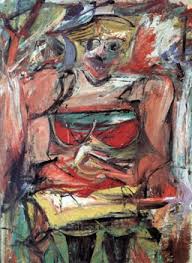
His pictures typify the vigorous gestural style of the movement and he, perhaps, did more than any other of his contemporaries to develop a radically abstract style of paining that used Cubism, Surrealism and Expressionism. Although he established his reputation with a series of entirely abstract pictures, he felt a strong pull towards traditional subjects and would eventually become most famous for his pictures of women, which he painted in spells throughout his life. Later he turned to landscapes, which were also highly acclaimed, and which he continued to paint even into his eighties, when his mind was significantly impaired by Alzheimer’s disease.
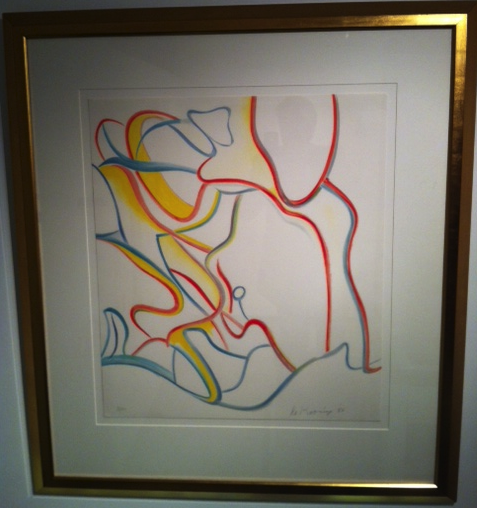
Gorgeous Abstract Composition Edition 98/100 Stone lithograph (1986 – 28 x 25 in.) Available at: Elan Fine Art Limited –Vancouver, B.C. info@elanfineart.ca
He possessed the polished techniques of painters in the New York School, one that compares to that of the Old Masters, and he looked to the likes of Ingres, Rubens and Rembrandt for inspiration. De Kooning’s influence on painters remains important even to this day, particularly those attracted to gestural styles; the highly abstract and erotic work of prominent 1990s painter Cecily Brown is inconceivable without his example.
“I’m not interested in ‘abstracting’ or taking things out or reducing painting to design, form, line, and color. I paint this way because I can keep putting more things in it � drama, anger, pain, love, a figure, a horse, my ideas about space. Through your eyes it again becomes an emotion or idea.” – de Kooning

 Girl Who Would be KING on Life, Style and INSPIRATION.
You must be logged in to post a comment.