If Happy Days taught us anything, it’s that life was better in the fifties.
On Friday I attended a Celebration of Life party at the Museum of Vancouver for a neighbour’s mom who just passed away.
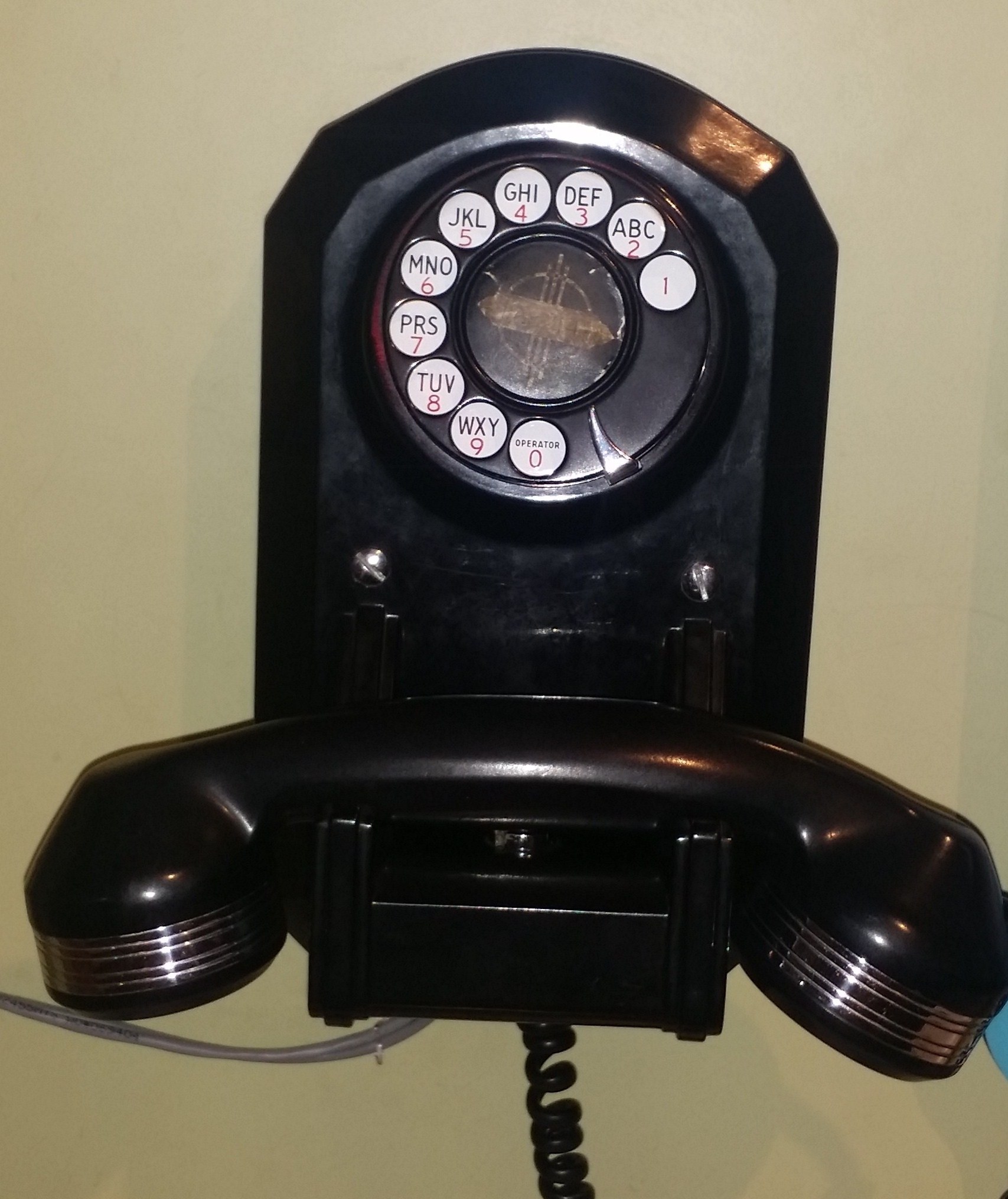
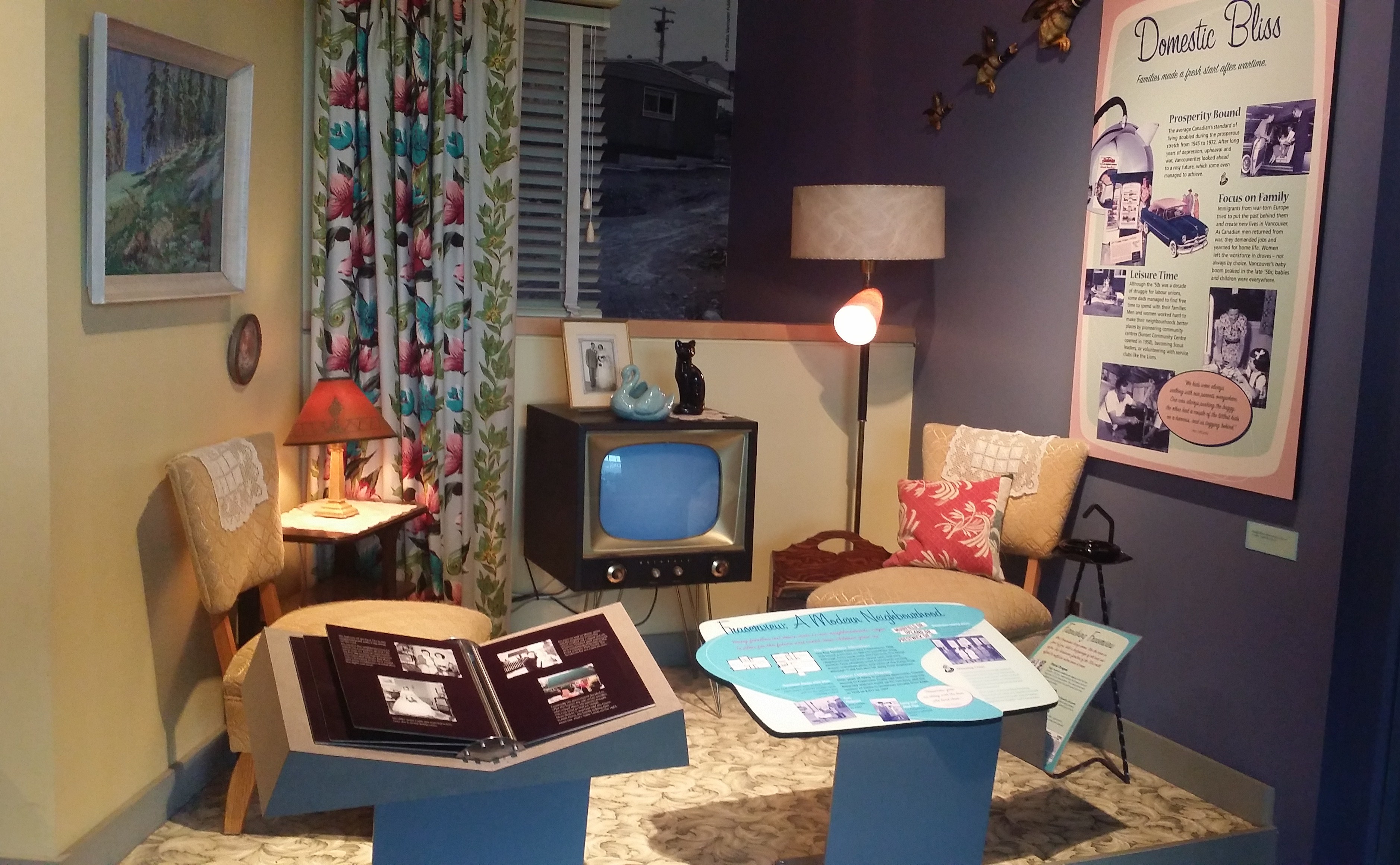
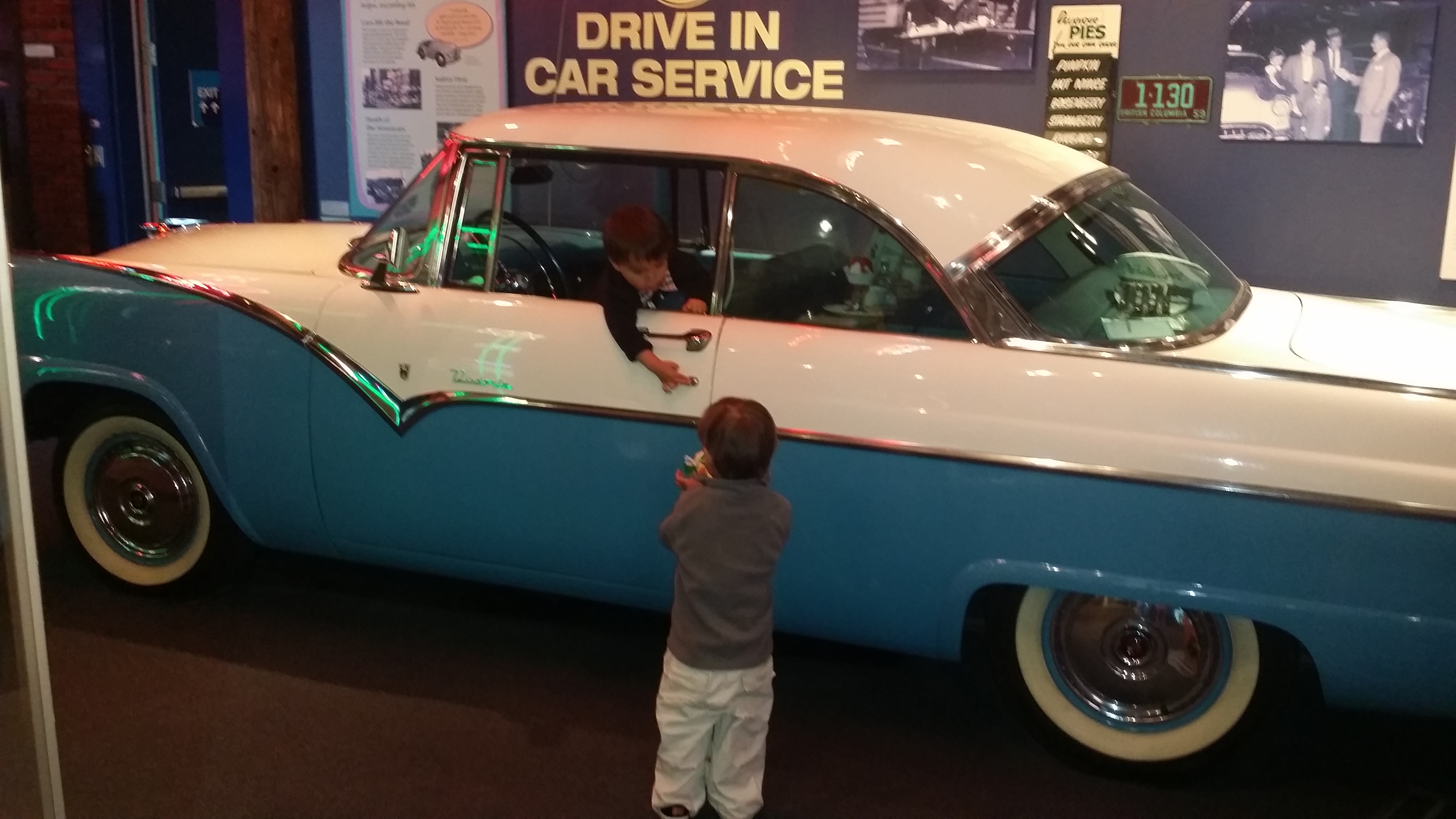
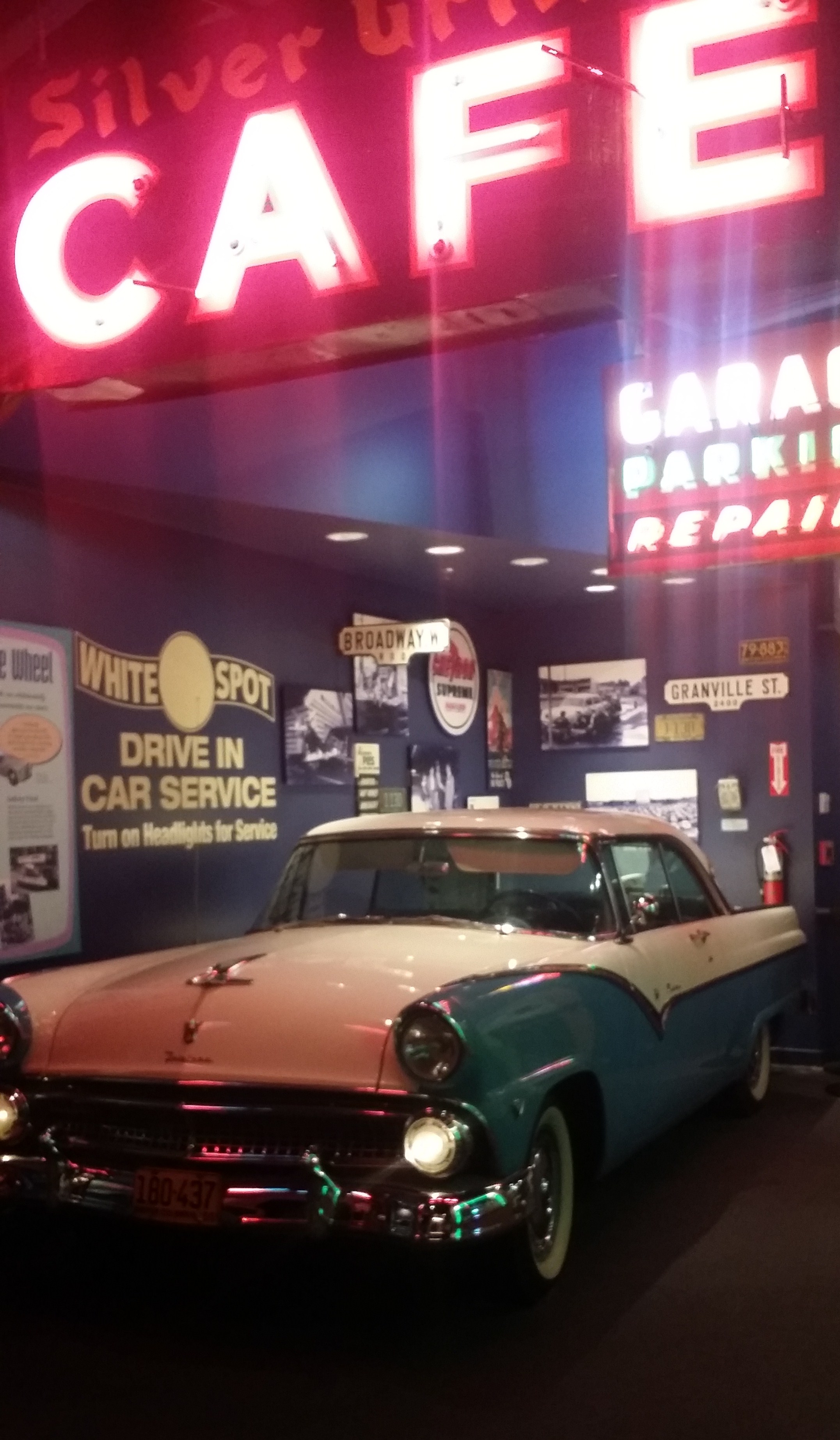
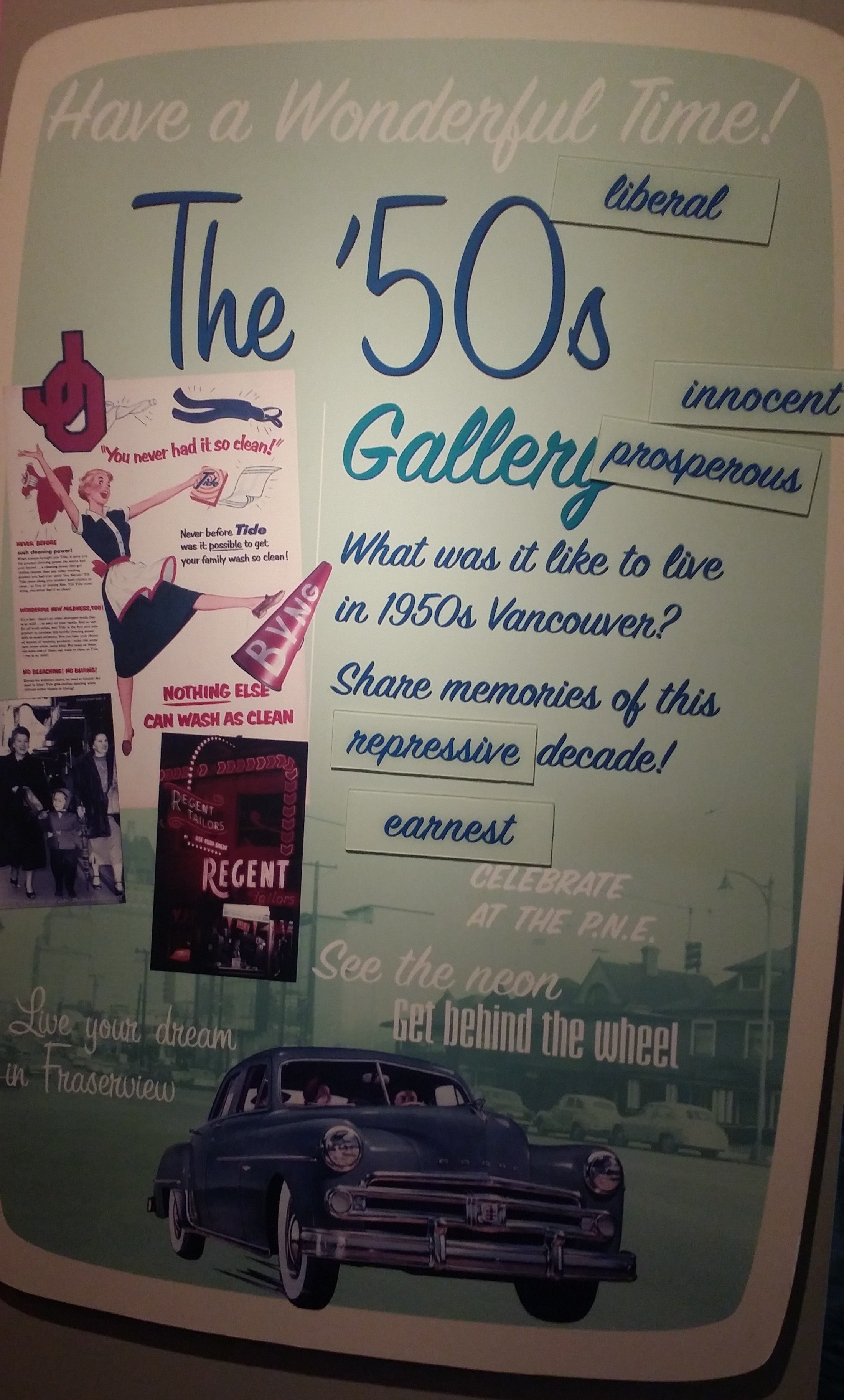
With beautiful photos of her life rotating on a big screen and smooth jazz playing in the background (later a live Cuban band) it seemed she was in her element in the 1950’s. So how appropriate that the 50’s interactive exhibit was in the room adjacent to us (and open for us). I thought it would be interesting to post some photos I took. Here’s looking back….
People left their door unlocked at night, kids respected their elders and a guy who lived above his best friend’s garagecould still be cool so long as he owned a leather jacket. Well, turns out The Fonz didn’t lie: despite the racism, and homophobia, the fifties were a pretty good time to be alive.
In Hollywood, setting something in the fifties brings forth things like ‘nostalgia’ and ‘optimism’. But, how do you measure optimism?
Beginning in 1935, Polling Company AIPO spent decades ringing strangers up and asking them how happy they were—a move that actually yielded usable data. According to this, the fifties saw a surge of people claiming they were very happy, peaking between 1955 and 1960 at around forty percent. That’s the highest it’s ever been. Remember this isn’t just ‘happy’ but ‘very happy’—as in nothing could possibly be better.
In 1957 the murder rate bottomed out at four people per 100,000 the lowest in fifty five years.
It sure seemed like a more peaceful, less complicated time than living now in our more fast-paced, stressed out era. But life is still good, worth living and you can have your own reality show…..for even more than 15 minutes!
fyi – hula hoops have made a comeback and they’re a great exercise…..if you can swing it.
Not exactly a prophet, but he did predict the future. Andy was way ahead of his time.
All good things must come to an end. Like the self indulging 80’s! Too bad if you weren’t around to experience it – there’s never been anything like it since. But maybe that’s a good thing. Thank goodness there was no instagram!
All photos by Fan Zhong – Take out your check because this culture is Expensive.
The nightclub known as “Area” was of its own time, but also way ahead of its time: there was a convergence of art, music, performance and fashion – where the only constant was change. That was then.
With three bars, a shark tank, and a swimming pool the downtown imaginarium known as “Area” welcomed all manner of wildlife, from Andy Warhol and Jean-Michel Basquiat to Madonna and Grace Jones to Marc Jacobs and Calvin Klein to the chameleonic Bernard Zette, a man who might arrive on any given night as a mermaid or, say, Anne Frank.
The bathroom was its own special club within the club, an orgy of anonymous sex and a wildly eclectic marketplace (condoms, chicken sandwiches, or Comme des Garcons jackets could all be had at cost), the whole scene powdered faintly in white. It was, after all, the ’80s.The nightclub-as-art-gallery that came to define the creative hedonism of 1980s New York, was resurrected for a single night last Tuesday at the Hole Gallery on the Bowery. The occasion was a new book, “Area” a 368-page homage (Abrams) to the over-the-top thematic parties that took place during the club’s storied 1983-to-1987 run.
The sidewalk was crammed with kooky artists and well-dressed celebutantes, craning their necks to get a glimpse of “Invisible Sculpture,” a piece by AndyWarhol that consists of a pedestal and a wall label. Inside, a sweaty mass of latter-day club kids and downtown royalty squeezed past a Barbara Kruger mural, brushed up against naked dancers and jostled for cocktails served in faux Campbell’s Soup cans.
The show was curated by Jeffrey Deitch and others, including the Area alums Eric Goode, Jennifer Goode and Serge Becker. It was also Mr. Deitch’s first exhibition after leaving the Museum of Contemporary Art, Los Angeles, and the party not only evoked the sybaritic spirit of the club, but also the fashionable scene cultivated by his gallery in the 1990s and early 2000s.
In addition to Warhol and Kruger, the show had rare works by Jean-Michel Basquiat, Francesco Clemente, Kenny Scharf, Keith Haring and others art stars of the 1980s — many created originally for Area. A row of nonworking toilets was also installed, prompting plenty of knowing chuckles and Instagram moments. (The exhibition ended November 10th).
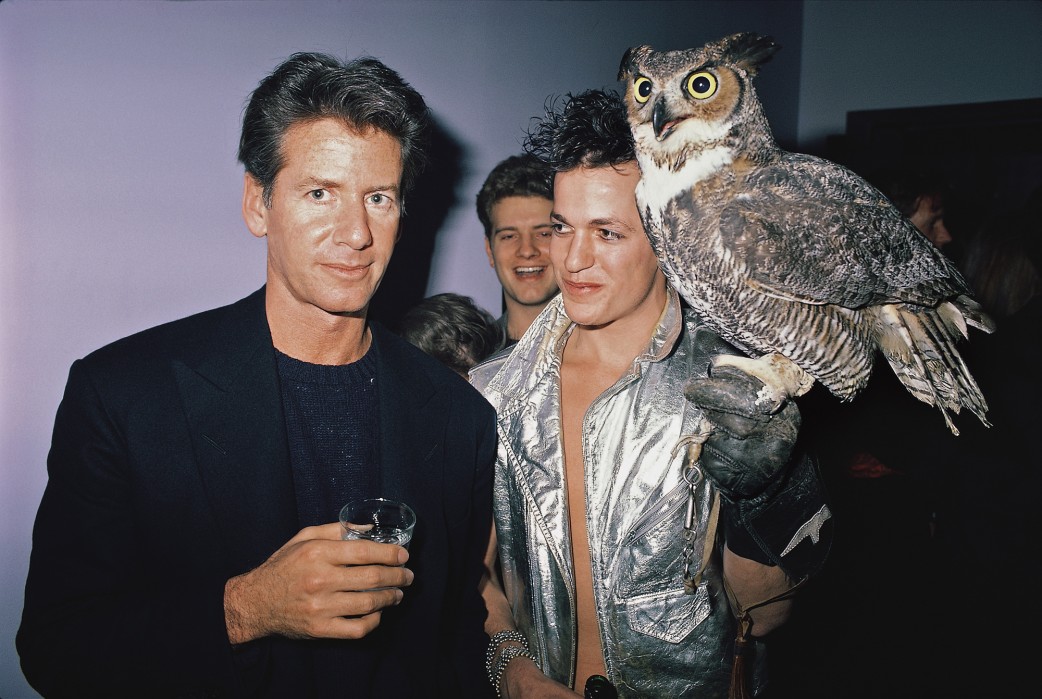
Calvin Klein and Tommy Street with an owl.
At one point Calvin Klein showed up, standing before a wall of Ronald Reagan posters created for a Hollywood party in 1984. “It was a different experience every time,” Mr. Klein said of the club, as he made his way for the exit. “You never knew what to expect. It was such a creative moment.” For some, the night brought back some of the debauched silliness of 1980s clubbing. Mirrored surfaces were dusted with fake piles of cocaine. Scantily clad performers simulated copulation. Drunken partygoers rolled around the floor.
Mr. Goode, who owns the Bowery and several other boutique hotels, surveyed the scene from a corner. “The late ’70s and early ’80s were a very special time in NewYork,” he said. “It was a think tank of artists. The city was very lawless.” He contrasted that to Mayor Michael R. Bloomberg’s gilded age, when community boards, night-life task forces and real estate prices have dampened the city’s creativity. Places like Area, he added, “would be impossible to pull off today.”
“We opened Area never expecting it to last,” writes Eric Goode in the preface to the new book Area: 1983 – 1987 ($75, abrams.com), an exquisite oral and pictorial history of the legendary—though short-lived—New York nightclub.
Over its four-year run, the warehouse space was made over anew approximately every six weeks: from its opening theme of “Night,” during which a masked welder lit up a dark dance floor with showers of sparks to a later incarnation called “Gnarly,” with a platoon of drag racers and nude bikers screeching across the 13,000 square foot space.
They don’t make em like they used to!
Taken in part from the New York TimesFashion & Style




 It sure seemed like a more peaceful, less complicated time than living now in our more fast-paced, stressed out era. But life is still good, worth living and you can have your own reality show…..for even more than 15 minutes!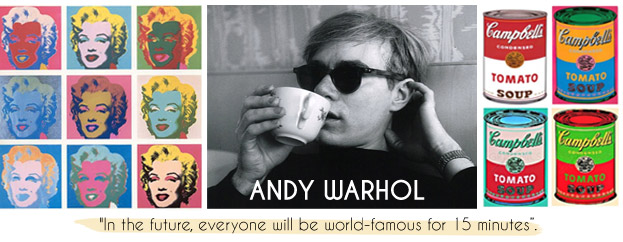



 Girl Who Would be KING on Life, Style and INSPIRATION.
You must be logged in to post a comment.