A continuation of my post from last Monday on the Art of Collecting ART and What Makes Good Art – answersfrom Art World Pros. However this discussion will always be continuing because everyone’s opinion differs. Here is one more:
Damien Hirst’s Spot Painting – Gagosian gallery, Paris. As the title promises, Spot Paintings features borrowed and newly created works of art featuring the UK-based artist’s signature dotted paintings. Different colors, sizes, and shapes were all variations on the theme.
Scott M. Levitt, Director, Fine Arts, Bonhams & Butterfields, Los Angeles:
Quality, quality, quality. This is the mysterious and subjective key to good art. In all periods of art there are good and bad works of art. I find that defining quality in representational art is easier than in modern and abstract art. The other key word is looking. Everything looks good when you first start looking at art, as you have nothing to compare it to. As you hone your eye, you begin to distinguish between good and bad. The more you look at art, the easier it is to determine what is good and what is bad.
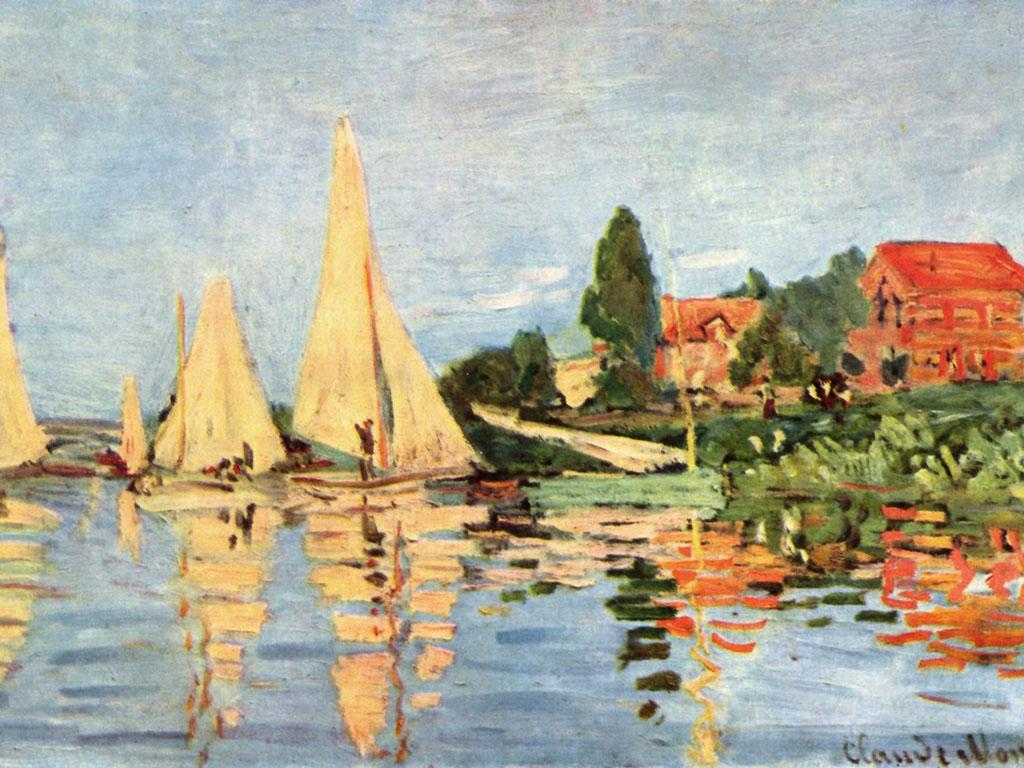
Claude Monet Landscape Painting
Also, there are two schools of thought as to what is good and bad. Some people believe that good and bad are personal distinctions and entirely in the eye of the viewer. Others believe that there is good art and crap art and no one can tell them otherwise. I think the real answer is somewhere in between, and this is based entirely on the quality of the eye of the viewer.
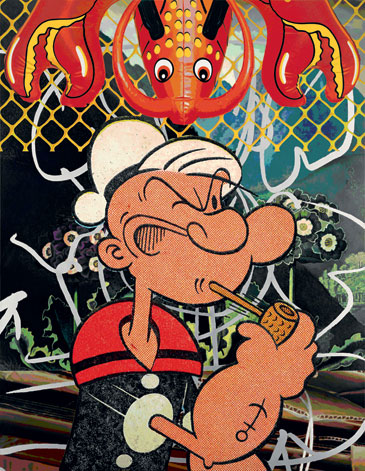
Each area of art requires its own set of criteria when determining good and bad, i.e. painting, sculpture, printmaking, craft, conceptual etc. Personally I hold originality to be important in this determination. For contemporary artists that can be tough. Most of what is being created today is, in my personal opinion, not very original. To me a Mark Rothko is a masterpiece, while a thousand color-field artists after him are not. I find Pop artists brilliant and Jeff Koons completely reactionary. There is originality in contemporary art, but it is tough to find.
Mark Rothko contemplation
It is also tough when the art market influences good and bad. I would like to say that monetary value determines quality, but unfortunately they are often unrelated, as many factors can influence the value of artwork other than quality. Damien Hirst is an interesting and relatively unique artist, but I don’t think his prices at auction reflect how good he is. When one of his works is worth more than a good Monet landscape, something is very amiss.
I think the best “take away” here is that if you want to know what is good and what is not, you have to get out and look for yourself and make that decision. Take a year… and make it a rule to visit museums and galleries every weekend and read art-related books and magazines as much as possible in as many art fields as possible. You will have your answer. If you don’t use this approach, you will officially have no eye or ability to make these distinctions.
If you are in this purely for your own collecting interests, then look at as much art as possible in all fields and eras as I have just said. If you are in it purely to make money, then buy a subscription to Artnet or E*Trade. It’s your call.
The artist’s record breaking sculptures SELL FOR MILLIONS
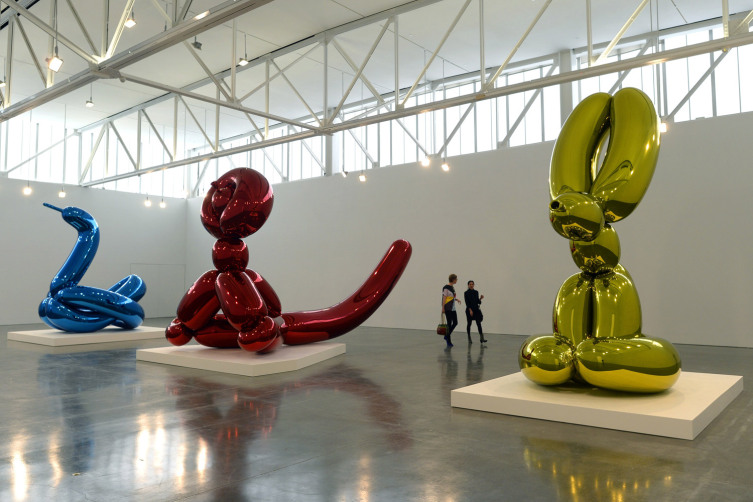
Timothy A. Clary / AFP / Getty (L-R) Balloon Swan (Blue), Ballon Monkey (Red), Balloon Rabbit (Yellow) at the Gagosian Gallery in New York City on May 9, 2013.
Stephen Colbert probably summed up the meaning of Koons’s balloon animals best in an interview with the artist on The Colbert Reportlast year. “A lot of them are shiny, you know,” Colbert observed, “so when I look at them I can see me, and then I’m really interested in it.” Koons agreed, arguing “art happens inside the viewer… and the art is your sense of your own potential as a person.” These reflective balloon sculptures “just trigger that information in you.”
On a more somber note, Koons added, “I’ve always enjoyed balloon animals because they’re like us. We’re balloons. You take a breath and you inhale, it’s an optimism. You exhale, and it’s kind of a symbol of death.” (And somewhere, a clown just cried…)
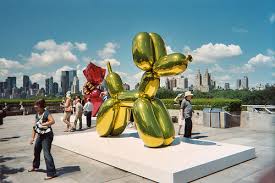
Last year, Jeff Koons’s Balloon Dog
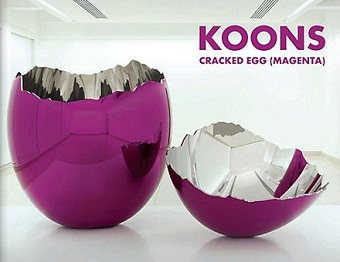
went for a whopping $58.4 million at Christie’s, making it the most expensive contemporary art sculpture ever sold. On February 14, 2014, the artist’s wonderfully whimsical Cracked Eggsculpture (Magenta – see below) part of the same series: Celebration—went to auction for the first time and fetched 14.1 million pounds, within the expected range. The winner was a client of David Linley, Christie’s chairman in the U.K. and a grandson of King George VI.
In his own words, Koons says, “Cracked Egg is a symbol of birth. It’s already happened, so it’s about moving on and transcendence, like Botticelli’s Birth of Venus. It was technically very difficult to create due to both the concave and convex surfaces.” When he says “technically difficult,” he means it took a staggering 12 years to produce the impossibly thin two-piece eggshell replica. Every detail, from the reflection of the viewer in and around the sculpture to the cartoon-like, saw-tooth edges has been a carefully calculated labor.
Celebration takes inspiration from a number of calendar events, replete with Valentine’s Day hearts, Easter eggs, and other pop symbols at magnified proportions. Conceived in 1994, some of its pieces are still in progress. Those who wanted to gaze at the sculpture without reaching deep within their pockets were able to view the egg on display at Christie’s King Street in London from February 8-13, before it went to auction.
from images
Koons lives and works in both New York City and his hometown of York, Pennsylvania.
How do you feel about these sculptures – elevated kitsch or fine art?
Credit: Harper’s BAZAAR magazineand Time Newsfeed.





 Girl Who Would be KING on Life, Style and INSPIRATION.
You must be logged in to post a comment.