Leave trends to the fashion industry– Trends come and go, and when you’re talking about changing a pair of jeans, or buying a new dress, that’s fine, but where your brand identity is concerned, longevity is key. Don’t follow the pack. Stand out. ~David Airey
I like to work first in black and white to ensure that the logo will look good in its simplest form.Color is very subjective and emotional. This can distract from the overall design – say if you saw your logo in all red, that color may be the first thing that you respond to and not the composition of the design elements. I will not even consider submitting color suggestions to a client for review until they have signed off on a final black and white logo. ~Patrick Winfield
Should a logo be self-explanatory? It is only by association with a product, a service, a business, or a corporation that a logo takes on any real meaning.A logo derives its meaning and usefulness from the quality of that which it symbolizes.If a company is second rate, the logo will eventually be perceived as second rate. It is foolhardy to believe that a logo will do its job immediately, before an audience has been properly conditioned. ~Paul Rand
LOGOS have become part of our culture. Have you ever wondered WHAT MAKES A LOGO SPECIAL?
A good logo takes time to come up with. It must be distinctive, appropriate, practical, graphic, simple and be able to inform and convey an intended message at a glance . I hope that I’ve been able to express all of that in my logos.
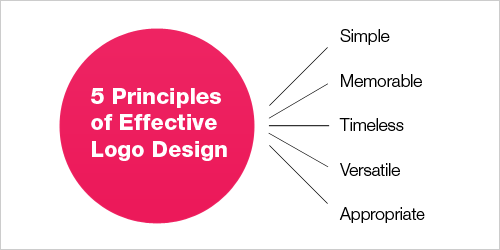
There are five principles that you should follow to ensure that this is so…
1) SIMPLE
A simple logo design allows for easy recognition and allows the logo to be versatile & memorable. Good logos feature something unique without being overdrawn.
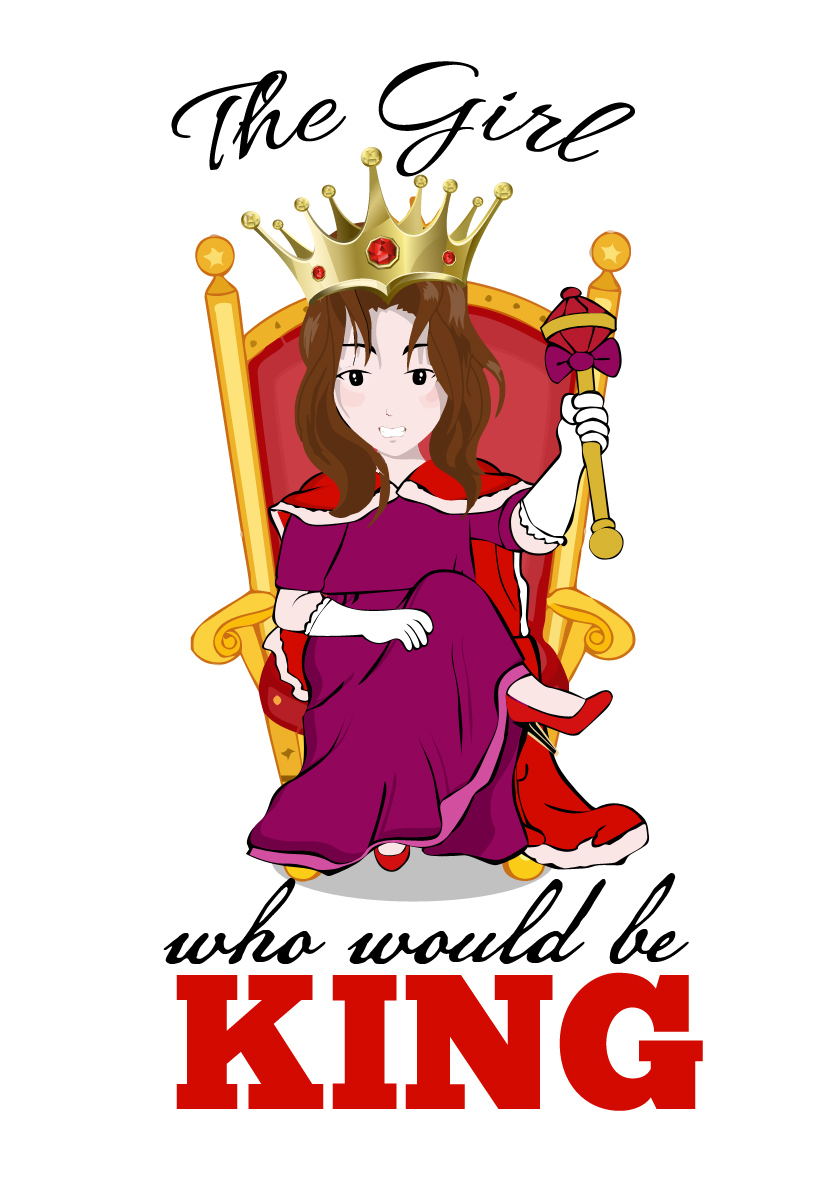
Blog logo: I’m Female, my last name is KING, I like to RULE! Oh; and be worshipped (hee, hee). Makes perfect sense!
2) MEMORABLE
Following closely behind the principle of simplicity, is that of memorability. An effective logo design should be memorable and this is achieved by having a simple, yet, appropriate logo.
3) TIMELESS
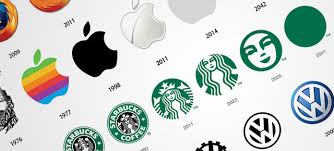
An effective logo should be timeless – that is, it will endure the ages. Will the logo still be effective in 10, 20, 50 years?
Probably the best example of a timeless logo is the Coca-Cola logo… if you compare it to the Pepsi logo, you can see just how effective creating a timeless logo can be. Notice how the Coca Cola logo has barely changed since 1885? That is timeless design.
4) VERSATILE
One way around creating a versatile logo is to begin designing in black and white only. This allows one to focus on the concept and shape, rather than the subjective nature of colour. One must also remember printing costs – the more colors used, the more expensive it will be for the business over the long term. An effective logo should be able to work across a variety of mediums and applications. The logo should be functional. For this reason a logo should be designed in vector format, to ensure that it can be scaled to any size. The logo should be able to work both in horizontal and vertical formats.
5) APPROPRIATE
How you position the logo should be appropriate for its intended purpose. For example, if you are designing a logo for children’s toys store, it would be appropriate to use a childish font & colour scheme. This would not be so appropriate for a law firm.
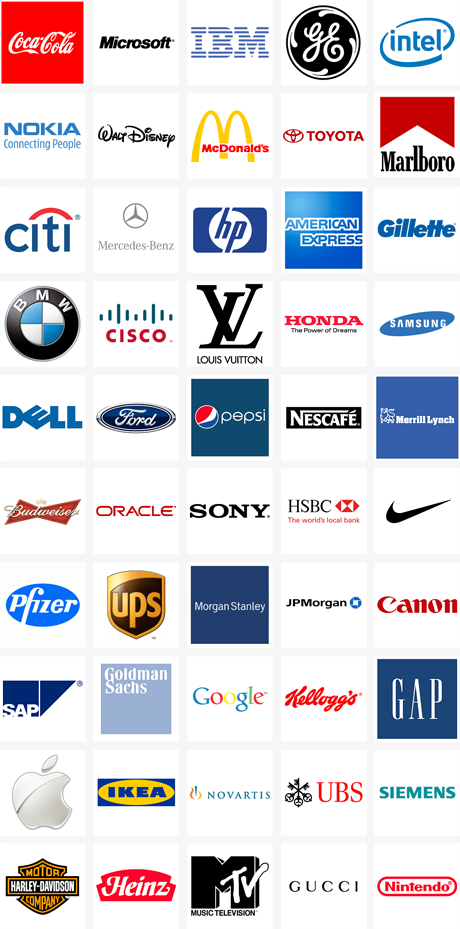
It is also important to state that a logo doesn’t need to show what a business sells or offers as a service. ie. Car logos don’t need to show cars, computer logos don’t need to show computers. The Harley Davidson logo isn’t a motorcycle, nor is the Nokia logo a mobile phone. A logo is purely for identification. For further evidence of this, take the top 50 brands of the world – 94% of the logos do not describe what the company does.
Things you may not have noticed before:
What’s so special about the amazon logo? Look at the arrow, it goes from A to Z.
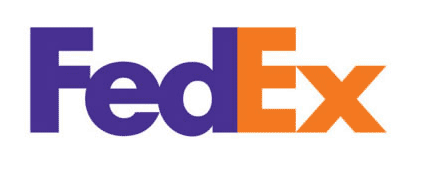
This is the FedEx logo, it is quite common. What’s so interesting about it? Look at the E and the small X, you are now noticing the arrow inbetween the E and the X. Then look over at the word Fed, if you look at the small E, you see a spoon. You’re’ being “Fed,” get it?
Credit: JustCreative.com Jacob Cass does personal branding. He is responsible for the graphic art on Jerry Seinfeld’s show “Comedians In Cars Getting Coffee” – an excellent web series.

Leave trends to the fashion industry – Trends come and go, and when you’re talking about changing a pair of jeans, or buying a new dress, that’s fine, but where your brand identity is concerned, longevity is key. Don’t follow the pack. Stand out. ~ David Airey



 Girl Who Would be KING on Life, Style and INSPIRATION.
You must be logged in to post a comment.