PSIFF: Dead Man’s Wire

 The Palm Springs International Film Festival has now come to a close.

My movie choices this time explored themes of resilience, legacy, homelessness, pride, prejudice, power, relationships, and bureaucracy. One film in particular added another layer: desperation – the kind that pushes a person past the point of reason.
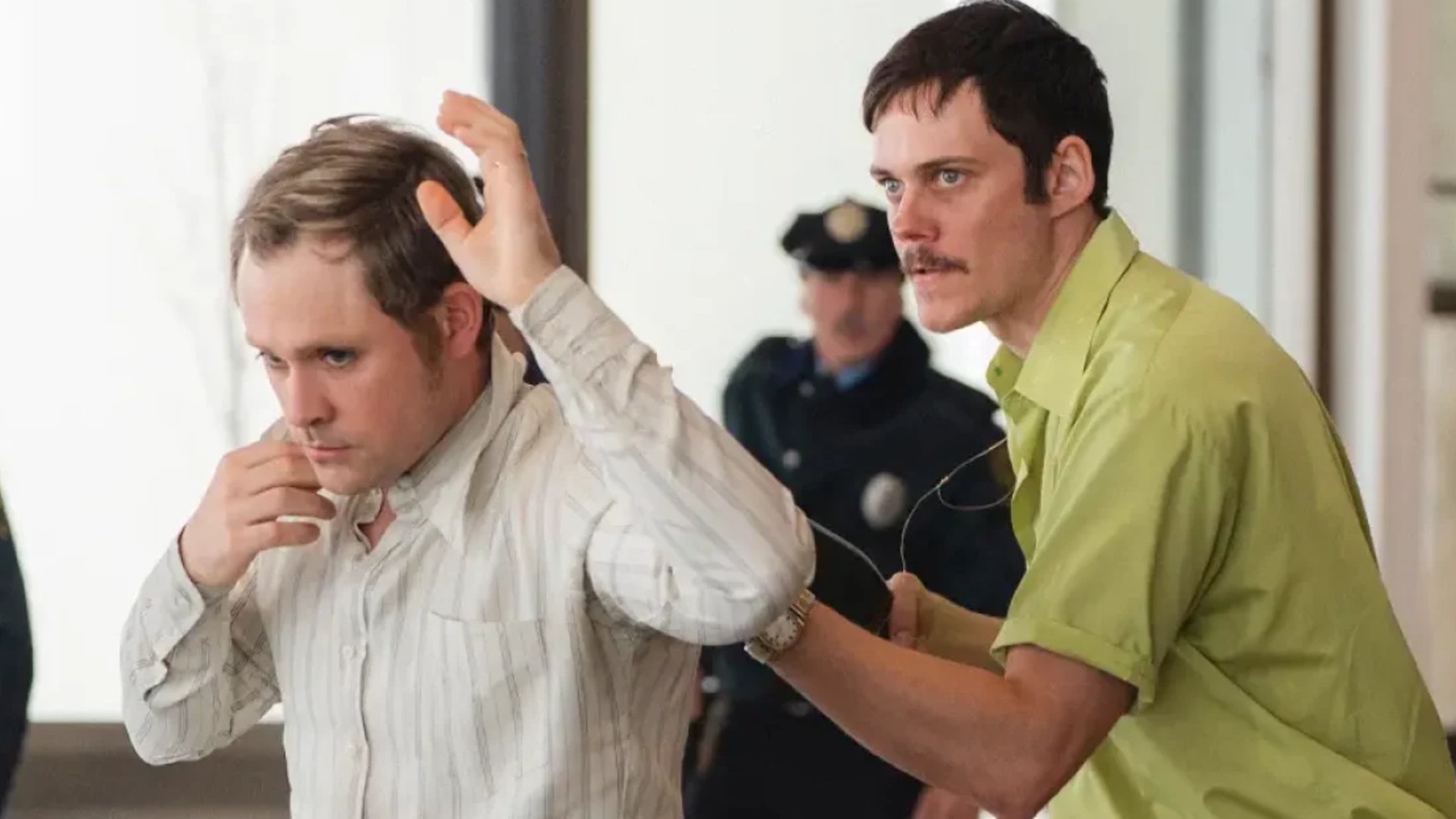
Photo courtesy of Palm Springs International Film Festival.

That film was Dead Man’s Wire, a true‑crime thriller directed by Gus Van Sant (Good Will Hunting), starring Bill Skarsgård and Dacre Montgomery, with Al Pacino in a small but influential role.

The film dramatizes a real 1977 hostage crisis in Indianapolis, one of the most shocking and televised standoffs of its time.  It shows what happened when a distressed man, Tony Kiritsis, took a mortgage company executive hostage and wired a sawed-off shotgun to the man’s neck – a device rigged to fire if anyone tried to intervene.  Any sudden movement would kill him. The film keeps you on the edge of your seat, and it certainly kept the hostage on his.

Kiritsis, a frustrated landowner facing foreclosure, stormed into Meridian Mortgage Company believing the business had sabotaged his development deal and pushed him into financial ruin.

The 63‑hour standoff ended in a live televised press conference, something almost unheard of at the time.

Bill Skarsgård delivers an intense, unsettling performance as Kiritsis, portraying him not as a monster, but as a man spiraling under pressure.  The film blends period detail with a modern sense of psychological tension.

Ultimately, Dead Man’s Wire exposes the thin line between grievance and violence, and what can happen when someone feels pushed too far – even though Kiritsis took things far beyond any acceptable boundary.

You can understand his frustration, yet you’re appalled by the extreme lengths he went to in an attempt to “set things right.” The film leaves you thinking about the volatile mix of frustration, powerlessness, and fear, and how easily those forces can ignite.

It circles back to the same question that ran through other films I saw this year: what happens when people feel they’ve run out of options, and who pays the price when they break?
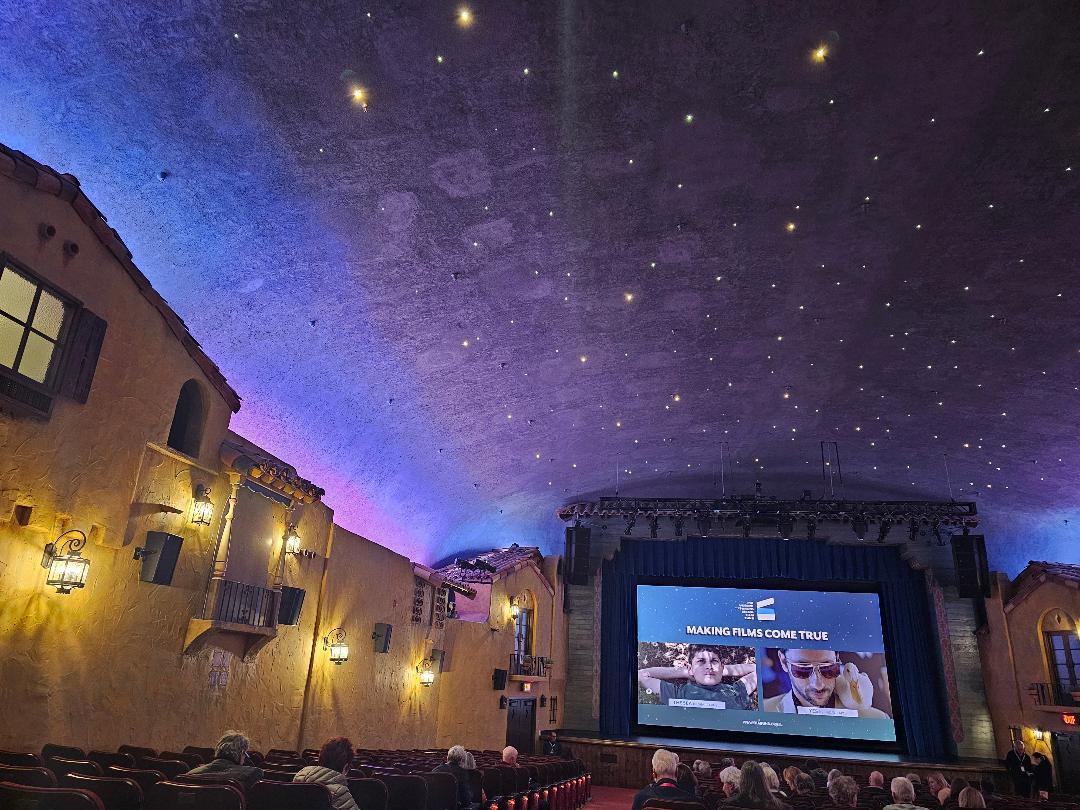
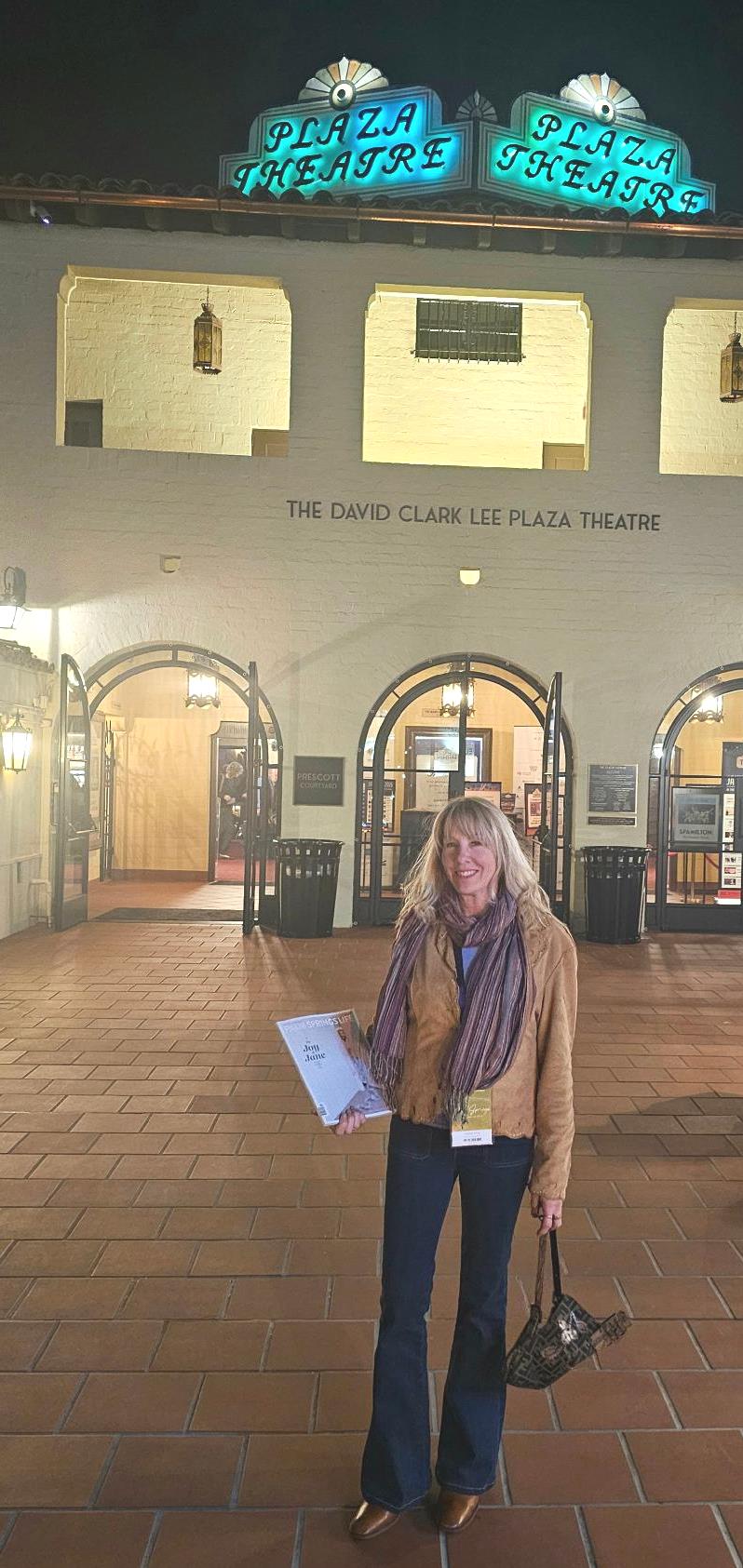
The Plaza Theatre is where the movie screening took place. After its 34-million dollar renovation.

Director Gus Van Sant was here for a Q&A after the screening.
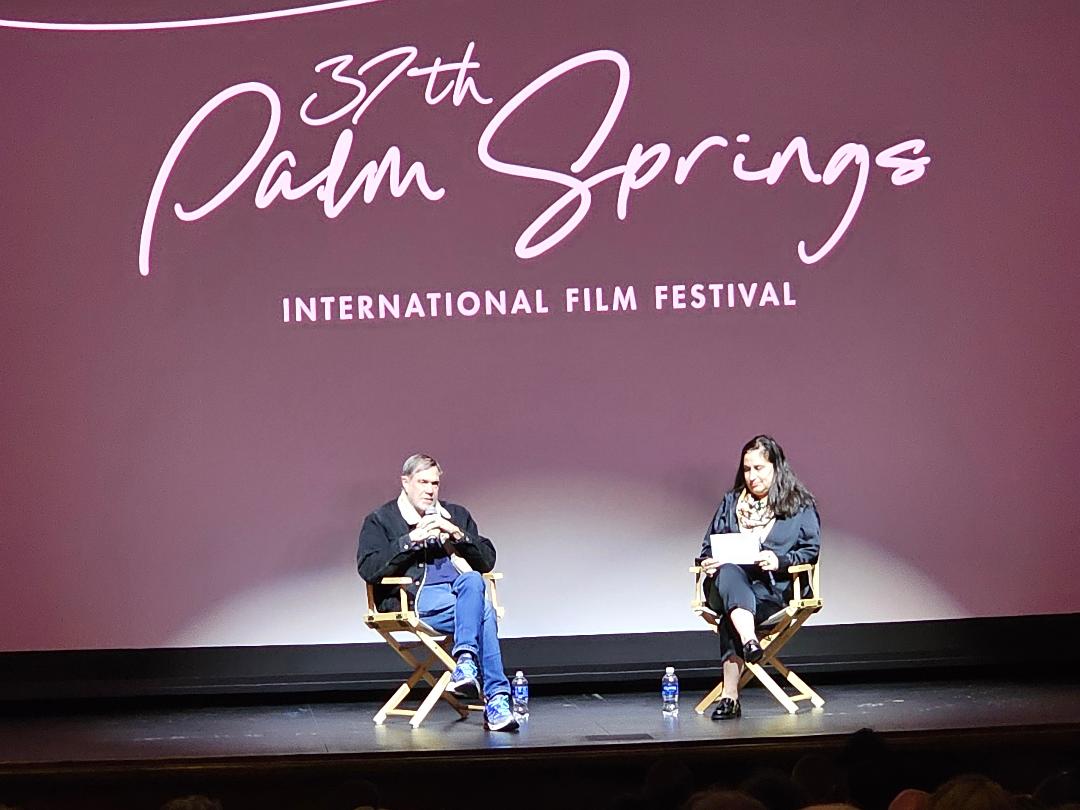
Photo: d. king

Best of the Fest:

https://www.psfilmfest.org/film-festival-2026/festival-events/best-of-fest-2026
 

PSIFF: Kim Novak’s Vertigo

Do you ever wonder what became of some of Hollywood’s biggest stars? Are they still alive? What are they doing now? Even if they were before your time, their stories still echo through film history.

Courtesy of the Palm Springs International Film Festival.

I grew up watching old movies with my dad, so I’ve always had a soft spot for the stars of earlier eras. Today, it feels like younger generations don’t have the same connection to these films, which makes discovering a great documentary about them even more special.

I love documentaries about interesting, multi‑faceted people. Some are actors, some are not.

I saw Bombshell: The Hedy Lamarr Story, about the famous actress and brilliant inventor who co‑patented a “Secret Communication System” during WWII that used frequency hopping – the basis for modern Wi‑Fi, Bluetooth, and GPS. Her scientific contributions weren’t recognized until later in life. I think it’s because of her that I was able to navigate my way from Vancouver to Palm Springs in my vehicle – so I thank her for that.

Another amazing documentary is My Mom Jayne, about Jayne Mansfield directed by her daughter, actress Mariska Hargitay, who was only 3 years old and survived in the backseat of the car that took her mother’s life.  Who knew that Mansfield was a highly intelligent and musically gifted polyglot, fluent in five languages (English, German, Italian, Spanish, Hungarian), a classical pianist and violinist, who performed on The Ed Sullivan Show, and a self-proclaimed genius with a reported IQ of 160+?  When she was in Hollywood, the studio was more interested in her physical measurements than her IQ.

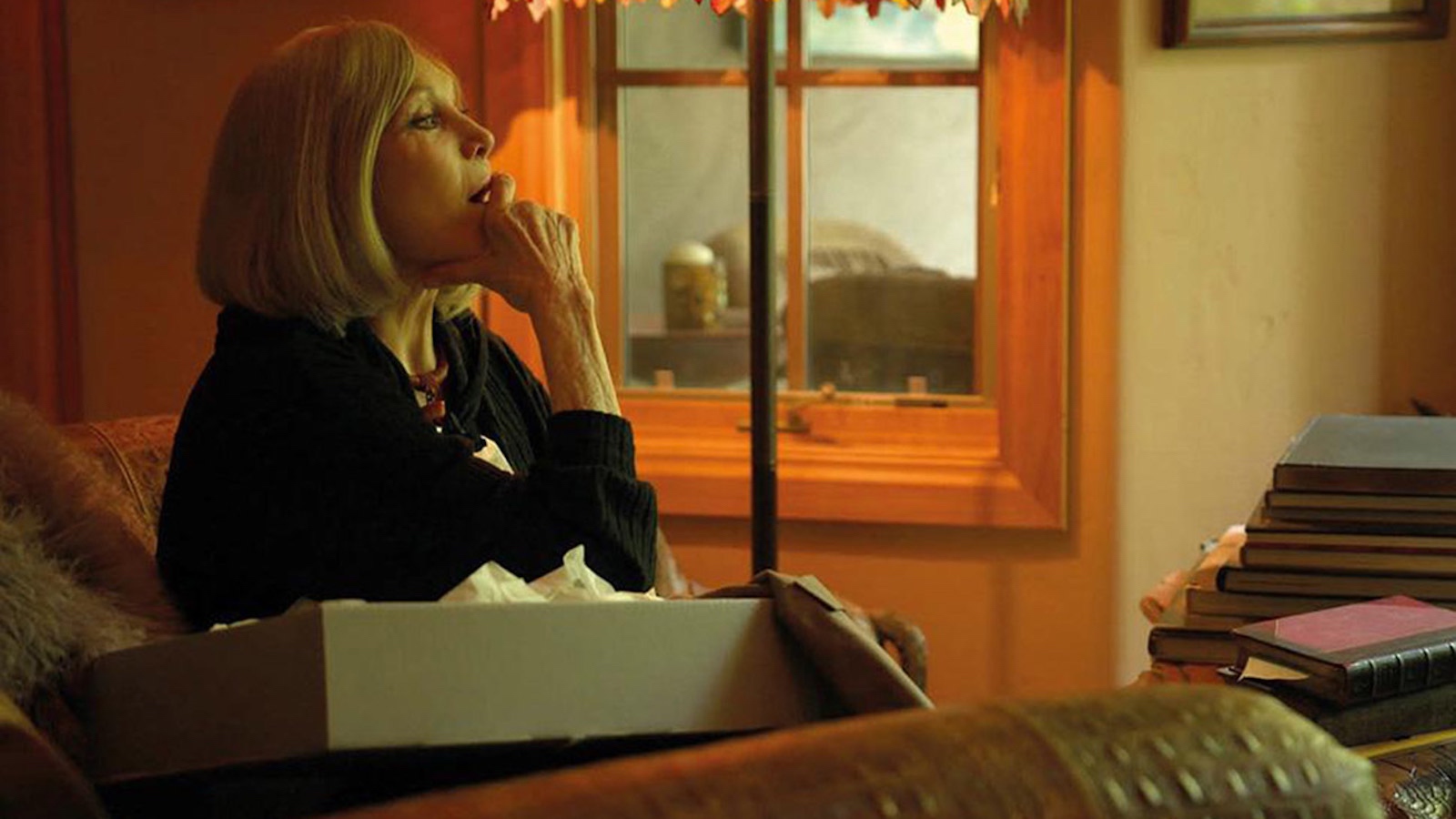
Which brings me to the U.S. premiere of a documentary I just saw at the Palm Springs International Film Festival called Kim Novak’s Vertigo.

Like Lamarr and Mansfield, Kim Novak was far more complex than the studio system allowed her to be. Unlike them, she’s very much alive.

For those not familiar with the name, Novak was a major Hollywood star in the 1950s, and for a few years she was Columbia Pictures’ top box‑office draw.  She was Columbia’s answer to Marilyn Monroe, and the studio groomed her as their glamorous blonde star. She headlined major films like Picnic (1955), The Man with the Golden Arm (1955), and Pal Joey (1957).

She became iconic for Hitchcock’s *Vertigo (1958), which is now considered one of the greatest films ever made. In fact, her dual role is still studied in film schools.

She stepped away from Hollywood in the mid‑1960s, saying she wanted to protect her sense of self and avoid the pressures that had consumed other stars of her era.

This poignant film, directed by Alexandre O. Philippe (who was in attendance and whose childhood memory includes the same wallpaper seen in Vertigo), shows Novak looking back on her life as an actress, poet, and painter in an intimate portrait. Novak left at the top of her game. She bought a beautiful home, sight unseen – perched on a cliff overlooking the ocean. She now lives a secluded life surrounded by many animals. She’s 92.  She’s an extraordinary painter (link below).

She recently received The Golden Lion for lifetime achievement at the Venice International Film Festival.  

In the end, what moved me most was seeing a woman who chose peace over fame, art over applause, and authenticity over expectation. Her story lingers  quietly, like a final frame that stays with you long after the credits roll.

It made me wonder how many other stars from Hollywood’s golden age have stories we’ve never heard.

If you’ve seen any great documentaries about classic film icons, I’d love to hear your recommendations.

*Vertigo – Here’s the official synopsis:

As the mysterious Madeline (and her doppelgänger Judy) in Alfred Hitchcock’s Vertigo, Kim Novak delivered one of the most mesmerizing and enigmatic performances in Hollywood history – cementing her legacy as one of her generation’s most independent and iconic talents. Shortly thereafter, she left it all behind to pursue a quieter, more purposeful life in the Pacific Northwest. It’s here that filmmaker Alexandre O. Philippe finds her: at home, ready to share the swirling, singular memories of her life as an actress, poet, painter, and person. This intimate portrait of artistic resilience and personal reflection is a stream-of-consciousness stunner.

Director Alexandre O. Philippe was in attendance for a Q&A after the screening.

PSIFF: TOW

Rose Byrne is one of those rare performers who seems to have no weak spots, and the more you look at her career, the clearer that becomes.

Courtesy of Palm Springs International Film Festival – 2026.

She can move between drama and comedy with ease, as witnessed in movies such as “Bridesmaids” and “If I Had Legs, I’d Kick You.”

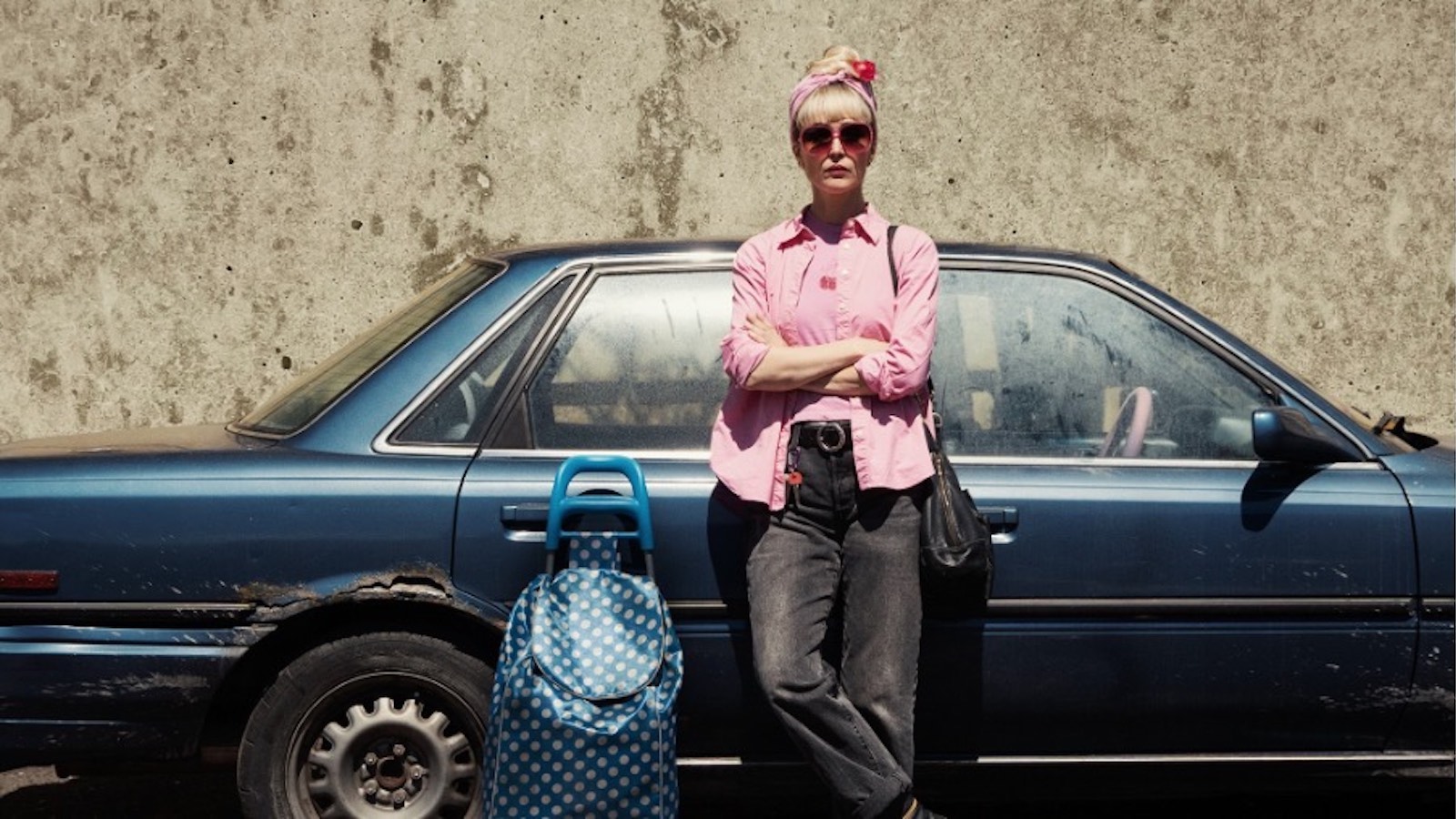
I just saw “Tow” at the Palm Springs International Film Festival.  “Tow” is based on the very real story of Amanda Ogle, an unhoused Seattle woman living in her aging Toyota Camry. The movie premiered at the 2025 Tribeca Film Festival, and stars Byrne as the main character.

The story is based on Ogle’s real 2017 ordeal, when her car, containing all of her belongings, was stolen, recovered, and then towed. She spent over a year fighting the system to get it back.  The car was not just her transportation, it was her home.

Byrne did a powerful performance in portraying Ogle’s battle against bureaucracy. She not only starred in it, she also produced the film, showing how personally invested she was in getting the story out there. The film was shot in just 19 days on a very small budget, which Byrne said added to its raw, realistic feel.

This movie really makes you think about how unfair the system can be. It was unnerving to watch the struggle to get the car back. Bureaucracy doesn’t bend for people who fall outside its assumptions of things like a home address, job, savings and ability to take time off to go to court.

Ogle had to deal with a maze of agencies that don’t talk to each other.  They included the police, the towing company, municipal courts, city departments and storage facilities. She had to live in a woman’s shelter while doing so. At least there was that.

When the car was eventually recovered by police, instead of being returned to her, it was impounded. And because she was unhoused and had no stable address or resources, she couldn’t easily navigate the system to get it back. The towing company presented her with a bill of $21,634 for storage and fees over time, which of course, she could not pay. The system creates the problem, then makes it nearly impossible to fix.

This wasn’t a case of someone ignoring a ticket – it was a person trapped in a system that treated her car as property but ignored the fact that it was also her shelter. 

Rose Byrne has said she was drawn to the project because Amanda’s story exposes how ordinary people can be crushed by systems that are supposedly neutral.  And let’s also say that her appearance does not fit the typical stereotype, challenging our assumptions about “what homelessness looks like.”

The emotional undercurrent is the quiet realization that someone’s entire life can be uprooted because of a dramatic mistake. With a “there but for the grace of God go I” kind of feeling.

Homelessness has reached levels in the U.S. that are hard to ignore, and one of the most striking, and often invisible parts of the crisis is the rise in people living in their cars.

The festival is on until January 12th, 2026.  For films and available tickets: