Aside from leaving a legacy of astonishing abstract art, Jackson Pollock has a cookbook. And why should that come across as strange. He was no starving artist and even so, everyone has to eat and cook something for themselves sometimes right? But I must admit my first thought was…really?? It’s interesting how we see people as one dimensional when we only know one thing about them. But this man not only painted, he enjoyed gardening, entertaining and making food – everything from starters and entrees to side dishes, breads, and desserts.
Seems the lines are becoming more and more blurred between fashion and art, makeup and art and now food and art?
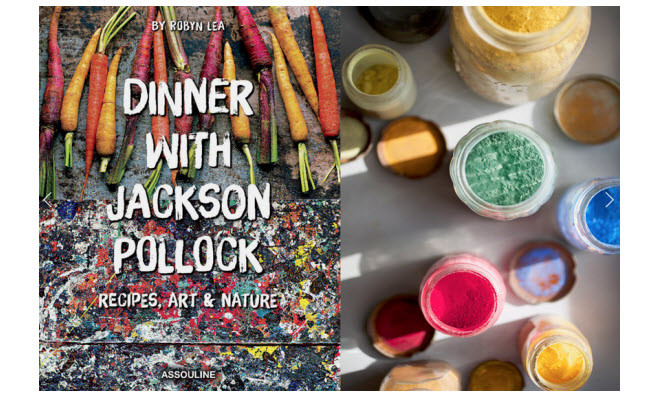
What do you know about Jackson Pollock, the famous American artist? That he was considered rather wild, and struggled with alcoholism? All of this is true, but it’s not the full picture of the artist and his life. He was also an avid cook, and a lover of good food, which shades in some fresh nuances to his life and work, explains Robyn Lea, the author of a new book about Pollock and his cooking, Dinner with Jackson Pollock.
Like his canvases, I would imagine my dinner plate to be splattered with a colorful and chaotic assortment of food.
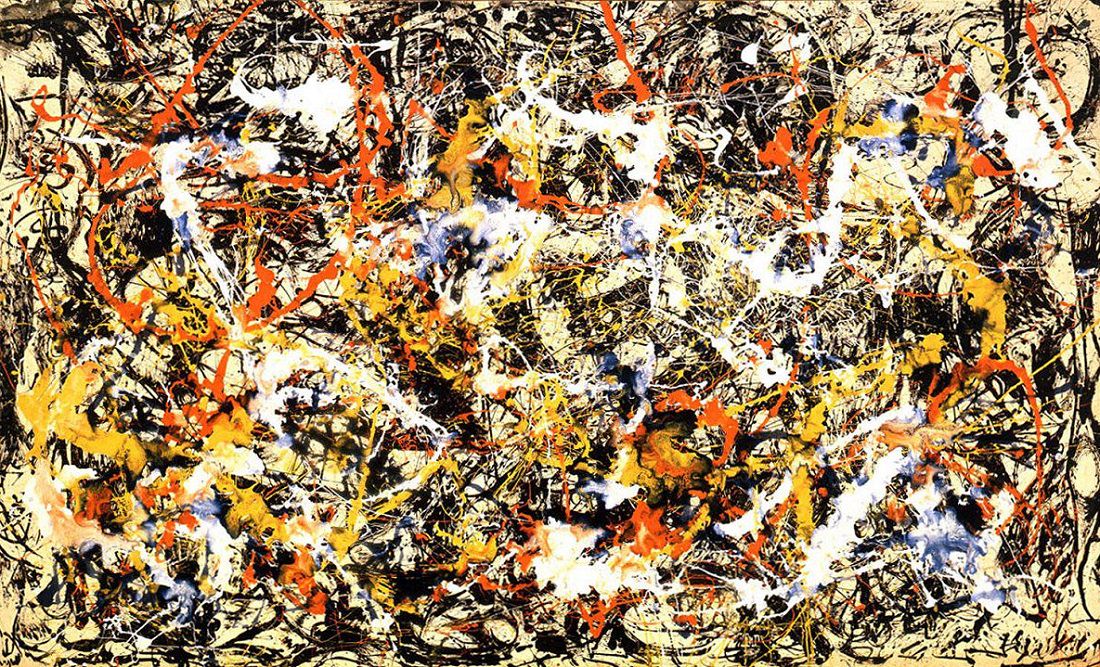
Convergence, 1952 by Jackson Pollock
Robyn Lea is an Australian photographer and writer who became fascinated by Pollock and his relationship with food. She was doing a story for an Australian magazine and photographed the pantry at Pollock House in East Hampton, NY. “I started to wonder about their food,” she told me. “They had beautiful objects in there that said these people were really interested in food, like Eva Zeisel china, and an expensive, complete collection of Le Creuset pieces.”
She wondered what the artist’s dinner parties were like, and then she discovered his own hand-written recipe books — with dozens of recipes clearly made and loved by the artist. “I started a series of Jackson Pollock dinner parties,” Lea told me. The discovery process took over from there, and through it she not only cooked quite a lot of good food from Pollock’s cookbooks, but discovered a less-well-known side of the man as well.
“I thought he was the genius wild man throwing paint in the air and drinking too much,” Lea said, confirming a caricature of Pollock that is perhaps the most widely known. “And then the great surprise was that he was the baker, which is an art and science that requires precision. That was a great shock to me — he’s a baker but his artwork is not like that.”
But, in a twist, Pollock’s precision with food casts fresh light on the current scholarship of his work: “But then, he denied the accidental in his work,” Lea told me. “He said he knew exactly where the splats of paint would land. Scientific studies now actually show an incredible amount of design and structure to that work.” It’s very contrary, she said, to how the average person sees the work of Jackson Pollock. “If you look at his cooking from this perspective there’s a great connection to how he painted.”
Perhaps the most poignant food connection in Pollock’s story, however, is the diet Lea discovered in her research that was intended to cure his alcoholism. “There were very valid attempts to assist him in these cures,” she told me. “Very poignant and showed this side of him that was not so egocentric but tried very hard to overcome alcoholism, with therapy and diet, from the 1930s on. There’s a sadness there to find these things out.”
The book itself is a beautiful, lively melding of Pollock’s work and his recipes, drawn together with Lea’s photography, writing, and interviews with his family. She tells many stories, like that of the Cross-Country Johnny Cakes, which Pollock and his brother lived off of on their cross-country road trip to visit their mother in California. There are stories of happy times and many images of Pollock’s work, and photographs of him in the studio. It’s a rare cookbook — one that doesn’t simply offer the novelty of a famous artist’s recipes and cooking, but offers fascinating insight on his life as a human being as well.
And that is exactly why it would have been so amazing to actually have had dinner with this rare man.
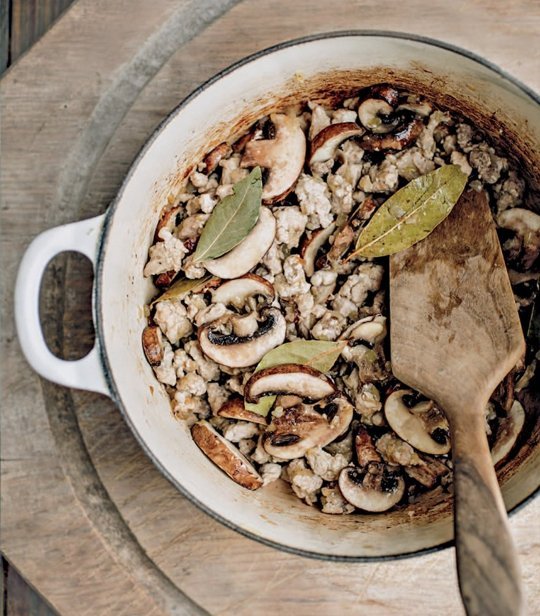
One of the photos in the book – a spaghetti sauce with mushrooms and pork.
When it comes to art everyone seems to have an opinion. Of course everyone has different tastes and what someone loves, someone else might despise. But there is art…and then there is ART!
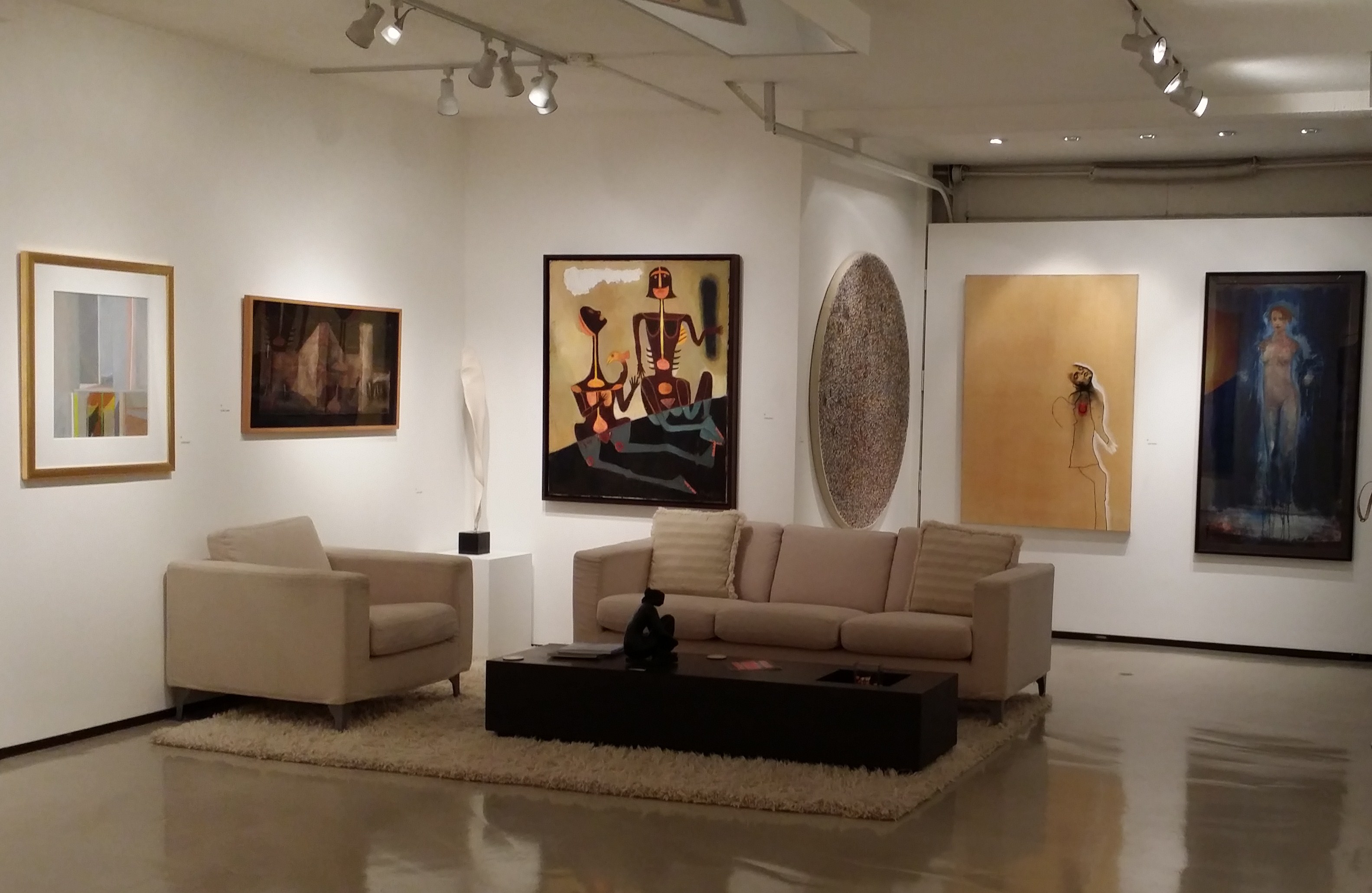
Elan Fine Art Gallery, Vancouver
Have you ever wondered how experienced art world professionals separate out the best art from the rest?
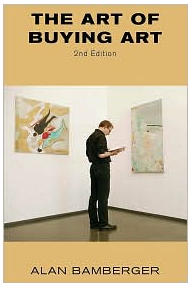
I came across a website about the business of ART by Alan Bamberger, a San Francisco art consultant, advisor, and independent appraiser of all aspects of original works of art including art-related documents, and art reference books. He has been selling art since 1979 and has been consulting and appraising for artists, galleries, businesses, organizations and collectors since 1985. He is the author of “The Art of Buying Art.”
Mr. Bamberger asked some Art World Pros for answers. Here they are:
Brian Gross, Brian Gross Fine Art, San Francisco: Art that is unique in conception and well executed.
DeWitt Cheng, freelance art writer and critic, Bay Area, CA: Good visual art looks stunningly right and, in retrospect, obvious, or inevitable– yet it’s also continually surprising. It is a powerful paradox. How can someone have possibly made this? How in the world could it not have been made?
A magnificent painting by Joseph Kyle hangs in a downtown office bringing light and life to an already beautiful space.
Cheryl Haines, Haines Gallery, San Francisco: Clear intention, unwavering dedication, patience, perseverance, self awareness and the drive to make for yourself and no one else.
Robert Berman, Robert Berman Gallery, Los Angeles: Reality is by agreement. The reality of art is usually by some kind of agreement. The arbiters are the museums, the museum curators, the people who spend their lives and their time actually being critical of what they see and judging what they see. If you add in four or five art critics who are then able to write about it, if you get four or five major collectors who are passionate about what they collect to patronize it, and several major auction houses to auction it, then a consensus or vetting process begins to unfold. Of course there’s magic dust involved, so this is not a sure way, but it’s a safe way to go about judging what is good art.
by Marc Séguin
Catharine Clark, Catharine Clark Gallery, San Francisco: When it has its own internal logic. It took me a long time to get to this place, but that is the answer that I now give. I used to say that good art is like porn; you know it when you see it.
Mat Gleason, Coagula Art Journal, Los Angeles: The moment and the memory. It has to be something that engages you, on one of a million levels, in person, and establishes a memory that remains positive. This can be an artwork that challenges you and then makes you think about it days later or one that seduces you and delivers pleasant feelings days later. There are as many ways to produce this 1-2 effect as there are artists, but so much art that grabs you is glib and you forget it or is lousy and only recalled as something you sped past or upon which you only regret wasting your day.
Robert Shimshak, Collector, Berkeley, CA:
Marc Chagall
Good art is timeless. It will assume a new relevance to each generation, and to yourself as you grow. It will connect to the past and feed the future. It has a simple and rigorous beauty that commands your gaze and thoughts whenever you look at it. The best work will break your heart. As a collector, you will know it when you see it. It’s personal. You will not have to be convinced by anyone to acquire it; it will be something you simply must have. It is like a good marriage that completes a feeling inside you, something that lasts forever and grows with time.
Marsea Goldberg, New Image Art, Los Angeles: Originality, representational of the time when it was created, passion, a frame of reference, freshness, intellectual content, and is uniquely identifiable as the work of that particular artist. The art should effortlessly have as many of these characteristics as possible– or none at all. It also has to have magic; if you try too hard, the magic could fly away. The artist needs to have a vision and it’s important that the work doesn’t go into a dead end. It’s helpful if the artist has the capacity to reinvent their creativity through various skills and mediums.
Robert Flynn Johnson, Curator Emeritus, Achenbach Foundation, San Francisco: It is truly an unanswerable question without stating something that appears pretentious… the perception of what makes art “good ” revolves around the application of that difficult word, “taste” which I observe to be in considerably short supply in society today. People are not willing to take the time and effort to develop their own personal sensibilities through study or reflection but are prone to “go with the flow” from the “tastemakers” so as not to be seen as square and out of touch… so sad…
Jack Hanley, Jack Hanley Gallery, New York: I like something where the intensity of the experience of the person making it comes through. Maybe somebody is turned on by the nature of the materials, a psychological issue or some kind of narrative. Maybe some people have greater intensities of experience than others. What makes art good on a grander scale is how extraordinary and profound the components of those experiences are. Some artists are maybe better than others at tapping into their own idiosyncrasies and conveying them to others.
Justin Giarla, The Shooting Gallery, White Walls & 941 Geary, San Francisco: What makes good art is when you see a piece from across the room, you immediately fall in love with it without knowing anything about it and are in love with it forever.
Paul Kyle, Private Art Dealer, Elan Fine Art, Vancouver: A good work of art for me, is a piece that has the ability to awaken and remind me of my essence or the highest aspect of my being, if you will. To successfully accomplish this, I as viewer, must be open to allowing the work to reveal itself to me without pre-judgement, what I call contempt prior to investigation. Also, a great work of art gets better the more it is viewed. Often it is the work that has an immediate impact that is the one that wears thin over time, being the one with little real substance, as opposed to the one that takes time to reveal itself as the one with the greatest depth and meaning. There are certain elements however that the work must contain before the experience I seek is possible. Two elements that I look for in art are: Beauty and Elegance.Beauty, not referring to “pretty” but beauty referring to directness and honesty. Elegance is where there is nothing that can be added or taken away from the individual work. This can only be accomplished by an artist with great technical competence and authentic original vision.
Alan Bamberger, itinerant artster, San Francisco: At its most fundamental level, good art is an effective combination of concept, vision and mastery of medium (the ability to get the point across). Good art is also uncompromisingly honest, unselfconscious, bold, ambitious, enlightening, original, challenging, and a feast for the senses. It doesn’t necessarily have to have all of these qualities, but at the very least it has to keep you coming back for more… and never ever bore.
An easy-to-understand book on how to buy, sell, evaluate, appraise, and collect art. Soft cover; 284 pages. By Alan S. Bamberger, noted art expert, author, and syndicated columnist. Available at http://amazon.com
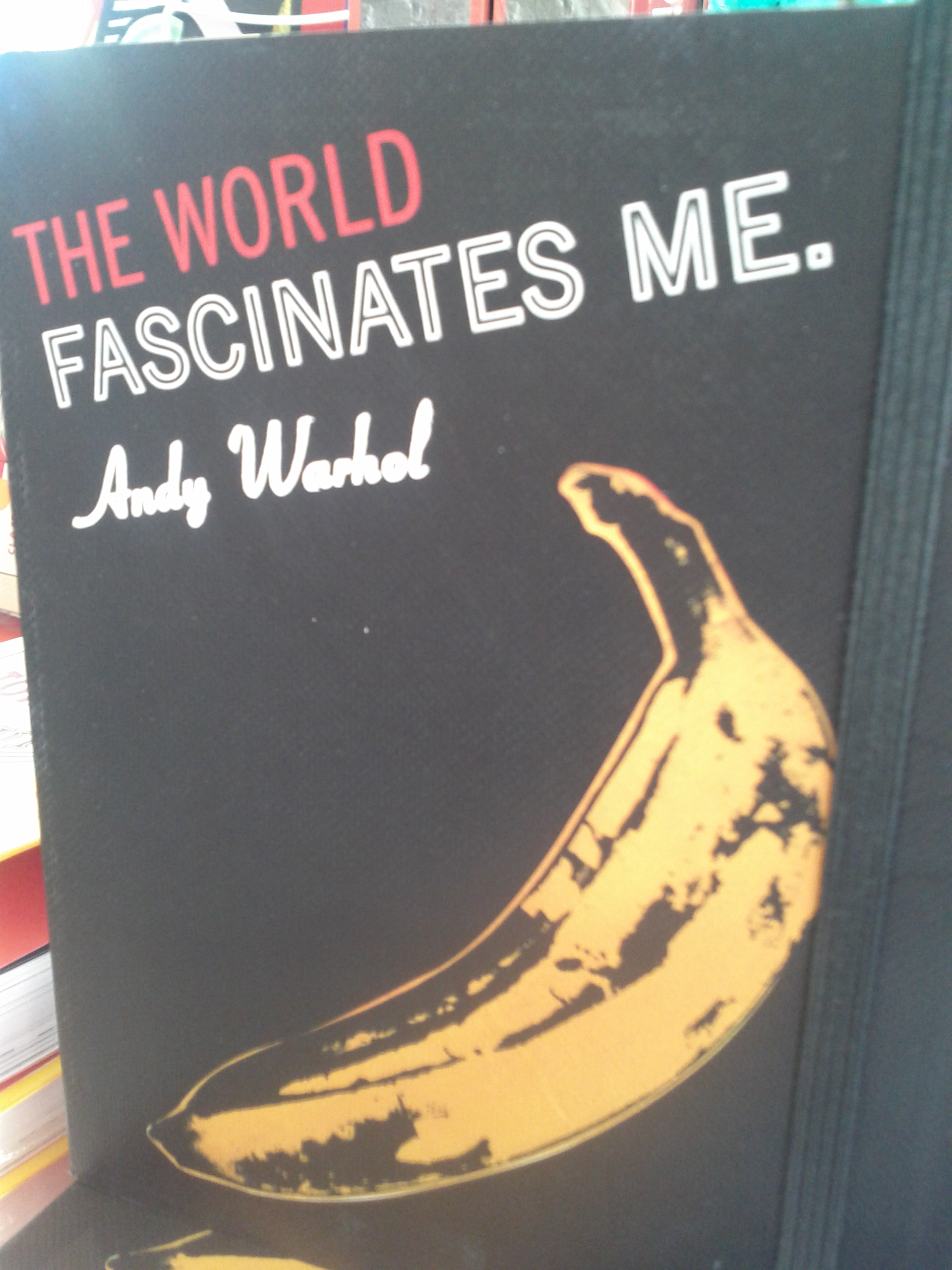
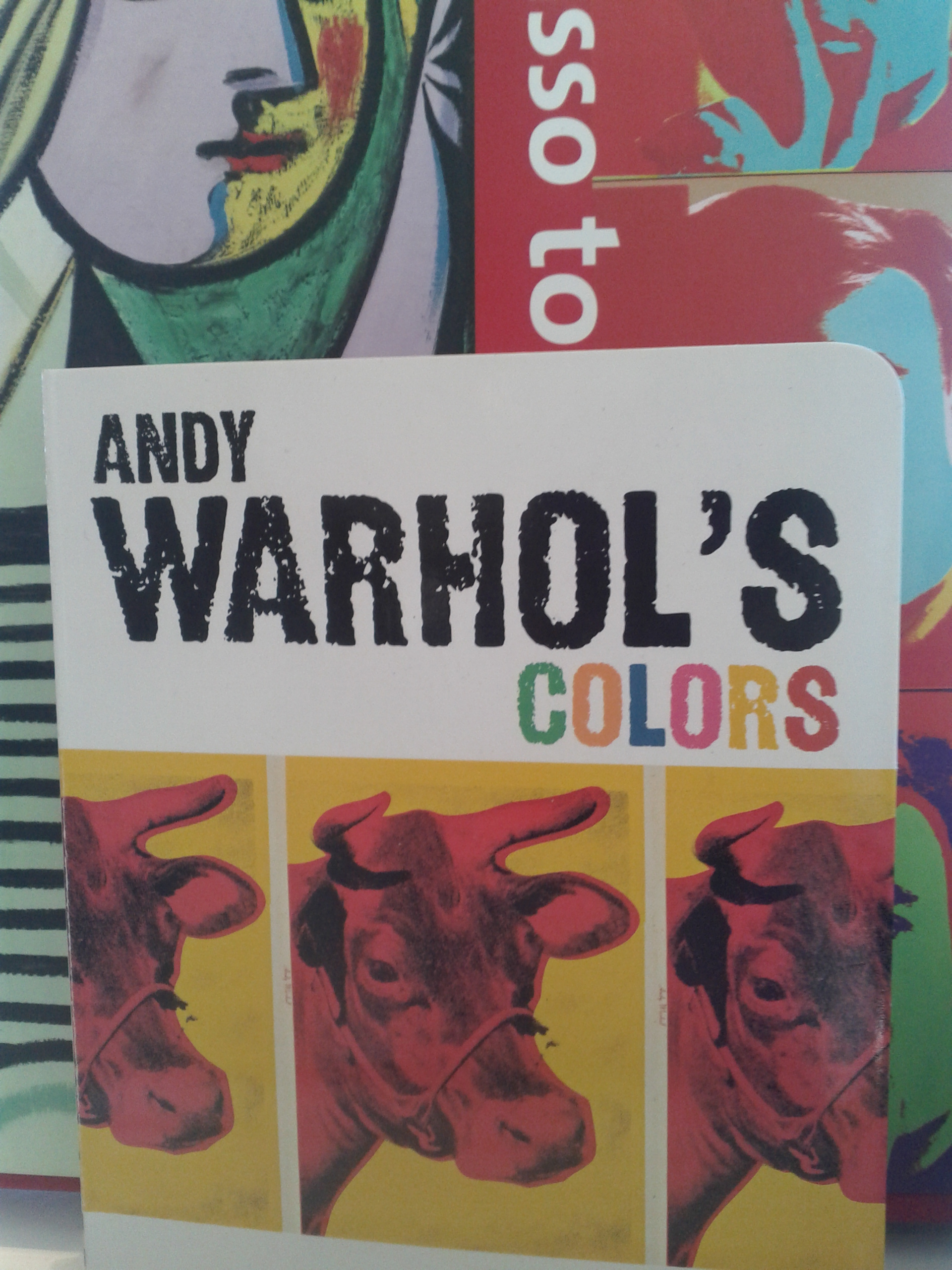
This is the man who turned his creative eye towards consumerism in a brilliant manner. I just came back from a mini vacation in Palm Springs where Warhol’s works inhabits many galleries including the Palm Springs Art Museum. His influence is felt everywhere. Which brings me to:
The Warhol Museum
Over the course of his career, Andy Warhol transformed contemporary art. Employing mass-production techniques to create works, Warhol challenged preconceived notions about the nature of art and erased traditional distinctions between fine art and popular culture. The Andy Warhol Museum’s permanent collection is comprised of more than 8,000 works of art by Warhol including paintings, drawings, prints, photographs, sculpture, film, videotapes, and extensive archives that consists of ephemera, records, source material for works of art, and other documents of the artist’s life. Together, the art and archives make The Andy Warhol Museum the most comprehensive single-artist museum in the world.
In 1964 one visitor upon seeing Andy Warhol’s Brillo Boxes at the Stable Gallery questioned “Is this an art gallery or supermarket warehouse?”
The Andy Warhol Museum is located at: 117 Sandusky St, Pittsburgh, PA – USA. It is the largest museum in the country dedicated to a single artist.
For those who want a little piece:
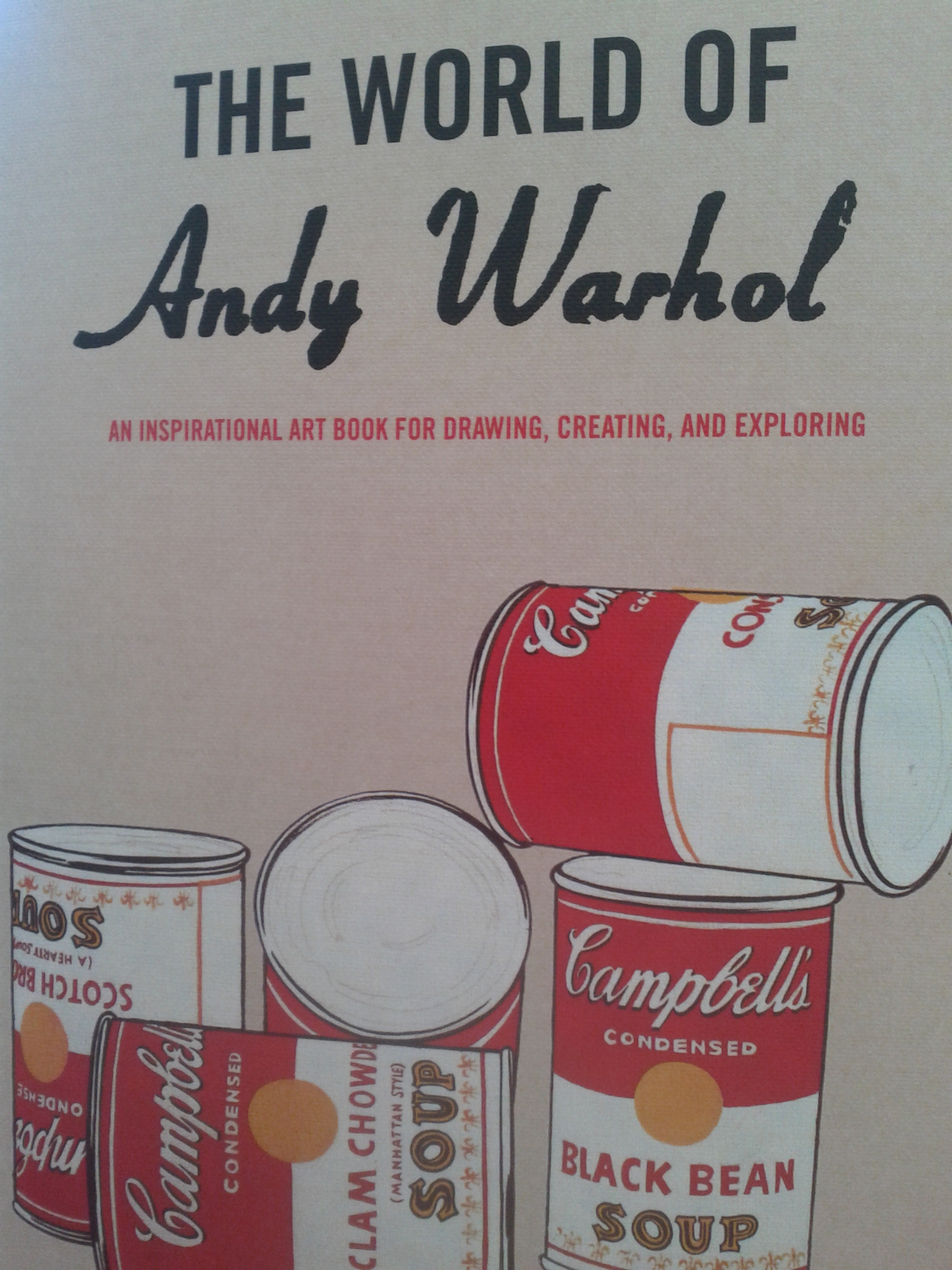
All of these FAB Warhol ART books were spotted at Just Fabulous– Palm Springs.

And why should that come across as strange. He was no starving artist and even so, everyone has to eat and cook something for themselves sometimes right? But I must admit my first thought was…really?? It’s interesting how we see people as one dimensional when we only know one thing about them. But this man not only painted, he enjoyed gardening, entertaining and making food – everything from starters and entrees to side dishes, breads, and desserts.





 Girl Who Would be KING on Life, Style and INSPIRATION.
You must be logged in to post a comment.