

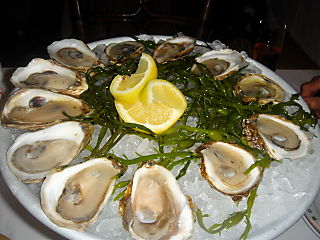
All About Oysters: only eat oysters in the months with a letter ‘R’.Exactly when and where the ‘R’ rule first appeared is a bit of a debate; but historically, for health and conservation practices, it was best to refrain from eating oysters during warm water months. During the warmer months, as ocean temperatures rise, oysters naturally tend to spawn or reproduce. For conservation practices, wild oysters were not harvested during the spawning seasons. In earlier times (c. 1700-1800’s, pre-refrigeration) it was dangerous to ship and, ultimately consume, oysters that sat out in the heat. An oyster for all seasons: now, because of sustainable farming practices, strict water quality monitoring and advanced wet storage techniques it is healthy, and safe, to consume farmed oysters all year long. Yet oysters remain a sensitive species whose quality and nature fluctuate with the seasons.
When purchasing remember to keep the unopened oysters cold but do not store in water! Oysters are alive and need to breathe, so never seal them tightly in a plastic bag. Open (shuck) shortly before serving – not more than 2 hours. The colder the oyster, the easier it is to shuck. Keep oysters cold at all times, partly for safety and very much to enhance flavor and texture.
How to Shuck an Oyster + recipeHow to Shuck an Oyster+ recipe
Tips for shucking taken from Goop.com TO PURCHASE OYSTERS – WHAT TO LOOK FOR:
HOW TO EAT OYSTERS ON THE HALF SHELL: You can either use a little fork to pick the oyster out, or you can do like most people do and slurp them out of their shell into your mouth. Cradle the shell in a hand, grasping it with your thumb and first two fingers. Some people look for what they call the “sipping lip” part of the shell before planting their lips on it. When ready, slurp up the oyster, savoring the taste in your mouth. Drink up the salt-watery juice in the shell, too. It’s part of the treat! Eat the entire oyster in a single slurp. Remember, you don’t want to see what is inside an oyster. You just want to taste it! SIMPLE HOMEMADE COCKTAIL SAUCE 1/2 cup ketchup (or chilli sauce) 2 Tbsp. hot cream-style horseradish 1/4 tsp. granulated sugar 1/2 tsp. coarse salt 1/2 tsp. freshly cracked black pepper 2 tsp. fresh-squeezed lemon juice 4 drops tabasco or your favorite hot sauce 1/2 tsp. Worcestershire sauce 2 garlic cloves, minced
Contrary to popular opinion, not all oysters taste alike. Some are brinier, some are creamier, some are leaner, some are fatter, and some even have a “fruity” taste, vaguely suggestive of cucumber and melons. Some of the differences in taste have to do with the species, but mostly it has to do with the temperature of the waters in which they are harvested; as well as the oyster’s fabled muscle, which constantly opens and closes to allow a flow of water and nutrients.
While oysters are famously immobile — once an oyster finds its rock, there it remains — they do have a powerful muscle that opens and shuts its gnarly shell. Contrary to popular opinion, not all oysters are created equal. First of all, there are several species. Perhaps the best known oysters are those originating from the waters off the East Coast — from Nova Scotia all the way down to the gulfstream waters from Florida to Texas — that are often called Bluepoints (although Bluepoints technically come only from New York’s Long Island).
http://www.oysterguide.com/book/what-kind-of-oyster-eater-are-you/ Fun Fact: You’ve heard the phrase “the world is your oyster.” Where does it come from? Origin: It comes from Shakespeare – The Merry Wives of Windsor (1600). The world is the place from which one can extract success and profit, as a pearl can be extracted from an oyster. You are in a position to take the opportunities that life has to offer.
“I can do anything I want to, the world’s my oyster.”
|
|||

 Girl Who Would be KING on Life, Style and INSPIRATION.
You must be logged in to post a comment.