

Last week I promised this very simple (only 3 ingredients) recipe which you can add to Moroccan chicken, spicy lamb, seafood dishes or just use the juice in salad dressings.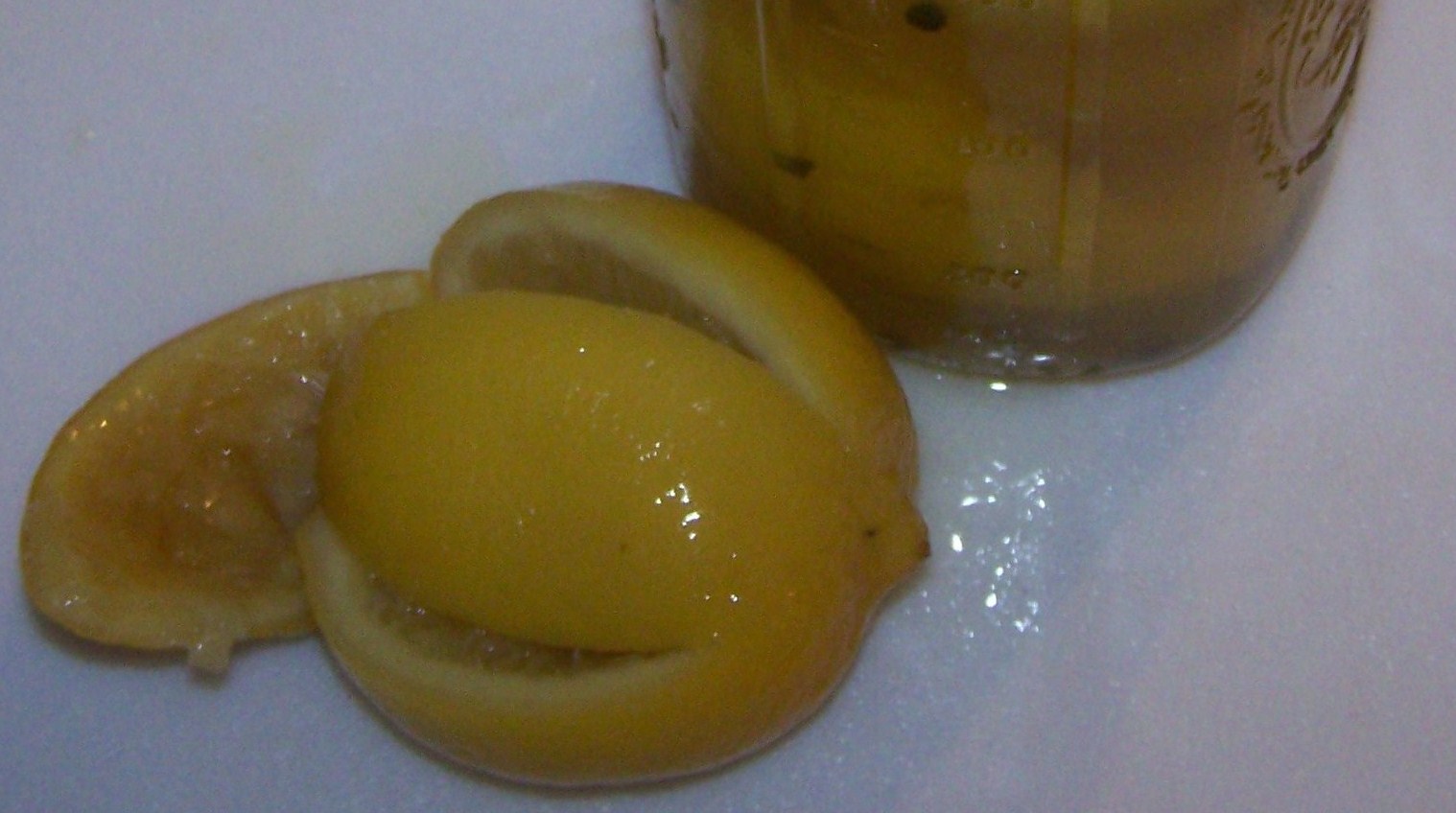
Lemons loose their sharpness when preserved in salt. The unique flavour and silken texture that develops when you use this technique is a characteristic of North Africa, especially Moroccan cooking. Yet the lemons also make a novel addition to non-Moroccan dishes. You will find that these lemons are easy to prepare and thin-skinned lemons yield the most juice.
Traditionally, only the peel of the preserved fruit is used, but I usually include the flesh as well and you can eat the whole thing. Once the jar has been opened, the fruit will keep for up to 1 year unrefrigerated (don’t worry if a lacy white film appears on top of the jar or on the lemons, as it is quite harmless – simply rinse it off); a layer of olive oil floated on the surface will help to preserve freshness. When it comes time to use one of these lemons just rinse & chop it.
Ingredients
7 Tablespoons coarse salt (you use 1 Tbsp of salt per lemon)
7 plump, juicy lemons, preferably thin-skinned
Boiling Water
Put 1 tsp. coarse salt in the bottom of a clean, dry jar. Holding a lemon over a plate to catch the juice, cut lengthwise 4 times as if about to quarter it, but do not cut quite through – leave the pieces joined. Ease out any seeds.
Pack 1 Tbsp. salt into the cuts, then close them up around the salt and put the lemon in the jar. Repeat with 5 more lemons, packing them tightly and pressing each layer down to expel any air before adding the next layer, until the jar is full.
Squeeze another lemon and pour the juice over the rest of the lemons. Sprinkle with more coarse salt and finally pour in boiling water to cover the lemons.
Close the jar tightly and keep in a warm place for 3 to 4 weeks before using.
Give me your feedback after you try them because I’m sure you’ll LOVE them.
SALTS: There is no difference between kosher salt and rough sea salt. Many cooks prefer to use kosher salt because its larger rough size crystals is simply more convenient and practical for certain kinds of food preparation such as this one.
The only differences between kosher salt and nearly every other sort of salt lie in the shape and size of its crystals, not its chemical makeup. Almost all salt has an identical chemistry. Some are smoked, or have trace elements of minerals that change their taste or color, but any differences between “kosher” and “sea” salt, provided the shapes of their crystals are the same, are purely in the labeling. In general Kosher salt and flakier, more delicate salts that melt nicely on the tongue, tend to be used as finishing salts, adding the last crunchy, salty touch to a dish. Table salt is used more for seasoning a dish while still in process.
*Recipe taken from Sensational Preserves by Hilaire Walden (250 recipes for jams, jellies, chutneys and sauces). This has been my guide book for making jams, hot pepper sauces & mustards. It’s an exceptionally useful book in both my opinion and that of the Daily Mail, UK.

 Girl Who Would be KING on Life, Style and INSPIRATION.