ART: let’s talk about it

Art is so personal, isn’t it?art1

I was recently at a fundraiser where one of the live auction items was an original painting…which I disliked immensely but I do know that art can grow on you.  I wasn’t the only one who objected, however the piece ended up going for thousands.  Someone either loved it or just wanted to make a very generous contribution.  Another painting which I liked much better didn’t fare as well.

When I asked a friend to accompany me to a Picasso Exhibit she explained that she did not like Picasso. This coming from an art major.

What you display on the walls of your home is an eye into your mind and your soul.art2

It’s okay…not everyone likes the same things. But generally I believe investment pieces that make you feel good and you never tire of looking at are the very best to buy.  

Personally I’ve collected a lot of things that bring me back to places of interest.  Having said that, my taste is changing.  I’m taking down some works that no longer have a place on my walls.  They no longer hold a special interest and maybe never did. I want to upgrade.  Recently I purchased a large original painting from Santa Fe (no coyote in sight).  It holds meaning because I’ve been there on several occasions and identify with the setting.  I had to have it!  I also replaced a limited edition print with a beautiful *monotype.

So I’m no art expert but I have a few friends who are collectors and maybe through their influence I’m slowly making some changes.  Some things will stay the same though because they hold significant meaning.  Even if they’re important to only me; that’s enough!

But then I came across this article about how to buy art in a gallery and a guide to getting it right.  It’s worth a look for those who are interested.  Because there is some kind of a system to the whole thing. My advice: Always buy original when you can.

BY ANDY BATTAGLIA for mansionglobal.com

There it is, gleaming and white: a gallery filled with art looking for a new home. But sometimes the setting can be so mysterious, so alien and arcane, that knowing how to strike a deal can be elusive — or at least daunting to those who don’t know the art world’s often cryptic customs and codes.

The assumption is … galleries are these elitist places that are going to ignore you if you try to talk to them,” said Photios Giovanis, owner and director of Callicoon Fine Arts, a gallery in New York’s Lower East Side. “But that’s not true — the assumption is wrong. There may be galleries that will treat you rudely, but there are just as many, if not more, that are going to be kind and want to speak to you about what they’re showing. That’s why galleries are there — to show work and share it with an audience.”

Getting started

The first step is easy: “Ask questions,” Mr. Giovanis said, about the art on show and the artist who made it — but also other pieces that might not be displayed, like works on paper or other holdouts that gallerists often keep in storage. “That would create a level of engagement that is deeper than just transactional. Later on, that collector would be more prominent in the mind of the dealer.”

Another tip at the start is to learn the language, enabling one to ask the right questions in search of answers that might inevitably be beyond a beginner’s bounds.

If you take time to educate yourself, you’ll be ahead of the game,” Mr. Giovanis said. “People always say ‘buy with your eye’ and other clichés like that. That is fine, but it’s more a process of learning and, as you learn and look, what you like can change and develop. Don’t be afraid to make a mistake.”

Alexander Gray, operator of the Alexander Gray Associates gallery in New York’s Chelsea neighborhood, echoed similar points, with more tips to consider. He urged self-education by going to museums and talking to curators who can point to galleries in line with their discerning tastes.

When not to buy art

Be wary when too far from home, though: “One of the mistakes that people make is buying art while they’re on vacation,” Mr. Gray said. “That’s a really egregious mistake because, when one is at the beach, one is thinking about how great it is to be outdoors with seagulls. It can be something people will love and want to look at, but is it something that will retain value or enhance legacy? Most likely not. No dolphin art. No coyote art in Santa Fe.”

Consider an adviser

Displaying knowledge of the distinctions between shopping and collecting shows a gallerist a lot, Mr. Gray said, as does the act of working with an adviser to council on acquisitions or even just looking around.
“We love working with advisers, especially advisers working with new clients, because it means the new collector is taking the journey seriously enough to bring in expertise. It also helps us understand what their motivations might be,” he said.

Some advisers are primarily attuned to market activity while others tend toward the philanthropic possibilities of purchases that help particular artists and galleries thrive. In any case, Mr. Gray said, “We prefer advisors who are retainer-based for clients who are being given completely unbiased advice. A lot of advisors work on commission, but the transparency of the arrangement is important.”

Abigail Ross Goodman, principal and founder of the advisory firm Goodman Taft, said advising—in her case under a retainer structure—can be akin to a kind of art itself. “Our job is to educate, demystify and advocate on behalf of our clients and help them make choices off the bat,” she said.

Do your homework … and remember there’s no crystal ball

Regardless, from Ms. Ross Goodman, a simple bit of advice: take notes, in a Moleskine notebook or on a phone. “Train your eye, build up a visual vocabulary, keep track of your tastes and how what you respond to changes,” she said. “Sometimes the things that can be most daunting at first become objects that are the most generous over a lifetime.”

And, remember, all the advice and advisement in the world only goes so far.

“There’s no way to do this without getting your hands dirty,” Ms. Ross Goodman said. “One of the biggest mistakes a client can make is to be so driven by external information that they buy something that means nothing to them. There’s no crystal ball.”

At a certain point in the sometimes beguiling but often immensely gratifying world of art, she said, “Everybody has to take a leap of faith.”

Don’t be afraid to take a leap!

*The difference between monotypes and monoprints frequently baffles art buyers and sellers alike! Therefore, a description of that difference is useful at the outset.

A monoprint is one of a seriestherefore, not wholly unique. A monoprint begins with an etched plate, a serigraph, lithograph or collograph. This underlying image remains the same and is common to each print in a given series. Other means of adding pigment or design are then employed to make each print in the series slightly different. The series of monoprints has a limited number of prints and each is numbered.

A monotype is one of a kind, a unique piece of artwork. It is the simplest form of printmaking, requiring only pigments, a surface on which to apply them, paper and some form of press. 

ART: BOWIE / COLLECTOR

David Bowie’s Art Collection is up for grabs

A gallery assistant poses with
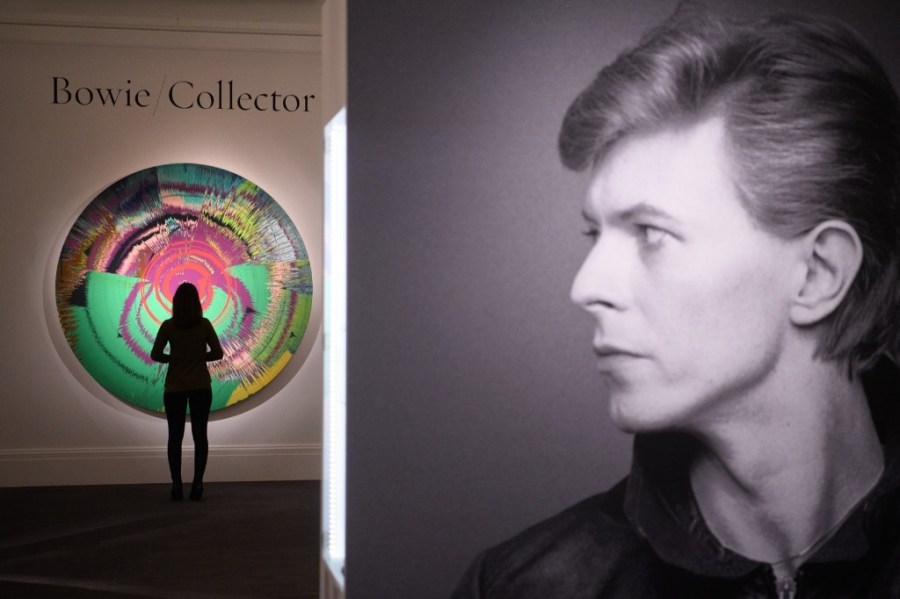
A gallery assistant poses with “Beautiful, Hallo, Space-Boy Painting” by Damien Hurst during the press preview of the “Bowie/Collector” auction at Sotheby’s. Leon Neal/Getty Images

Art has always been for me a stable nourishment,” said David Bowie.

On the occasion of Sotheby’s historic three-part sale of the legendary artist’s personal collection, his close friend and fellow musician Bono offers an appreciation. Plus, a sampling of Bowie’s own insightful words on the artists he admired and a selection of the works with which he lived. 

BONO, SEPTEMBER 2016 said: David understood the power of the image better than any musician who ever lived. He spent his life creating images, some of which he tried to occupy or personify, some of which he hung from his music and some his music hung from. He knew that in his time, more than any other era, ideas often arrived as pictures and that the world was being shaped by photography, cinematography and, even still, painting.

A painting by John Virtue called 'Landscape No. 87', part of the Bowie Collection on display at Sotheby's. AP Photo/Kirsty Wigglesworth
A painting by John Virtue called ‘Landscape No. 87’, part of the Bowie Collection on display at Sotheby’s. AP Photo/Kirsty Wigglesworth

BOWIE ON ART AND ARTISTS:

DAVID BOWIE was not just a collector of art, but also an informed authority on the subject. He was close to countless living artists and maintained conversations with them throughout his life. In 1994 he was invited to join the editorial board of Modern Painters magazine, to which he contributed in-depth interviews with the likes of Tracey Emin, Balthus and Damien Hirst, a review of the first-ever Johannesburg Biennale in 1995 and a response to the life and work of Jean-Michel Basquiat. Below is a selection of Bowie’s astute and deeply personal observations, first published in Modern Painters and The New York Times on the art and artists that fascinated and inspired him.

ON BALTHUS

Bowie suggested to the editors of Modern Painters that he might be able to secure an interview with the reclusive Balthus. Both men were living in Switzerland at the time and had met at a gallery opening for Balthus’s wife, Setsuko. One afternoon in the summer of 1994, Bowie drove to a mountain chalet in Rossinière to meet the painter, whose works of “timeless, serene, but disturbed sculptural claustrophobia” he greatly admired. Their conversation as well as Bowie’s introductory text are extraordinary. Sitting at lunch with the artist and Setsuko, he observed: “Balthus puts down his knife and fork and, staring at some far off point, says quietly:  ‘I awoke very early this morning. I went to my studio and started work. It would not come…. and I gazed at my painting then the small things around me and I felt such a tremendous…sense of awe.’” His voice dies away, leaving “a misty trail of remembrances, glories and maybe disappointments,” Bowie continued. “Locked in silence, we three sit, Balthus, Setsuko and I. The tragedy and chaos of the twentieth century rushes through the memory of its last Legendary Painter.”

ON MARCEL DUCHAMP

“Sometimes I wish that I could put myself in Duchamp’s place to feel what he felt when he put those things on show and said: ‘I wonder if they’ll go for this. I wonder what’s going to happen tomorrow morning,’ ’’ he said to Kimmelman in The New York Times. “I would understand that attitude perfectly, because the most interesting thing for an artist is to pick through the debris of a culture.”

ON DAMIEN HIRST

A painting produced collaboratively by Damien Hirst and David Bowie called 'Beautiful, halo, space-boy painting' 1995, part of the Bowie Collection on display at Sotheby's auction rooms. The painting is estimated at 250,000-350,000 pounds (318,000- 445,000 US dollars). AP Photo/Kirsty Wigglesworth
A painting produced collaboratively by Damien Hirst and David Bowie called ‘Beautiful, halo, space-boy painting’ 1995, part of the Bowie Collection on display at Sotheby’s auction rooms. The painting is estimated at 250,000-350,000 pounds (318,000- 445,000 US dollars). AP Photo/Kirsty Wigglesworth

Hirst was one of only a handful of high-profile contemporary artists for  whom Bowie publicly expressed his admiration, interviewing him for Modern Painters in 1995. “He’s different. I think his work is extremely emotional, subjective, very tied up with his own personal fears –  his fear of death is very strong – and I find his pieces moving and not at all flippant,” Bowie told Michael Kimmelman in an extensive 1998 interview in The New York Times.

ON JEAN-MICHEL BASQUIAT

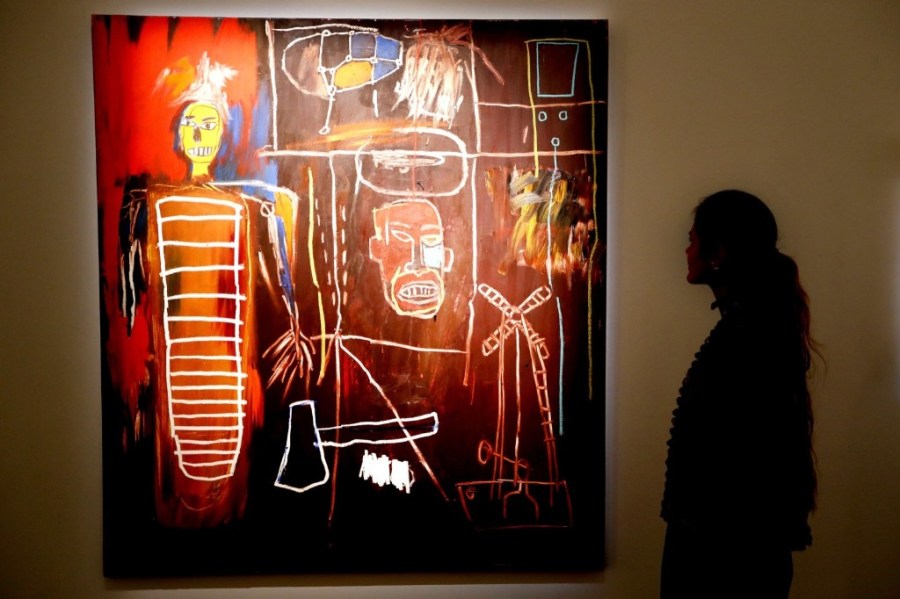
A painting by Jean-Michel Basquiat called
A painting by Jean-Michel Basquiat called “Air Power’ 1984, estimated at 2.5-3.5 million pounds (3.18- 4.45 million US dollars), part of the Bowie Collection. AP Photo/Kirsty Wigglesworth

“I feel the very moment of his brush or crayon touching the canvas,” wrote Bowie of Basquiat in a 1996 issue of Modern Painters. “There is a burning immediacy to his ever-evaporating decisions that fires the imagination ten or fifteen years on, as freshly molten as the day they were poured onto the canvas.” Bowie acquired Basquiat’s Air Power in 1997, the year after he played Andy Warhol to Jeffrey Wright’s Basquiat in Julian Schnabel’s 1996 biopic of the artist.

ON FRANK AUERBACH

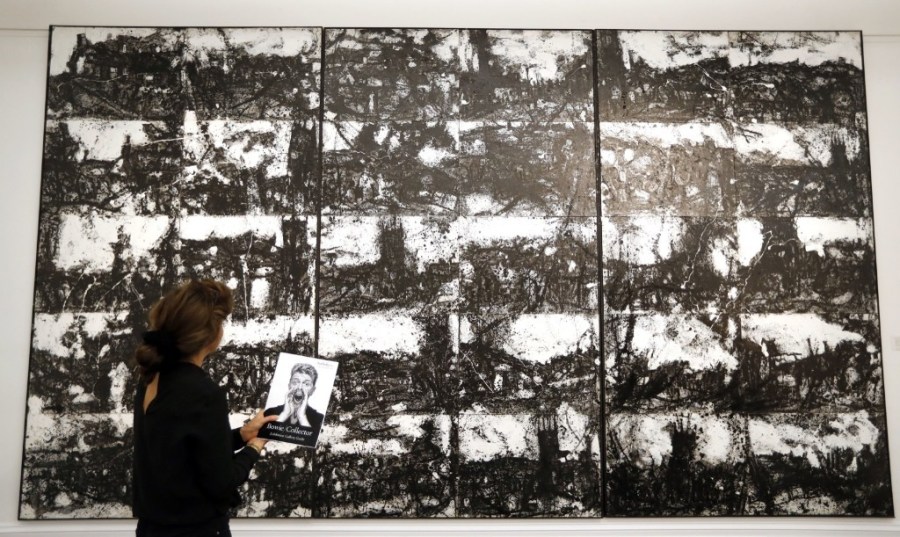
“I find his kind of bas-relief way of painting extraordinary,” said Bowie of Auerbach in the 1998 New York Times interview with Kimmelman. “Sometimes I’m not really sure if I’m dealing with sculpture or painting.” Auerbach’s work provoked strong reactions: “It will give spiritual weight to my angst. Some mornings I’ll look at it and go, ‘Oh, God, yeah! I know!’ But that same painting, on a different day, can produce in me an incredible feeling of the triumph of trying to express myself as an artist. I can look at it and say: ‘My God, yeah! I want to sound like that looks.’”

From 1–10 November, the collection will be exhibited at Sotheby’s New Bond Street galleries in London, giving fans, collectors, art lovers and experts a once-in-a-lifetime opportunity to immerse themselves in the extraordinary range of objects that informed Bowie’s private world. British artists, including high profile painters and sculptors such as Frank Auerbach and Henry Moore, make up the heart of the collection, representing over 200 pieces in total.

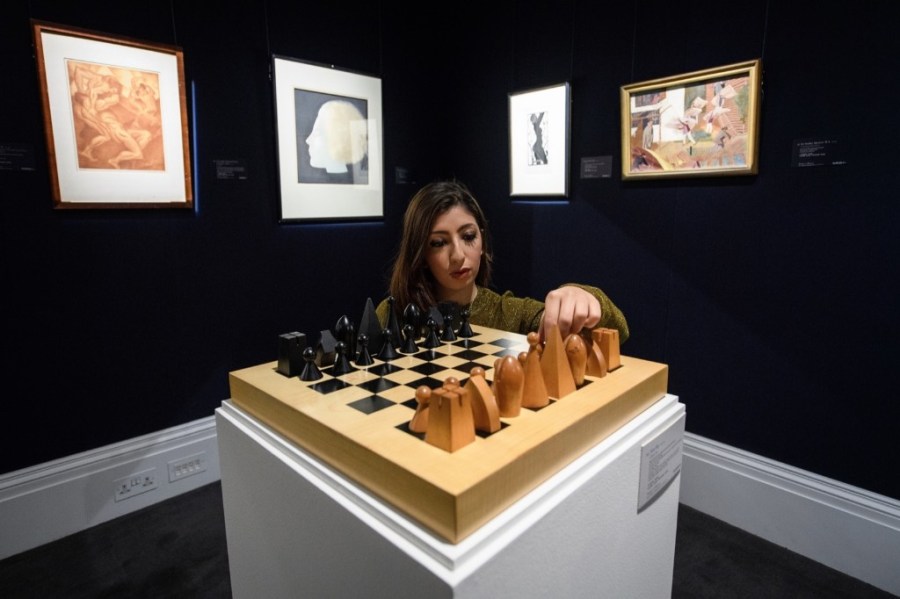
A gallery assistant poses with
A gallery assistant poses with “Chess Set” by Man Ray (est. £20,000-30,000) during the press preview of the “Bowie/Collector” auction at Sotheby’s. Leon Neal/Getty Images
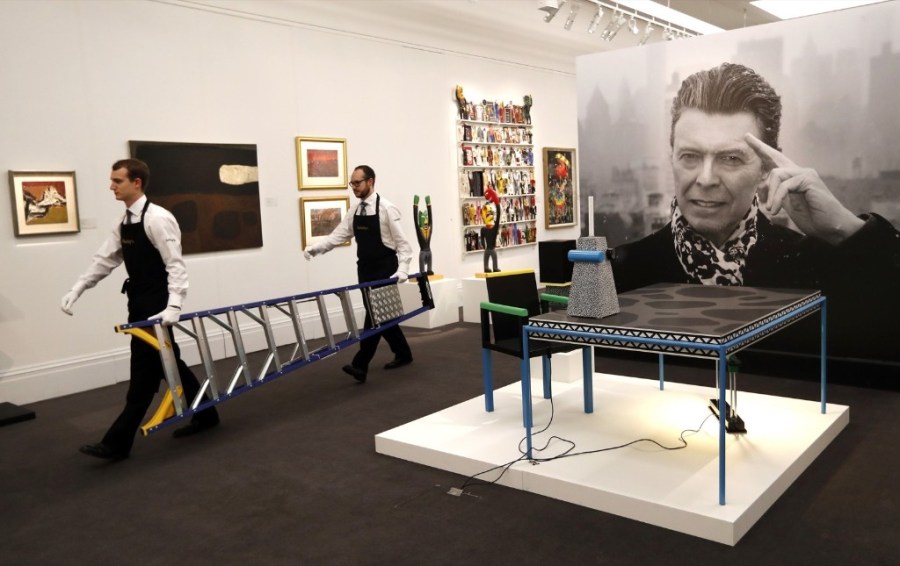
Technicians prepare artworks from the Bowie Collection to go on display at Sotheby's. AP Photo/Kirsty Wigglesworth
Technicians prepare artworks from the Bowie Collection to go on display at Sotheby’s. AP Photo/Kirsty Wigglesworth
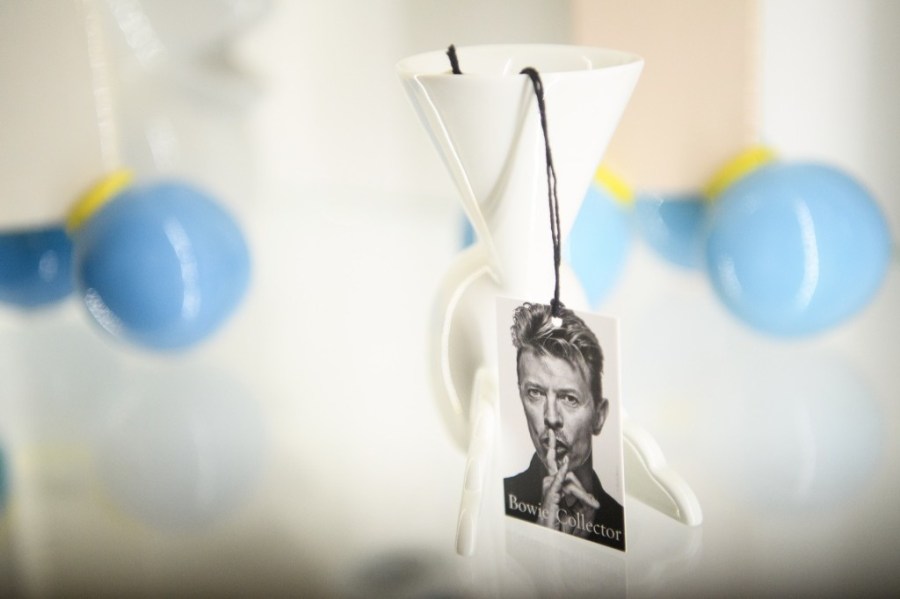
A photo of David Bowie on the auction labels of items during the press preview of the
A photo of David Bowie on the auction labels of items during the press preview of the “Bowie/Collector” auction at Sotheby’s. Leon Neal/Getty Images

What a great memento for those who appreciate Art & Bowie.  

I don’t know where I’m going from here but I promise it wont’ be boring – David Bowie

Source: sothebys.com

Design/Film: The Architect

“As an Architect  I have the job of transforming hopes and dreams into wood, glass, steel and concrete.  But if the dreams aren’t there, there is very little I can do.”

– a line from the  The Architect

Clip from the Film
Still from the Film

Last night I attended the VIFF premiere of a new movie called “The Architect”.  I wanted to see a light comedy after the heaviness of the last several movies.  Something with a design element to it.  The Architect was reminiscent of “The Cable Guy” starring Jim Carrey but only in the sense that the architect (played by James Frain) was annoyingly cloying in his attempt to help out, thus getting on the nerves of his employers as he tries to infiltrate their lives.

The movie was written and directed by Jonathan Parker who was in attendance to answer questions from the audience as was one of the main characters, Eric McCormack (Will & Grace, Broadway, etc. Parker Posey plays his wife in this bizarre tale of obsession and deceit when a couple (played by McCormack & Posey) hire a supposedly top notch visionary architect to build their dream house right after buying a tear-down.  But what they’re not prepared for is the architect’s brash ego informing them to follow his own designs and desires.  The wife, a creative type of her own,  gets swept up by the architect as creative designer – a stark contrast to her husband’s very practical side.  A husband by the way,  quite skeptical of the intentions of the architect in question.

You begin to realize who the dream house really belongs to –  The Architect.architect1

What’s funny is that Eric McCormack (originally from Vancouver) is building a home here and his own architect was at the screening.  He pointed him out in the audience at the Vancouver Playhouse.  He said if that wasn’t enough he also hired an interior designer.

Some lines from the film:

I don’t know why people hire architects and then tell them what to do

I believe it is just as important to design a chicken coup as it is to design a cathedral

Q & A
Q & A with Director and Actor.  Photo: d. king

The Trailer:

https://www.youtube.com/watch?v=rn9pk_186P4

For more information on the Vancouver International Film Festival (VIFF) please visit: 

https://www.viff.org

ART/Culture: Picasso – the Artist and his Muses

Are we to paint what’s on the face, what’s inside the face, or what’s behind it? – Pablo Picasso

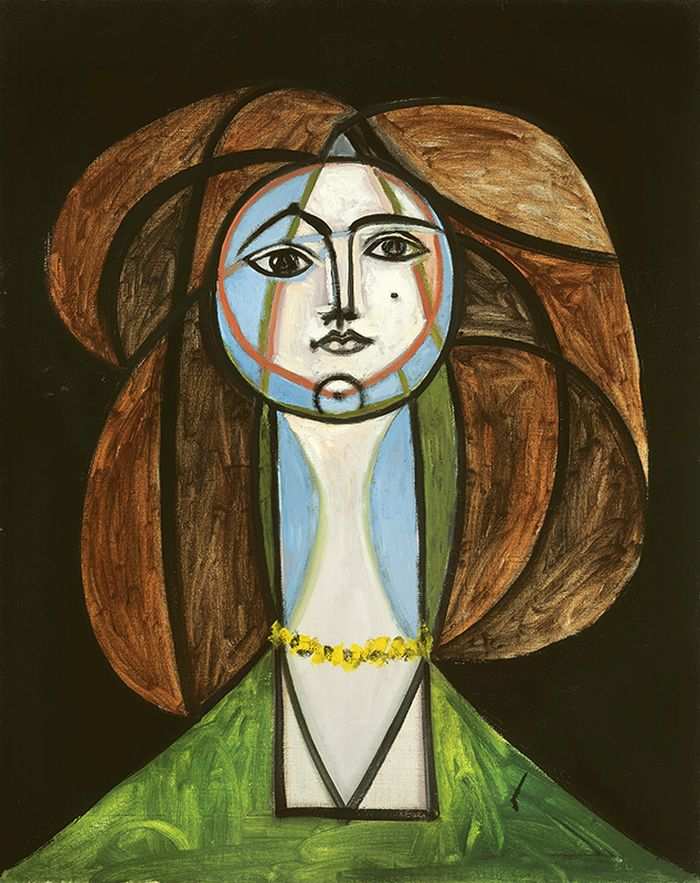
Femme au collier jaune, oil on canvas, 1946 by Pablo Picasso

They say behind every great man there is a great woman.  And behind every great male artist there is a great muse (or muses).  Are there any male muses?  Probably not because commonly a muse is a woman who is the source of inspiration for a creative artist (who is male).  In mythology, the Muses were nine goddesses who symbolized the arts and sciences.  Therefore I do not know of any male muses to date.  So unfair.  I will research this a little more and get back to you because there should really be some don’t you think?

In modern days you might say that Brooke Shields and Kate Moss were muses to Calvin Klein,  Amanda Harlech to Karl Lagerfeld and Carine Roitfeld to both Tom Ford & Karl Lagerfeld (oh that Karl, he has several and he’s not even straight so those women must be awesome).

In theory a good muse should not only be physically attractive (at least to the artist) and alluring but also interesting, attentive, amuseing, offer emotional support and be sexual.  Offer something special to inspire the artist to want to devote time and effort to paint, write, sing, whatever their artistic endeavour.  Otherwise why bother right?

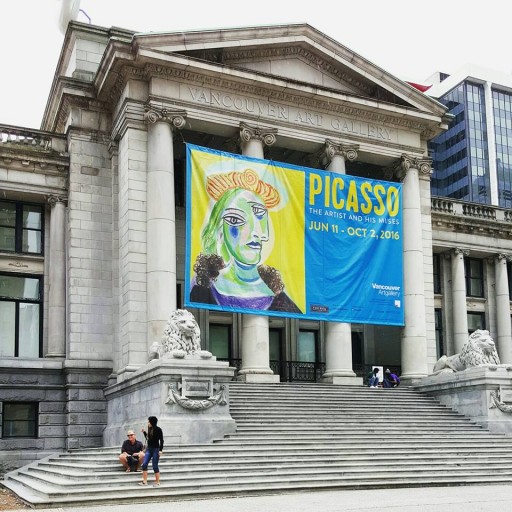
Picasso had many muses and six of them are on display at the Vancouver Art Gallery.

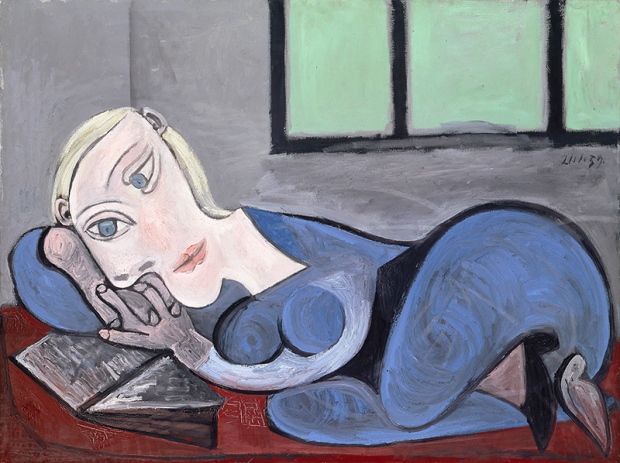
Femme couchée lisant, 1939, oil on canvas. This subject in this piece is Picasso's last wife Jacqueline Roque.
Femme couchée lisant, 1939, oil on canvas. This subject in this piece is Picasso’s last wife Jacqueline Roque.

It appears that Picasso was not good relationship material.  Interesting, Yes…Talented, yes…just non-committal and not very nice to his women.  Picasso had affairs with dozens, perhaps hundreds of women, and was true to none of them – except possibly the last.  At least he was upfront.

“Women are machines for suffering,” Picasso told his mistress Françoise Gilot in 1943. Indeed, as they embarked on their nine-year affair, the 61-year-old artist warned the 21-year-old student: “For me there are only two kinds of women, goddesses and doormats”.

And there were some unfortunate incidents…

I read that out of the seven most important women in Picasso’s life, two killed themselves and two went mad. Another died of natural causes only four years into their relationship.

At the same time he was obsessed and dependent on these women.  In any event and to our advantage they definitely influenced the development of his art. Which led to this exhibit Picasso: The Artist and his Muses.

Now until October 2nd at the Vancouver Art Gallery:

Vancouver Art Gallery

Below taken from Vancouver Art Gallery Website:

Known for his enormous contribution to the canon of great art in the 20th century, Pablo Ruiz y Picasso (1881—1973) is one of the masters of Modernism. Examining the significance of the six women who were inspirational to his artistic development, Picasso: The Artist and His Muses is the most significant exhibition of Picasso’s work ever presented in Vancouver. Beginning in early 20th-century Paris, the exhibition takes the visitor on a journey through the lives and personalities of Fernande Olivier, Olga Khokhlova, Marie-Thérèse Walter, Dora Maar, Françoise Gilot and Jacqueline Roque, who were all principal figures in Picasso’s personal life and strongly influenced the development of his career. Picasso’s innovations in painting, drawing, print and sculpture are conveyed through recurring motifs such as the seated woman and reclining nude. The exhibition presents major works that dramatically altered the course of European art history.

http://www.vanartgallery.bc.ca/

It is a must-see

“I paint objects as I think them, not as I see them”

Art is not the application of a canon of beauty but what the instinct and the brain can conceive beyond any canon. When we love a woman we don’t start measuring her limbs” – Picasso


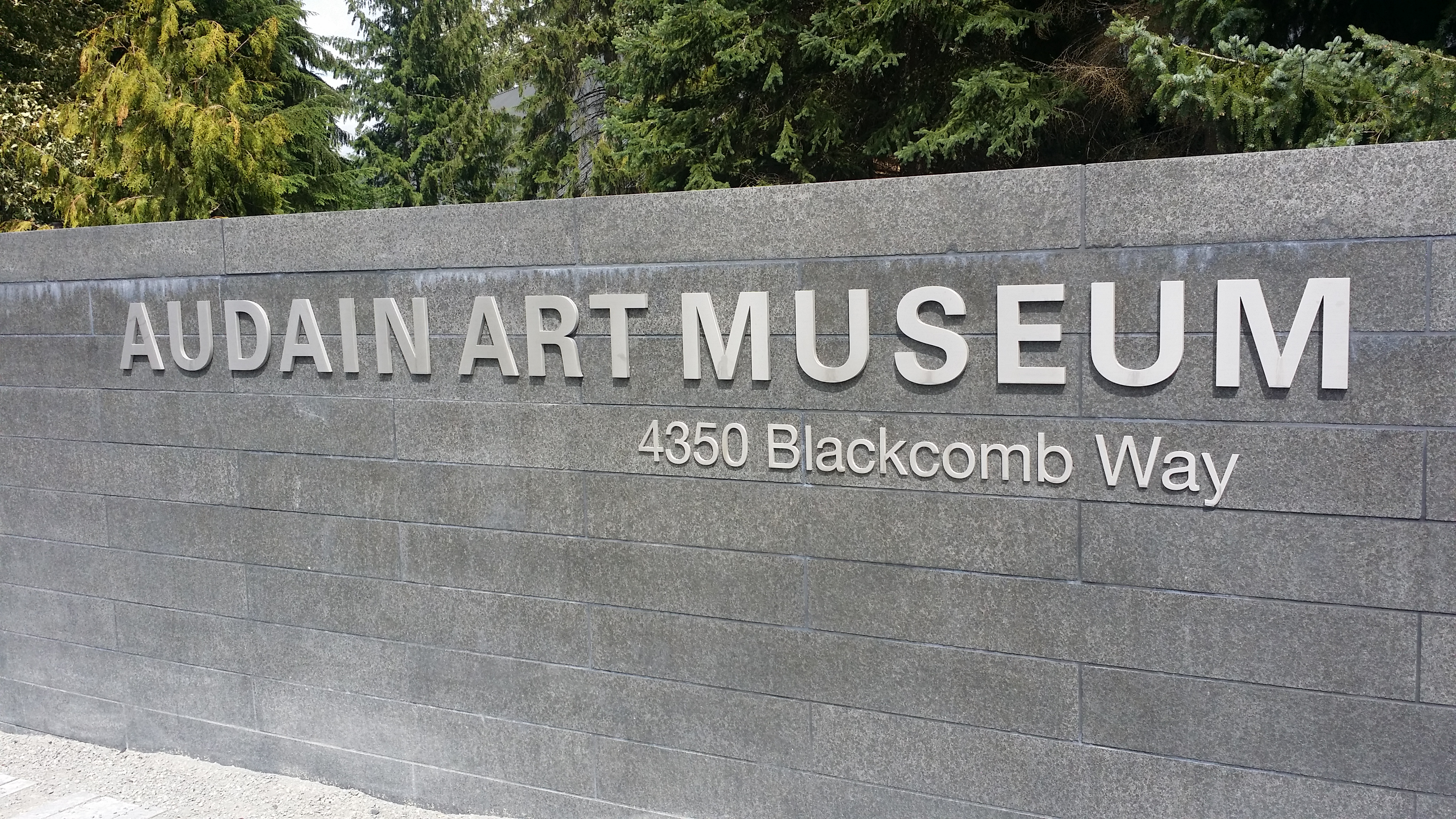
Audain Art Museum

Diversityaudain6

What do you get when you mix historic art in an architecturally stunning building amongst a breathtakingly natural setting?audain1220160701_135130

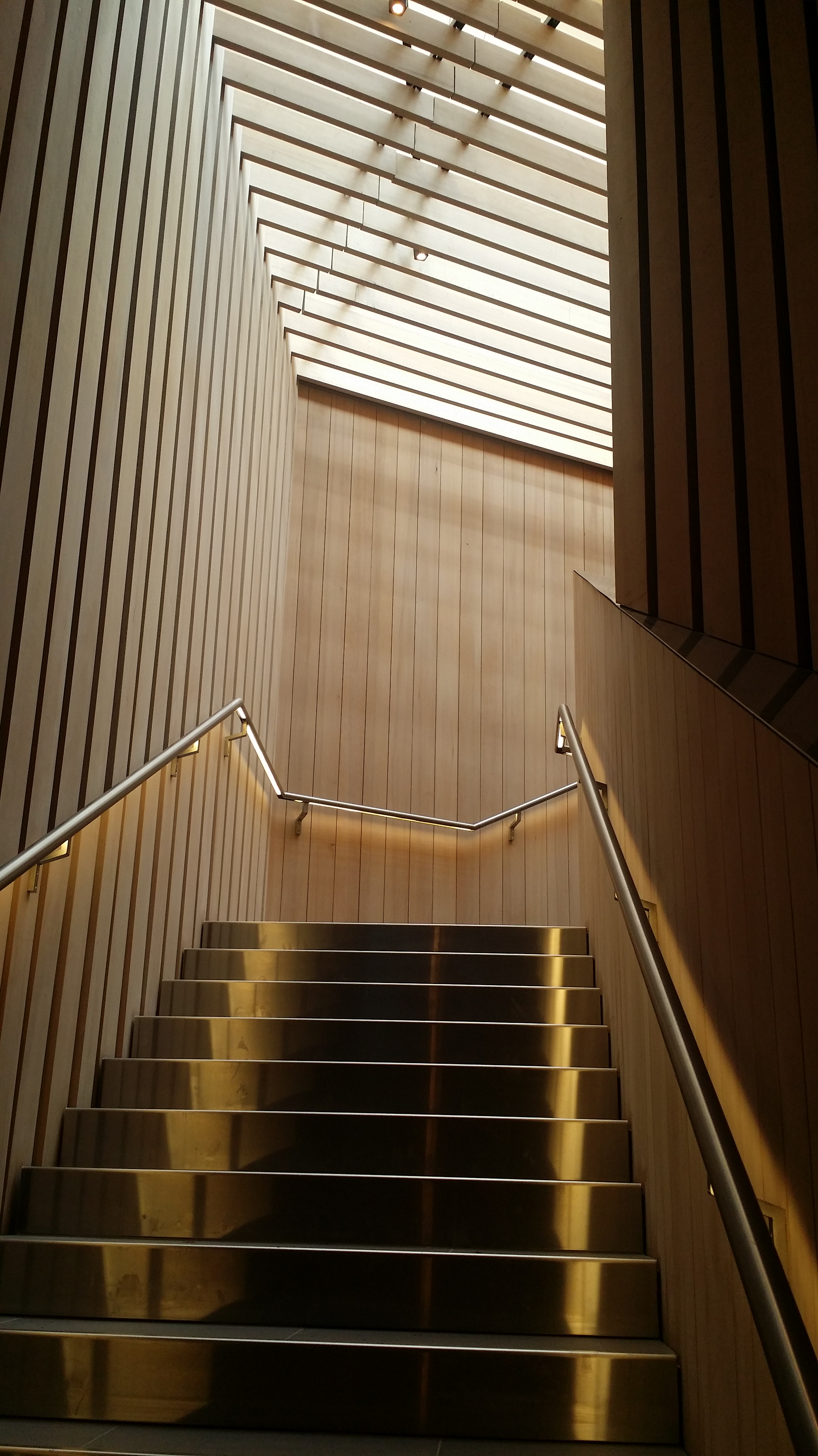
Steps to Second Floor

audain7

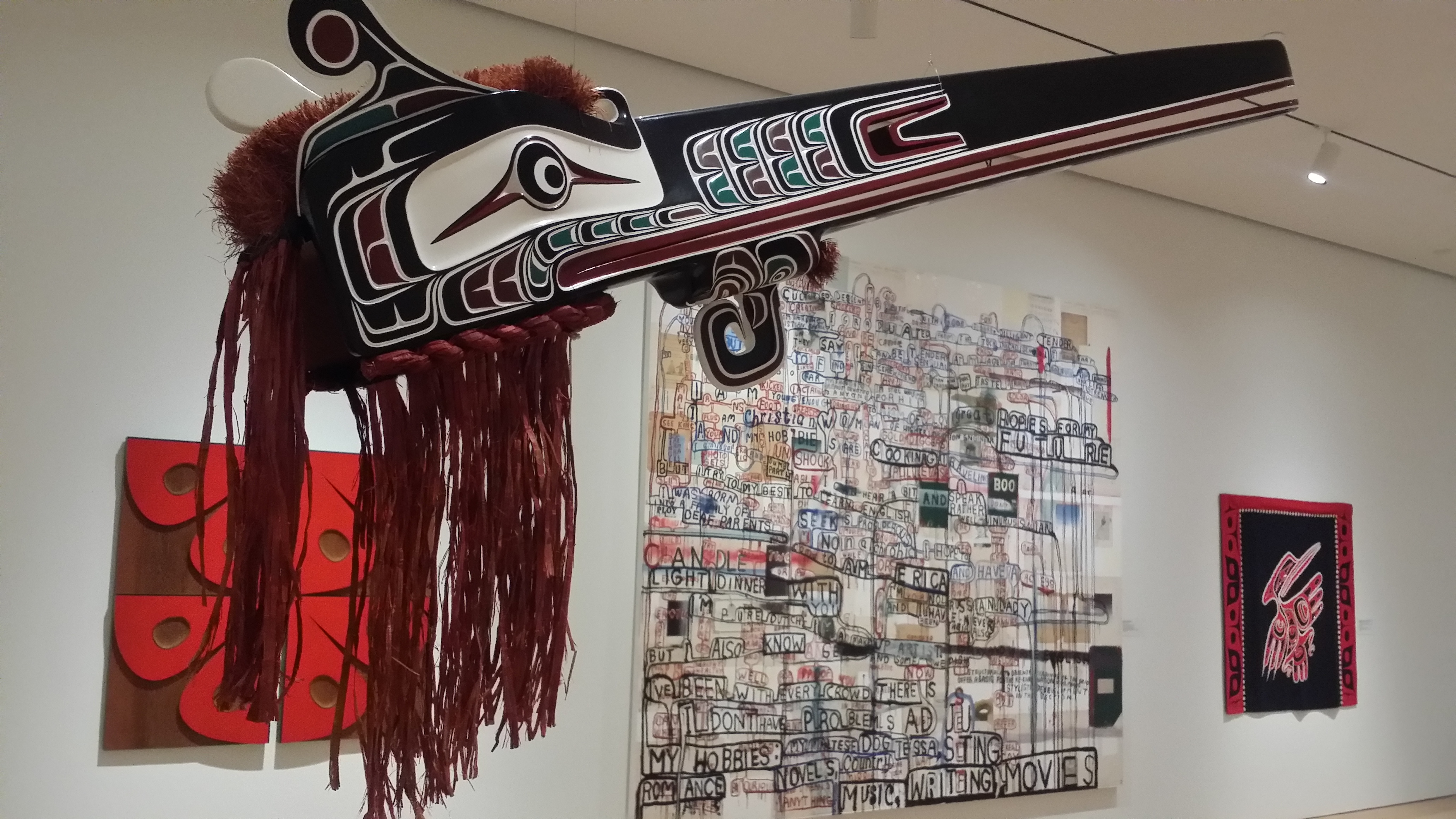
This museum is a must for anyone remotely interested in art while visiting Whistler. 

James Hart, the Dance Screen
James Hart (1952 – ) The Dance Screen.  Red Cedar Panel with Abalone,  Mica, Acrylic, Wire and Yew Wood.  Audain Art Museum Collection. Gift of Michael Audain and Yoshiko Karasawa.

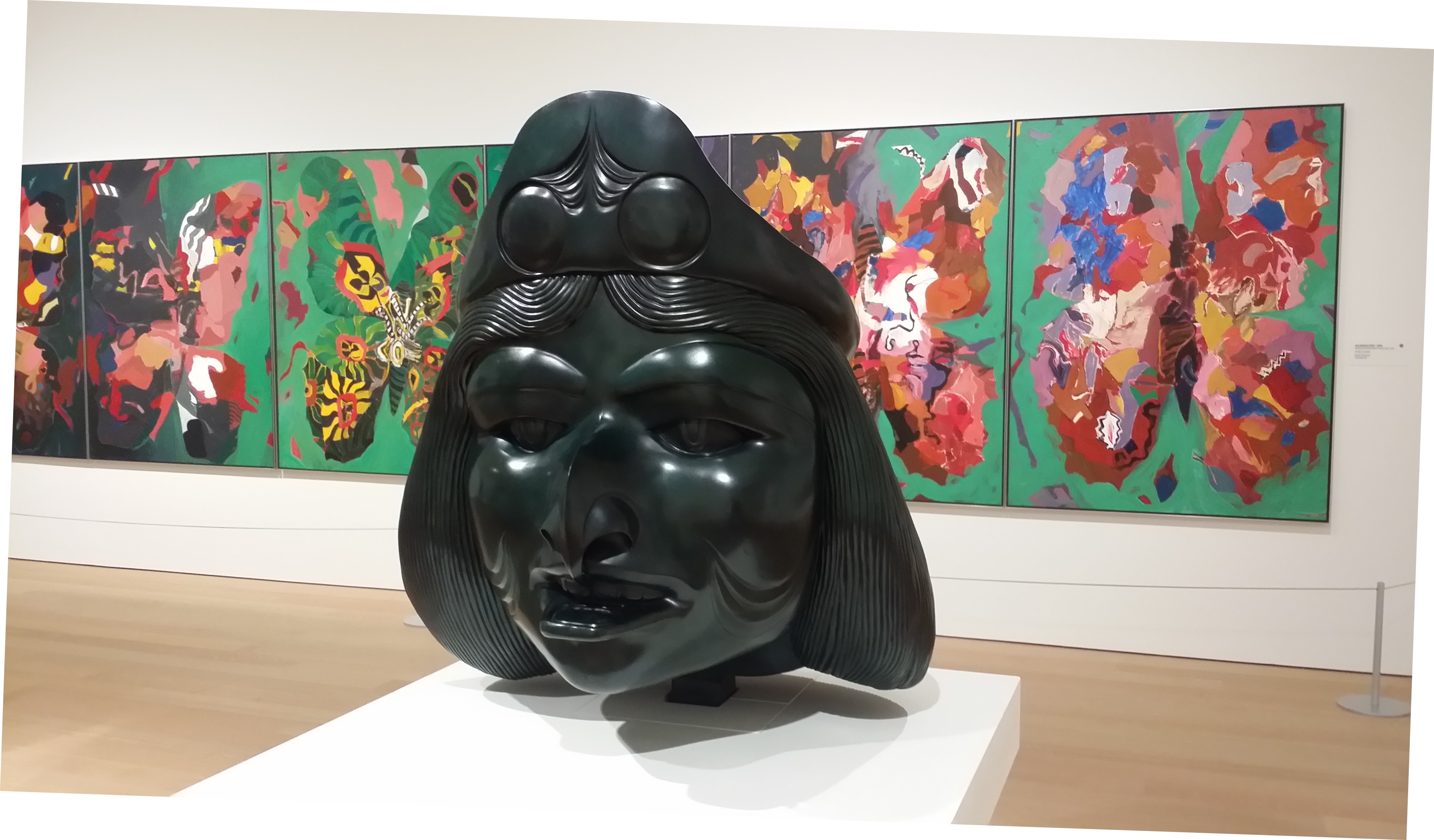
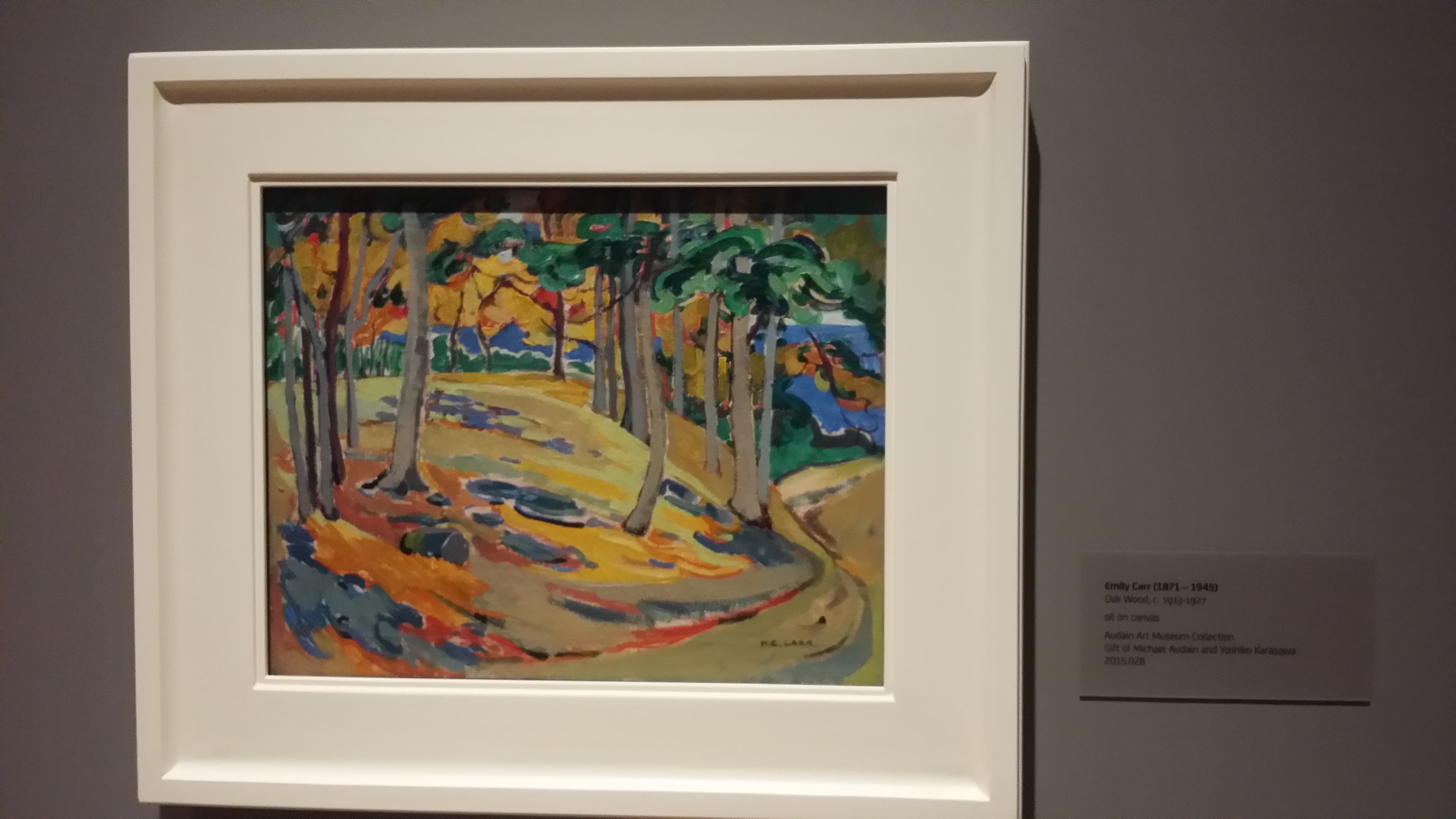
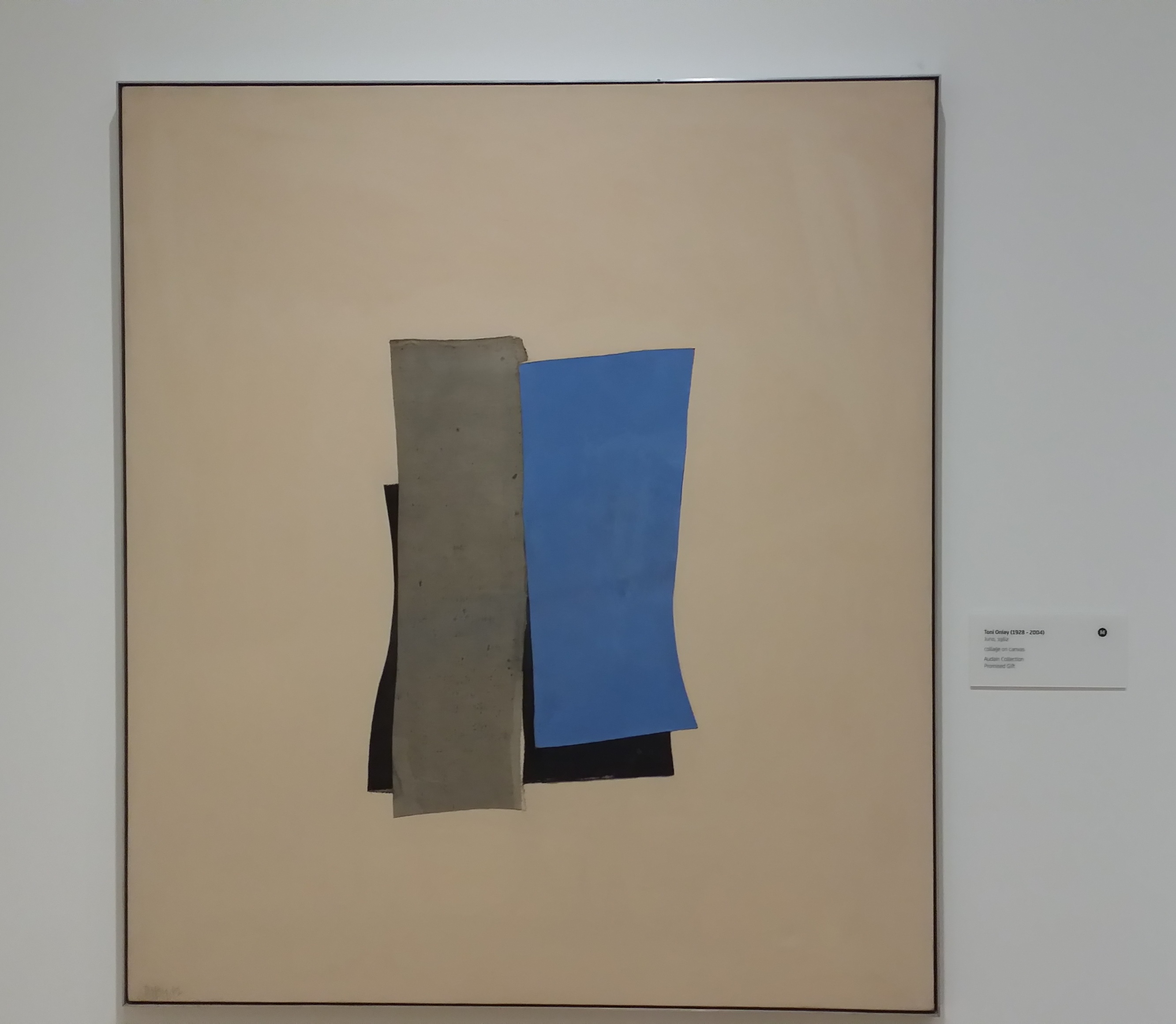
I spent half a day appropriately On Canada Day experiencing the Art of British Columbia, from traditional works of the province’s First Peoples through to its contemporary masters in one of Canada’s most treasured wilderness settings.  It’s such an impressive gallery.  I absolutely loved it and highly recommend checking out British Columbia’s newest and perhaps nicest museum.

Bill Reid, Sculpture. JAck
Bill Reid (1920 – 1998), Bronze Sculpture.
Behind Sculpture: Jack Shadbolt (1909-1998) Butterfly Transformation, Acrylic on Canvas
Emily Carr
Emily Carr

Permanent Collection

Toni Onley
Toni Onley (1928 – 2004)

The Audain Art Museum’s Permanent Collection of nearly 200 works of art is a visual journey through the history of art from coastal British Columbia. Spanning from the 18th century to present day, the Collection contains one of the world’s finest collections of Northwest Coast First Nations masks; a large collection of works by Emily Carr, encompassing all periods of her artistic career; as well as art by important post-war modernists such as E.J. Hughes, Gordon Smith and Jack Shadbolt. In addition to these historical works, the Collection showcases art by internationally renowned, contemporary British Columbia artists including Jeff Wall, Dana Claxton, Marianne Nicolson and Stan Douglas, among others.

Gordon Smith
Gordon Smith (1919 – ) Winterscape, 1991.  Acrylic on Canvas

?

Photos: d. king

Permanent Collection (about): taken from Website

Have you been?  

Feel-good Friday: In Good Company

If we couldn’t laugh we would all go insane.” – Robert Frost (way before Jimmy Buffett sang it).

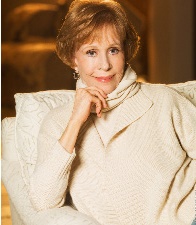
The best thing is to laugh with friends. I was in such good company on Saturday listening to Carol Burnett reminisce about her successful career in show business, specifically hilarious stories revolving around her weekly TV comedy “the Carol Burnett Show.” 

carolburnettThe same show I used to watch with my parents. The one which set the bar for other comedians like Tina Fey and Amy Poehler but maybe not Amy Schumer .  And laugh we did.

Hopefully most of you remember it, or at least know who I’m referring to.  Carol Burnett is not only familiar but she’s a classic and a legend and a really warm person, in person.  She makes you feel like you’re a friend, which you are, even if you aren’t if that makes any sense. She reminds you of family.

On a style note, it was interesting to learn that Bob Mackie designed all the costumes for every single episode for eleven straight running years.  He’s the same designer who was responsible for the stunning gowns that Cher used to wear on her show.  Blah, blah, blah…yeah, lots of stories. Lots of famous names, sadly many no longer around. And lots of questions answered in a witty & wonderful manner.

And then just before you know it two hours later came the time Carol had to say good night.  Awwww…all good things come to an end.   I could have listened to her all night.

So thought I’d share a few of my favourite clips from the series.  One is a very short spoof from the movie classic “Gone With the Wind” (the one where Carol takes the curtain down literally to make a dress to greet Rhett Butler played by Harvey Korman) and the other is a full episode (I couldn’t find a shorten version) of a spoof from the old beach party movie “Beach Blanket Bingo” starring Annette Funicello.  But this one has Carol playing Annette and Steve Martin as Frankie Avalon – too too funny.  You can always skim through it.  The scene with Carol & Steve on a surfboard……………had me in stitches!

Let’s just say…we all can use a good laugh!

On that note, wishing you a wacky wonderful weekend!

Carol Burnett: Went with the Wind

https://www.youtube.com/watch?v=eTKhw-v5h2I

The Making of Beach Blanket Boo Boo

https://www.youtube.com/watch?v=yHEFepmIpsI

She’s 83 now. In Such Good Company is the name of Carol’s new memoir celebrating eleven years (and more) of laughter.  Available anywhere books are sold.

A good comedian is a treasure.  The challenge to make us laugh, a pleasure – d. king


Coffee ART: a delightful disappearing ART

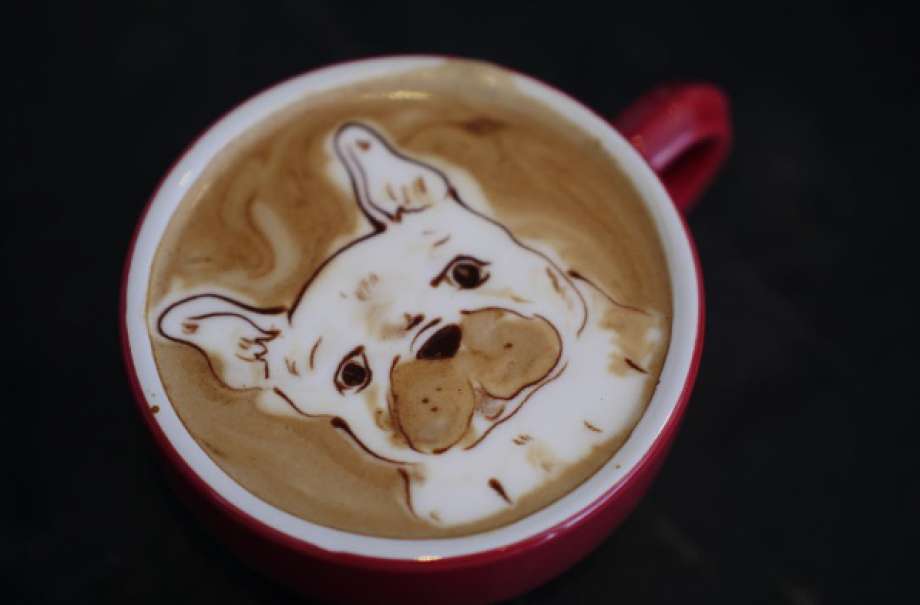
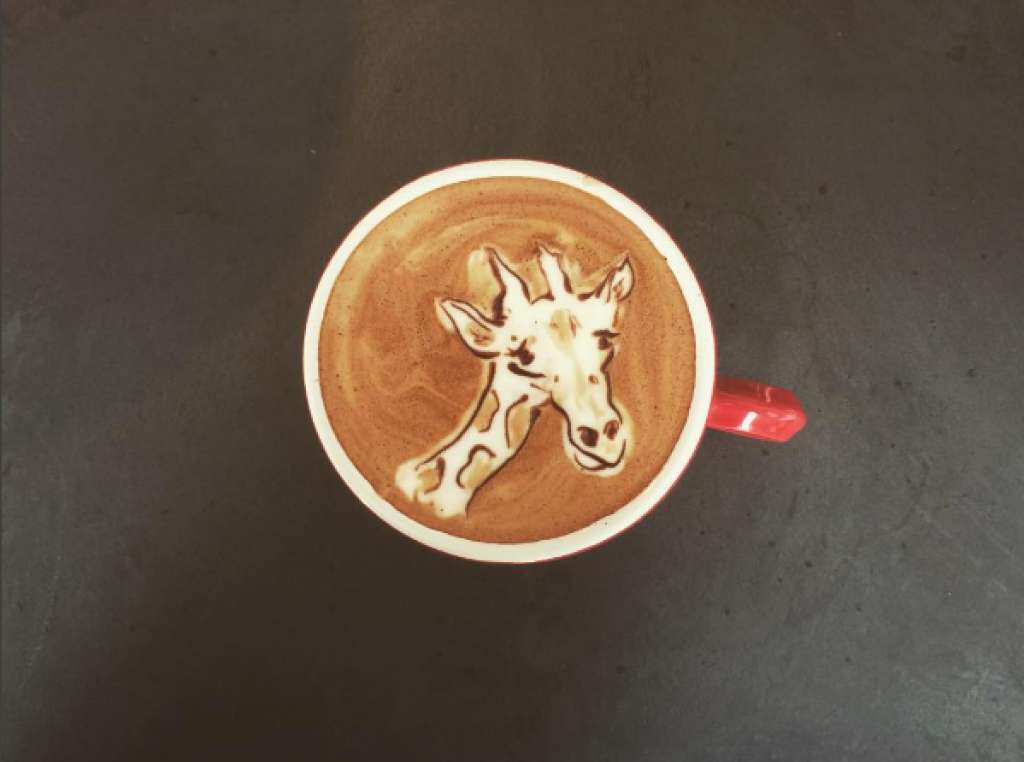
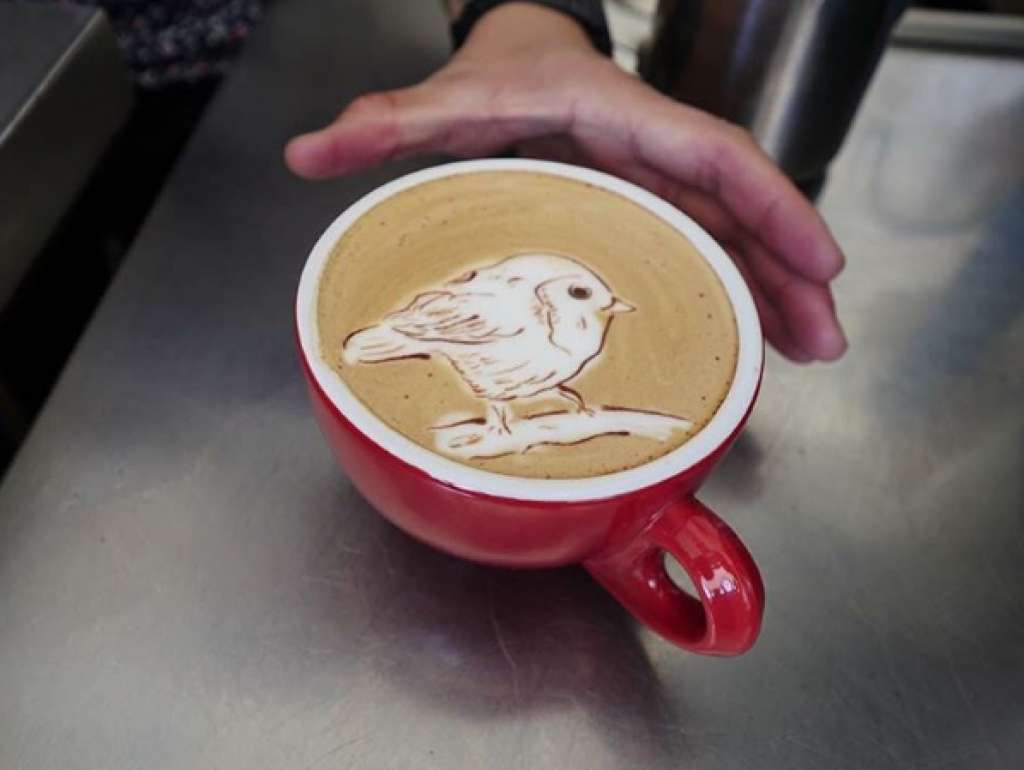
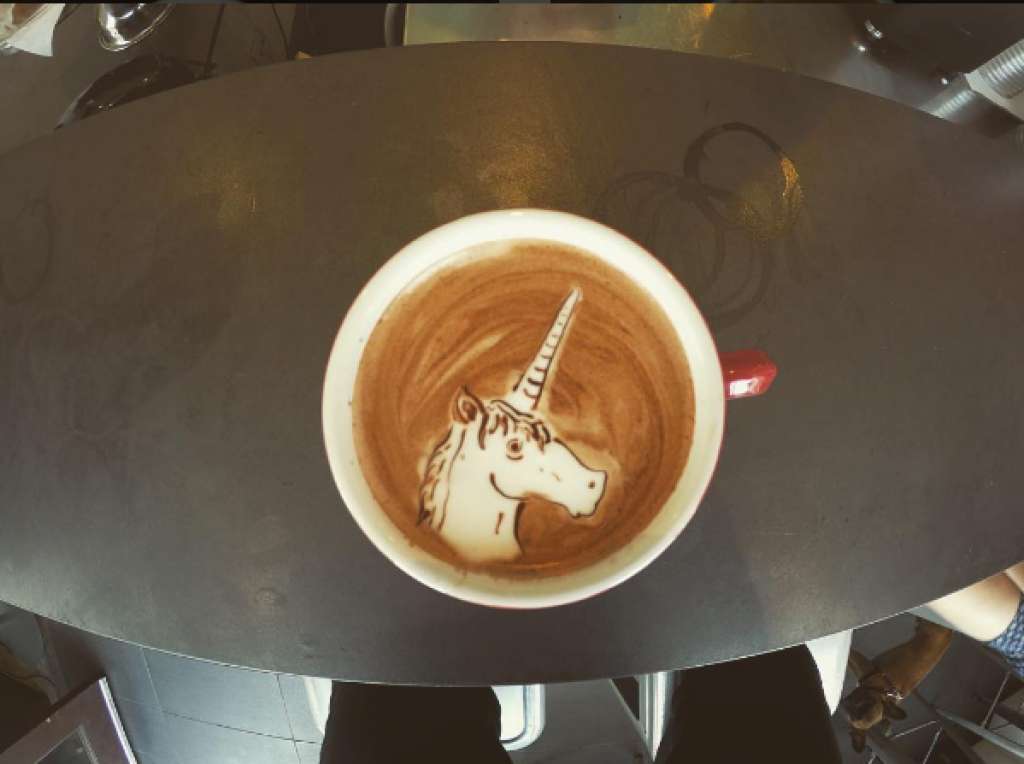
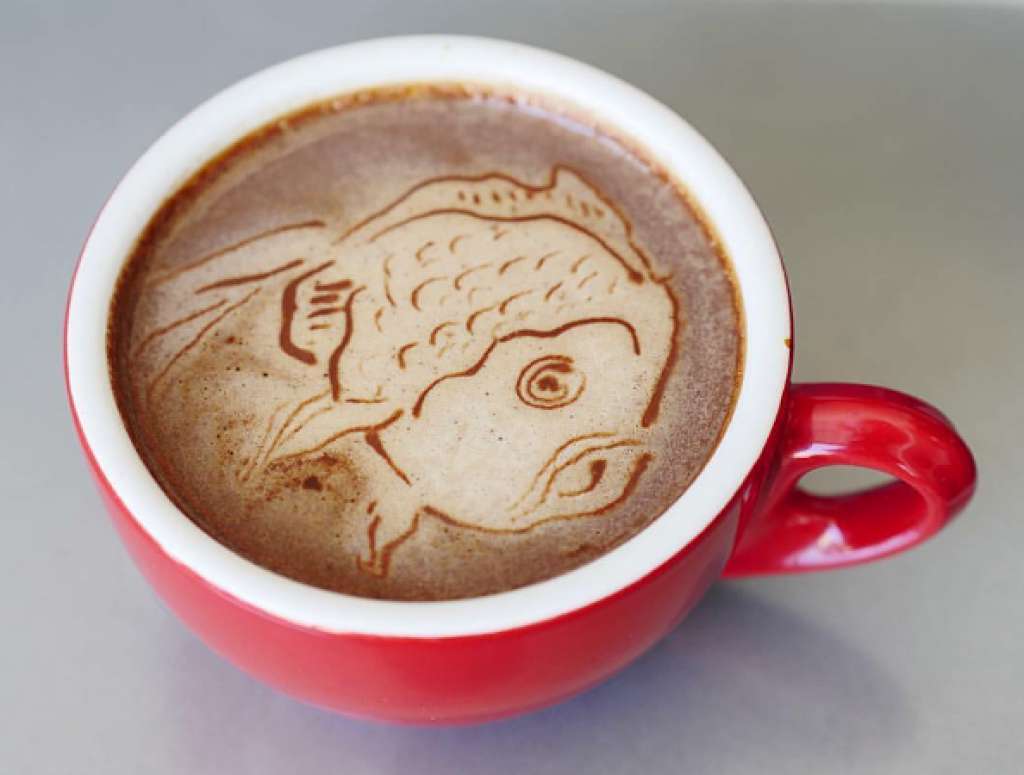
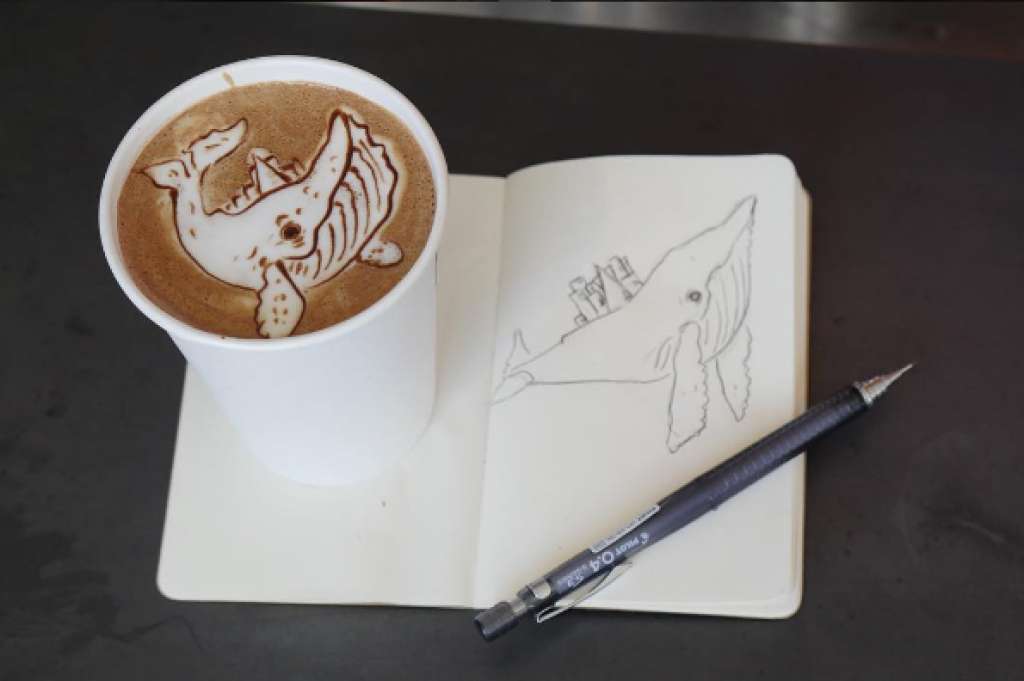
You might want to linger over your mocha or lattes by Melannie Aquino, a barista at the  Elite Audio Coffee Bar in San Francisco’s SOMA neighborhood. Mostly because as you can see from the following photos, they’re dazzling masterpieces in a cup.

With a side of Ice Cream
I’ll have my latte with Ice Cream on top

Melannie uses a metal skewer and a pot of chocolate to draw remarkably detailed sketches of everything from sweet-faced pugs to London’s Big Ben atop the frothy foam. Aquino, who grew up in Hawaii and moved to San Francisco 10 years ago, was recently named the best coffee artist in the world by Mashable. Without question she’s the best in San Francisco.barista1I thought that was a really bold statement…” Aquino says. “I may be one of the best, but I don’t think I’m the best. It’s a lot about perception.”

Most coffee art is made by “free pouring” steamed milk into a shot of espresso and adjusting the pour to create certain patterns and designs. The drawing method, Aquino says, is unique and she knows of only a few other “drawing” artists through Instagram.

“With a latte, the picture starts degrading after a few minutes,” she says. “Whereas with a mocha it sticks together for about 20 minutes.”barista7

Whole milk works best, while almond doesn’t cooperate.barista2

Requests:

Corgi dogs are currently the most commonly requested, and unicorns were popular for a while. R2D2 is also a favorite because a video of her creating the droid was featured on Instagram on Star Wars Day. She won’t do portraits or company logos. Once a girl used one of her creations to ask a boy out to prom. “While he was in the bathroom, she ordered his drink and asked me to write ‘Prom?'” she says. “He said yes.”barista6Aquino has always been a doodler, but she says her ability improved when she was studying film at the Academy of Art and required to take a drawing class.

“I’ve always been doodling throughout my life, but that class really showed me the basics of shape and shadowing and that’s where I learned to make my drawings a little more refined,” she says.
Moving to San Francisco and going to art school wasn’t what Aquino’s parents had in mind for their daughter. “It’s one of those things where they wanted me to go to college and get a stable job,” she says. “And they wanted me to stay in Hawaii.”barista4
But now that Aquino has over 22,000 followers on Instagram, websites calling her the best at her craft and people from all over the world coming to Elite to order her creations, she says her parents are proud, and most importantly she’s happy with what she’s doing.barista5

When I’m next in San Francisco I can’t wait for my JiaJia (he’s my sheltie dog) latte ooops, I mean mocha with whole milkbarista3

Source: Amy Graff for SF Gate

Art – unfinished

“Art completes what nature cannot bring to a finish” –  Aristotle

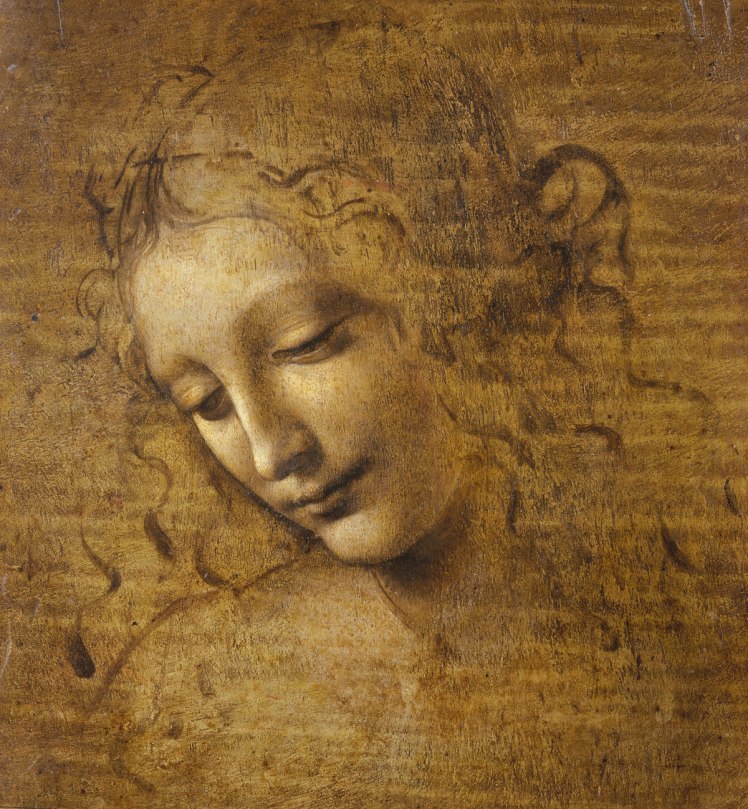
Leonardo da Vinci is credited with the catchy quote, “Art is never finished, only abandoned.”

Leonardo da Vinci (Italian, 1452–1519) Head and Shoulders of a Woman (La Scapigliata) ca. 1500–1505 Oil, earth, and white lead pigments on poplar 9 3/4 × 8 1/4 in. (24.7 × 21 cm)
Leonardo da Vinci (Italian, 1452–1519)
Head and Shoulders of a Woman (La Scapigliata)
ca. 1500–1505 Oil, earth, and white lead pigments on poplar
9 3/4 × 8 1/4 in. (24.7 × 21 cm)

But I say….”along with our perception for beauty, art is in the eye of the beholder.”

Intriguing, as a new exhibit features famous artists who’ve left works of art undone.  But to an untrained eye how are we to know the difference? Even unfinished works are breathtakingly beautiful and you have to wonder what they’d look like complete. Or at least what would the artist have liked us to see, feel and think?

With the Whitney now at home in the Meatpacking District, the old building has become an extension of the Metropolitan Museum and a chance for them to expand their contemporary collection. Now called the Met Breuer, the first exhibit is called “Unfinished: Thoughts Left Visible” which is a compilation of unfinished work from artists throughout history.

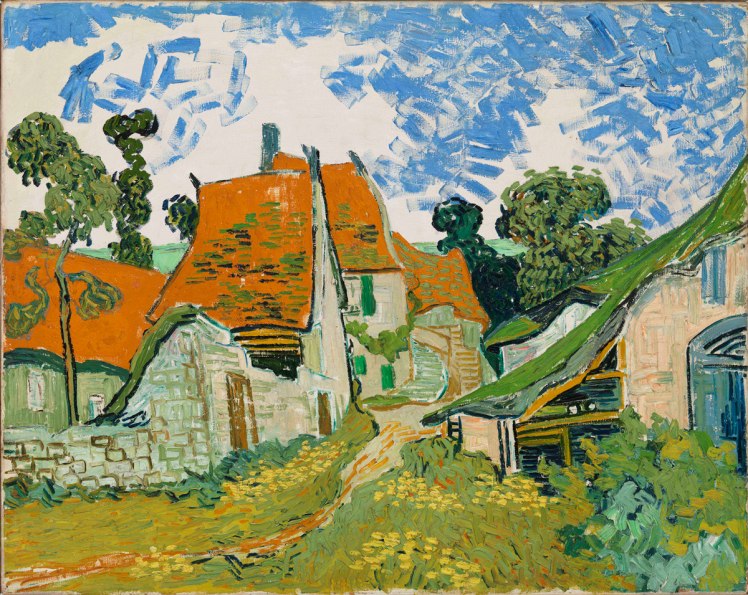
Vincent van Gogh (Dutch, 1853–1890) Street in Auvers-sur-Oise 1890 Oil on canvas 29 × 36 3⁄8 in. (73.5 × 92.5 cm)
Vincent van Gogh (Dutch, 1853–1890) Street in Auvers-sur-Oise
1890 – Oil on canvas 29 × 36 3⁄8 in. (73.5 × 92.5 cm)

My question is how do they know they’re unfinished unless it’s really obvious?  I guess we’ll leave that to the experts and take their word for granted.  I’m so curious.  Even surviving works of Leonardo da Vinci that look finished to modern eyes (above) in some cases were apparently not.  I find this fascinating.

Running until September 4, 2016, the Unfinished: Thoughts Left Visible exhibition assembles 197 works spanning the Renaissance to the present, with the goal of exploring the notion of what it is for a work of art to be “finished.” As the show organizers put it:

“Beginning with the Renaissance masters, this scholarly and innovative exhibition examines the term ‘unfinished’ in its broadest possible sense, including works left incomplete by their makers, which often give insight into the process of their creation, but also those that partake of a non finito—intentionally unfinished—aesthetic that embraces the unresolved and open-ended. Some of history’s greatest artists explored such an aesthetic, among them Titian, Rembrandt, Turner, and Cézanne.

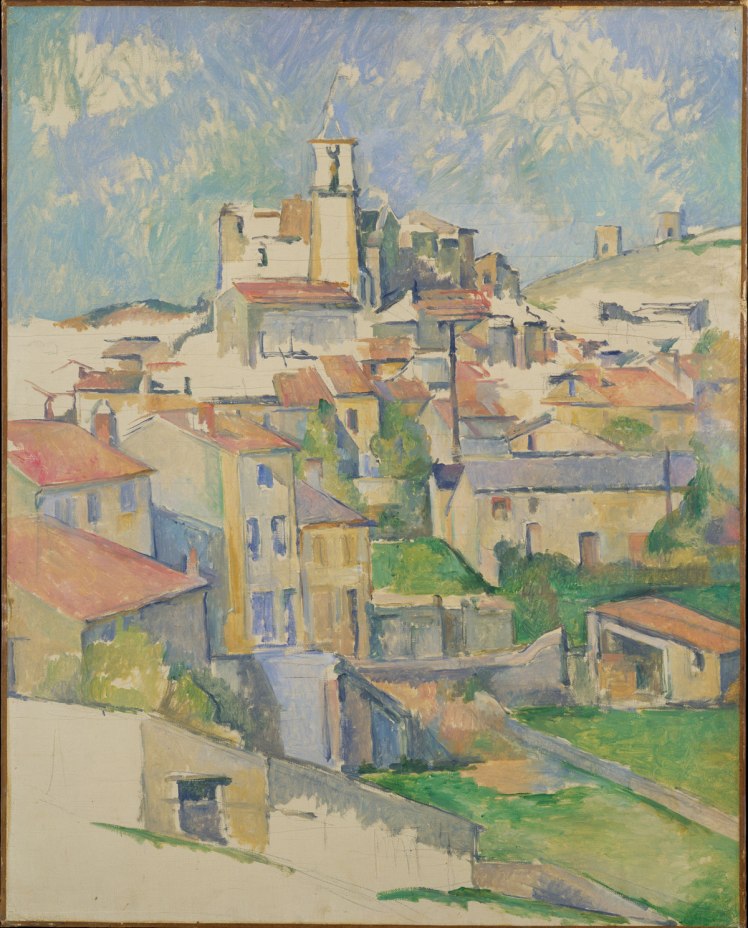
 Paul Cézanne (French, 1839–1906) Gardanne 1885–1886 Oil on canvas 31 1/2 x 25 1/4 in. (80 x 64.1 cm)  
Paul Cézanne (French, 1839–1906) Gardanne
1885–1886, Oil on canvas – 31 1/2 x 25 1/4 in. (80 x 64.1 cm)

I never want projects to be finished; I have always believed in unfinished work. I got that from Schubert, you know, the ‘Unfinished Symphony.‘ Yoko Ono

Certainly intriguing… don’t you think?

The Met Breuer, 945 Madison Avenue


Art/Culture – EVITA “the hit Broadway musical” comes to Vancouver

Vancouver Opera’s Company Premiere of Tim Rice and Andrew Lloyd Webber’s Tony Award winning smash hit EVITA will open at the Queen Elizabeth Theatre on April 30th.

evita8

Few women in history have had the allure of Eva Perón,  She once said My biggest fear in life is to be forgotten.”  Her legend lives on….

A very brief bio because the musical will explain everything in about 2 hours and 45 minutes including a short intermission:

*Don’t cry for me Argentina

Maria Eva Duarte de Perón was born out of wedlock on May 7, 1919, in Los Toldos, Argentina.  Eva (commonly known as Evita), left school when she was 16 and went to Buenos Aires in the 1930s to pursue her dream of becoming a star. She had reasonable success as an actress before marrying Juan Perón in 1945, who became president of Argentina the following year. Eva Perón used her position as first lady to fight for women’s suffrage and improving the lives of the poor, and became a legendary figure in Argentine politics. She died in 1952.

I’m really looking forward to this musical especially having been to Buenos Aires and since visiting the mausoleum of Evita in La Recoleta Cemetary.  It is most definitely one of the most amazing cemeteries I’ve ever seen.

Tickets are selling out for the VO’s brand new full-scale production taking place at the Queen Elizabeth Theatre with only 6 performances, from April 30th – May 8, 2016.  It has won 7 Tony Awards.

La Recoleta Cemetary - CNN listed it as one of the 10 most beautiful cemeteries in the world.
La Recoleta Cemetary – CNN listed it as one of the 10 most beautiful cemeteries in the world.

VO’s Evita will star three seasoned Broadway stars with international followings.

Ramin Karimloo will star as Che. Mr. Karimloo has played both Jean Valjean (Les Misérables) on Broadway and The Phantom (Phantom of the Opera) in London’s West End. He was personally selected by Andrew Lloyd Webber to star in the London World Premiere of the Phantom sequel, Love Never Dies. This will be his first appearance as Che.

Caroline Bowman will play Evita, a role she has also played in the Broadway revival and on tour in the United States. She also starred in the Broadway productions of Wicked (as Elphaba) and in Kinky Boots.

evita1John Cudia will play Perón. Mr. Cudia is the first and only performer to have played the roles of The Phantom and Jean Valjean on Broadway. Equally at home on opera, theatre and concert stages, Mr.Cudia is a lyric tenor who has also sung Alfredo in La traviata with Lyric Opera of the North.

SONY DSC

I have one thing that counts, and that is my heart; it burns in my soul, it aches in my flesh, and it ignites my nerves: that is my love for the people and Peron.” – Evita

She will not be forgotten

*Don’t Cry for me Argentina is a song composed by Andrew Lloyd Webber with lyrics by Tim Rice. It was first recorded by Julie Covington on the 1976 concept album Evita, and was later included in the 1978 stage musical of the same name.   It appeared at the opening and near the end of the show, initially as the spirit of the dead Eva exhorting the people of Argentina not to mourn her, and finally during Eva’s speech from the balcony of Casa Rosada.


Robert Mapplethorpe: The Perfect Medium

One Artist, Two Museums, Many Interpretations

Robert Mapplethorpe, Poppy, 1988, jointly acquired by the J. Paul Getty Trust and the Los Angeles County Museum of Art, partial gift of the Robert Mapplethorpe Foundation; partial purchase with funds provided by the J. Paul Getty Trust and the David Geffen Foundation, © Robert Mapplethorpe Foundation
Robert Mapplethorpe (Poppy, 1988)

He had me at “Some Women” – a hauntingly breathtaking book celebrating female beauty with more than eighty photographs of his friends, fellow artists and celebrities. I bought this to use for a coffee table from a used book store years ago because the images moved me and I also know a few of the women featured in it.

This month, Robert Mapplethorpe will take over Los Angeles, with a major two-part retrospective on view at LACMA  (Los Angeles County Museum of Art) and the J. Paul Getty Museum from March 20–July 31, 2016.

The Perfect Medium will present the full scope of the artist’s work, from his earliest collage-based works, through his early Polaroids, to late floral still-lifes and portraits and seldom-seen moving image works. With such rich visual and archival resources on display, visitors will have an unprecedented opportunity to reflect on Mapplethorpe’s legacy, which has been both social and aesthetic.

I love a leather jacket:

Robert Mapplethorpe, Self-Portrait, 1980, promised gift of the Robert Mapplethorpe Foundation to the J. Paul Getty Trust and the Los Angeles County Museum of Art, © Robert Mapplethorpe Foundation
Robert Mapplethorpe  (Self-Portrait, 1980)

He sought what he called “perfection in form” in everything from acts of sexual fetishism to the elegant contours of flower petals.  The exhibition also highlights the artist’s relationship to New York’s sexual and artistic undergrounds, as well as his experimentation with a variety of media.

PERFECTION

Photo #1 Poppy: jointly acquired by the J. Paul Getty Trust and the Los Angeles County Museum of Art, partial gift of the Robert Mapplethorpe Foundation; partial purchase with funds provided by the J. Paul Getty Trust and the David Geffen Foundation, © Robert Mapplethorpe Foundation.

Photo # 2 Self Portrait: promised gift of the Robert Mapplethorpe Foundation to the J. Paul Getty Trust and the Los Angeles County Museum of Art, © Robert Mapplethorpe Foundation.