With aging, scientists have always seemed to study things that decline, but how about those lucky individuals who seem to stay vital well into their 80s and beyond? Here’s some of their latest research advice & six ways how you can add years to your life.
#1 is no surpise – STOP EATING SO MUCH
exception for holidays…please.
This is something I personally have a hard time adhering to. But…
In Okinawa, Japan—home to some of the world’s oldest people—centenarians stop eating when they’re 80 percent full, says The Blue Zones author Dan Buettner, who studies longevity all over the planet.
They’re onto something: Scientists at St. Louis University found that, while both exercising and eating less led to weight loss in the study’s volunteers, cutting calories also lowered production of T3, a thyroid hormone that slows metabolism. The researchers believe that lower T3 levels may also slow the aging process.
#2 – MORE SEX
This might be easier and more fun to follow. And who doesn’t want to live longer? This does not apply to the ones who don’t enjoy it. Just skip to #4. Women who enjoy sex live longer says Mehmet Oz, MD, professor and vice chairman of surgery at New York Presbyterian–Columbia University and co-author of YOU: Being Beautiful. In fact, doubling your amount of satisfying sex can add up to three years to your life, he says. “Sex gives you the Zen moment you can’t find throughout the day otherwise.”
And you know what they say….more Zen, more Men! (No, I just made that up).
#3 – USE YOUR BRAIN
Dr. Geula, who has studied 80-year-olds who perform at the same level as people in their 50s on neuropsychological tests, has found that the superaged have fewer brain tangles—deposits of protein linked to Alzheimer’s—suggesting that their brains have some sort of protection that normal brains don’t. While scientists puzzle this out, there’s a lot you can do to keep your own synapses firing. Learn Italian, take up the cello—even driving a new route to work can wake up sleepy brain cells.
Darn, I’ve been learning the wrong language! I’m in trouble because I don’t even drive to work. Hope walking counts for something because you can walk so many different routes.
#4 – POUR YOUSELF SOME MERLOT
Now we’re talking – something I can follow! You’ve probably heard a lot about resveratrol, a compound in red wine and grape juice that seems to slow aging. One recent study found that resveratrol-fed mice had stronger bones and better motor coordination, and showed fewer “old age” problems like heart disease, inflammation, and cataracts. The jury is still out on whether resveratrol has the same effect on humans, but nutritionists say drinking red wine in moderation (and grape juice for those who can’t) does have heart-healthy benefits. The question is, what is moderation?? Pour me!
#5 – LOSE THE MUFFIN TOP
In one large study published in 2009, researchers who tracked 6,583 people for more than 30 years found that having significant belly fat in midlife can nearly triple your risk of dementia. No wonder so many people suffer from it.
#6 – EAT MORE PLANTS
They should have specified. I tried eating my fern and got sick.
In his study of centenarians, Buettner found the longest-living people tend to eat less meat and more beans, soy, and nuts (but no ferns). This is where it’s good to be a vegetarian.
AND no matter what your age there’s no excuse for not being STYLISH!
Tell me you’re not sick & tired of hearing/seeing/reading all the publicity to do with all things Kale? How about Açaí? Pomegranate is so last year! (even though I just bought a bottle of pomegranate vinegar).
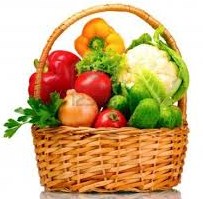
Yes, we know (or have been repeatedly informed) that they’re wonderful for us, but now we take for granted the ordinary food staples that sound less glamorous. Fruits and vegetables like celery, grapes, mushrooms and bellpeppers – stuff we probably have more of in our kitchens. Why should they be ignored? I always root for the underfruit!
Researchers are discovering new reasons to get excited about the old standbys. So maybe we shouldn’t let “superfoods” crowd out staples that are just as nutritious. They can work together as a team. Let’s discuss:
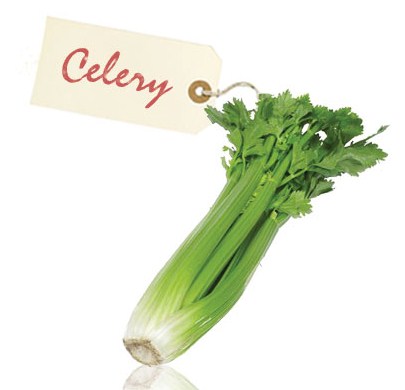
Celery – what’s a dip platter without this crudite? Now, back on the must-eat list as a potential cancer fighter with it’s top source of a flavonoid called apiginen. Researchers recently discovered that when pancreatic cancer cells were treated with apigenin, 44 percent of the cells died. Apigenin activates a chemical reaction inside diseased cells, causing them to self-destruct. While eating celery can’t cure pancreatic cancer (you’d never be able to eat enough), over time a diet containing apigenin-rich foods my help prevent the disease.
Grapes – we like them because they taste so refreshing and the skins are bursting with Resveratrol, the same superstar antioxidant that helps make red wine good for your heart (providing you don’t drink the whole bottle yourself). Resveratrol may also aid in boosting immunity by helping increase levels of a molecule that kills bacteria and viruses. Adding more grapes to your diet may even protect you from contracting infections in the first place. So drink up eat your grapes!
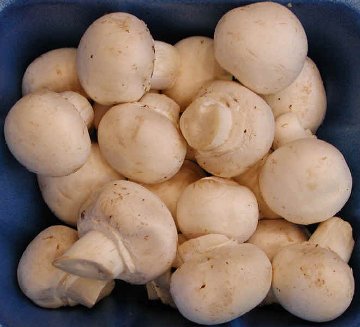
Mushrooms are like magic – science shows they may help prevent breast cancer by lowering estrogen levels. Fungi have also been thought to be heart healthy and immunity boosting for years. A study showed that when postmenopausal women consumed 13 grams of mushroom powder (the equivalent of 1 ½ cups of white button mushrooms) per day for three months, their estrogen production dropped by 27 percent.
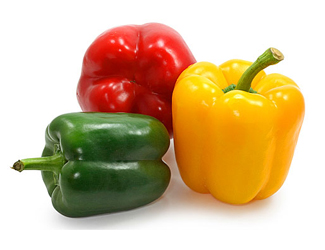
Bell Peppers – researchers have long known that smokers have a lower risk of developing Parkinson’s disease characterized by a loss of brain docells that make dopamine. No doctor would encourage lighting up, but there may be another way to get the benefit: peppers. They’re a safe source of nicotine, which may protect dopamine producing cells. Eating peppers (mostly bell peppers) twice a week or more is associated with at least a 30 percent reduced risk of Parkinson’s. This according to Susan Searles Nielson, PhD, who did a study which was published in the Annals of Neurology. Interesting stuff indeed.
What’s good too is that you can incorporate at least three of these items into a breakfast omelette, salad or pasta sauce. Try grapes in a chicken salad sandwich, they’re delicious.


With aging, scientists have always seemed to study things that decline, but how about those lucky individuals who seem to stay vital well into their 80s and beyond? Here’s some of their latest research advice & six ways how you can add years to your life.





 Girl Who Would be KING on Life, Style and INSPIRATION.
You must be logged in to post a comment.