Fresh from the Palm Springs International Film Festival:Two more movies with two intriguingly distinctive avant-garde dance styles and the ensuing competition that goes along with them. Because I wanted something artistic and upbeat as the festival draws to a close.
The dynamic energetic movies revolving around dance could not be more different from one another. One resembling poetry in motion and the other raw & sexually charged. Adversity is the only thing the main characters have in common and a drive to succeed.
I knew THE DANCER would if anything be visually stunning and I was correct.
Soko in “The Dancer”
I loved it. It was based on the true story of Loïe Fuller (perfectly played by French singer, songwriter, musician and actress Stéphanie Sokolinski, better known by her stage name “Soko”) an American dancer who became a sensation in Europe in the early 20th century-only to be swept aside just as quickly when a greater talent emerged on the scene. Don’t you hate when that happens? Said talent was Isadora Duncan whom you may have heard of as she became quite famous (gracefully played by Lily-Rose Depp in her first screen acting debut). The story relates how Fuller went from living a difficult life with her father in the Midwest to ending up at the prestigious Paris Opera creating a dance that was unlike anything that was seen before. She became the toast of the town and a legend who helped almost by accident to create another living legend. A hauntingly striking film.
King of the Dancehall
In Jamaica they really do dance to a different beat. I chose this movie because of the subject but also because I spent a lot of time all over Jamaica and part of that time was spent in Kingston where the film was shot. It was written, directed and produced by Nick Cannon (host of America’s Got Talent) who was also the main star. In other words a Nick Cannon production. Cannon was at the screening and answered some questions at the end.
Shot in actual Jamaican outdoor dancehall venues, Cannon plays Tarzan (they all have nick names), a Brooklyn drug dealer fresh out of prison, whose mother (Whoopi Goldberg) is ill and unable to pay her medical bills. As he contemplates ways to make money he heads to Kingston where he contacts his cousin Toasta (Busta Rhymes) in the hopes of striking up a deal to export the island’s finest ganja (aka weed) back to his hometown.
The movie is in English with English subtitles that I assure you helps with understanding the dialogue because a lot of it is in Patois. At least it’s authentic.
Toasta introduces Tarzan to the island’s nightclub scene with its vast network of fearsome gangstas, and his wife’s virginal (and sexy gyrating dancer of a sister) Maya whose suspicious bishop father (Lou Gossett Jr.) keeps her under a watchful eye.
Maya teaches Tarzan all the necessary moves so he is able to enter a contest in hopes of winning enough money to help out his mother.
What you need to know is that superstars like Beyoncé and Rihanna have used a lot of the original Jamaican dancehall moves in their shows and music videos. The North American audience says “that’s a great move” while the Jamaican dance audience say “she’s doing the (such and such…they all have names) move.” In Jamaica, the dancers are celebrities in their own right, known all over the island as dance stars.
All my time in Jamaica I never visited a dancehall such as in this film, but I did go to a nightclub and in Negril the locals & others dance to live Reggae music at night on the beach. This is where I witnessed very similar sexy dance moves as in the film. I had never seen dancing like that before….not here in North America!
Two Films, Two dysfunctional families involving Two playwrights with Two very different stories.
These were my first two choices to see at the Palm Springs International Film Festival (PSIFF). They make our world seem a whole lot less complicated and somewhat normal.
Image courtesy of Harmoney Productions
It was easy to choose the world premiere of a movie entitled “BREAKABLE YOU” mostly because two actors I really admire are in it. Holly Hunter (the piano, what women want) & Alfred Molina (Chocolat, Frida).
“We’re all fakes until we have a good idea, and then we’re geniuses” – quote from the film.
This arguably dark comedy revolves around Eleanor, a psychologist (Holly Hunter) following the divorce of her plagiarising playwright husband Adam (Tony Shalhoub) who tries desperately to regain a former successful Broadway following. They have a bi-polar philosophy grad student daughter named Maud (Cristin Miloti) who chases a forlorn uncommunicative man named Samir (Omar Metwally) who is trying to overcome an unbearable loss of his own.
Almost immediately following the divorce Eleanor embarks on an affair with her first love who happens to be her ex-husband’s brother (Alfred Molina). Sound complicated? It is! The setting takes place on New York’s upper west side with the Manhattan literary crowd.
If this sounds familiar like something from Woody Allen; trust me, it’s not!
“IT’S ONLY THE END OF THE WORLD” (Juste la fin du Monde) is gaining awards buzz and for good reason.
Photo: theplaylist.net
I chose this one because of the amazing all French cast: Marion Cotillard, Vincent Cassel, Léa Seydoux, Gaspard Ulliel & Nathalie Baye. They were all unbelievably brilliant even if at times it was in-your-facehard to watch.
In brief the story is about a young writer returning home after 12 years to try to reconcile and tell his family some terrible news. The news being that he is dying. But the whole family is dying in a psychological sense. This is one of the best (or worst) cases of family dynamic dysfunction I have yet to witness on the big screen. Let’s just say….
My next selections from hereon in will be more uplifting.
Written by Liz Fuoco
The Palm Springs International Film Festival (PSIFF) is from January 2 – 16, 2017. There is an abundance of fabulous films to choose from. For more information go to: https://www.psfilmfest.org/
It’s Christmas Eve dayand today also marks the first day of Hannukah
The Festival of Lights
Not only is the holiday’s lighting of candles beautifully symbolic of so many different things, but Hanukkah also creates a wonderful spirit of unison and love that I wish we saw more of during every other day of the year.
A little bit of light pushes away a lot of darkness
Taken at dog beach
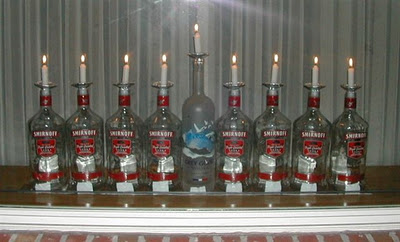
And if you don’t have an actual minora don’t worry – it’s easy to make one yourself.
For the Russian JewFor the Trekkie InspiredFor the Surfer JewJew know any winos?Hello Kitty – JapaJew
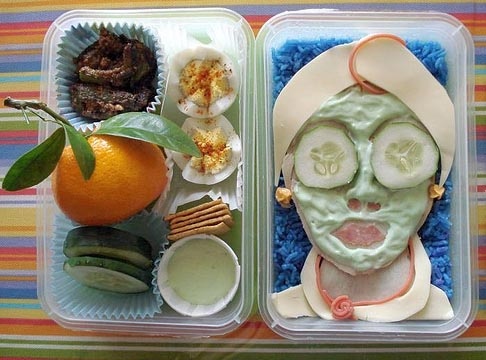
Made with lunch meats, cheese, cucumbers, and mayo (wasabi-mayo maybe?)
Like many aspects of Japanese culture, particularly contemporary fads (anime, Hello Kitty, harajuku girls), the bento has become extremely popular here in North America.
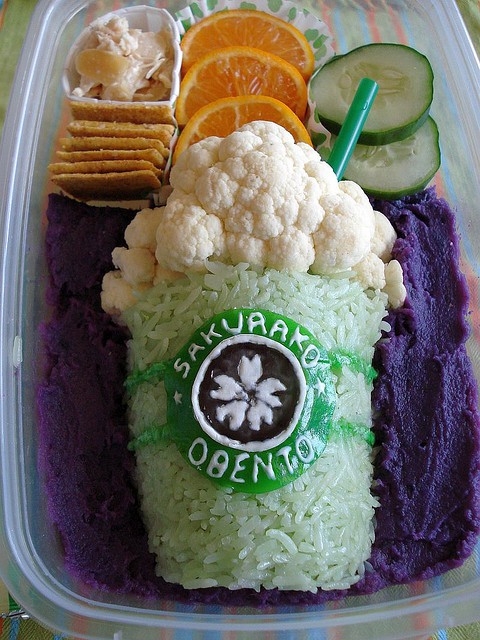
Frappucino: Chicken salad with toasted almonds, wheat crackers, tangerine wedges, cucumbers, cauliflower, rice, bits of Fruit Roll-Ups, and fondant over Okinawa sweet potato (naturally that purple!)
A single-portion meal, a Japanese bento typically contains rice, fish or meat, and one or more pickled or cooked vegetables. It’s pretty much on every Japanese restaurant menu or outside billboard (with the more casual places) as a fundamental lunch staple. A little variety of favourites in a partitioned decorative wooden box good for times you’re craving Japanese but you can’t make up your mind exactly what you want to eat, you’re hungry and don’t want to pay a fortune. Usually it’s the expected Western preferences like California roll (boooring), chicken or beef teriyaki over rice, tempura and the tiniest bit of salad. Sometimes miso soup on the side.
Recently I’ve come across some restaurants that offer a bit more creativity to the familiar boxed bento. You can pick and choose your add-ons from a variety of delicacies (usually from looking at photos on the menu). A design your own box lunch. After all Bento (弁当 or べんとう) really means the art of arranging one’s lunch. This is perfect for me.
Canadian Geese: Yellow pear tomato, rice (made with vegetable food-grade dye), portobello mushrooms, sesame seeds (as eyes), couscous, pear puree, green beans, and soba noodles.
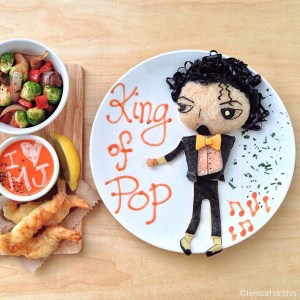
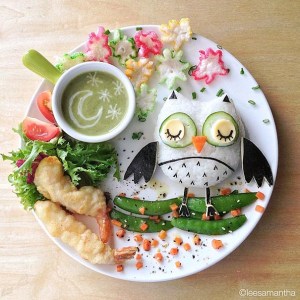
Anyway, for fun I wanted to share a few of these brilliant or at least cute looking bento boxes and lunch plates. I mean if they can create coffee art, why not this?
Above photos courtesy of Amorette Dye
And who cannot resist a perfect happy ending
It brings new meaning toyou are what you eatbut are you willing to disturb the presentation?
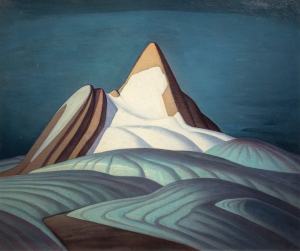
Isolation Peak, Rocky Mountains. 1930. Oil on canvas. Hart House Permanent Collection, University of Toronto. (Lawren Harris).
And a necessary distraction. You can be anyone from anywhere and of any economic background or situation and appreciate what you see the same way (or not) as the next person. This is why ART is so appealing and inspiring. But aside from the recognized and renowned artists such as Picasso or Van Gogh (love them or not) it’s good to expand your knowledge of other well respected but maybe not so widely famous artists from other countries. I’m having a Canadian moment here. Those of you living in the U.S. might not have heard of the Group of Seven. Comic book characters they’re not.
In the early decades of the twentieth century, circumstances brought together several artists who were committed to exploring, through art, the unique character of the Canadian landscape. Collectively they agreed: Canada’s rugged wilderness regions needed to be recorded in a distinctive painting style. This style would break from European tradition and reflect an increasingly nationalistic sentiment. Today, these men (and one woman, Emily Carr) are among Canada’s most famous artists. For many, their works have come to symbolize what is the distinctly Canadian identity.
When I lived in Toronto I had not paid too much attention to this Group of Seven but then I went to an exhibit at the McMichael Gallery to see what all the fuss was about and it changed me. Just like the saying goes “if you love to travel, explore your own country first” (or something like that), the same goes for art. So I did, and I learned something and appreciated what I saw – mostly the beautiful expansive and diverse landscape of my own country. Which, by the way I did explore in full since then. So I can admit that Art did influence me in another respect.
This year at the Vancouver International Film Festival (VIFF) I looked forward to watching a documentary about one of the most influential Group of Seven artists – Lawren Harris.
A founding member of the Group of Seven and a major figure in the history of twentieth-century Canadian art, Lawren Harris (1885-1970) remains largely unknown in the United States. This year the AGO partnered with the Hammer Museum to introduce Harris’s iconic landscapes to audiences in Los Angeles and Boston. The Idea of North: The Paintings of Lawren Harriswas the first major solo exhibition of his work to be shown in the United States.
Around this time I was watching CBC (a former employer of mine while living in Toronto) and saw comedian (author and artist himself) Steve Martin talking about his love of Lawren Harris’ work with news anchor Wendy Mesley. It was very interesting.
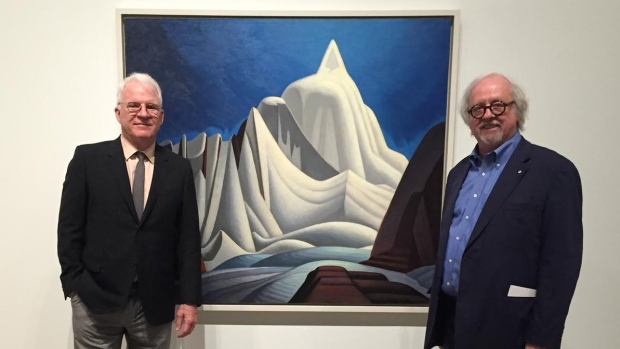
Steve Martin was Michael’s guide for a tour of the exhibition of Harris’s work at the Art Gallery of Ontario. (AGO).
The exhibitionThe Idea of North: The Paintings of Lawren Harris was curated by comedian, musician, actor and writer Steve Martin in collaboration with Cynthia Burlingham, Deputy Director, Curatorial Affairs at the Hammer Museum, and Andrew Hunter, Fredrik S. Eaton Curator of Canadian Art at the AGO.
I have a lot of respect for this guy.
Yes, I too believe that while anyone can put brush to canvas, true artistsare not created equal. Sorry, but that’s what I really think. The ones who really move you are guided by some other outside force.
An intimate portrait of the life and art of Lawren Harris, a founding member of the legendary Group of Seven, and the expansive landscapes that inspired him below.
WHERE THE UNIVERSE SINGS: The Spiritual Journey of Lawren Harris (trailer):
And while writing this I decided that I’m going to attempt to create a painting of my very own.. on a whim with some friends….and some expert guidance….and some wine. It’s not until the end of this month. It’s kind of on my revised bucket list and believe me, I’m not expecting to create something of “worth”…just somethin…somethin….do something that scares you….well….this is it. I’m expecting that whatever it is, it will turn out to be pretty scary. However, according to my personal horoscope this month I have all of the cosmic mojo I need to accomplish—nay, excel at—anything I put my mind to. A possible masterpiece?? You’ve got to believe!
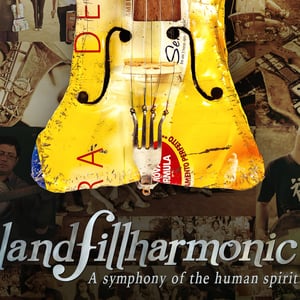
This is the best feel-good movie I’ve seen in a long time.
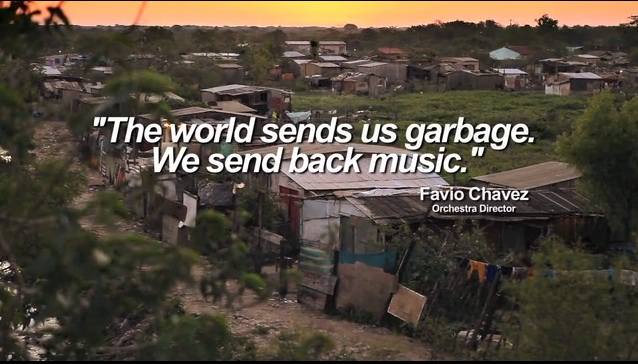
I just watched it with my film buddy who I met at VIFF. This film is not about garbage, it’s about making the best of the junk that surrounds you.
The reason it’s uplifting is that it points out that no matter what your living conditions are like, through the power of hope and dreams you can build on becoming what you desire and we realize that music is that unifying force that binds all people. It’s pretty powerful. It’s actually a film on the power of music through very unusual circumstances.
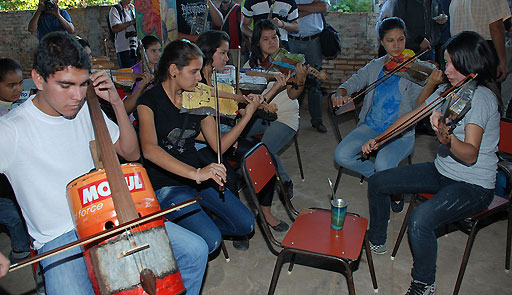
These kids play everything from the BIG THREE (Mozart, Bach, Beethoven) to heavy metal (play heavy metal with heavy metal) favourites.
Land Fillharmonic was showcased last year at various film festivals but was recently re-released in many cinemas worldwide (you’ll have to check in your hometown). If so, I highly recommend seeing it. WATCH TRAILER:
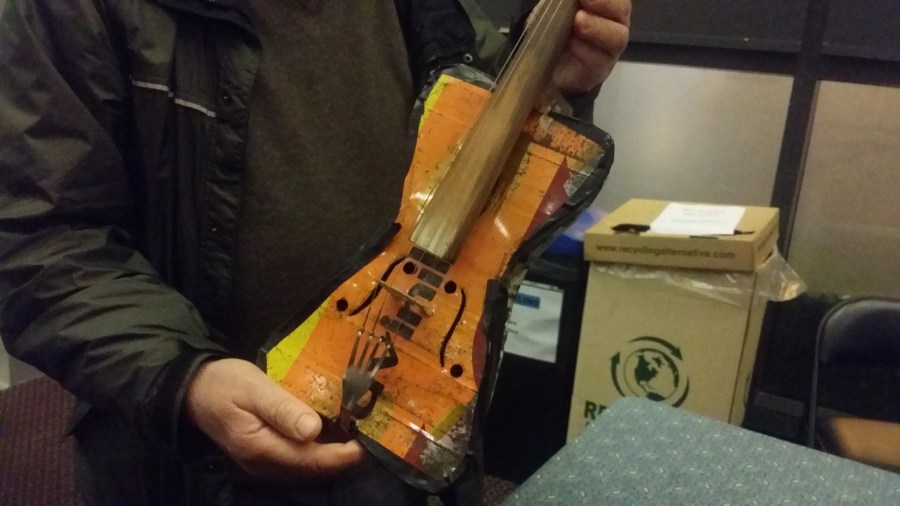
Landfill Harmonic follows the Recycled Orchestra of Cateura, a Paraguayan musical youth group who live next to one of South America’s largest landfills. This unlikely orchestra play music from instruments made entirely out of garbage. When their story goes viral, the orchestra is catapulted into the global spotlight. With the guidance of their music director, Favio Chávez (a most amazing man), they must navigate this new world of arenas and sold out concerts. However, when a natural disaster devastates their community, the orchestra provides a source of hope for the town.
Photo: d. king – one of the instruments taken in the lobby of VanCity Theatre Tuesday night.
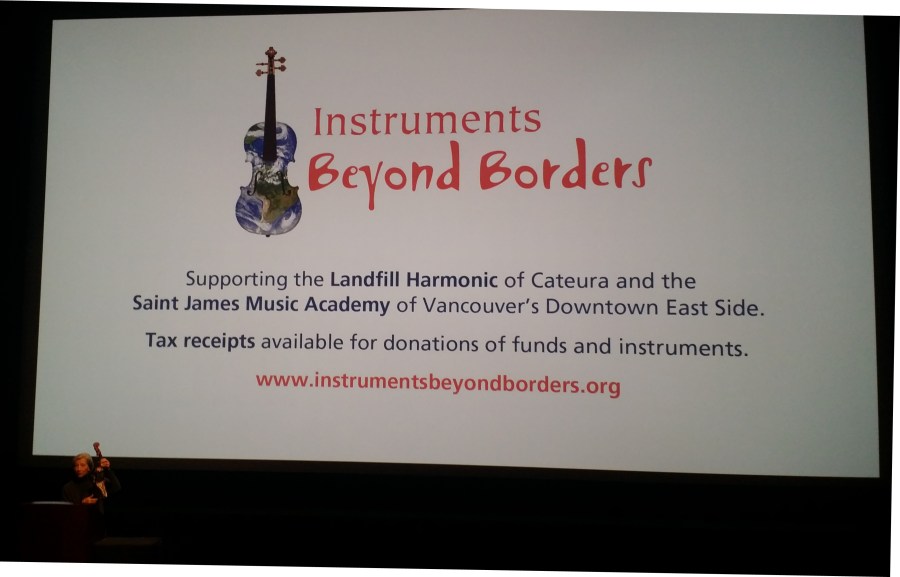
Instruments Beyond Borders...harnessing the power of music to better children’s lives. Many schools have now very unfortunately cut music from educational programs. It’s good to give back.
Photo: d. king
An entirely volunteer, charitable Society dedicated to delivering donated musical instruments and funds to music education programs in disadvantaged communities at home and abroad. In Vancouver instrument donations can be made at Tapestry Music (3607 West Broadway). Tax receipts for donated instruments are available upon evaluation.
I was recently at a fundraiser where one of the live auction items was an original painting…which I disliked immensely but I do know that art can grow on you. I wasn’t the only one who objected, however the piece ended up going for thousands. Someone either loved it or just wanted to make a very generous contribution. Another painting which I liked much better didn’t fare as well.
When I asked a friend to accompany me to a Picasso Exhibit she explained that she did not like Picasso. This coming froman art major.
What you display on the walls of your home is an eye into your mind and your soul.
It’s okay…not everyone likes the same things. But generally I believe investment pieces that make you feel good and you never tire of looking at are the very best to buy.
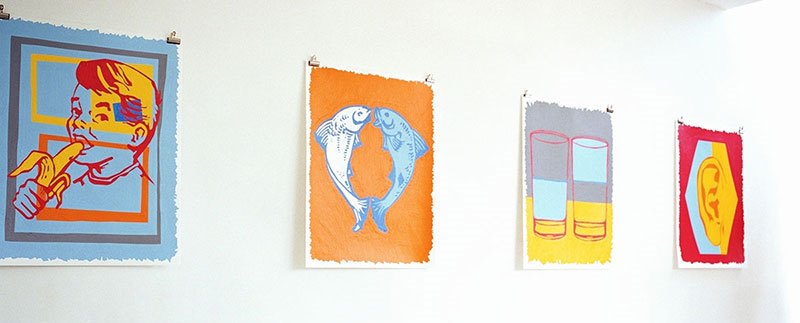
Personally I’ve collected a lot of things that bring me back to places of interest. Having said that, my taste is changing. I’m taking down some works that no longer have a place on my walls. They no longer hold a special interest and maybe never did. I want to upgrade. Recently I purchased a large original painting from Santa Fe (no coyote in sight). It holds meaning because I’ve been there on several occasions and identify with the setting. I had to have it! I also replaced a limited edition print with a beautiful *monotype.
So I’m no art expert but I have a few friends who are collectors and maybe through their influence I’m slowly making some changes. Some things will stay the same though because they hold significant meaning. Even if they’re important to only me; that’s enough!
But then I came across this article about how to buy art in a gallery and a guide to getting it right. It’s worth a look for those who are interested. Because there is some kind of a system to the whole thing. My advice: Always buy original when you can.
There it is, gleaming and white: a gallery filled with art looking for a new home. But sometimes the setting can be so mysterious, so alien and arcane, that knowing how to strike a deal can be elusive — or at least daunting to those who don’t know the art world’s often cryptic customs and codes.
“The assumption is … galleries are these elitist places that are going to ignore you if you try to talk to them,” said Photios Giovanis, owner and director of Callicoon Fine Arts, a gallery in New York’s Lower East Side. “But that’s not true — the assumption is wrong. There may be galleries that will treat you rudely, but there are just as many, if not more, that are going to be kind and want to speak to you about what they’re showing. That’s why galleries are there — to show work and share it with an audience.”
Getting started
The first step is easy: “Ask questions,” Mr. Giovanis said, about the art on show and the artist who made it — but also other pieces that might not be displayed, like works on paper or other holdouts that gallerists often keep in storage. “That would create a level of engagement that is deeper than just transactional. Later on, that collector would be more prominent in the mind of the dealer.”
Another tip at the start is to learn the language, enabling one to ask the right questions in search of answers that might inevitably be beyond a beginner’s bounds.
“If you take time to educate yourself, you’ll be ahead of the game,” Mr. Giovanis said. “People always say ‘buy with your eye’ and other clichés like that. That is fine, but it’s more a process of learning and, as you learn and look, what you like can change and develop. Don’t be afraid to make a mistake.”
Alexander Gray, operator of the Alexander Gray Associates gallery in New York’s Chelsea neighborhood, echoed similar points, with more tips to consider. He urged self-education by going to museums and talking to curators who can point to galleries in line with their discerning tastes.
When not to buy art
Be wary when too far from home, though: “One of the mistakes that people make is buying art while they’re on vacation,” Mr. Gray said. “That’s a really egregious mistake because, when one is at the beach, one is thinking about how great it is to be outdoors with seagulls. It can be something people will love and want to look at, but is it something that will retain value or enhance legacy? Most likely not. No dolphin art. No coyote art in Santa Fe.”
Consider an adviser
Displaying knowledge of the distinctions between shopping and collecting shows a gallerist a lot, Mr. Gray said, as does the act of working with an adviser to council on acquisitions or even just looking around.
“We love working with advisers, especially advisers working with new clients, because it means the new collector is taking the journey seriously enough to bring in expertise. It also helps us understand what their motivations might be,” he said.
Some advisers are primarily attuned to market activity while others tend toward the philanthropic possibilities of purchases that help particular artists and galleries thrive. In any case, Mr. Gray said, “We prefer advisors who are retainer-based for clients who are being given completely unbiased advice. A lot of advisors work on commission, but the transparency of the arrangement is important.”
Abigail Ross Goodman, principal and founder of the advisory firm Goodman Taft, said advising—in her case under a retainer structure—can be akin to a kind of art itself. “Our job is to educate, demystify and advocate on behalf of our clients and help them make choices off the bat,” she said.
Do your homework … and remember there’s no crystal ball
Regardless, from Ms. Ross Goodman, a simple bit of advice: take notes, in a Moleskine notebook or on a phone. “Train your eye, build up a visual vocabulary, keep track of your tastes and how what you respond to changes,” she said. “Sometimes the things that can be most daunting at first become objects that are the most generous over a lifetime.”
And, remember, all the advice and advisement in the world only goes so far.
“There’s no way to do this without getting your hands dirty,” Ms. Ross Goodman said. “One of the biggest mistakes a client can make is to be so driven by external information that they buy something that means nothing to them. There’s no crystal ball.”
At a certain point in the sometimes beguiling but often immensely gratifying world of art, she said, “Everybody has to take a leap of faith.”
Don’t be afraid to take a leap!
*The difference between monotypesand monoprintsfrequently baffles art buyers and sellers alike! Therefore, a description of that difference is useful at the outset.
A monoprintisone of a series—therefore, not wholly unique. A monoprintbegins with an etched plate, a serigraph, lithograph or collograph. This underlying image remains the same and is common to each print in a given series. Other means of adding pigment or design are then employed to make each print in the series slightly different. The series of monoprints has a limited number of prints and each is numbered.
A monotypeisone of a kind, a unique piece of artwork. It is the simplest form of printmaking, requiring only pigments, a surface on which to apply them, paper and some form of press.
Now here’s a documentary for those who adore art, culture, music, fashion, politics, celebrity & larger than life celebratory, astonishing and horrendously shocking legendary moments in time.
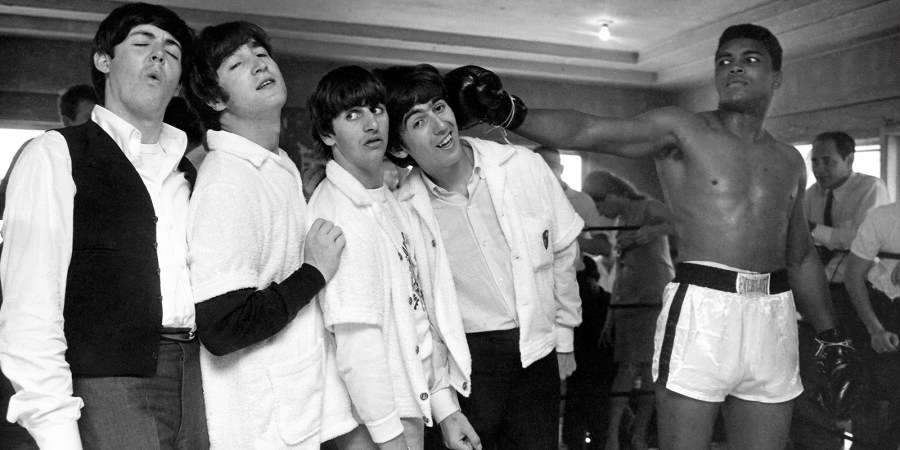
Saying that Scottish photographer Harry Benson is a Zelig-like character who’s witnessed every major cultural and political event of the last 50 years is not an exaggeration. Here’s just a partial resumé of the man’s astounding life: he arrived in America with the Beatles in 1964 as a photographer for their American tour (he took the famous photo of the Beatles’ hotel room pillow fight); he has photographed every American president from Eisenhower to Obama; he was just a few feet away from Bobby Kennedy on the night Kennedy was assassinated; he was alongside Martin Luther King, Jr. on the Meredith march and attended his funeral; he was in the room when Nixon resigned; he was there when the Berlin Wall went up—and when it came down; and he has taken iconic fashion photos for the likes of Vanity Fair, Paris Match and a half-dozen other magazines.
Benson, now 86 and still working, certainly deserves the wonderful tribute offered here in Matthew Miele and Justin Bare’s fascinating portrait. Featuring testimonials from Sharon Stone, Alec Baldwin, Donald Trump, Piers Morgan, Dan Rather, James L. Brooks, Henry Kissinger, Ralph Lauren and Joe Namath among others, the film reveals that Benson is not only a globetrotting legend of the photography world but that he’s also a nice guy!
I don’t know. Being way before my time I couldn’t personally tell you but from all the photos and stories from others who were around then, it sure looked like everyone was having fun. We all know that fun doesn’t last forever though.
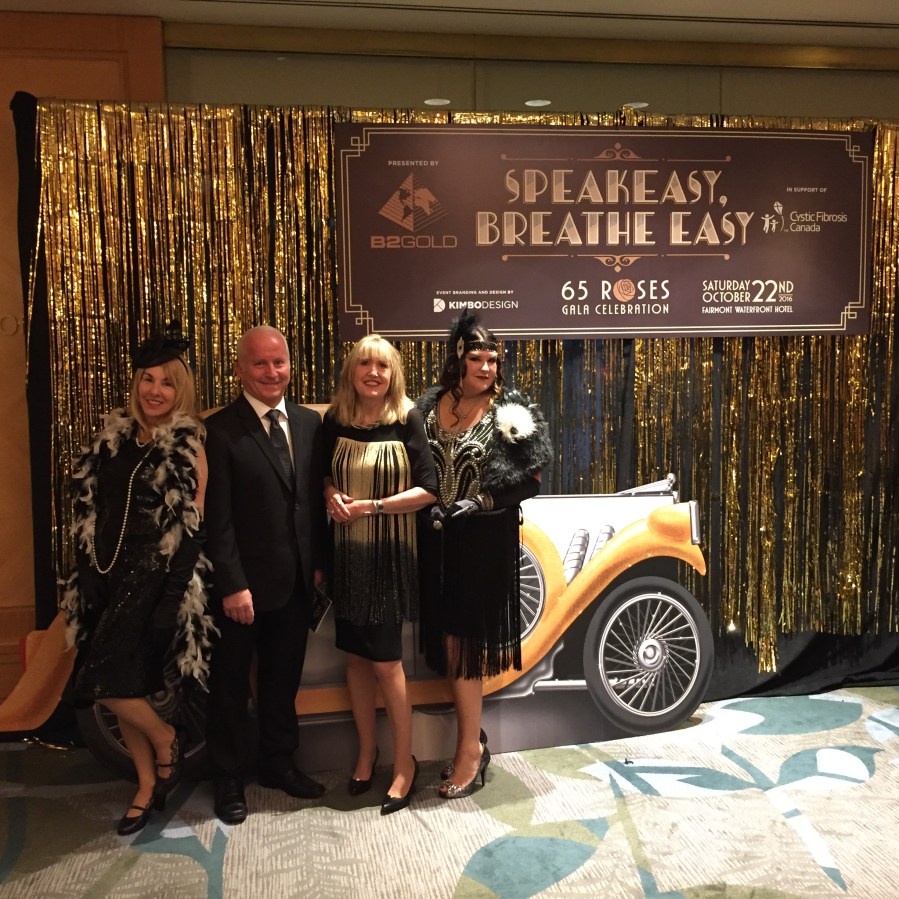
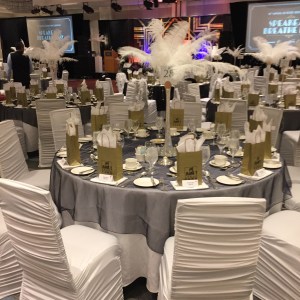
But we try. Saturday night we tried to re-create the era as best we could for the 16th annual 65 Roses Gala to raise money to help find a cure for a terrible disease called cystic fibrosis (CF).
With friends Brian and Colleen. My sister Lisa on the right.
My personal connection to the evening is my good friend and a true inspiration; Colleen Kohse. Aside from sharing select photos from the evening here is what Colleen had to say:
Lisa and Colleen
On this day, 28 years ago, I had my heart double-lung transplant. It’s truly amazing to be here after such a long time, although it really doesn’t feel that long ago. I’m thankful for all the wonderful people who helped me survive and thrive.
Tonight, my friends are having a small, intimate party for just over 300 people, with formal dress, cocktails, a gourmet dinner and dancing at a high-end Vancouver hotel. In truth, it’s not actually a party for me, but I can pretend!! It’s the 65 Roses Gala for Cystic Fibrosis and I’m proud to be on the committee putting together this fabulous event. So I’ll be drinking, eating and dancing until midnight to celebrate my special day and a special day to help everyone with cystic fibrosis survive and thrive. Cheers 🍾🍸
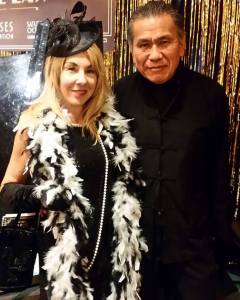
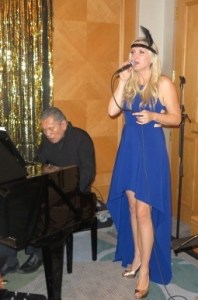
With musician friend Doug Louie
“I like LARGE PARTIES. They’re so intimate. At small parties there isn’t ANY privacy.” – Jordan Miller, The Great Gatsby
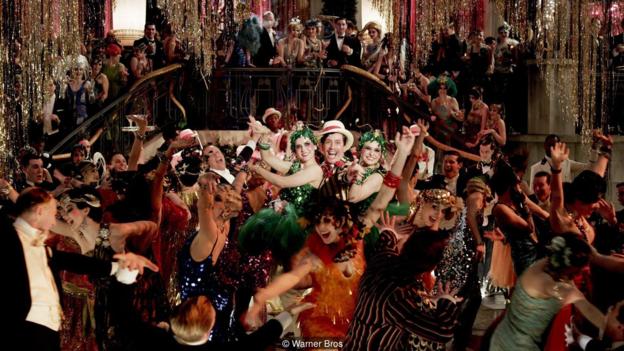
F Scott Fitzgerald’s The Great Gatsby immortalized the era – right down to its inclusion of a Lenglen-esque sportswoman in the character Jordan Baker (Credit: Warner Bros)Tables set up at Fairmont Waterfront Hotel
And if you want to know more……….here is a great article
The rhythms and beats of jazz permeated the visual – Dennis Nothdruft
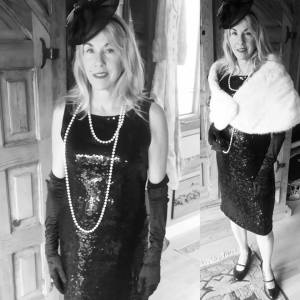
While getting ready I decided to wear my mom’s mink stole (the stuff you keep just in case…you get invited to a theme party) over my sequin dress, a gift from Colleen.
“It was an age of miracles,” F Scott Fitzgerald wrote in his essay Echoes of the Jazz Age. “It was an age of art, it was an age of excess.” In his fiction, the author beguilingly captured the sybaritic Roaring 20s – hedonistic, glamorous, decadent, opulent.Photographs and illustrations from the era reflect this seductive, dazzling sense of wildness and fun – flapper girls smiling ecstatically and dancing with abandon in their swishing, tasseled dresses and bobbed hair, or posing in tumbling marabou boas and towering feathered head-dresses.
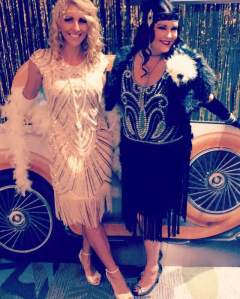
Lisa was made for the era
“There is a constant sense of rhythm and femininity and glamour,” says Dennis Nothdruft, who has curated an exhibition at London’s Fashion and Textile Museum called Jazz Age: Fashion and Photographs of the 1920s. “There’s a sense of society crashing into the modern age, with movement and speed and romanticism.” So how and why did the 1920s ‘roar’? And what made the Jazz Age so unique – and influential?
Kristen & Lisa
The speed of change during the 1920s was dizzying. Booming prosperity and social upheaval combined with a youthful, post-war euphoria and new female empowerment to make the 1920s paradigm-shifting, boundary-busting decade. “The generation before them had been slaughtered in the war, and there was a devil-may-care attitude,” Nothdruft says. And like the musical genre it was named after, the Jazz Age was full of unruly spontaneity, improvisation and edginess. “Jazz was the sound of the ‘20s, and the rhythms and beats of the music permeate the visual.”
Doug Louie on piano & Amanda Wood play old tunes while guests arrive.
Sin and Spectacle
The 1920s was when “the modern woman’s wardrobe began,” Nothdruft says. Out went the tight corsets and bustles of the Edwardian era, as did the long, hugely impractical dresses, elaborate hair styles and hats of that time, and in came the shorter, drop-waisted dresses and easy-to-manage bobbed hairstyles. Silk pyjamas became popular for lounging, entertaining at home or for the beach, with chinoiserie and Egyptian styles particularly popular in clothing and jewellery – the latter due largely to the blockbuster exhibition of King Tut’s tomb in 1922. Coco Chanel even took to wearing trousers. What began as a niche, bohemian youthquake soon trickled down. The fashions became pervasive and the bobbed hairstyles de rigeur among the general female population, and with them a sense of liberation and confidence.
And now that the motion picture was emerging, the new trends could reach more people faster than ever before. Hollywood was bursting into the popular consciousness with an explosion of film palaces going up across the world, and massive stars coming into their own – like the glamorous Gloria Swanson in her elaborate head dresses and rebellious ‘it girl’ Clara Bow.
In the extravagantly ruffled robes de style by Lanvin and in the ubiquitous feathered boas, fringes and tassles, there was a new feeling of dynamism – perfectly captured by American illustrator Gordon Conway, herself a flapper career girl, whose work encapsulates the music, sensuality and glamour of the time. “These clothes were made to move and dance in, and the capes with huge collars and no structure literally fell off the wearer as she moved,” says Nothdruft.
A new sense of speed and movement pervaded culture – crucially the motorcar had arrived, and even tennis became racey. “There was an explosion of athleticism,” says Nothdruft, whose exhibition devotes a section to the sportswear of the era. Women’s tennis had previously been a genteel pastime, with ladies in long dresses and heavy petticoats drifting daintily around a lawn. But in the 1920s the first female star of tennis, French player Suzanne Lenglen, was transforming the women’s game with her tough, fast playing style (considered by some commentators ‘unladylike’) and her diva-ish ways. She always arrived courtside in a fur coat, whatever the weather, and played in modern flapper outfits – calf-length, slim-silhouetted silk dresses in red or orange. She also had a tendency to smoke and drink cognac on the court – to steady her nerves, she said. She shocked the crowd by serving overhead, and became known as ‘the Goddess’.
Breaking the mould
It was also the first time that mannish styles became fashionable. “There was a trend for women wearing tuxedos and tailored suits. Coco Chanel borrowed hers from her boyfriend along with fisherman’s sweaters and tweeds,” says Nothdruft. “And lesbianism was also fashionable for the first time, certainly in café society in Paris, London and New York.” Among the stylish, talented lesbian stars of the era were painter Romaine Brooks and her partner, writer Natalie Barney, along with the poet and author of The Well of Loneliness, Radclyffe Hall. Women like these helped set the agenda for the decades that followed, and their chic, androgynous style has proved enduring – androgynous dressing and masculine tailoring for women have appeared at regular intervals over the subsequent decades, and now, nearly a century on, the look is once again enjoying a renaissance, at French label Céline in particular.
In New York it was the era of the Harlem Renaissance, with a wave of creative energy from black artists, musicians and writers, notably writer and social activist Langston Hughes, one of the earliest innovators of jazz poetry. Meanwhile in Europe racial boundaries were increasingly being challenged, with African-American jazz musicians widely feted, and the talented and flamboyant cabaret dancer Josephine Baker becoming an icon of the era.
It was a time of liberation and boundary breaking, says Nothdruft: “The career woman was born, and for the first time women could choose not to marry. Young women were working in the day, and were out un-chaperoned in Chinatown dens, jazz clubs and speakeasies.” The party lasted for 10 years and then, as Fitzgerald put it: “leaped to a spectacular death in October 1929”. Glittering but tragic, beautiful and damned, the emotionally bankrupt lost generation – this is how the Jazz Agers have often been depicted. But in its mood and its aesthetic, not to mention its sheer progressiveness, the Jazz Age remains arguably the most beguiling and culturally influential era of them all.
And fun while it lasted. As Fitzgerald wrote in Echoes of the Jazz Age, his essay for a 1931 issue of Scribner’s Magazine: “After two years the Jazz Age seems as far away as the days before the War. It was borrowed time anyhow – the whole upper tenth of a nation living with the insouciance of grand ducs and the casualness of chorus girls. But moralizing is easy now and it was pleasant to be in one’s twenties in such a certain and unworried time.”
To the person who asked “does this mean that I can win a Grammy?” No! It just means that people are taking more notice of great songwriting and poetry which have their place (orprose) in the writing world. If so, then in my opinion Rodriguez (of searching for Sugarman fame) & Leonard Cohen should be next in line.
Maybe they should open it up to noteworthy artists who paint for a living. They are like literature for the soul. Open up a new category? Something to think about? I think so!

Two more movies with two intriguingly distinctive avant-garde dance styles and the ensuing competition that goes along with them. Because I wanted something artistic and upbeat as the festival draws to a close.


 and today also marks the first day of Hannukah










 I just watched it with my film buddy who I met at VIFF.
  This film is not about garbage, it’s about making the best of the junk that surrounds you.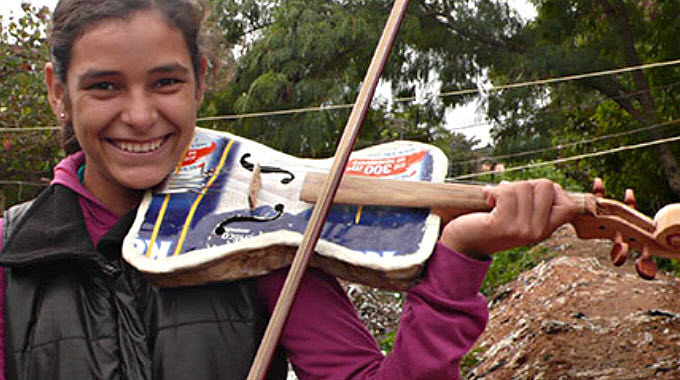



 Girl Who Would be KING on Life, Style and INSPIRATION.
You must be logged in to post a comment.