Health MATTERS: the skinny on PROTEIN

 A crash courseprotein1Believe me there’s far too much information so I broke it down as best I could (even though it’s a lot bit longer than my usual posts) from researching a few articles. I think we all know that keeping a balanced diet is really key.

What do I immediately do after a run or workout using weights at the gym?  Go home to make a smoothie with a BIG scoop of *protein powder.  Of course the smoothie is more of a thick milkshake-like consistency with other good stuff like banana, yogurt, frozen wild blueberries (I like it cold), wild green powder or juice, coconut water, flax & chia seeds and a good quality matcha green tea powder (from Japan).  This to me is the Ultimate workout recovery.  I try to drink it as quickly as possible so that the protein will adhere to my muscles ASAP!  Who knows but it feels really healthy, works for most athletes as I am a major athlete (of which I am not) but why not do as they do?
 Because WITHOUT PROTEIN, life as we know it would not be possible.

They’re used to make muscles, tendons, organs and skin.  Proteins are also used to make enzymes, hormones, neurotransmitters and various tiny molecules that serve important functions.

Bottom Line: Protein is a structural molecule assembled out of amino acids, many of which the body can’t produce on its own. Animal foods are usually high in protein, with all the essential amino acids that we need.

If we don’t get enough from the diet, our health and body composition suffers.

However, there are vastly different opinions on how much protein we actually need.     Most official nutrition organizations recommend a fairly modest protein intake.

  • 56 grams per day for the average sedentary man.
  • 46 grams per day for the average sedentary woman.

Although this meager amount may be enough to prevent downright deficiency, studies show that it is far from sufficient to ensure optimal health and body composition.

It turns out that the “right” amount of protein for any one individual depends on many factors… including activity levels, age, muscle mass, physique goals and current state of health.

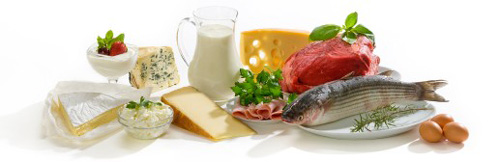
The best sources of protein are meats, fish, eggs and dairy products. They have all the essential amino acids that your body needs.  There are also some plants that are fairly high in protein, like quinoa, legumes and nuts.

All of this being said, I don’t think there is any need for most people to actually track their protein intake.

If you’re just a healthy person trying to stay healthy, then simply eating quality protein with most of your meals (along with nutritious plant foods) should bring your intake into an optimal range.

If you have a physically demanding job, you walk a lot, run, swim or do any sort of exercise, then you need more protein. Endurance athletes also need quite a bit of protein, about 0.5 – 0.65 grams per pound, or 1.2 – 1.4 grams per kg.

Elderly people also need significantly more protein, up to 50% higher than the DRI, or about 0.45 to 0.6 grams per pound of bodyweight.

What “Grams of Protein” Really Means

This is a very common misunderstanding

When I say “grams of protein” – I mean grams of the macronutrient protein, not grams of a protein containing food like meat or eggs.

An 8 ounce serving of beef weighs 226 grams, but it only contains 61 grams of actual protein. A large egg weighs 46 grams, but it only contains 6 grams of protein.

What About The Average Person (of course we all think we’re all above average)?

If you’re at a healthy weight, you don’t lift weights and you don’t exercise much, then aiming for 0.36 to 0.6 grams per pound (or 0.8 to 1.3 gram per kg) is a reasonable estimate.

This amounts to:

  • 56-91 grams per day for the average male.
  • 46-75 grams per day for the average female.

But given that there is no evidence of harm and significant evidence of benefit, I think it is better for most people to err on the side of more protein rather than less.

Protein and THE ATHLETE – How Much Do You Need?weights1
By **Alexandra Caspero, MA, RD

Whether running sprints, long-distance swimming or lifting weights, athletes expend more energy than the average person and their bodies need additional nutrients to recover from intense physical activity. Protein plays an important role in an athlete’s diet as the nutrient helps repair and strengthen muscle tissue. Recently, high protein diets have become popular among athletes — especially those seeking a leaner, more defined physique. But how much protein is really necessary?

OVERALL DIET

While protein is critical in building muscle mass, more is not necessarily better. Eating large amounts of lean protein will not equate with a toned body.

When determining protein requirements for athletes, it’s important to look at the athlete’s overall diet. During periods of both rest and activity, protein contributes about 10 percent of the total fuel an athlete’s body uses. The remaining fuel used is made up of carbohydrates and fat. Athletes who consume diets adequate in both these nutrients end up using less protein for energy than those who consume a higher protein diet. This means that protein can go toward preserving lean body mass (i.e. that lean physique). So in order to retain muscle, athletes need to ensure they are also meeting needs for carbs and fat, not just protein.

ACTIVITY

Muscle growth happens only when exercise and diet are combined.

For example, research has shown that *timing of protein intake plays a significant role. Eating high-quality protein (such as eggs, dairy or soy) immediately after exercise — either by itself or with a carbohydrate — enhances muscle creation.

Duration and intensity of the activity is also a factor when it comes to protein needs.

Endurance athletes (such as runners, bikers and swimmers) tend to synthesize more protein for fuel while power (or strength) athletes (such as sprinters, weightlifters and CrossFitters) tend to synthesize less protein for fuel but retain more for muscle development.

Because they are building muscle, power athletes require a higher level of protein consumption than endurance athletes. “[Power] athletes’ protein needs are highest during the initial training phases, when muscle gain is largest,” says sports dietitian Kelly Rossi, MS, RD, CSSD. “As any athlete trains more, their body’s efficiency in using protein increases so they may not need as much.”

RECOMMENDATIONS

While protein needs of both endurance and power athletes are greater than that of non-athletes, they’re not as high as commonly perceived.

The Academy of Nutrition and Dietetics, Dietitians of Canada and the American College of Sports Medicine recommend the following for power and endurance athletes, based on body weight:

  • Power athletes (strength or speed): 1.2 to 1.7 grams/kilogram a day
  • Endurance athletes: 1.2 to 1.4 grams/kilogram a day

For an adult male athlete, that’s about 84 to 119 grams of protein a day; for adult females about 66 to 94 grams.

By comparison, a sedentary adult male needs about 56 grams of protein a day; for females it’s about 46 grams.

Are POWDERS and SUPPLEMENTS Needed?

*Protein powders and protein supplements are great for convenience, but not to be solely relied on. Whole foods are always best, but with a busy athlete trying to juggle a million things, it is more realistic to provide them with the convenient shake.  It is for added reassurance.

*For the Ultimate protein, greens and fiber in powder form I use and recommend: http://www.ultimatevegan.com/products/

Source of info: http://authoritynutrition.com and http://www.eatright.org

**Alexandra Caspero, MA, RD, is owner of Delicious Knowledge in Sacramento, Calif. She specializes in plant-based diets, sports nutrition, food intolerance and weight management.

How about you?  What form of exercise do you regularly do and do you make a shake the minute you get home from your workout?


Health MATTERS: Exercise vs. Diet – which one matters most?

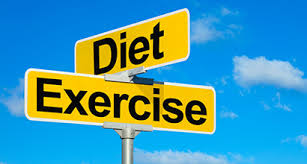
diet1If you had to choose between Diet or Exercise when it comes to slimming down which would it be?

Does one matter more than the other? I know, it’s not really a fair question but some people want to lose weight but really don’t want to 1) Exercise or 2) Diet.

 Of course you can always do one without the other but any thinking person knows that doing both will be more effective.  I was reading an article about this with two experts weighing out the differences.diet2

 HIT THE GYM:

Expert: Michele Olson, PhD, professor of physical education and exercise science at Auburn University at Montgomery, Alabama.

“Yes, you can lose weight with diet alone, but exercise is an important component.  Without it, only a portion of your weight loss is from fat – you’re also stripping away muscle and bone density.  Since working out stimulates growth of those metabolic tissues, losing weight through exercise means you’re burning mostly fat.  The number on the scale might not sound so impressive, but because muscle takes up less space than fat does, you look smaller and your clothes fit better.  Data shows that to lose weight with exercise and keep it off, you don’t need to run  marathons.  You just need to build up to five workouts a week, 50 minutes each, at a moderate intensity, like brisk walking or zumba.  Resistance training helps too.  Don’t just do isolated weight-lifting exercises like bicep curls – you’ll get leaner faster by using your body weight against gravity, as with movements like squats, lunges, push-ups, and planks.  And, of course, beyond burning fat, people shouldn’t forget that exercise can have other impressive health perks, like improving the quality of your sleep, lowering your cholesterol, and reducing your stress level.”

 EAT SMART

Expert: Shawn M. Talbott, PhD, nutritional biochemist and former director of the University of Utah Nutrition Clinic.

“As a rule of thumb, weight loss is generally 75 percent diet and 25 percent exercise.  An analysis of more than 700 weight loss studies found that people see the biggest short-term results when they eat smart.  On average, people who dieted without exercising for 15 weeks lost 23 pounds; the exercisers lost only six over about 21 weeks.  It’s much easier to cut calories than to burn them off.  For example, if you eat a fast-food steak quesadilla, which can pack 500-plus calories, you need to run more than four miles to ‘undo’ it!”

“So, what should you eat?  It’s true that low-carb diets tend to be the most popular because they offer the fastest results, but they can be difficult to sustain.  I recommend striving for a  more balanced plan that focuses on fruits and veggies, lean proteins, and whole grain carbs.  And never cut calories too low (this causes your metabolism to slow, and you can start losing muscle mass).  For a healthy daily calorie count, allow 10 calories per pound of body weight – so a 150-pound woman should shoot for a 1,500 calorie target.  That way, you should be able to lose weight no matter how much you exercise.”diet3

 THE LAST WORD: While diet and exercise are both important for long-term weight loss, remember this: “You can’t out-exercise a bad diet,” says Talbott.

Source: as told to Sarah Z. Wexler for “O” Magazine


Health MATTERS – Inflammation Fighters

Why eating certain power foods can help you avoid the disease-causing condition.

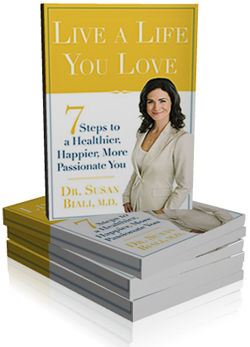
Susan Biali (a practicing GP, wellness expert and life coach) explains the connection between food and inflammation.  She is also the author of Live a Life You Love: 7 steps to a Healthier, Happier, More Passionate You. inflammation2

Biali first learned about this connection a decade ago when she visited a dermatologist about her acne condition at the time.  This specialist was way ahead of his time: instead of prescribing medication, he asked her what she was eating.  He explained that angry, red pimples are a manifestation of inflammation in the body, and that eating certain foods makes acne worse or better.  When she took his advice and changed her diet, her skin changed dramatically.  Of course, there are different causes for acne so food isn’t always the cure, but as a rule an anti-inflammatory diet should improve redness, inflammation and the overall look of your skin. 

Sometimes chronic inflammation is obvious, as with a painful arthritic knee, but it’s typically much more subtle.  Inflammation that contributes to heart disease happens at a microscopic level in your arteries.  You’ll never notice it or feel it until the condition is severely advanced.  The various triggers responsible for this can be stress related, depression, smoking and poor sleep.

You probably heard long ago that eating a Mediterranean-style diet reduces the risk of heart disease.  What you might not know is that it’s also a textbook “anti-inflammatory diet” packed with whole foods and low in refined sugars, refined flours, trans fat and red meat – all of which are believed to lead to inflammation.  Here are some of the power foods that reduce inflammation, protect you from disease and slow the aging process.

Fatty Fish – like mackerel, salmon, trout and sardines are powerfully anti-inflammatory.  In addition to eating fish a couple times a week, taking a high-quality wild fish oil supplement daily is also recommended.

Fruit and Vegetables – deep red berries, broccoli, sweet potatoes, and red & orange peppers are potent anti-inflammatories.

Extra Virgin Olive Oil – this is one of the cornerstones of the Mediterranean diet.  Use it in salads, in cooking and for dipping whole grain breads.  Don’t go overboard, though; one Tbsp. has about 119 calories and 14 grams of fat!  Yes, it’s a good fat,….but can still be fattening.

High-Fibre Whole Grains – refined white flours convert quickly into sugar in your blood, which is inflammatory.  Fibre, in contrast, is anti-inflammatory and digests more slowly, avoiding damaging spikes in sugar.  A test: if you can easily squish a piece of bread – crusts removed – into a pea size ball, it’s not high fibre.  Look for four to six grams of fibre content on the label before buying a “whole-grain” product.

Tumeric – a superstar!  It’s active ingredient (this was mentioned in my beauty post) curcumin, comes in supplement form and has been shown to be as potent for easing aches and pains as OTC painkillers such as ibuprofen.  I love turmeric rich curries and keep a bottle of the spice in my cupboard.

The scientific support for whole foods just keeps growing.  The better you eat, the better you’ll look and feel, and the more likely you’ll enjoy a healthy, inflammation-free life.

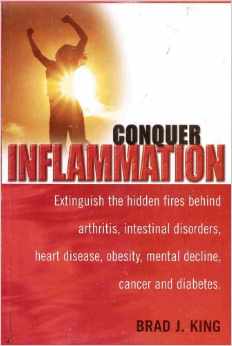
An excellent book on the subject:

inflammation1Conquer Inflammation will give you clear and concise details on exactly how inflammation is generated by your immune system or your fat cells and how it continuously creates havoc in your heart, your brain, your joints, your skin, and your soft tissues. This book will show you how you can end the inflammatory activity in your body without resorting to drugs that may have harmful side-effects. Lifestyle changes, nutritional strategies, and natural supplements can stop the inflammation process without causing more harm to your body.  Available on Amazon.com

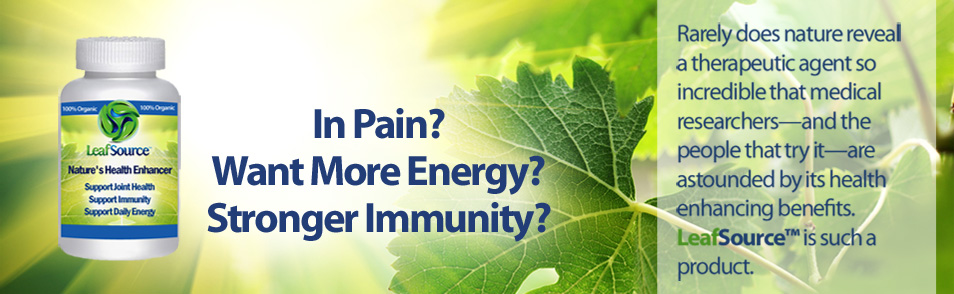
You can also try a product called “Leaf-Source”inflammation3LeafSource mineral products are derived from a 100% natural, organic, prehistoric sea-bed deposit dated at about 120 million years old. Agricultural civilizations have long relied on sea beds as vital sources of fertilizer that enrich soils and provide the nutrients in our foods.

We now know that this intricate matrix of naturally occurring organic acids and alkalizing minerals can have a direct beneficial effect on the body ultimately helping the body run more efficiently. http://www.leafsource.com/

If you have other recommendations for fighting inflammation please pass them along.


B Well – B Motivated

HOW TO EXERCISE WHEN YOU’RE TRAVELING:

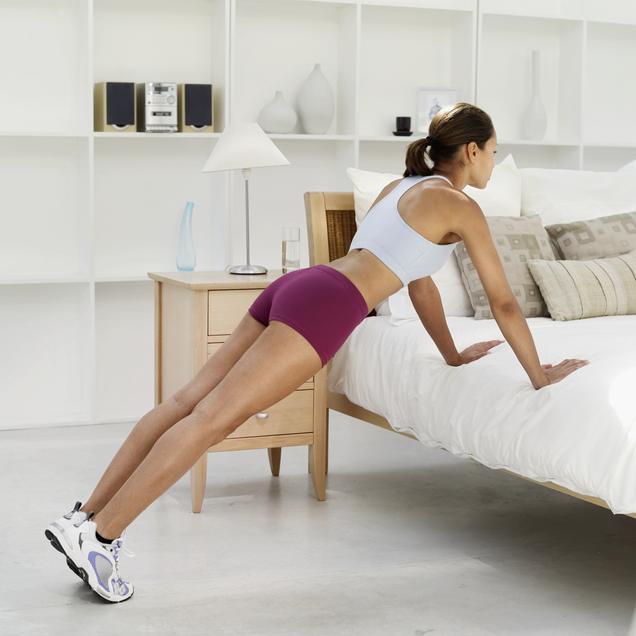
Photo Credit Stockbyte/Stockbyte/Getty Images

An Interview with David Kirsch, fitness expert and author of “The Ultimate New York Diet” (McGraw-Hill).  David owns the Madison Square Club, a private training gym in New York City, and has worked with Heidi Klum and Liv Tyler.  This is an excerpt from his interview with Courtney Balestier.

 Kirsch equates exercise with brushing his teeth or talking a shower.  It gets the day going.  If you have that attitude, it’s easy to take fitness on the road.

       Get motivated bright and early:  Here’s a universal truth – if you’re not working out in the morning, you probably won’t do it later in the day either.  You’re going to be tired from meetings, buzzed from the wine at lunch, later for your dinner reservation, and so on.  Whether you’re on a vacation or business trip, get 30 to 45 minutes of cardio out of the way first thing, and it’ll energize your day.

        Use your hotel:  Predictability is a good thing at the hotel gym.  Don’t fool with machines you’re not familiar with – stick with the treadmill or elliptical.  If you’re in a country that’s on a metric system, be less concerned with speed and more dialed into pushing yourself.

 Improvise:  But you don’t need a gym – or a vacation’s worth of free time.             My Hotel workout includes Spider-Man push-ups (feet on the bed and hands on the floor) and hand-offs with a  pillow (lie on your back with arms stretched overhead and legs in the air, hold a pillow between your shins, then pass it from legs to hands and back).  You can do lunges and step-ups using a chair or ottoman.  Do three sets of 10 reps each for the push-ups, 10 to 15 reps for the pillow hand-offs, and 10 to 15 reps per leg for the lunges and step-ups.

            Be adventurous: Travel is the perfect excuse to change your routine.  If you usually run three miles, bring a great pair of cross-trainers (I like Brooks) and power walk for an hour around a new city.  If you’re a fitness-class-person, ask the concierge about great classes nearby.  This is often entertaining too – a body-sculpting class conducted in French can be pretty funny.

 Also – **Don’t miss listening to “Transforming Health” with host Brad King for the most evocative and informative up-to-the-minute interviews with leading health professionals – Live every Wednesday @ 12PM-PST/3PM-EST on VoiceAmerica.com – #1 internet radio station in North America

Here’s the link: http://www.voiceamerica.com/show/1686/transforming-health