
Ocean Fresh: Spot Prawn Festival returns to Fishermen’s Wharf, Vancouver

Love Seafood?  Love Prawns?  Join me!

  Fresh off the Boat…

[Vancouver, BC] The Chefs’ Table Society of British Columbia celebrates 11 years of the Spot Prawn Festival at the False Creek Fishermen’s Wharf on Saturday May 13 from 11am-3pm. This event is generously supported by long-standing sponsor the Pacific Prawn Fishermen’s Association.

With the return of this free, family-friendly festival is also the return of the ticketed Spot Prawn Boil. The boil sells out every year and tickets are going fast. Get yours here.

Each Spot Prawn Boil ticket grants a wristband for a specific time slot, for access to a plate of three succulent BC spot prawns plus a selection of side dishes made with locally-sourced ingredients from Windset FarmsGrain, and freshly baked Terra Breads. Wristbands also include access to the drink tent for free samples from R&B Brewing , Evolve Cellars and Mogiana Coffee.

Just announced: these BC chefs will take the demo stage at the festival.

11:00 am – Dino Renaerts,  Bon Vivant Group

11:30 am – Taryn Wa, Savoury Chef Catering

12:00 pm – Andrew Shepherd, Vancouver Island Salt Co.

12:30 pm – Quang Dang, West Restaurant

01:00 pm – Matt Horn, Cowichan Pasta

01:30 pm – Isabel Chung,  Fairmont Whistler

02:00 pm – Ross Derrick, The Table at Codfathers and Jon Crofts, Codfathers Market

02:30 pm – Shelome Bouvette, Chicha Restaurant

About the Chefs’ Table Society

Chefs’ Table Society of British Columbia is a non-profit society comprised of BC’s leading chefs and culinary professionals. It is a chef-administered, province-wide collaborative dedicated to creating a foundation for the exchange of information between culinary professionals. The Society supports innovative and sustainable programs that will inspire, educate and nurture BC chefs, producers and the local food industry. The Chefs’ Table Society secures apprenticeships for and bestows bursaries to emerging local chefs and also finances culinary education programs in BC schools. For more information or to become a member visit chefstablesociety.com.

ALL ABOUT Spot Prawns (taken from the website):

Wild BC spot prawns are a delicacy known around the world for their sweet, delicate flavour and firm texture. They are most recognizable for their reddish brown colour, which turns bright pink when cooked, defining white spots on their tail and white horizontal bars on the carapace.

BC spot prawns are the largest of the seven commercial species of shrimp found on the west coast of Canada. They vary greatly in size, with some larger females exceeding 23 cm in total length. Prawns are hermaphrodites: for the first two years of their lives they are males, and then they change to females. Typically, spot prawns live a total of four years.

In BC, approximately 2,450 metric tonnes are harvested annually, with about 65% of the harvest coming from the waters between Vancouver Island and the mainland.

BC spot prawns are available live during the harvest season, which usually starts in May and lasts anywhere from six to eight weeks. Prawn fishermen spread baited traps along the rocky ocean floor at depths ranging from 40 to 100 metres. This method has minimal impact on ocean habitat and very low levels of by catch of other species.

BC spot prawns are very popular in Japan and the rest of Asia, with over 90% of BC’s commercial catch consumed there. Most of the prawns are frozen at sea by fishermen, and then packed and exported across the Pacific. The remaining few, however, are available to be enjoyed fresh in local BC restaurants and kitchens during the fishing season! Frozen spot prawns are also available in Canada year round.

Spot prawn stocks are carefully and sustainably managed to ensure that they remain available to enjoy for many years to come, including:

  1. Limiting the number of vessels that can commercially harvest spot prawns
  2. Limiting the number of traps that can be used
  3. Returning females with eggs live to the ocean

Interesting; No?

For more information please visit: https://spotprawnfestival.com/
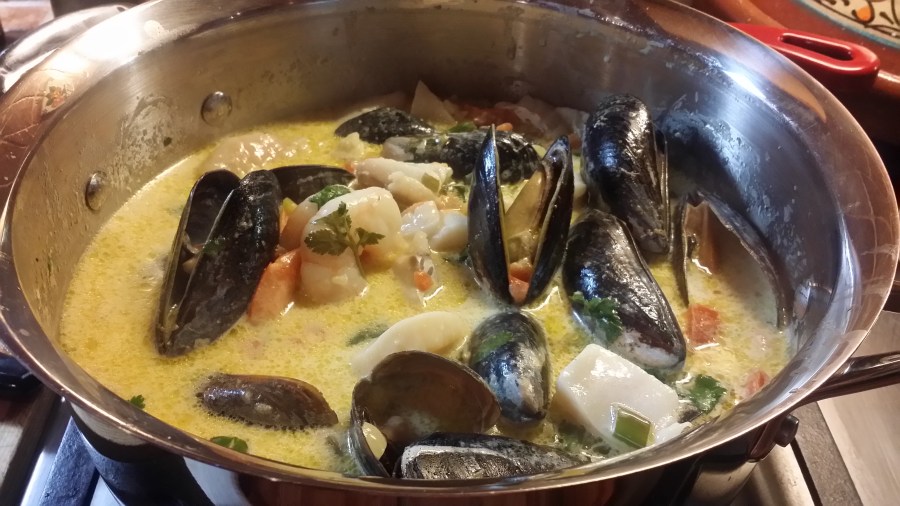
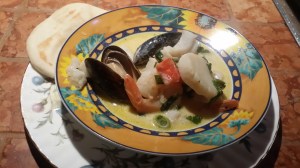
Recipe of the Week: Seafood in Coconut Curry Broth

Last week I made this delicious flavorful dish for an important celebration

my 25 year wedding anniversary! And I might add that the time has flown by.

Who says you have to go out? An evening spent at home with good food, good company, good wine, conversation, music and candlelight cannot be beat by going out to a restaurant.  Add to that a glass or two of bubbly to start…a perfect evening!

We were craving seafood and I hadn’t made this in a very long time.  It’s quite simple as everything is made in one pot.  You can alter the seafood depending on what you like as it’s adaptable as long as you’re using a variety of fresh seafood.  I have to admit the mussels make a huge difference for added flavour & appearance.  Originally I followed a popular recipe from an Indo-American Bistro, but as per usual I changed it and did it my way and it turned out perfect.

1 Tbsp. butter

¼ cup olive oil

2 cloves garlic, minced

1 shallot, minced

2 green onions, chopped

1 large tomato, chopped

1-2 tsp. Madras curry powder

salt + pepper to taste

1 cup coconut milk

1 cup fish stock  (you can make from scratch by boiling bones in water or you can buy from your local seafood store).  I bought frozen halibut stock which dissolves quite easily).

Splash of dry white wine or more (or none)

¼ cup fresh cilantro, chopped

Saffron threads

For Seafood: I used scallops, halibut, prawns & mussels

½  lb. sea scallops (if large, cut in half)

1 lb. white fish cut into chunks (halibut or cod)

1 ¼  lb. mussels (scrubbed + debearded)

8 large prawns (shelled + deveined)

Recipe serves 4 people

In a large saucepan, melt butter and sauté garlic, shallot and green onion for a few minutes over a low heat.   Add the olive oil and turn to medium high heat.  add tomato and sauté for 5-7 minutes, or until soft.

Stir in curry powder, salt and pepper.

Add coconut milk, stock and cilantro.  Cook for 5 minutes.

Add scallops, fish, mussels and prawns all together.  Cover and cook for 5 minutes.  Discard any shellfish that have not opened.

Best served in large soup bowls with naan bread for dipping.  YUM!

Enjoy!

Photos: d. king

Learning from our ancestors

Balance.  Moderation.  Variety.
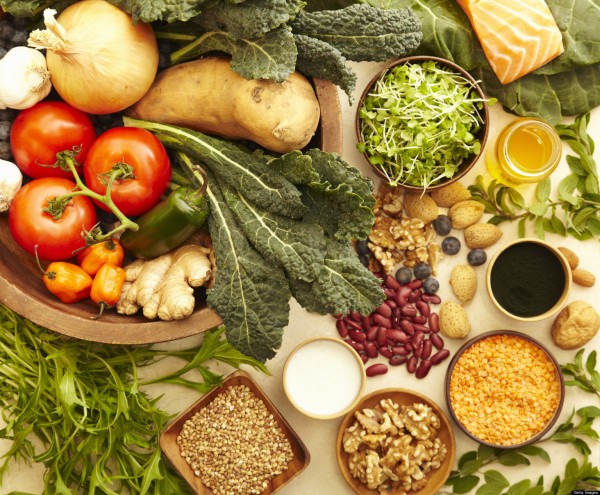
It seems to be the key ingredients to living well and that includes eating well. Whether you were recently celebrating Passover or Easter you more than likely enjoyed good food amongst friends and probably overate a little…or a lot.  Without really meaning to.
Never mind the Passover Brisket.  I will pass over that one. On Easter Sunday we had dinner at a friends house.  Spiral ham with pineapple, homemade scalloped potatoes, caesar salad, etc.  Of course dessert afterwards and then we all went home with a selection of curated individual goody bags from Purdy’s filled with chocolate easter eggs, bunnies, English toffee, etc.  But it’s a special treat and thank goodness it’s only once a year. It should really be guilt free but we always complain later that we should not have gone for that second third helping.  Why do we have friends that make it so darn difficult?  Why are they such good cooks?

Anyway I’m way off topic because where I was meaning to go with this post was to talk about ancient foods being the key to preventative medicine.  Our grandparents used to talk about the many ways people of their time used to heal themselves for common health issues and illnesses.  It’s just something to discuss and consider.

The use of traditional remedies, usually homemade preparations and herbal infusions was common practice. The lack of readily available medicines and healing remedies now known to us existed but were not as widely accessible as today. This forced our ancestors to focus more on prevention as a priority.  It’s a good start.

Hippocrates’ famous quote “Let food be your medicine and medicine be your food”, dating back to 400 B.C., reflects this ideal of focusing on prevention.  The concept of using food for prevention is even found as far back as 2000 B.C., with the Egyptians using honey, garlic, radishes and turnips as well as figs, nuts, salts and spices in their daily diets to fortify the body.

Honey, for example, is one of the oldest recorded foods, used for preventative purposes.  Its unique chemical composition, low humidity and high acidic levels create a low pH environment (3.9 on average), an unfavourable atmosphere for bacteria and other micro-organisms to grow.  Raw honey is a true natural antibiotic. I put a teaspoon of raw, organic unfiltered honey in my lemon water almost every morning to help protect my immune system.  I now add turmeric, cayenne + fresh ginger to the mix.  You can never be too sure.

Vinegars, salts and spices have also been important cornerstones in the diets of our ancestors.   Vitamin C, although it was not discovered until the 1900’s, played a critical role in the everyday diets of the past. Water soluble vitamins found in fruits and vegetables were not yet understood however they were known to consume large quantities of fruits like oranges and lemons high in vitamin C.

In the Amazon of Peru, natives have historically consumed Camu Camu, a superfood that we know today is packed with the highest concentration of natural Vitamin C in the world.

Eating well means to ingest diverse food each day to get the nutrients your body needs to support and maintain good health.  It’s all about balance, moderation and variety.  Even without technology, our ancestors understood this and there’s still much to learn from them.

We can only do our best.

Source: Jorge Urena (founder, president & CEO of UHTCO Corp. – a Canadian company dedicated to create, manufacture and distribute the most unique high quality products from Peru).


Food:  plated pretty   

It’s a feast for the eyesmaybe more so than the palate.  Not something to be wolfed down. But she’s a pretty good looking egg when she gets properly plated.

Free-range eggs on an Isabelle Poupinel plate at the Hotel Thoumieux.                           Credit: Alban Couturier

Sometimes a so-so dish can get an upgrade by an artful placement on a pretty plate.  You get to first admire what you are about to digest and by doing so and taking a bit more time, everything seemingly tastes better too.  At least in my opinion.  If you don’t believe me check this out:

The Chef & The Potter

At his eponymous restaurant inside Hotel Thoumieux near the Eiffel Tower, chef Sylvestre Wahid has earned two Michelin stars for his artful food — served on equally imaginative dishes. “The plate is like a canvas on which the dish and its colors are realized,” he says. The 300 handmade pieces in his collection were designed in collaboration with French potter Isabelle Poupinel. “I love the handcrafted aspect of her creations; the dimensions, the natural, mineral aspects to them,” Wahid says. “This parallelism between the content and the containers is really an interesting way to create harmony.” Poupinel, who has created ceramics by hand, on a wheel, for nine years, agrees — but claims that collaborating with chefs isn’t always so easy. “At first, he wanted the raw plates without enamel. I said, ‘no way!’ With sauce, or whatever, they’d get ruined. Sometimes, you have to control what chefs want in order to protect the work. They can be crazy!” she says with a laugh.

A Recipe From Paris’s Famous Poilâne Bakery

The following is brought to you (via me) by My Little Paris, a website that I’ve lately become addicted to for fun French musings on life, cooking and je ne sais quoi else.bakery1

3,451 miles. That’s how far Apollonia Poilâne used to go to get her bread every week.

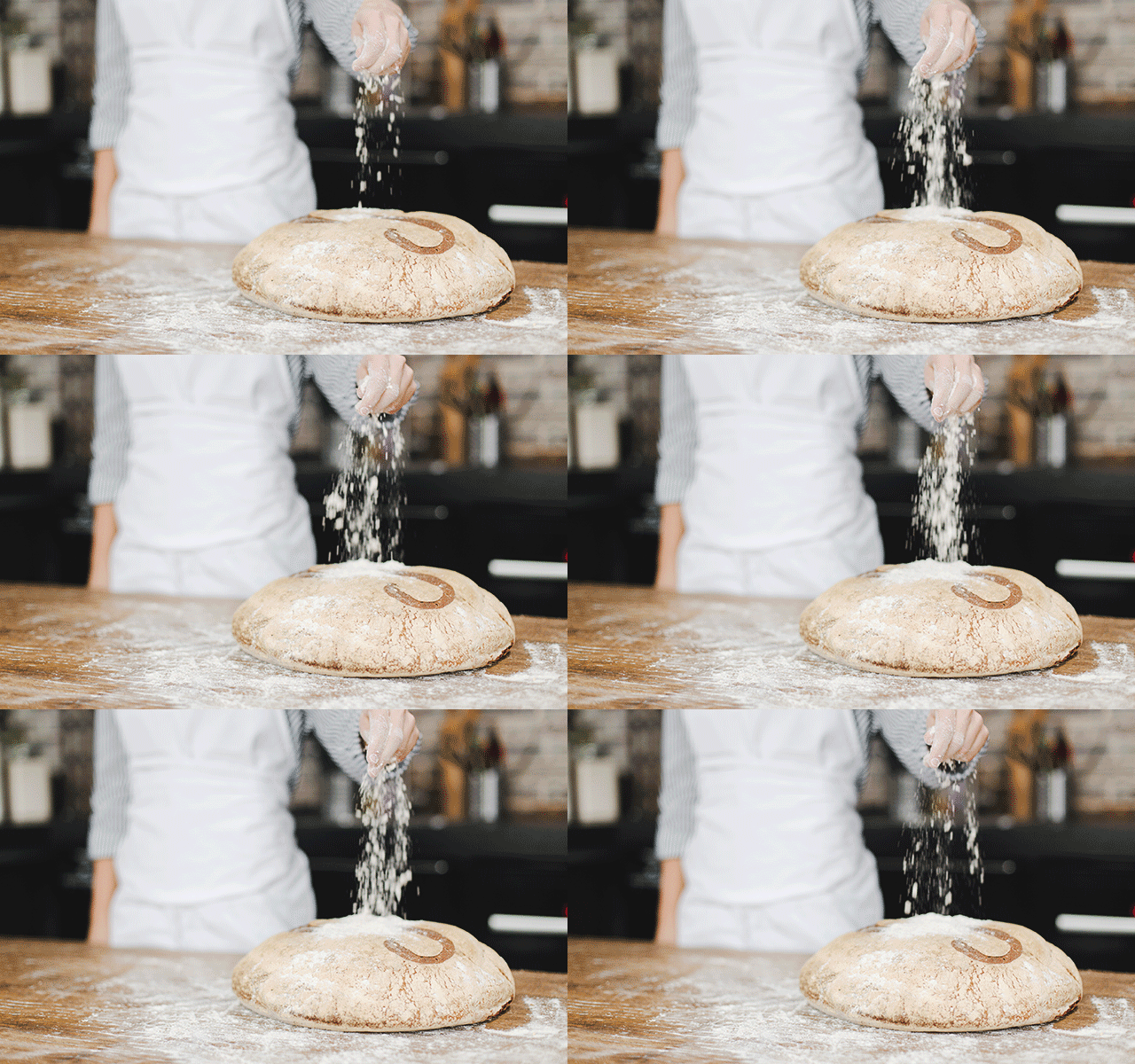
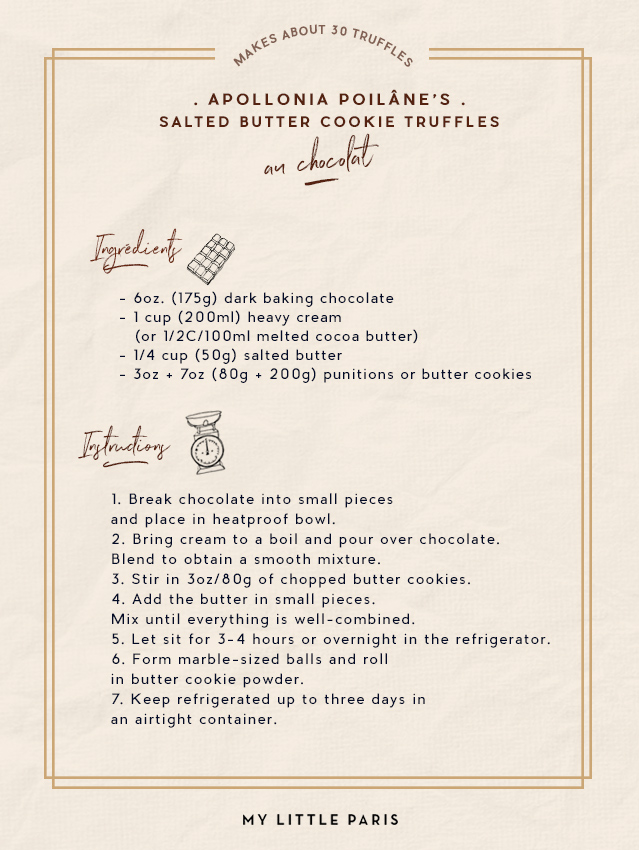
Okay—technically, it was FedEx delivering the loaf from the Poilâne bakery in Paris to Apollonia’s mailbox in the US. But still. The woman clearly takes her bread seriously. She had to: when her parents died in a helicopter crash just months before she left France for college, 18-year-old Apollonia spent four years running the entire bakery from—no kidding—her Harvard dorm room. The following recipe is not for bread (it’s impossible to recreate a Poilâne loaf at home, trust us). But it’s one of Apollonia’s personal favorites, and involves chocolate, crushed butter cookies, and salted butter. Kind of hard to complain.

(Tip: they’re best made with Poilâne’s punition biscuits (which you can order here), but any old butter cookie will do.)
In Paris? Stop by Poilâne’s flagship bakery at 8 Rue du Cherche-Midi for breakfast (or lunch, or both). Not in Paris and desperate for a loaf? FedEx yourself Poilâne’s famous 4.5lb sourdough here.

Food: the forgotton few

Two things I picked up recently at the supermarket: Sunchokes & Watercress.I haven’t had watercress in ages mostly because I rarely find it other than farmers markets.  I almost forgot the nice peppery taste and how great it goes in salads either as the main leafy green or added to a mix of others.
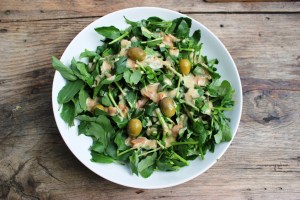
Watercress Salad

One time in Jamaica I swam across an area of the wild cruciferous plant so I snapped off a bunch of the leaves and took it back and made watercress sandwiches (with thinly sliced onion on the advice of someone who swore how delicious & nutritious it was). It used to be a staple of the working class diet in England. It comes with good recommendation. The ancient green is said to have also been a staple in the diet of Roman soldiers with a long history of benefits like immunity boosting properties, a cancer preventative and support for thyroid. In fact, Hippocrates, the father of medicine, used watercress to treat his patients. What was good enough for the Romans & Hippocrates is good enough for me.

Sunchokes

Sunchokes are a different matter.

They are a vegetable formerly known as “Jerusalem Artichokes” and are neither from Jerusalem nor are they related to artichokes.  They are originally cultivated by Native Americans. I guess that’s all the history I’m getting or giving for now.  They look like large pieces of ginger but taste a bit nutty and sweet at the same time. It’s pretty weird sounding.

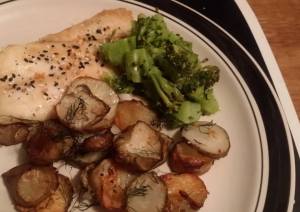
I am neither used to seeing them or cooking with them but since I’m always up for trying something new, I bought a package. I asked a supermarket employee in the vegetable department what to do with them.  He said “cook em up like you would a potatoe.  Peel, leave skin on, mash, bake or boil – they’re delish!” I decided to slice them fairly thin with skin on, drizzle olive oil over top, a little sea salt & fresh dill and bake them in the oven.  They baked in very little time and were quite yummy with more of a root vegetable taste.

Orange roughy with asian marinade, steamed broccoli & baked sunchokes.   Image: d. king

I will make them again and try different ways of serving them.

Have you tried them?


Food: Fish Tacos

Making fish tacos is the closest I feel to being at the beach in Mexico. 

fishtacos1 Because some of my best food memories is eating fish tacos on the beach in Mexico.

Somebody said that it’s not the food itself but all the bonds and memories the food represents.

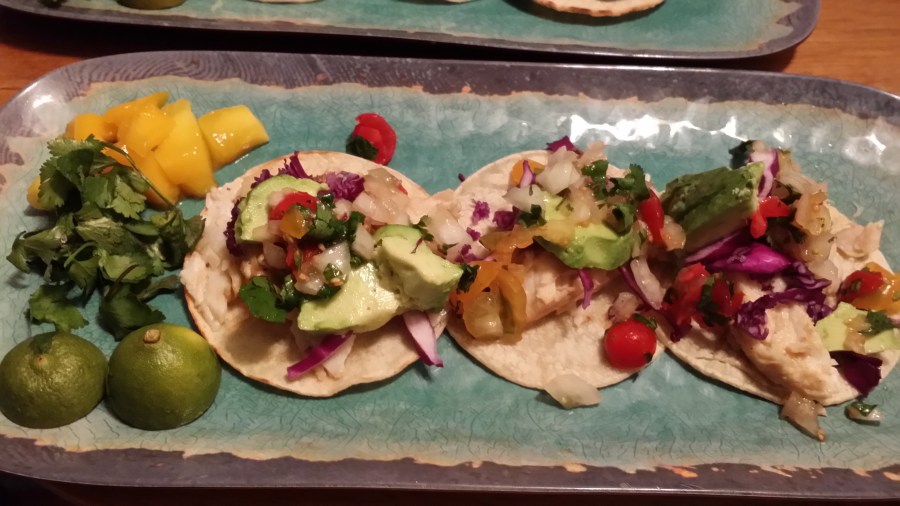
But I never follow a set recipe for tacos because there are so many variations.  These are closest to typical baja style with a little twist and without the sauce. Okay, maybe they’re just my own version.

Buy small street tortillas (they’re easily found in many supermarkets now – I prefer corn to flour) and make pico de gallo from scratch.

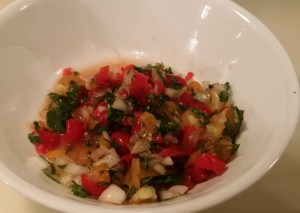
Pico de Gallofishtacos2

  • Chopped fresh red + yellow grape tomatoes, jalapeño, sweet maui onion, handful of cilantro, sea salt + squeeze of fresh key lime.
  • Sprinkle chili/lime seasoning blend on both sides of fish (I used Mexican seabass but you can substitute any white fish). Grill until done – a couple minutes per side. Divide fish among warmed tortillas and add pico de gallo, shredded purple cabbage, extra salsa if you like, top with more cilantro, sliced avocado, squeeze of lime & fold in half.  Add a side of chopped mango for added sweetness.

Buen apetito!

They’re fairly fast and fun to make and definitely delish!

Photos: d. king


nutritious morning meals made easy

These no-brainer but well planned ideas came about while glamping.

Vintage Trailer Show - Modernism Week
Have Wheels, Will Travel! Vintage Trailer Show – Modernism Week

Since becoming a glamping expert I try to make healthy balanced breakfasts incorporating a variety of food groups for a wholesome start to the day that doesn’t require a lot of time or effort.  They’re equally good for non-glamping types too.

Avocado Toast with Feta

A few ideas:

Avocado toast is nothing new but try adding feta cheese over avocado to a piece of whole grain or sourdough toast drizzled with extra-virgin olive oil & balsamic vinegar.  It’s delicious!glamping9

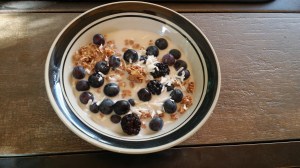
Just a bowl of organic cereal with berries, unsweetened coconut flakes & almond milk (califiafarms toasted coconut is my favourite) is not just a bowl of cereal.

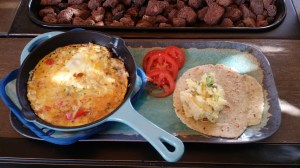
Huevos Rancheros
Huevos Rancheros

Steel-cut Oatmeal made with unsweetened coconut or almond milk, half a smashed banana, raisins, topped with fresh berries & drizzled with a little pure maple syrup, honey or in this case specialty balsamic vinegars (honey ginger and/or coconut for something different).  Each time it varies but tastes equally good and good for you.

Frittata: put a little butter in a skillet, sauté some veggies in it, crack some eggs over top, cook away until done.

Frittata with leftover mashed potatoes (a surprise idea) instead of homefries.
Frittata in individual cast iron pan with leftover mashed potatoes (a surprise idea) instead of homefries.

Huevos Rancheros are fun to make because you get to put them overtop a warm tortilla.  I prefer the smaller ones and versions like 100% whole wheat.  Eggs over-easy, a little refried beans, salsa & cilantro and you’re pretty much done – gringa style.

Oatmeal topped with berries & two new balsamic toppings
Oatmeal topped with berries & two new flavorful balsamic toppings

glamping2

glamping3

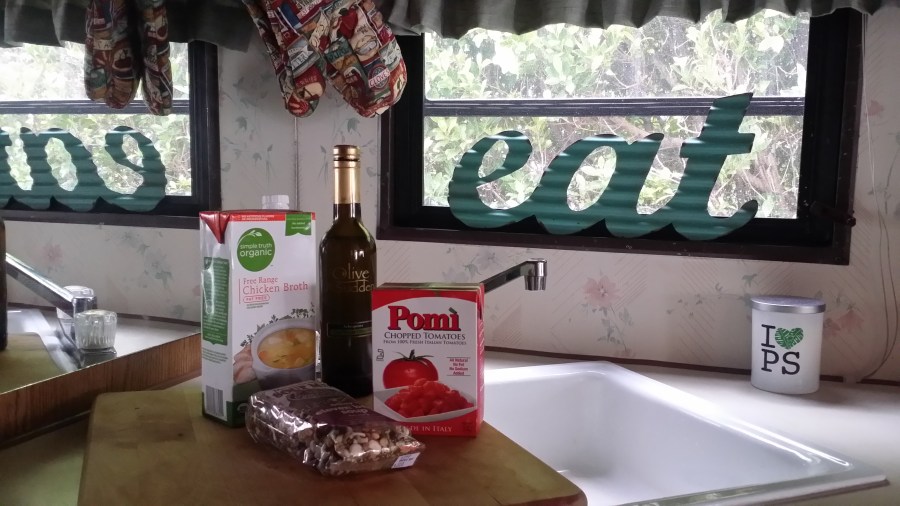
Lunchtime Lentil Soup using free-range organic chicken broth, italian chopped tomatoes & olive oil.
Lunchtime 12-bean Lentil Soup using free-range organic chicken broth, italian chopped tomatoes & olive oil.
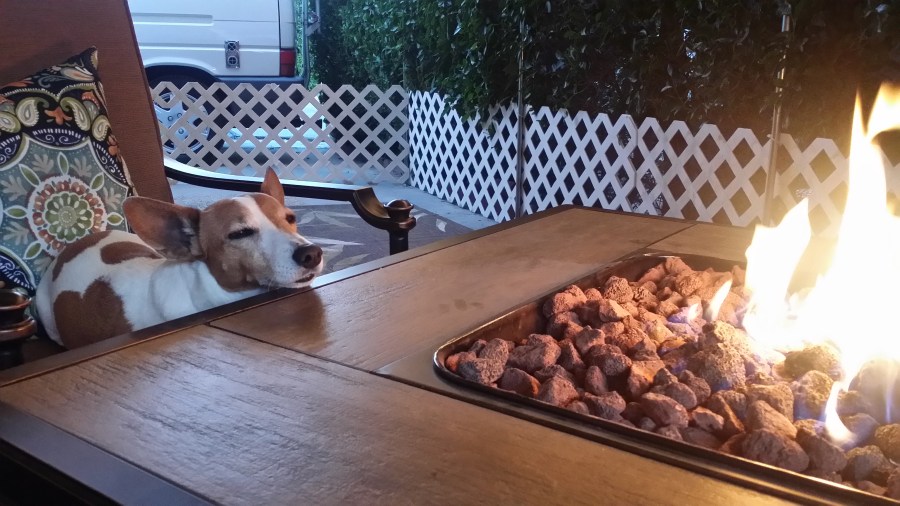
Jack enjoying the firepit (again).
Jack enjoying the firepit again.
The View
The View at Sunrise

 Glamping:  think cocktail tumbler instead of canteen, mood light instead of fashlight, sleeping oasis instead of sleeping bag.  Basically all the comforts of home…but with wheels so you can take it with you.

Photos (except for trailers) d. king.


Food: FARM

What can be more comforting than having a savoury crêpe on a country-chic flower decked patio that makes you feel like you’re in Provence, France?farm4 Even though the secluded setting is located behind retail shops in “La Plaza” a Spanish style center off Palm Canyon Drive in Palm Springs.

farm2

Farm serves locally sourced, French & Spanish-inspired fare.  It was built in the 1930’s as studio residences to house local workers.

The waiter told me Farm restaurant comes with a story…and I always love a good story. Along with a white picket fence.farm3

The story:

Liz Ostoich, owner of Farm Restaurant, told us that La Plaza was developed by the wealthy Julia Carnell, of the National Cash Register Company. The story goes that she was friends with Palm Springs pioneer Nellie Coffman, who built the Desert Inn and invited Carnell to visit.

Apparently Carnell loved the village, but lamented that shopping, entertainment and dining was too spread out. So she built La Plaza in the center of town that encompassed not only shops, a theater, probably a restaurant, but also housing for those working in the shops. Automobiles could park in the cobble-stone plaza near the shops; La Plaza was actually the first “strip mall” in California, if not the country.

“The idea of combined residential and retail units [is] not new,” said Ostoich. “Carnell built the plaza for $2 million, which during the Depression was a lot of money.”

Fresh squeezed watermelon mimosa
selfie
fresh selfie

The vibe

For Ostoich, travels in the south of France gave her an appreciation for farm-fresh cuisine and French country living. La Plaza’s human-scale Spanish architecture is reminiscent of European country sides where hand-built farmhouses seem to spring from the ground like the plants around them.

A white picket fence and gate encloses Farm’s outdoor garden dining areas and a worn pavement path leads to the patio covered by a tangle of vines and bougainvillea. The patio bisects two adjoining bungalows on either side; two are the dining rooms, two are now the kitchen.

Les chiens

Jack's birthday is today - he turns 7!
Jack’s birthday is today – he turns 7!
Jia Jia will be 14 on February 14th

Did I mention they’re dog friendly?

The fare

As the kitchen is small without a microwave or freezer, Ostoich’s Provencal-style breakfast and lunch menu is simple but flexible, based on artisanal meats, local produce and organic eggs. Dishes are made to order with great attention to detail.

My Crêpe: Chicken. Mushrooms. Crème Fraiche. Herbs. White Wine.
My Crêpe: Chicken. Mushrooms. Crème Fraiche. Herbs. White Wine. Salad.

Farm Restaurant

6 Plaza, Palm Springs (760) 322-2724  www.farmpalmsprings.com

Source for story: Pamela Bieri “The Desert Sun”

Photos: d. king

Inside
Inside

Food: the versatile rice bowl

I’ve rekindled my love for rice bowls.  Not only nutritious & delicious but easy to make.

vegetarian coconut rice bowl

It’s a good way to use up all kinds of leftovers. Energize your meal with protein: chicken, salmon or steak. Substitute quinoa or noodles instead of rice as a base and play with a variety of different veggies and dressings to turn it Mexican, Indian, Asian+ for endless possibilities.

Let’s try unlikely combos.  Let’s eat things that are good.  Let’s eat things that make us feel good.

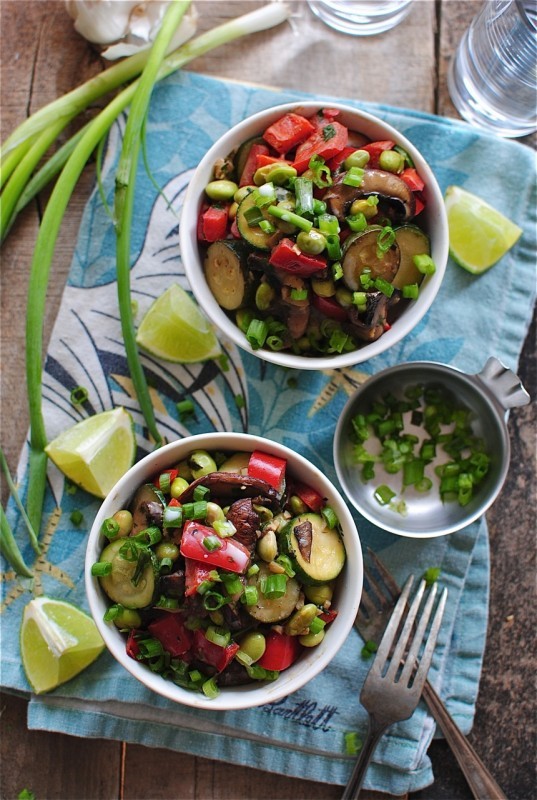
Vegetarian Coconut Rice Bowl Recipe

Yield: 4  bowls

1 cup uncooked jasmine rice, rinsed
* 1 (14 oz) can coconut milk
* 1 cup chopped cilantro, divided
* 2 limes
* 2 tsp extra-virgin olive oil
* 1 cup mushrooms, sliced
* 2 small zucchini, thinly sliced
* 1 red bell pepper, diced
* 2 garlic cloves, minced
* 1 Tbs. freshly minced ginger
* 1/2 cup frozen edamame
* 2 scallions, finely sliced
* coarse salt and freshly ground pepper, to taste

Place the rinsed rice in a rice cooker. Add 3/4 cup coconut milk to the cooker, and 1 1/4 cup water & cook.

When the rice is done, add the juice of half a lime along with 1/2 cup cilantro. Stir.

Heat the oil over medium-high in a large sauté pan. Add the mushrooms and sauté until they become tender and dark brown, about 4 minutes. Add the zucchini and bell pepper; season with salt and pepper and sauté another 3 to 4 minutes. Add the garlic and ginger; sauté for about another minute.

Now add the remaining coconut milk, edamame, remaining cilantro, scallions & another good squeeze of lime juice. Let it simmer 3 minutes, or until the edamame warms through.

Serve over coconut rice garnished with more scallions and fresh lime wedges.

Here’s a growing fast food chain I really like:

Freshii is a (fairly new to Vancouver) fast food restaurant chain that specializes in healthy rice bowls, salads, juices and smoothies.  I recently stumbled upon it when I was hangry (that place when you’re really hungry, bordering on the verge of cranky anger) and enjoyed the *Oaxaca bowl very much.  I wondered why there were not more fast food places like it. The story behind it is interesting blending fashion & food.

Matthew Corrin is the founder & CEO of Freshii.  While working in New York City for fashion designer Oscar de la Renta, Matthew was inspired by “mom-and-pop” delis with fresh food but lackluster branding & service. He sought to “add magic to the fresh food business” & brand the commodity of fresh food not unlike Starbucks branded the coffee bean. He’s a recipient of the Ernst & Young Entrepreneur of the Year award, Canada’s Top 40 under 40, Inc. Magazine’s Top 30 under 30, and Canadian Association of Foodservice Professionals Restaurateur of the Year. In 2005, he founded Freshii.

Oaxaca Bowl
my Oaxaca Bowl

*brown rice & kale, avocado, beet slaw, black beans, corn, salsa fresca, crispy wontons, lime wedge, spicy yogurt sauce (1927 W. 4th in Kits).

Source for vegetarian recipe: bevcooks.com