Healthy Ginger & Turmeric Latte

I’m always looking to incorporate new healthy ingredients for smoothies and teas but never lattes –  so this recipe which was originally featured in a recent GOOP newsletter for Great Skin – Inside and Out kills two birds with one great caffeine-free latte.  I used my favourite creamy almond milk from Califia Farms (California) in Toasted Coconut which is only 45 calories per cup. YUM!
20160205_173000Both ginger and turmeric have incredible anti-inflammatory properties, which means this soothing and delicious latte is also really good for you.

Ginger + Turmeric Latte

SERVES 1

1 heaped teaspoon peeled and finely chopped fresh turmeric

1 teaspoon peeled and roughly chopped ginger

1 tablespoon organic coconut sugar, maple sugar or raw blue agave sweetener

2 teaspoons organic virgin coconut oil

pinch himalayan salt

1/4 tsp. high quality green matcha powder (optional)

1 cup almond milk

  1. Combine turmeric, ginger, coconut sugar, coconut oil and a pinch of sea salt in a powerful blender.
  2. Heat almond milk in a small saucepan over medium heat until just simmering.
  3. Pour the hot almond milk into the blender and blitz everything until smooth and frothy.

TIPS: If you can’t find fresh turmeric, use 1 teaspoon of ground. I added a sprinkling of cinnamon on top – delish!  *Try adding half a banana for additional silkiness & flavour.20160205_173413Beauty Tips:

Jean Godfrey June, goop Beauty Director

I think food makes an enormous difference in the look of your skin. Too much sugar starts an inflammatory glycation process that’s not just super-aging in the long-term, it makes you look puffy and lethargic in the short-term. Inflammation has been proven to be a huge factor in aging in general, and in the way your skin ages, in particular, so anti-inflammatory foods help—my current personal anti-inflammatory obsessions are turmeric and sour cherry. And avocados, like everyone else on the planet!

Fats got such a bad name for so long, and I truly believe they’re critical, especially for people with dry or aging skin: Avocado, sunflower, olive, and coconut oils are all incredible, plus I like to take wild salmon oil capsules. And eat oily fish: My boyfriend and I grilled some fresh herring from the farmer’s market and they were—so good. I’m a huge egg person also. I’m in favor of full-fat milk if you’re going to have milk for the same reason.

And again, antioxidants—in many of the foods I’ve already mentioned, but pretty much every fruit, vegetable, and nut in existence—are important to take internally as well as topically.

Turmeric is incredibly anti-inflammatory and incredibly delicious. My boyfriend got a pound of turmeric powder one day, and that started the whole craze. Fresh turmeric takes it to whole new level; put it with fresh ginger and the flavor is just…heaven.

This latte is pure comfort food, the creamy almond milk, the rich coconut, a little salty a little sweet, warm, spicy: Everything I love!

Photos: d. king

Recipe: GOOP

If you make it let me know how you like it


Health – on the seedy side

CHIA vs FLAX?  I don’t know if one is better than the other so I use both.

Chia Seeds
Chia Seeds

Both are considered super-seeds. At least Flax was spared the humility of being sold as a pet.  Let’s focus on chia seeds for now.

Not so long ago chia seeds were most well known for being spread onto terracotta pottery so that they would grow fur to resemble some kind of animal.  I never had one of those and thought them to be in the same category as the useless pet rock.

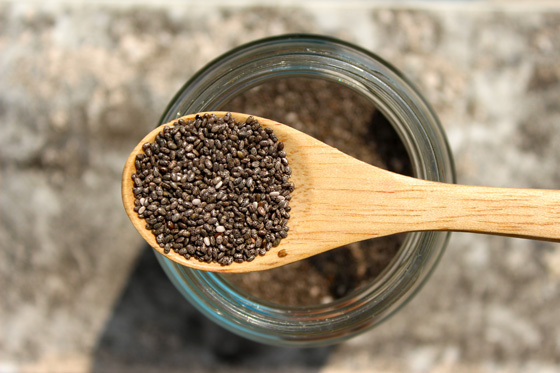
But then we found out that the seeds are much more useful than for making novelty items; they’re incredibly beneficial for your health.  So to be on the healthy safe side I put a handful into my vitamix to add to smoothies and top granola and oatmeal with the potent little seeds that have similar benefits to Flax except they don’t have to be ground prior to consumption, and they don’t go rancid as quickly either.

Chia seeds, along with mint, were a prized food to the ancient Aztecs and Mayans. “Chia” is the ancient Mayan word for strength, and the tiny seeds were valued for their energy-boosting properties.

A Rich Source of Healthy Fats and Nutrients

Chia seeds are a quick and easy-to-use source of protein, healthy fats, dietary fiber, minerals, vitamins, and antioxidants, all rolled into one neat package. That’s a lot to boast about.

20160112_100741In addition, chia seeds contain a number of additional phytochemicals, each with its own unique benefits. This includes myricetin, quercetin, and kaempferol, known for their antioxidant, anti-inflammatory, and anti-cancer properties, and caffeic acid.

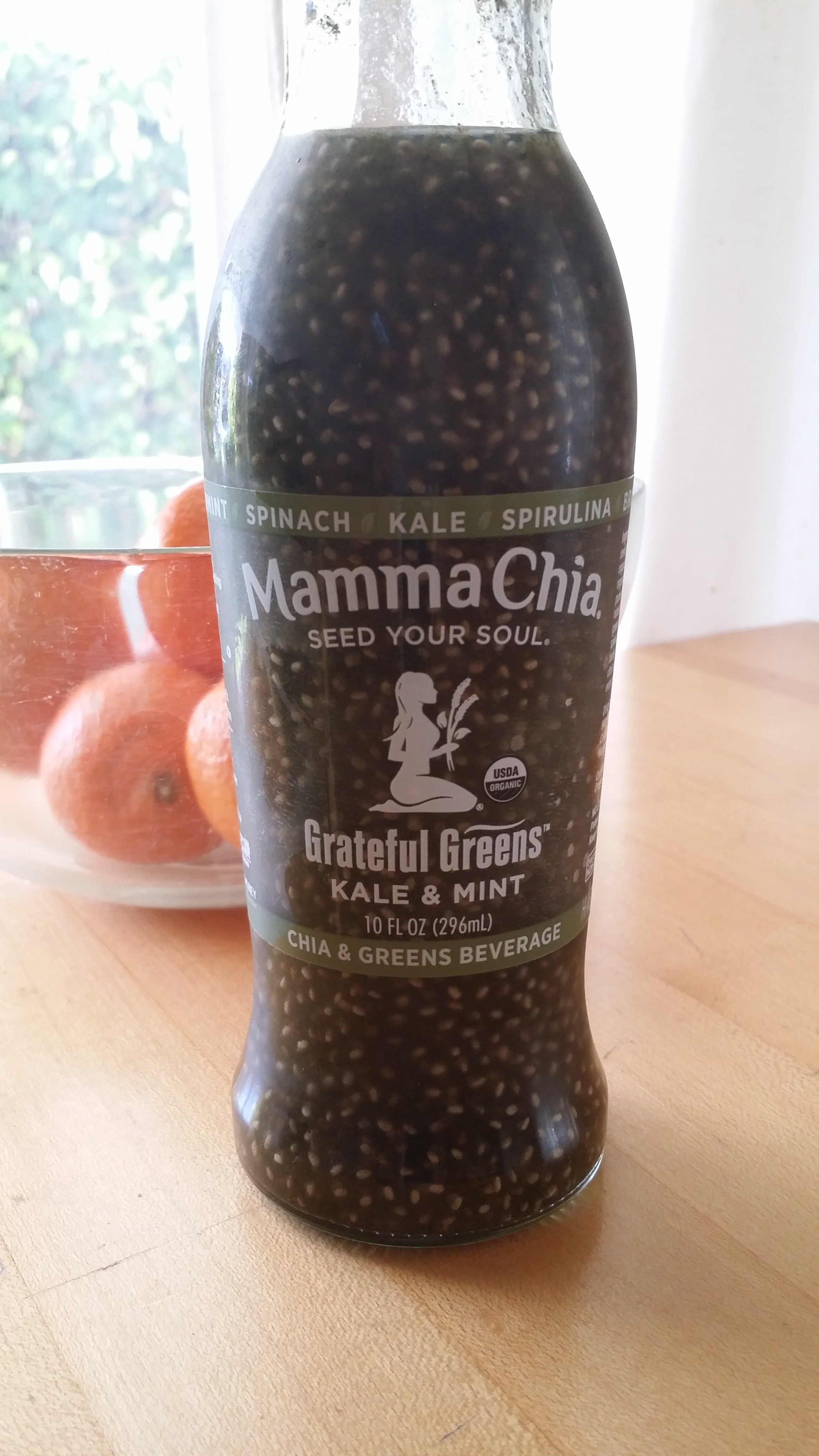
As it goes with the latest “IT” health boosters, you can buy it in other forms like the “Mamma Chia” energy drink shown here which has other added health benefits like spinach, kale, mint & spirulina and tastes similar to bubble tea.

Do you use Chia?


health – post holiday detox

healthy3It’s like Spring cleaning but for your body, and many of us partake at this time of the year right after several weeks of over indulging in food + drink.  We say this year will be different, we won’t stuff ourselves nearly so much at the office parties and celebratory get togethers around Christmas and New Years but how many of us really have the strong willpower to say NO to that scrumptious looking piece of chocolate cake?  Having said that…

Are you confused about the difference between a detox and a cleanse?

Many people use the terms detox and cleanse interchangeably. But there is a slight distinction between the two. It’s that distinction that will help you to make the appropriate investment of your time and resources to reach your optimal health goals.

In a detox, the goal is to remove the foods and food categories that are muddying the waters. We’re taking out the substances that slow you down, make you sick, clog your sinuses, cause bloating, make you retain unnecessary weight and leave you feeling tired and foggy. Who wants any of that?! Sometimes the things we’re removing are foods and sometimes they’re more than foods. . . behaviors or beliefs, patterns and habits that are holding us back. The protocol all depends on the intent of the specific detox.

So if that’s a detox, what’s a cleanse?

A cleanse is all that and more. We’re definitely removing the substances that leave you feeling high and dry in the ways I mentioned above. Yet we’re also going in a bit deeper. We’re delving into a certain area to detoxify and actually working to CLEAN it. We use food and supplements and herbs and practices to get those internal organs functioning to the best of their abilities.  And because many of our organs are so easily regenerated, the healing you bring through these intense cleanses serves you well throughout the entire year.

Your gut is your deep-seated intuition. Intuition tells me that healing the gut is the very first step in remedying almost any health issue.healthy4

As you are well aware there are many, many cleanses out there to choose from.  The most well known is the Master Cleanse. But for convenience sake I’m going to direct you to the trustworthy website belonging to none other than Gwyneth Paltrow. You know the one I’m talking about.  I believe that she (and the people who work on her site) will have one of the best cleanses to tell you about.  I mean who better to give us advice on a 21 day or a mini 3 day (for newbies) post New Years cleanse?  But to be on the safe side, always check with your doctor beforehand.

If you’re interested refer to this link:

http://goop.com/a-new-years-cleanse-and-why-its-important/

Slim down.

Feel great.

Thrive.healthy1

Source: Andrea Nakayama for Replenish PDX and Goop.com

The Power of a New Story – The Year of Moving the Present Forward

A New Year – A New Story

story3

I find this timely piece written by Life Advisor Suzannah Galland to be totally inspiring. Galland uses a combination of intuition, numerology, and general “knowing” to help her clients recognize blind spots and acknowledge the truth—which they often already know but don’t want to believe. Below, she explains how we hold ourselves back by clinging to the energy of old relationships and traumas.

The Year of Moving the Present Forward

As another year closes and a new year makes itself known, we’re inspired to reminisce about the past and lay claim to what we want in the upcoming months and years. Yet, when we look back, many of us may find ourselves pretty much in the same place we were in years past—at least in certain areas of our life. We still haven’t met our dream partner, lost those 10 pounds, or risen in our career as much as we’d hoped. We can name our New Year’s resolutions till we’re blue in the face, but if we approach our life the same way as we always have, we can expect the same results. If our results have been disappointing, why not do something different? Why not move the present forward?

Moving the present forward is another way of saying drop the baggage and manifest the life you want. The only way to do this is to work with what you’ve got now—and to keep your head out of the past.

Manifestation is nothing new. The practice of intentionally creating what you want by visualizing it and feeling its energy has been around for thousands of years. It’s not hard. It’s not even time consuming. Yet most of us don’t do it. It’s possible we’re afraid of getting what we want (we might fear that we still won’t be happy). We might not honestly know what we want and, uncommitted, we put out a wishy-washy lackluster energy that peters out before it reaches the universal flow. But more likely than not (as I see this with almost all of my clients), we’re carrying too much of our past with us into the future. Of all the hold-ups to living the dream, excess baggage is the biggest culprit.

Baggage includes all our resentments, self-pity, and victim mentality—all the negative thoughts and beliefs we mutter to ourselves day in and day out. We’re too fat to date an attractive man, we’re too inexperienced to get the job, we failed last time so why try again. Combined, and over time, these thoughts and beliefs create our overall energy—the vibration level we project to the world. Maybe we had a horrid past or maybe we can’t seem to let go of an old love. We harbor these negative thoughts or resentments, and in doing so we lower our vibration level. Over time, we become our baggage. We’re consumed by it.

The Meter

Women have what I like to call creep meters. When a man enters a room or talks to us, we immediately get a sense of whether he’s got good mojo or is stalker looking for prey. We may not always trust or allow ourselves to tune into the reading, but we have it. We’re able to sense, or read, the energy vibration of another.

In truth, everyone has a meter, and we’re capable of reading more than just creeps. We sense when someone’s vibration is strong and in tune with the universe, and these are the people we want to be around. We’re drawn to them. They feel charismatic. We want to be near them. When the creep meter goes off the charts, on the other hand, we’re repelled. We can’t wait to leave the room.

Everyone has an energy vibration, and everyone is responsible for sustaining or strengthening their vibration. We are, in effect, walking balls of energy, showing the world each and every day what we’re made of. Our vibration level is a kind of personal branding. One subconscious feel of our vibration and people sense our authenticity, our mood, and more. We can show up at the table looking and feeling gorgeous and sexy, blindsiding our date momentarily. But we can’t conceal our vibration forever. Once our date sees past his libido, he’ll sense the real vibration. If it’s below his, he’ll lose interest and, sex appeal or no sex appeal, he’s out the door.

If we’re not attracting what we want, we need to increase our vibration. Good, good, good…good vibrations (the Beach Boys)!

High energy is less consumed by past experiences. High vibration people live more in the present. They feel good about life. They don’t dwell for too long on the past, and only reference it when they need information. The people with little or no baggage don’t work harder, they don’t study longer, they aren’t sexier or more beautiful, and they don’t have any special talents. They are pretty much the same as people with baggage, except for a one percent distinction—high vibration people avoid bringing their past into their future. Instead, they move their present forward.

The New Year is the perfect time to resolve to manifest because, coincidentally, the only way to reach this glorious future self is to raise your vibration by taking a short stroll into the fabulous parts of your past. Keep this visit short and sweet so you don’t wander into dangerous territory. You want to intentionally (not as if you were on autopilot) remember an event or a moment that brought you joy or great pleasure. Forget about the painful memories. Don’t even go there. You want to carry the joy forward. Go there and go deep. Smell it, taste it, feel it. Most important, sustain the feeling.

I loved this Vegas show
I loved this Vegas show – photo: d. king

Here is an example of how you could rekindle some passion by reminiscing a kiss.

A kiss says it all. Do you remember that rush of excitement or falling in love in that moment? It just took you time to realize it, but it was all there in his first kiss. His touch told you right from the start he was crazy about you.

The more you do this, the more you will remember what you can have. You develop a certain confidence, a self-assuredness, which is key, and in no time you will feel compelled to voice out loud how you know a love mate is coming in 2016. You’ll have a new story, and, if anything, your mouth will be craving a kiss.

Why does this work? Physics has proved it: The brain doesn’t know what’s real or not real. It knows what you tell it, what you believe, what you feel. So why not take some editorial license to delete what isn’t working and create a heightened, more evolved you?

The Power of a New Story

My client Stephanie is a public relations consultant for a prestigious firm in New York City. “I’m so sad,” she said, sheepishly in our Skype session. “I had just met this guy Rob. He’s handsome with wavy dark hair and his eyes are so intense. He’s exceptionally smart…we couldn’t stop talking about this and that…we had so much in common. We saw each other a few times. I didn’t sleep with him. He’d been texting me all week. The other night we were back at my apartment and he broke out into a cold sweat and chills. He opted to leave and fast…that was Thursday…and now I haven’t heard from him for four days. I mean we were texting every day regularly, and you should see his words to me. I’ve just spent the whole night crying. I don’t know what to do.”

I felt her pain and understood her crisis. To me, it was clear that she was lapsing into her history of pain and rejection. I wanted to help her.

I asked her if she could Skype me a picture of him. No kidding, he was definitely handsome. I found myself magnetized by his soft green eyes. I could see what she saw in him. He was super sexy. I had an overwhelming sense that this relationship was not over. I started to remotely profile him. He was sincere, embarrassed by the other night for sure, and extremely keen on pursuing her. He felt melancholy and removed. Yet, what was stopping him? I had a hit that he was a reactor. By that I mean that Rob was sensitive to her energy. And Stephanie’s energy was consumed by her story of rejection, abandonment, and lost loves. So if he thought of her, he was repelled.

“Stephanie,” I said calmly, “when he thinks of you, he’ll feel your pain. It’s not something he’ll be consciously aware of. But energy travels. It’s more subliminal. I mean look at how you’re feeling now? You’re full of toxic goo. Let’s shift this energy and right now!” I exclaimed boldly. “Let’s create a different story and move this forward to create a better future.” I took a pause. “Tell me how it felt being with him the first night?”

“OMG” she said excitedly. Her smile lit up the screen. “He took me to a fabulous restaurant and brought me a scarf as a gift. He said, ‘I want you to sleep with this tonight and when I next see you, wear it for me. I will smell it and know it will have your scent all over it.’”

I asked her to find the pashmina and wrap it around herself. She was delighted to do this. As our session closed, she looked (and felt) positively radiant.

Within 30 minute she texted me: “Amazing. Just heard from Rob. He explained he was out of town and not feeling well.”

Stephanie was sold. She was focused on creating a new story and understood the ramifications firsthand of carrying around the past in the present.

Letting Go of Your Go-To Story

When the past comes into the present, you become tied to this story—your go-to story. In a sense, you become addicted to this story—to your past—and you end up making history with this unwanted story. If you continue to support that story, it becomes your definition of yourself. You bring it with you. Likewise, you transmit it to others. It comes with you to a romantic dinner, to bed, while having sex, taking meetings—wherever you go, your past sits with you, smack bang in the middle of everyone and everything. The trick is not to let it define you. Even though it happened, it’s gone; it’s the past. It’s no longer your story. Let go of the story and create a new one.

Create a new and better go-to story, and make 2016 an irresistible year.  Happy New Year.

Suzannah Galland is not a typical Life Advisor. Her work combines her innovative MindSense Method™ with compelling strategic and tactical guidance. She uses intention profiling (“both those of the subject, and the intentions of people in their lives”) to give her clients immediate access to their desired results.

Suzannah is a licensed HeartMath coach, and licensed in Kinesiology by Brain Gym®. She also has Management & Leadership training from Cornell University’s certificate program in Executive Leadership.

Health/Exercise – What Happens When You Skip the Gym?

exercise2exercise1

I’ve belonged to the same gym which is located a very short walking distance from where I live for more years than I want to admit.  If I really stop to think about it, If I went every single day since day one, my body would be in perfect shape right now.  But because I only go a few times a week instead, it is in almost perfect fairly good shape right now with room for improvement..always. My criteria is location, equipment, cleanliness and classes.  The classes are excellent and I go to the varied yoga classes with different instructors and practices.  I must admit that as much as I want to love working out with weights I don’t.  I tried and tried and liked seeing the results because weights really do work but I didn’t enjoy it. I have some weights at home that are still sitting on the floor waiting to be picked up…someday.  I don’t even enjoy spinning because I’d much rather ride a bike outside and I don’t like to sweat very much.  So spinning is out.  Running, Yoga and Dancing (tango/swing) works for me right now.  And I always walk.  I can walk and walk and walk for miles as long as my footwear is comfortable.  Basically I feel better about myself when I’m doing a physical activity to improve my body, but sometimes…

No matter how dedicated you are to fitness, sooner or later, it’s going to happen: You’re going to skip a workout… and another… and another. Maybe you can blame a vacation, a mile-high pile of paperwork at the office or just your run-of-the-mill funk. Whatever the reason, before you know it, you’re out of shape.

A running buddy helps to get you motivated
A running buddy helps you to get motivated

Neglecting the gym every once in a while is nothing to worry about—after all, sometimes your body needs to rest and recover. But, when you hit pause on your workouts for more than a week, you might actually be throwing your fitness level into rewind.  Here is an article I read on thedailybeast.com

How Fast Will You Fall Out of Shape?

You worked hard to get fit, whether by logging regular runs, or striving for new personal bests in your bench press. When your workouts fall by the wayside, how fast you fall out of shape depends on more than just how much time you spent away from the gym. Your overall fitness and the type of workout you’re missing will also impact your losses, says James Ting, M.D., a board-certified sports medicine physician with the Hoag Orthopedic Institute in Irvine, CA.

As a general rule, the fitter you are, the longer it will take your muscles turn to flub, he says. Your physique doesn’t like change; it’s constantly trying to achieve homeostasis. So the longer you have been exercising (and the fitter you are), the more time it will take for your body to say, “Well, I guess we don’t need to build muscle anymore.”

If it’s only been a week since you broke a sweat, don’t stress. Whatever your workout history, it’ll take more than seven days for your body to soften. But two weeks? You might not get away with that as easily. One Journal of Applied Physiology study suggests that easing up on your workouts for just 14 days can significantly reduce your cardiovascular fitness, lean muscle mass, and insulin sensitivity. Meanwhile, it can take two months or longer to see complete losses of your fitness gains, according to Ting.

Endurance vs. Strength: Which Will You Lose?

Your body will react differently depending on whether you’re skipping endurance exercise versus strength training, says exercise physiologist and trainer Marta Montenegro, M.S., C.S.C.S.

That’s because your muscles contain both type I (slow-twitch) and type II (fast-twitch) muscle fibers. Type I fibers contribute to endurance performance. Type II fibers are more powerful, and their “fast-twitch” capabilities help you power through high-intensity exercise or strength training.

During your day-to-day activities (like walking, talking, sitting at a desk, etc.), your type I fibers are contributing to the bulk of your efforts. But you really have to work to get your type II fibers to switch into gear. So, when you take a break from exercise, your type I fibers are likely still being used, helping to prevent them from breaking down. But some of your type II, fast-twitch fibers may be rarely, if ever used, if you aren’t working out, she says.

That may explain why type II fibers tend to atrophy more quickly than type I fibers, she says. In other words, your max bench press will suffer before your 10K time does when you’re slacking. If you’re taking a break from strength work or high-intensity intervals, you’ll notice a huge difference when you finally do go back to the gym.

Endurance athletes aren’t entirely out of the woods, though. When you perform regular cardio, your type II muscle fibers gradually change from type IIx to type IIa, Montenegro explains. Type IIa fibers are key to endurance performance: They are powerful, but don’t tucker out as quickly as IIx ones, meaning they can help power your long runs. When you take a break from your long runs and rides, this essentially reverses, and your percentage of type IIa fibers decreases, while your IIx fibers increases, she says. So prepare to tire out way faster.

Breaks Aren’t All Bad

Before we terrify you into heading to the gym right now, know that it’s actually good for you to skip workouts from time to time. In fact, if you train hard , taking a break can actually help improve your strength, muscle development and aerobic fitness, says certified strength and conditioning specialist Brad Schoenfeld, Ph.D., assistant editor-in-chief of the Strength and Conditioning Journal.

Days off can also improve your mental fitness. “Your body and mind both need time to recover for overall health and in order to achieve optimal performance,” says Ting. “Failing to recognize this and training too hard can lead to fatigue and, ironically, underperformance, the so-called overtraining syndrome.”

If you’re sore more than 72 hours after a workout, you’re feeling ill, or your fitness progress is stalling, it may be time to back off. How long should your break last? “There’s no hard and fast rule for how long a ‘break’ from exercise should be,” Ting says. “It may be as short as a few days, but it’s important to realize as well that it can also be up to one to two weeks without any significant detriment or loss in previous fitness gains.

Just remember that taking a break from exercise doesn’t (and shouldn’t) equate to gluing your butt to the couch and Netflix-binging. “Taking up some light activity that isn’t part of your typical training regimen, such as yoga or even a long walk or leisurely bike ride, can all constitute a ‘break,’” Ting says.  (Oh, I see…I’ve been taking breaks all this time instead of actually working out).

How to Jump Back Into Your Workouts

Depending on how long you took off—and lazy you were—you might not want to jump back into your workouts, but rather ease into them. If you’ve taken any more than a couple weeks off, you’ll probably notice some differences. After a month or more, you’ll definitely want to get started with a less-intense version of your regular workout, Ting says.

“The most important thing is to back off a little for the first week,” Schoenfeld says. “Choose a weight where you will be able to stop several reps short of failure on your sets. The following week you should be able to train at your previous level, assuming the reason for stopping wasn’t an illness or injury.” Meanwhile, if you’re getting back into running, start at a pace at which you can run comfortably and are able to speak in short sentences. After a week, try turning up the speed.

It can be frustrating to exercise at anything less than your max effort, sure, but gradual is the way to go to prevent injury. The last thing you want is to walk into the gym after a month off, try to squat your “usual” load, and throw out your back. (Hello, another month off.)

Luckily, when it comes to getting back into your pre-break shape, you do have muscle memory working for you, Schoenfeld says. There are two aspects to muscle memory. One involves your ability to carry out movements in a coordinated fashion. Wonder why your first rep on the bench press looked so sloppy? It’s because your body was learning which muscle fibers it needed to recruit, and which ones it didn’t, to properly perform the exercise.

Then second component of muscle memory involves your cells. “Muscles have satellite cells—basically muscle stem cells—that help to drive protein synthesis. Resistance training increases satellite cells and these changes remain for years,” he explains. “So even if muscle is lost from taking time away for many years, a person can regain the lost muscle much more quickly after an extended layoff.” Score.

Exactly how long it takes will vary from person to person, but by and large, you can expect to be back in fighting shape in a few weeks.

What kind of exercise do you do on a regular basis?

Source: K. Aleisha Fetters, Life by Daily Burn (thedailybeast.com)

Happiness RULES! – Part Two

Following yesterdays post re the ancient philosophy of Vedantamind2

Peace of Mind is the most important factor for feeling grounded and achieving happiness.

What disturbs your peace of mind?

No external factors can disturb you except yourself. You make yourself, you mark yourself. The world cannot disturb you.mind1

Rule #1: If you operate on likes and dislikes, you will face the consequences thereof.

A man picks up a cigarette and finds so much pleasure in it; another guy can’t stand smoking. A man goes to a lawyer to divorce his wife, and he finds great pleasure in getting rid of her; another guy is desperately waiting to marry the same lady.

This happens everywhere: The lady produces joy to one, sorrow to another. Therefore, it is not in the object or in the being—it is in how you relate to it. It’s your mind that wreaks havoc on your peace, not the external world. It is a mistake to believe that joy or sorrow is in the external world.

The mind is replete with likes and dislikes. So when you’re operating at the level of the mind, you do what you like, and you avoid what you don’t like. And when you’re dependent on your likes and dislikes, it’s miserable. For example, an Indian comes to the United States and he only likes rice and dal, but you give him pasta. What is this pasta? Meanwhile, the pasta-lover doesn’t like rice. If you operate on likes and dislikes, you’re dependent on the world. The world is in a flux of change. It can’t cater to your likes all the time. Therefore, you will be frustrated. If you only like summer, you will enjoy three months and suffer for nine. When you operate on likes and dislikes, you operate on the mind. But when you operate on the intellect, you choose the right course of action.

See, what is pleasant to you in the beginning is not so in the end. Junk food is pleasant in the beginning, but not so much in the end. You don’t like exercise, and you avoid it, but it becomes a problem later. What you like is detrimental; what you don’t like is beneficial. This is not to say that you shouldn’t do what you like—I’m only asking that you examine whether it is proper.

One Indian man heard my lecture and he went home and he looked at his wife. She said, “Why are you looking at me like that?” And he said: “I was liking you very much, but Swamiji said that I should throw out my likes and so I’m going to throw you away.”

Crazy! I didn’t say that! For heaven’s sake, don’t throw your partner away! All I said is to examine your likes and dislikes. If you don’t like exercise, you can’t just throw it away. If you like junk food, and you eat it all the time, there are consequences.

Rule #2: Know the mind has a tendency to ramble.

When I’m talking to you, it’s impossible to follow everything I say, even though you might want to follow. The mind rambles. It’s natural. It rambles into worries of the past, and anxieties for the future. That tires you. Action doesn’t tire you. Action can never tire you.

Therefore, you are making the biggest blunder by getting away from action for weekends and rest. In my entire life, I’ve never taken a vacation. Every day is vacation. At the Institution, students are in a three-year course. They’re up at 4am and we go until 9pm, 365 days a year. There are no breaks for weekends or vacations. Come and examine the students—nobody wants a break.

If you don’t find rest in action, you will never rest by getting out of action. In fact, you’re working for weekend and vacations. But if you don’t know how to control your mind and act in the present, you will always feel tired.

Do you want proof? Examine your own children. Your children are never tired. They are bristling with activity. Because of the simple fact that children have no worries of the past and anxieties for the future, they’re happy. But you all have the worries of the past and anxieties for the future, and it tires and fatigues you. So you need rest. It’s as simple as that.

Rule #3: Uncontrolled desires create havoc.

Without desires, you can’t live. You can’t survive. So what do you do with desire? You have to monitor and control your desires, because when unmonitored, desire becomes lust, greed, and avarice.

That’s what happened in 2008—the greed mounted to the point where there was a crash, and crash after crash. But if you control your desires, it becomes an aim, an ambition, or aspiration, and that is alright. You have to watch your desires before they mount to greed.

Rule #4: Preferential attachment is deadly.

What you pass off as love is nothing but preferential attachment. And preferential attachment is deadly.

When there is love, I serve you.
When there is attachment, I look for your service; what can I get out of you?

The husband says: This is my right, I married you.
The wife says: This is my right, I married you.

It’s more a life based on rights than on duties. It’s because of preferential attachment. It’s passed off as love.

Love + Selfishness = Attachment

Attachment – Selfishness = Love

Get that straight!

I’m not against love, I’m against this deadly thing called attachment.

The home should be the center, not the boundary of your affection/love. It becomes the boundary when you can’t see anything or anyone beyond it.

When you change yourself, you change the world

You cannot change the world without changing yourself. Everyone has the ambition of changing everything except for themselves.

All the great prophets, they changed themselves, then changed the world. If you change yourself, you change the world. If you want to change your children, you need to lead by example.

There is an inscription on the tomb of an Anglican Bishop in England:

When I was young and free and my imagination had no limits, I dreamed of changing the world. As I grew older and wiser, I discovered the world would not change, so I shortened my sights somewhat and decided to change only my country.

But it, too, seemed immovable.

As I grew into my twilight years, in one last desperate attempt, I settled for changing only my family, those closest to me, but alas, they would have none of it.

And now as I lie on my deathbed, I suddenly realize: If I had only changed myself first, then by example I would have changed my family.

From their inspiration and encouragement, I would then have been able to better my country and, who knows, I may have even changed the world.

If you want to change the world, you must change yourself first.

Source: Goop.com


Health: how does one achieve LASTING Happiness?

By practicing Vedantahappiness2Vedanta is an ancient philosophy that is based on the end of the four Vedas. (It literally means “the end of knowledge.”) The scholar comes from the Vedanta Academy, a school just outside of Mumbai established by Swami A. Parthasarathy, a nearly 90-year-old guru who has been traveling the world explaining how to eradicate unhappiness for more than 60 years.
At its heart, Vedanta revolves around developing the intellect: That we are all unhappy because we drive our lives forward using only our minds, which are the seat of emotion, likes, and dislikeswe need our intellect, the seat of reason and rationality—to keep the rambling and anxiety in check.

It is simple and profound, and incredibly relevant to life today—in fact, Parthasarathy (respectfully known as Swamiji) spends most of his time working with business leaders and CEOs, who are struggling to scale companies and embrace the tenets of real leadership.

Parthasarathy is incredibly prolific and has written 10 books, dealing with everything from love versus attachment, to business and relationships, as well as mentoring his ever-expanding pool of scholars. It’s going to expand even faster, as they’ve just introduced an e-learning portal where anyone, anywhere can access 368 lectures, to be consumed over the course of three years. If you want to get a baseline understanding, he recommends that you start with four books, in this order: The Fall of the Human IntellectThe Holocaust of Attachment, Governing Business & Relationships, and The Vedanta Treatise: The Eternities.happiness1
PART ONE (it’s quite lengthy so I had to cut it into two parts) – excerpted from a talk by Swami A. Parthasarathy.  

Below, an abridged version of a lecture Swamiji recently gave in Southern California that gives an overview of what Vedanta is all about.

Tonight, we are going to discuss Vedanta, a word that you won’t find in the English dictionary. Vedanta is ancient wisdom, laid down thousands of years ago. It’s made up of two words—veda and anta—which mean, respectively, knowledge and end. So the word Vedanta simply means the end of knowledge, the culmination of knowledge. It is ancient, but it is relevant in modern life—in our day-to-day living.

Now when you purchase a machine—any gadget, really—you’re given a manual for how to operate it, whether it’s a shaver or a coffee pot. If you don’t have the manual, you are in trouble. Now, you have the subtlest of machines within you—and nobody has a clue what it is. And what’s more, this machine is operating you throughout your life. There is no reference to it in school or universities. Nowhere are you taught what it is, or how it operates in your life. Even the most intelligent people have no clue.

And therefore we get into all sorts of problems. And problems, problems, and more problems. For the last 60 years, I’ve been listening to only problems.

It’s interesting because a human being is a masterpiece of creation—but a human being has all the problems. Look at the animal world: No problems at all. And that is because all creatures are protected by nature. But humans…humans do what they like—exactly what they like. Have you found one zebra in the animal planet that is overweight or underweight? One impala? They all have the same weight. Because nature takes care of them.

But no two people are the same—some are underweight and some are overweight—because nature does not take care of humans. Why has this happened? Well, as I said, a human is a masterpiece, so nature has left it to us to handle our own lives. It’s exactly like when your son or daughter reaches the age of 18 and you hand over the finances and tell them to operate on their own. They are grown-up, they can handle their affairs. Similarly, nature leaves us to ourselves because we have been provided with an intellect.

We get to do what we want. But we sure have messed it up. Because here is the rub: There is nothing in the world that can disturb you except yourself. You are the architect of your fortune and the architect of your misfortune. You can entertain yourself, and you can also disturb yourself.

Vedanta deals with the subject of YOU, and your life.

How do you define your life?

Your life is a series of experiences. That’s your life. That’s my life. A stream of experiences, just as water flowing is a river. Your experiences flowing, one after another: That is life.

So what is an experience? It consists of two factors. You and the world. You alone cannot have an experience—for example, in deep sleep you don’t have an experience. The world is what you experience. So there is a subject/object relationship that brings about an experience. The subject is you. The object is the world.

When you contact the world, there is an experience. So ancient scientists went about beautifying the world and making it a better place for us all to live. I’ve seen the world evolve in the past 70 or 80 years—there’s been a phenomenal change, it’s really incredible. But as the world has been improved, human beings are not as happy or comfortable as they once were. It’s a paradox. Our ancestors were much happier. It’s a contradiction.

The world has been improved, but the individual has been neglected. We live in a beautiful world but are unable to make use of it properly. It’s like having excellent food, but no appetite.

What compels us to act?

We must continue contacting the world—action is the insignia of life, while inaction is death. You have to act. So the question is really, how do you act? The body performs the action. When I’m talking to you, it’s an action. When you are listening to me, you’re performing an action. But all that said, my body cannot come here and talk to you by itself. There is something other than the body that propels it and compels it to act. What is it? You are not taught this in school or university; you were not taught this by your parents when you were a child. No government takes up the subject. We are all left high and dry in the world without knowing that which enables us to act in the world. It’s like being blindfolded. So learn this today: You have two equipments, and one is the mind, and one is the intellect.

The mind consists of emotions. It is the seat of feeling, of likes and dislikes. You’ve been collecting likes and dislikes since childhood. The intellect, on the other hand, is for reasoning. You’ve just never bothered to deal with it.

There are three living species. Plant, Animal, and Human.

A plant has only a body; it has no mind and no intellect.

An animal has a body and a mind, but no intellect.

Only a human being has all three.

But human beings don’t know how to use their intellect. And you need your intellect for success and for peace, which we all want.

What is this intellect?

First, you must understand the difference between intellect and what you all know—what you all know is intelligence. Intelligence is knowledge.

Intelligence is just information you gain from your predecessors. You gain intelligence from external agencies like teachers and textbooks, from schools and universities. That knowledge and information provide you with intelligence. No amount of intelligence can make up the intellect. It is impossible. They are on two different wavelengths.

So you have intelligence and you’re making a living off of it. And you’re complacent. You have a good business. You have this, you have that. Let’s talk about that.

You have a pen. And you leave it behind today. Are you going to drive back and get it? Probably not, it’s just a pen.

Let’s say you leave your wristwatch here. You’re going to call the hotel and give a description and ask them to keep it safe so you can come and pick it up.

Let’s say you have your wristwatch and you go out to the parking lot and your car is missing. What is the loss of a car to you?

Let’s say the car is there, and you drive home and your new beautiful, fully paid-off home has burned to the ground. What is the loss of a house to you?

Let’s say you drive home and your friend calls you to tell you that your wife and two children have met with a fatal accident. What is the loss of family to you?

Draw the line from the loss of a pen to the loss of your family and then find out where you stand. No amount of intelligence is going to help you tackle that problem. If you are buckling after the loss of a wristwatch, or the loss of a car, and it is causing you sleepless nights, that’s a pretty bad state. No amount of intelligence is going to help you handle your affairs. You need an intellect to help you handle the faculties of the mind, for it is the mind that troubles you and destroys your peace. It is nothing else. You must know how to deal with your mind.

The only real value of intelligence is to help you make a living. You might go to medical school to gain the knowledge of medicine so that you can make a living. Same with engineering school, or law school. But all animals make a living without going to university.

Millions of doctors have passed through medical school, but one guy found out how to transplant a kidney, one guy found the cure for tuberculosis. How about that? Those men had intellect, besides intelligence.

So how do you develop the intellect?

You need to start developing your intellect at the age of 7, of 8, of 9. And these are the two most important points.

  1. Never take anything for granted.
    2. Question everything.

I can prove to you that you have taken everything for granted and that you don’t question. It’s called herd instinct. You follow the herd. You follow your predecessors. You go to primary and secondary school. I ask, “Why do you go to school?” You reply, “Everyone goes to school.” You brother, your sister, your mother, your father. I ask, “Why did you get a job?” You reply: “Because after school that is what everyone does.” And then you get married and have children.

Herd instinct. I’m not saying that going to school is wrong. Or that getting married and having children is wrong. But have you thought about why you have done these things?

Here are some words from Galileo:

I do not feel obliged to believe that the same God who has endowed us with sense, reason, and intellect has intended us to forgo their use.

What are you working for?

So once you provide yourself with intellect, what do you do? First of all have you have to fix an ideal in life: What are you doing? What do you want? Everybody in the world is running around with no time, just running and running. But what are you all working for?

Most of you are probably working for your husband or wife and children. You are working for your family—everything else is a blur. Your home is the boundary of your affection. But it should really just be the center of affection.

With the intellect, you have to fix an ideal. And an ideal requires working beyond yourself. You can work for your family, you can work for the community, you can work for the country, you can work for humanity…you can even work for all living creatures.

The higher the ideal, the greater the initiative to work. The problem is that people don’t have ideals or a higher focus and there is no initiative for them to come to work. They work instead through incentives. You jump from company to company because they provide better perks. The boss, herself, has no initiative to work.

So you really work for perks and weekends and vacations. Thank God It’s Friday. TGIF. It’s even come to India, can you believe that?

You don’t want to work, the CEO doesn’t want to work, the manager doesn’t want to work…nobody wants to work! If you don’t find rest in action, you will never find it. You are trying to find rest by getting away from action.

But before we get to that, you are all looking for success and peace. You need the intellect for both.

What defines success?

So what is success? Success is an effect. Success belongs to the future. And what’s the cause? The cause for success is the right action. If the action is perfect, there’s success. If the action is imperfect, there’s failure.

The correct or perfect action boils down to the three C’s:

  1. Concentration
    2. Consistency
    3. Cooperation

So what is concentration? I ask this question all over the world. I always get this answer: Focus! So what is focus? It’s concentration! So nobody really knows what concentration is. They go about in circles.

Think about it. It is directing the mind in one direction, toward one point. The human mind has the tendency to slip into the worries of the past or the anxieties of the future. Everybody’s mind, including mine. Concentration is keeping the mind on the present job and not allowing it to slip. This can only be achieved through the intellect—you must have a powerful intellect to keep the mind in its place.

Similarly, you have to be consistent. If Tiger Woods plays golf for one month, baseball for a second month, and football for a third month, you can probably beat him! You have to be consistent with what you are doing—all your actions must flow in one direction. Only the intellect can keep you on the direction you’ve set.

And the third is the spirit of cooperation. If you don’t have intellect, you have a superiority or an inferiority complex. We are all spokes in the wheel of life and nobody is important, and nobody is unimportant. Who is more important? The person who removes trash from your house, or the person who sits in the White House? For a week or more you can probably do without the person who sits in the White House, but not the person who removes trash from your house. To understand that we are all spokes in the wheel of life is to understand the spirit of cooperation.

If you practice all three C’s, you’ve prepared the cause of the effect of success. Here is an example.

There was a forgery case in India in the ’30s. The lawyer defending it spoke for six hours. The other lawyer? He dozed in the courtroom. The defense lawyer was speaking eloquently and documenting things and the judge kept waiting for the other lawyer to interrupt and contradict him. So the judge asks him if he has anything to complain about and he hasn’t even been listening. He says, “No objection.” The defense lawyer sits down, and the judge turns to the other lawyer and asks him if he has anything now to say.

And he says: “My lord, look at the document against the light.” So he puts it against the light. “Do you see the watermark? This paper was manufactured in 1932. And the document is dated 1930. Is this man Einstein? How did he manage to do that?” He handed over the two samples and walked out of the courtroom. That is the power of the intellect.

You need the intellect to program concentration, consistency, and cooperation. And you also need it for your peace of mind. Every one of you can give a seminar on what disturbs your peace of mind. And it will all be external factors.

Check back tomorrow for Part Two.  Find out what disturbs your peace of mind and some RULES to live by to achieve inner peace.

This is a longer post than usual, but since I find it to be interesting and introspective I wanted to share it with like minded readers. 

Source: Goop.com

What MATTERS: Friends who have HEART

This photo was taken 3 days ago with my very dear friend Colleen.  

In a pet store with my dog Jia Jia & an adopted dog from Taiwan, Nina.
With my dog Jia Jia & Nina, an adopted dog from Taiwan at My Fluffy Friend’s pet store.

We’ve been friends for over 20 years and have gone on several adventures together; among them a swamp tour in the bayou where we got to hold a baby alligator, a birthday cruise where we met up with another friend and sailed from Miami to Cayman Islands and swam with countless Stingrays, a side trip from Jamaice to Havana where Colleen taught me how to light up a cigar (first & last time) and a nighttime pub crawl through the mossy tree lined streets of Savannah, Ga. while our guide related creepy scary story after story.  Colleen is an inspiration; she doesn’t take life for granted and she’s the first person to say “YES” to going somewhere and doing something fun.  She has no time for sweating the small stuff. Her family is amazing. The only time I don’t want to be around Colleen is when I’m feeling the slightest bit rundown. But there’s a reason for that.

Saturday at Pirate Joe's getting a bag of TJ goodies for the gala - silent auction table
Yesterday at Pirate Joe’s getting a bag full of TJ goodies for the silent auction table.

We first met 27 years ago, just before she left for London, England to undergo a heart & double lung transplant; a surgery that was not performed here in Canada at the time. She was celebrating her 27 year anniversary which was on October 22nd.  Colleen suffered a deadly disease called cystic fibrosis (commonly known as CF) and London was where her knighted surgeon, Sir Magi Yacoub (of Egyptian & English descent) was located. Along with her mother, Colleen waited there 2 months before receiving her transplant. Colleen always had a good heart but at that time the surgeon felt it better for the lungs to keep same heart attached so he gave her the heart and lungs as one unit. Colleen’s donor was British and Colleen’s good heart went to a Greek man who was so grateful he gave her a gold heart pendant and earrings as a thank you. Organ donors can give people a second chance at life. Colleen is one of only a few living heart donors. She has been back to visit both her surgeon and her heart recipient (he had two kids and lived 17 longer years) since.

Colleen is Canada’s longest surviving heart and double-lung recipient and many stories have been written about her.  At the time, she travelled to London with her best friend Brandy who also received a heart/double-lung transplant but her body rejected it and very sadly Brandy did not survive.  In a few more weeks from now Colleen will be celebrating her donor kidney replacement (from a different donor).  Some may think she’s taking advantage of too many celebrations but she has good reason to celebrate, don’t you think? 

 She posted on Facebook: it’s great to be alive and well.  I miss all my friends along the way that were not so fortunate, but have wonderful memories.  An auspicious and reflective day.

being a bit crazy at
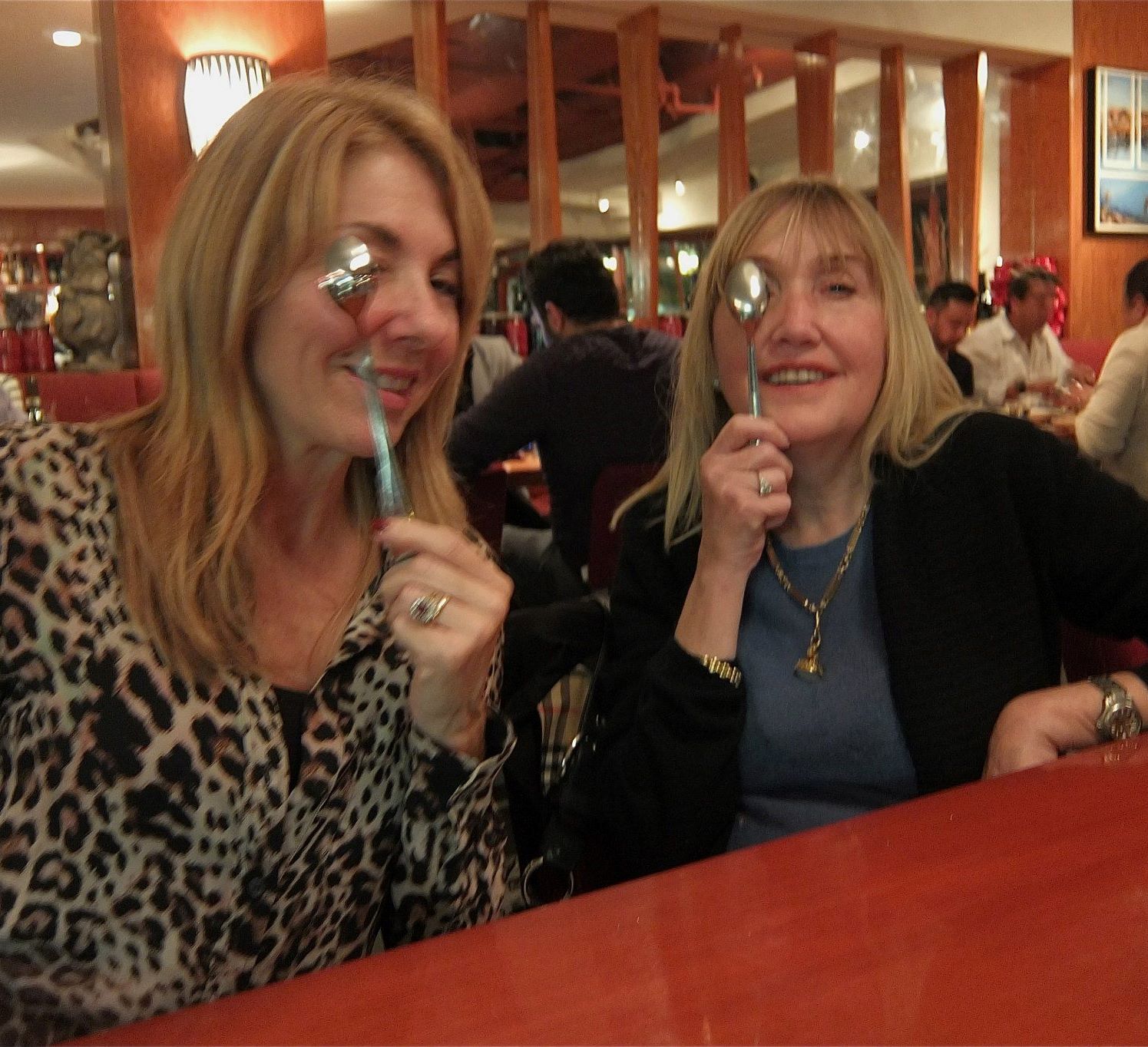
Spooning at Tavola (on Robson) after a tiring long day.

And I have met many people since with this common, fatal genetic disease that affects mostly young adults and children. I met an incredibly strong natured young woman, a  beautiful red-haired actress Eva Markvoort  who tragically passed away after a long fight five years ago.   She chronicled her combat with CF via a daily blog which people from all over the world followed religiously, many whom had no connection to CF.

Eva
Eva Markvoort

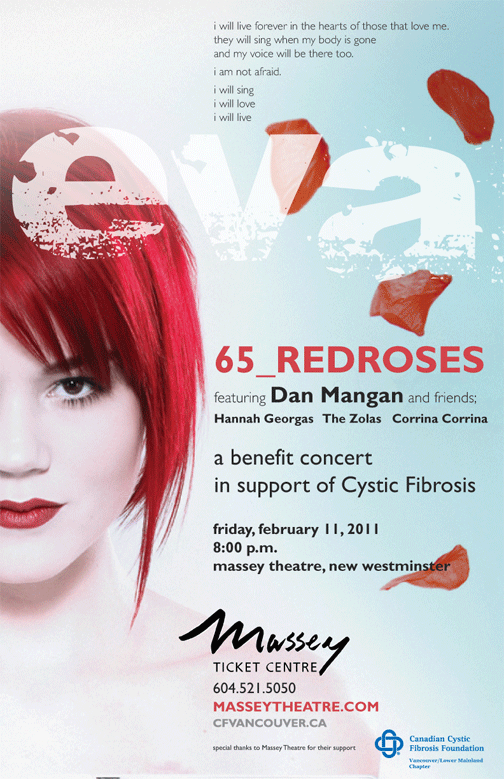
It is because of  people like Eva and Colleen that I volunteer  every year by rounding up live and silent auction items for a fundraising event called “65 Roses” to help raise money towards  finding a cure for cystic fibrosis.  As it stands right now there is no cure.

CF is not as widely recognized as Cancer. While I know more people close to me who currently have cancer, or are in remission from it, or people who have died from having cancer, this along with the SPCA, is my charity of choice. We are starting to see some progress here.

So I thought I’d share with  you a little bit about CF and the fundraising event called 65 Roses – because I think it’s important to raise consciousness regarding this.

What is CF?

It is a multi-organ disease, primarily affecting the lungs and digestive system. Ultimately, most CF deaths are due to lung disease.  Each week in Canada two children are diagnosed with CF and one person dies from this life-shortening disease. In 2010, half the Canadians who died of cystic fibrosis were under 26 years old.

About one in every 25 Canadians carries a defective version of the gene responsible for CF, and currently there are more than 4,000 Canadians living with the disease. Many people are not even aware that they have this gene.   Here’s the thing; both parents must carry the gene in order for their child to get CF, and each time they conceive they have a 1 in 4 chance of getting a child with CF.  Carriers may pass on the gene without passing on the disease.  For instance, Colleen has a brother and sister and neither have CF, nor do their children.  Although Colleen’s mother lost a baby son and a teenage daughter to this terrible disease .

What is 65 ROSES?

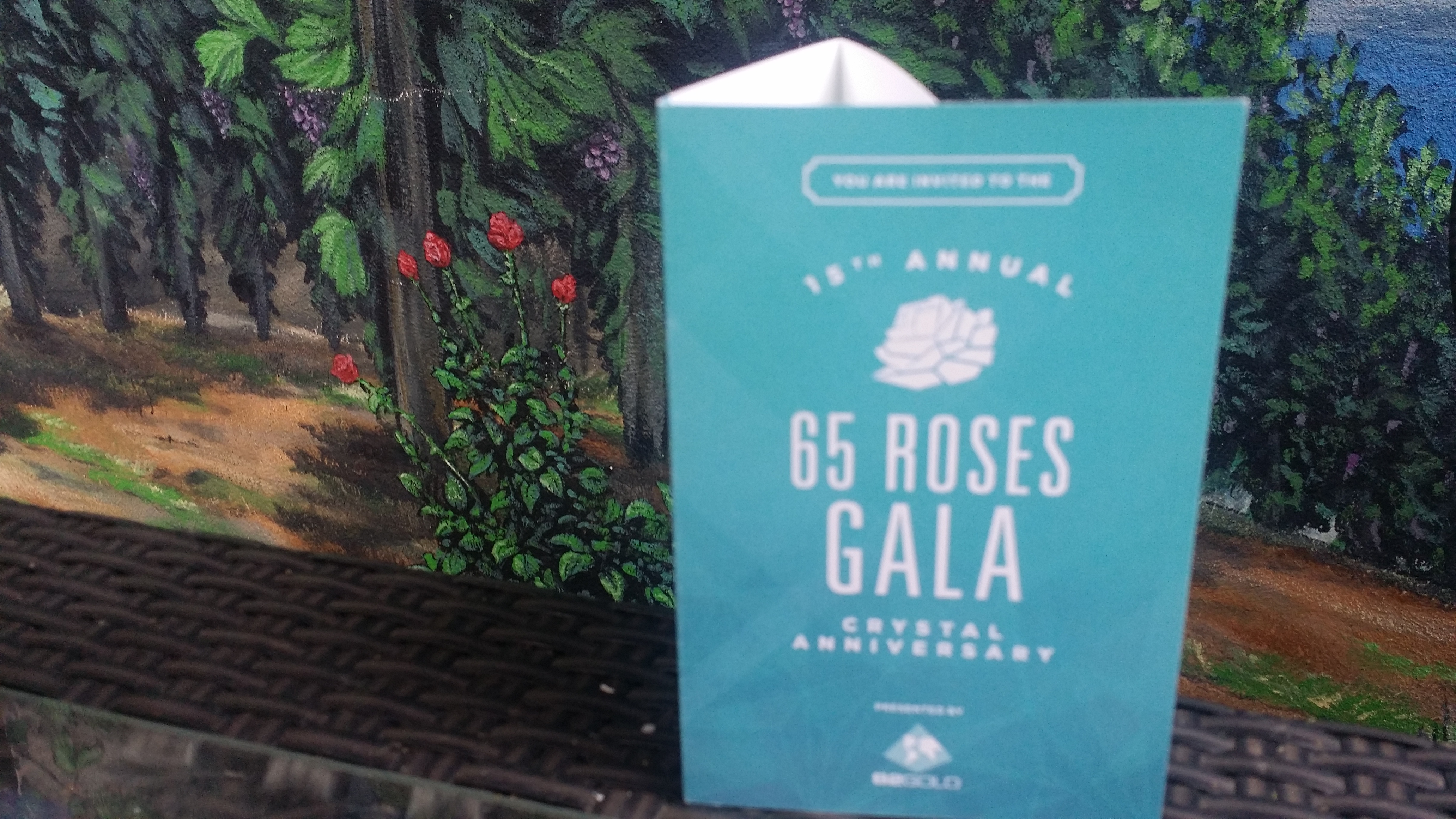
The annual 65 Roses Gala is Cystic Fibrosis Canada Vancouver Chapter’s signature event, and I am excited to announce that this year marks the 15th ‘Crystal’ Anniversary of the gala.  This amazing event, Presented by B2Gold Corp, is set to take place on Saturday, November 7, 2015 at the Fairmont Waterfront Hotel, and to honor this milestone anniversary we have some special surprises and exciting performances lined up which I’m sure everyone will love! Tax receipts will be issued for the charitable portion of each ticket.

Crystal Anniversary.....still some tickets available.
2015 Crystal Anniversary…..still some tickets available.  For tickets: 604.436.1158 or visit http://www.65RosesGala.com

Last year’s Gala was a great success! Over 300 guests gathered to enjoy an evening of fine dining, superb wines, delicious food, and danced the night away. Thanks to guests, sponsors, and donors, we collectively raised more than $400,000 for cystic fibrosis research and care, making this our most successful event to date.  There are still some tickets available.

About the RESEARCH

In 2015/2016, Cystic Fibrosis Canada will invest more than $7.7 million in innovative research and clinical care. Researchers are attacking cystic fibrosis on many fronts.  We know that this research is making a difference in the lives of those with cystic fibrosis because the median age for life expectancy of Canadians living with CF is now 50.9 years, the highest in the world! This research and care is largely funded by our fundraising efforts and events such as this one, and we cannot raise the money that we do without the help of our generous sponsors.

How can you HELP make a difference?

If you are interested in supporting CF by donating an item for auction or purchasing gala tickets,  please contact the Cystic Fibrosis Canada Western Region office at 604.436.1158  Not only will you receive a tax receipt for doing so, but it will make you feel good and *way more attractive too.

There have been great strides towards finding a cure for cystic fibrosis, but we know we can do more, and with your help we can fund critical research and care to help make CF stand for CURE FOUND. 

I’m delighted to do whatever I can to help support CF and it makes me feel good to do something for such a worthwhile cause.  Plus I’m looking forward to another FUN evening.  Because let’s face it, there always has to be some FUN involved. 

*FUN FACT: According to my friend Yanive, DONATING MAKES YOU 65 TIMES MORE ATTRACTIVE TO THE OPPOSITE SEX and adds 125% more goodness to your SOUL.

A MESSAGE from EVA:

Documentary about Eva on CBC’s The Passionate Eye

http://www.cbc.ca/player/Shows/The+Passionate+Eye/ID/1333883430/

Dance at every opportunity

Health MATTERS – go NAKED

 I like to make my smoothies NAKED
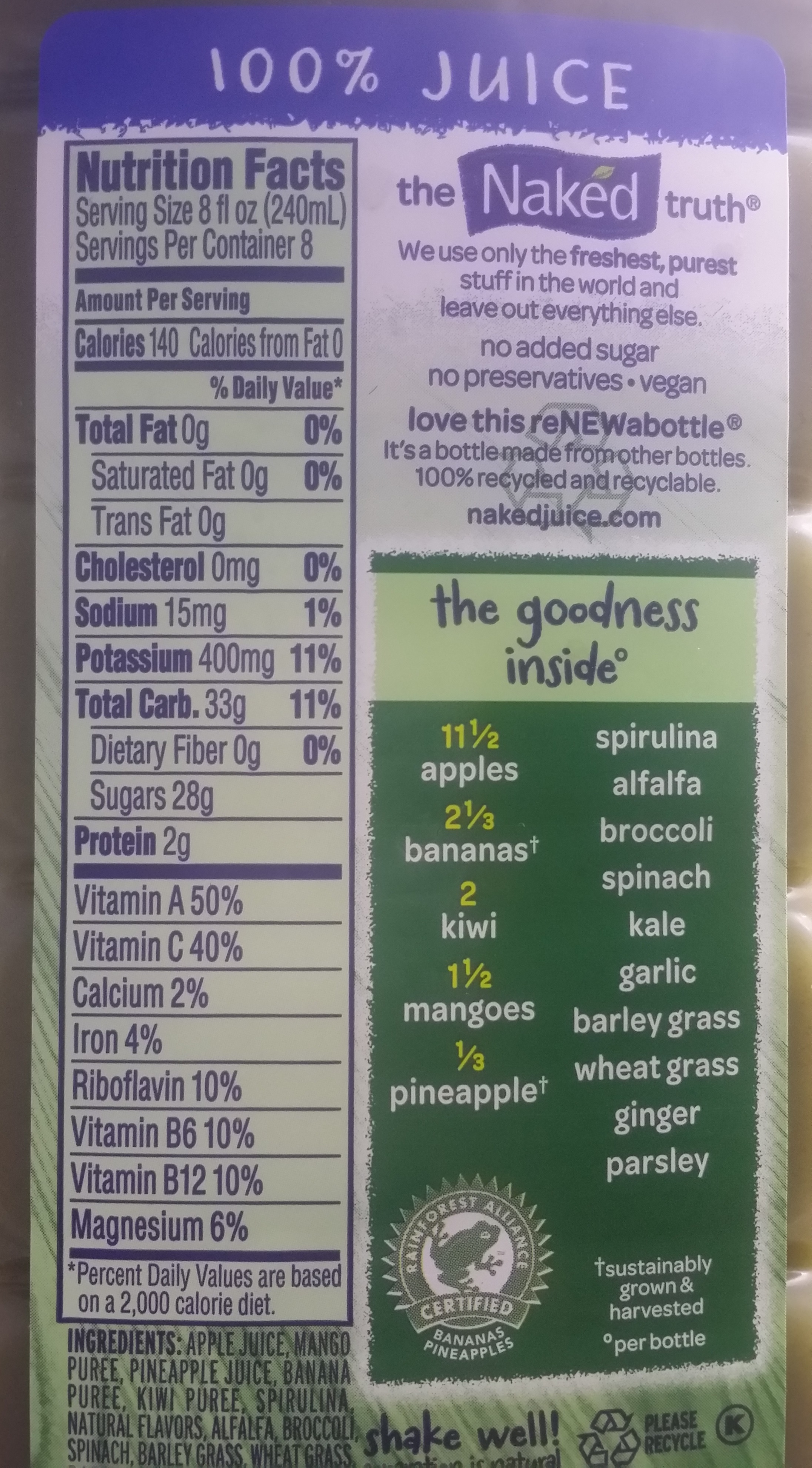
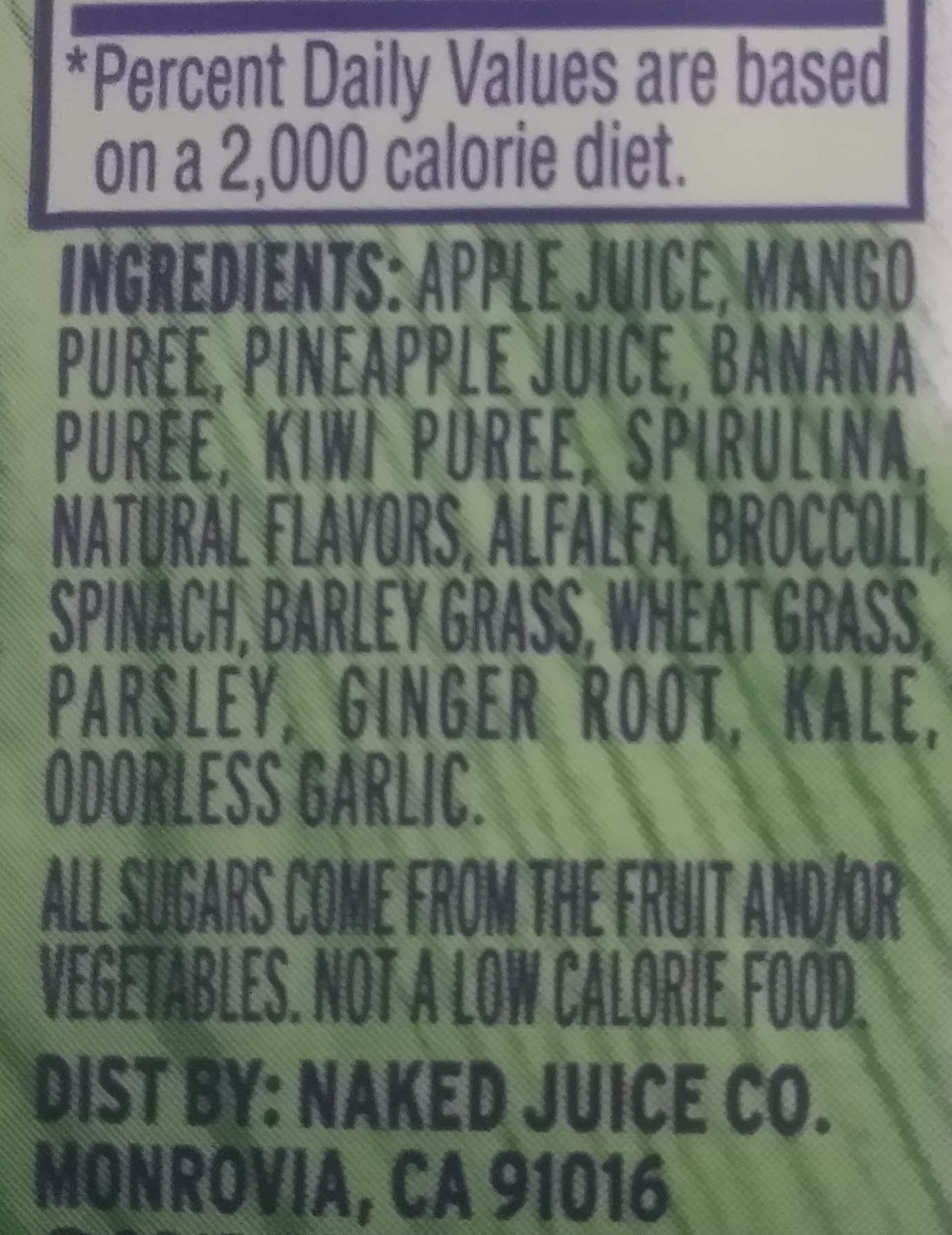
20151021_112437Have you tried this juice? As far as juices go it’s pretty complete.  They label it a juice smoothie so you can drink it as is but if you have a Vitamix and add a few extras it’s perfect! It has a high percentage of fruit mixed with all the power greens including garlic & ginger for good measure. 140 calories per 8 fl. oz. so it’s not without calories.   Also has plenty of vitamins but no fibre – although you can add fibre to it. It has naturally occurring sugars (from the fruit) but that’s what gives you the energy boost. It’s perfect right after a run, workout or for a pick-me-up.  I love trying out new healthy smoothie recipes that are simple to make. Here, half the work is already done for you in one bottle.

My own concoction for a quick ‘n delicious Energy Smoothie for two:

NAKED (Green Machine)

ORANGE JUICE

FROZEN MANGO CHUNKS

1 BANANA

SCOOP OF* PROTEIN POWDER

SCOOP OF *FIBRE

FILTERED WATER (adjust to desired consistency)

MONKEYS (optional)

Start with 1 cup each of the juices,  add 1 cup of mango and go from there. *I use Brad King’s Ultimate Vegan FibreLean and Ultimate Vegan Protein Powder.  I also added a couple scoops of Vitamin C with L-Lysine (Medi-C Plus) for additional anti-sickness protection

20151019_19041320151019_190441What do you think?  

Not bad right?

Health MATTERS – the benefits of being Happy

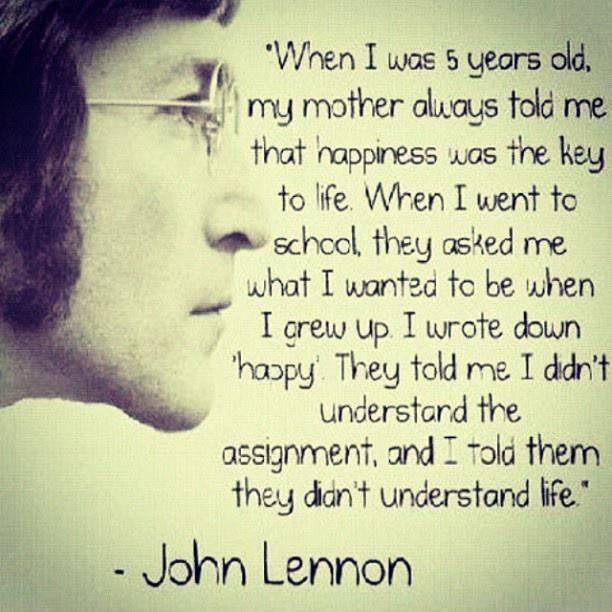
far outweigh the non-benefits of being unhappy.  But who is happy all the time?  Being happy all the time is just as not normal as being sad all the time!happy7Life throws you some curveballs and it seems almost everyone I know right now is carrying a heavy personal load in some way be it with their family, love relationship, health, finances or job.  I know a family whose house burnt down on Thanksgiving day no less.  They’re just thankful that they made it out alive & now they’re lucky to have found their cat that ran out when the firemen arrived.  Their personal belongings gone.  The situation is not a happy one but they themselves are generally happy people and other than being shaken up by this devastation they’re dealing with it in an emotionally stable manner even with having to soon face starting all over again from scratch.  It will not be as easy as looking for a new job. Which leaves me with the conclusion that aside from family, if you strip yourself of all your worldly belongings and material goods you are left with only yourself in your own skin and your bare emotions That is really all you have that is your own. My thoughts are if you are an emotionally balanced person you will be able to face any negativity that comes your way in a more graceful and stable manner to be able to get through it faster than someone who is not.  happy3I believe your emotional health is at the crux of your quality of life. Without happiness, hopefulness and well-being, it’s difficult to reach your full potential and embrace each day as it comes. Even though some days leave you listless and it can be really hard to get through them. But you’ve got to suck it up and get on with it or get over it! If anything, I’ve always been hopeless hopeful.  Hope gives you; well….it gives you possibilities.  You can see yourself succeeding instead of failing.  Maybe you’ll end up failing but the thing is you expected not to.  You’ll pick yourself up, brush yourself off and start again because you have faith in yourself and your abilities.  Mainly you have faith in yourself that you can and will overcome temporary setbacks. This is what John Lennon had to say about it:happy8The following is what Dr. Mercola has to offer on the subject:

Your emotional health is also intricately tied to your physical health, such that an emotionally imbalanced person will be at a greater risk of chronic diseases and acute illnesses like colds and flu.

It’s thought that genetics account for about 50 percent of your “innate” happiness while life circumstances make up another 10. The rest is under your control, and the first step to harnessing it is to choose it and believe you can be happy.

Research shows, for instance, that when people were told to attempt to feel happier when listening to music, they were (as opposed to those who were told to simply relax).

It was the intention to become happier that made a difference.

It might help to consider your emotions as a form of energy. According to Dr. Bradley Nelson, when you feel an emotion, what you’re really sensing is the vibration of a particular energy. Each emotion has its own vibratory signature, and when intense emotions are felt, they can become trapped in your body, much like a ball of energy.

These “balls of energy” can become lodged just about anywhere in your body, where they can then cause disruptions in your body’s energy system, which underlies your physical system much like an invisible matrix.

Your body cannot tell the difference between an actual experience that triggers an emotional response and an emotion fabricated through thought process alone—such as when worrying about something negative that might occur but has not actually happened, or conversely, thinking about something positive and pleasant.

The latter, of course, will help your body to express many of the health benefits associated with happiness, while ruminating or focusing on negativity can literally manifest disease.

The Health Benefits of Happiness

Happiness not only feels good… it’s physically good for your body, too. For instance, past research has found that positive emotions –including being happy, lively and calm — appear to play a role in immune function. One study found that when happy people are exposed to cold and flu viruses, they’re less likely to get sick and, if they do, exhibit fewer symptoms.

The association held true regardless of the participants’ levels of self-esteem, purpose, extraversion, age, education, body mass or pre-study immunity to the virus, leading the lead researcher to say:

“We need to take more seriously the possibility that positive emotional style is a major player in disease risk.”

Further, in a study of nearly 200 heart failure patients, those with higher levels of gratitude had better mood, better sleep, less fatigue, and less inflammation, which can worsen heart failure, than those with lower levels.

What this means is that investing in your own happiness should not be viewed as a self-indulgent luxury. It represents an important piece of the puzzle when it comes to piecing together your overall health.

Your mind can only take so much stress before it breaks down, yet many neglect to tend to their emotional health with the same devotion they give to their physical well-being.

 Strategies to Stay Emotionally Healthy

It’s clear that your emotional state is intricately tied to your physical and mental states. So what can you do to stay emotionally healthy? Like achieving physical fitness or a healthy weight, this is an ongoing process… something that must be tended to each and every day. The good news is that small steps add up and can make a major different for your emotional health. Tips for emotional nurturing include:

  1. Be an Optimist

Looking on the bright side increases your ability to experience happiness in your day-to-day life while helping you cope more effectively with stress.

  1. Have Hope

Having hope allows you to see the light at the end of the tunnel, helping you push through even dark, challenging times. Accomplishing goals, even small ones, can help you to build your level of hope.

  1. Embrace Your Quirks

Self-deprecating remarks and thoughts will shroud your mind with negativity and foster increased levels of stress. Seek out and embrace the positive traits of yourself and your life, and avoid measuring your own worth by comparing yourself to those around you.

  1. Stay Connected

Having loving and supportive relationships helps you feel connected and accepted, and promote a more positive mood. Intimate relationships help meet your emotional needs, so make it a point to reach out to others to develop and nurture these relationships in your life.

  1. Express Gratitude

People who are thankful for what they have are better able to cope with stress, have more positive emotions, and are better able to reach their goals. The best way to harness the positive power of gratitude is to keep a gratitude journal or list, where you actively write down exactly what you’re grateful for each day. Doing so has been linked to happier moods, greater optimism and even better physical health.

  1. Find Your Purpose and Meaning

When you have a purpose or goal that you’re striving for, your life will take on a new meaning that supports your mental well-being. If you’re not sure what your purpose is, explore your natural talents and interests to help find it, and also consider your role in intimate relationships and ability to grow spiritually.

  1. Master Your Environment

When you have mastery over your environment, you’ve learned how to best modify your unique circumstances for the most emotional balance, which leads to feelings of pride and success. Mastery entails using skills such as time management and prioritization along with believing in your ability to handle whatever life throws your way.

  1. Exercise Regularly

Exercise boosts levels of health-promoting neurochemicals like serotonin, dopamine, and norepinephrine, which may help buffer some of the effects of stress and also relieve some symptoms of depression. Rather than viewing exercise as a medical tool to lose weight, prevent disease, and live longer – all benefits that occur in the future – try viewing exercise as a daily tool to immediately enhance your frame of mind, reduce stress and feel happier.

  1. Practice Mindfulness

Practicing “mindfulness” means you’re actively paying attention to the moment you’re in right now. Rather than letting your mind wander, when you’re mindful you’re living in the moment and letting distracting or negative thoughts pass through your mind without getting caught up in their emotional implications. Mindfulness can help you reduce stress for increased well-being as well as achieve undistracted focus.

All we can do is try to do the best we can

Source: Dr. Mercola – articles by Mercola.com