

Is everyone still juicing?
For ages I’ve been juicing. At first with a blender, then a George Foreman and finally a Vitamix.
Then for no valid reason I took a break from juicing with the intention of getting back to it real soon. There’s something healthily satisfying about a morning routine of downing a concoction of fresh fruit and veggies. I’ve been told so many things over the years about the correct and incorrect way to juice properly to reap all the benefits. Someone told me years ago that I better drink up within the first 15 minutes otherwise all the vitamins will evaporate. Here’s answers to a few questions of late:

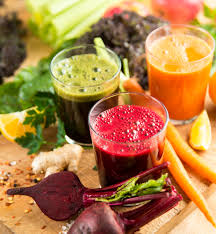
Does juice have to be consumed right away?
Answer: Stored in an airtight container, I’m now told that juice can be kept for up to three days. You can even make it the night before (although I prefer first thing in the morning) and have it for breakfast, or take it to work the next day.
What to do with all that pulp?
Answer: For every serving of juice, you get up to four cups of pulp. Right now I no longer worry about this as the Vitamix tends to process all of the pulp which is the main reason I bought it (also to make sorbets), so don’t just toss it – it may not look appealing, but it contains a lot of fibre and flavour. Try adding carrot, zucchini, beet or ginger pulp to muffins for a nutritious boost, or cucumber pulp to a veggie dip. You can even toss frozen pulp (I’ve frozen it in ice cube trays) into soups and stews.
Should you peel your produce first?
Answer: It’s best to leave peel on for most produce (especially organic) because that’s where a lot of the nutrients thrive. Did you know that the flavonoids found in apple peel can help with weight loss?
 If you don’t have a juicer, will a blender suffice?
Answer: Blenders are great for making smoothies – not so much for making juice. A juicer is designed to extract and separate the liquid from the pulp of fruits and vegetables. A blender, on the other hand, will purée the entire mix.
What else should you incorporate with your juice?
Answer: How about fresh herbs? Toss immune-boosting garlic into a savoury veggie juice, or add basil or parsley for extra flavour. Or, fresh spices…a thumb-sized chunk of ginger root is a great way to add flavour while giving your immune system a quick pick-me-up. Fresh turmeric and cinnamon help with digestion. Chia Seeds – these omega-3-rich seeds don’t look like much dry, but when added to juice they absorb the liquid and become plump and full of flavour. Toss a couple of Tablespoons in for extra crunch.
AND:
**Don’t miss listening to “Transforming Health” with host Brad King for the most evocative and informative up-to-the-minute interviews with leading health professionals – Live every Wednesday @ 12PM-PST/3PM-EST on VoiceAmerica.com – #1 internet radio station in North America. Here’s the link: http://www.voiceamerica.com/show/1686/transforming-health


 Girl Who Would be KING on Life, Style and INSPIRATION.
You must be logged in to post a comment.