B well – with mighty little ‘mini’ greens

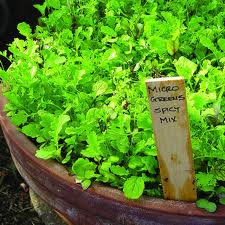
Little healthful tidbits that go a long way…proving that good things do come in extremely small packages.microgreens3We already covered the power of using seeds in our food, but what about the ‘seedlings’ called microgreens (mini-me’s?).

Every few years it seems like a new leafy veggie becomes the darling of the ‘farmers’ market – first swiss chard, then kale, and now….microgreens.

Harvested when they’re just seven to 14 days old, these pint-sized leaves can be far more nutrient dense than their full-grown counterparts, according to a recent study done in collaboration with the U.S. Department of Agriculture and published in the Journal of Agriculture and Food Chemistry.  “Plants use stored nutrients to grow, so plucking the tiny seedlings early means they still have high levels of vitamins and minerals,” says study coauthor Zhenlei Xiao.  Keep in mind, though, that these mini-me’s lack the fiber found in mature plants, so they should supplement the greens you already eat, not replace them.

The best part?  Thanks to the concentrated flavour of these five diminutive standouts, they elevate meals in taste as well as nutrition.microgreens1

Try:

Micro Cilantro – 11 times more lutein and zeaxanthin (nutrients that can reduce the risk of cataracts and age-related vision loss) than the same amount of mature cilantro.

Micro Red Cabbage – they outshine full grown cabbage with roughly 260 times the beta-carotene and more than 40 times the Vitamin E.

Micro Purple Mustard Greens – just 4 ounces meet your recommended dietary allowance (RDA) of Vitamin C.  Perk:  among the tastiest greens with a spicy zing.

Micro Green Daikon RadishVitamin E superstar, boasting 165% of your RDA per ounce.  By contrast, mature leaves contain only trace amounts of the antioxidant.

Micro Garnet Amaranth (I’ve never heard of this one before) – light red with an earthy flavour, this ranks highest in Vitamin K which is essential for blood clotting and may reduce the risk of bone fractures.  Best with grains.
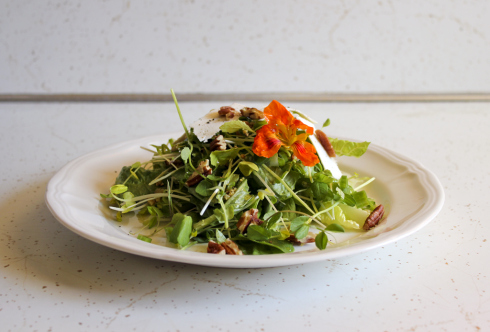
leafy greens - big & small
leafy greens – big & small
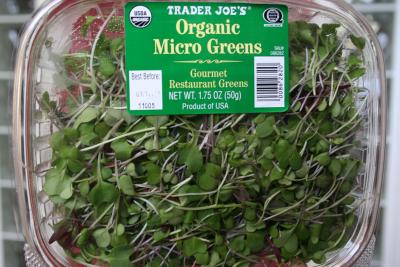
Trader Joe's offers some great packaging
Trader Joe’s offers some great packaging

Taken from an article written by Leslie Goldman

**Don’t miss listening to “Transforming Health” with host Brad King for the most evocative and informative up-to-the-minute interviews with leading health professionals – Live every Wednesday @ 12PM-PST/3PM-EST on VoiceAmerica.com – #1 internet radio station in North America.

Here’s the link: http://www.voiceamerica.com/show/1686/transforming-health

B Well – turning over a new leaf

Step aside Kale….there are some new produce powerhouses that deserve attention.

Known for their A-to-Zinc spectrum of vitamins and minerals, leafy vegetables like spinach and collards have long been rated among the healthiest foods on the planet.  But those old standbys – and their suddenly stylish cousin kale – are hardly the only greens that should be in your diet.  Shake things up with these four super nutritious choices:

1)   bok choy      Bok Choy – belongs to the cruciferous (cabbage) family, a group known for its anticancer properties (which may be due, in part, to a high concentration of the antioxidant kaempferol).mustard greens

2)      Mustard Greens – may be more effective at lowering cholesterol and decreasing the risk of cardiovascular disease and cancer than cabbage, broccoli and green peppers.  But the way you cook them matters: according to a recent study in Food and Nutrition Sciences, mustard greens had greater cholesterol-lowering potential when sautéed than when boiled, steamed, or served raw.

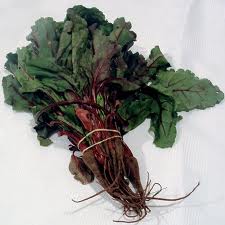
3)     beet greens Beet Greens – a good source of potassium, a mineral that can help control blood pressure.  One cup delivers nearly 60 percent more potassium than the same amount of spinach.  The leaves also contain vitamin A, which promotes good vision, and vitamin K, which may strengthen bones.

4)      Chard – just one cup of cooked chard delivers almost 50 percent of your recommended daily value of magnesium, a mineral that may have the ability to lower blood pressure and reduce  the risk of diabetes.  A scientific review of several studies found that increasing magnesium intake by 100 milligrams a day (that’s just 2/3 cup of cooked chard) can lower the risk of stroke by 8 percent.chard

Taken from Feeling Good – “O” magazine.  Article by Johannah Sakimura.

Also;
**Don’t miss listening to “Transforming Health” with host Brad King for the most evocative and informative up-to-the-minute interviews with leading health professionals – Live every Wednesday @ 12PM-PST/3PM-EST on VoiceAmerica.com – #1 internet radio station in North America.