By Pao – in Rome, Italy. SpongeBob Square Pants. I’m familiar with the character but never watched the cartoon. I find this humorous.
Call it what you will but there are some truly astounding works to behold all around the globe. Besides beautifying otherwise downtrodden neighbourhoods and offering innovative art to the public for free, the transient nature of street art is part of its appeal. It’s also a lot nicer than looking at a blank wall. Street art is an ephemeral thing. Here today, maybe gone tomorrow. Many a mural has been erased due to the whims of local governments and the impulses of other street artists. I was upset to notice that an intricately beautiful mural I’ve always admired on a gelato shop had been painted over.
So I thought it would be fun to post the TOP TEN BEST CITIES in the world to view streetside art.
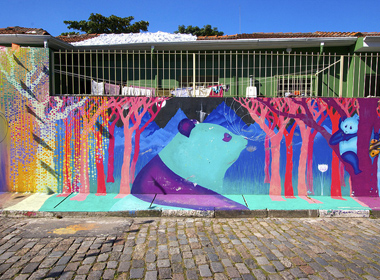
Sao Paulo, Brazil
Like many other cities, Sao Paulo has had a turbulent relationship with local street artists. Originally, much of the prohibited public painting going up in the city was political and the government was opposed. But it has relaxed this stance in recent years, collaborating with street artists to produce colourful works on highways and housing developments. When you’re there, be sure to look down to find artist Tec’s fascinating road murals. If you can’t make it, you can find a virtual selection of Sao Paulo’s best works on the Google Art Project website.
London, England
London has incubated its fair share of street artists over the years. While many works have been removed and repainted, many pieces stand untouched throughout the city (including some elusive pieces by the famous Banksy). Though officially condemned, the popularity of street art in England’s capital has led the city government to commission various pieces, like the sometimes odd installations on the Fourth Plinth in Trafalgar Square.
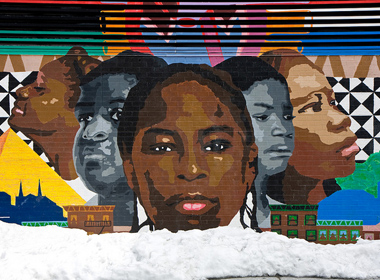
New York City, USA
New York is where it all started. In the late 1960s and early 1970s, the first graffiti artists began tagging everything in sight. At that time, the driving force behind this nascent street art was ubiquity. The art form has evolved since then to encompass the elaborate murals and clever works that can be found around NYC today. Neighbourhoods like Chelsea, Bushwick and the Lower East Side are all meccas for street artists. At 106 and Park in Spanish Harlem, you can find the Graffiti Hall of Fame, a section of wall that has seen some of the best graffiti writers of all time scribble their stuff.
Berlin, Germany
Berlin’s tumultuous history offers inspiration for street artists to produce some of their best work. Nowhere is this more apparent than the East Side Gallery, a section of the former Berlin Wall that has been turned into a 1.3-kilometre canvas. Here, you’ll find 105 murals that were painted on the east side of the wall in 1990, where graffiti had been banned during Soviet rule. Kreuzberg is another popular district for street art, and is home to the largest stencil in the world, the Kreuzberg Spaceman. But you don’t have to travel far from downtown Berlin for impressive creations: the central Mitte district is a creative enclave, home to Tacheles, a former department store covered in artists’ work.
Buenos Aires, Argentina
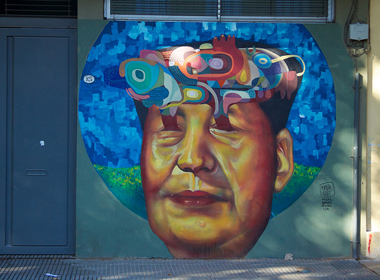
One of the most popular tourist areas in Buenos Aires, Caminito, is a district that bills itself as the world’s first open-air pedestrian museum. Its colourful building facades are very photogenic, and a number of artists sell their wares in the neighbourhood. However, Buenos Aires is known worldwide for its support of street art. Barren walls city-wide are transformed into building-sized murals, which are not only tolerated by the city government, but oftentimes actively funded. Buenos Aires native Martin Ron’s famous 3D turtle is found here, in addition to a number of his other vibrant and breathtaking murals.
Philadelphia, USA
As a burgeoning artistic centre, Philadelphia boasts a creative spirit that’s easy to find on its “Mural Mile”. Surprisingly, Philadelphia’s Mural Arts Program – the largest public art program in the United States – began as part of a government-funded anti-graffiti movement. Tired of the artless tags that plagued the city, Philadelphia officials approached graffiti artists and had them direct their considerable artistic talents into full size murals. Today, there are more than 3,600 of these impressive works dotting the city. In addition to these full-size pieces, a number of famous street artists have left their mark here.
Melbourne, Australia
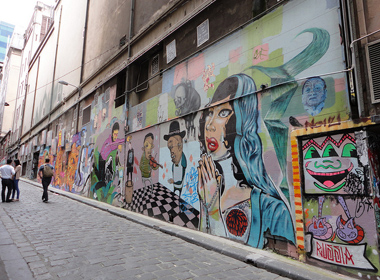
Melbourne has become one of the world centres for street art, with dozens of acclaimed artists having left their mark on the city. Numerous alleyways in the Australian cultural capital are decorated with vibrant works. Hosier Lane and Caledonian Lane are iconic spots, and in 2010 the local council commissioned a number of artists to paint the walls of Union Lane. These alley artworks are now highlighted by local tourism agencies. Though the relationship between street artists and government has been strained at times (city workers accidentally demolished a Banksy piece), the government has largely supported its creative citizens and it shows in the variety of urban spaces where street art has popped up.
Los Angeles, USA
If there’s anywhere in the world where street art has jumped the gap between radical expression and commercial enterprise, it’s in LA. Here, you can find LAB ART, a 6,500 square-foot gallery of street art that’s not so much on the street anymore, but can be purchased instead. But that isn’t to say that the art form has been completely commercialized here. A number of iconic works can still be seen in the La Brea area and walls in Hollywood are regularly redone with fantastic images from local artists like Robbie Conal and Saber.
Tel Aviv, Israel
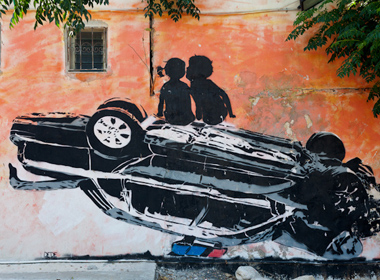
While some cities shirk the free public art its talented citizens spray on the walls, forward-thinking places like Tel Aviv embrace it wholeheartedly. The community centre on Rothschild Boulevard and the area around Jaffa Port are ever-changing exhibits of innovative paintings, wheat paste art and stenciling. You can find interesting works wherever you may go in the city, though, like elsewhere, the best works are often found in less developed neighbourhoods. In Tel Aviv this means heading toward the less hip areas of Florentin to see what inventive Israeli artists have to offer.
Paris, France
Walking around Paris, you’re likely to come across small tiled 8-bit figures a couple of stories above the street on building corners and monuments. These are works done by the artist Invader, who works across the world but hails from Paris. His colourful tiled mosaics of characters from the arcade game Space Invaders can be found throughout the city. Paris is also home to Blek le Rat, the father of stencil graffiti, who has been at work on Paris streets for over 30 years. You might have to pay to see the Mona Lisa, but some of the best art in the French capital is found streetside.
*Graffiti ranges from simple written words to elaborate wall paintings, and it has existed since ancient times, with examples dating back to Ancient Egypt, Ancient Greece, and the Roman Empire.
Every year millions of dollars are spent by art collectorseager to own the world’s most sought after paintings. However, the most expensive paintings are not necessarily the most famous paintings. The most famous ones are generally owned by museums, which very rarely sell them, and as such, they are quite literally priceless. An overview of the TOP 10most famous paintings of all time, found in museums around the world:
the birth of Venus, Sandro Botticelli
10. The Birth of Venus is a painting by Sandro Botticelli created around 1485–87. It depicts the goddess Venus (or Aphrodite as she is known in Greek mythology) emerging from the sea upon a shell in accordance with the myth that explains her birth. The original location of the painting and its commissioner remain uncertain. Some experts attribute its commission to Lorenzo de’ Medici and the Villa of Castello as the site to which the work was originally destined. Today, the painting is held in the Uffizi Gallery in Florence.
Water Lilies, Claude Monet
9. Water Lilies is a series of approximately 250 oil paintings by French Impressionist Claude Monet. The paintings depict Monet’s own flower garden at Giverny and were the main focus of his artistic production during the last thirty years of his life. The paintings are on display at museums all over the world. The one shown here is displayed at the Metropolitan Museum of Art in New York.
The night watch, Rembrandt van Rijn
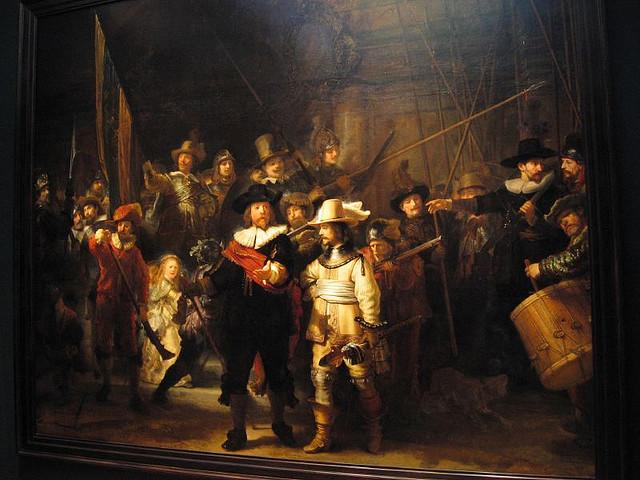
8. Completed in 1642, at the peak of the Dutch Golden Age, The Night Watch is one of the most famous paintings by Dutch painter Rembrandt van Rijn. It depicts a city guard moving out, led by Captain Frans Banning Cocq and his lieutenant, Willem van Ruytenburch. For much of its existence, the painting was coated with a dark varnish which gave the incorrect impression that it depicted a night scene, leading to the name Night Watch. This varnish was removed only in the 1940s. The painting is on display in the Rijksmuseum in Amsterdam.
The Scream, Edvard Munch
7. The Scream is a series of expressionist paintings and prints by Norwegian artist Edvard Munch, showing an agonized figure against a blood red sky. The landscape in the background is Oslofjord, viewed from the hill of Ekeberg, in Oslo. Edvard Munch created several versions of The Scream in various media. The one shown here was painted in 1893 and is on display in The National Gallery of Norway. It was stolen in 1994 in a high-profile art theft and recovered several months later. In 2004 another version of The Scream was stolen from the Munch Museum, only to be recovered in 2006
the girl with the pearl earring, Johannes Vermeer
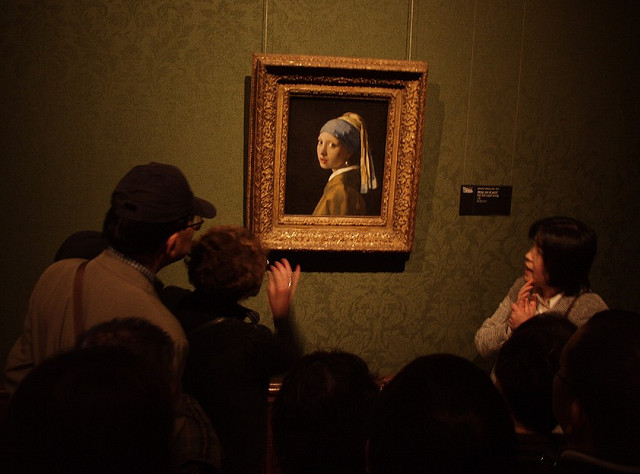
6. Sometimes referred to as “the Dutch Mona Lisa”, the Girl with a Pearl Earring was painted by Johannes Vermeer. Very little is known about Vermeer and his works and this painting is no exception. It isn’t dated and it is unclear whether this work was commissioned, and if so, by whom. In any case, it is probably not meant as a conventional portrait. Tracy Chevalier wrote a historical novel fictionalizing the circumstances of the painting’s creation. The novel inspired a 2003 film with Scarlett Johansson as Johannes Vermeer’s assistant wearing the pearl earring. It has been in the collection of the Mauritshuis gallery in The Hague (Netherlands) since 1902.
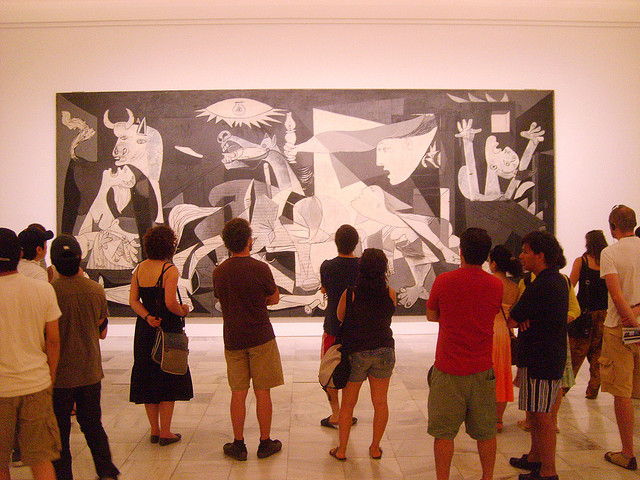
Guernica, Pablo Picasso
5. Guernica is one of Pablo Picasso most famous paintings, showing the tragedies of war and the suffering it inflicts upon individuals, particularly innocent civilians. Picasso’s purpose in painting it was to bring the world’s attention to the bombing of the Basque town of Guernica by German bombers, who were supporting the Nationalist forces of General Franco during the Spanish Civil War. Picasso completed the painting by mid-June 1937. The painting can be seen in the Museo Reina Sofía in Madrid.
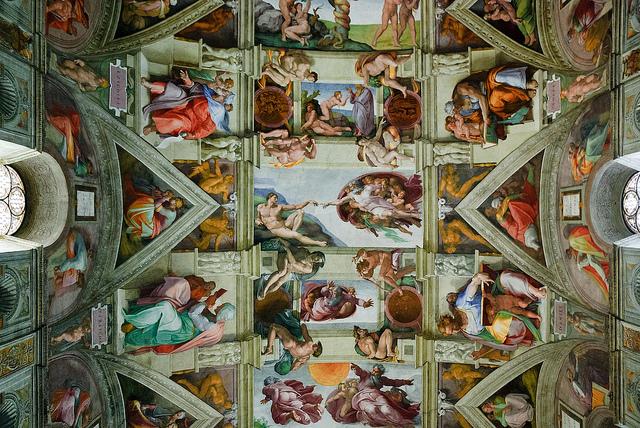
The Sistine Chapel, Michelangelo
4. The Sistine Chapel ceiling, painted by Michelangelo between 1508 and 1512, at the commission of Pope Julius II, is one of the most renowned artworks of the High Renaissance. The ceiling is that of the large Chapel built within the Vatican in Rome. Central to the ceiling decoration are nine scenes from the Book of Genesis. Among the last to be completed was the Creation of Adam in which God the Father breathes life into Adam, the first man. The Creation of Adam is one of the famous paintings of all time and has been the subject of countless references and parodies.
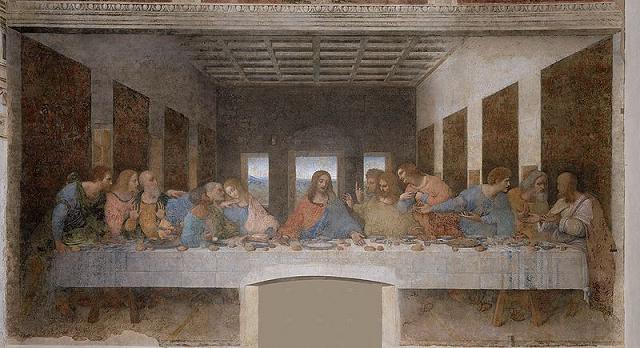
The Last Supper, Leonardo da Vinci
3. The Last Supper is a 15th century mural painting in Milan created by Leonardo da Vinci and covers the back wall of the dining hall at the monastery of Santa Maria delle Grazie in Milan. It represents the scene of The Last Supper when Jesus announces that one of his Twelve Apostles would betray him. Leonardo began work on The Last Supper in 1495 and completed it in 1498 though he did not work on the painting continuously. Some writers propose that the person in the painting seated to the left of Jesus is Mary Magdalene rather than John the Apostle, as most art historians identify that person. This popular theory was the topic of the book The Templar Revelation (1997), and plays a central role in Dan Brown’s novel The Da Vinci Code (2003).
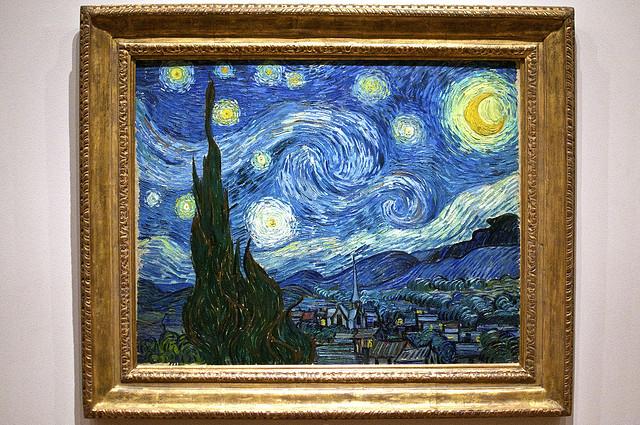
The Starry Night, Vincent van Gogh
2. The Starry Night was painted by Dutch artist Vincent van Gogh. Although Van Gogh sold only one painting in his life, the aftermath of his work is enormous. Starry Night is one of his most famous paintings and has become one of the most well known images in modern culture. The painting shows the village of Saint-Rémy under a swirling sky, in a view from the asylum towards north. The cypress tree to the left was added into the composition. Since 1941 it has been in the permanent collection of the Museum of Modern Art in New York.
Mona Lisa, Leonardo da Vinci
1. The most famous painting of all time, the Mona Lisa was painted by Leonardo da Vinci during the Renaissance in Florence. He began painting the Mona Lisa in 1503 or 1504 and finished it shortly before he died in 1519. The painting is named for Lisa del Giocondo, a member of a wealthy family of Florence. In 1911, the Mona Lisa was stolen by Louvre employee Vincenzo Peruggia, an Italian patriot who believed the Mona Lisa should be returned to Italy. After having kept the painting in his apartment for two years, Peruggia was finally caught when he attempted to sell it to the directors of the Uffizi Gallery in Florence. Today, the Mona Lisa hangs again in the Louvre in Paris where 6 million people see the painting each year.
I’ve had the pleasure of seeing six of these paintings in person. The Birth of Venus (Florence), Water Lilies (Met, New York), The Night Watch (Amsterdam), The Last Supper (Milan), Starry Night (MOMA, New York) & Mona Lisa (Paris).
So, do you have a favourite? I appreciate them all, but if I had to choose it would be between The Birth of Venus and the Girl with the Pearl Earring. Does this mean I’m a girly girl?
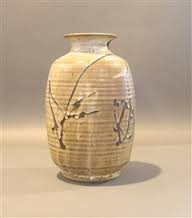
Versatile, sensuous, malleable, as basic as mud and as old as art itself, clay is increasingly emerging as a material of choice for a wide range of contemporary artists.
Ann Agee’s installation Super Imposition (2010), at the Philadelphia Museum of Art, presents the artist’s factory-like castings of rococo-style vessels in a re-created period room.
Ceramic art, referring specifically to American ceramic art, has finally come out of the closet, kicking and disentangling itself from domestic servitude and minor-arts status—perhaps for good. Over the past year, New York has seen, in major venues, a spate of clay-based art. There was the much-lauded Ken Price retrospective at the Metropolitan Museum of Art, as well as his exhibitions at Franklin Parrasch Gallery and the Drawing Center. Once known as a ceramist, Price is now considered a sculptor, one who has contributed significantly to the perception of ceramics as fine art.
Populist as well as elitist, its inclusive nature might be one reason for its current appeal. It has infinite versatility, from the purely formal to the functional. It is a substance every child has played with,
Clayzone Ceramics, Vancouver
and it is responsive to the primal instinct to make things by hand. Clay allows the artist to create form in spontaneous and direct ways that other mediums do not.
What do the Artists have to say?
Arlene Shechet, Sculptor: “I’m not a ceramic artist,” Shechet insists. “I’m an artist who works in clay. I like working in clay because it is very direct experience. I like the resistance of clay. It’s a physical enterprise, and you can make anything out of it. It doesn’t have a character until you give it one.”
Julia Kunin, Sculptor: “Clay,” she says, “gives me the freedom to create something intense, raw, over the top.”
Sculptor Julia Kunin creates baroquely grotesque animal forms, such as Double Portrait, 2010. D. James Dee
It has allowed me to pile things up, break things down, play, and make mistakes.” Kunin loves the immediacy of a material that is “as basic as mud,” she points out. “I am addicted to the unpredictability and iridescence of the glazes I’m using as well as the range of their colors and their psychedelic qualities.”
As these artists and many others, frequently women, wrestle with a material deeply embedded in rules, craft, and tradition, they are widening its trajectories, spinning it into the art-world mainstream, into blue-chip desirability. They are waiting for the day, as Cherubini says, when clay—no longer synonymous with the counterculture, with hippies and vegans—is just a material like any other, and those who use it are not ghettoized as ceramic artists.
Lilly Wei is a New York–based art critic, independent curator, and a contributing editor of ARTnews.
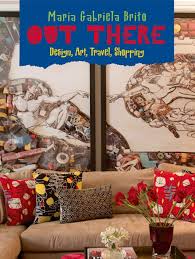
Design, Art, Travel, Shopping – these are some of my favourite things!
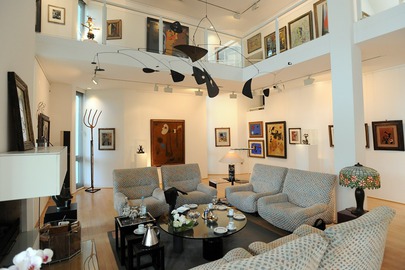
Maria Gabriela Brito is an art collector and interior designer living in New York City and the author of Out There: Design, Art, Travel, Shopping ($60USD – Pointed Leaf Press). The book is an insider’s guide to designing interiors and developing an art collection. OUT THERE is a fresh and exclusive look behind the scenes of a passionate and exciting new design authority on mixing contemporary art with home decoration. It features highlights of Brito’s favorite contemporary artists, photographs of eight New York City apartments that she designed, and an extensive look at favorite galleries, shops, and hotels worldwide.
The following is taken from her interview by Danielle Pergament for Allure Magazine.
Rather than trying to match art to your furniture or throw pillows, look for work that you love but that is on the edge of your comfort zone in terms of brightness. Color is the fastest way to bring life to a room.
Go BIG. The bigger the piece, the more it will transform a room. Don’t shy away from a large piece. People tend to choose art that is too small for the space. Take your cue from the furniture your art will hang near. If your sofa is 70 inches long, go for a piece that’s 50 inches: if the couch is 96 inches long, try something that measures 80 inches. If you can’t find one really big image you like, you can cheat by placing two side by side. The bottom of the frame should sit six to ten inches above the top of the furniture, and the closer the top edge is to the ceiling, the higher your ceilings will look.
Present it Properly. If you’re buying art from a gallery, follow their framing or mounting suggestions, which usually reflects the artist’s wishes. As a general rule, stretched canvases don’t need a frame, and large photographs look best mounted in acrylic or Plexiglas. If the colors of the artwork are muted, consider a colorful frame to liven it up.
Advance your Placement. Before you automatically hang a new piece in the living room, think about your entire home. Instead of the predictable console and mirror in a foyer, imagine a huge, vibrant print/painting there. I especially love to incorporate smaller pieces of art in unexpected places, like a bathroom or kitchen. In the bedroom, go a bit more subdued – black-and-white photography, for example – to keep the room peaceful.
How to hang a gallery wall. Hallways make great mini galleries, but it can be tricky to hang lots of pieces of varying sizes. Here’s how to do it: take a piece of butcher paper the size of the wall (or tape paper panels together) and put it on the floor. Arrange all the artwork you want to hang on the paper. You can play around until it really looks right, then use a pencil to mark exactly where each should go. Tape the paper to the wall and hang each piece on its designated mark. Finally, rip the paper carefully. Voilà – your own gallery.
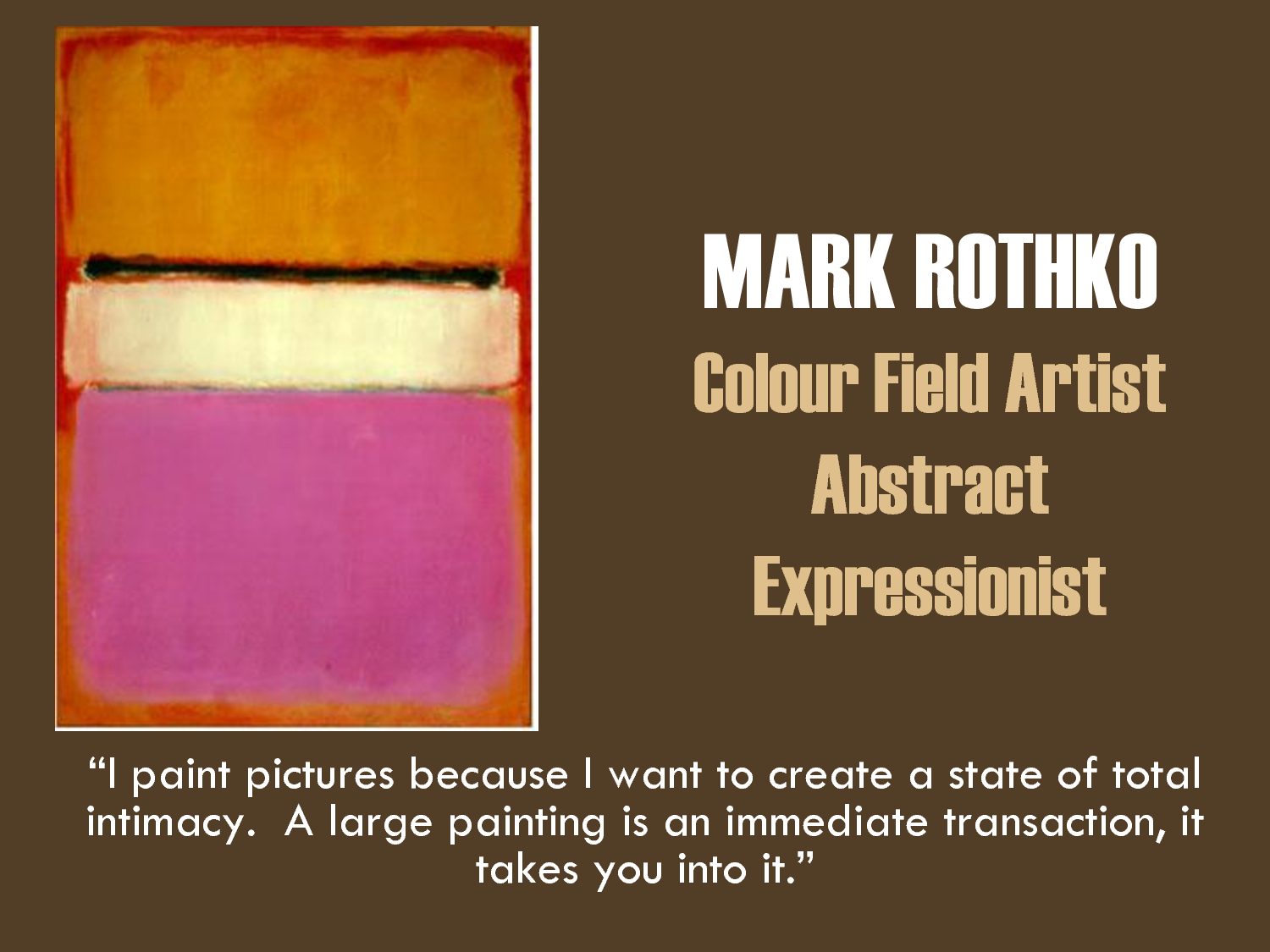
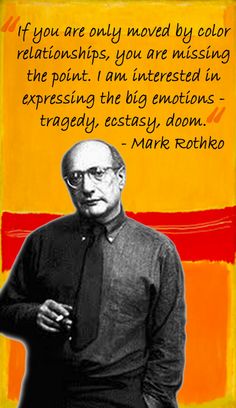
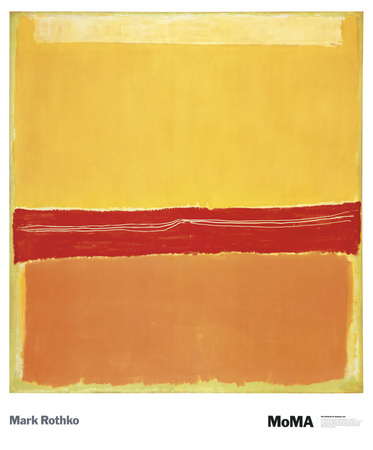
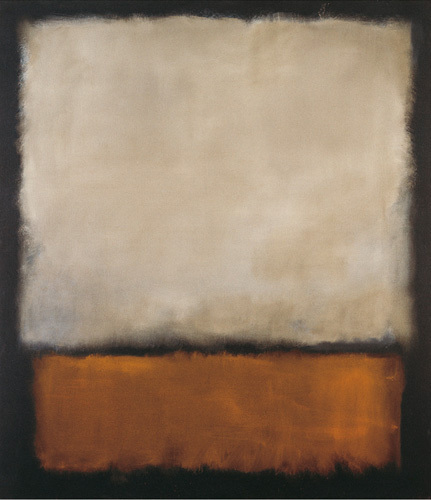
Mark Rothko (1903 – 1970) was an American painter of Russian Jewish descent. He is considered one of the most famous postwar American artists along with Jackson Pollock and Willem de Kooning. Generally identified as an Abstract Expressionist, he himself rejected this label and even resisted classification as an “abstract painter.”
The most important aspect of painting for Mark Rothko was the creation of space within it. For him, artists were seekers of truth and he sought to communicate his understanding of the world, not through colour, as we might imagine, but through a sense of space within the work.
Mark Rothko along with Adolph Gottlieb published the Abstract Expressionist Manifesto, which read as follows:
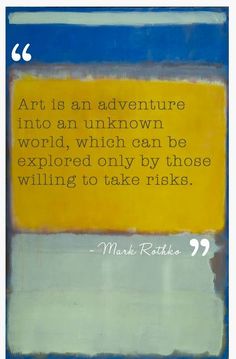
‘To us art is an adventure into an unknown world, which can be explained only by those willing to take risks. This world of the imagination is fancy-free and violently opposed to common sense. It is our function as artists to make the spectator see the world our way – not his way. We favour the simple expression of the complex thought. We are for the large shape because it has the impact of the unequivocal. We wish to reassert the picture plane. We are for flat forms because they destroy illusion and reveal truth… ‘
‘You might as well get one thing straight. I’m not an abstract artist...I’m not interested in the relationship of colour or form or anything else. I’m interested only in expressing basic human emotions – tragedy, ecstasy, doom and so on. And the fact that a lot of people break down and cry when confronted with my pictures shows that I can communicate these basic human emotions…The people who weep before my pictures are having the same religious experience as I had when I painted them.’
Basel (pronounced the same way as the herb) is a charming city in Switzerland. Basel is so tucked away on the northern edge of the country, bordering both France and Germany, that it’s not on the regular Geneva-Bern-Lucerne-Zurich route and is often forgotten. And what a shame that is (I’ll tell you why in a minute).
But first A LITTLE HISTORY:
It’s worth a visit even to just ride the buses
Basel is Switzerland’s third most populous city (approx. 195,000 inhabitants) and is located where the Swiss, French and German borders meet with suburbs in France and Germany. Basel straddles Europe’s greatest river – the Rhine. A small part of the city (Kleinbasel) sits on the northern shore, even though the rest of that riverbank is German – and so acts as Switzerland’s gateway to the sea. It’s a very pretty little city too.
Basel on the Rhine
CULTURE: for many Swiss people, Basel means the three Fs: football, Fasnacht (a large popular festival) and pharmaceuticals, all loved and hated in equal measure. But Switzerland’s third largest city has a lot more to offer than some effing stereotypes, a fact that is also lost on many foreigners visiting Switzerland. ART is a BIG deal. So are museums.
Amid all the museums and galleries that crowd into Basel, perhaps the quirkiest is the one dedicated to the Swiss artist Jean Tinguely, aptly named “The Tinguely Museum.”
Jean Tinguely
Tinguely was born in Fribourg but grew up in Basel, and created the most amazing sculptures you are ever likely to see. Many look like they were put together by a mad scientist using laboratory leftovers. If you thought the Swiss were dull, this museum will change your mind. But I never thought they were dull. I had a Swiss German friend (a girl named Simone) who I met travelling in the Philippines who was extremely avantegarde and fun.
Moving right along, do you know what Basel, Miami Beach and Hong Kong have in common?
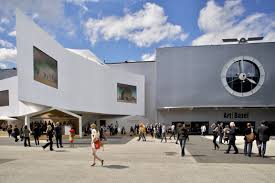
All three cities stage premier international art shows, providing a platform for artists and gallerists from all over the globe. It is considered the world’s largest and most prestigious fair for modern and contemporary art – goes by the name “ART BASEL.” Heard of it?
Art Basel was founded in 1970 by Basel art gallerists Ernst Beyeler, Trudi Bruckner and Balz Hilt. They put their passion and determination behind a visionary idea of their city anddecided to feature only museum quality art work. Art Basel was founded and met with an immediate approval, with more than 16,300 visitors its inaugural year. The fair used a selection process which chose the most elite and exclusive art galleries to participate. These special exhibitions allowed visitors to experience the art on a more global scale, as well as focus on particularly important featured artists.
After more than 30 years of shows, Art Basel extended its fair from Switzerland, to Miami in 2002. Just last year, Hong Kong was added to the list of art-forward cities to participate. Art Basel currently hosts 300 exhibitors from all over the world, with a reported 75,000 to Miami’s location, with many of the exhibitors entirely selling out.
The Art Market’s boom amid world economic sluggishness is a sign of the growing gulf between the rich and the super-super-rich. Taken from The Wall Street Journal (on Opinion Europe – June/20/2013):
A Matter of Taste and Millions
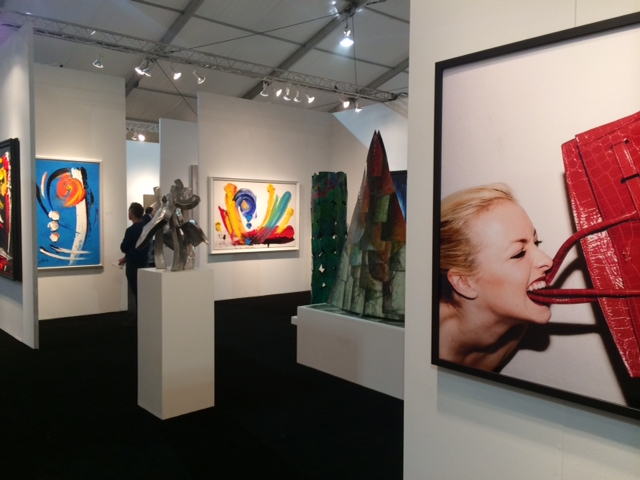
Samuel Lynne Galleries
Art Basel is the world’s largest and most prestigious fair for modern and contemporary art. Art Basel offers collectors the most expansive and high quality buying venue of the year. It provides an extraordinary overview of primary and secondary market material. And, increasingly, it is responding to the growth of the global art market, offering a more comprehensive look at galleries and art making practices around the world. It has for a long time set the standard among art fairs.
Things you might not know about one of the most influential artists of the twentieth century:
(1869-1954)
Initially trained as a lawyer, Matisse developed an interest in art only at age twenty-one.
Along with those of Pablo Picasso, his stylistic innovations fundamentally altered the course of modern art and affected the art of several generations of younger painters.
The Fall of Icarus, 1943
In the summer of 1904, while visiting his artist friend Paul Signac at Saint-Tropez, a small fishing village in Provence, Matisse discovered the bright light of southern France, which contributed to a change to a much brighter palette.
Matisse’s career can be divided into several periods that changed stylistically, but his underlying aim always remained the same: to discover “the essential character of things” and to produce an art “of balance, purity, and serenity,” as he himself put it in his “Notes of a Painter” in 1908.
The Dessert: Harmony in Red
In the autumn of 1917, Matisse traveled to Nice in the south of France, and eventually settled there for the rest of his life. No wonder – it’s so nice in Nice.
In the late 1940’s, sufffering from ill health, Matisse retired his paintbrush. A spirit as creative as his, however, was not to be restrained.
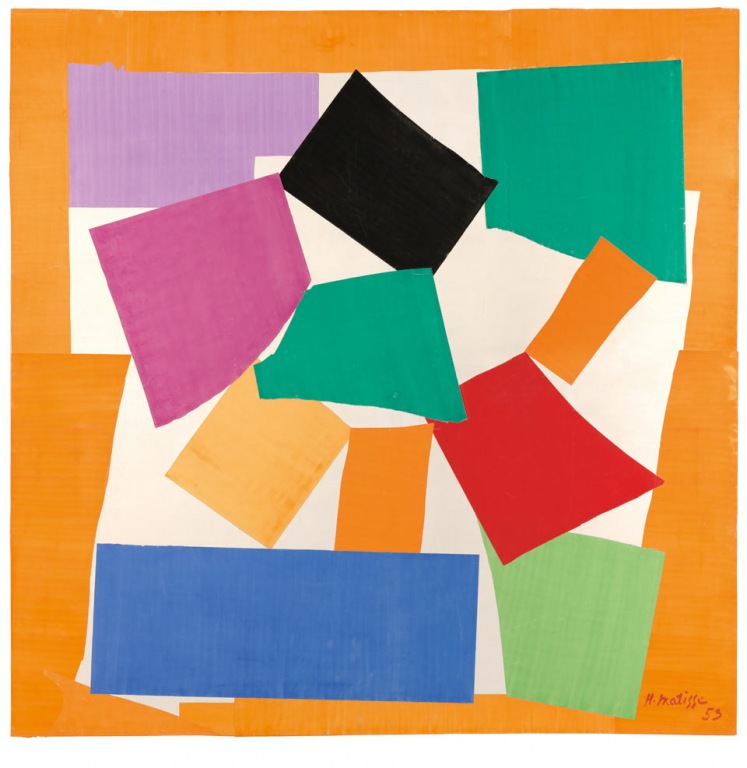
The Snail
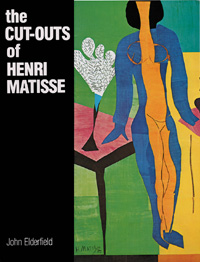
Until his death in 1954, the trailblazing colorist snipped and tore gouache-coated paper into graphic shapes that he assembled into vibrant compositions.
Debuting at London’s Tate Modern this spring, the exhibition “Henri Matisse: The Cut Outs” features some 120 of these works, from figurative pieces – botanical tableaux, nudes – to playful abstracts such as The Snail (shown), a nine-foot square 1953 masterpiece that is as striking today as ever.April 17 – September 7; tate.org.uk
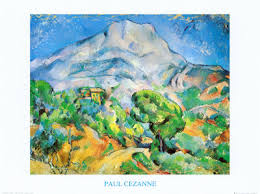
Paul Cézanne (1839-1906) Born January 19 in Aix-en-Provence, France
The most seductive thing about art is the personality of the artist himself – Paul Cézanne
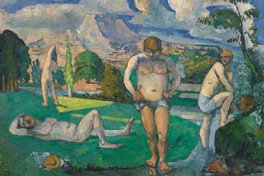
Bathers at Rest
Cézanne was best known for his incredibly varied painting style, which greatly influenced 20th century abstract art. Both Matisse and Picasso are said to have remarked that Cézanne “is the father of us all.” No small compliment.
In 1943, Pablo Picasso declared to photographer George Brassaï that artist Paul Cézanne was “my one and only master.”
The seminal moment for Picasso was the Cézanne retrospective held at the Salon d’Automne one year after the artist’s death in 1906. Though he previously had been familiar with Cézanne, it was not until the retrospective that Picasso experienced the full impact of his artistic achievement. As he later put it: “Cézanne’s influence gradually flooded everything.”
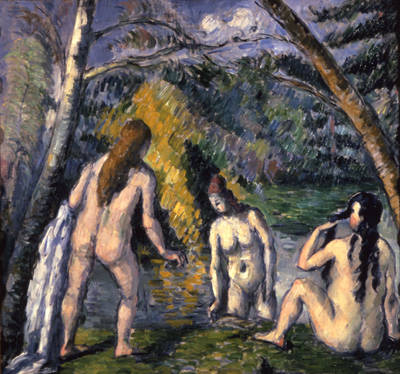
Three Bathers, 1879-82 Oil on canvas 21 7/16 x 20 5/16 in. (55 x 52 cm) Petit Palais, Musée des Beaux-Arts de la Ville de Paris
Cézanne early recognized the limitations of the Impressionists in their adherence to “honoring the eye” and reacted by constructing a new artistic vocabulary that synthesized reality and abstraction, the backbone of early Modernism. He also revitalized the classical concept of the nude. In 1899, Henri Matisse purchased Cézanne’s small painting called Three Bathers(1879-82) from Vollard; it remained with him for three decades as a teaching model.
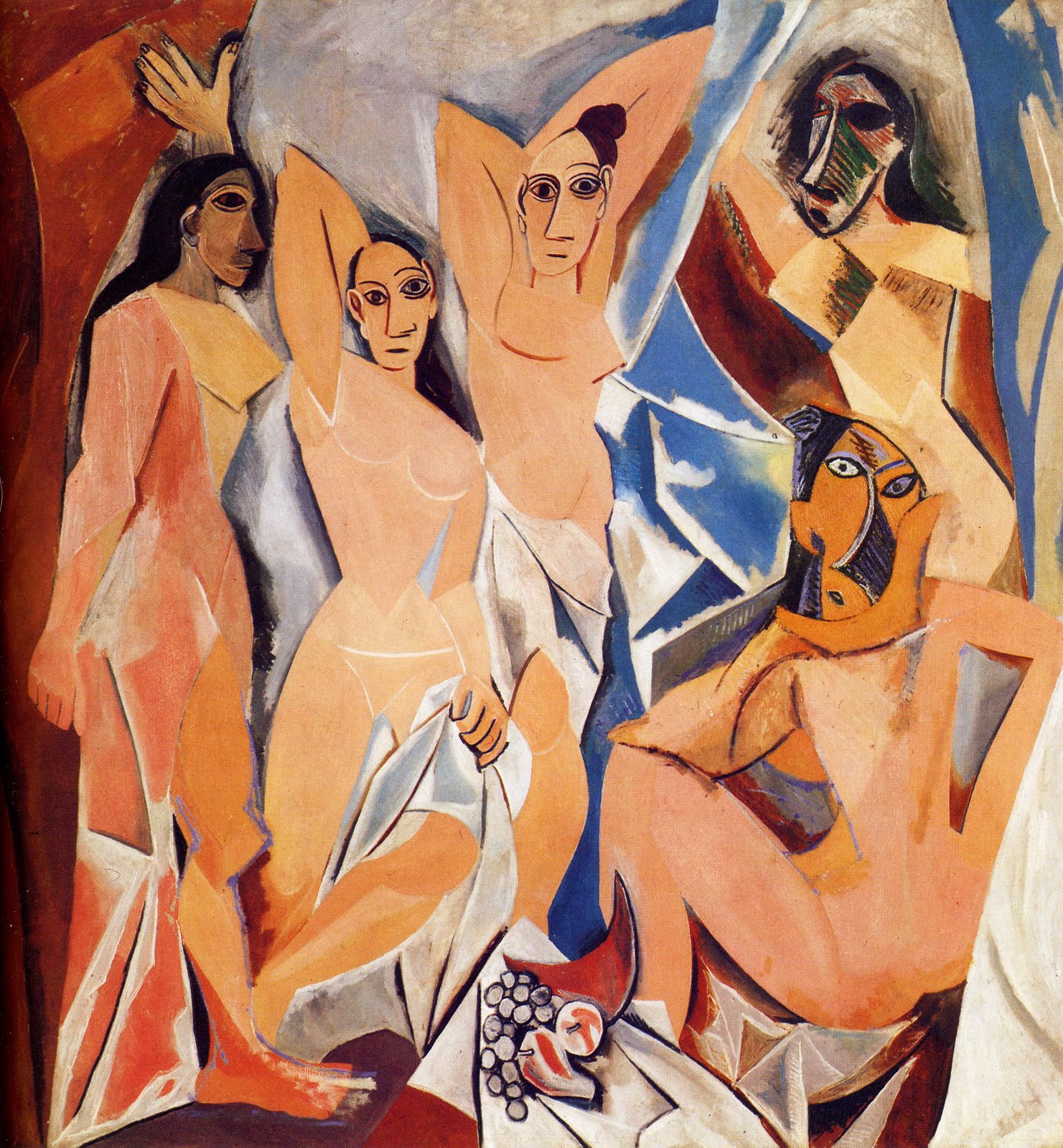
Pablo Picasso – Les Demoiselles d’Avignon
The work’s significance lies in its demotion of the nude to an earthbound status that would eventually reach the peak of its final metamorphosis in Pablo Picasso’s Les Demoiselles d’Avignon (1907). A comparative study of Picasso and Cézanne is not new. Imagine how many Ph.D. theses had been devoted to the topic.
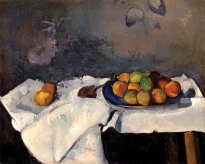
Still Life: Plate of Peaches, 1879-80. Oil on canvas, 59.7 x 73.3 cm. Solomon R. Guggenheim Museum, N.Y.
Cézanne set up his still lifes with great care. A testimony by an acquaintance describes his method of preparing a still life: “No sooner was the cloth draped on the table with innate taste than Cézanne set out the peaches in such a way as to make the complementary colors vibrate, grays next to reds, yellows to blues, leaning, tilting, balancing the fruit at the angles he wanted, sometimes pushing a onesous or two-sous piece [French coins] under them. You could see from the care he took how much it delighted his eye” (But when he began to paint, the picture might change in unusual ways. Cézanne seems to be painting from several different positions at once. He believed that the beauty of the whole painting was more important than anything else—even more important than the correctness of the rendering (Robert Burleigh, Paul Cézanne: A Painter’s Journey [New York: Harry N. Abrams, Inc., 2006], p. 18).
Inevitably, we see him as the point where modern art began: so the first room of theMuseum of Modern Art in New York, in its current hang, gives us a Gauguin and three Seurats on the left; outnumbering them, on the right and straight ahead, are half a dozen Cézannes. But, just as inevitably, in his own time they could see more clearly where he came from than where he would lead. So a friendly critic called him “a Greek of the Belle Époque”. Renoir said that his landscapes had the balance of Poussin, while the colours in his “Bathers” “seem to have been taken from ancient earthenware”. Cézanne, like all serious members of any artistic avant-garde, was constantly learning from previous masters, studying Rubens all his life. And while we might admire his daring fragmentations of vision, what the painter himself sought was “harmony”, which was nothing to do with “finish” or “style”.
Cézanne had his first one-man show in 1895, at the age of fifty-six.
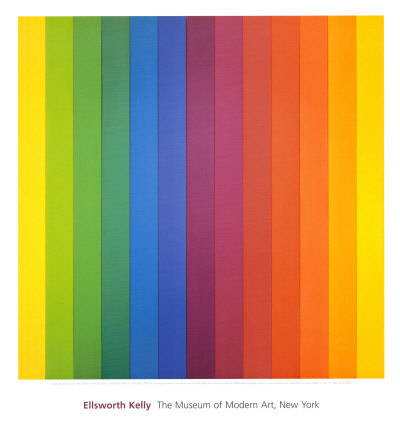
Ellsworth Kelly (American, born 1923) is a painter and sculptor who established his own style amidst the pervasive influence of the Abstract Expressionist and Pop Art movements.
“I have worked to free shape from its ground, and then to work the shape so that it has a definite relationship to the space around it; so that it has a clarity and a measure within itself of its parts (angles, curves, edges and mass); and so that, with color and tonality, the shape finds its own space and always demands its freedom and separateness.” – Ellsworth Kelly
MOMA
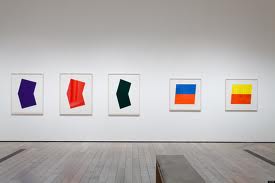
Maintaining a focus on the dynamic relationships between shape, form and color – Kelly was one of the first artists to create irregularly shaped canvases. His subsequent layered reliefs, flat sculptures, and line drawings further challenged viewers’ conceptions of space. While not adhering to any one artistic movement, Kelly virtually influenced the development of Minimalist, Hard-edge painting color field and Pop Art.
Kelly intends for viewers to experience his artwork with instinctive, physical responses to the work’s structure, color, and surrounding space rather than with contextual or interpretive analysis. He encourages a kind of silent encounter, or bodily participation by the viewer with the artwork, chiefly by presenting bold and contrasting colors free of gestural brushstrokes or recognizable imagery, panels protruding gracefully from the wall, and irregular forms inhabiting space as confidently as the viewer before them.
More Samplings
Background info:The Artist
Born in New York City, Kelly admired the works of Naturalist John James Audobon (American, 1785–1851) as a child and loved to draw, even though his parents only reluctantly permitted him to study at the Pratt Institute in Brooklyn, NY. After serving during World War II for two years as a camouflage artist, Kelly was able to study on the GI Bill at the School of the Museum of Fine Arts, in Boston, MA, and then at the École Nationale Supérieure des Beaux-Arts in Paris, France. Separated from the American art world while in Europe, Kelly developed his distinctive method of painting. These works echo Kelly’s desire to separate himself from the traditional roles of composition and the artist’s hand. Kelly only returned to the US when he believed that the enthusiasm for Abstract Expressionism had died down enough to allow his work to get some visibility. By the end of the 1950s, he was internationally recognized for his monochromatic canvases, which began to take the shape of non-rectangular forms such as ovals and curves. Kelly also began to create sculptures similar to his paintings, featuring simple two-dimensional forms. In 1970, the artist moved to upstate New York, where he shifted his focus to create large outdoor sculptures concerned more with color than form. Many of his public works are now on display around the world. Kelly now lives and works in Spencertown, NY.
Sources: Artnet.com + theartstory.org
From the Lawren Harris exhibit at the Vancouver Art Gallery 03/30/14
If there is a particular artist that you’d like to see featured on this blog please let us know.
Twenty four years ago a painting by Barnett Newman ignited a firestorm in Canada.
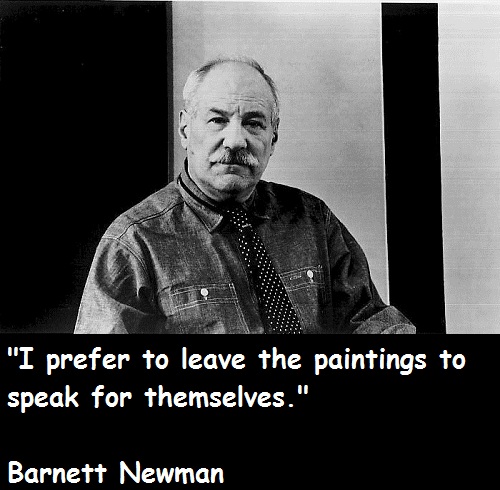
“In titles I try to evoke the emotional complex that I was under.” – Barnett Newman (1905-1970)
Which leads me to ask…what qualifies as art, especially in the increasingly bizarre world of modern art?
From Malevich’s Black Square, a pure black canvas, to DuChamp’s Fountain, a urinal turned upside down, modern art can take on forms from the bizarre to the mundane. This leaves many people wondering, how can these seemingly simple pieces become famous works of art?
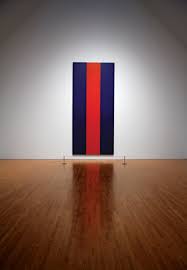
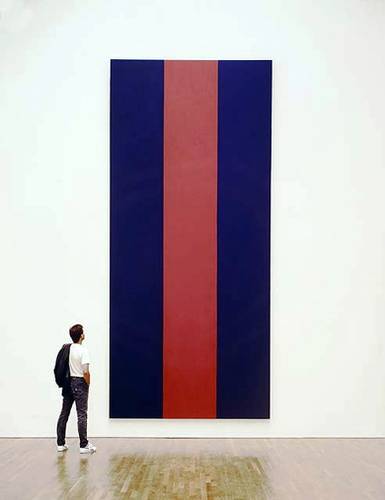
In 1990, The National Gallery of Canada made a controversial purchase of a well-known contemporary painting by Newman entitled “Voice of Fire” referred to as “the biggest art scandal in the country.” The painting is almost 18 feet tall and features a simple red stripe on a blue background. Although Voice of Fire hung peacefully on loan in the gallery for two years, it was the subject of public outcry when, in the spring of 1990, the gallery decided to purchase the painting for $1.76 million. More than two decades later, the almost $1.8-million price might sound modest, but it seemed extravagant then.
As Capital News reported, the purchase was so highly contested by the public and the media that it was taken all the way to the House of Commons and sparked a fad of T-shirts and ties patterned after the painting.
If the fuss over the price seems quaint in hindsight, the deeper question is: Can three stripes, no matter how monumentally presented, be considered an important creation?—is not so easily dismissed.
The popular sentiment was that nearly 1.8 million of the tax payer’s dollars was a colossal waste of money for a painting widely dismissed asthree stripes of colour. “My kid could have painted that” about sums it up (ignorantly if I may say so), with a fair sprinkling of “He’s not even Canadian!”
But supporters of the acquisition held that fine art shouldn’t have to be accessible; it’s there to challenge, and to push the boundaries. Newman’s work did that, especially when on display in the Gallery, where its enormous size and bold colours really were quite startling to behold. Plus, it was a work of some relevance to Canadians, even if Newman was an American painter: it had hung in the geodesic dome American Pavillion at Expo67 in Montreal.
Limiting his colours to red and blue, he created this powerful vertical canvas to be suspended from the dome’s ceiling. While it appears simple in form, Voice of Fireconveys a range of meanings. Newman intended the work to be studied from a short distance; its enormous scale transforms the space and tests our sensory experience.
If the painting was sold today it would be worth in the area of $70 million.
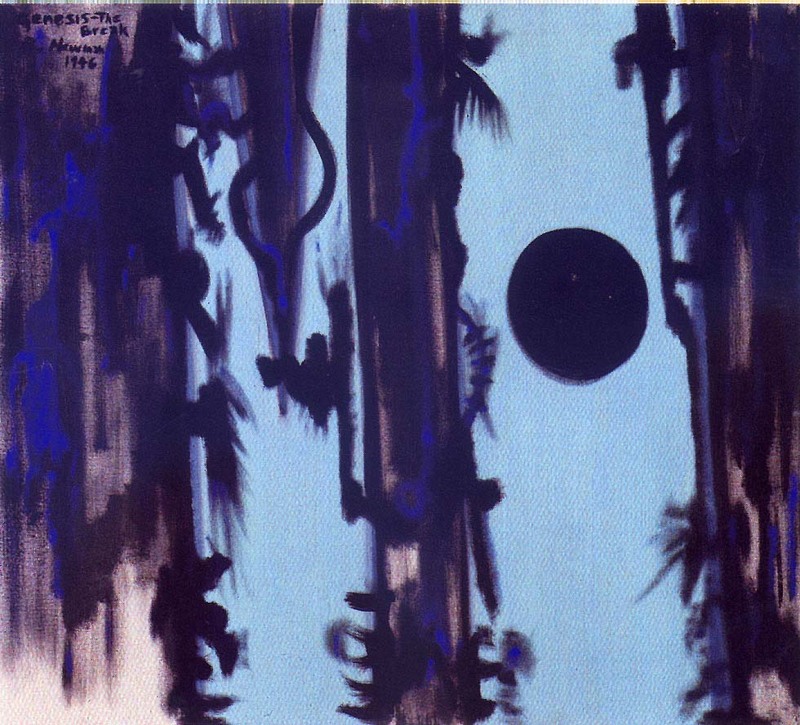
Genesis by Barnett Newman
Newman was born in New York City, the son of Jewish immigrants from Poland. He was known to be an articulate writer and spokesman for modern art. Newman was also very spiritual and saw his work as such. The Voices of Fire title comes from the biblical voice from the burning bush.



 Sao Paulo, Brazil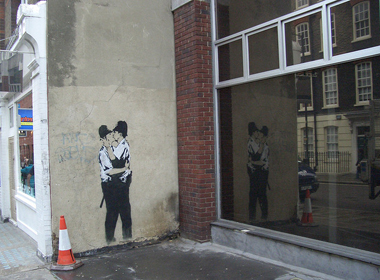
 New York City, USA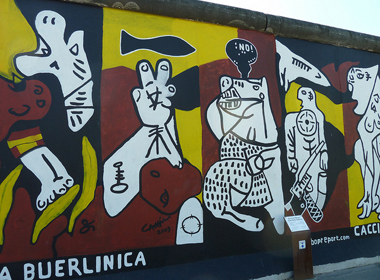
 Buenos Aires, Argentina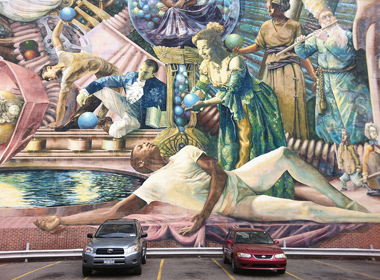
 Melbourne, Australia
 Tel Aviv, Israel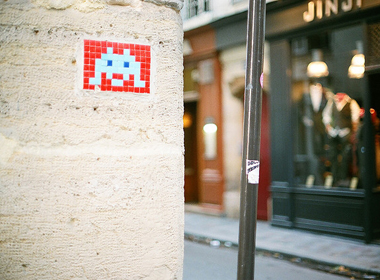


















 Girl Who Would be KING on Life, Style and INSPIRATION.
You must be logged in to post a comment.