A continuation of my post from last Monday on the Art of Collecting ART and What Makes Good Art – answersfrom Art World Pros. However this discussion will always be continuing because everyone’s opinion differs. Here is one more:
Damien Hirst’s Spot Painting – Gagosian gallery, Paris. As the title promises, Spot Paintings features borrowed and newly created works of art featuring the UK-based artist’s signature dotted paintings. Different colors, sizes, and shapes were all variations on the theme.
Scott M. Levitt, Director, Fine Arts, Bonhams & Butterfields, Los Angeles:
Quality, quality, quality. This is the mysterious and subjective key to good art. In all periods of art there are good and bad works of art. I find that defining quality in representational art is easier than in modern and abstract art. The other key word is looking. Everything looks good when you first start looking at art, as you have nothing to compare it to. As you hone your eye, you begin to distinguish between good and bad. The more you look at art, the easier it is to determine what is good and what is bad.
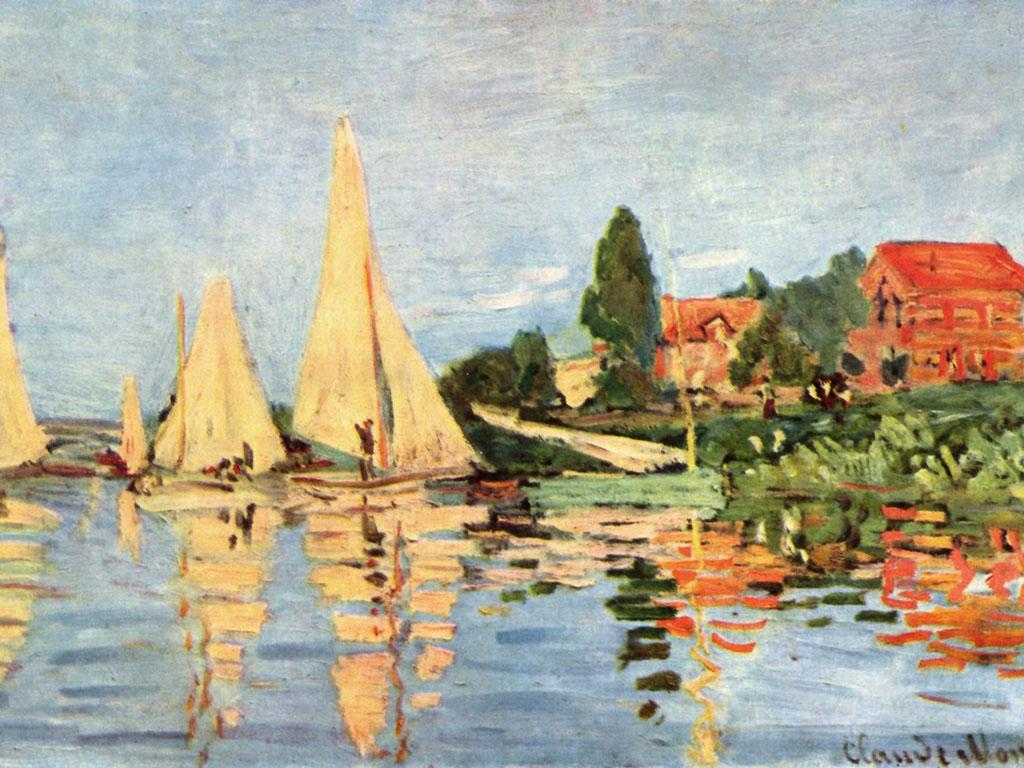
Claude Monet Landscape Painting
Also, there are two schools of thought as to what is good and bad. Some people believe that good and bad are personal distinctions and entirely in the eye of the viewer. Others believe that there is good art and crap art and no one can tell them otherwise. I think the real answer is somewhere in between, and this is based entirely on the quality of the eye of the viewer.
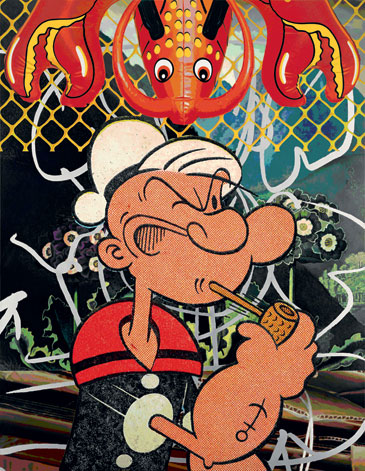
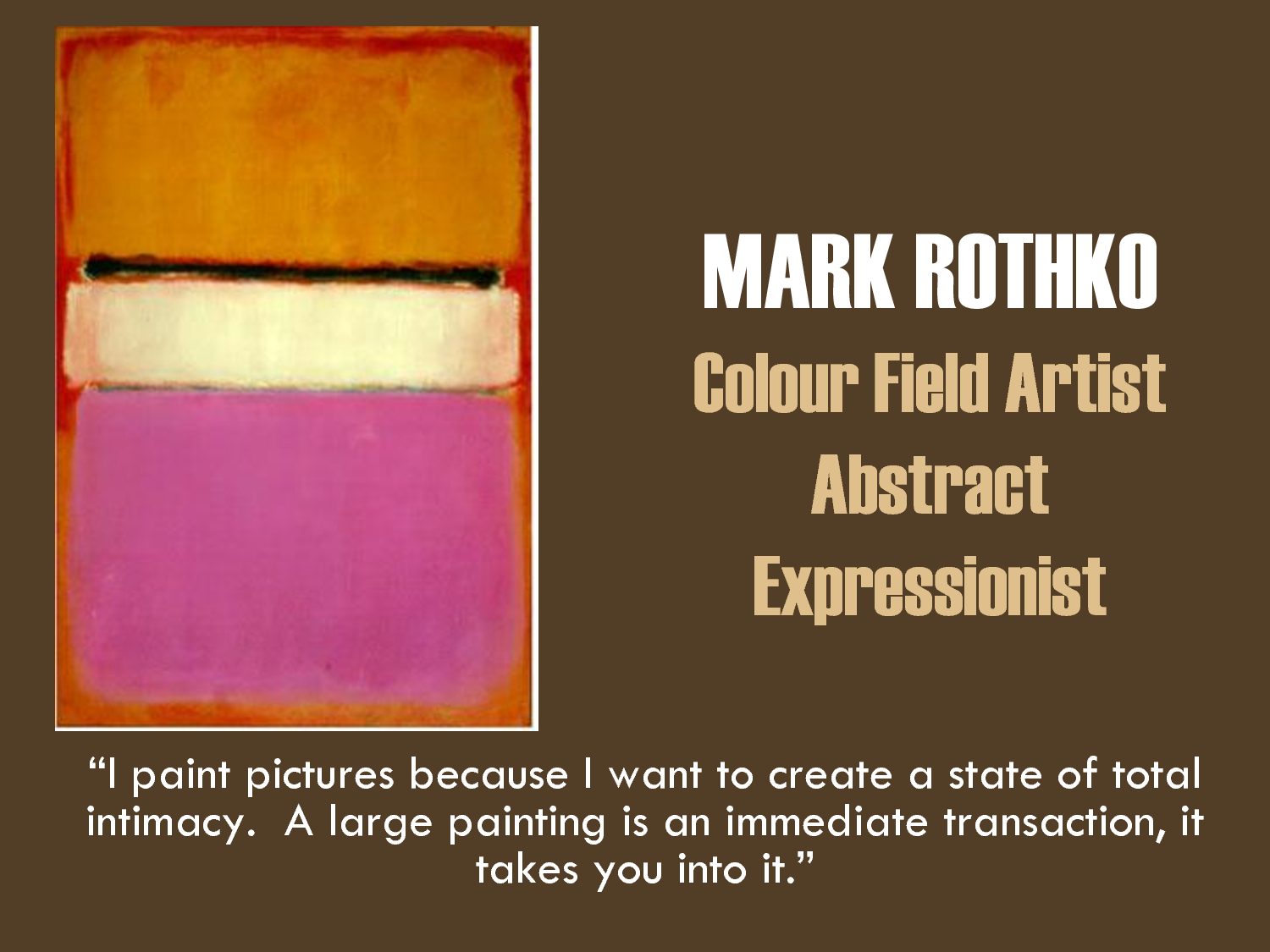
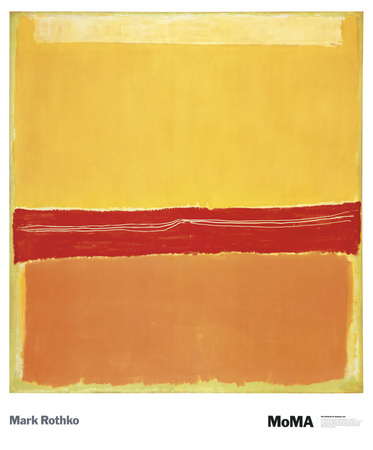
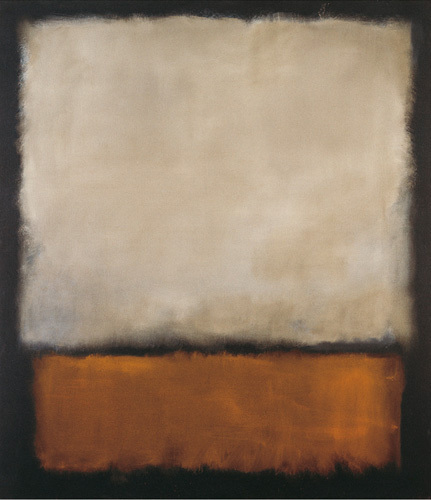
Each area of art requires its own set of criteria when determining good and bad, i.e. painting, sculpture, printmaking, craft, conceptual etc. Personally I hold originality to be important in this determination. For contemporary artists that can be tough. Most of what is being created today is, in my personal opinion, not very original. To me a Mark Rothko is a masterpiece, while a thousand color-field artists after him are not. I find Pop artists brilliant and Jeff Koons completely reactionary. There is originality in contemporary art, but it is tough to find.
Mark Rothko contemplation
It is also tough when the art market influences good and bad. I would like to say that monetary value determines quality, but unfortunately they are often unrelated, as many factors can influence the value of artwork other than quality. Damien Hirst is an interesting and relatively unique artist, but I don’t think his prices at auction reflect how good he is. When one of his works is worth more than a good Monet landscape, something is very amiss.
I think the best “take away” here is that if you want to know what is good and what is not, you have to get out and look for yourself and make that decision. Take a year… and make it a rule to visit museums and galleries every weekend and read art-related books and magazines as much as possible in as many art fields as possible. You will have your answer. If you don’t use this approach, you will officially have no eye or ability to make these distinctions.
If you are in this purely for your own collecting interests, then look at as much art as possible in all fields and eras as I have just said. If you are in it purely to make money, then buy a subscription to Artnet or E*Trade. It’s your call.
ART is part of our culture and can improve our LIFE
By art alone we are able to get outside ourselves, to know what another sees of this universe which for him is not ours, the landscapes of which would remain as unknown to us as those of the moon. Thanks to art, instead of seeing one world, our own, we see it multiplied and as many original artists as there are, so many worlds are at our disposal, differing more widely from each other than those which roll round the infinite and which, whether their name be Rembrandt or Vermeer, send us their unique rays many centuries after the hearth from which they emanate is extinguished. (Proust)
“What do I ask of a painting? I ask it to astonish, disturb, seduce, convince.” – Lucian Freud
Agnes Martin
When I think of art I think of beauty. Beauty is the mystery of life. It is not in the eye it is in the mind. In our minds there is awareness of perfection.
What I say is that we’re capable of a transcendent response, and I think it makes us happy. And I do think beauty produces a transcendent response.” – Agnes Martin
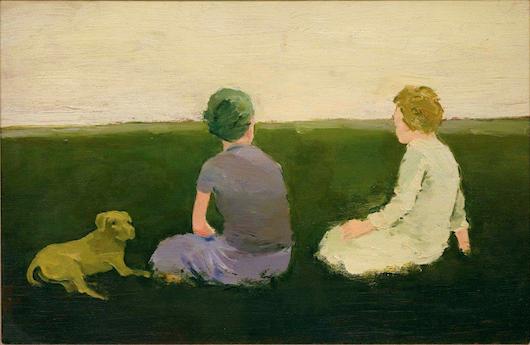
Albert York
“The modern world just passes me by. I don’t notice it. I missed the train.”
“I think we live in a paradise. This is the Garden of Eden, really it is. It might be the only paradise we ever know, and it’s just so beautiful, with the trees and everything here, and you feel you want to paint it. Put it into a design. That’s all I can say.” – Albert York
Joan Miró – 1927
“I feel the need of attaining the maximum intensity with the minimum of means. It is this which has led me to give my painting a character of even greater bareness.”
“What I am looking for… is an immobile movement, something which would be the equivalent of what is called the eloquence of silence, or what St. John of the Cross, I think it was, described with the term ‘mute music.'” – Joan Miró
“Art enables us to find ourselves and lose ourselves at the same time” ~Thomas Merton
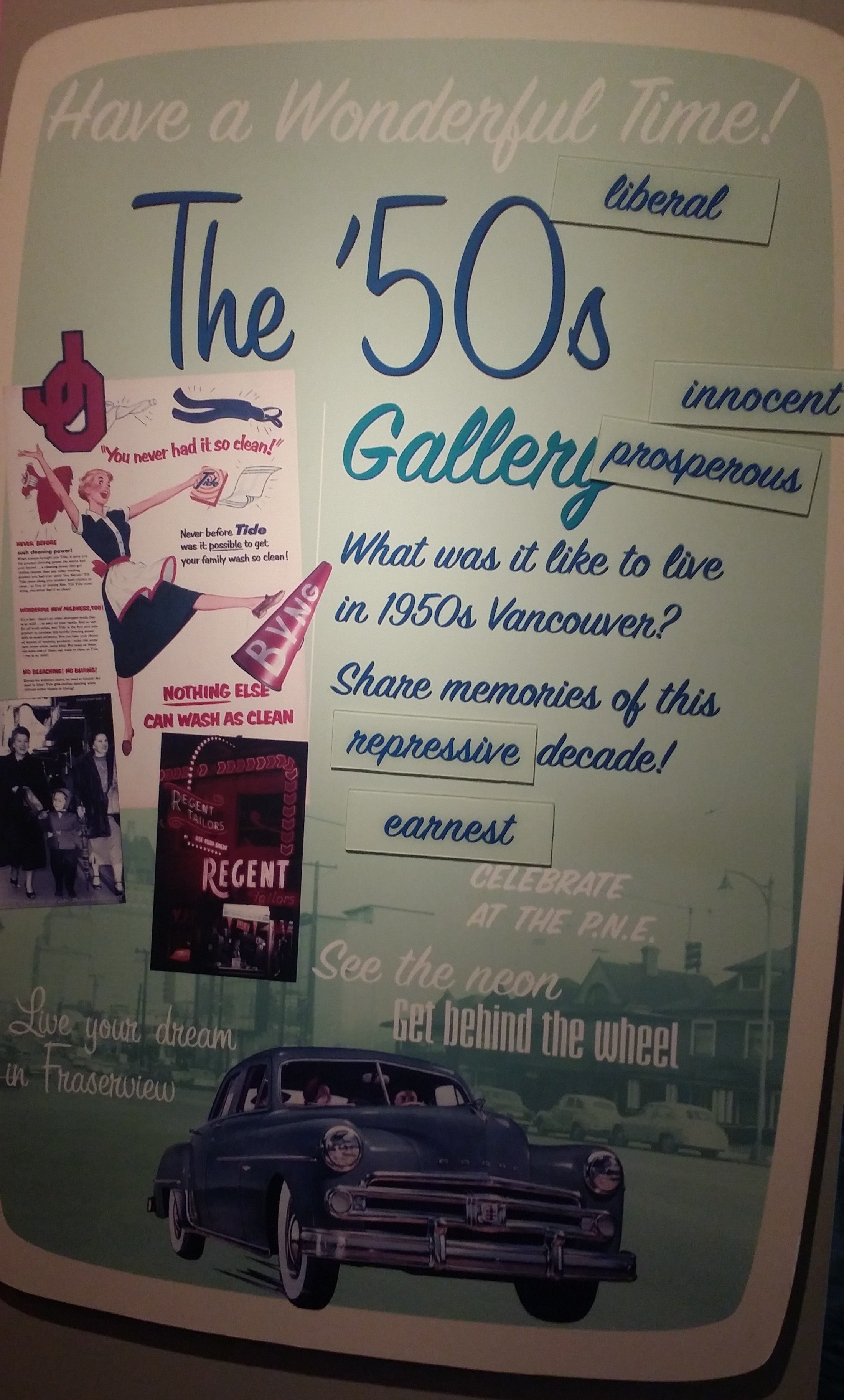
If Happy Days taught us anything, it’s that life was better in the fifties.
On Friday I attended a Celebration of Life party at the Museum of Vancouver for a neighbour’s mom who just passed away.
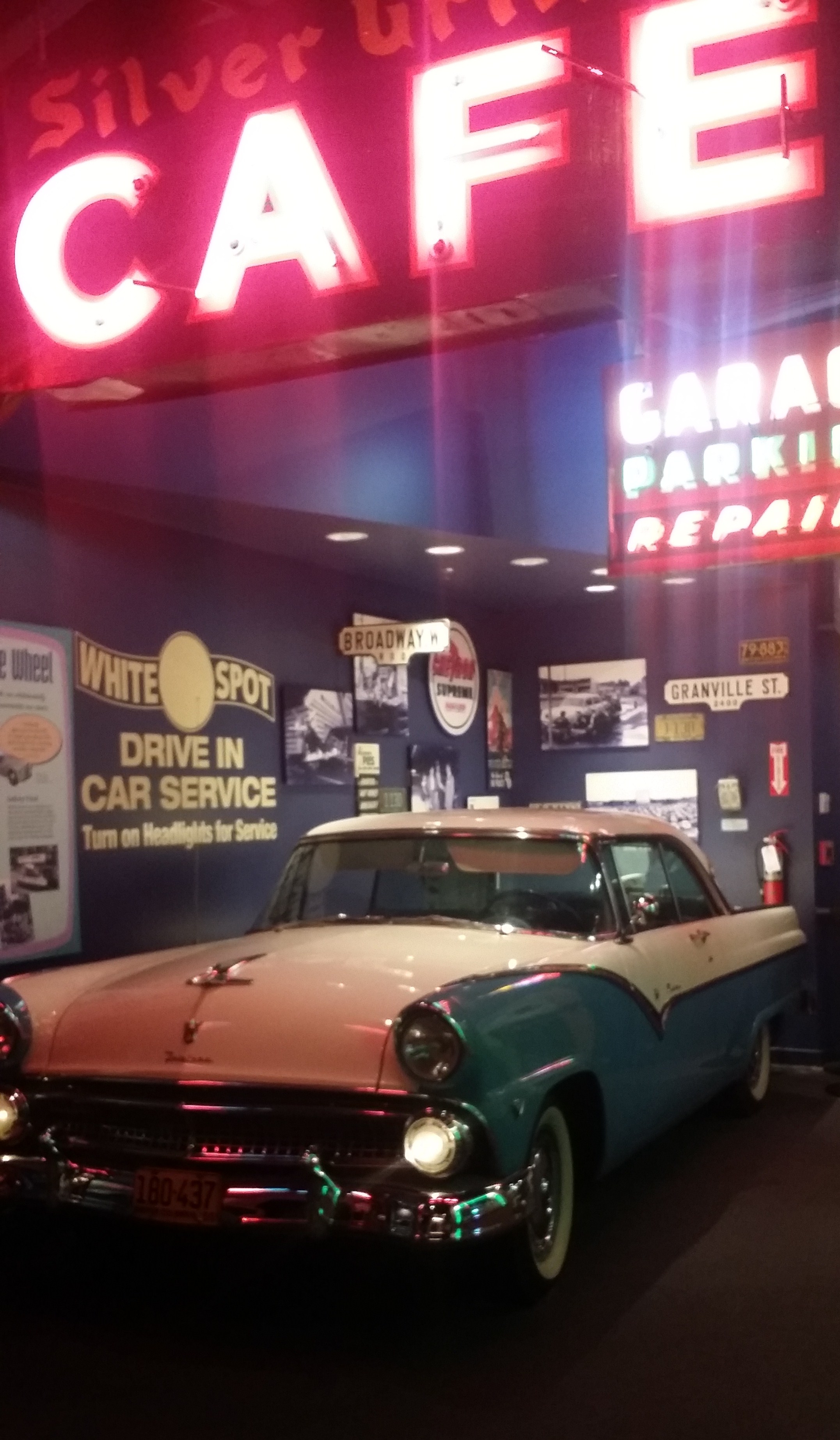
With beautiful photos of her life rotating on a big screen and smooth jazz playing in the background (later a live Cuban band) it seemed she was in her element in the 1950’s. So how appropriate that the 50’s interactive exhibit was in the room adjacent to us (and open for us). I thought it would be interesting to post some photos I took. Here’s looking back….
People left their door unlocked at night, kids respected their elders and a guy who lived above his best friend’s garagecould still be cool so long as he owned a leather jacket. Well, turns out The Fonz didn’t lie: despite the racism, and homophobia, the fifties were a pretty good time to be alive.
In Hollywood, setting something in the fifties brings forth things like ‘nostalgia’ and ‘optimism’. But, how do you measure optimism?
Beginning in 1935, Polling Company AIPO spent decades ringing strangers up and asking them how happy they were—a move that actually yielded usable data. According to this, the fifties saw a surge of people claiming they were very happy, peaking between 1955 and 1960 at around forty percent. That’s the highest it’s ever been. Remember this isn’t just ‘happy’ but ‘very happy’—as in nothing could possibly be better.
In 1957 the murder rate bottomed out at four people per 100,000 the lowest in fifty five years.
It sure seemed like a more peaceful, less complicated time than living now in our more fast-paced, stressed out era. But life is still good, worth living and you can have your own reality show…..for even more than 15 minutes!
fyi – hula hoops have made a comeback and they’re a great exercise…..if you can swing it.
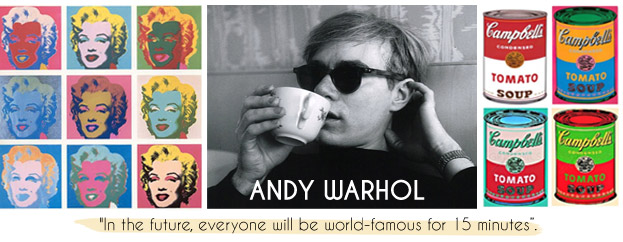
Not exactly a prophet, but he did predict the future. Andy was way ahead of his time.
By Pao – in Rome, Italy. SpongeBob Square Pants. I’m familiar with the character but never watched the cartoon. I find this humorous.
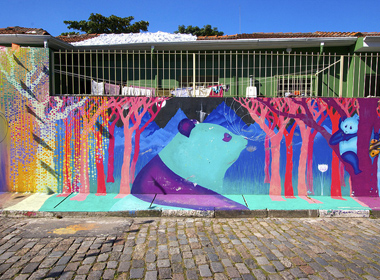
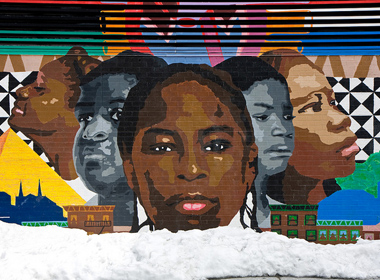
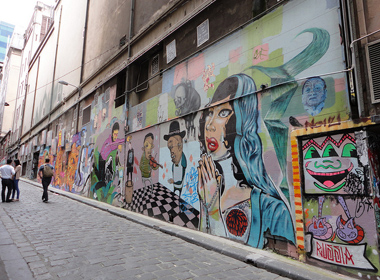
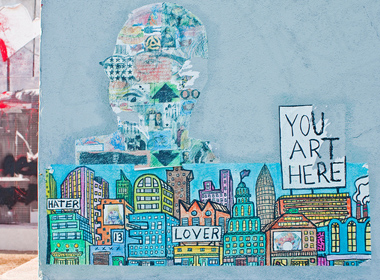
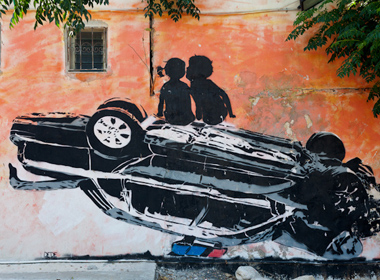
Call it what you will but there are some truly astounding works to behold all around the globe. Besides beautifying otherwise downtrodden neighbourhoods and offering innovative art to the public for free, the transient nature of street art is part of its appeal. It’s also a lot nicer than looking at a blank wall. Street art is an ephemeral thing. Here today, maybe gone tomorrow. Many a mural has been erased due to the whims of local governments and the impulses of other street artists. I was upset to notice that an intricately beautiful mural I’ve always admired on a gelato shop had been painted over.
So I thought it would be fun to post the TOP TEN BEST CITIES in the world to view streetside art.
Sao Paulo, Brazil
Like many other cities, Sao Paulo has had a turbulent relationship with local street artists. Originally, much of the prohibited public painting going up in the city was political and the government was opposed. But it has relaxed this stance in recent years, collaborating with street artists to produce colourful works on highways and housing developments. When you’re there, be sure to look down to find artist Tec’s fascinating road murals. If you can’t make it, you can find a virtual selection of Sao Paulo’s best works on the Google Art Project website.
London, England
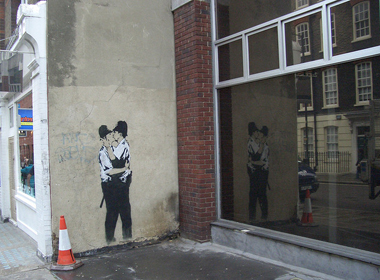
London has incubated its fair share of street artists over the years. While many works have been removed and repainted, many pieces stand untouched throughout the city (including some elusive pieces by the famous Banksy). Though officially condemned, the popularity of street art in England’s capital has led the city government to commission various pieces, like the sometimes odd installations on the Fourth Plinth in Trafalgar Square.
New York City, USA
New York is where it all started. In the late 1960s and early 1970s, the first graffiti artists began tagging everything in sight. At that time, the driving force behind this nascent street art was ubiquity. The art form has evolved since then to encompass the elaborate murals and clever works that can be found around NYC today. Neighbourhoods like Chelsea, Bushwick and the Lower East Side are all meccas for street artists. At 106 and Park in Spanish Harlem, you can find the Graffiti Hall of Fame, a section of wall that has seen some of the best graffiti writers of all time scribble their stuff.
Berlin, Germany
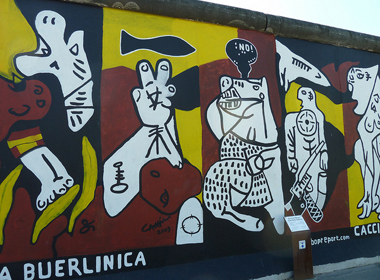
Berlin’s tumultuous history offers inspiration for street artists to produce some of their best work. Nowhere is this more apparent than the East Side Gallery, a section of the former Berlin Wall that has been turned into a 1.3-kilometre canvas. Here, you’ll find 105 murals that were painted on the east side of the wall in 1990, where graffiti had been banned during Soviet rule. Kreuzberg is another popular district for street art, and is home to the largest stencil in the world, the Kreuzberg Spaceman. But you don’t have to travel far from downtown Berlin for impressive creations: the central Mitte district is a creative enclave, home to Tacheles, a former department store covered in artists’ work.
Buenos Aires, Argentina
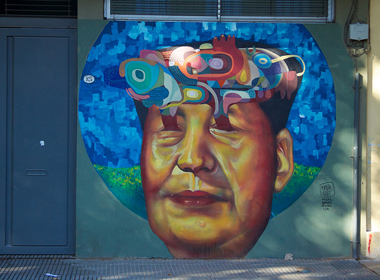
One of the most popular tourist areas in Buenos Aires, Caminito, is a district that bills itself as the world’s first open-air pedestrian museum. Its colourful building facades are very photogenic, and a number of artists sell their wares in the neighbourhood. However, Buenos Aires is known worldwide for its support of street art. Barren walls city-wide are transformed into building-sized murals, which are not only tolerated by the city government, but oftentimes actively funded. Buenos Aires native Martin Ron’s famous 3D turtle is found here, in addition to a number of his other vibrant and breathtaking murals.
Philadelphia, USA
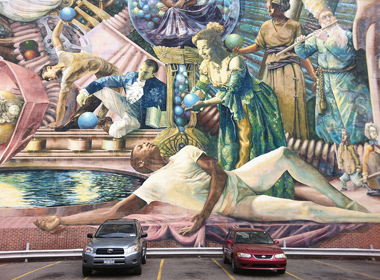
As a burgeoning artistic centre, Philadelphia boasts a creative spirit that’s easy to find on its “Mural Mile”. Surprisingly, Philadelphia’s Mural Arts Program – the largest public art program in the United States – began as part of a government-funded anti-graffiti movement. Tired of the artless tags that plagued the city, Philadelphia officials approached graffiti artists and had them direct their considerable artistic talents into full size murals. Today, there are more than 3,600 of these impressive works dotting the city. In addition to these full-size pieces, a number of famous street artists have left their mark here.
Melbourne, Australia
Melbourne has become one of the world centres for street art, with dozens of acclaimed artists having left their mark on the city. Numerous alleyways in the Australian cultural capital are decorated with vibrant works. Hosier Lane and Caledonian Lane are iconic spots, and in 2010 the local council commissioned a number of artists to paint the walls of Union Lane. These alley artworks are now highlighted by local tourism agencies. Though the relationship between street artists and government has been strained at times (city workers accidentally demolished a Banksy piece), the government has largely supported its creative citizens and it shows in the variety of urban spaces where street art has popped up.
Los Angeles, USA
If there’s anywhere in the world where street art has jumped the gap between radical expression and commercial enterprise, it’s in LA. Here, you can find LAB ART, a 6,500 square-foot gallery of street art that’s not so much on the street anymore, but can be purchased instead. But that isn’t to say that the art form has been completely commercialized here. A number of iconic works can still be seen in the La Brea area and walls in Hollywood are regularly redone with fantastic images from local artists like Robbie Conal and Saber.
Tel Aviv, Israel
While some cities shirk the free public art its talented citizens spray on the walls, forward-thinking places like Tel Aviv embrace it wholeheartedly. The community centre on Rothschild Boulevard and the area around Jaffa Port are ever-changing exhibits of innovative paintings, wheat paste art and stenciling. You can find interesting works wherever you may go in the city, though, like elsewhere, the best works are often found in less developed neighbourhoods. In Tel Aviv this means heading toward the less hip areas of Florentin to see what inventive Israeli artists have to offer.
Paris, France
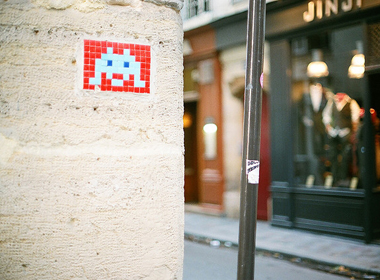
Walking around Paris, you’re likely to come across small tiled 8-bit figures a couple of stories above the street on building corners and monuments. These are works done by the artist Invader, who works across the world but hails from Paris. His colourful tiled mosaics of characters from the arcade game Space Invaders can be found throughout the city. Paris is also home to Blek le Rat, the father of stencil graffiti, who has been at work on Paris streets for over 30 years. You might have to pay to see the Mona Lisa, but some of the best art in the French capital is found streetside.
*Graffiti ranges from simple written words to elaborate wall paintings, and it has existed since ancient times, with examples dating back to Ancient Egypt, Ancient Greece, and the Roman Empire.
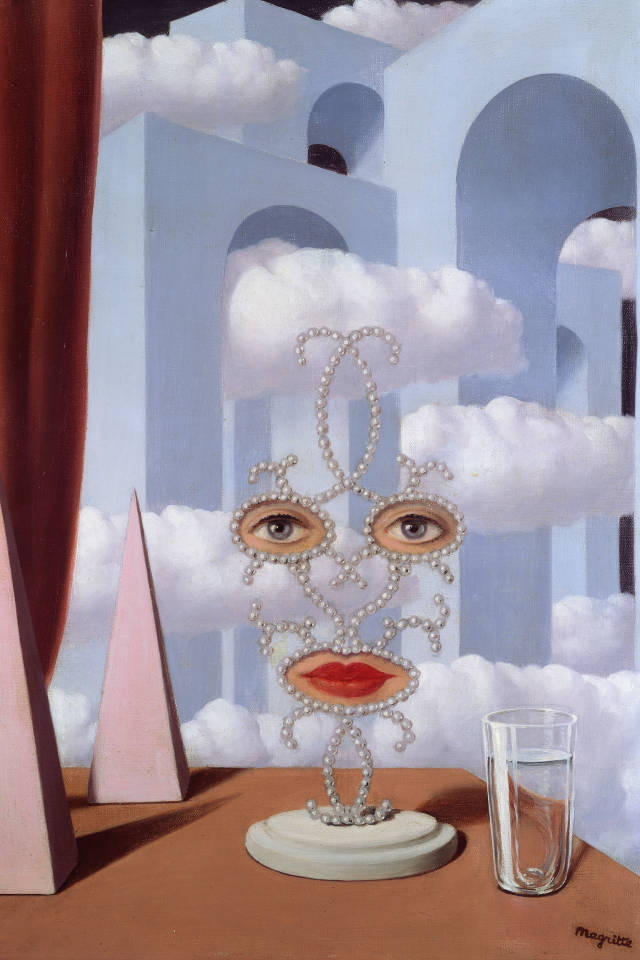
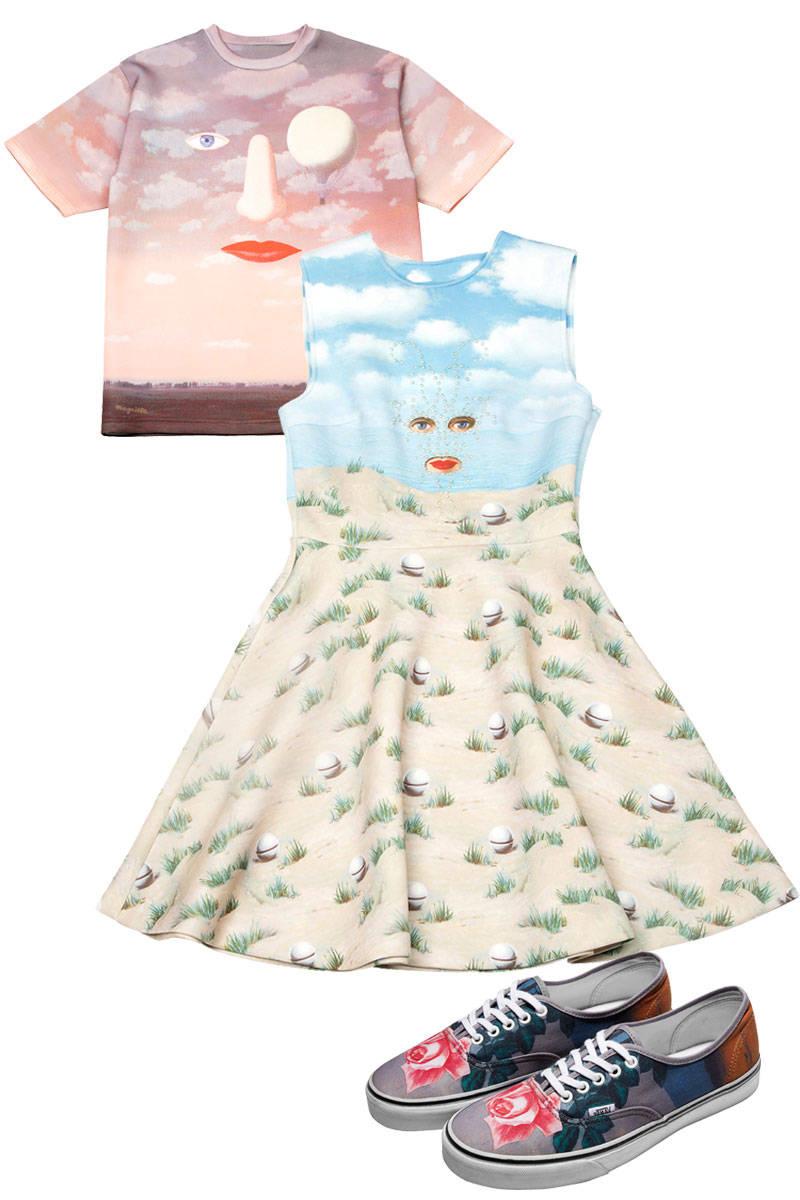
Two young designers pay homage to the surrealist with a new collaboration at “Opening Ceremony”. Opening Ceremony is one of the fashion world’s holy grails – a cult destination shop on a par with 10 Corso Como in Milan, Colette in Paris and Dover Street Market in London, with branches in LA and Tokyo.
Humberto Leon and Carol Lim had their heads in the clouds for their new collaboration with the Magritte Foundation. The duo’s favorite paintings by the surrealist adorn clothing of their own design, as well as shoes by Vans, Birkenstock, and Manolo Blanik.
“Opening Ceremony is featuring all things Belgium this year, so it was the perfect moment to celebrate the world of René Magritte,” say the designers. “We’re lifelong fans.”
prices below
Opening Ceremony was founded in 2002 by two friends from UC Berkeley, Carol Lim and Humberto Leon, as a place to share their passions for travel, art, and fashion. Inspired by a trip to Hong Kong, the two decided to leave their jobs in corporate fashion to realize their unique dream. What began as a single store on a quiet street in downtown New York is now a global community with outposts in New York, London, and Los Angeles, a department store in Tokyo, a wholesale showroom, an in-house clothing line, a blog, an e-commerce site, a TV channel, and an annual magazine.
Every year millions of dollars are spent by art collectorseager to own the world’s most sought after paintings. However, the most expensive paintings are not necessarily the most famous paintings. The most famous ones are generally owned by museums, which very rarely sell them, and as such, they are quite literally priceless. An overview of the TOP 10most famous paintings of all time, found in museums around the world:
the birth of Venus, Sandro Botticelli
10. The Birth of Venus is a painting by Sandro Botticelli created around 1485–87. It depicts the goddess Venus (or Aphrodite as she is known in Greek mythology) emerging from the sea upon a shell in accordance with the myth that explains her birth. The original location of the painting and its commissioner remain uncertain. Some experts attribute its commission to Lorenzo de’ Medici and the Villa of Castello as the site to which the work was originally destined. Today, the painting is held in the Uffizi Gallery in Florence.
Water Lilies, Claude Monet
9. Water Lilies is a series of approximately 250 oil paintings by French Impressionist Claude Monet. The paintings depict Monet’s own flower garden at Giverny and were the main focus of his artistic production during the last thirty years of his life. The paintings are on display at museums all over the world. The one shown here is displayed at the Metropolitan Museum of Art in New York.
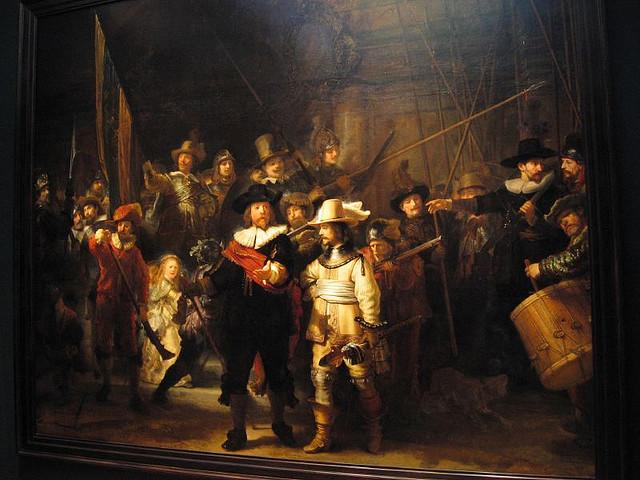
The night watch, Rembrandt van Rijn
8. Completed in 1642, at the peak of the Dutch Golden Age, The Night Watch is one of the most famous paintings by Dutch painter Rembrandt van Rijn. It depicts a city guard moving out, led by Captain Frans Banning Cocq and his lieutenant, Willem van Ruytenburch. For much of its existence, the painting was coated with a dark varnish which gave the incorrect impression that it depicted a night scene, leading to the name Night Watch. This varnish was removed only in the 1940s. The painting is on display in the Rijksmuseum in Amsterdam.
The Scream, Edvard Munch
7. The Scream is a series of expressionist paintings and prints by Norwegian artist Edvard Munch, showing an agonized figure against a blood red sky. The landscape in the background is Oslofjord, viewed from the hill of Ekeberg, in Oslo. Edvard Munch created several versions of The Scream in various media. The one shown here was painted in 1893 and is on display in The National Gallery of Norway. It was stolen in 1994 in a high-profile art theft and recovered several months later. In 2004 another version of The Scream was stolen from the Munch Museum, only to be recovered in 2006
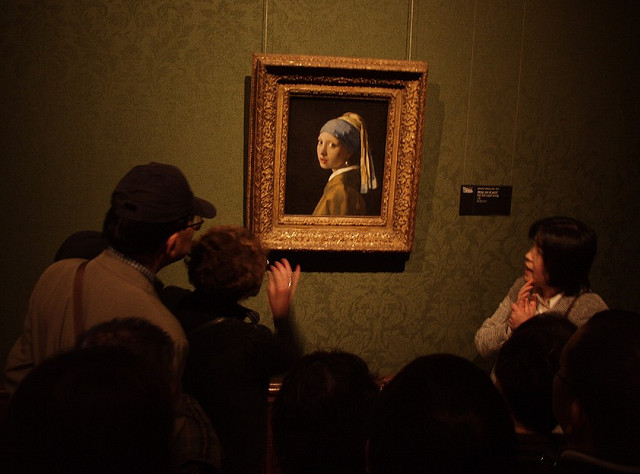
the girl with the pearl earring, Johannes Vermeer
6. Sometimes referred to as “the Dutch Mona Lisa”, the Girl with a Pearl Earring was painted by Johannes Vermeer. Very little is known about Vermeer and his works and this painting is no exception. It isn’t dated and it is unclear whether this work was commissioned, and if so, by whom. In any case, it is probably not meant as a conventional portrait. Tracy Chevalier wrote a historical novel fictionalizing the circumstances of the painting’s creation. The novel inspired a 2003 film with Scarlett Johansson as Johannes Vermeer’s assistant wearing the pearl earring. It has been in the collection of the Mauritshuis gallery in The Hague (Netherlands) since 1902.
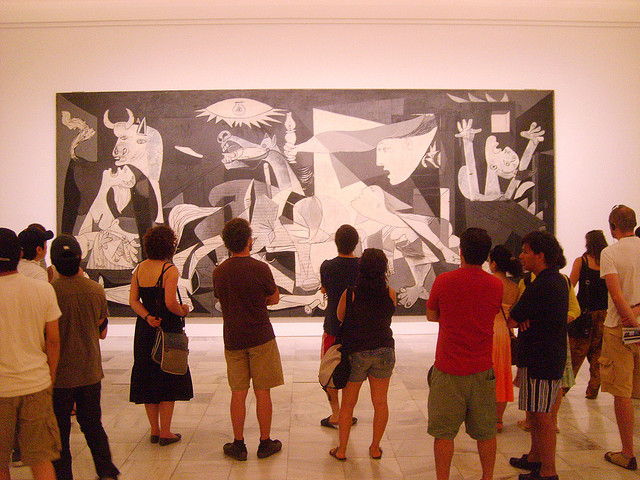
Guernica, Pablo Picasso
5. Guernica is one of Pablo Picasso most famous paintings, showing the tragedies of war and the suffering it inflicts upon individuals, particularly innocent civilians. Picasso’s purpose in painting it was to bring the world’s attention to the bombing of the Basque town of Guernica by German bombers, who were supporting the Nationalist forces of General Franco during the Spanish Civil War. Picasso completed the painting by mid-June 1937. The painting can be seen in the Museo Reina Sofía in Madrid.
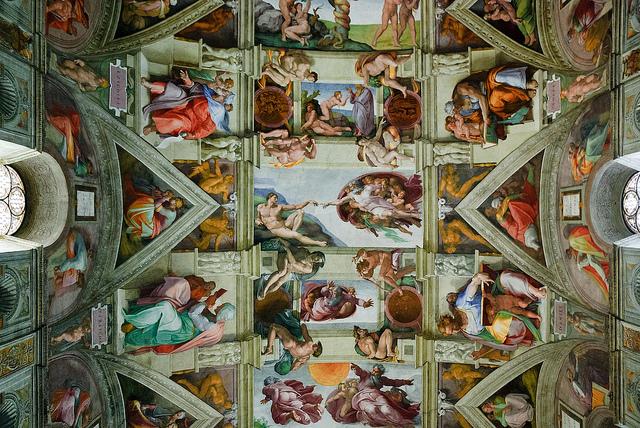
The Sistine Chapel, Michelangelo
4. The Sistine Chapel ceiling, painted by Michelangelo between 1508 and 1512, at the commission of Pope Julius II, is one of the most renowned artworks of the High Renaissance. The ceiling is that of the large Chapel built within the Vatican in Rome. Central to the ceiling decoration are nine scenes from the Book of Genesis. Among the last to be completed was the Creation of Adam in which God the Father breathes life into Adam, the first man. The Creation of Adam is one of the famous paintings of all time and has been the subject of countless references and parodies.
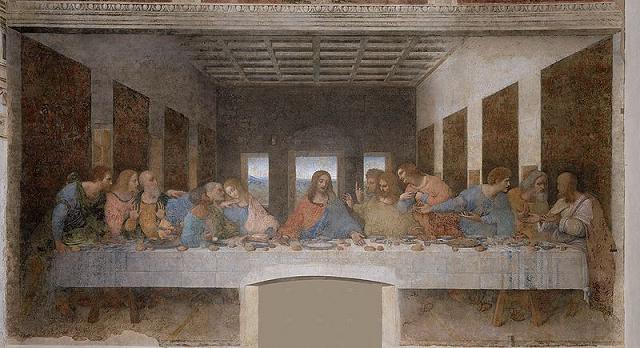
The Last Supper, Leonardo da Vinci
3. The Last Supper is a 15th century mural painting in Milan created by Leonardo da Vinci and covers the back wall of the dining hall at the monastery of Santa Maria delle Grazie in Milan. It represents the scene of The Last Supper when Jesus announces that one of his Twelve Apostles would betray him. Leonardo began work on The Last Supper in 1495 and completed it in 1498 though he did not work on the painting continuously. Some writers propose that the person in the painting seated to the left of Jesus is Mary Magdalene rather than John the Apostle, as most art historians identify that person. This popular theory was the topic of the book The Templar Revelation (1997), and plays a central role in Dan Brown’s novel The Da Vinci Code (2003).
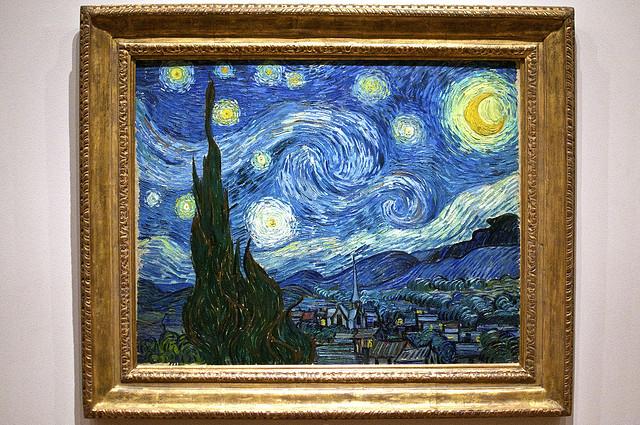
The Starry Night, Vincent van Gogh
2. The Starry Night was painted by Dutch artist Vincent van Gogh. Although Van Gogh sold only one painting in his life, the aftermath of his work is enormous. Starry Night is one of his most famous paintings and has become one of the most well known images in modern culture. The painting shows the village of Saint-Rémy under a swirling sky, in a view from the asylum towards north. The cypress tree to the left was added into the composition. Since 1941 it has been in the permanent collection of the Museum of Modern Art in New York.
Mona Lisa, Leonardo da Vinci
1. The most famous painting of all time, the Mona Lisa was painted by Leonardo da Vinci during the Renaissance in Florence. He began painting the Mona Lisa in 1503 or 1504 and finished it shortly before he died in 1519. The painting is named for Lisa del Giocondo, a member of a wealthy family of Florence. In 1911, the Mona Lisa was stolen by Louvre employee Vincenzo Peruggia, an Italian patriot who believed the Mona Lisa should be returned to Italy. After having kept the painting in his apartment for two years, Peruggia was finally caught when he attempted to sell it to the directors of the Uffizi Gallery in Florence. Today, the Mona Lisa hangs again in the Louvre in Paris where 6 million people see the painting each year.
I’ve had the pleasure of seeing six of these paintings in person. The Birth of Venus (Florence), Water Lilies (Met, New York), The Night Watch (Amsterdam), The Last Supper (Milan), Starry Night (MOMA, New York) & Mona Lisa (Paris).
So, do you have a favourite? I appreciate them all, but if I had to choose it would be between The Birth of Venus and the Girl with the Pearl Earring. Does this mean I’m a girly girl?
Versatile, sensuous, malleable, as basic as mud and as old as art itself, clay is increasingly emerging as a material of choice for a wide range of contemporary artists.
Ann Agee’s installation Super Imposition (2010), at the Philadelphia Museum of Art, presents the artist’s factory-like castings of rococo-style vessels in a re-created period room.
Ceramic art, referring specifically to American ceramic art, has finally come out of the closet, kicking and disentangling itself from domestic servitude and minor-arts status—perhaps for good. Over the past year, New York has seen, in major venues, a spate of clay-based art. There was the much-lauded Ken Price retrospective at the Metropolitan Museum of Art, as well as his exhibitions at Franklin Parrasch Gallery and the Drawing Center. Once known as a ceramist, Price is now considered a sculptor, one who has contributed significantly to the perception of ceramics as fine art.
Populist as well as elitist, its inclusive nature might be one reason for its current appeal. It has infinite versatility, from the purely formal to the functional. It is a substance every child has played with,
Clayzone Ceramics, Vancouver
and it is responsive to the primal instinct to make things by hand. Clay allows the artist to create form in spontaneous and direct ways that other mediums do not.
What do the Artists have to say?
Arlene Shechet, Sculptor: “I’m not a ceramic artist,” Shechet insists. “I’m an artist who works in clay. I like working in clay because it is very direct experience. I like the resistance of clay. It’s a physical enterprise, and you can make anything out of it. It doesn’t have a character until you give it one.”
Julia Kunin, Sculptor: “Clay,” she says, “gives me the freedom to create something intense, raw, over the top.”
Sculptor Julia Kunin creates baroquely grotesque animal forms, such as Double Portrait, 2010. D. James Dee
It has allowed me to pile things up, break things down, play, and make mistakes.” Kunin loves the immediacy of a material that is “as basic as mud,” she points out. “I am addicted to the unpredictability and iridescence of the glazes I’m using as well as the range of their colors and their psychedelic qualities.”
As these artists and many others, frequently women, wrestle with a material deeply embedded in rules, craft, and tradition, they are widening its trajectories, spinning it into the art-world mainstream, into blue-chip desirability. They are waiting for the day, as Cherubini says, when clay—no longer synonymous with the counterculture, with hippies and vegans—is just a material like any other, and those who use it are not ghettoized as ceramic artists.
Lilly Wei is a New York–based art critic, independent curator, and a contributing editor of ARTnews.
Design, Art, Travel, Shopping – these are some of my favourite things!
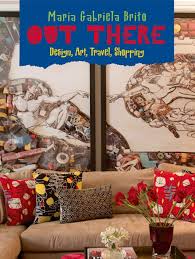
Maria Gabriela Brito is an art collector and interior designer living in New York City and the author of Out There: Design, Art, Travel, Shopping ($60USD – Pointed Leaf Press). The book is an insider’s guide to designing interiors and developing an art collection. OUT THERE is a fresh and exclusive look behind the scenes of a passionate and exciting new design authority on mixing contemporary art with home decoration. It features highlights of Brito’s favorite contemporary artists, photographs of eight New York City apartments that she designed, and an extensive look at favorite galleries, shops, and hotels worldwide.
The following is taken from her interview by Danielle Pergament for Allure Magazine.
Rather than trying to match art to your furniture or throw pillows, look for work that you love but that is on the edge of your comfort zone in terms of brightness. Color is the fastest way to bring life to a room.
Go BIG. The bigger the piece, the more it will transform a room. Don’t shy away from a large piece. People tend to choose art that is too small for the space. Take your cue from the furniture your art will hang near. If your sofa is 70 inches long, go for a piece that’s 50 inches: if the couch is 96 inches long, try something that measures 80 inches. If you can’t find one really big image you like, you can cheat by placing two side by side. The bottom of the frame should sit six to ten inches above the top of the furniture, and the closer the top edge is to the ceiling, the higher your ceilings will look.
Present it Properly. If you’re buying art from a gallery, follow their framing or mounting suggestions, which usually reflects the artist’s wishes. As a general rule, stretched canvases don’t need a frame, and large photographs look best mounted in acrylic or Plexiglas. If the colors of the artwork are muted, consider a colorful frame to liven it up.
Advance your Placement. Before you automatically hang a new piece in the living room, think about your entire home. Instead of the predictable console and mirror in a foyer, imagine a huge, vibrant print/painting there. I especially love to incorporate smaller pieces of art in unexpected places, like a bathroom or kitchen. In the bedroom, go a bit more subdued – black-and-white photography, for example – to keep the room peaceful.
How to hang a gallery wall. Hallways make great mini galleries, but it can be tricky to hang lots of pieces of varying sizes. Here’s how to do it: take a piece of butcher paper the size of the wall (or tape paper panels together) and put it on the floor. Arrange all the artwork you want to hang on the paper. You can play around until it really looks right, then use a pencil to mark exactly where each should go. Tape the paper to the wall and hang each piece on its designated mark. Finally, rip the paper carefully. Voilà – your own gallery.
It’s no secret that, despite Bloombergian laws banning smoking in bars and restaurants, cigarettes are still everywhere in Paris in a way they just aren’t in New York anymore (go to a private party in Paris and prepare to take your jacket to the dry cleaner the next day). Café terraces are often wreathed in smoke. Parisians have a habit of casually flicking their cigarettes over their shoulders and into your café crème…but in a really cool way.
That said, there’s one Parisian sight that elicits a special level of shock from visiting Americans: Fashionable, slim young parents (and they often are quite young, under 30, supported generously by the French government in their parenting) smoking outdoors in the presence of their babies or children. Ask Parisians about this and they’ll think you’re exaggerating. “That’s a myth,” said one (childless) friend. “French parents hide their smoking from their kids.” Another said, “French parents only do that outside in cafés, leaning away from their kids. Or on their balconies.” They miss the point that most yuppie American parents now think it’s a disservice to their health, and by extension, their families, to smoke at all, or even risk the guilt of watching their kids take up smoking in their teens.
New Yorkers new to Paris are also regularly startled to find that: Parisians do not walk around in gym clothes or sweatpants unless they are actually exercising.
Parisians do not talk to strangers. This can be profoundly disconcerting to a New Yorker who’s used to freely bitching about life’s daily indignities with whoever happens to be in line with them at Duane Reade. If you comment to a Parisian in the métro that the un-air-conditioned car is particularly smelly today, they will give you a frightened look like you are a crazy person and turn away.
Meanwhile, Parisians new to New York are often aghast that:
New Yorkers are so plump.This may come as a surprise to New Yorkers proud that they are among America’s thinnest, but on the whole, New Yorkers are heavier than Parisians. Part of this is a certain pride in body diversity in New York that doesn’t exist in Paris, where a good friend will quickly tell you if you look like you’ve gained five pounds.
New Yorkers carry around their coffee.In Paris, the very point of coffee is that you sit down and take a break. You don’t walk around with a giant vat, fueling yourself throughout the day. Parisians find this amusing and horrifying, as they do the fact that everything in America, even baby strollers, comes equipped with a huge cupholder.
New York parents talk to their kids as though they are their peers.“Jonah, did you think last night’s Arcade Fire show was as good as last year’s?” is not something you will ever hear a Parisian parent say to his or her 6-year-old.
New Yorkers are hyperfriendly up front and then forget about you later (unless they need you). In Paris, people are quite cold at first sight and don’t see the point in making particular efforts with strangers,” explains Anna Polonsky, U.S. director for the French food blogLe Fooding, which has become synonymous in France with global foodie culture. “However,” she continues, “as soon as you get past that, they’ll immediately invite you home for dinner or take you to their favorite bar for apéro. New Yorkers are the opposite. They’re extremely warm at first and will call you honey, boo, ormy dear in less than a second, but it takes years to actually become intimate with them. That cultural gap is very tough for a lot of Frenchies. They feel at first like they’re in heaven compared to Paris, only to be let down and find out that they won’t be contacted until they’re worth the interest, or if they have cool things to offer at night.”
And that, in a nutshell lies some of the key differences between New Yorkers and Parisians. What do you think?
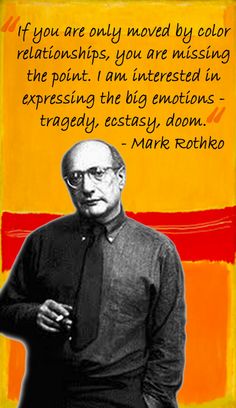
Mark Rothko (1903 – 1970) was an American painter of Russian Jewish descent. He is considered one of the most famous postwar American artists along with Jackson Pollock and Willem de Kooning. Generally identified as an Abstract Expressionist, he himself rejected this label and even resisted classification as an “abstract painter.”
The most important aspect of painting for Mark Rothko was the creation of space within it. For him, artists were seekers of truth and he sought to communicate his understanding of the world, not through colour, as we might imagine, but through a sense of space within the work.
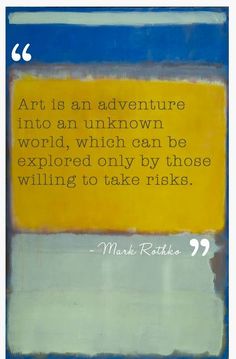
Mark Rothko along with Adolph Gottlieb published the Abstract Expressionist Manifesto, which read as follows:
‘To us art is an adventure into an unknown world, which can be explained only by those willing to take risks. This world of the imagination is fancy-free and violently opposed to common sense. It is our function as artists to make the spectator see the world our way – not his way. We favour the simple expression of the complex thought. We are for the large shape because it has the impact of the unequivocal. We wish to reassert the picture plane. We are for flat forms because they destroy illusion and reveal truth… ‘
‘You might as well get one thing straight. I’m not an abstract artist...I’m not interested in the relationship of colour or form or anything else. I’m interested only in expressing basic human emotions – tragedy, ecstasy, doom and so on. And the fact that a lot of people break down and cry when confronted with my pictures shows that I can communicate these basic human emotions…The people who weep before my pictures are having the same religious experience as I had when I painted them.’



























 Girl Who Would be KING on Life, Style and INSPIRATION.
You must be logged in to post a comment.