PSIFF: Natchez

An excellent and eye opening documentary about a charming city in Mississippi, once home to more millionaires than anywhere in the U.S.  Natchez is the home of modern Southern hospitality. Lots of history here, y’all.

Photo courtesy of Palm Springs International Film Festival – 2026

I’ve always loved the dreamy architecture and manicured gardens of the American South. When I visited a friend living in Savannah, Georgia, I made sure to take a homes‑and‑gardens tour. Same in Charleston, South Carolina. I admired the 18th‑century Creole cottages in New Orleans and the Spanish‑influenced wrought iron that defines the French Quarter, especially those lacy balconies. It all takes you back to a bygone era.

Natchez is famous for its breathtaking antebellum mansions -grand, columned estates that seem frozen in time. The history of this place is rich, as rich as the labour of the enslaved people who built it brick by brick. It’s kind of like Beauty and the Beast: if you’re going to tell a story, at least tell the whole story.

There’s a truth the city doesn’t always make visible, even as the beauty of these homes draws visitors from around the world. 

To walk through Natchez is to feel both the elegance and the weight of that past existing side by side. The film intentionally captures this beauty in a way that feels nostalgic, almost seductive – the South as many want to remember it. But it also shows how the city’s prosperity was built on exploitation, and how that legacy still shapes its present.  

A community deeply divided over how to tell its own story, with some wanting to preserve the romantic myth, others demanding truth and accountability.

Natchez wasn’t just a pretty river town; it was once one of the wealthiest cities in the United States because of cotton. The entire local economy revolved around it. Before the Civil War, the region’s rich soil and access to the Mississippi River made it a prime location for large plantations, and cotton became the engine that drove everything. But that prosperity came at a devastating human cost. The cotton industry in Natchez depended on the forced labour of enslaved people who planted, tended, and harvested the crops under harsh conditions. Their labour created the wealth that built the grand homes the city is now known for. That’s the part Natchez often glosses over – the beauty of the architecture is inseparable from the exploitation that funded it.

Taken from Images

Many of the families who open their doors for tours do so for practical reasons as much as pride. Maintaining these enormous homes with their aging foundations, sprawling gardens, and intricate architectural details is extraordinarily expensive, and tourism helps keep them standing. But it’s not just about money. For many locals, sharing these homes is a way of preserving a story they’ve inherited, even if that story includes chapters the city has long been reluctant to confront. The tours become a kind of living archive: part preservation, part performance, and part economic necessity.

I think as long as you can at least acknowledge the past, you can enjoy the present.

* Antebellum literally means before the war – in the U.S., it refers specifically to the period before the Civil War. In architecture and tourism, it’s still widely used to describe homes, estates, and design styles from that era. In places like Natchez, the term is often used to highlight beauty while downplaying the brutal labour by what they refer to as workers  (actually, slaves chained by ankle, wrists and neck) that made that beauty possible.

PSIFF: TOW

Rose Byrne is one of those rare performers who seems to have no weak spots, and the more you look at her career, the clearer that becomes.

Courtesy of Palm Springs International Film Festival – 2026.

She can move between drama and comedy with ease, as witnessed in movies such as “Bridesmaids” and “If I Had Legs, I’d Kick You.”

I just saw “Tow” at the Palm Springs International Film Festival.  “Tow” is based on the very real story of Amanda Ogle, an unhoused Seattle woman living in her aging Toyota Camry. The movie premiered at the 2025 Tribeca Film Festival, and stars Byrne as the main character.

The story is based on Ogle’s real 2017 ordeal, when her car, containing all of her belongings, was stolen, recovered, and then towed. She spent over a year fighting the system to get it back.  The car was not just her transportation, it was her home.

Byrne did a powerful performance in portraying Ogle’s battle against bureaucracy. She not only starred in it, she also produced the film, showing how personally invested she was in getting the story out there. The film was shot in just 19 days on a very small budget, which Byrne said added to its raw, realistic feel.

This movie really makes you think about how unfair the system can be. It was unnerving to watch the struggle to get the car back. Bureaucracy doesn’t bend for people who fall outside its assumptions of things like a home address, job, savings and ability to take time off to go to court.

Ogle had to deal with a maze of agencies that don’t talk to each other.  They included the police, the towing company, municipal courts, city departments and storage facilities. She had to live in a woman’s shelter while doing so. At least there was that.

When the car was eventually recovered by police, instead of being returned to her, it was impounded. And because she was unhoused and had no stable address or resources, she couldn’t easily navigate the system to get it back. The towing company presented her with a bill of $21,634 for storage and fees over time, which of course, she could not pay. The system creates the problem, then makes it nearly impossible to fix.

This wasn’t a case of someone ignoring a ticket – it was a person trapped in a system that treated her car as property but ignored the fact that it was also her shelter. 

Rose Byrne has said she was drawn to the project because Amanda’s story exposes how ordinary people can be crushed by systems that are supposedly neutral.  And let’s also say that her appearance does not fit the typical stereotype, challenging our assumptions about “what homelessness looks like.”

The emotional undercurrent is the quiet realization that someone’s entire life can be uprooted because of a dramatic mistake. With a “there but for the grace of God go I” kind of feeling.

Homelessness has reached levels in the U.S. that are hard to ignore, and one of the most striking, and often invisible parts of the crisis is the rise in people living in their cars.

The festival is on until January 12th, 2026.  For films and available tickets:

Elvis, Rocky and Me: The Carol Connors Story.

The world premiere of a remarkable documentary was last night – part of the Palm Springs International Film Festival.  I, and the audience, loved Elvis, Rocky and Me: The Carol Connors Story.

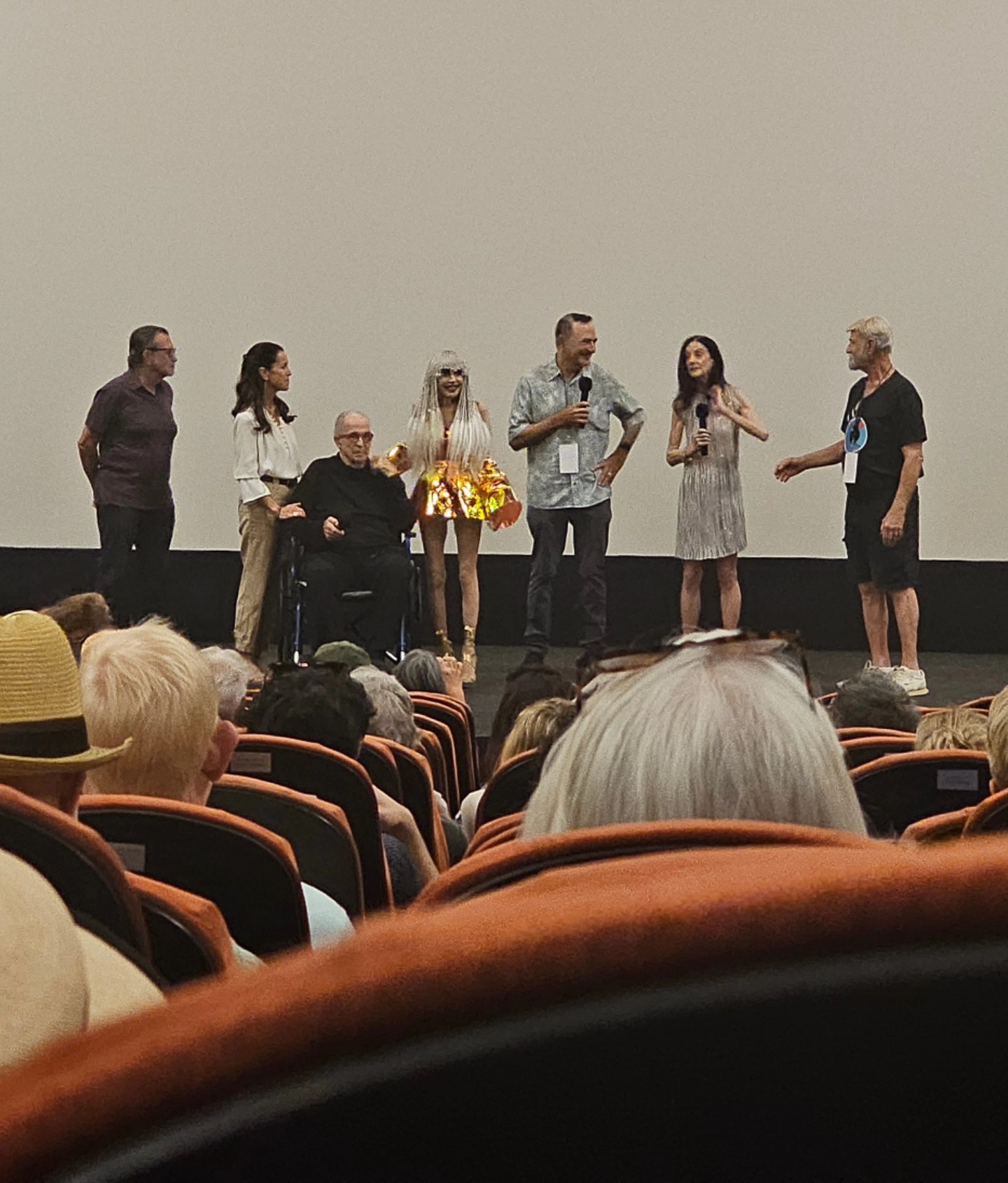
Carol (and her boxing gloves) with Screenwriter: Dahlia Heyman and Director/Producer/Screenwriter: Alex Rotaru

The documentary is based on her blockbuster memoir by the same name (the audiobook was recently nominated for a Grammy). Watching this documentary felt like opening a time capsule packed with charisma, chaos, and the unmistakable spark of a woman who refuses to dim.

Carol Connors is the kind of dynamo who could write a hit, charm a legend, and still get herself kicked out of a studio by Dionne Warwick – all before lunch.

To know her, is to love her – say all of Carol’s friends.

I heard the name before, but admittedly I didn’t know a lot about Carol Connors, other than she dated Elvis Presley (after he co-starred with Ann-Margret in “Viva Las Vegas”), co-wrote the iconic Rocky theme song (minimalist but powerful lyrics to “Gonna Fly Now” – which was nominated for an Academy Award) and had a #1 hit single (“To Know Him Is to Love Him”) recorded by The Teddy Bears, which became a major hit, reaching number one on the Billboard Hot 100 in late 1958, where it stayed for three weeks and launched producer Phil Spector’s career. It went on to have several renditions after that – my favorite sung by Dolly Parton, Linda Ronstadt and EmmyLou Harris (their version became a #1 country hit and was featured on their Grammy-winning album “Trio). 

I guess that alone seems like enough right? However, there’s so much more that I wasn’t sure where to begin writing this post because…

Before the documentary even begins, you realize Carol Connors didn’t just witness pop culture history…she helped write it, one hook, one heartbreak, and one heavyweight anthem at a time. 

I did a bit of research beforehand, but had no idea of the scope of her legacy. Some people live a life. Carol Connors lived a soundtrack.  One that starts with Phil Spector, flirts with Elvis Presley, and punches its way into the Oscars with Rocky.

With Kathy Garver (from Family Affair, an author and voice for Carol’s memoir audio book – see links of where to buy below.

The documentary is interspersed with interviews on major talk shows and snippets of conversations she’s had with Hugh Hefner, Mike Tyson and O.J. Simpson.

Believe me, I’m still not giving too much away. Remember the legendary Shelby Cobra roadster designed by Carroll Shelby? Connors wrote “Hey Little Cobra.” Here’s the fun part: she didn’t just write it about the car – she wrote it for Carroll Shelby himself, after he told her that if she wrote him a hit, he’d give her a Cobra. And he actually did. The song became a major hit, reaching No. 4 on the Billboard Hot 100. 

Only Carol Connors could turn a conversation with Carroll Shelby into a chart‑topping hit, and drive away in the car she wrote about.

At the end of the documentary, there was a Q&A followed by Carol singing a song called “You Loved My Night Awaythat she wrote (music & lyrics) on the day Elvis Presley died.  They stayed friends up until the end.  She still has a beautiful voice and the song is also beautiful.

 What a glamorous, fabulous life.

Director/Producer:  Alex Rotaru

Executive Producer:  Julian Warshaw. 

Screenwriters: Dahlia Heyman, Alex Rotaru

Cast: Carol Connors, Bill Conti, Talia Shire, Mike Tyson, Diane Warren, Dionne Warwick, Barbi Benton, Irwin Winkler.

The Film Festival is on until January 12th, 2026.  Film Finder and Tickets:

https://www.psfilmfest.org/film-festival-2026/film-finder/elvis-rocky-and-me-the-carol-connors-story

*You can buy Carol Connors’ memoir Elvis, Rocky and Me from major online retailers like Amazon, Walmart, and Target, or directly from the publisher BearManor Media, with options for paperback, hardcover, and Kindle e-book, plus an audiobook narrated by Kathy Garver. 

Musings on Resolutions

Why are we always looking for a fresh start as opposed to just being satisfied with the way things are? Resolutions are moments of renewal. It’s an incentive to make a clean slate. Maybe it’s a way to reset our identity.

I don’t make resolutions anymore. I’m still trying to finish the ones from 2020. I prefer my self‑improvement in small, untraceable increments. But really, most resolutions tend to be these big, dramatic declarations that often collapse under their own weight. 

And speaking of weight, I managed to get myself to my ideal body weight just by omitting bread, sweets and cheese for a few months. My clothes fit amazingly and I felt my best in ages. But then I brought those three food groups back over the holidays and put a bit of the weight back on – but I know what to do now to get back into shape – starting on January 1st, 2026 only because it’s so close. It’s more of a goal than a resolution.

Resolutions are kind of like trial subscriptions. Most people cancel by February. They often fail because they’re too rigid. Let’s say you miss a day, then you feel as if you’ve “broken” the resolution. The more realistic approach is if you slip up, just adjust and keep going.  Instead of “no” sweets (for months) I’ll have a weekly little something to satisfy a craving instead of eating half a cherry pie in a moment of weakness because I denied myself for so long. (Yes, I did).  I’ve discovered that completely denying yourself is not sustainable.

Resolutions like “get healthy” or “save money” are too broad.  And people, we should not wait for a new year to want to get healthy – it should be an “always on our list” thing. Resolutions can work if they‘re smaller, more realistic immediate steps to succeed.

Psychology Today notes that most resolutions pit willpower against old habits, and willpower alone usually loses. Our brains love routine and predictability. A resolution is basically you saying: “Hey brain, let’s do everything differently starting tomorrow.”

So unless the change is gradual, meaningful, and tied to identity, the old habits win.

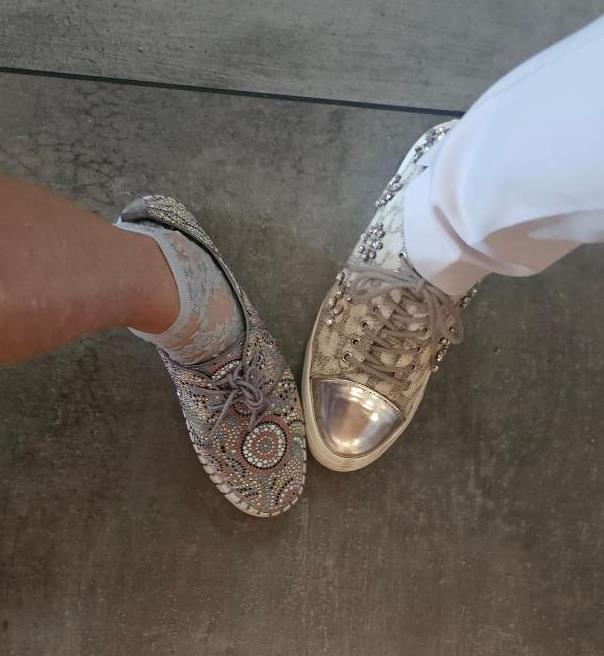
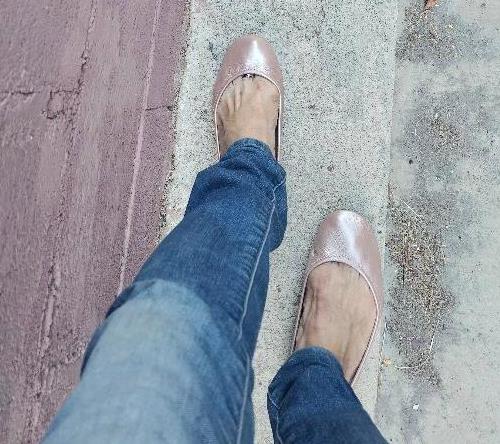
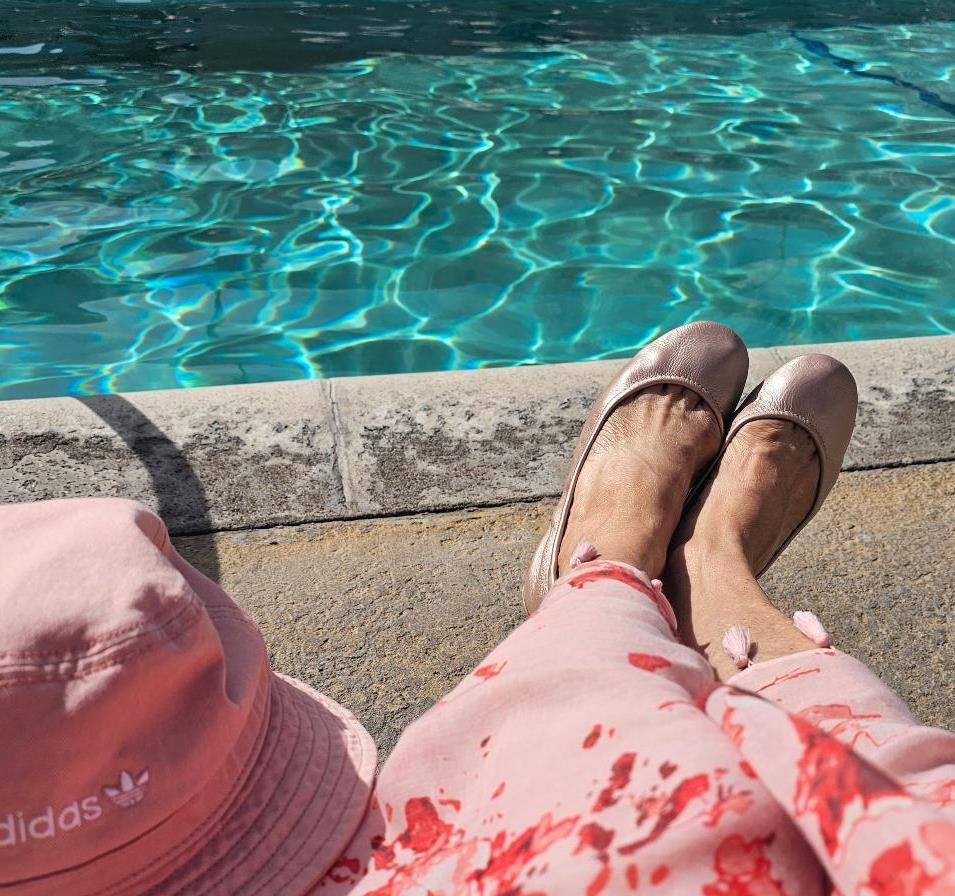
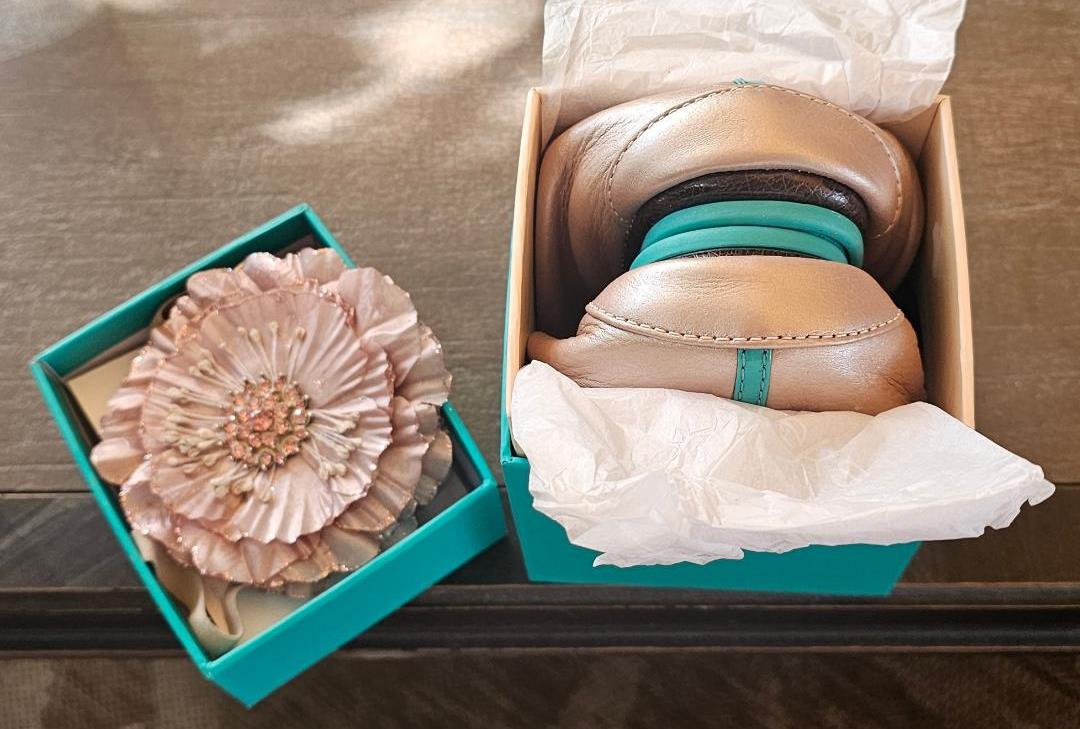
My resolve is to continue to put quality over quantity – in everything.  From food to friendships and even clothing.  I’m still working on the shoes though.

Continuous, self‑directed growth without the pressure of a once‑a‑year overhaul is much closer to how real change usually happens.  I like that.

I’m curious about what kinds of personal improvements have been on your mind lately?

Oh, and by the way…Happy New Year!


Happy Holidays

I want to wish a joyous celebration to anyone celebrating HANUKKAH.Still a few more candles to go. Lighting the candles in light of what has happened in recent days, is a reminder to try to bring hope and resilience, even in dark times.

And to everyone else, a very MERRY CHRISTMAS!

Selfie with Santa

As 2026 draws closer, may we step into it with courage, clarity, and compassion.

Musings: Festive Footsteps

Walking among the Inn crowd

Every year in Palm Springs around the holidays, a handful of cool, distinctive boutique hotels, otherwise referred to as “Inns” open their doors to welcome visitors for a “walk of the Inns” experience. It’s where each footstep carries with it a little story.

Some of the Inns offer warm cookies and cider and you can hang out at one Inn or go all Inn– each one is unique. We had a cocktail at one place because we didn’t want to leave.

I love how ambiance can evoke exotic, modern or vintage vibes. It’s an overall feeling of a place. It’s deeply associated with atmosphere, mood, and even spiritual perception. Like when you’re still in Palm Springs (not a bad place to begin with) but feel as if you’re in Morocco. It’s not just decoration or lighting; it’s the invisible quality that shapes how people experience a space.  Atmosphere is the external setup (think lighting, sound, scent), while ambiance is the internal response the feeling those elements create.

At Talavera. Photo: Tammy Preast

Until last week, I thought I’d already seen as I would all the hidden gems in this resort town.  There were four places on the list that I’d never been to before and two I’d never even heard of before. From mid-century modern to Mediterranean, it’s a great way to experience the spectacular architecture that makes Palm Springs famous.  Better to do so with friends.  I went with Tammy & Patricia. And it’s so nice around the holidays especially because decorations are plentiful and people are generally in better moods.
Places and description of each place are at bottom of the page with link to websites. I put asterisks by the ones that were my first visit.

Patricia (L) + Tammy

We ended our walk at the Palm Springs Woman’s Club where there was a silent auction and bake sale complete with a bunch of exceptional looking gingerbread houses.  Then burgers at The Avalon – not on the list this time, but a lovely boutique hotel and spot to sit and dine.

The INN list:

Casa Cody

The oldest operating hotel in Palm Springs, it was founded by Buffalo Bill Cody’s libertine cousin, Harriet. Charming and beautiful, Casa Cody boasts 2 pools, a charming eatery, and historical adobe buildings. It’s a favorite.

*Talavera Palm Springs

This Boho chic boutique hotel offers an intimate escape that is perfect for romance, personal retreats, and solo travelers. Every room boasts a private hot tub.  

*Lucille Palm Springs

Reimagined in 2023, but with a history that stretches back over 100 years. Originally built in 1921, the hotel has been welcoming guests for a century, including Lucille Ball and Desi Arnaz, who frequented the hotel with their family. 

*Korakia Pensione

Located at the base of the San Jacinto Mountains, in Downtown Palm Springs, Korakia offers a unique and seductive retreat from day to day reality. The historic property says it “blends the silhouette of Tangier with a whisper of the Mediterranean,” and is the perfect escape.

*Old Ranch Inn

A quintessential small Palm Springs hotel, this charming property embodies the casual nature of Palm Springs with a touch of western flair.  

Holiday House

Reimagined by interior designer Mark D. Sikes, the property features mid-century inspired elements combined with a communal atmosphere and whimsical edge. The design centers around Gio Ponti inspired tile-work in the bar and artwork throughout. They host a monthly fried chicken communal dinner and taco Tuesdays.

Ingleside Estate

The Ingleside Estate went back to its roots. In the 1920s, the Spanish Colonial Revival-style property was owned by a wealthy automaker, but it was transformed in the 1930s by Palm Springs pioneer Ruth Hardy. Fun fact: I met late-owner Mel Haber at a party in Melvyn’s lounge honoring Frank Sinatra’s 100th birthday.  Of course Frank wasn’t there, but a lot of other interesting people who knew and/or worked with him were, and the martinis were good.

*Amin Casa Hotel

Embodying the luxury of life in Palm Springs, this impressive property is dated to the 1920’s and ’30’s and was once the Palm Springs home of Hollywood screen legend and award-winning actress Gloria Swanson. This one was on the list but the doors were closed (not sure why – maybe it was rented out to people who didn’t want people shlepping through the property – but you can make sure I’ll go back).

Walk of the Inns 2025:

Header Photo taken at Villa Royale – d. king

Sipping Smarter – uncorking the truth about wine.

It pays to be informed. Discovering what’s really in your glass will make you more aware of what goes from vineyard to bottle.

Since I’m in California for 5 months a year, I’ve sampled a lot of wine from here.  Over time I’ve discovered that there’s something like 70 additives (such as sugar, concentrates, color, tannins, etc.) that can be legally added to wine because U.S. regulations allow over 60 approved additives in winemaking, and vineyards frequently use herbicides like glyphosate to control weeds. These practices aim to stabilize, preserve, and standardize wine, but they also introduce residues and additives that natural or “clean” wine brands avoid.

Wellness is very important now, and consumers care what they put in their bodies. There should be more transparency. People are starting to drink less, but they can also drink better.

The U.S. Alcohol and Tobacco Tax and Trade Bureau (TTB) authorizes more than 60 substances for winemaking. These include stabilizers, preservatives, clarifying agents, and flavor enhancers such as sulfur dioxide, albumen (egg whites), and other compounds. Many consumers are unaware of these chemicals because wine labels don’t list additives. Advocates of “clean wine” argue that these substances compromise health and authenticity.

Glyphosate, the active ingredient in Roundup, is widely used in California vineyards to control weeds. Studies have found glyphosate residues even in organic-labeled wines, due to drift from nearby conventional farms.

Large-scale, commercial wineries almost always use labs. Small-scale natural winemakers often skip lab testing.They rely on traditional methods, sensory evaluation (taste, smell, sight), and minimal intervention. Large-scale producers often rely on additives to ensure consistency across batches. This includes chemicals for color correction, tannin adjustment, and preventing spoilage. Smaller “natural” winemakers typically avoid these interventions.

Even when vineyards try to minimize chemical use, surrounding agricultural activity can lead to contamination. Glyphosate and arsenic residues have been detected in multiple California wine brands.

So there you go.  Better to be informed than clueless.

If you’re looking for wines with the least chemicals, focus on organic and biodynamic producers in Europe (France, Italy, Spain) & South America (Chile, Argentina), plus New Zealand.

These regions combine tradition, regulation, and climate advantages to produce wines with fewer additives and cleaner profiles.

In Canada, we’re lucky to have Summerhill/Pyramid winery in Kelowna (Okanagan), British Columbia.  Probably the “cleanest” wine you can drink (link below).

After doing my research, I recently bought a bottle of Avaline white wine.  Although it’s bottled in California, I was impressed to find out that the founders traveled to France and Spain to meet with the wine producers who were using organically certified grapes, no additives and were vegan friendly. 

Avaline was created to make organic, delicious wine more accessible and transparent to consumers. Bonus is it tastes good and the price point is very reasonable. None of their still wines contain sugar, plus they list all the *ingredients. I’ll be purchasing more. It might even become my go-to while here.  At present, their wine is not available in Canada.

Fun Fact: the brand is owned by actress and author Cameron Diaz, and entrepreneur, Katherine Power when they discovered they had something in common – a love of good wine. At the same time, they also learned they had a common frustration – the lack of transparency on wine labels. Forbes article below:

*Avaline Ingredients: https://drinkavaline.com/pages/ingredients

Canadian award-winning winery:

Aren’t you curious to know what’s in your wine?

INDUSTRY Design

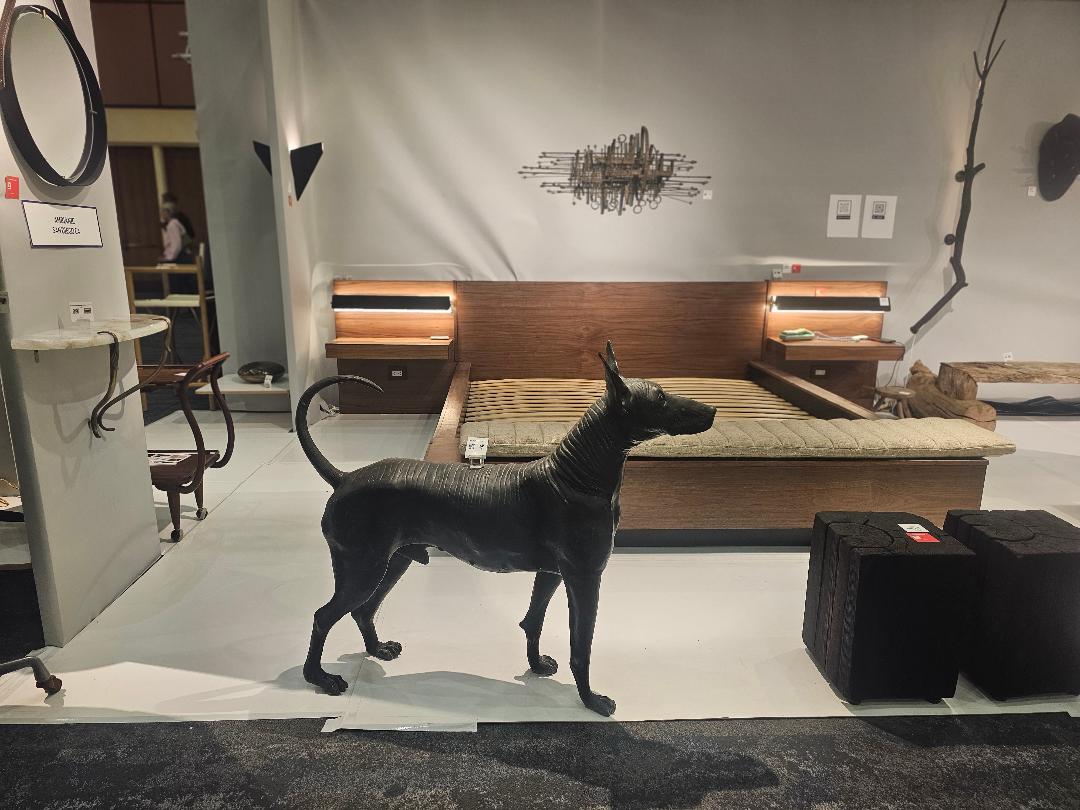
Amongst the cluster of antique shops and galleries located in the Sunny Dunes neighborhood of Palm Springs, there is a vintage finds and modern design store you won’t want to miss.

When you step inside industry, this unique home design store might make you feel like your home is missing a certain je ne sais quoi. Perhaps you’re missing a tree? The almost one-year-old store is basically a curated mix of mid-century, vintage, and modern pieces that owners Arel & Eric have picked up from their various worldwide travels. Let the recent pics I took speak for themselves.  

Helps to have a good eye and a knack for quality! It’s almost like walking into a museum.

Even the candles and coffee table books are a cut above.  Walking through there I wished I had more coffee tables.

Pics : d. king

 508 Industrial Place East, Palm Springs, CA.

Website: https://industryps.com/

Monday Mood – December 1st

It’s always nice when we start a new month on a Monday.

It’s the rare alignment of beginnings: a new week, a new month, and the final chapter of the year. Add to that the extra bonus (for those shoppers who didn’t get enough of Black Friday sales) it’s cyber Monday!

The calendar feels like a doorway, swinging open to both endings and beginnings at once. Each tick of the clock whispers: this is the start of the finish, the prologue to the finale.

And yet, there’s joy in it – the sparkle of holiday lights, the hum of anticipation, the quiet thrill of knowing that 2025 is winding down, making space for something new. Something fresh.
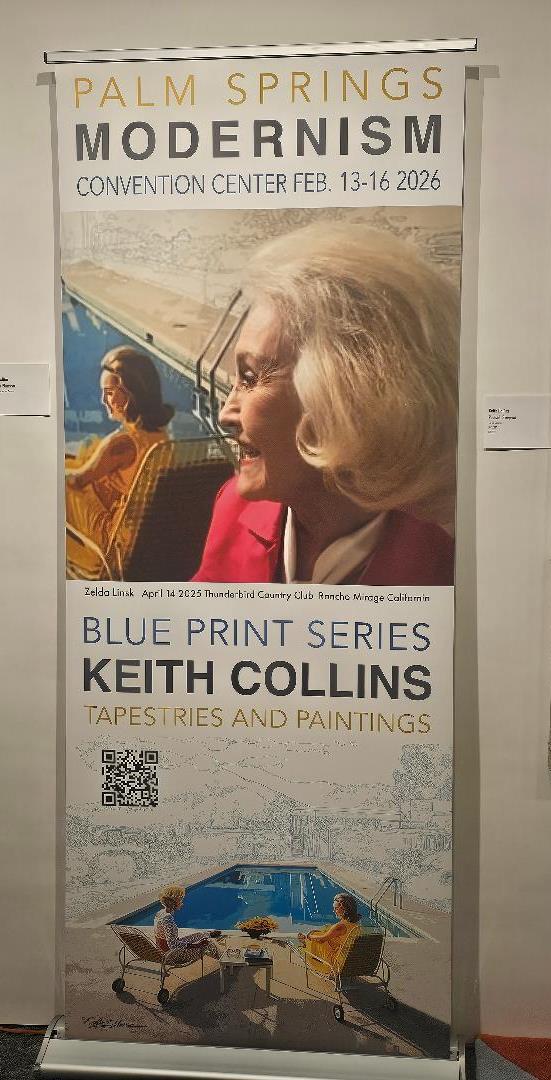
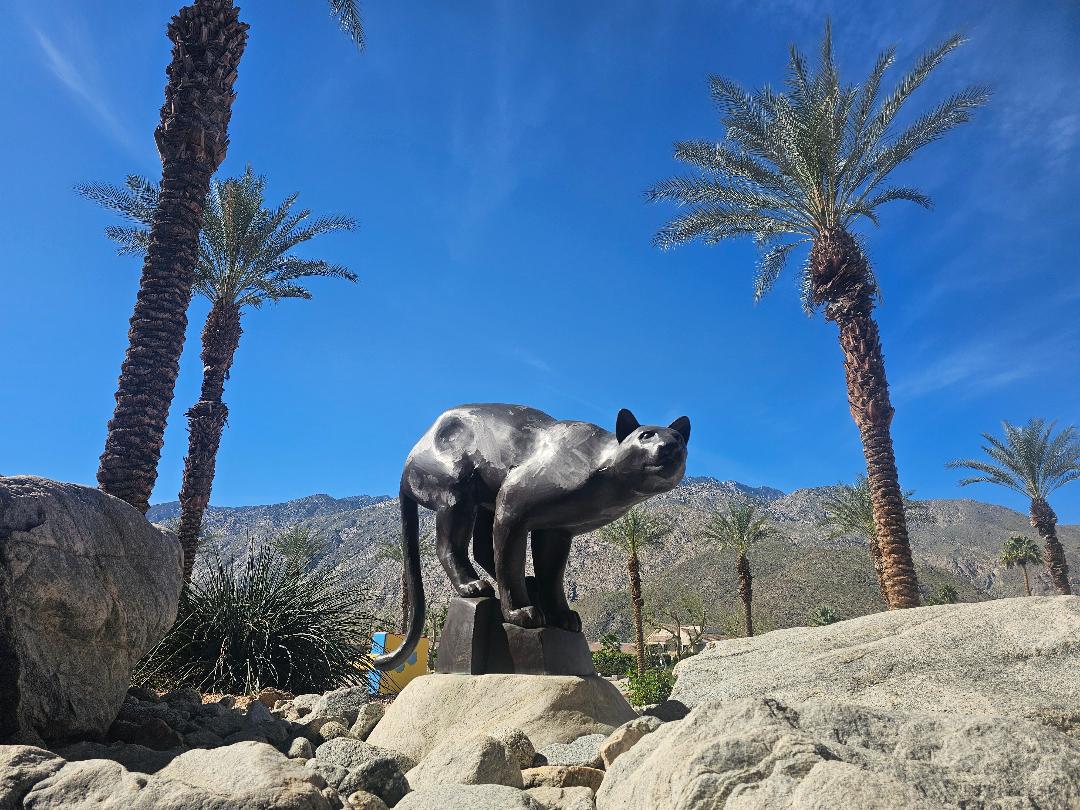
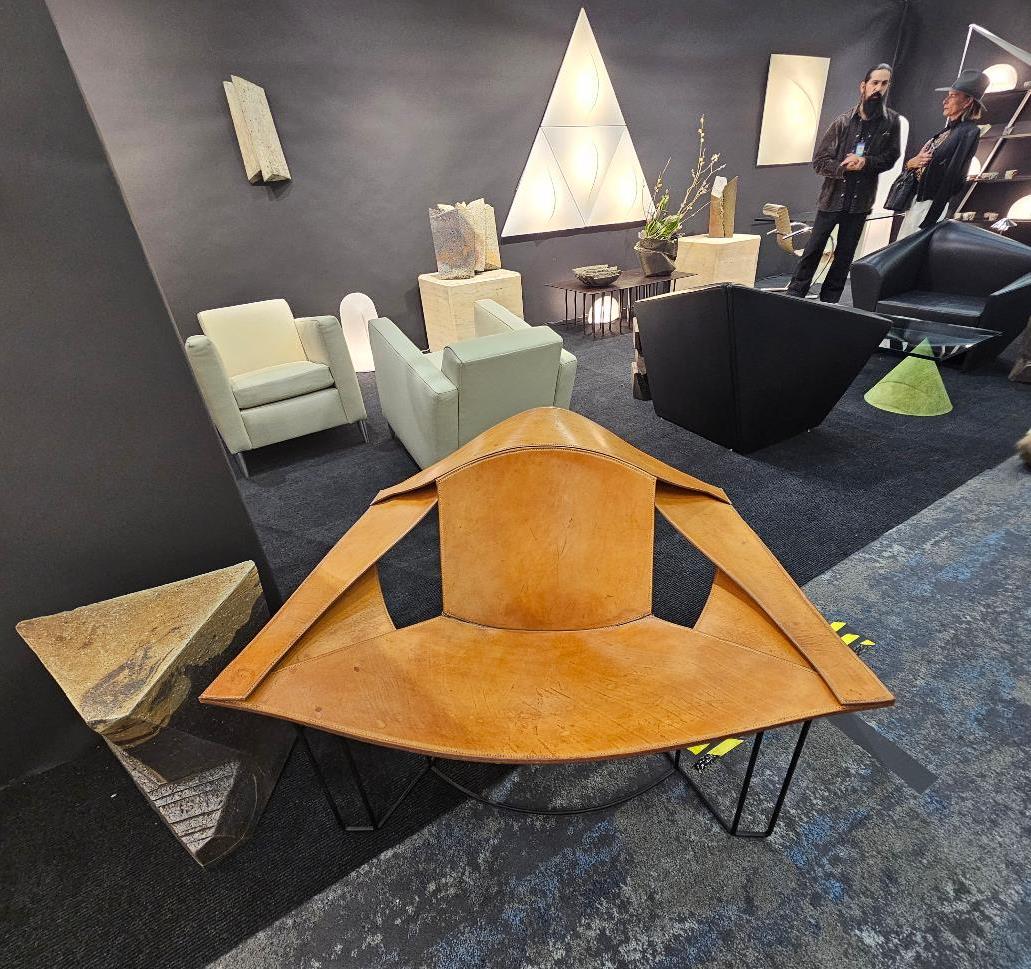
It’s not just Monday, not just December, but the beginning of the end, and the end of the beginning.
A time for reflection, renewal, and readiness to embrace it all.

I’m ready.  How about you?

Musings: Cult is King

It’s a cult world after all. Have you seen the signs?  I mean,someone just asked me if I did all my Christmas shopping. Shopping is no longer my Religion.Advertising is targeting the most vulnerable by creating urgency, excitement, and a sense of scarcity and making us feel like we’ll miss out if we don’t buy now.

Unfollowing social cues is hard for a lot of people because it has been so ingrained in us that the day after Thanksgiving, you go to the stores and you go shopping. Same with Boxing day – day after Christmas in Canada and other commonwealth countries.

Ads emphasize limited-time offers, doorbusters, and while supplies last messaging. This psychological trigger makes people act quickly, fearing they’ll lose the deal.

Brands start promoting weeks in advance with “sneak peeks” and countdowns. This builds anticipation and conditions shoppers to plan purchases around the event.  I mean, you can almost go broke with all the money you end up saving!

I’ve been a victim of this too.  I’ve recently ordered a few things online during way-too-early Black Friday sales (isn’t Black Friday supposed to follow Thursday Thanksgiving??). Anyway, I’m very careful not to get carried away.  I purchased only a few items that I would’ve purchased anyway.  A little discount and saving on shipping in some instances is okay so I was happy to not have gone overboard spending too much.  One item is actually practical. But I’m very aware of the pull to spend, spend and I’m pretty much over it okay…I’m getting there. I’m tired of the constant bombardment of advertising. 

So…funnily enough I came across this interview on the subject.  A new book called *Hoodwinked is about how brands mirroring cults stems from our lack of community. People are not finding community and belonging in religion, for instance, or in their workplaces. So they’re turning to brands.

Amy Odell interviews Dr. Mara Einstein on how marketers use the same tactics as cults. (YouTube video at bottom).

Brands came in to fill this void [because] we don’t have the cultural and social institutions that we used to have that became means for us to form our identity. Religion used to be something that people connected to and that was very much a part of who they were. Every Sunday you went to church or Saturday you went to temple or you went to mosque. Or your job – people worked for IBM for 30 years.

Most people don’t have that anymore. And so brands came in to fill the void. They [started] purpose marketing, right? Brands began to connect themselves to causes. Some companies do it better than others. Patagonia is very much connected to sustainability. Rihanna’s brand Fenty is very much connected to this idea of being all-inclusive. When people go to the store they think, Do I want to connect myself with Fenty and Rihanna and this idea of being part of a group of people, or do I want to buy a product by a brand like Maybelline that doesn’t mean anything? (FYI I like Fenty eyebrow pencil and lipstick – bought without realizing the brand belonged to Rihanna…just saying).

How exactly are brands like cults?

Cults lure people in with deception. So what cults do is invite you to have a free dinner, have a free meditation class. You start to connect with the people and you come for another dinner and another yoga class, then they upsell you to take another class, and eventually you become part of the group.

Before digital spaces, cults had to be in far off places, like Guyana for Jonestown. But because of digital, we are separated from people who disagree with us, and so we have cult-like spaces now online. This replicates what we talk about as the marketing funnel – at the top of the marketing funnel, you introduce your product to people, you make them aware of it. Then the next part of the funnel is to convert. It’s really funny that we use the word convert when you buy because of the connection to religion.

Hermès has this whole racket with Birkin bags, which you see talked about online endlessly. People make videos of trying to go and buy bags and getting rejected. Hermès sells bags to people who spend a certain amount on other stuff. Sometimes when they offer you a bag, it might not be the bag that you want – it might be a big red bag. They’re like, “Well, this is the bag I have for you today.” You can take it or leave it, and maybe they’ll call you again or maybe they won’t. Hermes is like a cult, right?

Sidenote from GWWBK – The Bag that Got Away: years ago in Toronto I placed an order for a Birkin bag at Holt Renfrew.  It was a medium size black leather.  I forgot all about it until over a year later the store called to tell me my bag had arrived.  They said they can only hold it for 24 hours before they call next in line to purchase. I started to get anxiety around it as the bag at that time was around 6K (what a deal! – compared to now it was).  I ended up going into the store, held the bag for a few minutes before handing it back to the seller. It wasn’t that I couldn’t afford to buy the bag at that time – it was the pressure that I had to buy it right then and there, and also, I was told how fortunate I was to get the exact bag I originally wanted because people take what they can get.  I was turned off by my conclusion that it appeared easier to adopt a baby in a foreign country than to adopt a birkin bag. Also; if I’m being totally honest – I know that Hermès is a quality brand. It emits luxury and status.  But I also know that I can buy a beautiful leather handbag and also take a trip to Europe for a lot less. My new bag might not convey the same status but I really, really thought the birkin was not worth that amount of cash.  Really!  It’s a beautiful bag, but the brainwashing around it was (and still is) disgraceful.  I was ashamed that I almost fell prey to the “it bag of the century.”  Fast forward to today: you can sell a used Birkin bag for a lot more 6K – they’re still in demand and retain their value.  But actually, I was never planning on selling it. Like a house, you only sell if you keep one for yourself!

*The term “hoodwink” dates back to the 16th century. Originally, “hoodwink” literally meant to cover someone’s eyes with a hood or blindfold. Over time, it shifted to a figurative meaning: to blind someone to the truth – hence, to deceive.  Yup people – pay attention!

Black Friday: How Fashion Brands Use Cult Tactics on You. Amy Odell interviews Dr. Mara Einstein (on Marketing, Religion and Advertising). Full interview here:

Not totally relevant but I like this quote and was looking for an opportunity to use it somewhere: We are all like penguins on an ice floe, enjoying the view and companionship, until a seal in the water grabs one of us, and the awareness of the danger we all face sets in.