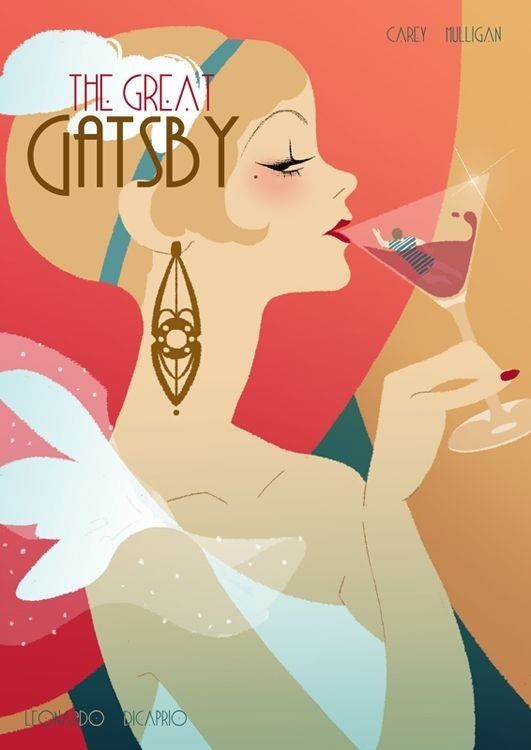
Ultimately it’s the image of decadence that appeals to me.
Timing is funny. If not for the simple fact that I would no longer be alive, I think living in the 20-30’s might have been a perfect time for me. I’ve been meaning to do a post on art deco style for months now. I’ve kept these photos on file for when the timing struck me right to do something on it. I find the era and the architecture very significant.
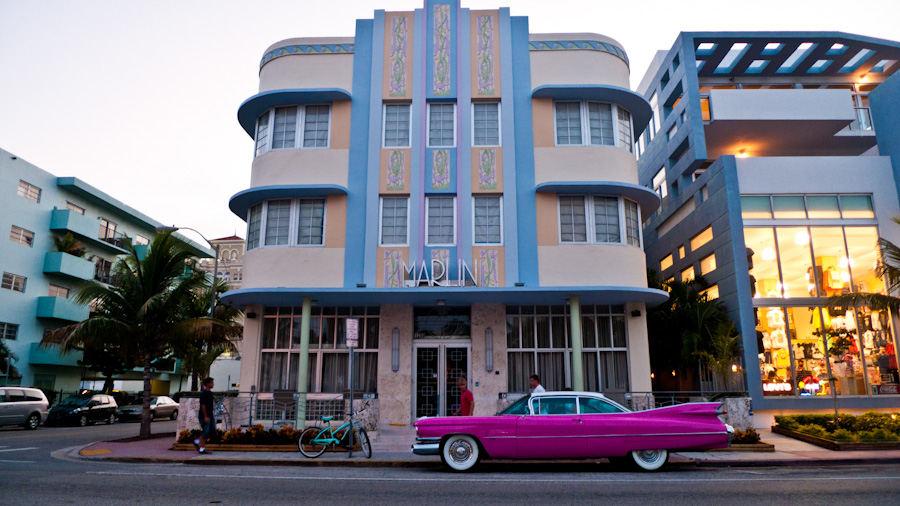
South Beach, Miami
After all, the roaring twenties conjures up images of glamour, vast ocean liners and prohibition-era hedonism. That period in time is specifically what attracted me to hanging around South Beach, that they’ve managed to keep the flavour alive through design and the remodelling of buildings and the ambiance in general.
When I lived in Montreal I was part of a dance scene in a made for TV movie (written by Mordecai Richler and directed by Claude Jutra) which involved hiring a dance instructor to teach us the Jitterbug and Charleston while dressed up in full costume – it was a blast. That was my first experience going back in time.
Dapper Men
Fast forward to today. I’m part of a committee which puts on a big fundraiser once a year with a theme. As it so happens the theme everyone decided on for this year’s gala is Art Deco. So I can’t wait to get dressed up in some kind of attire that will invoke a refined elegance. Should be lots of fun with some research involved.
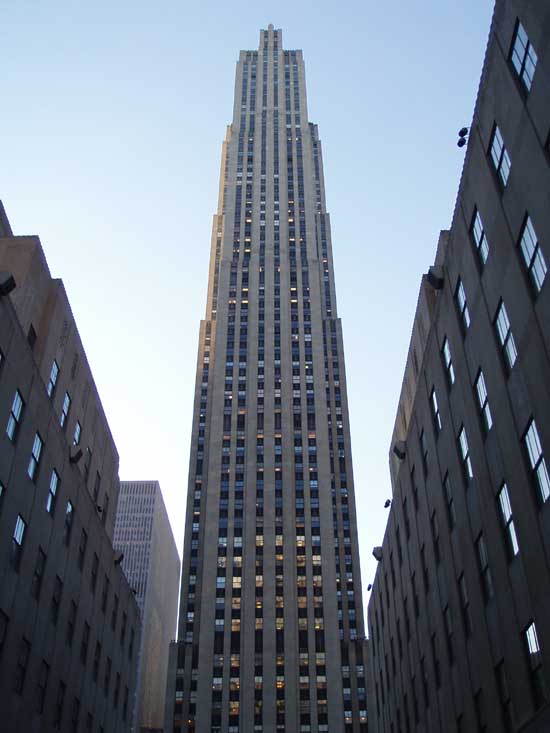
Rockefeller Center, including its centerpiece tower (opened in 1933 & now familiarly known as 30 Rock) was primarily designed by architect Raymond Hood
Until then I will share some images of things I find interesting from that time period.
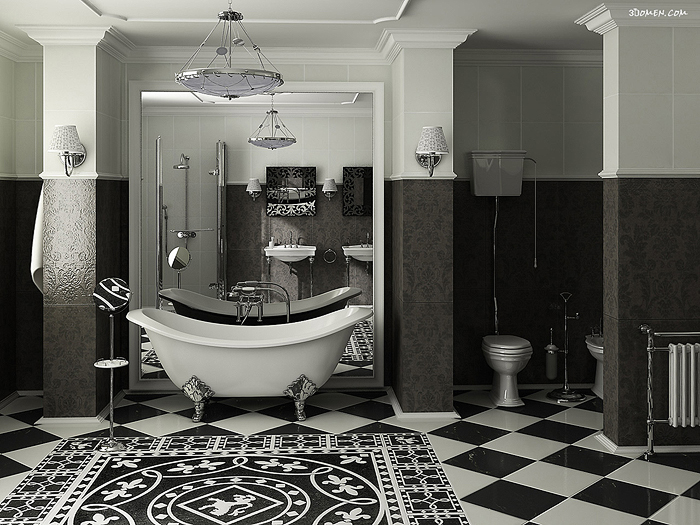
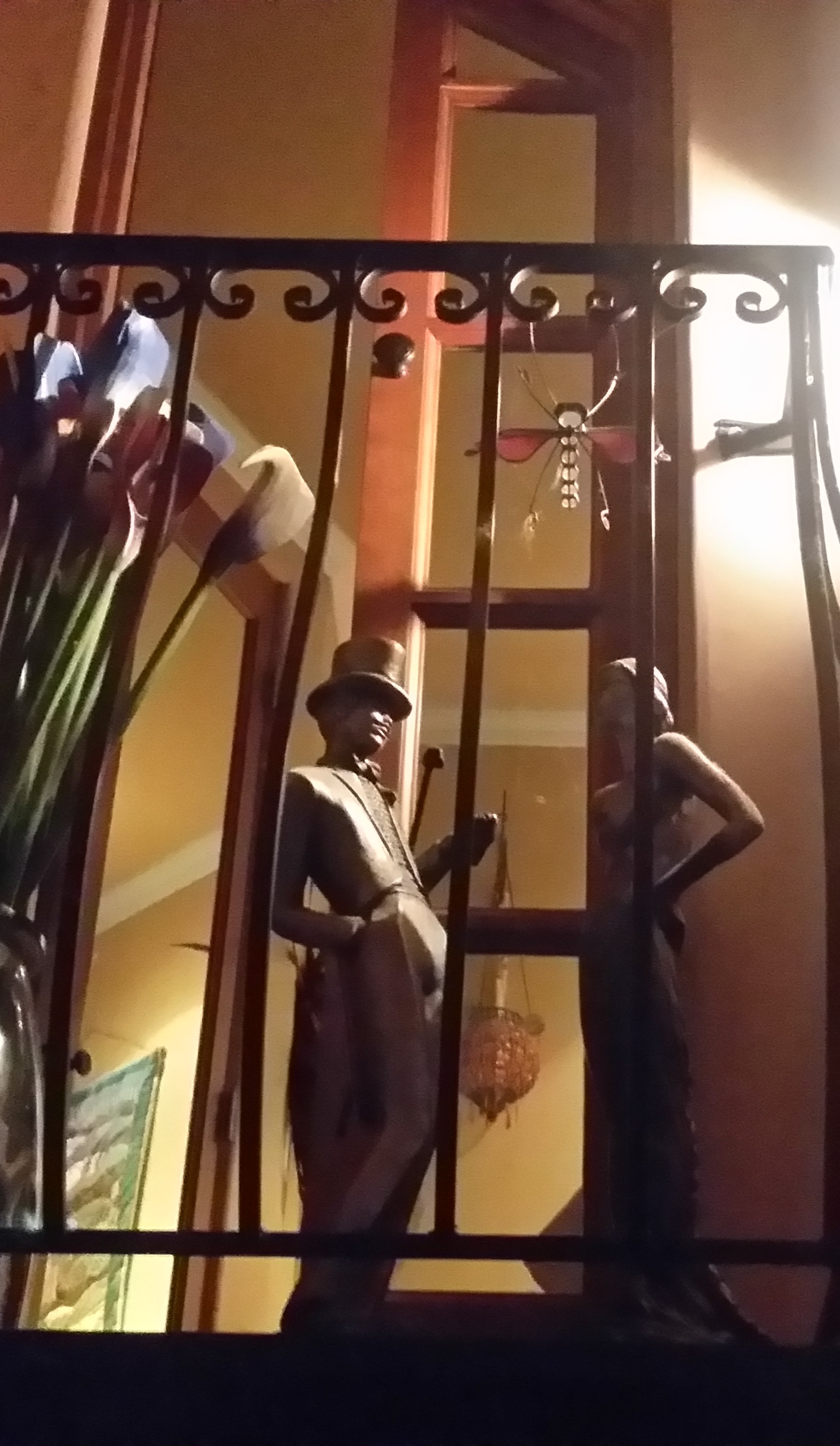
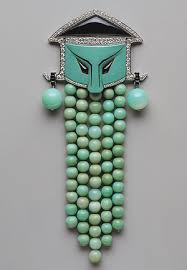
I have a bathtub just like this. I always wanted an old fashioned tub.One of my other expressions of Art Deco fascination are these statues on Juliet balcony overlooking living area.Georges Fouquet’s 1923 jade, onyx and diamond dress ornament is in the collection of New York’s Metropolitan Museum of Art.
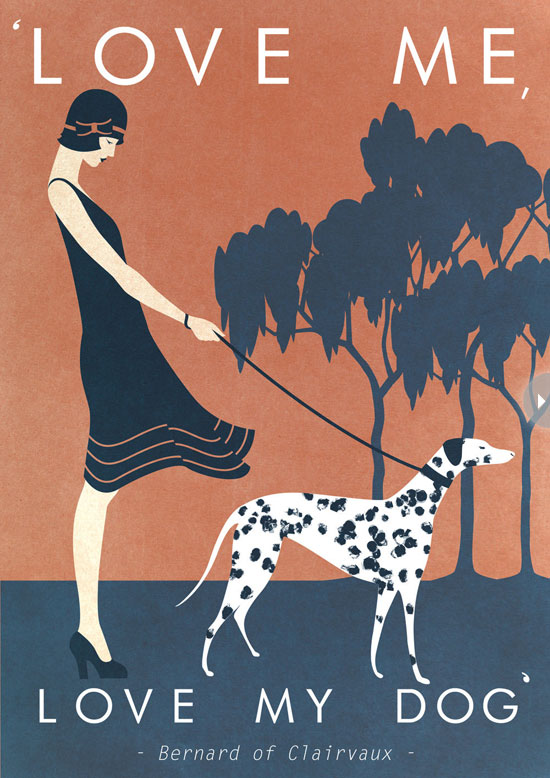
Funny; polka dots never go out of style. Maybe my next dog will be a Dalmation.
And it’s such a drip….figuratively speaking, because I’m talking about Jackson Pollock in this post.
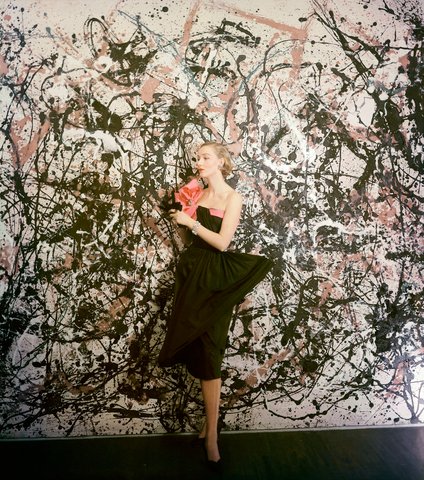
Photographed by Cecil Beaton, Vogue, March 1951
A survey of Pollock’s works is at the Museum of Modern Art (MoMA) covering early experiments with primal themes and loosely figurative forms from the years 1934 to 1954. The exhibition also features the highly recognizable drip paintings which made him famous the world over.
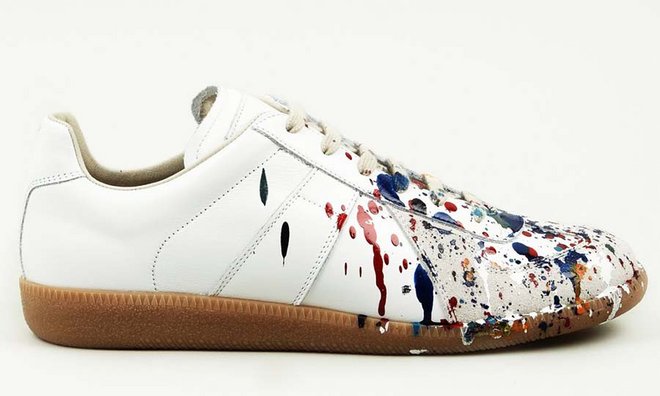
These drippings have caught on with fashion designers big time who have been inspired by them and have incorporated Pollock-print paint splatterings on everything from sneakers to ball gowns.
While designers have referenced many artists over the years, there are few so synonymous with Pollock’s style.
Maison Margiela’s popular “Pollock” sneaker Photo: Courtesy of Maison Margiela
Perhaps the first fashion world adoption of Pollock’s art came in a 1951 issue of Vogue (in photo above), where a model showed off the season’s chicest gowns standing in front of a Pollock painting on view at the Betty Parsons Gallery.
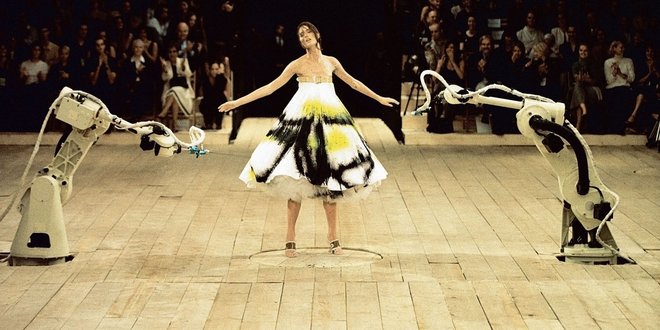
Since then, his signature splashes have infiltrated the runways in many forms. The most unmatched tribute to Pollock’s art, however, came courtesy of Alexander McQueen, who positioned model Shalom Harlow in the center of paint-shooting robots that streaked her ivory gown black and acid green as she rotated on a platform.
Alexander McQueen Spring 1999 Photo: Courtesy of Alexander McQueen
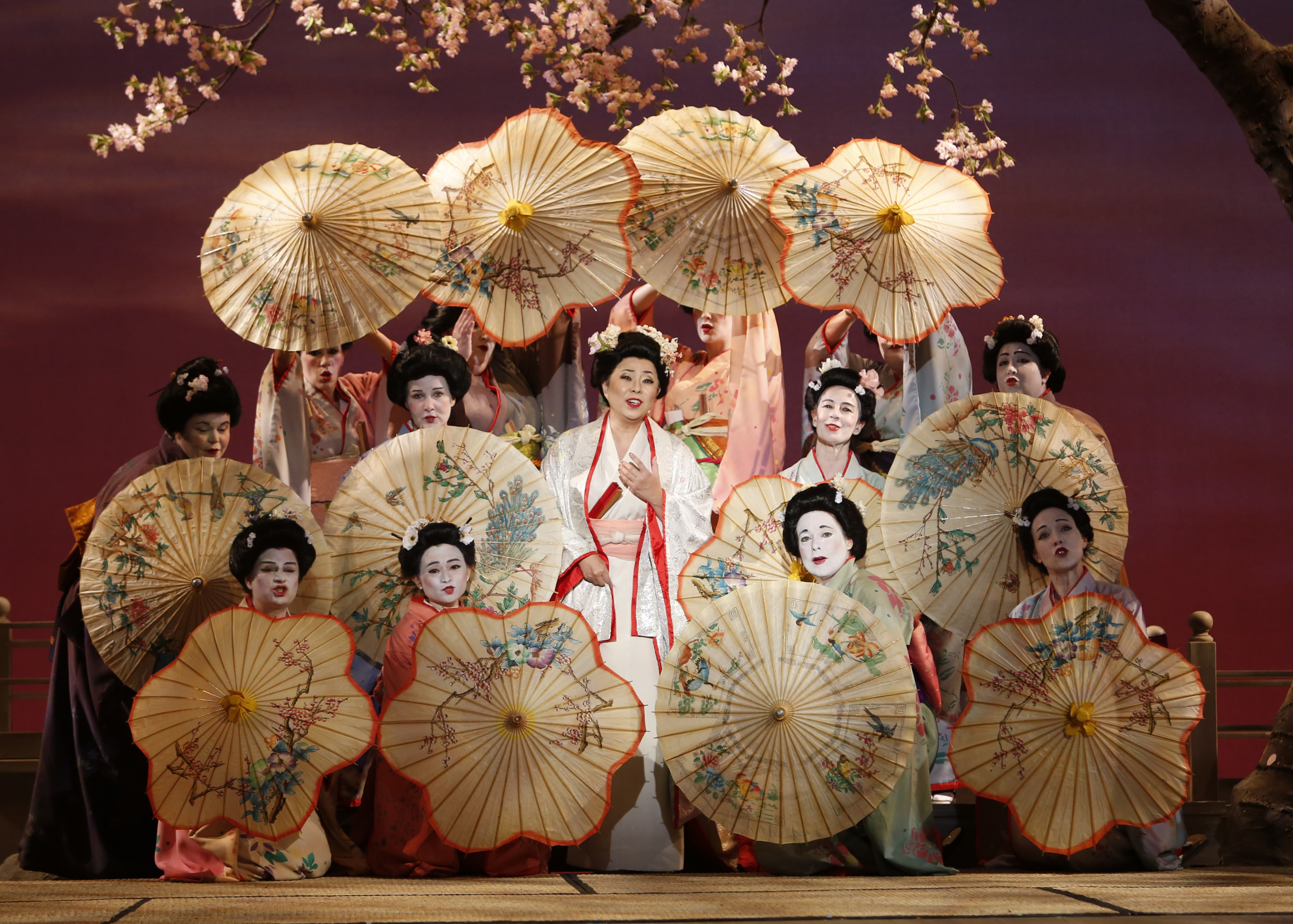
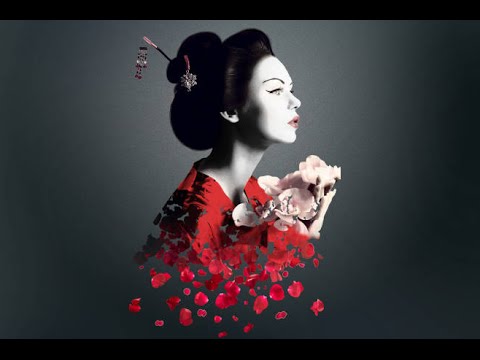
Don’t miss Vancouver Opera’s gorgeous production of Puccini’s MADAMA BUTTERFLY – a beautiful story of honour, love, heartbreak and sacrifice.
As they say;Fall in love at the OPERA.
Middle: Mihoko Kinishita as Cio-Cio-San (Butterfly). Photo: Tim Matheson
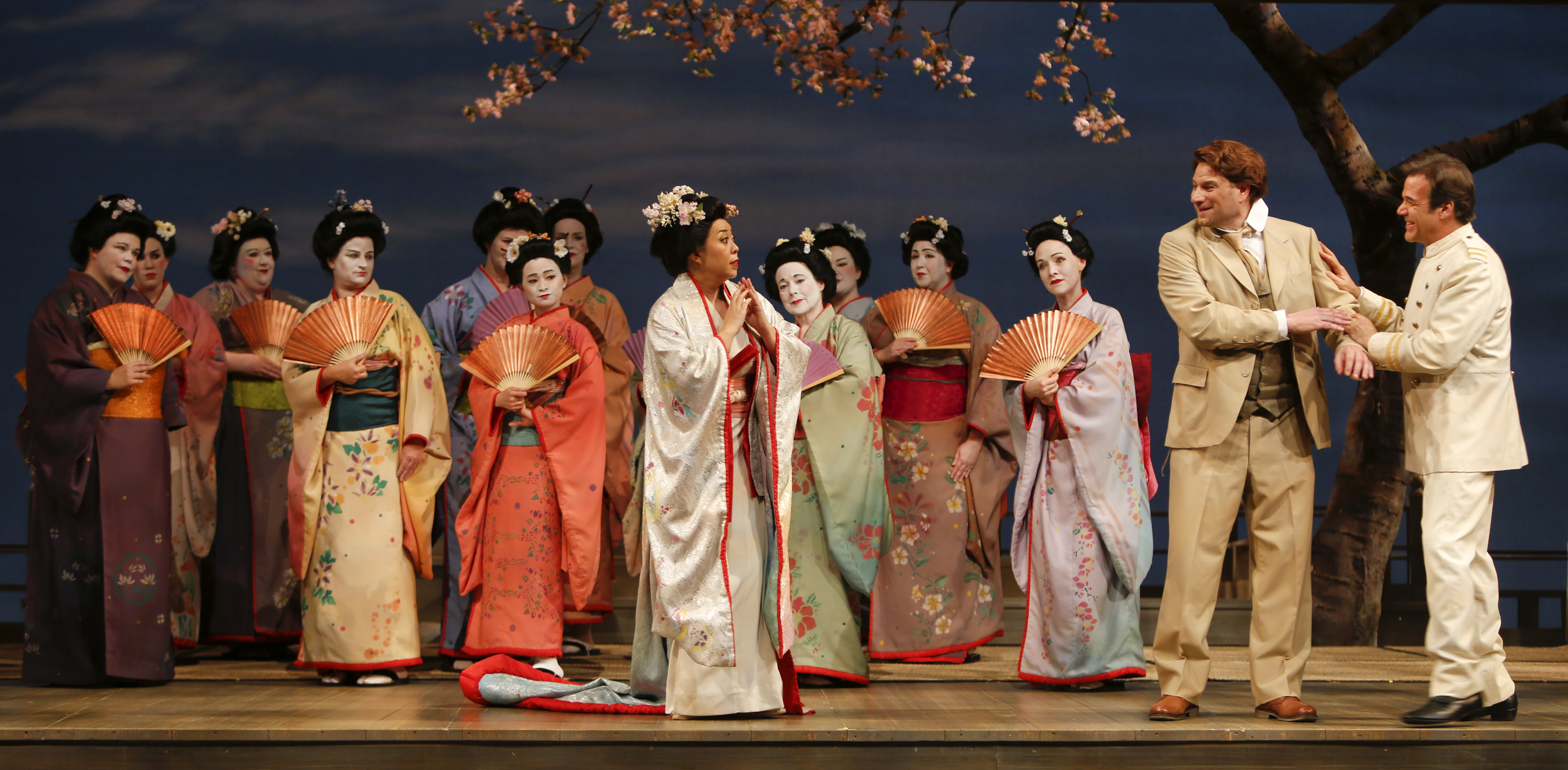
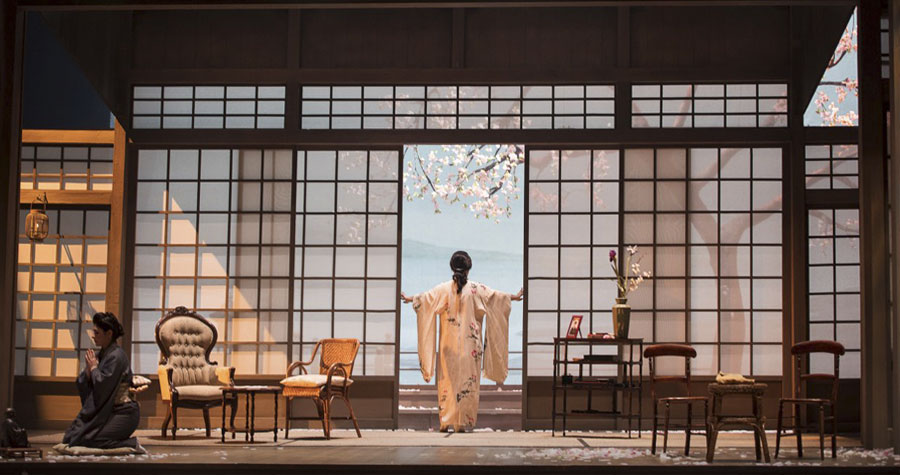
I went to the opening last night and thoroughly enjoyed the gorgeous set, incredible voices and achingly beautiful music brought to life by two of the world’s most in demand sopranos. There were many women fittingly dressed up in stunning Kimonos.
Mihoko Kinoshita as Cio-Cio-San (butterfly), Gregory Dahl as Sharpless, Richard Trotell as Pinkerton. Photo: Tim Matheson
About the Performers:
Sharing the role of Cio-Cio-San (Butterfly) for alternating performances will be Jee-Hye Han and Mihoko Kinoshita. Jee-Hye Han will be making her VO début. Mihoko Kinoshita was last seen in VO’s 2010 production of Madama Butterfly. Tenors Adam Luther and Richard Troxell will sing opposite them, sharing the role of Pinkerton.
Madama Butterfly is onstage at the Queen Elizabeth Theatre, corner of Georgia and Hamilton Streets,Vancouver, B.C. for only 6 performances, March 5 – 13, 2016.
Good seats still remain but are selling quickly for all performances, with the best availability at the Friday, March 11 and Sunday March 13 performances.
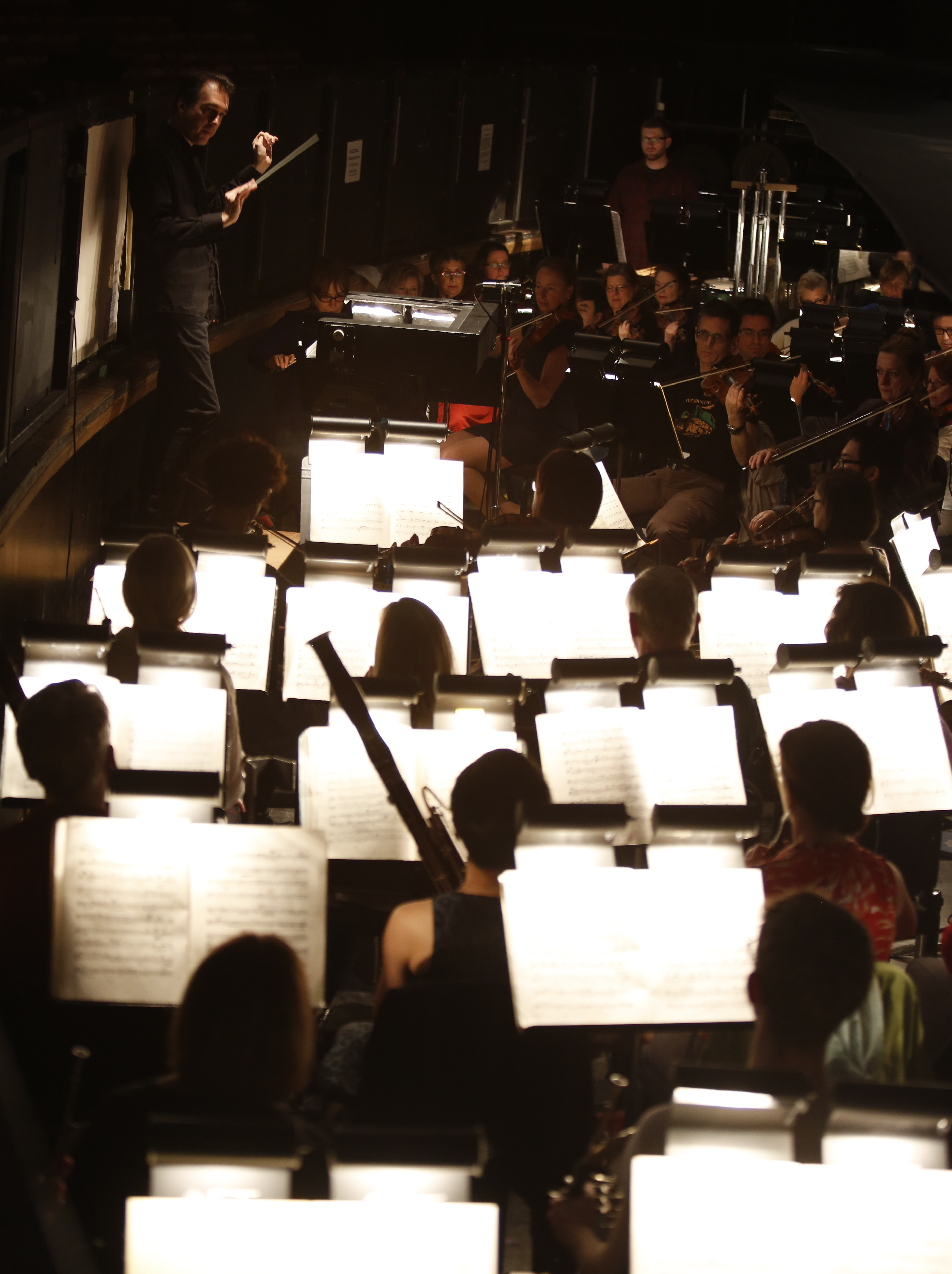
Not a kimono but at least it was colourful.The Vancouver Opera Orchestra conducted by Leslie Dala. Photo: Tim Matheson
Dates:
Sunday, March 6 • 2:00pm matinée
Thursday, March 10 • 7:30pm
Friday, March 11 • 7:30pm
Saturday, March 12 • 7:30pm
Sunday, March 13 • 2:00pm matinée
Madama Butterfly will be sung in Italian with English translations projected above the stage.
Approximate running time: 2 hours and 40 minutes, including 1 intermission.
Tickets are available exclusively through the Vancouver Opera Ticket Centre: 604-683-0222 or www.vancouveropera.ca. Visa, MasterCard and American Express are accepted. Special pricing for groups of at least 10, and for families, is available by phone.
Follow Vancouver Opera on Twitter and Facebook for exclusive offers such as VO’s Get O.U.T (Opera Under 35) program, with $35 tickets for patrons aged under.
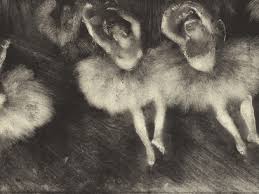
“Degas’s focus on dance is part of his engagement with depicting the subjects, spaces, rhythms, and sensations of modern life,” says Jodi Hauptman, senior curator in the department of drawings and prints at New York’s Museum of Modern Art, where an exhibition that explores Degas’s extensive work in monotype, “Edgar Degas: A Strange New Beauty,” opens up next month. “His vision wanders and focuses, taking note of what usually is overlooked and honing in on what best reflects the conditions of his time.”
I found the article below INSPIRING. It encompasses the perfect ménage à trois of Style: Art, Dance & Fashion.
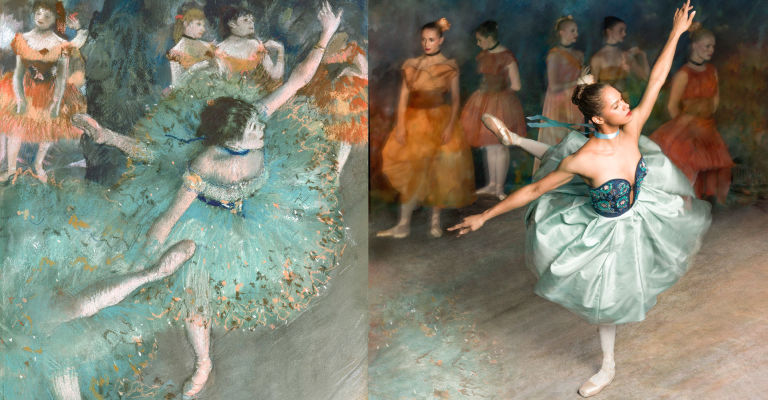
As she channels the artist Edgar Degas’s most famous ballet works ahead of this new exhibition, dancer Misty Copeland opens up about what it feels like to make history.
Ballet dancers, Misty Copeland says, like to be in control. It’s something about ballet itself—the painstaking quest to achieve the appearance of a kind of effortless athleticism, fluidity, and grace—that makes it hard to let go. “I think all dancers are control freaks a bit,” she explains. “We just want to be in control of ourselves and our bodies. That’s just what the ballet structure, I think, kind of puts inside of you. If I’m put in a situation where I am not really sure what’s going to happen, it can be overwhelming. I get a bit anxious.”
Copeland says that’s part of the reason she found posing for the images that accompany this story—which were inspired by Edgar Degas‘s paintings and sculptures of dancers at the Paris Opéra Ballet—a challenge.
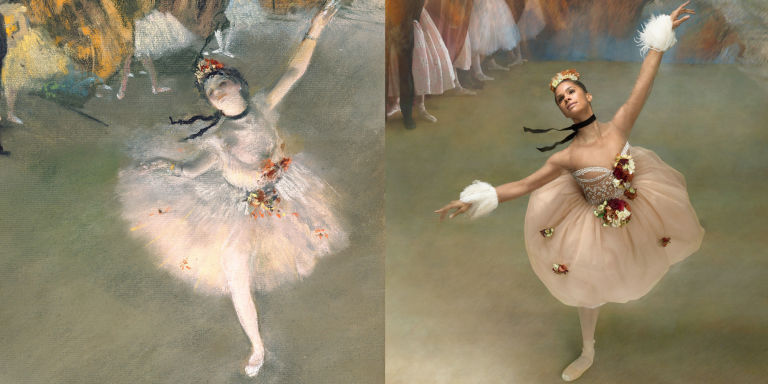
Copeland re-creates Degas’s The Star; Valentino dress, $15,500, 212-355-5811; Wilhelm headpiece, $495, and corsages,$135, wilhelm-nyc.com; Mokuba ribbon, $11 per yard, 212-869-8900.
“It was interesting to be on a shoot and to not have the freedom to just create like I normally do with my body,” she says. “Trying to re-create what Degas did was really difficult. It was amazing just to notice all of the small details but also how he still allows you to feel like there’s movement. That’s what I think is so beautiful and difficult about dance too. You’re trying to strive for this perfection, but you still want people to get that illusion that your line never ends and that you never stop moving.”
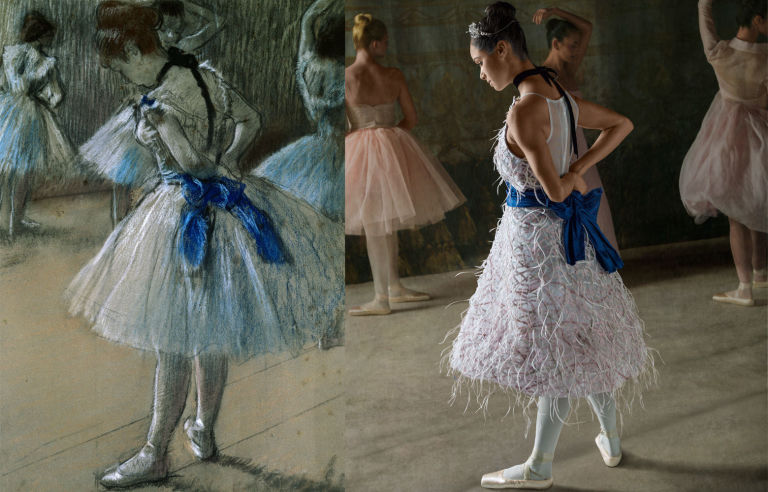
Copeland as Degas’s Dancer; Carolina Herrera top, $1,490, skirt, $4,990, 212-249-6552; Hatmaker by Jonathan Howard headpiece, $750, hatmaker.com.au; Mokuba ribbon, $11 per yard, 212-869-8900; Mood Fabrics fabric (worn as a belt), 212-230-5003.
It should probably come as no surprise that Copeland would have trouble conforming to someone else’s idea of what a ballerina should look like; she gave that up a long time ago. At 33, she’s in the midst of the most illuminating pas de deux with pop culture for a classical dancer since Mikhail Baryshnikov went toe-to-toe with Gregory Hines in White Nights. Last June, she was named a principal dancer at American Ballet Theatre, the first African-American woman to hold that distinction. She was also the subject of a documentary, Nelson George’s A Ballerina’s Tale, which chronicled her triumph over depression and body-image issues, as well as her comeback from a career-threatening leg injury in 2012. The story of her rise from living in a single room in a welfare motel with her mother and five siblings to the uppermost reaches of the dance world has become a sort of 21st-century parable: the unlikely ballerina, as Copeland referred to herself in the subtitle of her 2014 memoir, Life in Motion, who may be on her way to becoming the quintessential ballerina of her time.
Copeland as Swaying Dancer (Dancer in Green); Oscar de la Renta dress, $5,490, 212-288-5810; Mokuba ribbon, $11 per yard; Hatmaker by Jonathan Howard headpiece corsage, $70,hatmaker.com.au.
Degas’s ballet works, which the artist began creating in the 1860s and continued making until the years before his death in 1917, were infused with a very modern sensibility. Instead of idealized visions of delicate creatures pirouetting onstage, he offered images of young girls congregating, practicing, laboring, dancing, training, and hanging around studios and the backstage areas of the theater. Occasionally, portly men or dark figures appear, directing or otherwise coloring the proceedings. “People call me the painter of dancing girls,” Degas is said to have once told his Paris art dealer Ambroise Vollard, the Larry Gagosian of the day. “It has never occurred to them that my chief interest in dancers lies in rendering movement and painting pretty clothes.” It’s an unsentimental place, Degas’s ballet, and his representation of the dancers is far from sympathetic. But it’s a space where he discovered not only a freedom for himself as an artist but also a kind of beauty that existed behind all the beauty of the performance and in the struggle of his subjects to become something.
WHEN: 26 Mar — 24 Jul 2016 at the Museum of Modern Art (MoMA) in New York
Not to be missed if you’re in New York City
Source: photography by Ken Browar & Deborah Ory of the NYC Dance Project.Written by: Stephen Mooallem; Fashion Editor: Michelle Jank Magazine: Bazaar Edited: by d. king
“INSPIRATION is an awakening, a quickening of all man’s faculties, and it is manifested in all high artistic achievements.” – Giacomo Puccini
My inspiration for the week: the Vancouver Opera‘s opening night performance of Puccini’s Madama Butterfly; a beautiful story of love, honour, heartbreak and sacrifice.
This famous opera which was composed by Giacomo Puccini in 1904 (and remained his personal favourite throughout the remainder of his life) is based on a short story “Madame Butterfly” (1898) by John Luther Long. In brief it’s about a pleasure seeking American naval officer based in Nagasaki, Japan who leases a house and weds a young geisha. He is only briefly enchanted with her (his “Butterfly” – oh you know what some men are like; they profess their love only to lose interest when they want to move on to the next) while she in turn, gives herself wholly to the marriage. He abandons her and then returns to claim their child. Butterfly is devastated and dishonoured and makes an ultimate sacrifice to honour her family. Having spent some time in Kyoto when I lived in Japan, I was fascinated by the beauty and elegance of the mysterious geisha. I followed them around but never quite knew where they were going. I wanted to learn their secret but maybe it was best not knowing. For me, at the time it was a different world and an escape from the norm. They had a reserved, otherworldliness unlike other women which was refreshingly appealing. They gave the illusion of being faithful and trustworthy. I loved reading Memoirs of a Geisha (surprisingly it was written by a man; Arthur Golden).
“Why, in the Peking Opera, are women’s roles played by men?…Because only a man knows how a woman is supposed to act.” – David Henry Hwang (Tony-award winning creator of the beloved play M. Butterfly).
Some TICKETS are still available at the Queen Elizabeth Theatre. Only 6 performances from March 5 – 13, 2016.
“Art is a form of nourishment,” Susan Sontag wrote in her diary
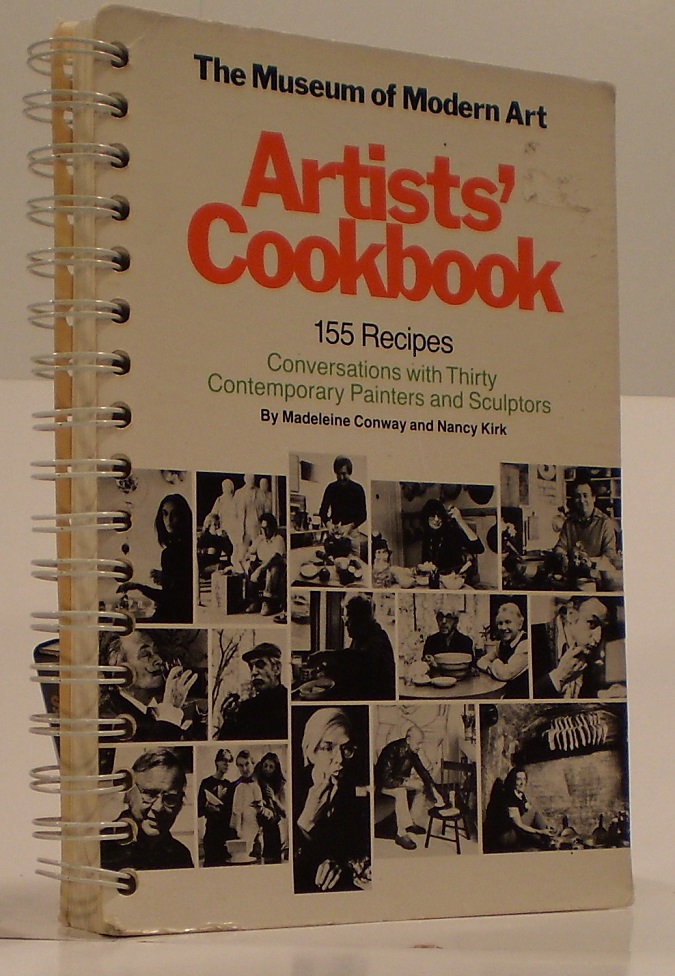
Art/Fashion/Food/Culture – it’s all one big melting pot. It’s everything I’m interested in and it is all that (along with money) which makes the world go round. So I wasn’t too surprised to find out only recently about the now vintage MoMA Artists’ Cookbook.
In 1977, a pair of art and cuisine enthusiasts, Madeleine Conway and Nancy Kirk, collaborated with New York’s MoMA on The Museum of Modern Art Artists’ Cookbook (public library) — a marvelous compendium of favorite recipes and reflections on food by thirty of the era’s most prominent artists, including Salvador Dalí, Louise Bourgeois, Robert Indiana, Will Barnett, Larry Rivers, Andy Warhol, and Willem de Kooning.
I got a kick out of looking up some of the recipes which I’m not at all planning to make. What interested me was finding out about each of the artists relationship to food.
Of particular Interest:
Andy Warhol
Andy Warhol, who had collaborated with his mother on a little-known and lovely cookbook(called Wild Raspberries) eighteen years earlier, tells Conway and Kirk that he no longer eats anything out of a can but — a statement that comically dates the book and tragically reminds us of a culinary downturn — believes that “airplane food is the best food.”
In a confession that reminds us just how much Warhol blurred the line between person and persona, just how deliberate he was about the construction of his own myth — this, after all, is such a thoroughly Andy Warhol thing to say — he tells the editors:
I always thought cereals like corn flakes and Rice Krispies were a natural thing — that they came from a cereal bush. He shares a befittingly on-brand recipe:
CAMPBELL’S MILK OF TOMATO SOUP
a 10 oz can Campbell’s condensed tomato soup
2 cans milk
In a saucepan bring soup and two cans milk to a boil; stir. Serve.
Willem de Kooning, in his early seventies at the time, looks back on how his formative years in Holland and his immigrant experience shaped his relationship to food:
Willem de Kooning
It was hard to overeat when I was a boy because when you had dinner, it was always brown beans. We were poor. When I came to America I had never seen so much food in my life! I came to America as stowaway. When I was discovered among the pipes, I became a kind of cabin boy and washed the decks. I got off when we landed in Boston and took a train to New York. I went right to Wall Street. I recognized from the silent movies where the Stock Exchange was.
We went to Hoboken because it was a Dutch, Italian, and German settlement. I got a room, and I got a job as a house painter; America seems to be a land of wonder because, you see, I worked and I made six dollars a day. Then I made nine dollars. In one week I could buy a suit, Thom McAn shoes, sets of underwear. Socks were ten cents a pair and it almost didn’t pay to wash them. You could throw them away! This was such a revelation, such an overflow! Here, everything was so big and had such a style I said, “Oh, hallelujah, here I come.”
The first food I remember eating? A hamburger. Lunchtime I went to a place on River Street and I saw on the bill of fare that I could read “Hamburger,” so I said, “Hamburger. The next day I took a hamburger and on the following day I took a hamburger, and then I thought I’d change and ordered a sirloin of beef and I tried to say it but the waiter gave me a hamburger anyway.
Even as he rose to fame in the art world, De Kooning retained this capacity for delight in the simplest of things and cared little for the snobbish charade of sophistication that all too often bedevils high society. More than half a century after the hamburger experience, he shares his favorite unfussy dressing for cold shrimp, lobster, or crabmeat, made with ingredients one could buy at the most rudimentary convenience store:
KOO’S SEAFOOD SAUCE
Makes 2 ½ cups
8 ounces heavy cream, whipped until stiff
8 ounces mayonnaise
1 ounce cognac
1 ounce sherry
4 tablespoons ketchup
salt and pepper to taste
In a large bowl fold mayonnaise gently into the whipped cream with a whisk. Add remaining ingredients and refrigerate for 1 hour. Serve.
“It is not sufficient to know an artist’s works – it is also necessary to know when he did them, why, how, and under what circumstances. I want to leave to posterity a documentation that will be as complete as possible. That’s why I put a date on everything I do.” – Pablo Picasso
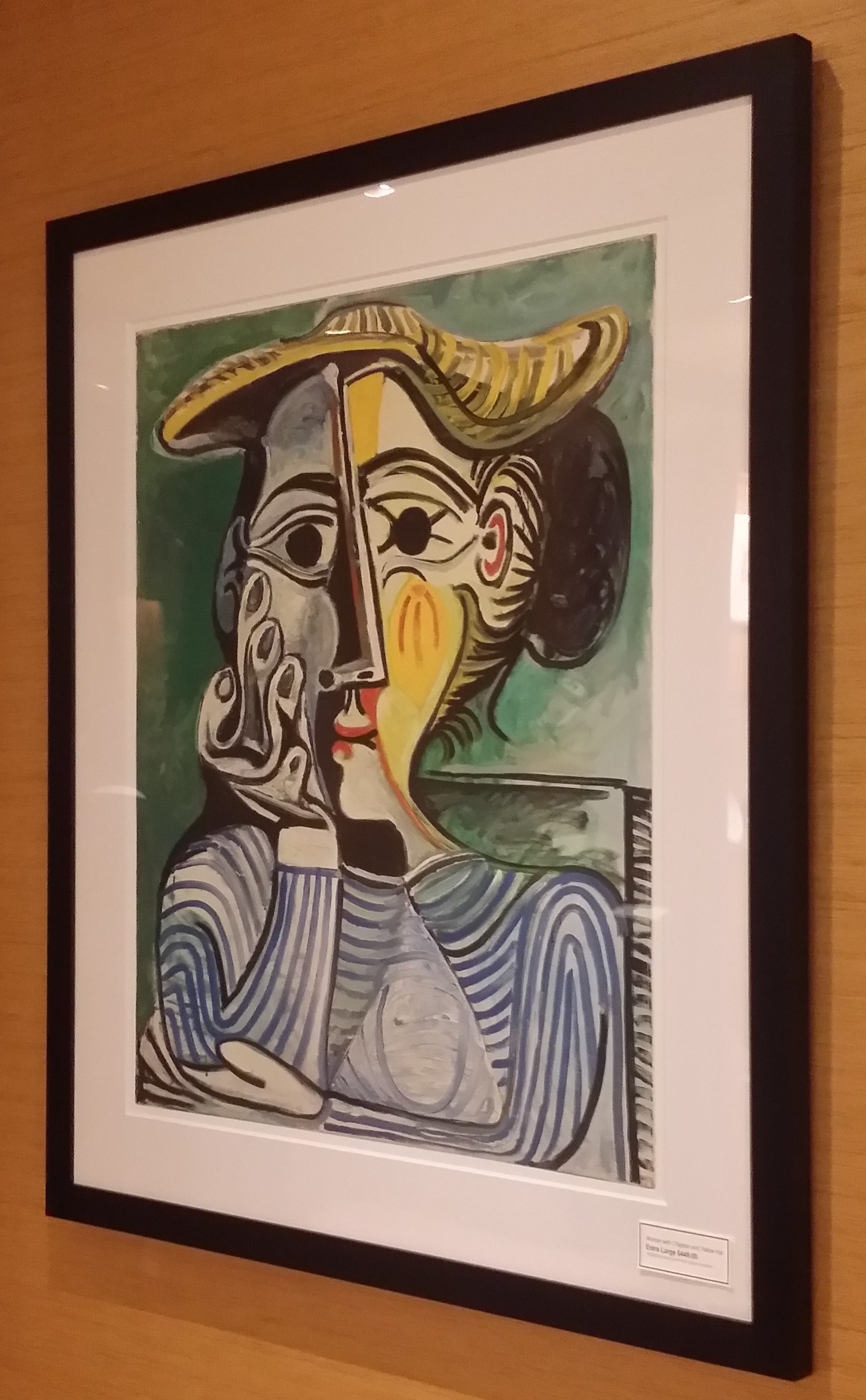
Picasso Print – the original was in the exhibit & not allowed to be photographed
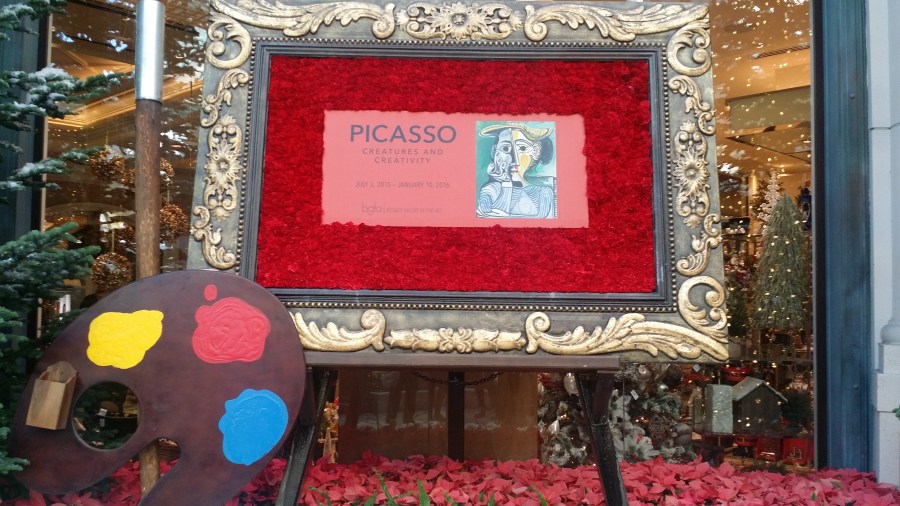
I just saw this amazing exhibition at The Bellagio Gallery of Fine Arts(bgfa) in partnership with the Claude Picasso Archives. It took the curator of bgfa two years to get Picasso’s son Claude to agree to show some of his private collection. No photos were allowed, sorry.
The 43 works, dated from 1938 to 1965, shown all together for the first time in the U.S.A., explore Picasso’s creative process. The exhibition focuses on Pable Picasso’s favourite theme – the human figure through the medium of painting and print making (print making was a challenge for the artist) and includes lithographs, linocuts and rare corresponding plates.
Through every stage, until the final work, the visitor follows his evolving artistic vision.
The exhibition demonstrates how the lithograph and linocut techniques inspired new directions in Picasso’s work. The exhibition focuses on specific themes, showing how Picasso’s imagery went through a constant process of metamorphosis.
Source: Tatyana Franck; curator
Have you been to any exciting exhibits lately?
This b+w photograph of Pablo Picasso seated by one of his original works is available at: Jeff Mitchum Galleries@ the Bellagio Hotel, Las Vegas. Contact: Johnnie Perea – 702.304.0007
“The job of the artist is always to deepen the mystery” – Francis Bacon
The LATE PAINTINGS – magnificently framed in GOLD
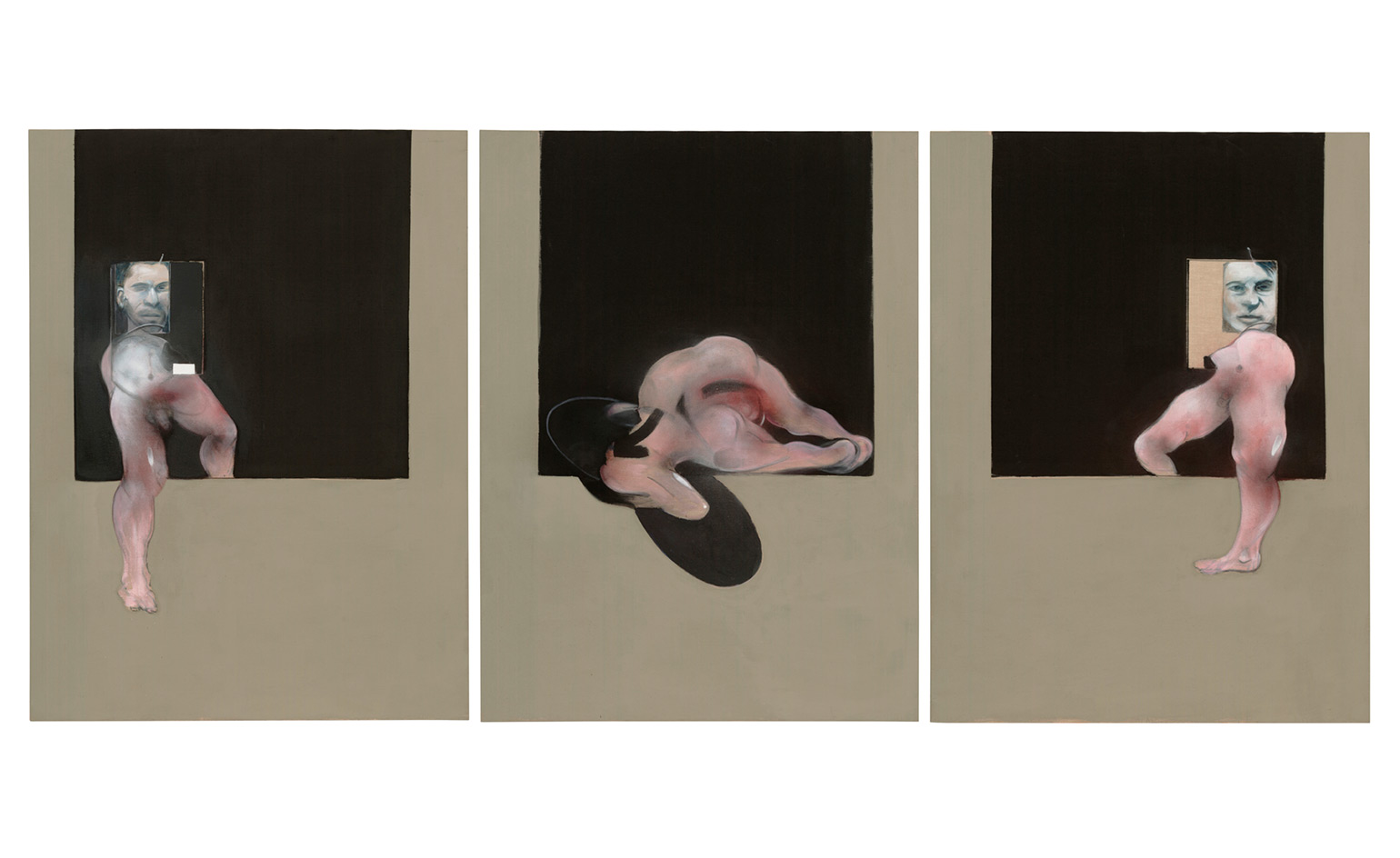
There’s something about Francis Bacon’s paintings that are surreal and difficult to describe in detail (especially if you’re not an art critic) so I’ll keep it brief and just say that I find them to be completely compelling. You have to experience them for yourself. His versions of the human form are unlike any I’ve witnessed before and they conjure up disturbingand hystericalfeelings at the same time – at least for me. Brilliance on the brink of insanity? Bacon succeeded in deepening the mystery.
The Gagosian Gallery in New York just ended a run presenting “Francis Bacon: Late Paintings” encompassing more than twenty paintings that Bacon made in London and Paris during the last two decades of his life. The third exhibition of Bacon’s work following “Francis Bacon: Triptychs” (Gagosian, London, 2006) and “Isabel and Other Intimate Strangers: Portraits by Alberto Giacometti and Francis Bacon” (Gagosian New York, 2008).
If like me, you were too late for the exhibit, here are a few of the images of works that were shown.
Although it’s never too late to appreciate his paintings.
I like this quote:
“Imagination was given to man to compensate him for what he is not; a sense of humor to console him for what he is”– Francis Bacon
It’s one of the human world’s most colourful, modern day, micro-migrations.
In the first week of December of every year, the art world descends on Miami Beach for ART BASEL Miami Beach and the dizzying range of young, wannabe rival fairs that have sprouted up in its shadow. From discreet European billionaires looking out of place amidst the Latino bling, to desperate crowds trying to force entry into exclusive art parties, to the variety of art installations and performances dotted along the ocean front, the spectacle of the art world temporarily grafted onto the hot mess that is Miami Beach is truly something to behold.Buried underneath all that wealth, naked ambition and partying, is the thing-in-itself – the art. Dazed previews the best new art that’s being shown at the best fairs – NADA at The Fontainebleau hotel and Untitled, operating from a vast tent-cum-hanger right on the beach as well as Art Basel Miami Beach itself.
Feeling Moody?
Maybe one of the most interesting art installations to land in New York recently is theMuseum of Feelings.
A first of its kind installation combining innovative technology, scent and art to generate an unforgettable and emotional experience, controlled by feelings from around the world. Crazy, right? And completely amazing…
The mysterious façade of the museum allows audience members to embark on a sensory journey through five distinctive zones that explore the connection between art and emotion in unassuming and surprising ways. Meanwhile, the museums radiant exterior, linked to various social network sites, simultaneously extracts data from news and weather reports, stock exchange and even flight delays and incorporates the various information into feelings, ultimately depicted by a hue of interchangeable colors. Kind of like a giant and interactive mood ring.
The Museum Of Feelings, nestled in lower manhattans Brookfield Place (near Battery Park City) will be free and open to the public until the 15th of December.
I’m not so sure what to make of this…but would it be so wrong to hang a skateboard on my wall as an ART piece? I mean we hang masks, why not a skateboard?
EmilioPucciLimited Edition Skateboards
I can ice skate and rollerblade, but I have never skated on a board and my dog barks at anyone who does. But if I did (and was still in my 20’s or under), I would be attracted to this limited-edition Pucci skateboard collection.
It wouldn’t be the first time a luxury brand has put its stamp on a recreational item (Chanel surfboards, Alexander Wang pool toys, Louis Vuitton golf bags, the list goes on). It is, however, the first time a brand tapped art students to reimagine its archives as something entirely new for the younger set. The resulting street decks are emblazoned with seven graphic takes on Pucci’s classic, color-happy prints. And while each one easily qualifies as an enjoy-from-afar art piece, they’re constructed from scratch-resistant Balkan beech wood and equipped with durable, trick-friendly wheels—in short, they’re meant for riding.
Instead of a traditional announcement, Pucci collaborated with NOWNESSon a short film to break the news. HERE:
You must be logged in to post a comment.