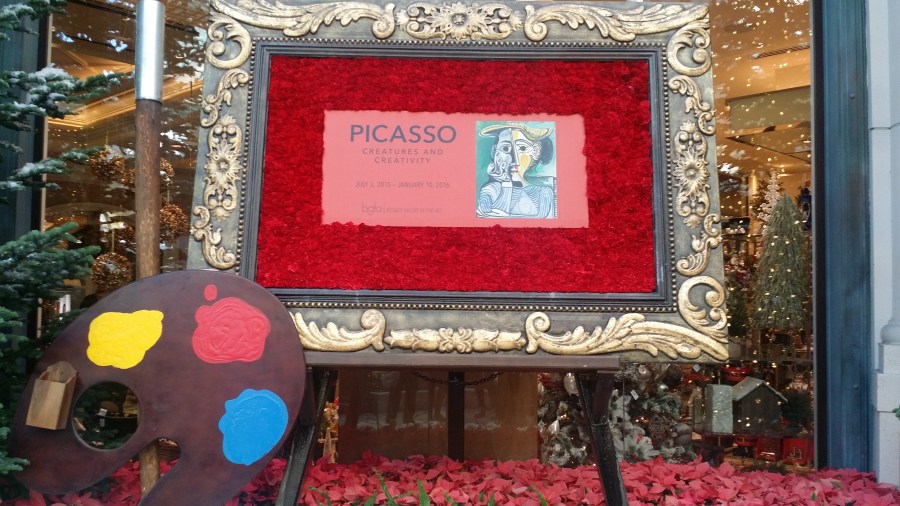

ART/Picasso: Creatures and Creativity

20151226_124016It is not sufficient to know an artist’s works – it is also necessary to know when he did them, why, how, and under what circumstances.  I want to leave to posterity a documentation that will be as complete as possible.  That’s why I put a date on everything I do.” – Pablo Picasso
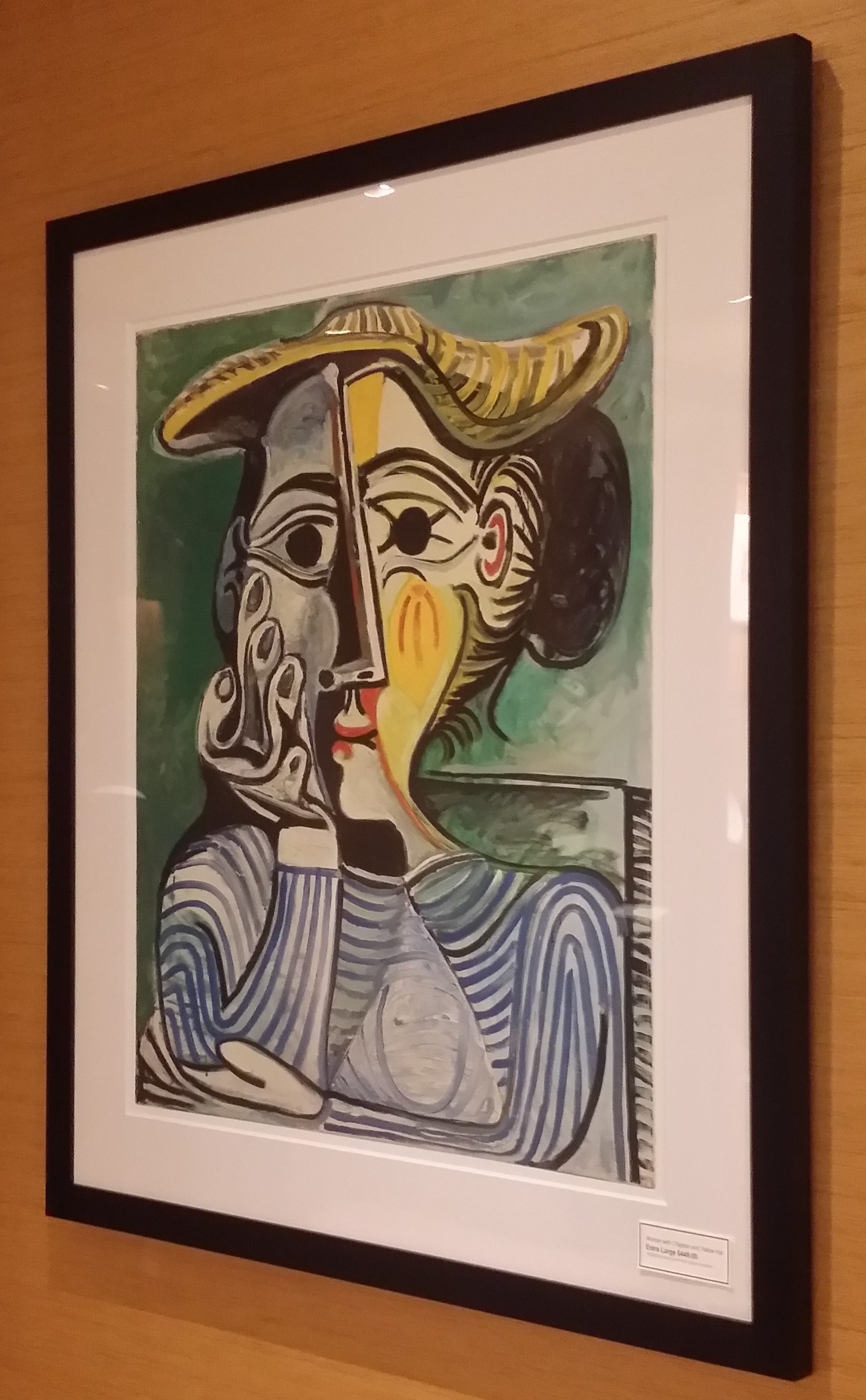
Picasso Print - the original was in exhibit
Picasso Print – the original was in the exhibit & not allowed to be photographed

I just saw this amazing exhibition at The Bellagio Gallery of Fine Arts (bgfa) in partnership with the Claude Picasso Archives.  It took the curator of bgfa two years to get Picasso’s son Claude to agree to show some of his private collection. No photos were allowed, sorry.

The 43 works, dated from 1938 to 1965, shown all together for the first time in the U.S.A., explore Picasso’s creative process.  The exhibition focuses on Pable Picasso’s favourite theme – the human figure through the medium of painting and print making (print making was a challenge for the artist) and includes lithographs, linocuts and rare corresponding plates.

Through every stage, until the final work, the visitor follows his evolving artistic vision.

The exhibition demonstrates how the lithograph and linocut techniques inspired new directions in Picasso’s work.  The exhibition focuses on specific themes, showing how Picasso’s imagery went through a constant process of metamorphosis.

Source: Tatyana Franck; curator

Have you been to any exciting exhibits lately?

20151226_125817 This b+w photograph of Pablo Picasso seated by one of his original works is available at: Jeff Mitchum Galleries @ the Bellagio Hotel,  Las Vegas. Contact: Johnnie Perea – 702.304.0007


Francis Bacon – it’s a little Too Late

The job of the artist is always to deepen the mystery” – Francis Bacon

The LATE PAINTINGS – magnificently framed in GOLDbacon2

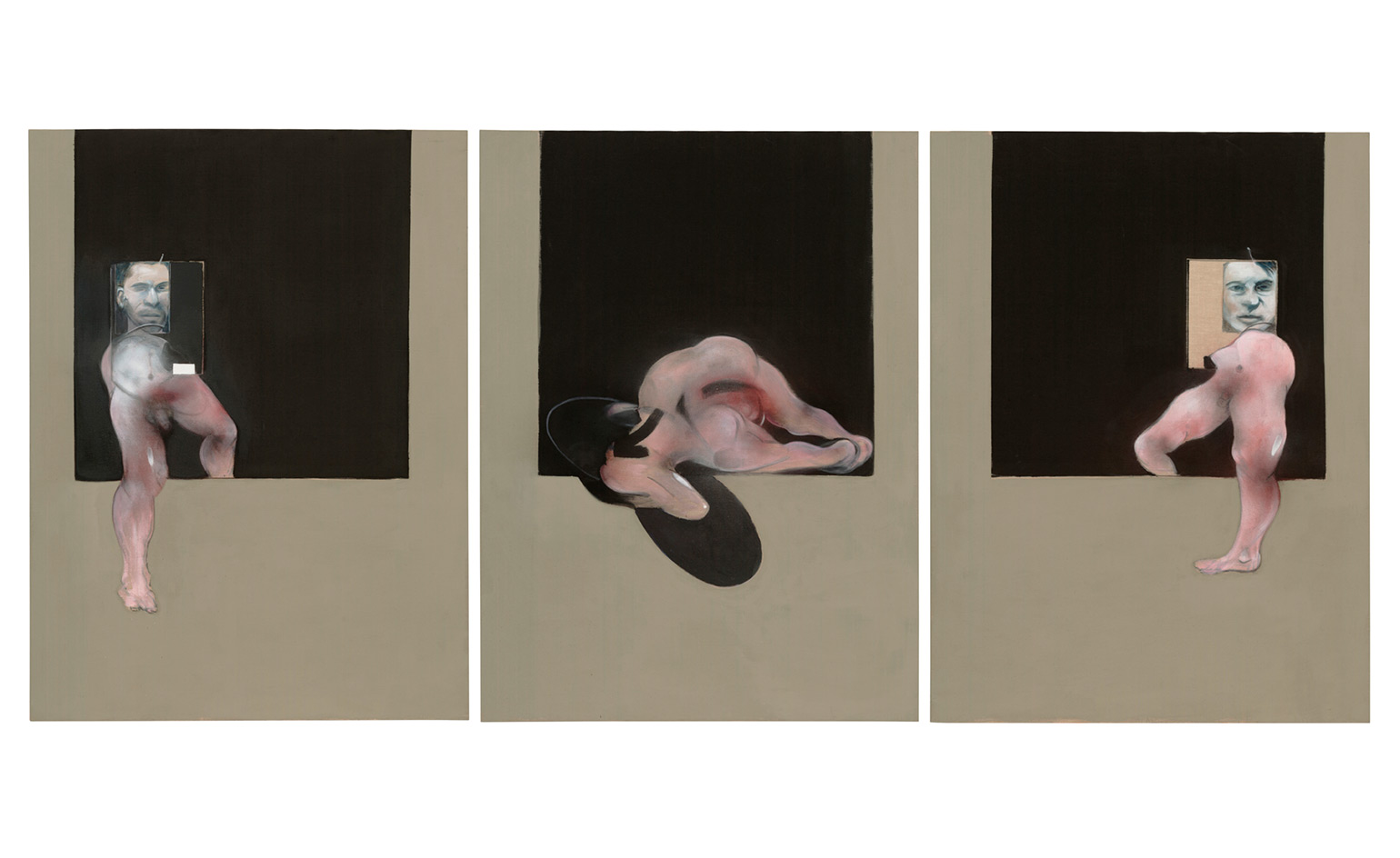
There’s something about Francis Bacon’s paintings that are surreal and difficult to describe in detail (especially if you’re not an art critic) so I’ll keep it brief and just say that I find them to be completely compelling.  You have to experience them for yourself.  His versions of the human form are unlike any I’ve witnessed before and they conjure up disturbing and hysterical feelings at the same time – at least for me. Brilliance on the brink of insanity? Bacon succeeded in deepening the mystery.

Francis Bacon, Self-Portrait, 1978. Oil on canvas. © The Estate of Francis Bacon. All rights reserved. / DACS, London .

The Gagosian Gallery in New York just ended a run presenting “Francis Bacon: Late Paintings” encompassing more than twenty paintings that Bacon made in London and Paris during the last two decades of his life.  The third exhibition of Bacon’s work following “Francis Bacon: Triptychs” (Gagosian, London, 2006) and “Isabel and Other Intimate Strangers: Portraits by Alberto Giacometti and Francis Bacon” (Gagosian New York, 2008).bacon1

If like me, you were too late for the exhibit, here are a few of the images of works that were shown.bacon5

Although it’s never too late to appreciate his paintings.

I like this quote:

“Imagination was given to man to compensate him for what he is not; a sense of humor to console him for what he is” – Francis Bacon

What kind of feeling do they invoke for you?

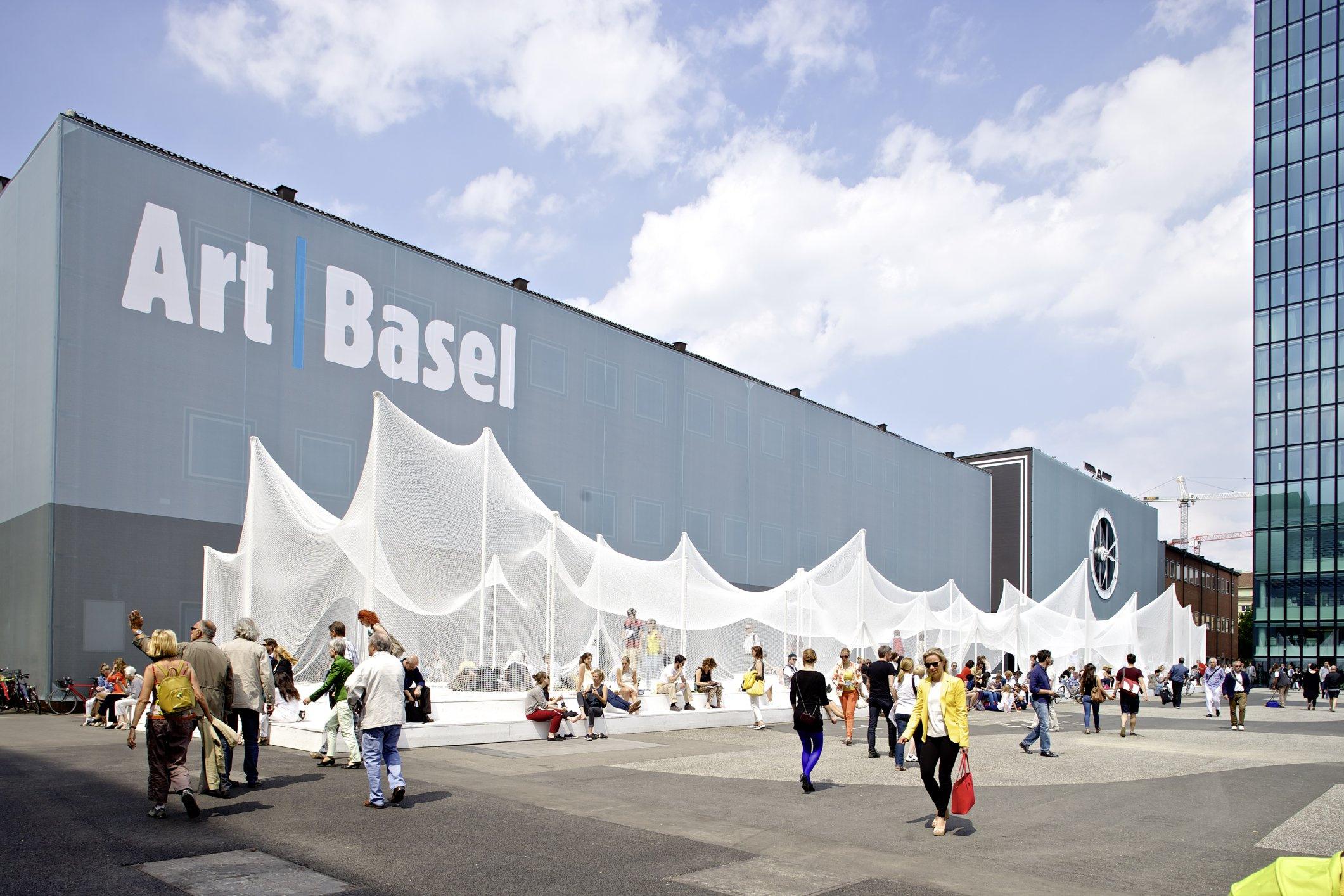
Art Basel: with Feelings on the side

It’s one of the human world’s most colourful, modern day, micro-migrations.

157485826DM00004_Art_Basel_

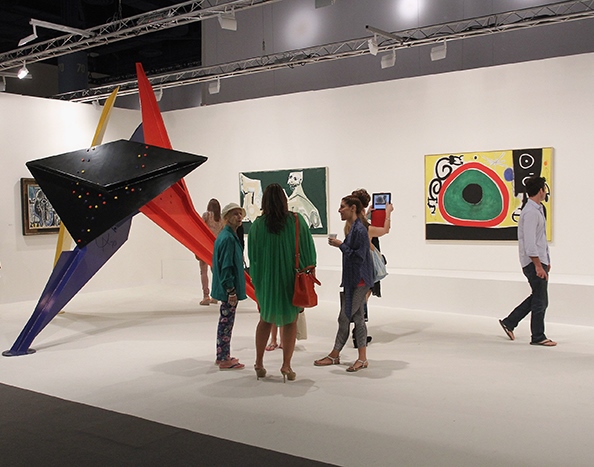
In the first week of December of every year, the art world descends on Miami Beach for ART BASEL Miami Beach and the dizzying range of young, wannabe rival fairs that have sprouted up in its shadow. From discreet European billionaires looking out of place amidst the Latino bling, to desperate crowds trying to force entry into exclusive art parties, to the variety of art installations and performances dotted along the ocean front, the spectacle of the art world temporarily grafted onto the hot mess that is Miami Beach is truly something to behold.artbasel1Buried underneath all that wealth, naked ambition and partying, is the thing-in-itself – the art. Dazed previews the best new art that’s being shown at the best fairs – NADA at The Fontainebleau hotel and Untitled, operating from a vast tent-cum-hanger right on the beach as well as Art Basel Miami Beach itself.

Feeling Moody?

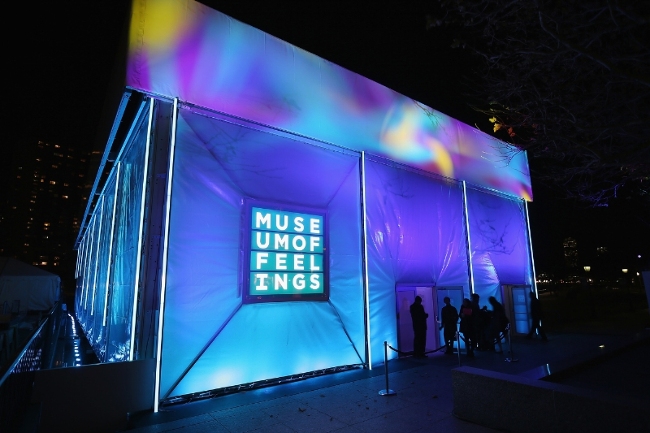
Maybe one of the most interesting art installations to land in New York recently is the Museum of Feelings.feelings2

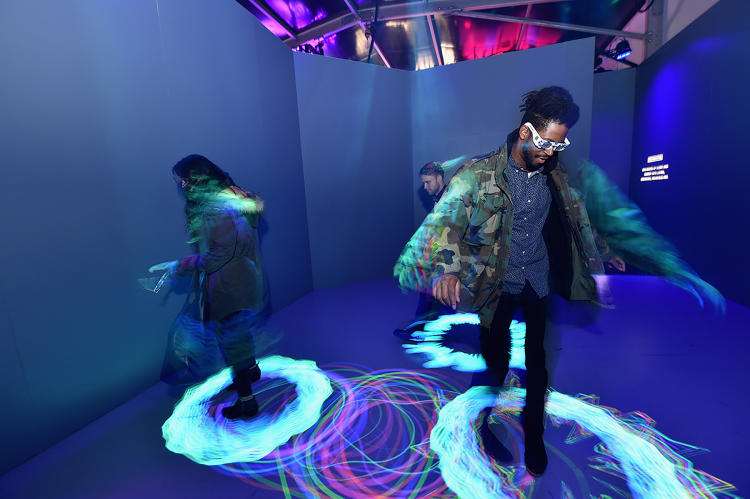
A first of its kind installation combining innovative technology, scent and art to generate an unforgettable and emotional experience, controlled by feelings from around the world. Crazy, right? And completely amazing…

The mysterious façade of the museum allows audience members to embark on a sensory journey through five distinctive zones that explore the connection between art and emotion in unassuming and surprising ways. Meanwhile, the museums radiant exterior, linked to various social network sites, simultaneously extracts data from news and weather reports, stock exchange and even flight delays and incorporates the various information into feelings, ultimately depicted by a hue of interchangeable colors. Kind of like a giant and interactive mood ring.feelings1

The Museum Of Feelings, nestled in lower manhattans Brookfield Place (near Battery Park City) will be free and open to the public until the 15th of December.

Source: dazeddigital.com & garancedore.com


Rolling with Emilio PUCCI

I’m not so sure what to make of this…but would it be so wrong to hang a skateboard on my wall as an ART piece? I mean we hang masks, why not a skateboard?

Emilio Pucci Limited Edition Skateboards

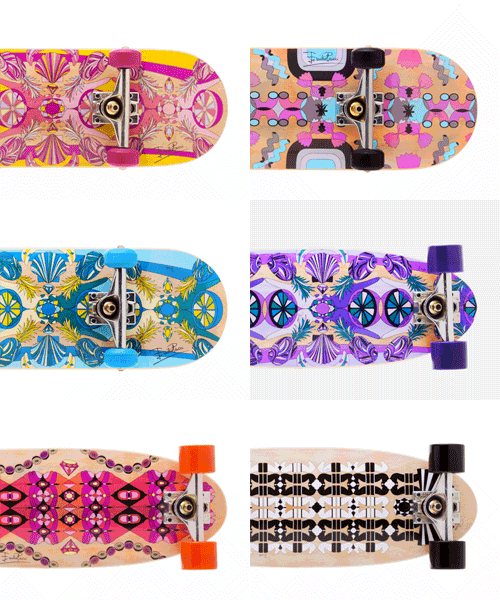
I can ice skate and rollerblade, but I have never skated on a board and my dog barks at anyone who does.  But if I did (and was still in my 20’s or under), I would be attracted to this limited-edition Pucci skateboard collection.  pucci3

It wouldn’t be the first time a luxury brand has put its stamp on a recreational item (Chanel surfboards, Alexander Wang pool toys, Louis Vuitton golf bags, the list goes on). It is, however, the first time a brand tapped art students to reimagine its archives as something entirely new for the younger set. The resulting street decks are emblazoned with seven graphic takes on Pucci’s classic, color-happy prints. And while each one easily qualifies as an enjoy-from-afar art piece, they’re constructed from scratch-resistant Balkan beech wood and equipped with durable, trick-friendly wheels—in short, they’re meant for riding.

Instead of a traditional announcement, Pucci collaborated with NOWNESS on a short film to break the news.  HERE:

https://www.nowness.com/story/emilio-pucci-orangejuice-skateboard

maybe I'll stick to the ART scarves
maybe I’ll stick to the ART scarves which not only fame your neck but can also be framed on your wall.

skate

ART – Gogh Figure! Splendor in the grass

CROP ART?vangogh1

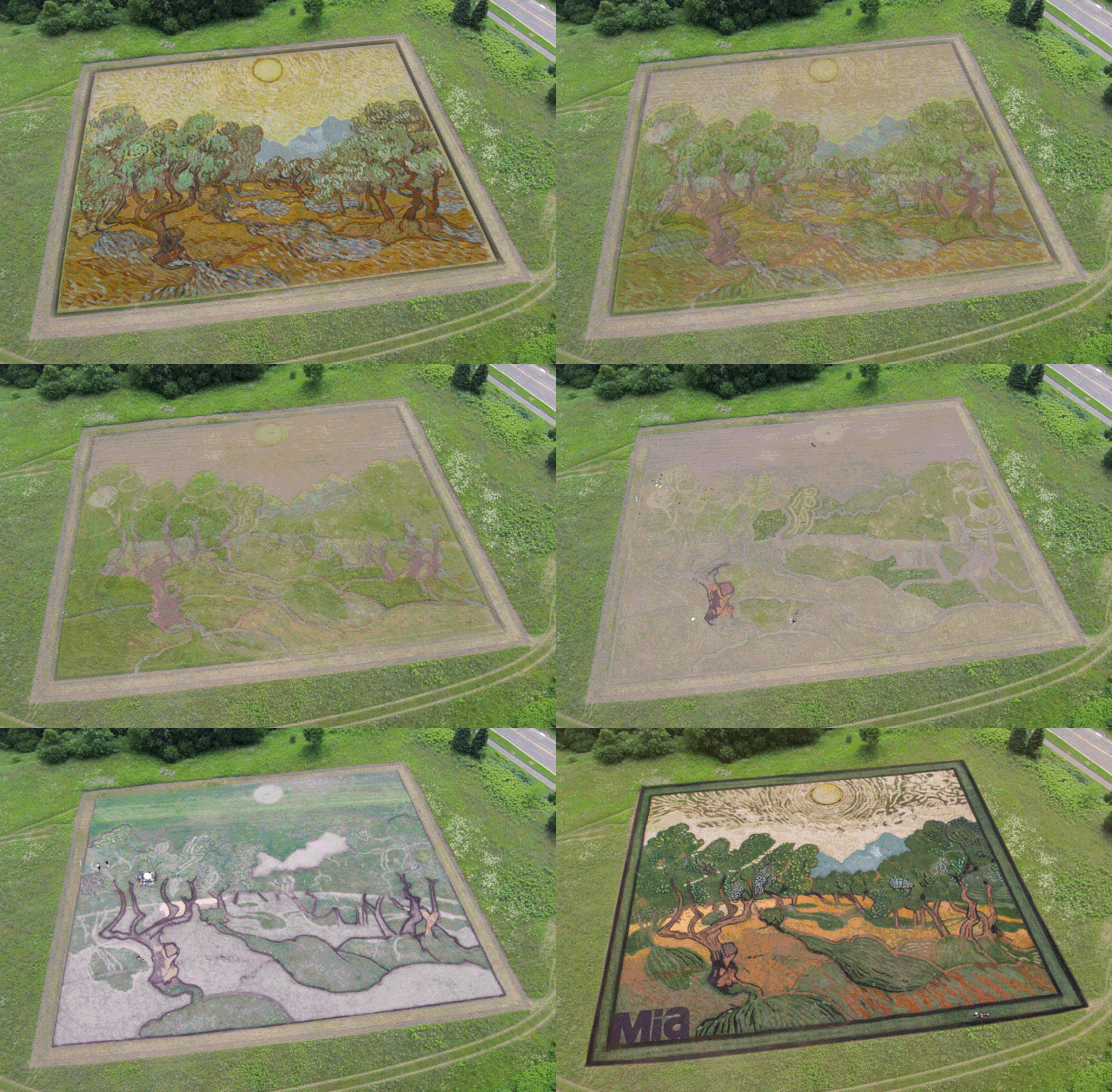
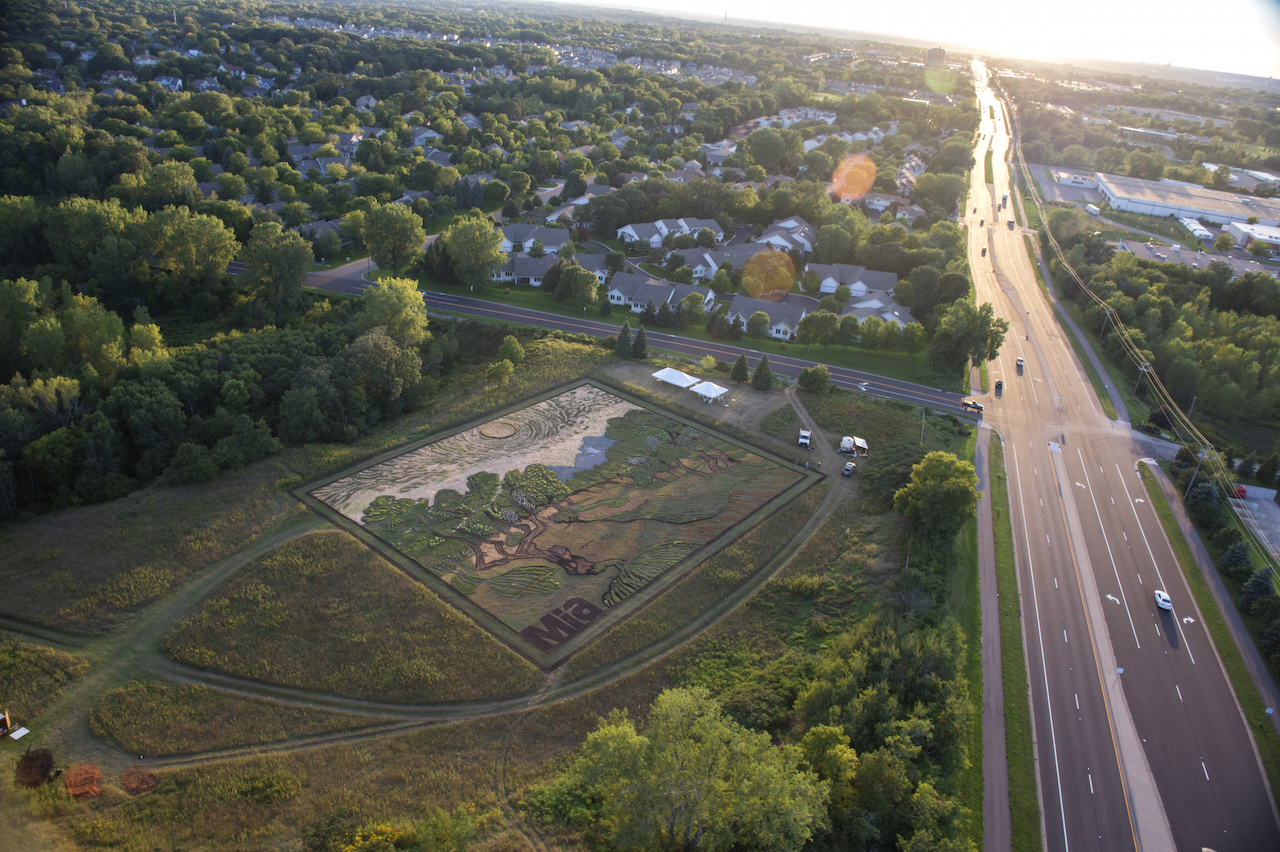
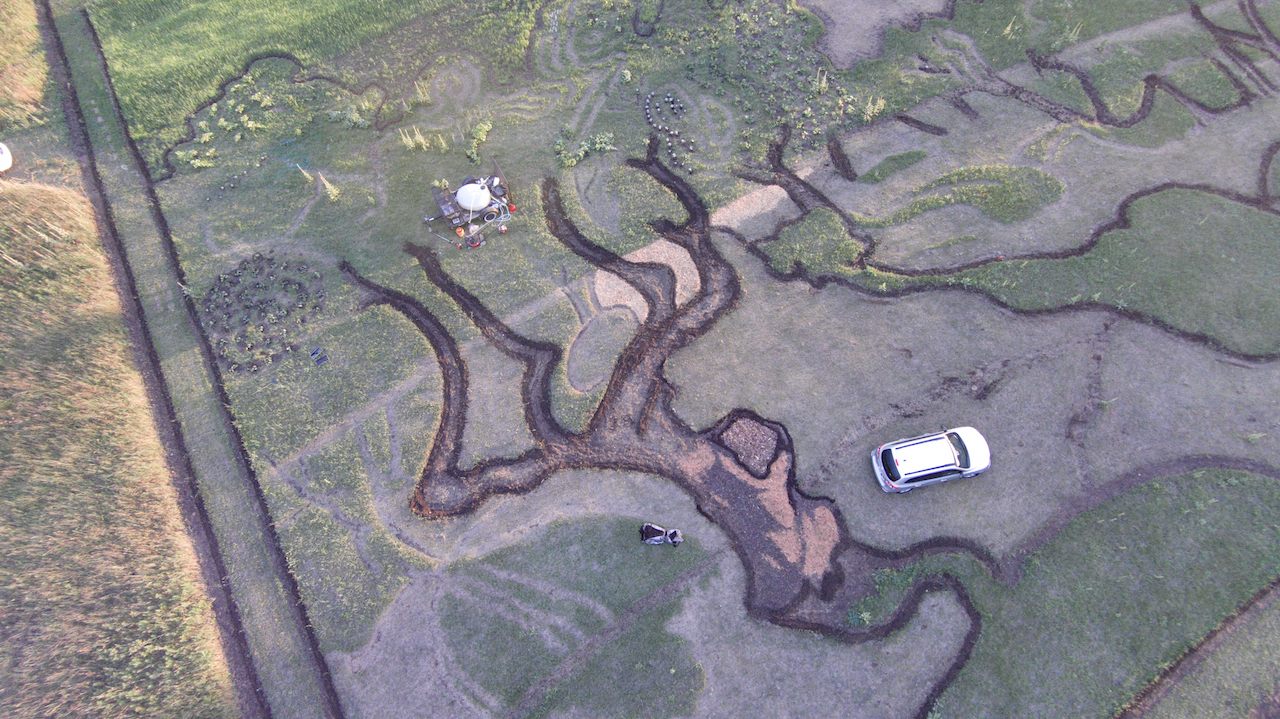
One of Vincent van Gogh’s olive tree paintings has literally sprung to life, reproduced as a large, growing field in Minnesota. Last month the Minneapolis Institute of Art (Mia) unveiled a 1.5-acre work of crop art by Stan Herd, a Kansas-based artist who has planted many earthworks around the world, including a re-creation of one of Leonardo da Vinci’s sketches of gliders. Commissioned by Mia to celebrate the museum’s centennial, this most recent piece replicates van Gogh’s “Olive Trees,” one of 15 known paintings of the trees the artist produced in the fall of 1889. That specific work actually hangs in the museum, but Herd’s has sprouted on a site belonging to media firm Thomson Reuters, near the Minneapolis–Saint Paul International Airport.vangogh4Herd has cultivated the field since spring, and his sprawling artwork will remain on view through the end of the fall. Prior to the planting, he had to carefully determine which specific plants and soils to incorporate in order to best represent van Gogh’s particular palette. The painter’s brushstrokes, too, demanded the mowing and digging of many serpentine paths.vangogh2“You can see this is darker, so I’m planting these kind of more verdant, green plants, he explained in a video about the crop artwork’s creation, pointing at a gridded version of the painting he used as a plan.

“The amazing thing about van Gogh’s painting is that there’s not a single straight line in the whole canvas,” he added. “Everything is organic and curved and flowing, and it’s like a pulse.”

The result, just slightly muted in tone, is impressively faithful to the original painting. Mia chose the site specifically so planes arriving to the airport will pass it, so you’ll be able to see it from above if you’re flying into the city — just be sure to choose a seat on the left.vanghogh3

Source: Claire Voon for hyperallergic.com

Photos:  all images courtesy Minneapolis Institute of Arts unless otherwise stated

ART in a Heartbeat

Balloons always remind me of birthday parties or open houses.  A cause for celebration!balloons5

An art installation of 100,000 white balloon clusters, sculpted into the shape of magnificent clouds…or one glorious bubble bath.

Let me explain….Covent Gardens has commissioned French artist Charles Pétillon, famous for his playful balloon ‘invasions’, to create his first ever installation in a public space called “Heartbeat.” A pulsating light beams into the installation a little like a heartbeat which is meaning to indicate the notion of Covent Garden as one of London’s most central structures. balloons3

An incredibly photographic display.  Wish I were there to see it in person.  But just like a heartbeat…..it has come and gone.

And just like a heart…balloons break

Photo: d. king (Kits Beach)

Other photos: google images

Art & Fashion – the ART of Shopping

 Who says that art should be only relegated to museums and galleries?

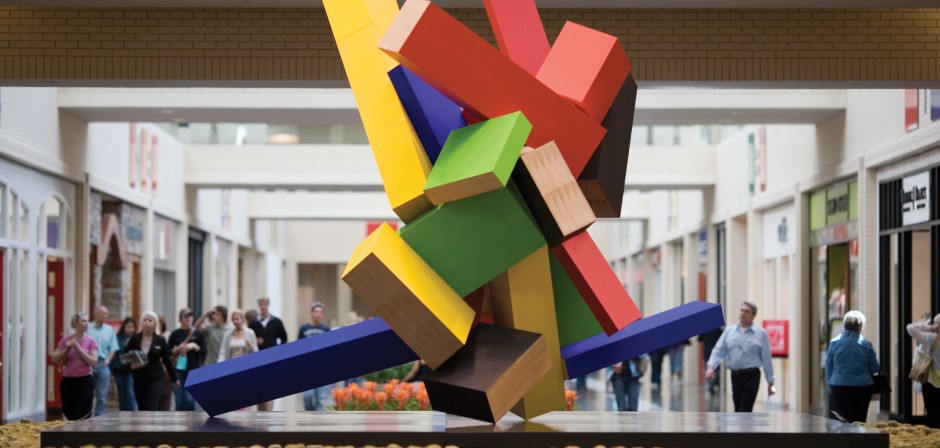
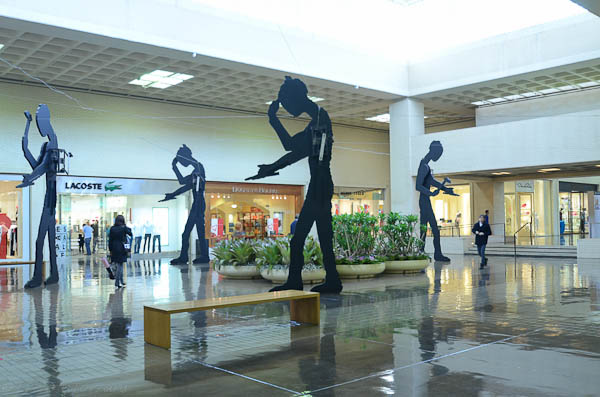
20 ELEMENTS, JOEL SHAPIRO
20 ELEMENTS, Joel Shapiro

Many coffee shops and restaurants (even some hair salons) like to display art from unknown artists, and if we’re lucky we can sometimes find work from celebrated artists we know of, in select high end design/furniture shops. There’s Art and then there’s Art!

I enjoyed looking at Picasso’s while dining in a restaurant in Las Vegas.  Mind you, it was the Picasso restaurant at the Bellagio and yes, his original paintings are displayed throughout the restaurant.  An art gallery within a restaurant.  But renowned art in a shopping mall? When have you seen that?

We already know that art and fashion have  something in common.  But do we dare draw the line between art and shopping in a mall?

NorthPark Centre in Dallas, Texas is no ordinary mall.  I’ve been there and as far as shopping in a mall goes (a mall is not my favourite place to shop or hang out), it’s a cut above. This year the centre is celebrating their 50th anniversary, and in conjunction is hosting an exhibition this fall called “Art Meets Fashion.”

Lee Ann Torrans 
Lee Ann Torrans

Raymond Nasher, who built NorthPark, and his wife, Patsy, were big collectors and proudly displayed the works they acquired throughout the shopping concourse because they believed that art should be seen, and not just in museums and galleries. Their daughter, Nancy Nasher and her husband, David Haemisegger, have given their promise to ensure that this mission lives on. They’ve expanded the NorthPark collection and helped to transform the shopping centre into one of the most visited public gallery spaces in America. 

Andy Warhol
Andy Warhol

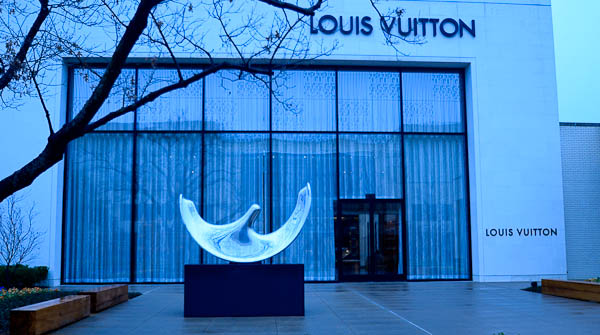
So… (apparently it’s not proper to start a sentence with so….but I say “so what?”) now you can buy your Louis Vuitton or Gucci with a side of Roy Lichtenstein or Frank Stella.   How nice is that?

    Anish Kapoor North Park
Anish Kapoor North Park

Now, if only every mall was like this…what a wonderful art world it would be!

What do you think about this?

The ART of the Dealer – the True Believer

As it is believed behind every brilliant actor or musician there is a remarkable manager, it seems behind every great art movement there is an exceptional art dealer.

Renoir’s Dance at Bougival, 1883, is one of the masterworks that seduced Londoners in the famous show Durand-Ruel presented at the Grafton Galleries in 1905. Image courtesy of the Museum of Fine Arts, Boston
One of my favourite paintings: Renoir’s Dance at Bougival, 1883, is one of the masterworks that seduced Londoners in the famous show Durand-Ruel presented at the Grafton Galleries in 1905. Image courtesy of the Museum of Fine Arts, Boston

An important new exhibition at the PHILADELPHIA MUSEUM OF ART  (PMA) celebrates the keen eye of Paul Durand-Ruel, the Paris dealer who defied the scorn of critics to promote the raggedy brand of pioneering young painters we now know as the Impressionists.

An exhibition celebrating his brave achievement, “Discovering the Impressionists: Paul Durand-Ruel and the New Painting,” is on view at the PMA through September 13th. It features scores of intoxicating canvases by Claude Monet, Édouard Manet, Edgar Degas, Mary Cassatt and Pierre-Auguste Renoir, all beloved now, but in their own day savaged.

“Discovering the Impressionists: Paul Durand-Ruel and the New Painting” features more than 90 intoxicating canvases by the movement’s masters. Photo by Graydon Wood
“Discovering the Impressionists: Paul Durand-Ruel and the New Painting” features more than 90 intoxicating canvases by the movement’s masters.  Photo by Graydon Wood

The success of Impressionism was largely due to the intrepid zeal of Durand-Ruel. Or should one say survival? “Without Durand, we would have died of hunger, all of us Impressionists,” a grateful Claude Monet exclaimed shortly after the dealer’s death in 1922 at the age of 90.

A man of conviction, who went to mass every morning, Durand-Ruel never wavered in his belief in his artists. During his long life, he purchased approximately 1,000 Monets, 1,500 Renoirs, 200 Manets, 400 Degases and 800 Camille Pissarros. He once owned Eugène Delacroix’s epic Death of Sardanapalus, 1827, now in the Louvre, and Renoir’s Luncheon of the Boating Party, 1880-81, one of the treasures of the Phillips Collection, along with other masterpieces that ended up in the PMA, Metropolitan Museum of Art, National Gallery in London and Pushkin Museum in Moscow.

In 1851, when he was just 20 years old, Durand-Ruel joined his ailing father at his family’s picture gallery near the Place Vendôme, which over the next 70 years he would transform into an artist-promoting powerhouse. He had a discerning eye, trusted his instincts and was not afraid to sit on stock — or even purchase it back. He introduced such now standard practices as operating his gallery in several cities (London, Brussels and New York), mounting solo shows, sending work to international exhibitions, organizing public lectures, publishing exhibition catalogs, backing art magazines and giving his artists stipends.

The American expat Mary Cassatt was among the many painters Durand-Ruel discovered. She focused on domestic scenes like The Child’s Bath, 1893. Image courtesy of The Art Institute of Chicago: Robert A. Waller Fund
The American expat Mary Cassatt was among the many painters Durand-Ruel discovered. She focused on domestic scenes like The Child’s Bath, 1893. Image courtesy of The Art Institute of Chicago: Robert A. Waller Fund.

At last, in Philadelphia, Durand-Ruel is getting the credit he richly deserves for having put Impressionism on the map. We may be late to the party, but Renoir always knew this day would come. “Your love of art and your defense of living artists,” he presciently told Durand-Ruel in 1885, “will be your claim to fame.”

Source: title changed and condensed from an article written by Phyllis Tuchman for “Introspective Magazine”

Art washes away from the soul the dust of everyday life – Pablo Picasso
This quote by Charles Dickens (Bleak House) best sums up giving credit where credit is due – “He didn’t at all see why the busy bee should be proposed as a model to him; he supposed the Bee liked to make honey, or he wouldn’t do it — nobody asked him. It was not necessary for the bee to make such a merit of his tastes.” – Dickens

ART – Lessons We Can Learn from Kandinsky

As a new gallery of Kandinsky’s work opens in New York, we examine key lessons that can be learned from the legendary painter and art theorist – which is perfect for what MATTERS for life in general.

Improvisation 28 (second version) (Improvisation 28 [zweite Fassung]) by Vasily Kandinsky, 1912 Courtesy of Solomon R. Guggenheim Museum, New York, Solomon R. Guggenheim Founding Collection
Improvisation 28 (second version) by Vasily Kandinsky, 1912 Courtesy of Solomon R. Guggenheim Museum, New York, Solomon R. Guggenheim Founding Collection.
The career of Wassily Kandinsky ranged from theorising colour and geometric forms in completely new ways to painting some of the first abstract paintings as well as writing books on completely new concepts in art. Simply put, Kandinsky was ground breaking in the ways he divorced himself from typical norms of old school fine art and broke new ground by taking inspiration from everything to music and human emotion, reinterpreting these topics into colourful artworks and brilliant theoretical books.

Blue Mountain (Der blaue Berg) by Vasily Kandinsky, 1908–09 Courtesy of Solomon R. Guggenheim Museum, New York, Solomon R. Guggenheim Founding Collection
Blue Mountain (Der blaue Berg) by Vasily Kandinsky, 1908–09 Courtesy of Solomon R. Guggenheim Museum, New York, Solomon R. Guggenheim Founding Collection.

The latest gallery of 150 Kandinsky works at The Guggenheim in New York traces the artist’s aesthetic evolution and contribution to the abstract art movement, from his early days working as a painter in Munich to the last era of his career in Paris. Here, we look at what we can learn from the storied artist, from living a colourful life to knowing the value of contrast.

Black Lines (Schwarze Linien) by Vasily Kandinsky, December 1913Courtesy of Solomon R. Guggenheim Museum, New York, Solomon R. Guggenheim Founding Collection
Black Lines (Schwarze Linien) by Vasily Kandinsky, December 1913 Courtesy of Solomon R. Guggenheim Museum, New York, Solomon R. Guggenheim Founding Collection.
  1. Let your STYLE evolve
    Kandinksy knew the true value of having confidence to move from one aesthetic to another. Though primarily known as an abstract artist, he often experimented with different forms of abstraction with much success. During his Blue Rider period, his paintings were large and expressive, with markings that varied in shape and size. But his Bauhaus period saw paintings that were centered on controlled geometrics and sharp lines. He turned the classic saying of “Do one thing and do it well,” on its head – and that lesson can be used for fashion advice or life in general.
  2. LIVE a colourful life
    His paintings offer the anecdote that living a colourful life is always better than living a dreary one in only black and white. As a highly spiritual artist, Kandinsky saw colour as emotional therapy and injected much of it into his paintings. In his book, Concerning the Spiritual in Art, he wrote, “Colours on the painter’s palette evoke a double effect: a purely physical effect on the eye which is charmed by the beauty of colours, similar to the joyful impression when we eat a delicacy. This effect can be much deeper, however, causing a vibration of the soul or an “inner resonance” – a spiritual effect in which the colour touches the soul itself.” On an off day, we can always imagine ourselves living inside a Kandinsky painting.
  3. KNOW when to take a break
    There’s no doubt Kandinsky was a hard worker. He produced hundreds of works and painted until the last few years of his life. But he also knew when to take a break from his work. One day, an exhausted Kandinksy decided to take a walk. When he returned to his studio, one of his paintings had been accidentally turned upside down by friend and fellow artist Gabriele Münter. Without recognising it as his own, he proclaimed it was “of extraordinary beauty, glowing with inner radiance.” This moment was said to change his ideas about painting and open his eyes to abstraction. Taking a break or stepping back from a big project can make one see things in a different light – especially if someone else gets involved in the most unexpected ways.
  4. BELIEVE in the power of contrast
    There’s a reason why black and white striped tops forever remain a wardrobe staple. Kandinsky recognized the power of contrasting colours and shapes early, assigning hues emotional qualities and using them to balance each other out. “White and black form the second great contrast, which is static. White is a deep, absolute silence, full of possibility. Black is nothingness without possibility, an eternal silence without hope, and corresponds with death,” he wrote in Concerning the Spiritual Art. Similarly, Kandinsky’s paintings often play with contrasting shapes: long, sharp lines juxtapose soft orb-like spheres and curves. Life wouldn’t be as beautiful without the best of both worlds.
  5. The INNER self matters
    If all of Kandinsky’s beliefs could be condensed into one, his biggest theory would probably be what he called “internal necessity.” His paintings were colourfully stunning but they weren’t just based on pure aesthetics. As well as believing in a form of communication between the artist and the viewer, Kandinsky believed in total self-awareness. He committed to his feelings and senses and often theorised that shapes and colours were attached to his own emotional feelings. For example, he felt the circle was the most peaceful symbol – so he used it to create his own codes throughout his work. He also considered black as the colour of closure. And with this system, he created not just beautiful work, but his own language that was completely one of a kind and representative of a singular person.

Love his theory

The Kandinsky gallery is at The Guggenheim, New York until Spring 2016.

Source: Kristen Bateman for http://anothermag.com

ART – a living connection to ART History

The work of art must seize upon you, wrap you up in itself, carry you away. It is the means by which the artist conveys his passion; it is the current which he puts forth which sweeps you along in his passion.”  ― Pierre-Auguste Renoir 

This painting holds special significance to me

Madame Josse Bernheim-Jeune et son fils Henry [Mrs Josse Bernheim-Jeune and her son Henry]
Madame Josse Bernheim-Jeune et fils Henry [Mrs Josse Bernheim-Jeune and her son Henry]
I know a relative of the two people in this painting. About five months ago I had brunch in Oregon with a very interesting woman who is the daughter of the little boy (yes, it is a boy) who is sitting on his mother’s lap in this Renoir oil painting.  The woman I met (name withheld) is the friend of a friend I was travelling with. The woman in this painting would of course be her grandmother.  Her grandparents were friends with Renoir.  Her grandfather and his brother were established art dealers for the first generation of impressionists. So I looked up the painting which hangs in the Musée d’Orsay and thought I would share it with you.

About the painting:

Pierre Auguste Renoir (1841-1919) Mrs Josse Bernheim-Jeune and her son Henry – 1910 Oil on Canvas H. 92,5; W. 73,3 cm Paris, Musée d’Orsay

The model for this painting was Mathilde Adler (1882-1963). In 1901 she married her cousin, Josse Bernheim-Jeune (1870-1941) while her sister Suzanne (1883-1961) married his brother Gaston (1870-1953). For several years the Bernheim-Jeune brothers had been established as dealers for the first generation of Impressionists.
They had already turned to Renoir for a portrait of the two young fiancées, in September 1901. In 1910, he was approached once again. At his country property, Les Collettes, near Cagnes-sur-Mer, Renoir painted for Josse a portrait of his wife and their son Henry Dauberville (1907-1988).

THE BERNHEIM-JEUNE STORY

Extract of the article dedicated to Bernheim-Jeune in the Larousse Encyclopedia:

ʺBernheim-Jeune (said Bernheim), art dealer’s family native of Besançon which can be traced from the late XVIIIth century at the head of a business of painting supplies (frames and colours for the artists).

Succeeding Joseph Bernheim (1799 1859), his son Alexandre Bernheim (1839-1915) friend of Delacroix, Corot and Gustave Courbet, came to settle down in Paris in 1863, settled down at 8 rue Lafitte (on the advice of his fellow countryman of Besançon, G. Courbet). This is where Alexandre Bernheim presents the impressionists in 1874. Transferred in 1906 to 25 boulevard de la Madeleine and 15 rue Richepanse, the Bernheim gallery takes its real development under the supervision of Alexandre Bernheim’s sons, Josse Bernheim-Jeune (1870-1941) and Gaston Bernheim-Jeune (1870-1953). They organise (in particular) in 1901, the first Van Gogh exhibition, present Bonnard and Vuillard in 1906, Cézanne and Cross (1907), Seurat and Van Dongen (1908), Matisse (1910), Boundin, the ʺItalian Futuristsʺ (1912), Le douanier Rousseau (1916), R.Dufy and Vlaminck (1921), Modigliani (1922), Utrillo (1923), Marquet (1925), Gauguin (1930), having settled down avenue Matignon (1925)ʺ.

“Bernheim-Jeune indeed, is the first gallery to settle down avenue Matignon (at the corner of avenue Matignon and rue du Faubourg Saint-Honoré). Its new places were inaugurated by Gaston Doumergue, President of the French Republic, for the opening of the exhibition: ʺMasterpieces of the XIXth and XXth Centuryʺ.

“I have arrived more definitely than any other painter during his lifetime; honours shower upon me from every side; artists pay me compliments on my work; there are many people to whom my position must seem enviable…. But I don’t seem to have a single real friend!”Pierre-Auguste Renoir