Art/Culture/Conservation – SUBMERGED in Art

Have you heard about The Museo Subacuático de Arte (MUSA), located off the coast of Isla Mujeres in Mexico’s Maya Riviera?
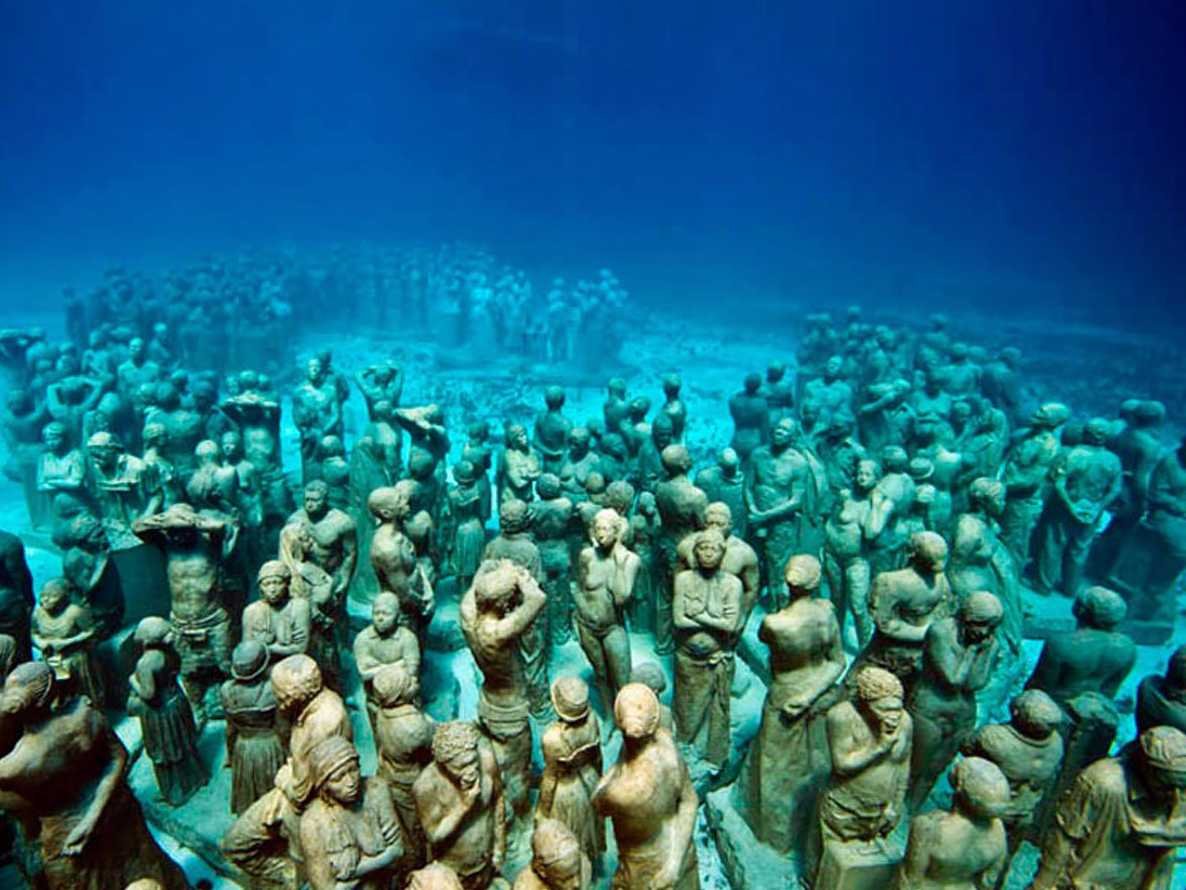
Photo: Jason deCaires Taylor
Taylor’s “SILENT EVOLUTION “is composed of 450 statues, making it the largest work in the exhibit.  Photo: Jason deCaires Taylor

It’s the world’s largest underwater museum.

It looks like a pretty cool place. And, being underwater it has to be cool.  I want to dive right in.  

Composed of over 500 life-sized sculptures, MUSA offers incredible displays hidden 28 feet below the ocean’s surface. That means that the only way it can be explored is by diving or snorkeling.  For me, having already been to Isla Mujeres, and since becoming an advanced certified scuba diver it would be an adventurous outing.
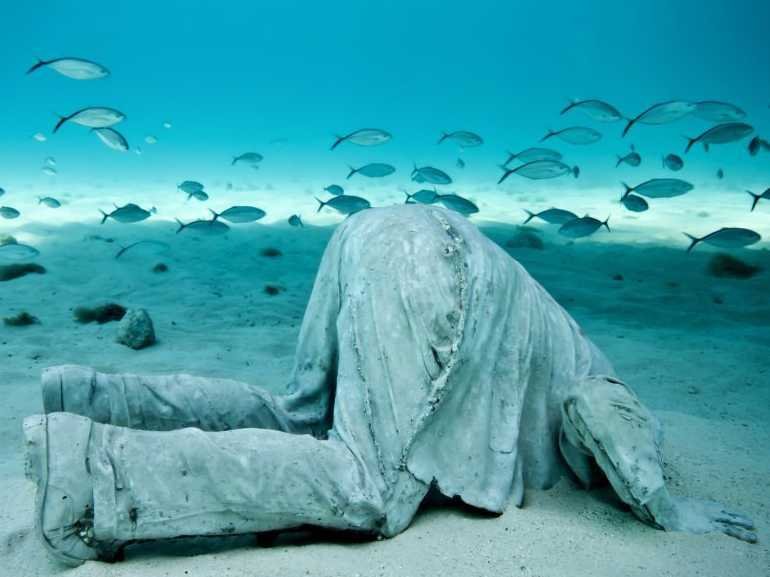
Photo: Jason deCares Taylor
One of the statues in “THE BANKER” series.   Photo: Jason deCares Taylor

The project began in 2009 as an effort to protect the endangered Mesoamerican Reef (the second-largest barrier reef in the world) by diverting divers and snorkelers to MUSA.

Roberto Díaz Abraham, one of the founders of the museum, describes it as an “art of conservation.” Each sculpture holds special nooks and crannies that help to support the breeding of marine life while providing a safe habitat.
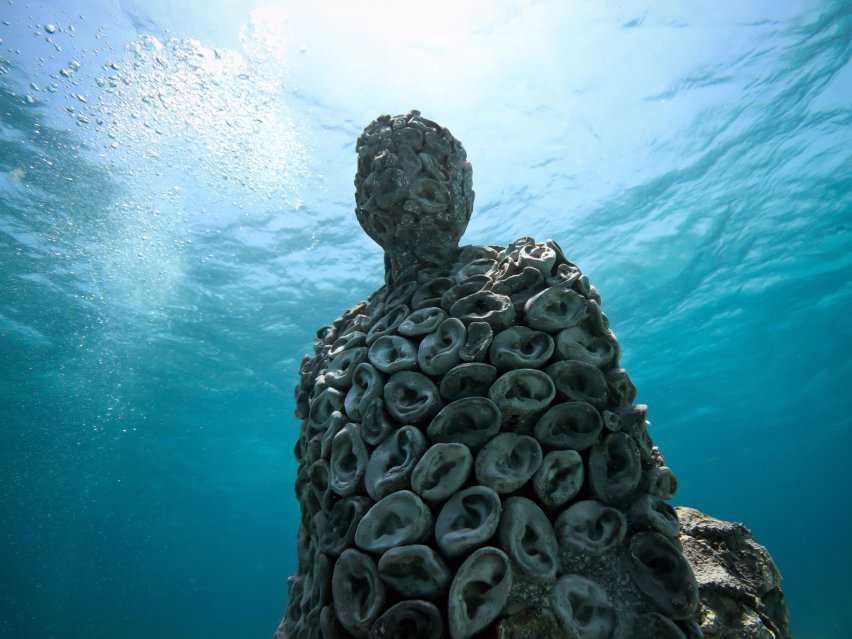
Photo: Jason deCaires Taylor
THE EAR” sculpture    Photo: Jason deCaires Taylor

Six artists helped to compose the works found in MUSA: Jason deCaires Taylor, who is also a co-founder of the museum, Roberto Díaz AbrahamSalvador Quiroz EnnisRodrigo Quiñones ReyesKaren Salinas Martínez and Enrique Mireles, but a large portion of the works are by Taylor.

Taylor models his sculptures after local residents from his nearby fishing town of Puerto Morelos and covers them with a marine-grade cement consisting of a PH-neutral surface that promotes coral growth. He allows the plaster to dry before removing it and filling in the remainder of the sculptures.

Since they’re made with this marine-grade cement, the statues have become covered in algae and coral to make for a stunning sight.
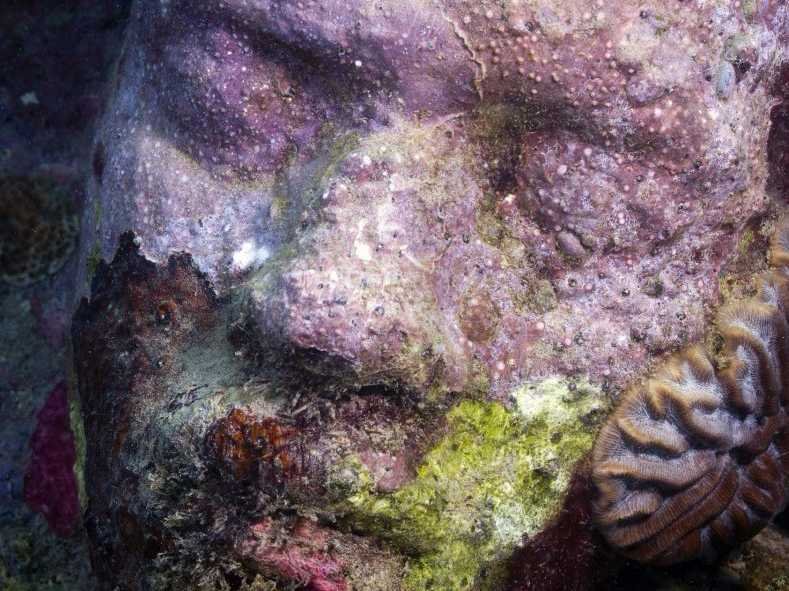
Photo: Jason deCaires Taylor

Some of Taylor’s works are a satirical commentary on humanity. He created “The Banker,” a series of men in business suits submerging their heads in sand, after attending a climate-change conference in Cancun.

“It represents the loud acknowledgment made about the issue, but when it comes to taking action nobody wants to stick their neck out and do something about it,” Taylor said about the work.

Some of his works symbolize the growth of new life. “The Resurrection” was created using coral fans that had broken off during a thunderstorm in Cancun.

The Resurrection. Photo: Aquaworld
The Resurrection.  Photo: Aquaworld

You’ll also find statues of people you might recognize. “The Anchors” is molded from the heads of “Today” show anchors Matt Lauer, Savannah Guthrie, Al Roker, and Natalie Morales, and NBC News correspondent Kerry Sanders.

But what’s most fascinating is that each of his works is built to aid in the protection and understanding of marine life. “The Ear” is a work installed with a hydrophone and hard drive. It allows researchers to study marine life via audio.

“Anthropocene,” or the Volkswagen, is made specifically for lobsters. Taylor created the piece after fisherman wiped out about 50 lobsters previously living in his “Silent Evolution” display. The car has holes to allow the shellfish to enter the sculpture, and inside it is stacked with shelving units where the creatures like to sleep.

MUSA offers an exploration into a world that’s remained a mystery.

“Two-thirds of our world is water, but there’s so much in that incredible world that’s still unknown,” said Taylor.
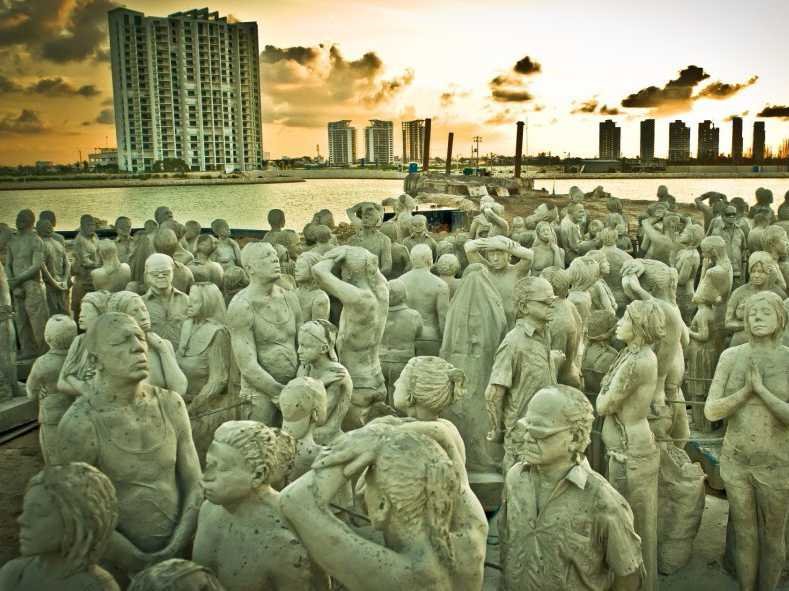
Photo: Jason deCaires Taylor
“The Silent Evolution” exhibit before being submerged underwater. Photo: Jason deCaires Taylor

There are two different exhibits within the museum: Salon Manchones, which holds 475 sculptures and is 8m (27 ft.) deep and Punta Nizuc, which offers a shallow snorkeling area about 4m (13 ft.) deep and a semi-submersible boat as an alternative to diving.

MUSA is open year-round for public viewing; however, because the diving site is protected as a conservation area, you’ll need to sign up with one of the museum’s selected tour guides to access the site. Tickets cost about $60 for a two-hour tour.

If you can’t make it there in person, here’s some footage to mentally transport you to the stunning sight. https://youtu.be/lrpnxEHNW4Y

Source: businessinsider.com
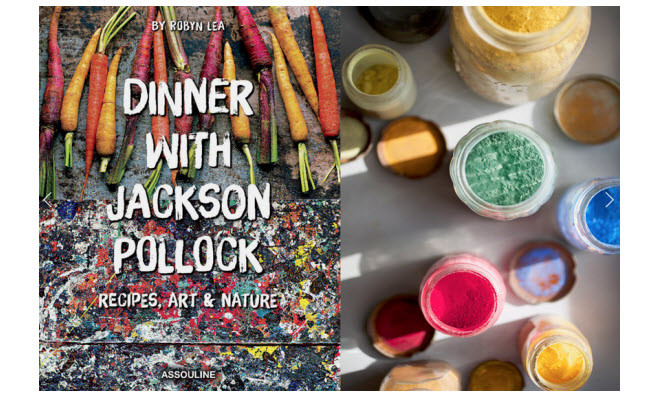
The Art of Food: “Dinner with Jackson Pollock”

Aside from leaving a legacy of astonishing abstract art, Jackson Pollock has a cookbookpollock2 And why should that come across as strange.  He was no starving artist and even so, everyone has to eat and cook something for themselves sometimes right?  But I must admit my first thought was…really??  It’s interesting how we see people as one dimensional when we only know one thing about them.  But this man not only painted, he enjoyed gardening, entertaining and making food – everything from starters and entrees to side dishes, breads, and desserts.

Seems the lines are becoming more and more blurred between fashion and art, makeup and art and now food and art?

What do you know about Jackson Pollock, the famous American artist? That he was considered rather wild, and struggled with alcoholism? All of this is true, but it’s not the full picture of the artist and his life. He was also an avid cook, and a lover of good food, which shades in some fresh nuances to his life and work, explains Robyn Lea, the author of a new book about Pollock and his cooking, Dinner with Jackson Pollock.

Like his canvases, I would imagine my dinner plate to be splattered with a colorful and chaotic assortment of food.

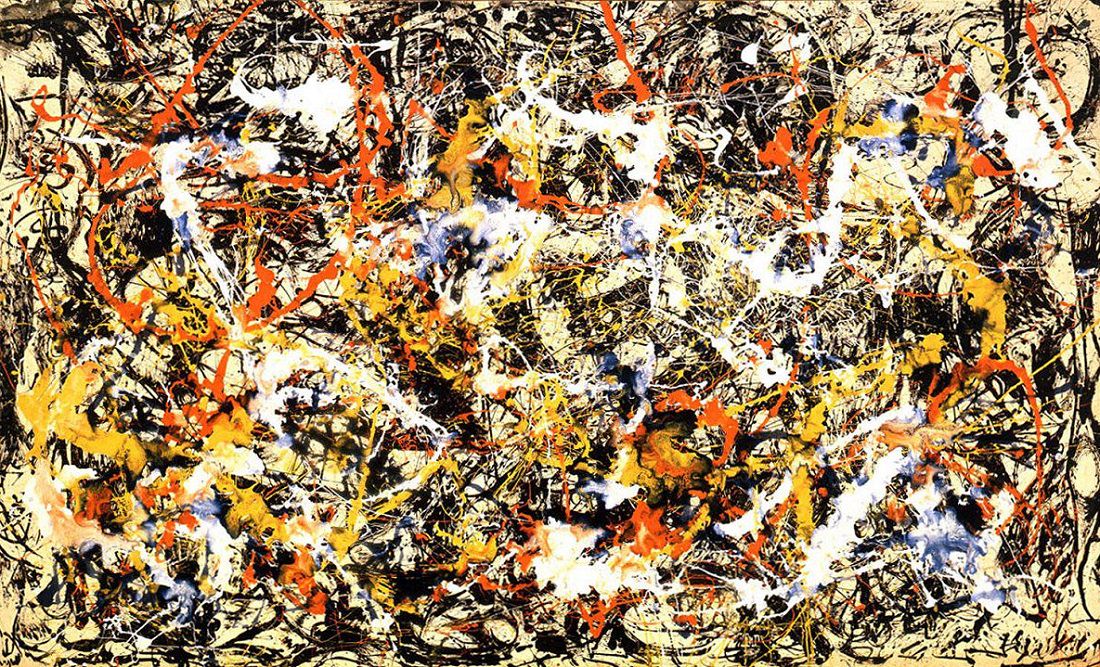
Convergence, 1952 by Jackson Pollock

Robyn Lea is an Australian photographer and writer who became fascinated by Pollock and his relationship with food. She was doing a story for an Australian magazine and photographed the pantry at Pollock House in East Hampton, NY. “I started to wonder about their food,” she told me. “They had beautiful objects in there that said these people were really interested in food, like Eva Zeisel china, and an expensive, complete collection of Le Creuset pieces.”

She wondered what the artist’s dinner parties were like, and then she discovered his own hand-written recipe books — with dozens of recipes clearly made and loved by the artist. “I started a series of Jackson Pollock dinner parties,” Lea told me. The discovery process took over from there, and through it she not only cooked quite a lot of good food from Pollock’s cookbooks, but discovered a less-well-known side of the man as well.

“I thought he was the genius wild man throwing paint in the air and drinking too much,” Lea said, confirming a caricature of Pollock that is perhaps the most widely known. “And then the great surprise was that he was the baker, which is an art and science that requires precision. That was a great shock to me — he’s a baker but his artwork is not like that.”

But, in a twist, Pollock’s precision with food casts fresh light on the current scholarship of his work: “But then, he denied the accidental in his work,” Lea told me. “He said he knew exactly where the splats of paint would land. Scientific studies now actually show an incredible amount of design and structure to that work.” It’s very contrary, she said, to how the average person sees the work of Jackson Pollock. “If you look at his cooking from this perspective there’s a great connection to how he painted.”

Perhaps the most poignant food connection in Pollock’s story, however, is the diet Lea discovered in her research that was intended to cure his alcoholism. “There were very valid attempts to assist him in these cures,” she told me. “Very poignant and showed this side of him that was not so egocentric but tried very hard to overcome alcoholism, with therapy and diet, from the 1930s on. There’s a sadness there to find these things out.”

The book itself is a beautiful, lively melding of Pollock’s work and his recipes, drawn together with Lea’s photography, writing, and interviews with his family. She tells many stories, like that of the Cross-Country Johnny Cakes, which Pollock and his brother lived off of on their cross-country road trip to visit their mother in California. There are stories of happy times and many images of Pollock’s work, and photographs of him in the studio. It’s a rare cookbook — one that doesn’t simply offer the novelty of a famous artist’s recipes and cooking, but offers fascinating insight on his life as a human being as well.

And that is exactly why it would have been so amazing to actually have had dinner with this rare man.

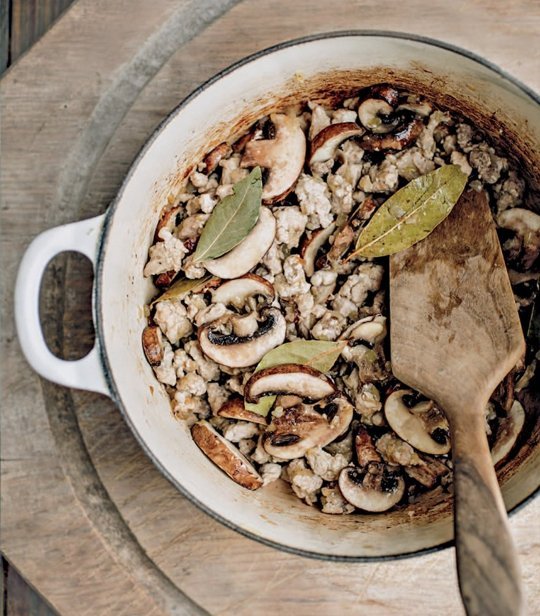
Spaghetti Sauce
One of the photos in the book – a spaghetti sauce with mushrooms and pork.

Source for cookbook info: thekitchn.com
To purchase: http://www.assouline.com/dinner-with-jackson-pollock.html – $50

“Show Me Love” – an exhibit by Yayoi Kusama

Selfie Realization!

Must Love Polka-Dot
Must Love Polka-Dots

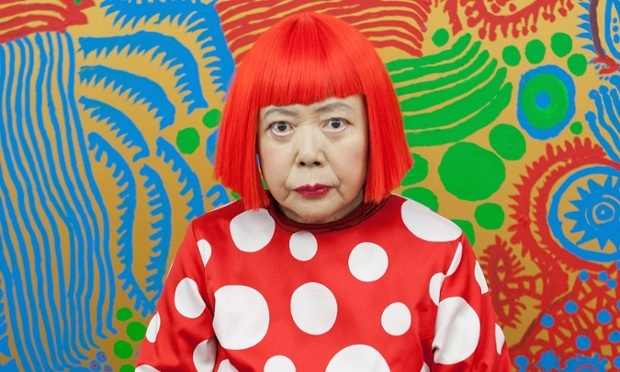
In 2013, Japanese artist Yayoi Kusama’s Infinity Mirrored Room was the surprise hit of the art world, the piece that launched thousands of selfies on its way to becoming an international cultural phenomenon. By the end of her exhibition I Who Have Arrived in Heaven‘s run at David Zwirner Gallery in New York, the waits to see the show had grown to eight hours long. (On an average day, the exhibition received around 2,500 visitors, each allotted less than a minute of time in the space.) So the question hanging over her second Zwirner show, Give Me Love, was if Kusama could once again channel the same spirit.infinity-room-artist-yayoi-kusama-returns-to-new-york-with-a-new-obliteration-room-845-body-image-1431382702

At 28, Kusama left her native Japan for New York City like so many before and after her, with a one-way ticket and a dream. Like Yoko Ono and the FLUXUS movement, Kusama created a series of instructions and “invitations” that could be re-replicated, her most famous a series of be-in style protests in the late 60s that involved naked men and women, covered in polka dots, stationed outside the UN, the New York Stock Exchange, the Statue of Liberty, and elsewhere.

When she began to deteriorate both physically and emotionally in 1973, she returned to her native country for treatment, to commence what would turn into a decades-long stint in a mental hospital. As she recovered, she acquired her own unique, some have said therapeutic, visual style, the most recognizable her polka dot and infinity net works. With her success of the Infinity Mirrored Room, 60 years after her initial arrival in the city Kusama finally achieved the New York welcome she’d so longed for, an adoration that extended far beyond the cloistered world of the city’s arts institutions—the Guardian even called her the world’s most popular artist of 2014. So what has she done for an encore?

The Artist
The Artist

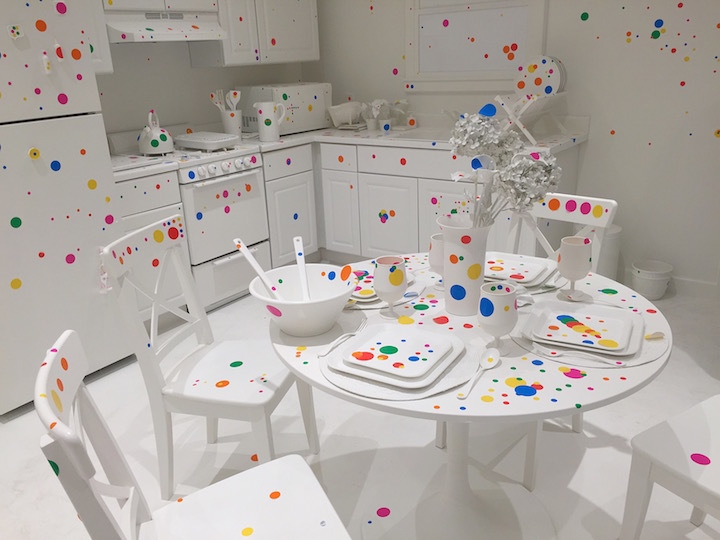
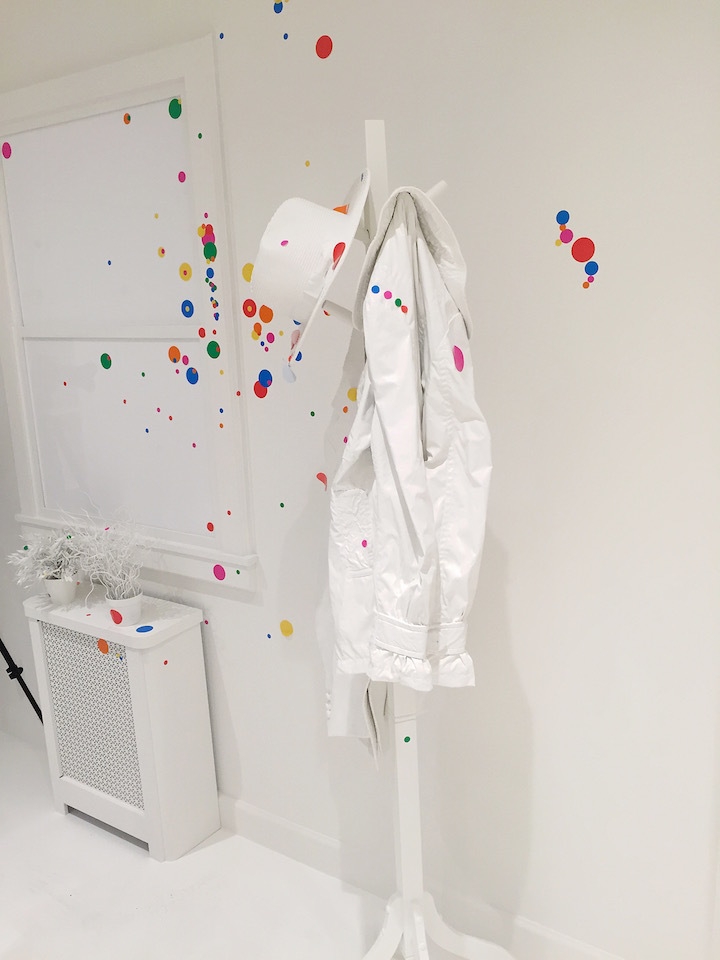
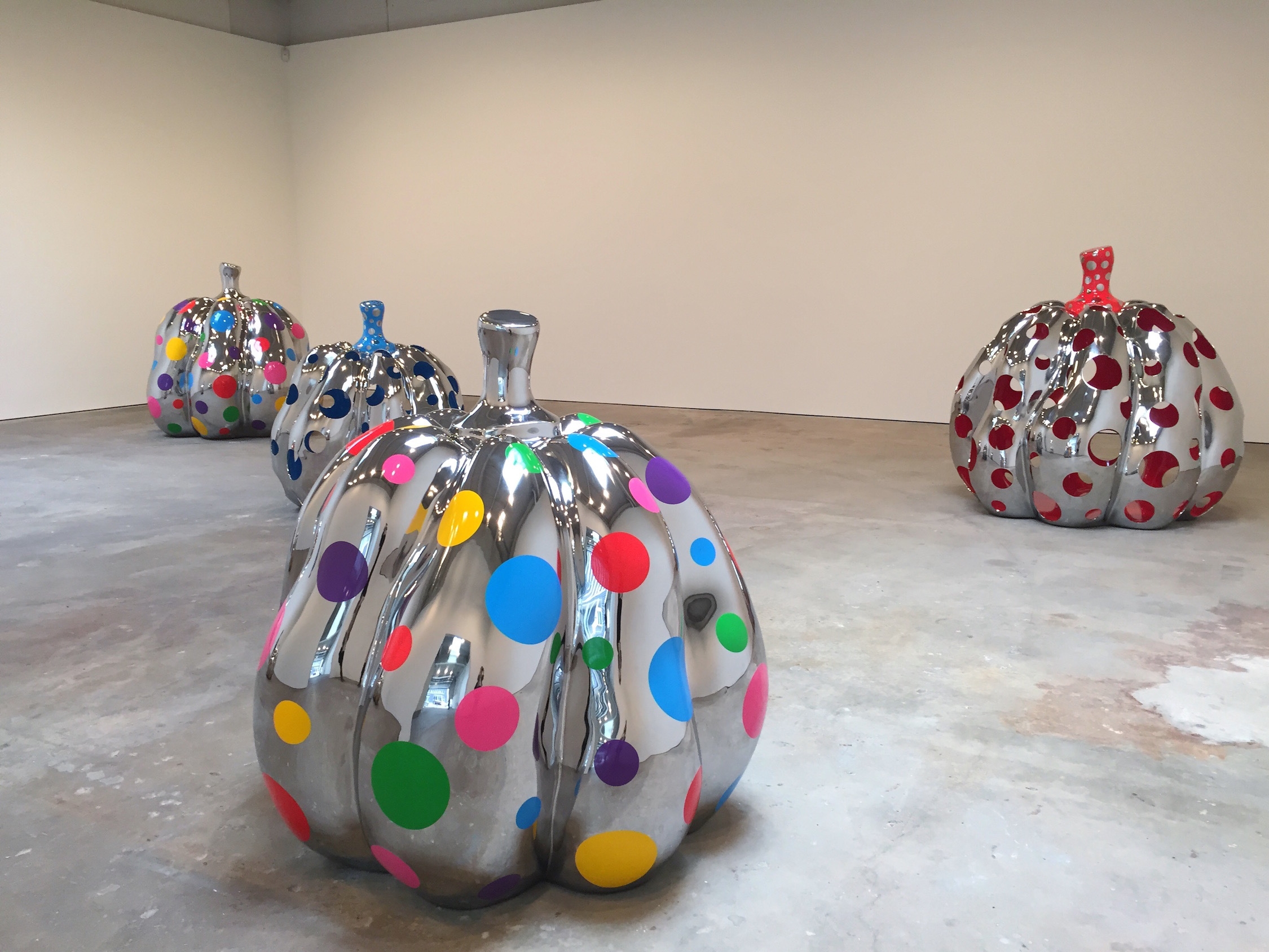
The new show, which will be up through mid-June, features the artist’s intricate paintings, large-form pumpkin sculptures, and Obliteration Room, an interactive project inspired by a makeshift “American middle-class house.” The design is based on the urban planning initiatives of Levittown, New York, widely considered to be the first suburb and prototype for many of the country’s postwar communities. As part of Obliteration Room, which was previously staged in Australia, visitors are given colorful polka dot stickers to place wherever they like inside the all-white house. Eventually, the faux TV, dinner table, sofa, and desk will all become a pastiche of color swatches, transforming the calm, blank slate into a space that is overwhelming with radiant life. Gallery visitors become willing participants in both the project’s destruction and renewal, in keeping with Kusama’s prior themes of life, death, and rebirth.infinity-room-artist-yayoi-kusama-returns-to-new-york-with-a-new-obliteration-room-845-body-image-1431383049

The most recent reason for Kusama’s resurgence is the social media effect. Infinity Mirrored Room was one of the most Instagrammed and selfied art events of 2013, and perhaps of all time. But you can’t measure her influence merely in likes and reblogs, says Hanna Schouwink, a senior partner at David Zwirner.

“[Kusama]’s a genius, someone who’s really been able to tap into what it means to be human, whether you live in America or Tokyo or Russia,” explains Schowink. “People from all over the world tune in to her message. Every museum, every single venue where these shows have shown, has broken [attendance] records for its institution. And then she breaks them doubly. It’s a phenomenon that I don’t think we’ve ever seen before.”

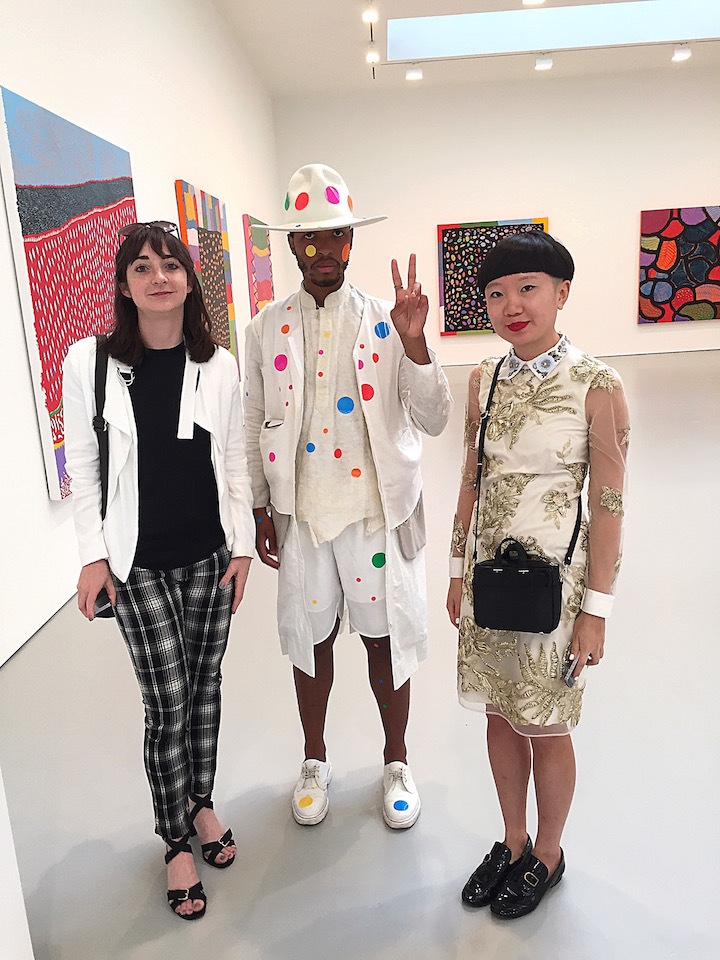
Antwaun Sargent, Jiajia Fei, and another visitor at 'Give Me Love'
Antwaun Sargent, Jiajia Fei, and another visitor at ‘Give Me Love’

David Zwirner himself says, “Very few artists have this gift to really transcend the art world. It’s rare. Jeff Koons has that gift, of course. What Kusama does is very life-affirming. It’s very positive, and it asks you to enter. It’s not opaque, and she doesn’t hold back as an artist. She’s had difficult times in her life, and I think that transports to the work and people really react to it.”

Though the sheer volume of Infinity Room selfies puts it in a league with such tourist traps as the Statue of Liberty and the Brooklyn Bridge, the photo-friendly nature of the exhibit wasn’t a calculated move by Zwirner to court the smartphone set.

But why do visitors respond to Kusama’s work? Easy: “It just makes people happy.”

And as is often the case with happiness, sometimes you’ve just got to wait.

Yayoi Kusama’s Give Me Love is on view at David Zwirner Gallery in New York through June 13, 2015 with extended hours during New York Frieze Week.

Source – Story and Photos:  Laura Feinstein, Brooklyn-based editor and writer for Vice.com

From me:

I Want Happiness!  According to Buddha,  If you take away “I” which is “ego” and you take away “want” which is “desire” all you’re left with is Happiness.

happy face

The price of good ART

Overheard at Christie’s auction house in New York City last week – “Will you give me 160, 160 million?” Even if I had the money I would not be so sure, but how nice to even be able to be in the running. Worth it, not Worth it – What is the value of good art?picasso-women-of-algiers_garance-dore-770x513Last week a Picasso painting broke the world record as the most expensive artwork to sell at auction when it went for a mere $179.4 million. While the final sale price was actually $160 million, a 12 per cent buyer’s premium was added to the astonishing total.
Definitely not pocket change.

The painting “Woman of Algiers” (Version O) beat out the previous title holder which was Francis Bacon’s “Three Studies of Lucian Freud” in 2013. It made me wonder about what kind of price you can put on art and also who is buying these paintings? I believe that the identity of the buyer is not yet known.

While I admire the work of both of these major artists and love the paintings I somehow can’t get over the prices. Even so, I wouldn’t mind having a substantial painting gracing a wall in my home.

The Picasso oil painting is a vibrant, cubist depiction of nude courtesans, and is part of a 15-work series the Spanish artist created in 1954-55 designated with the letters A to O.
This is an absolutely blockbuster picture – it’s one of the most exciting pictures that we’ve seen on the market for 10 years,” said Philip Hoffman, founder and CEO of the Fine Art Fund Group.

“Yes there are one or two [Picassos] that could even smash that record but it has a huge wall presence, it’s a big show-off picture.”

“For anybody that wants to have a major Picasso, this is it – and $179m in 10 years’ time will probably look inexpensive,” said Hoffman.

I don’t know, it seems pretty exorbitant to me right now. Imagine? Never say never but that probably leaves me out of the running for ever owning a major player painting.

Source: http://www.bbc.com/news/
Photo: Wall Street Journal

ICON – the UNIQUE Lives of Shirley MacLaine

Anyone familiar with bestselling author and Academy Award winning actress Shirley MacLaine knows that she’s lived a journey of many lifetimes.ULE Booklet 2014 (Calgary Pg 7)

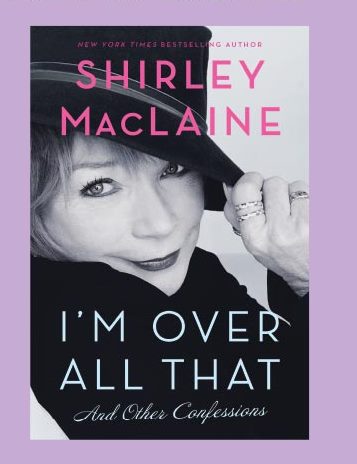
On May 26th, Shirley MacLaine will be gracing the stage of the Vancouver Orpheum not to sing, dance, act or read an excerpt from one of her many intriguing books – but to share in stories about her own life experiences with trademark wit and candour to a captivated audience as part of the intimate “unique lives” series. 

I’ll be one of those people engrossed in hearing whatever she has to say.  Because let’s face it, even if you’re not a fan you cannot deny that it has been a life (including past lives) well lived. 

With credits too numerous to mention on a blog, let’s take a little peek into the world of this living legend:

The daughter of a drama teacher, she started out as a dancer.  She will take you down memory lane with movie and television clips from her illustrious career starting in 1955 with her first movie, Alfred Hitchcock’s “The Trouble with Harry“.

With a film career too long to mention – you’ll see clips from “Irma la Douce“, “Sweet Charity“, “Two Mules for Sister Sara“, and most recently, “Glee” and “Downton Abbey“. Not only will you hear about her award-winning film and stage career, but also her years with the “Rat-Pack“, her journey on the Camino, and her greatest passion: the spirit, mind and body.

Members of the audience will get a chance to ask Shirley questions during a question and answer session.

Five of my personal favourite films from her extraordinary career:

The Turning Point (1977), she stars as a former dancer who gave up her career to have a family. Her daughter follows in her footsteps, and MacLaine’s character is forced to confront her old dance rival (Anne Bancroft).

In 1983, MacLaine finally claimed her Oscar statue for Terms of Endearment. She plays Aurora Greenway, a woman with a troubled relationship with her daughter, in the film. Debra Winger stars as her daughter and Jack Nicholson as her love interest in this popular tearjerker. In her acceptance speech at the Academy Awards, MacLaine said “I have wondered for 26 years what this would feel like,” according to the Hollywood ReporterVanity Fair also notes that she added “I deserve this.”

Steel Magnolias with Olympia Dukakis, Sally Field, Dolly Parton and Julia Roberts. The quip that stands out: “I’m not as sweet as I used to be.” Set in Louisiana, she plays Ouiser Boudreaux, a woman who through years of turmoil and heartbreak, becomes more cynical, hardened and wiseass. But you can’t help but love her. She embodies wisdom, cynicism, sarcasm, and snarky humor…all mixed into one fabulous southern lady…how can you ask for more.

She tackled the role of one of her real-life contemporaries. In Postcards from the Edge, based on Carrie Fisher’s memoir, MacLaine plays actress Debbie Reynolds. According to the Hollywood Reporter, Reynolds gave MacLaine at least one critique of her performance. “She didn’t think I should have put vodka in the smoothie,” MacLaine said.

In 1960, MacLaine delivered one of her best performances in The Apartment. She co-starred with Jack Lemmon in this Billy Wilder classic, playing a young elevator operator named Fran Kubelik who has an affair with the company’s big boss, but later falls for Lemmon’s character.

ULE Booklet 2014 (Calgary Pg 7) So there you have it – I’ll be all over that!

Tickets: http://uniquelives.com/vancouver


Art/Nature – GREEN PORNO

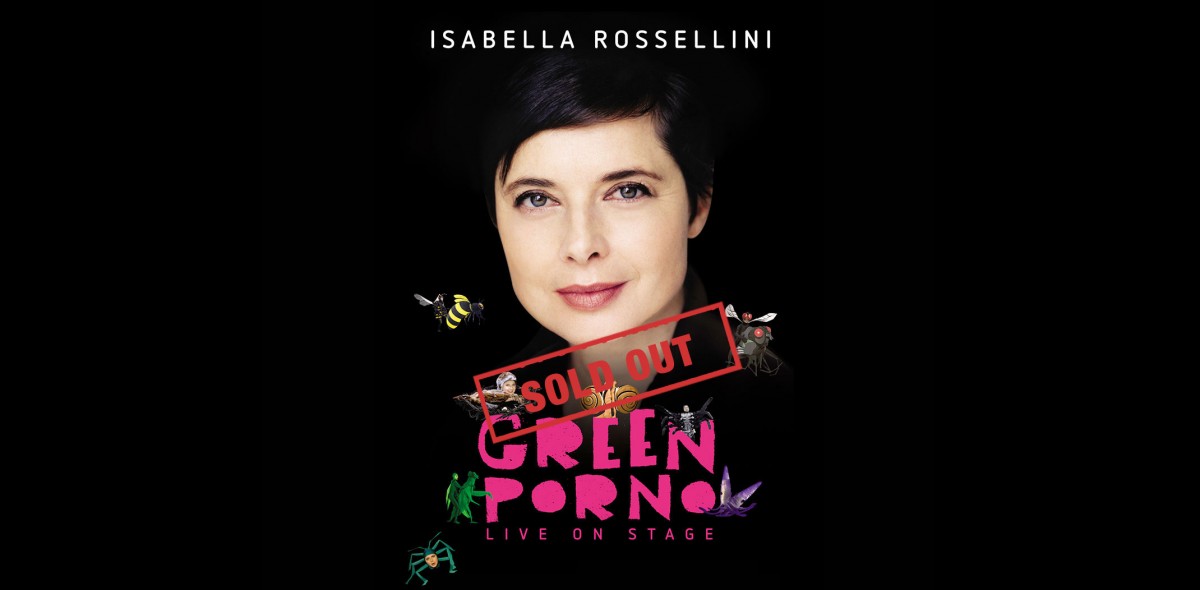
The iconic Isabella Rossellini was in Vancouver to perform her provocatively acclaimed and comedic one-woman show Green PornoGreenPorno-Sold-Out-1200x590at a sold out, one night only performance Saturday night at the Vancouver Playhouse.  Presented by The Vancouver PuSh Festival and the Italian Cultural Centre.

Green Porno, explores the fascinating sex lives of land and sea creatures. C’mon, tell me you haven’t ever wondered? Encouraged by actor-filmmaker Robert Redford (who is tremendously supportive of experimental, independent films and very interested in nature), Green Porno was originally a popular web series for the Sundance Channel. Green Porno featured Rossellini live on stage discussing and acting out the scientifically accurate reproductive habits of marine animals and insects in an extremely entertaining manner.  The opportunity to learn about the mating habits of some creatures which aim to astonish anyone.

I am personally fascinated by the femme fatale of all insects –the female praying mantisShe always devours the male after mating, sometimes even during if she can’t waitI can understand this if he doesn’t please her and his services are no longer required; but must this always happen?

Rossellini exposes the intricate and often surprising reproductive rituals of the natural world—from pachyderms (very large mammals with thick skin, like an elephant or rhino) to bugs (no need to explain) to shed light on the fragile balance of our ecological future, to which humans are inextricably linked. From stage, Rossellini delivered a riveting presentation with props, costumes and remarkable wit and charm, accompanied by her Green Porno short films.


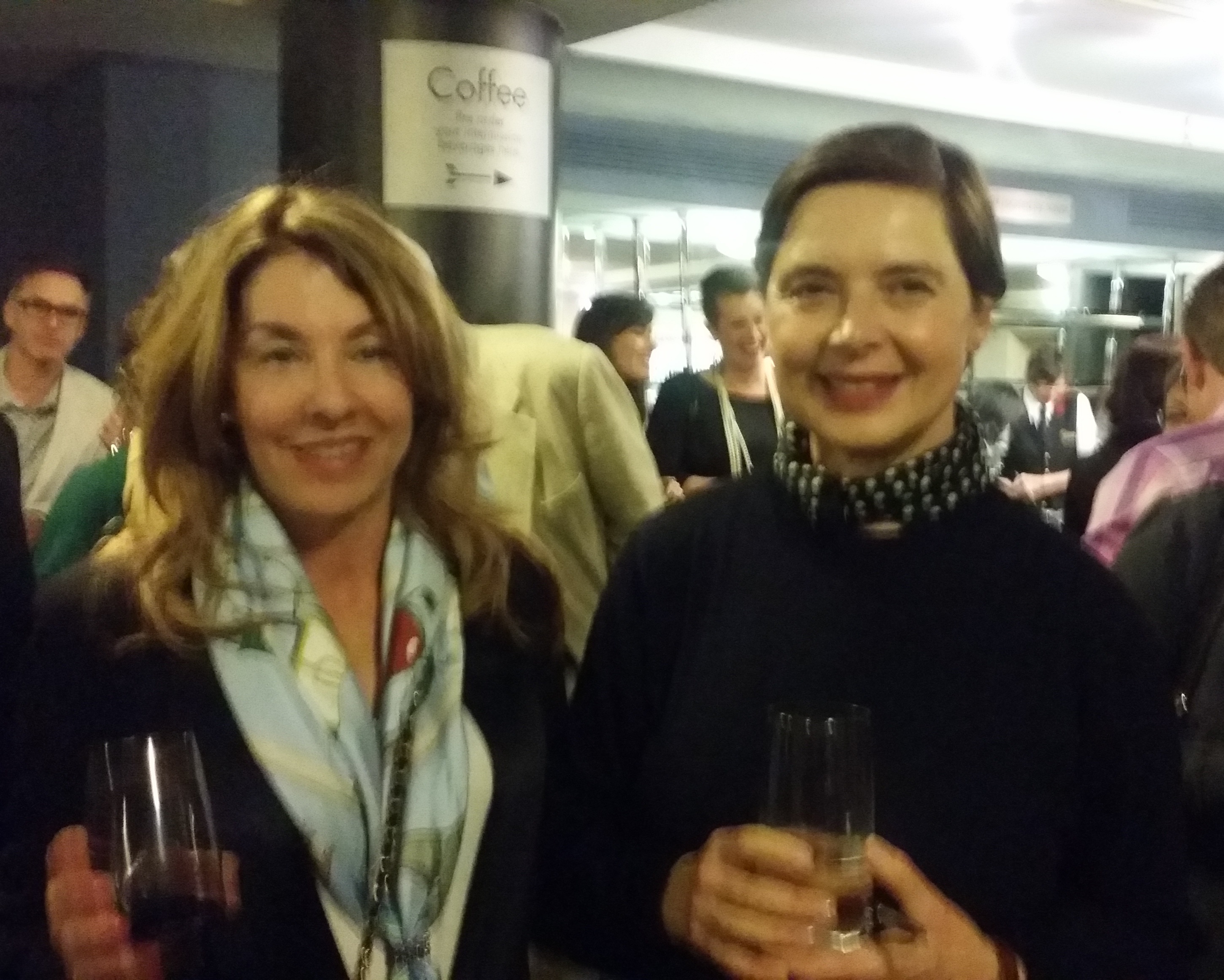
I had the opportunity of catching up with the glowing Rossellini at a reception following her performance
.20150425_215427

I asked how her daughter Elettra was doing. No surprise to find out she’s a successful New York model (discovered by Bruce Weber), and has a very interesting food blog (which I will talk about soon, since this blog is about Isabella’s show). But I can’t stop…In 2014, Elettra hosted the first ever Live Stream of the Metropolitan Museum Costume Institute Gala.  She’s founded a charity called “*One Frickin Day” for which she won the “Young Environmentalist Award” in 2011, among other things. I am so impressed by everything this woman is setting out to accomplish or already has. Needless to say, her mother is very proud.

I found out that my green porno name is “Black Widow” (be careful, I bite!)

Rossellini’s films include Blue Velvet (a personal favourite), Cousins (filmed in Vancouver), Immortal Beloved, The Saddest Music in the World and many more.  She was the face of Lancôme Cosmetic Company for 14 years and had a modelling career that lasted for 25 years. Isabella was recently seen in the romantic comedy Late Bloomers.  She’s still blooming.

*A charity aimed at equipping PIH clinics (Partners in Health) throughout the third world with solar power via another partner, Solar Electric Light Fund.

ART Specific: See Sawing around New York Art Galleries

Have you heard about this new ART App, called *See Saw Map that started in New York?

Kiss by Judith Henry

It makes perfect sense since NYC has so many great galleries.

Besides the big ones (MoMa, Guggenheim,The Met) there are tons of smaller galleries that are spread across lower Manhattan and Brooklyn. Since it’s one of the best ways to spend an afternoon in New York, many people have already fallen for this new app which shows you all of the exhibitions taking place.install_right_wall_180_dpi_lYou can search by locality or artist — and it will also bring up all of the information on each plus flag any exhibits that might be closing soon (so you don’t miss a thing). It covers all of the art happening in New York City and Brooklyn with plans to soon expand to other cities like Los Angeles. What a great idea!

Here is a current showing I find interesting observing the roles people play (similar to the fly on the wall).

ART/Mixed-Media: THE MASKS WE WEAR

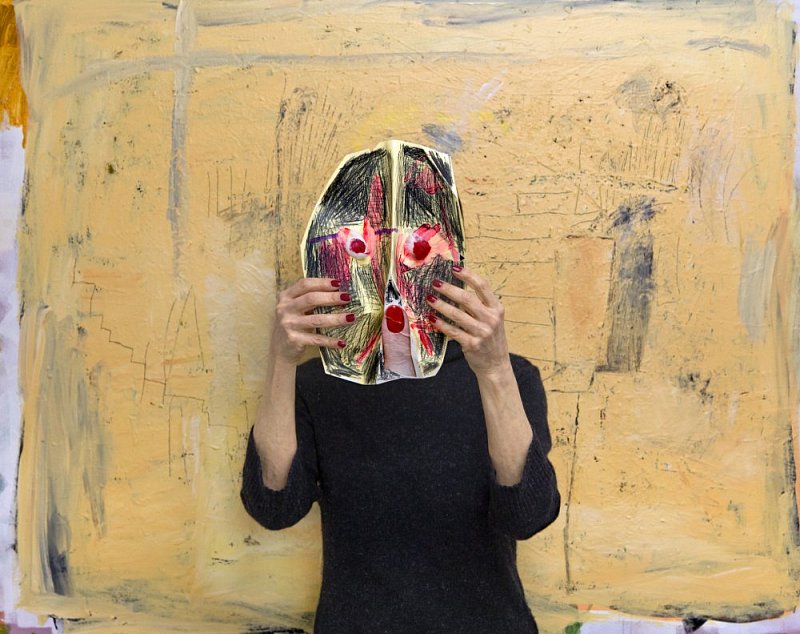
Red Nails
Red Nails
Explosion
Explosion

Judith Henry April 9-May 16, 2015
Conceptual Artist Judith Henry brings her fascination with humankind closer to home – casting herself as the protagonist of powerful mixed-media compositions that explore the various roles we play.
Judith Henry has spent her career bringing the proverbial “faces in the crowd” into focus, incorporating snippets of overhead conversation or a snapshot of a passerby into her artworks.
**Bravinlee programs is pleased to present two new series of work by Judith Henry; Me as Her and The Artist is Hiding,
For over 40 years, Judith Henry has created evocative multimedia artworks that explore the friction between our interior lives and public selves. Henry’s projects often re-purpose documentary materials like newspapers, telephone books and film clips in poignant explorations of identity and loss.
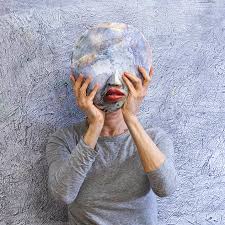
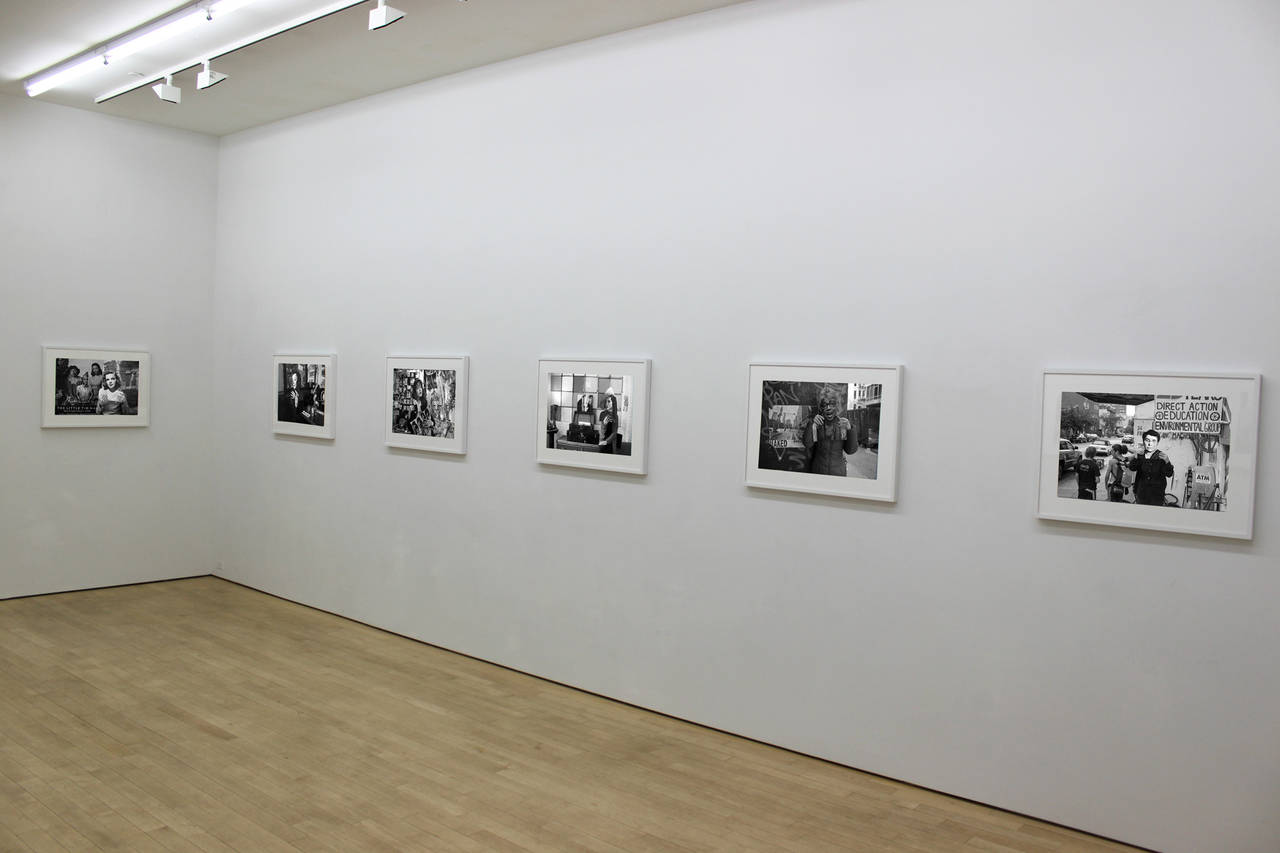
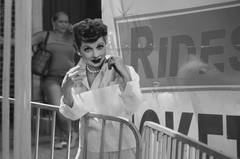
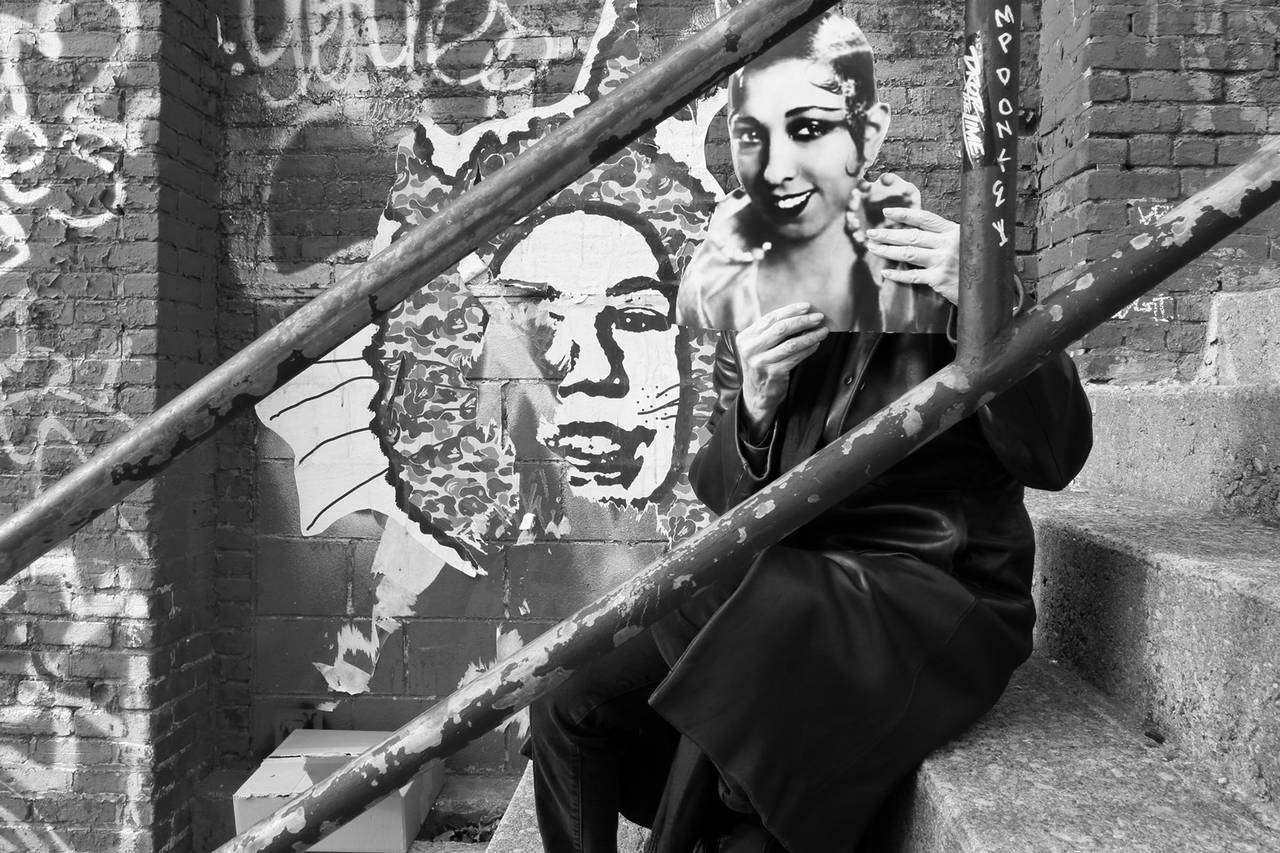
In a series of black and white photographs, Me As Her, Henry continues her long-standing practice of remaining hidden/masked within her work. She re-imagines herself behind masks of significant and accomplished women who have died.

Henry as Lucille Ball

The photo-masks themselves reveal very little about the personality they depict, underlining the truth that there is little any of us can know about who we see and who sees us. The photographs are shot in available light, on location near her home in Williamsburg, Brooklyn. The appearance of Henry’s hands is itself a reflection of her own aging process and an important signature of each piece.

Henry as Josephine Baker

Sometimes the mask informs the painting; sometimes the reverse is true. Once again, Henry’s hands are the only part of her that is visible and thus the only clue to her identity.

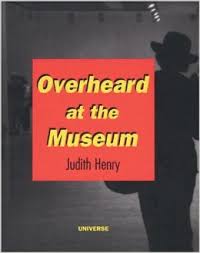
For over three decades, Henry traversed the streets of New York City secretly photographing and eavesdropping (so be careful what you say) on the people she encountered, resulting in her Overheard Book Series published by Universe/Rizzoli (2000-2002). The series consists of four books: Overheard at the Museum, Overheard at the Bookstore, Overheard While Shopping and Overheard in Love. In 2006 Atria published Overheard in America; New York, Los Angeles, Chicago and Miami. images

*ART App: https://itunes.apple.com/us/app/see-sawmap/id791643418?mt=8
**BravinLee programs is a contemporary art gallery in the Chelsea neighborhood of New York City.  Address: 526 West 26th Street #211, New York, NY
Source: Introspective Magazine on the website 1stdibs.com (luxury re-sale website):
http://www.1stdibs.com/introspective-magazine/judith-henry-at-bravin-lee/

ANDY WARHOL – A Different Idea of LOVE

EXTENDED: Please see recent UPDATE at bottom of page.

Vancouver, March 1 – 30th.

warhol14.

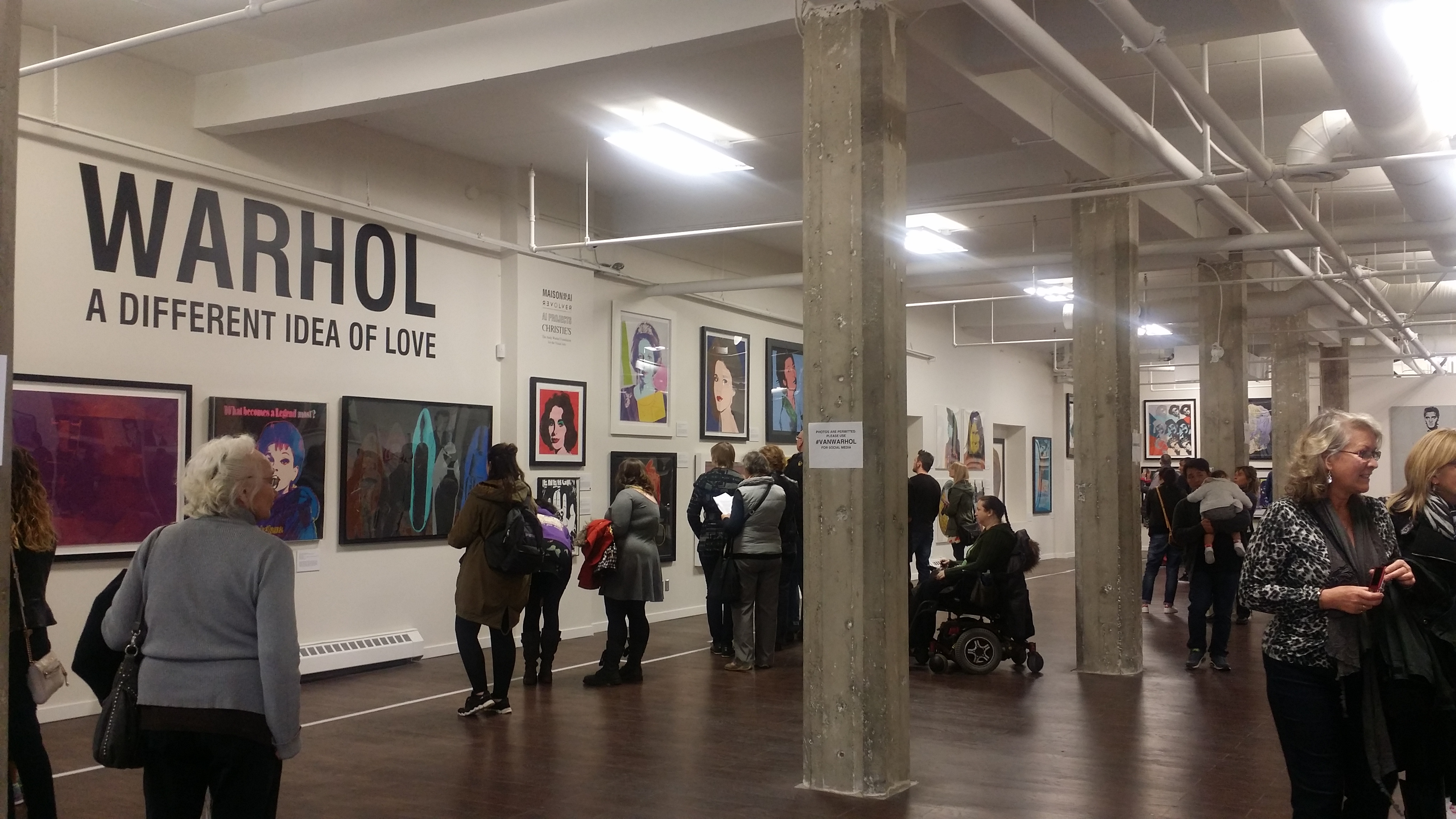
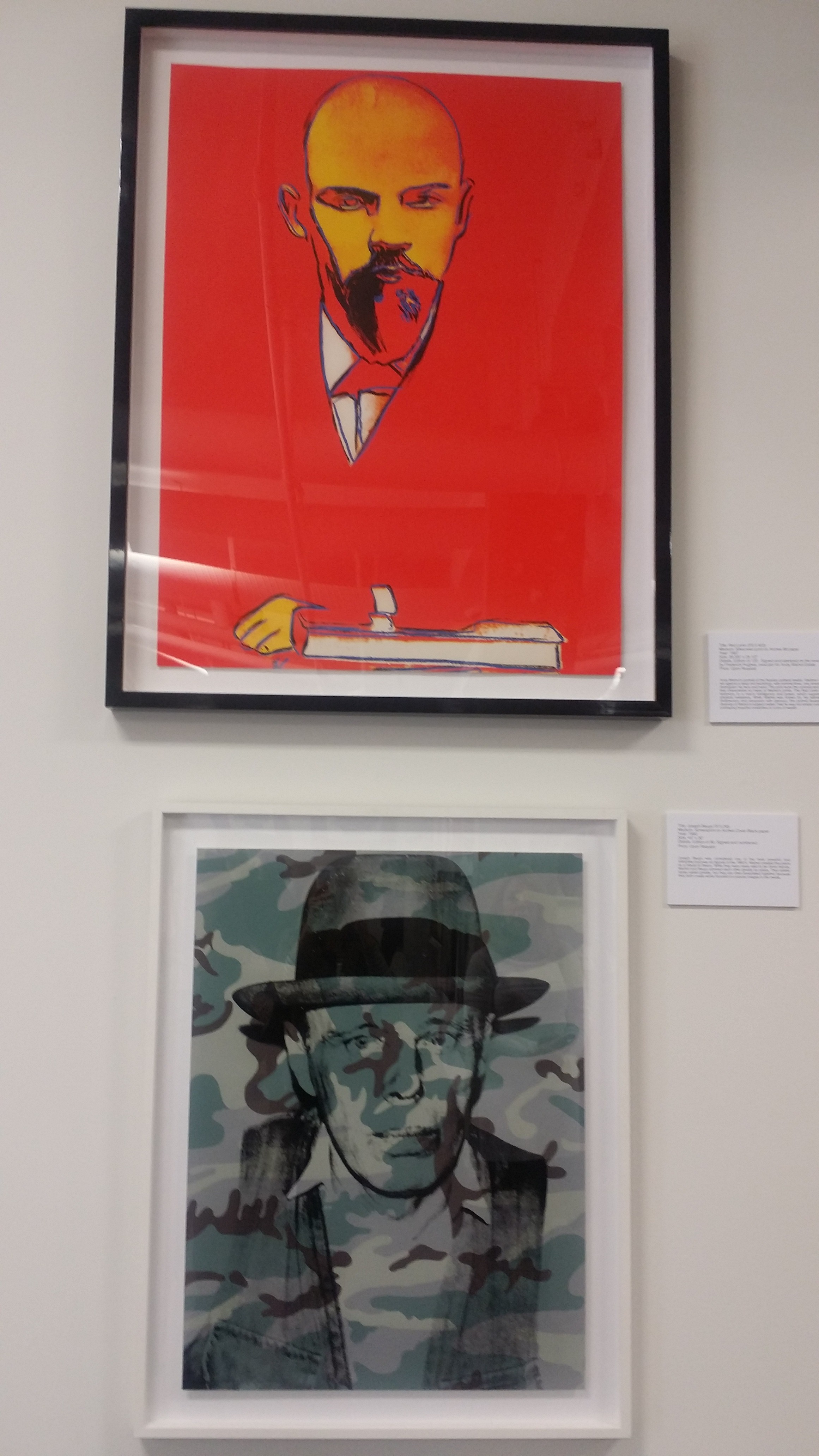
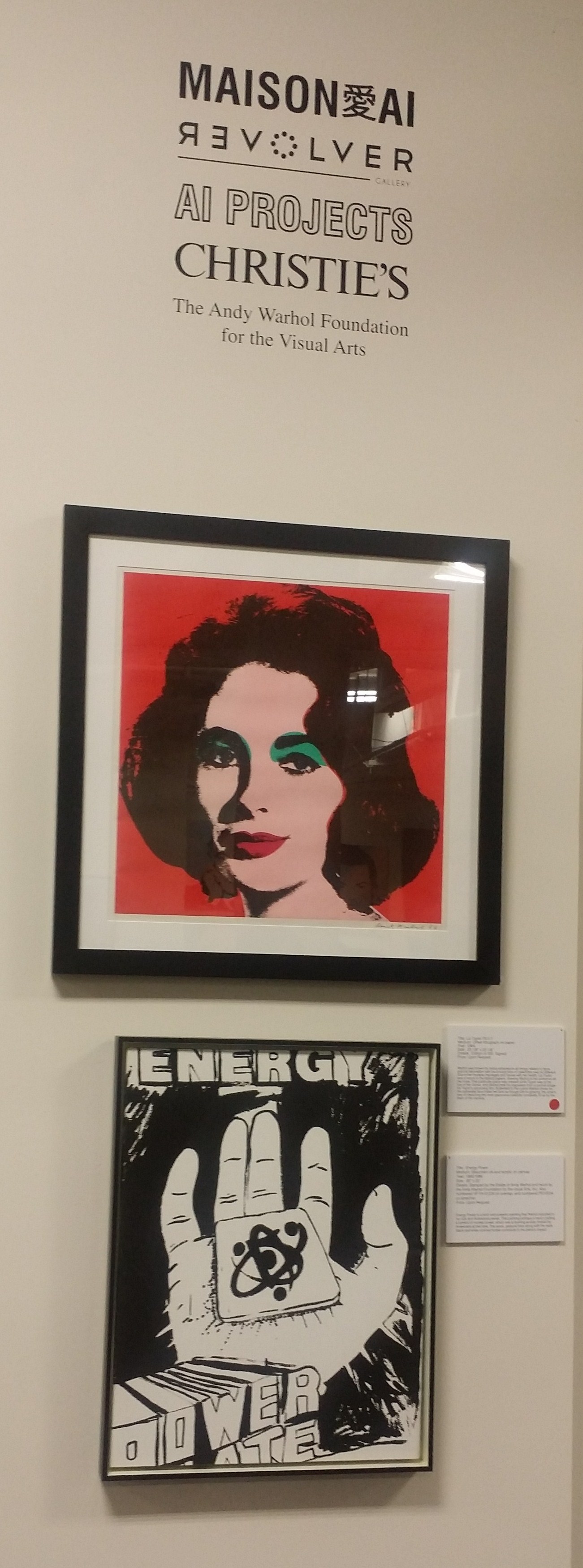
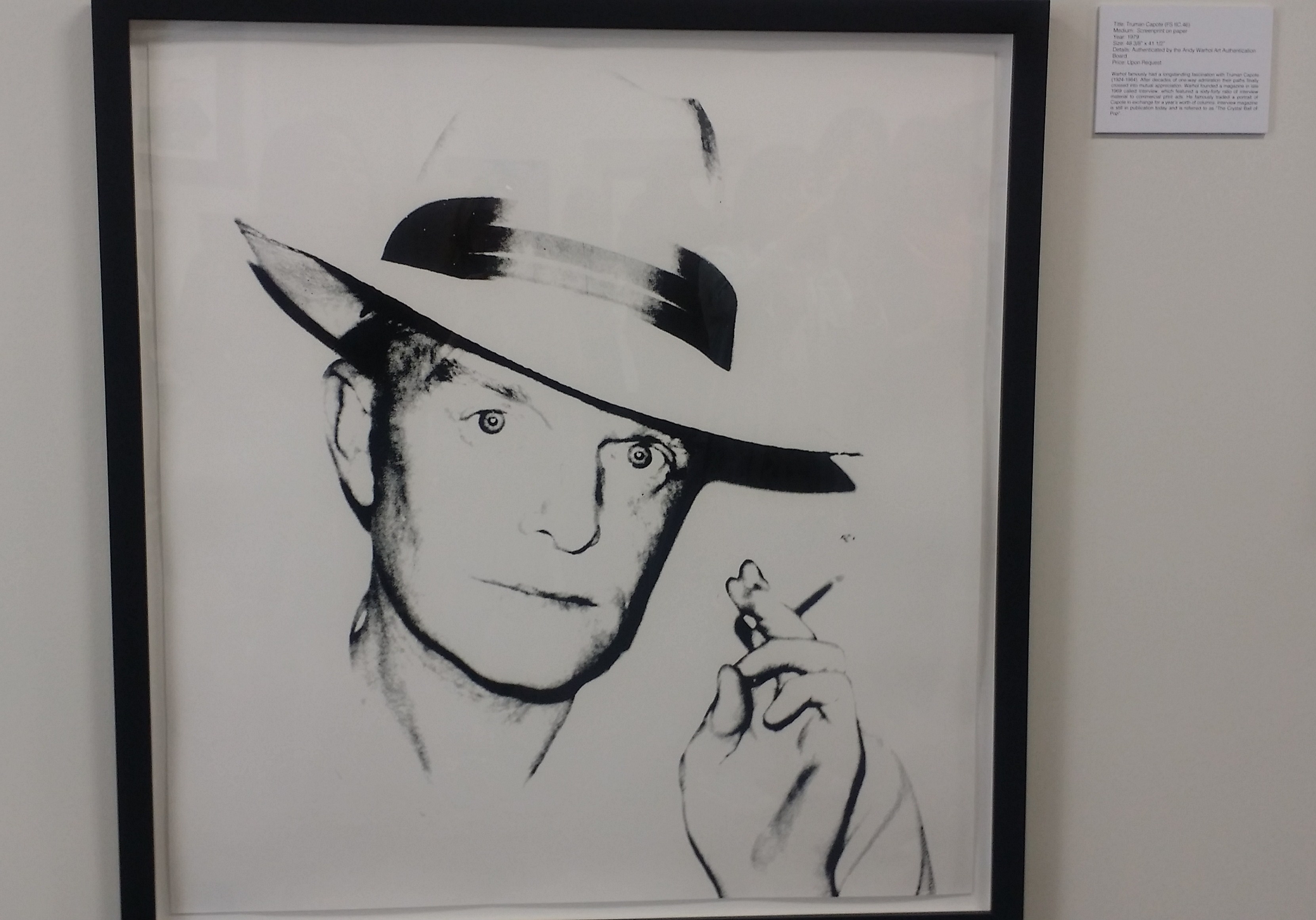
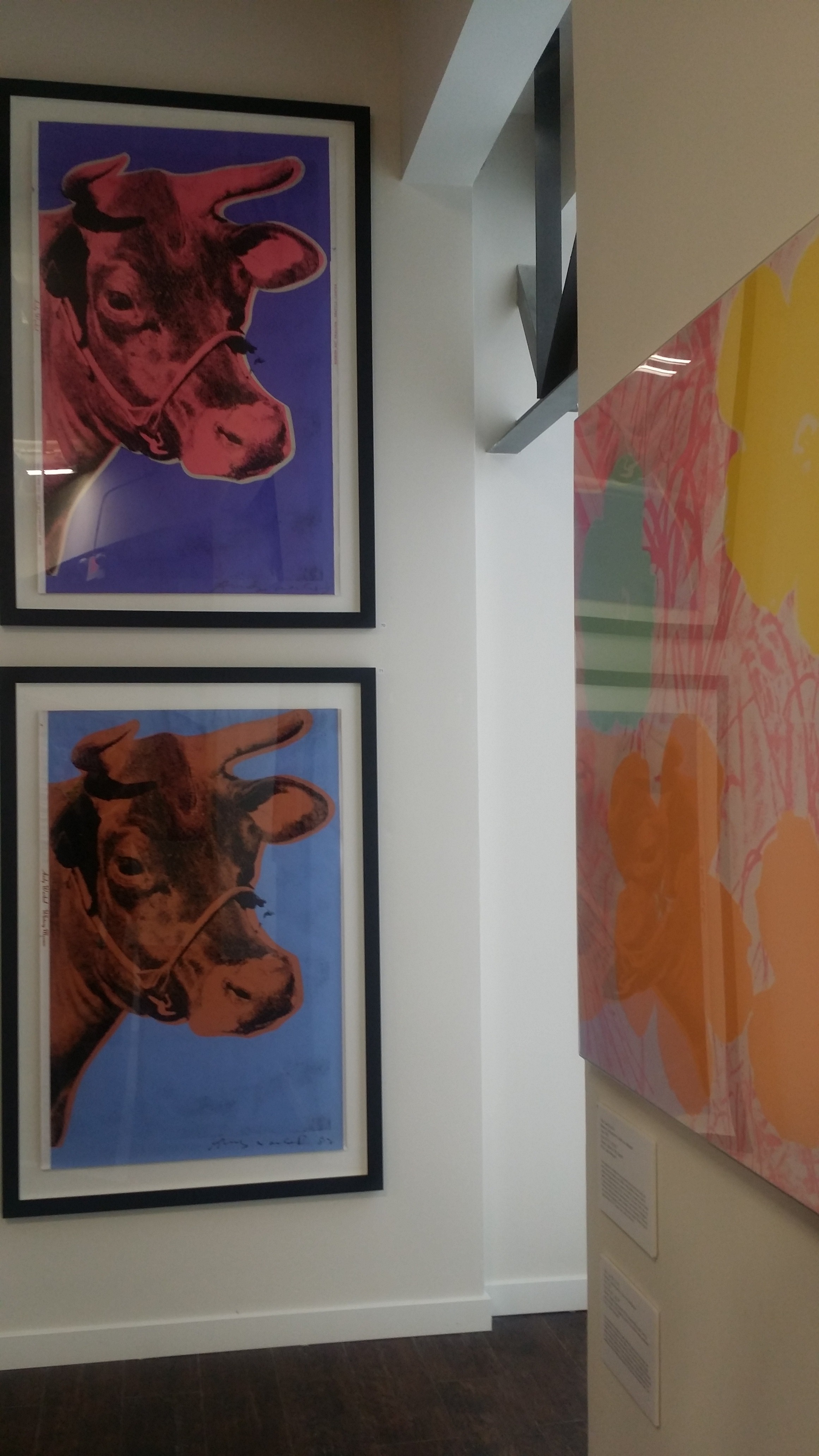
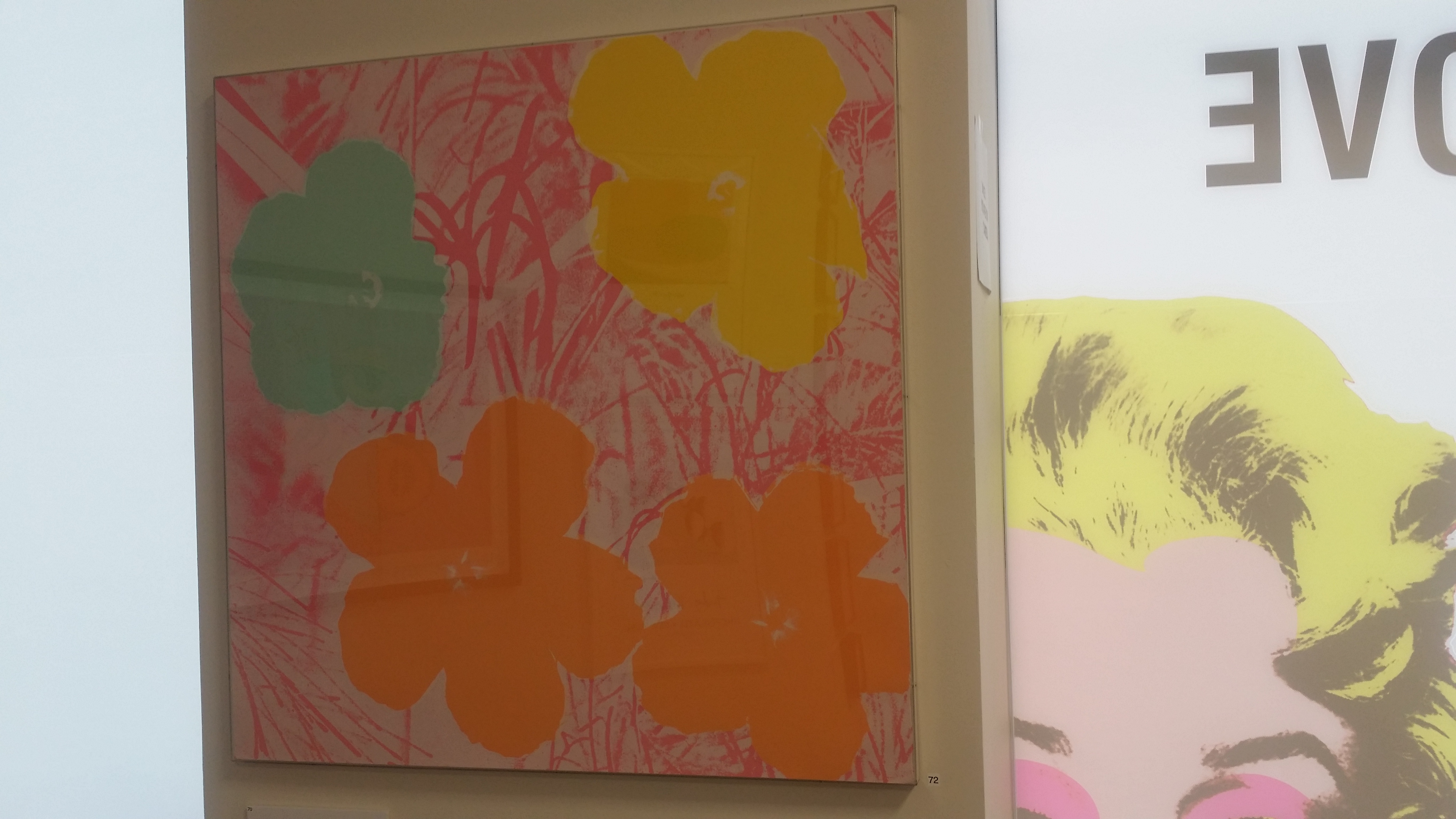
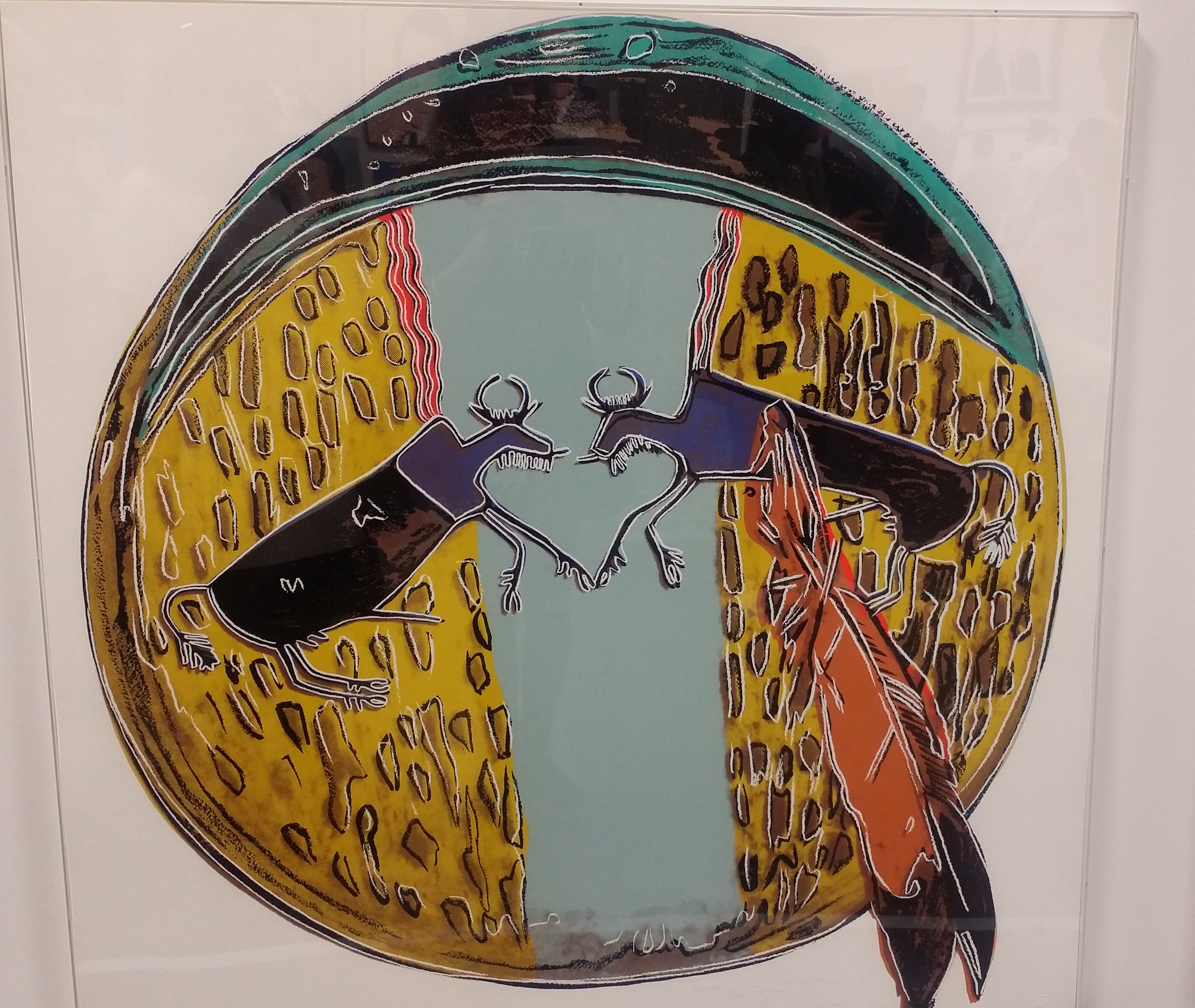
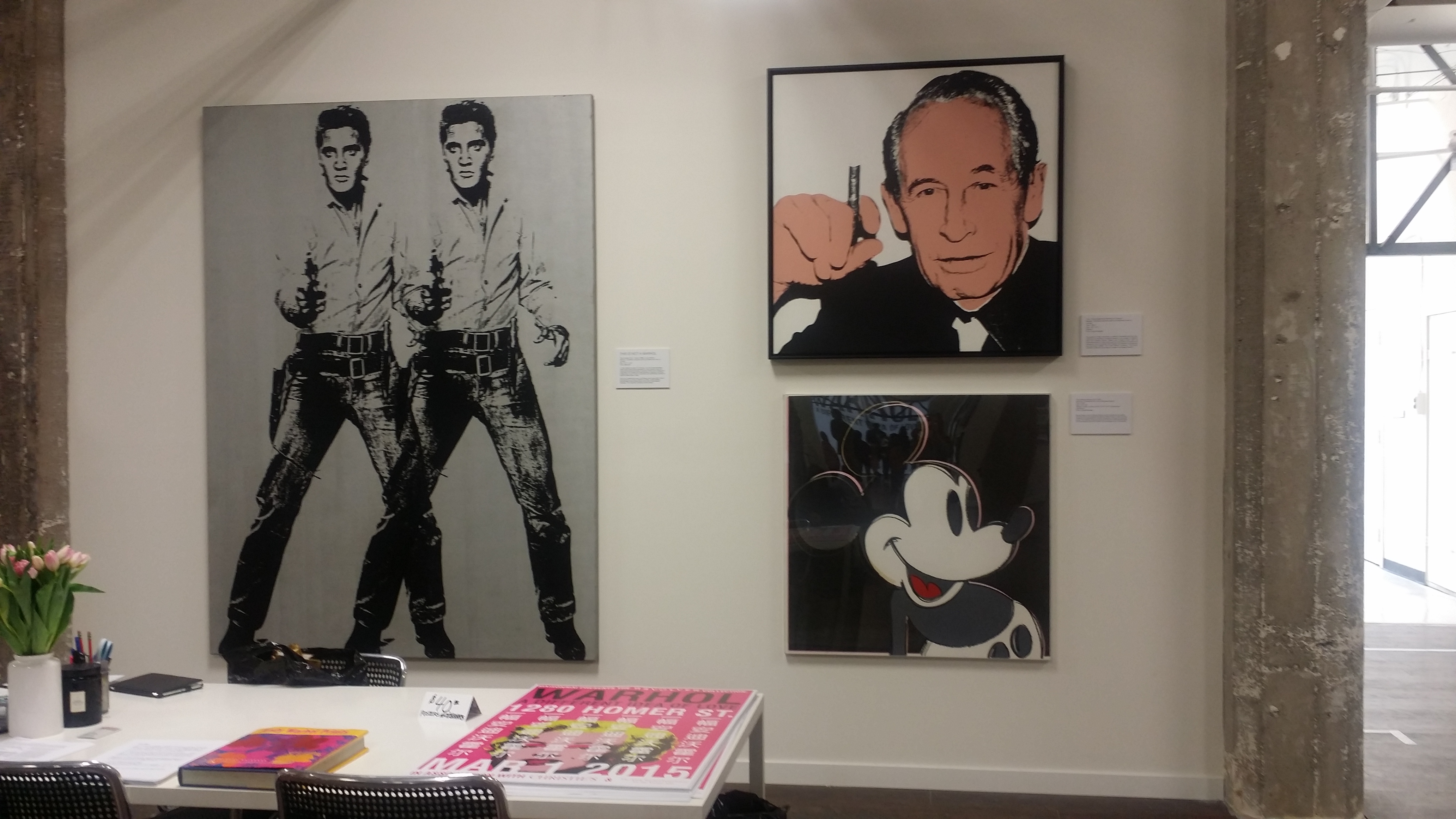
A Warhol public ‘pop-up’ exhibition was held for the first time in Vancouver at a Yaletown warehouse and presented by MAISON AI, and Revolver Gallery Beverly Hills, in association with Christie’s, and The Andy Warhol Foundation for the Visual Arts. It was a compilation of never (or rarely) before seen works from the private collection of Ron Rivlin, a Los Angeles businessman.  Many of them were for sale.  It was fascinating and it was free.warhol9
Can’t believe I Almost missed it! 
If it was not for a very good friend of mine (one who knows how much I love Warhol) who attended an opening reception and told me all about it,  I might not have known because I was out of town and then engrossed in other matters until the very last day. But better late than never.  I would have been upset to have missed such a captivating exhibit.  warhol1 Warhol2warhol12

I’ve always been fascinated with all things Warhol.  I made a pilgrimage to “the factory” on one of my many visits to New York in the early 80’s to try to locate him.  I had imagined we might hang out, maybe take polaroids of each other and talk movie star gossip.  How fitting since he made a silkscreen portrait of Ingrid Bergman (as a nun from the movie The Bells of St. Mary’s) and I worked for her daughter (Isabella Rossellini) for a little while.  On that same trip I met Liza Minnelli (the daughter of Judy Garland and another Warhol subject) at Elaine’s restaurant.  He loved glamour and I know he had a thing for shoes so we already had at least three things in common. Plus I had a subscription to Interview magazine and loved the photographs. Well Warhol wasn’t there but other people were so I got to hang out a bit and get a tiny glimpse into his world.  At least just enough to satisfy my curiosity.  He was pretty out there.warhol3

Mick Jagger
Mick Jagger
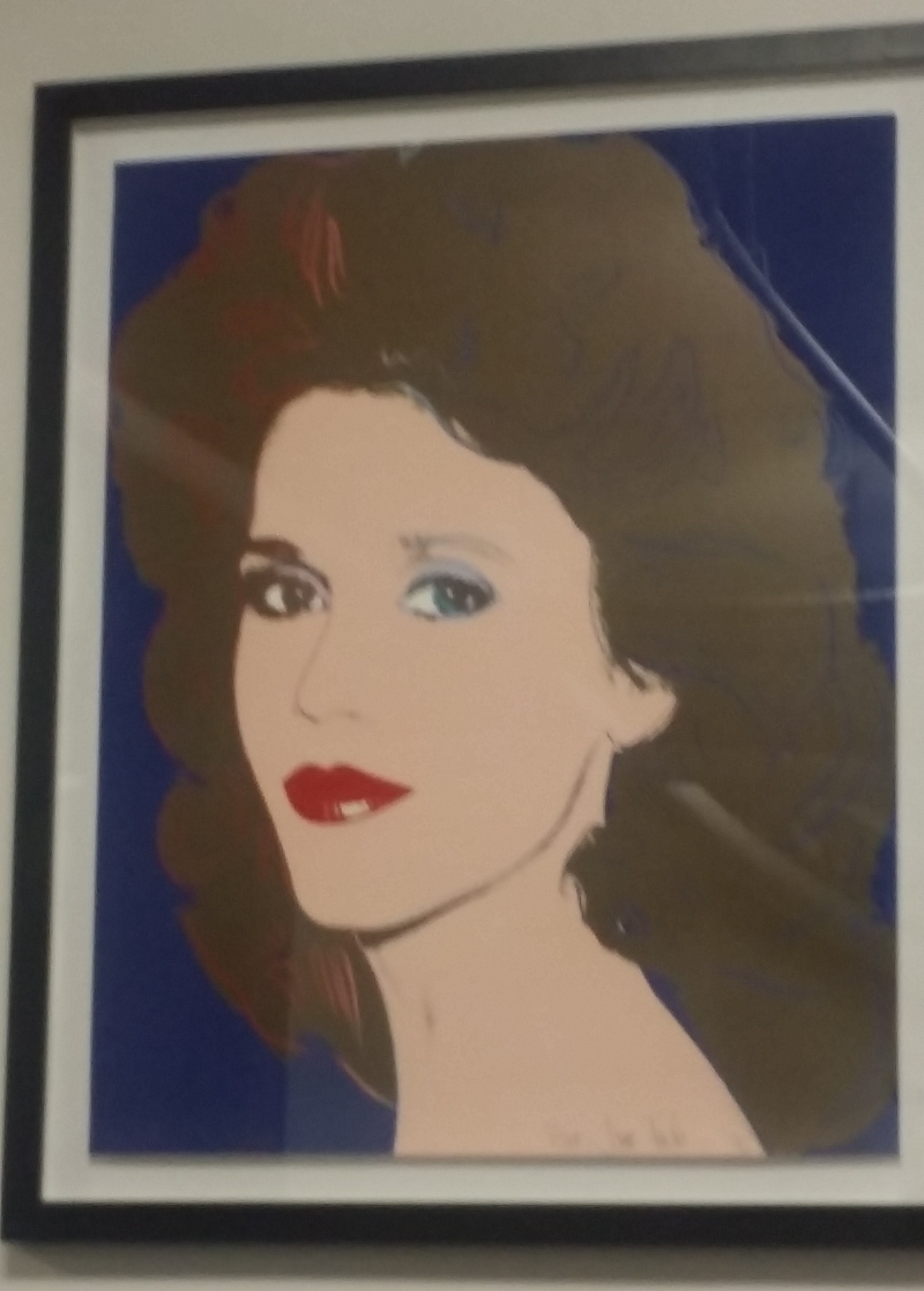
Jane Fonda
Jane Fonda

At the exhibit, Chris Dohm, the owner of Maison AI, apologized for the lighting which made it a bit difficult to take photos because of the glare. Even so, I was satisfied to get some pretty good shots for the blog nonetheless.  I left feeling good and happy that here in Vancouver we were lucky to get this one of a kind presentation from such a gifted artist. warhol15

Truman Capote
Truman Capote

warhol13warhol10warhol5warhol11

And if you missed it, what a shame!  This city should offer more presentations of this calibre.

*UPDATE: due to the overwhelming interest, the WARHOL – A
Different Idea of Love selling exhibition will continue through to the 28th of April.
Hours are as follows:
OPEN TO THE PUBLIC APRIL 1st TO APRIL 28th, 2015
Friday afternoons 4pm to 8pm*
Saturdays & Sundays 1pm to 5pm*

COLLECTORS’ PRIVATE VIEWINGS BY APPOINTMENT:
Tuesday to Friday, 11am to 4pm*
Please contact: warhol@maisonai.com
Serious inquiries only

Closed Mondays and Public Holidays, including Good Friday.*possible early closings for private event.

BUYING WARHOLChristie’s Amelia Manderscheid (Head of eCommerce Channel, Post-War & Contemporary Art) will be at the AI PROJECTS space this Saturday, April 4th from 2pm to 5pm, to answer questions about buying Warhol and contemporary art.

Great, you get another chance.  Don’t miss it!

ART/Abstract Attraction

ABSTRACT ART Does anyone know enough about it – are we supposed to?

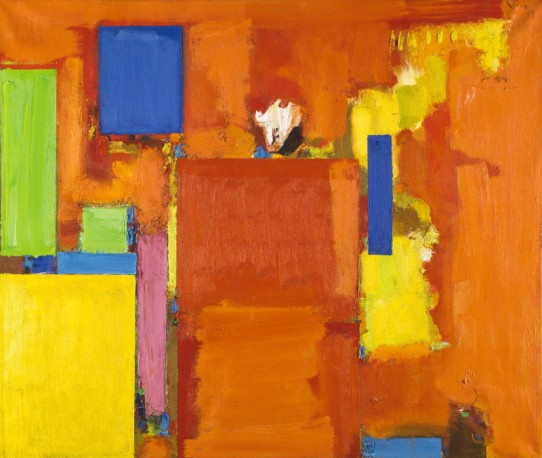
Hans Hofmann
Painting: Hans Hofmann

 My appreciation for abstract has grown through the years.  I certainly do not confess to know anything about it other than a strange attraction to its form, colour and content even though it appears to be convoluted to some degree.  It makes you question what it means and wonder just what the artist’s intentions were.  After all, a tree is a tree for all to see.  Abstractally speaking, do you see something totally different to what the artist intended you to.  Does it matter?  What if we just admire the piece for what it is…whatever it is.  Which brings me once more to a former question – what makes good art?

I can only surmise that if it moves you then it must be good art.  Abstract art is sometimes misunderstood, but that, ironically, is what makes it beautiful. Abstract art is art in its purest form. Below is a brief history of abstract art and an easy-to-understand, layman’s introduction to the term. And a beautiful way of expressing the form.

“Experiencing Life Through Painting”

Courtesy, Art by Mona.

Most art produced today can be said to be abstract art and, in fact, that has been the case for more than 100 years. The development of photography in the late 19th century and its evolution today have freed artists from the obligation to recreate “picture perfect” paintings that reflected reality precisely. And that has given birth to the everlasting abstract art revolution. Artists today are no longer expected, nor do most even desire, to simply paint what their eyes see. Instead, they paint their interpretations of what they see, and that is abstract art. This lack of objectivity means that today’s art is often complicated and easily misunderstood. But, for the art lover willing to spend time studying paintings for their subtle merits and messages, abstract art is endlessly exciting.

Abstract art is best compared to poetry or literature. Rather than to simply report the facts, the way a piece of non-fiction does, a good poem gives much more: it reveals the writers attitudes and feelings towards what he is writing. Abstract art does much the same. By experimenting with shades of colors that would not necessarily be found together in nature, an abstract art painter can portray moods that would not be seen in a painting that attempted to create a scene realistically. Just the way, say, the legendary writer Edgar Allan Poe took great care to choose every word of his poems and stories to evoke a constant feeling of horror, a good abstract art painter can choose every brush stroke and every color to conjure a specific emotion. This is what makes abstract art, perhaps, the purest form of art. It captures, as many scholars and critics have noted, all that it means to be human.

Art by MonaAbstract art, despite its beauty and excitement, can be difficult to interpret (just as some poems are), and that leads to frustration among many viewers. Often, for example, novice viewers will stroll through a museum filled with abstract art and marvel at what appears to be paint simply splashed thoughtlessly on canvas after canvas. “Gee, I can do that,” the uninitiated might be heard to mumble under their breath.
Eventually, though, the novice art lover will come to understand that, even the most amateurish looking of masterpieces, are, underneath the service, elaborate, master-crafted works of art. The artist has carefully chosen every drop of paint to evoke a certain feeling and express a certain attitude. Sometimes the feelings and attitudes can be directed toward a specific thing, but often, they are simply evoked for their own sake. Only abstract art, for example, can make a viewer feel happy (or sad or frightened or angry) without providing anything concrete to be happy (or sad or frightened or angry) about. A bright yellow painting with plenty of pink, green and light blue brush strokes strategically arranged can brighten up anyone’s day – even if those brush strokes represent nothing in particular.

Abstract art, like nothing else, helps us all to experience everything that it means to be alive.

So, do you agree with Mona?  I do.  Except for the part about amateurish looking paintings which are not master-crafted works at all.  Remember what Matisse said: “everybody is sensitive to art, but that doesn’t mean that they are capable of making it.”

Source: German born Monika Heckenbach (known best simply as Mona) has created hundreds of inspiring paintings that are on display in private residences and galleries across the globe. http://artbymona.soup.io/


ART: Highlights From A Never-Before-Published Interview With Henri Matisse

Henri Matisse is one of my all-time favourite artists.

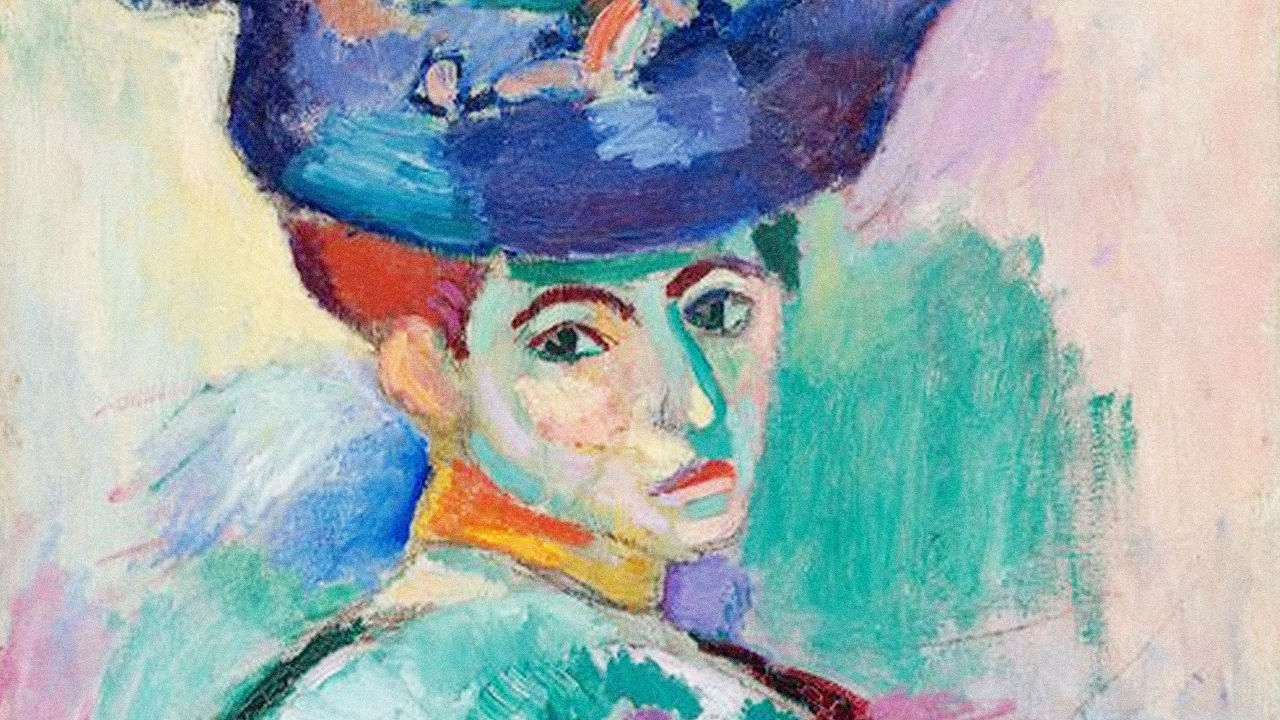
Woman with a Hat.
Woman with a Hat, Henri Matisse

His romantic impressionist paintings leave me feeling like I want to walk right into them.  They make you want to dance naked holding hands in a circle, lie in a Garden of Eden and wear a fancy hat way too large for your face.

DESIGN OBSERVER HAS PUBLISHED AN ILLUMINATING, LONG-LOST INTERVIEW WITH FRENCH ARTIST HENRI MATISSE. READ SOME HIGHLIGHTS HERE.

In August of 1946, after the end of World War II, an art-obsessed American soldier named Jerome Seckler interviewed legendary French painter Henri Matisse. At the time, Matisse had been suffering from cancer for several years and was at work on his collaged cut-outs—specifically, large-scale works that would become Oceania, The Sky and Oceania, The Sea—which are now on view at New York’s Museum of Modern Art. In their extensive dialogue, Matisse discussed everything from the value of being a “starving artist” (“It is evident that in order to make good artists it is necessary that they not eat too well”) to the nitty-gritty of his creative process. The interview’s roughly 3,000-word transcript sat unpublished in a cardboard box for 70 years.

This year, Jerome Seckler’s son, Donald Seckler, unearthed the lost interview, which Design Observer has now published for the first time, in three installments.

In places, the interview turns into a heated debate—Seckler’s questions are challenging and provocative, and you can hear the ever-opinionated Matisse get a bit riled up. The artist’s comments range from the philosophical (“It is necessary that life be hard in order to form one’s character”) to the drily funny (“In America there are not enough bad boys”) to the self-reflective (“Do you think that I am neurotic? Is it seen in my paintings?”). Below are some highlights.

In part one of the interview, Seckler asks Matisse about the importance of subject in painting. “A book would be necessary to answer [this question],” Matisse replies. “The question is complex, very complex.” But he offers some opinions in this excerpt:

Henri Matisse: I think that art must not be a disagreeable thing. There is enough unhappiness in life to turn one towards the joy. One should keep the disagreeable, the unhappiness to himself. One can always find a pleasant thing. An unhappiness doesn’t remain. It makes experience. One doesn’t need to infect people with his annoyances. One should make a serene thing. One should make a stimulating art which leads the spirit of the spectator into a domain which puts him outside of his annoyances.

In part two of the interview, Matisse defends the starving artist, arguing that struggle builds a painter’s character:

Jerome Seckler: If the artist plays such an important role in society, don’t you think that a government subsidy should be paid the painter just like it pays any other government worker? He wouldn’t have to worry about where his next piece of bread was coming from. He could live a normal family life like any other person. He wouldn’t be at the mercy of a dealer. He should really be free to paint.

Henri Matisse: I am against ease. If one leaves the possibilities of getting a pension from the government for painting, to all the people who want to paint, all the Sunday painters will seize a brush. That is impossible. It is necessary that there be a straining. While giving to people who want to paint the facilities of doing it, it is necessary to put up a very strong barrier to prevent the invasion of the bad painter. Each time that a student who devotes himself to painting arrives at school for the first time, he should be given a volley of blows by a stick and after to lead him back to his home and he will see if he wants to begin again. If there was a test like that there would be a great many who would not return.

It is necessary that life be hard in order to form one’s character. That makes muscles. Art is a thing of exception. A great many people think today that they are artists because they see beautiful sunsets, or flowers. Today with the degree of civilization to which we have reached, everybody is sensitive to art, but that doesn’t mean that they are capable of making all that.

In this excerpt from part three, Matisse disses young copycat painters and discusses his painting process.

JS: When we look around at the young contemporary painters we see the tremendous influence of your painting. You have certainly helped change the direction of painting especially by your color.

HM: It is not my fault. I didn’t do it on purpose.

JS: Do you use color scientifically? What is your theory of color, especially as regards your conception of perspective?

HM: No, I don’t use color scientifically. And I have no theory of color. I haven’t any theory, even of drawing. That comes only from what I know what to look forward to. I work while waiting what will come. When I began painting, I copied the paintings in the Louvre and I finished by clarifying all that I thought and to see that color is a very beautiful thing. Why mix up the colors. Why trouble with all that. Why not utilize these colors as they are naturally. I searched for my combinations with combinations of colors which do not destroy themselves. In my [spirit], perspective is made in my head and not on the paper. That depends on you and the ideas you have. The most simple things are the most difficult.

The interview is well worth a read in its entirety—head to Design Observer for parts onetwo, and three of the extensive talk.

The true work of ART is but a shadow of the divine perfection – Michelangelo.