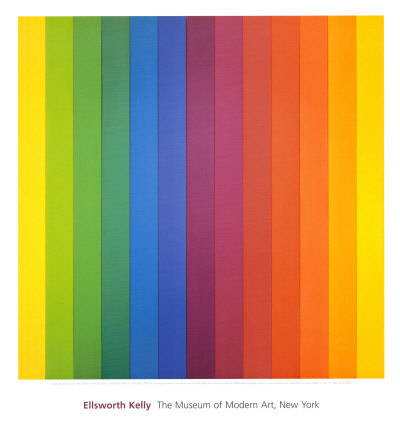
Ellsworth Kelly (American, born 1923) is a painter and sculptor who established his own style amidst the pervasive influence of the Abstract Expressionist and Pop Art movements.
“I have worked to free shape from its ground, and then to work the shape so that it has a definite relationship to the space around it; so that it has a clarity and a measure within itself of its parts (angles, curves, edges and mass); and so that, with color and tonality, the shape finds its own space and always demands its freedom and separateness.” – Ellsworth Kelly
MOMA
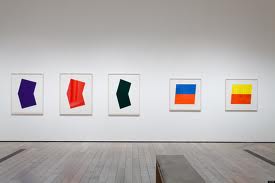
Maintaining a focus on the dynamic relationships between shape, form and color – Kelly was one of the first artists to create irregularly shaped canvases. His subsequent layered reliefs, flat sculptures, and line drawings further challenged viewers’ conceptions of space. While not adhering to any one artistic movement, Kelly virtually influenced the development of Minimalist, Hard-edge painting color field and Pop Art.
Kelly intends for viewers to experience his artwork with instinctive, physical responses to the work’s structure, color, and surrounding space rather than with contextual or interpretive analysis. He encourages a kind of silent encounter, or bodily participation by the viewer with the artwork, chiefly by presenting bold and contrasting colors free of gestural brushstrokes or recognizable imagery, panels protruding gracefully from the wall, and irregular forms inhabiting space as confidently as the viewer before them.
More Samplings
Background info:The Artist
Born in New York City, Kelly admired the works of Naturalist John James Audobon (American, 1785–1851) as a child and loved to draw, even though his parents only reluctantly permitted him to study at the Pratt Institute in Brooklyn, NY. After serving during World War II for two years as a camouflage artist, Kelly was able to study on the GI Bill at the School of the Museum of Fine Arts, in Boston, MA, and then at the École Nationale Supérieure des Beaux-Arts in Paris, France. Separated from the American art world while in Europe, Kelly developed his distinctive method of painting. These works echo Kelly’s desire to separate himself from the traditional roles of composition and the artist’s hand. Kelly only returned to the US when he believed that the enthusiasm for Abstract Expressionism had died down enough to allow his work to get some visibility. By the end of the 1950s, he was internationally recognized for his monochromatic canvases, which began to take the shape of non-rectangular forms such as ovals and curves. Kelly also began to create sculptures similar to his paintings, featuring simple two-dimensional forms. In 1970, the artist moved to upstate New York, where he shifted his focus to create large outdoor sculptures concerned more with color than form. Many of his public works are now on display around the world. Kelly now lives and works in Spencertown, NY.
Sources: Artnet.com + theartstory.org
From the Lawren Harris exhibit at the Vancouver Art Gallery 03/30/14
If there is a particular artist that you’d like to see featured on this blog please let us know.
Twenty four years ago a painting by Barnett Newman ignited a firestorm in Canada.
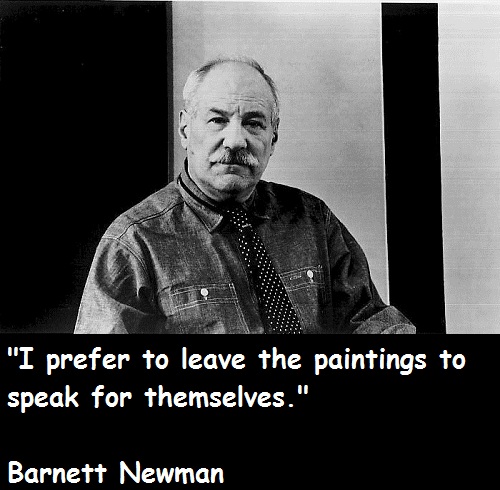
“In titles I try to evoke the emotional complex that I was under.” – Barnett Newman (1905-1970)
Which leads me to ask…what qualifies as art, especially in the increasingly bizarre world of modern art?
From Malevich’s Black Square, a pure black canvas, to DuChamp’s Fountain, a urinal turned upside down, modern art can take on forms from the bizarre to the mundane. This leaves many people wondering, how can these seemingly simple pieces become famous works of art?
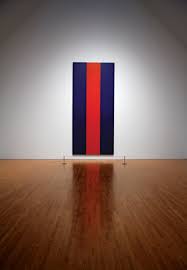
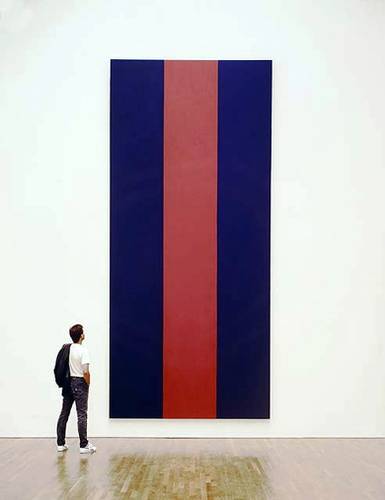
In 1990, The National Gallery of Canada made a controversial purchase of a well-known contemporary painting by Newman entitled “Voice of Fire” referred to as “the biggest art scandal in the country.” The painting is almost 18 feet tall and features a simple red stripe on a blue background. Although Voice of Fire hung peacefully on loan in the gallery for two years, it was the subject of public outcry when, in the spring of 1990, the gallery decided to purchase the painting for $1.76 million. More than two decades later, the almost $1.8-million price might sound modest, but it seemed extravagant then.
As Capital News reported, the purchase was so highly contested by the public and the media that it was taken all the way to the House of Commons and sparked a fad of T-shirts and ties patterned after the painting.
If the fuss over the price seems quaint in hindsight, the deeper question is: Can three stripes, no matter how monumentally presented, be considered an important creation?—is not so easily dismissed.
The popular sentiment was that nearly 1.8 million of the tax payer’s dollars was a colossal waste of money for a painting widely dismissed asthree stripes of colour. “My kid could have painted that” about sums it up (ignorantly if I may say so), with a fair sprinkling of “He’s not even Canadian!”
But supporters of the acquisition held that fine art shouldn’t have to be accessible; it’s there to challenge, and to push the boundaries. Newman’s work did that, especially when on display in the Gallery, where its enormous size and bold colours really were quite startling to behold. Plus, it was a work of some relevance to Canadians, even if Newman was an American painter: it had hung in the geodesic dome American Pavillion at Expo67 in Montreal.
Limiting his colours to red and blue, he created this powerful vertical canvas to be suspended from the dome’s ceiling. While it appears simple in form, Voice of Fireconveys a range of meanings. Newman intended the work to be studied from a short distance; its enormous scale transforms the space and tests our sensory experience.
If the painting was sold today it would be worth in the area of $70 million.
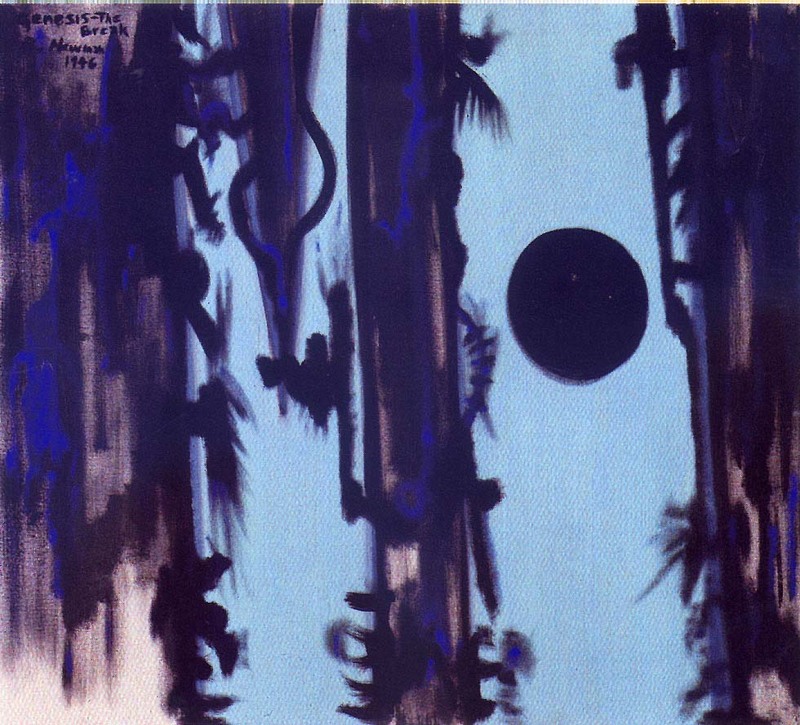
Genesis by Barnett Newman
Newman was born in New York City, the son of Jewish immigrants from Poland. He was known to be an articulate writer and spokesman for modern art. Newman was also very spiritual and saw his work as such. The Voices of Fire title comes from the biblical voice from the burning bush.
The artist’s record breaking sculptures SELL FOR MILLIONS
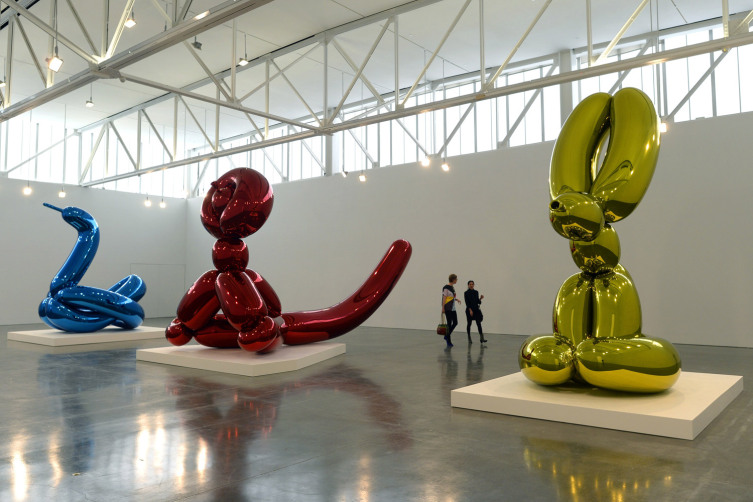
Timothy A. Clary / AFP / Getty (L-R) Balloon Swan (Blue), Ballon Monkey (Red), Balloon Rabbit (Yellow) at the Gagosian Gallery in New York City on May 9, 2013.
Stephen Colbert probably summed up the meaning of Koons’s balloon animals best in an interview with the artist on The Colbert Reportlast year. “A lot of them are shiny, you know,” Colbert observed, “so when I look at them I can see me, and then I’m really interested in it.” Koons agreed, arguing “art happens inside the viewer… and the art is your sense of your own potential as a person.” These reflective balloon sculptures “just trigger that information in you.”
On a more somber note, Koons added, “I’ve always enjoyed balloon animals because they’re like us. We’re balloons. You take a breath and you inhale, it’s an optimism. You exhale, and it’s kind of a symbol of death.” (And somewhere, a clown just cried…)
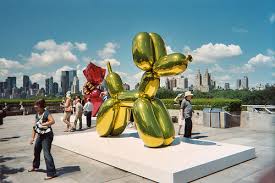
Last year, Jeff Koons’s Balloon Dog
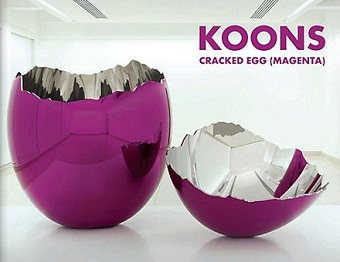
went for a whopping $58.4 million at Christie’s, making it the most expensive contemporary art sculpture ever sold. On February 14, 2014, the artist’s wonderfully whimsical Cracked Eggsculpture (Magenta – see below) part of the same series: Celebration—went to auction for the first time and fetched 14.1 million pounds, within the expected range. The winner was a client of David Linley, Christie’s chairman in the U.K. and a grandson of King George VI.
In his own words, Koons says, “Cracked Egg is a symbol of birth. It’s already happened, so it’s about moving on and transcendence, like Botticelli’s Birth of Venus. It was technically very difficult to create due to both the concave and convex surfaces.” When he says “technically difficult,” he means it took a staggering 12 years to produce the impossibly thin two-piece eggshell replica. Every detail, from the reflection of the viewer in and around the sculpture to the cartoon-like, saw-tooth edges has been a carefully calculated labor.
Celebration takes inspiration from a number of calendar events, replete with Valentine’s Day hearts, Easter eggs, and other pop symbols at magnified proportions. Conceived in 1994, some of its pieces are still in progress. Those who wanted to gaze at the sculpture without reaching deep within their pockets were able to view the egg on display at Christie’s King Street in London from February 8-13, before it went to auction.
from images
Koons lives and works in both New York City and his hometown of York, Pennsylvania.
How do you feel about these sculptures – elevated kitsch or fine art?
Credit: Harper’s BAZAAR magazineand Time Newsfeed.
All good things must come to an end. Like the self indulging 80’s! Too bad if you weren’t around to experience it – there’s never been anything like it since. But maybe that’s a good thing. Thank goodness there was no instagram!
All photos by Fan Zhong – Take out your check because this culture is Expensive.
The nightclub known as “Area” was of its own time, but also way ahead of its time: there was a convergence of art, music, performance and fashion – where the only constant was change. That was then.
With three bars, a shark tank, and a swimming pool the downtown imaginarium known as “Area” welcomed all manner of wildlife, from Andy Warhol and Jean-Michel Basquiat to Madonna and Grace Jones to Marc Jacobs and Calvin Klein to the chameleonic Bernard Zette, a man who might arrive on any given night as a mermaid or, say, Anne Frank.
The bathroom was its own special club within the club, an orgy of anonymous sex and a wildly eclectic marketplace (condoms, chicken sandwiches, or Comme des Garcons jackets could all be had at cost), the whole scene powdered faintly in white. It was, after all, the ’80s.The nightclub-as-art-gallery that came to define the creative hedonism of 1980s New York, was resurrected for a single night last Tuesday at the Hole Gallery on the Bowery. The occasion was a new book, “Area” a 368-page homage (Abrams) to the over-the-top thematic parties that took place during the club’s storied 1983-to-1987 run.
The sidewalk was crammed with kooky artists and well-dressed celebutantes, craning their necks to get a glimpse of “Invisible Sculpture,” a piece by AndyWarhol that consists of a pedestal and a wall label. Inside, a sweaty mass of latter-day club kids and downtown royalty squeezed past a Barbara Kruger mural, brushed up against naked dancers and jostled for cocktails served in faux Campbell’s Soup cans.
The show was curated by Jeffrey Deitch and others, including the Area alums Eric Goode, Jennifer Goode and Serge Becker. It was also Mr. Deitch’s first exhibition after leaving the Museum of Contemporary Art, Los Angeles, and the party not only evoked the sybaritic spirit of the club, but also the fashionable scene cultivated by his gallery in the 1990s and early 2000s.
In addition to Warhol and Kruger, the show had rare works by Jean-Michel Basquiat, Francesco Clemente, Kenny Scharf, Keith Haring and others art stars of the 1980s — many created originally for Area. A row of nonworking toilets was also installed, prompting plenty of knowing chuckles and Instagram moments. (The exhibition ended November 10th).
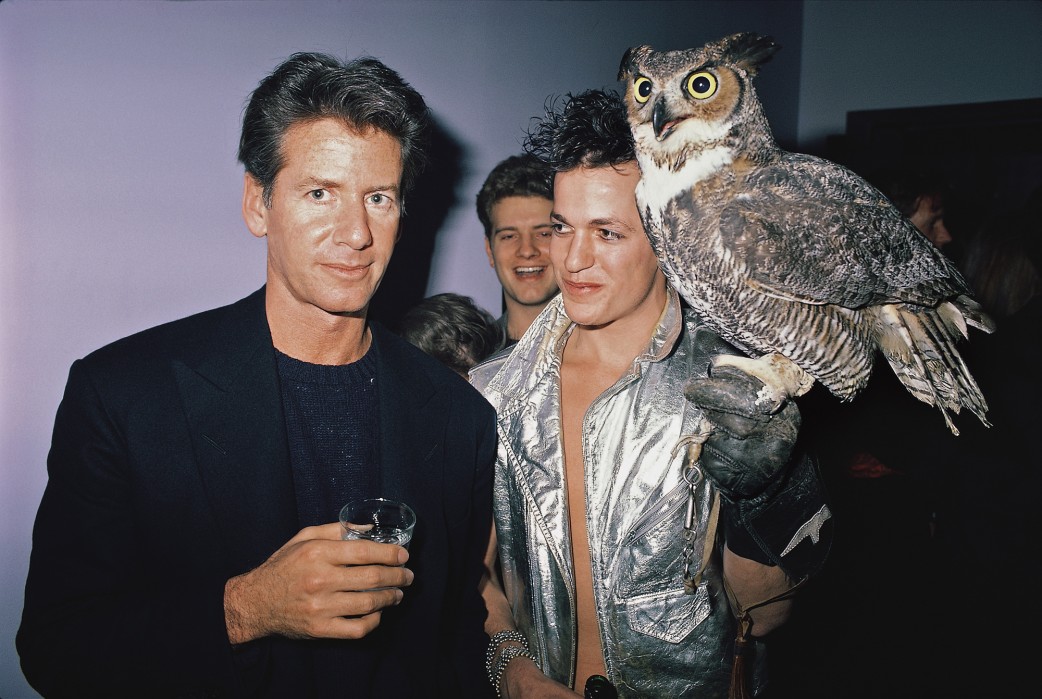
Calvin Klein and Tommy Street with an owl.
At one point Calvin Klein showed up, standing before a wall of Ronald Reagan posters created for a Hollywood party in 1984. “It was a different experience every time,” Mr. Klein said of the club, as he made his way for the exit. “You never knew what to expect. It was such a creative moment.” For some, the night brought back some of the debauched silliness of 1980s clubbing. Mirrored surfaces were dusted with fake piles of cocaine. Scantily clad performers simulated copulation. Drunken partygoers rolled around the floor.
Mr. Goode, who owns the Bowery and several other boutique hotels, surveyed the scene from a corner. “The late ’70s and early ’80s were a very special time in NewYork,” he said. “It was a think tank of artists. The city was very lawless.” He contrasted that to Mayor Michael R. Bloomberg’s gilded age, when community boards, night-life task forces and real estate prices have dampened the city’s creativity. Places like Area, he added, “would be impossible to pull off today.”
“We opened Area never expecting it to last,” writes Eric Goode in the preface to the new book Area: 1983 – 1987 ($75, abrams.com), an exquisite oral and pictorial history of the legendary—though short-lived—New York nightclub.
Over its four-year run, the warehouse space was made over anew approximately every six weeks: from its opening theme of “Night,” during which a masked welder lit up a dark dance floor with showers of sparks to a later incarnation called “Gnarly,” with a platoon of drag racers and nude bikers screeching across the 13,000 square foot space.
They don’t make em like they used to!
Taken in part from the New York TimesFashion & Style
There have been murals on walls throughout the world for as long as there have been people on Earth. People scratched them, carved them, etched them and painted them.
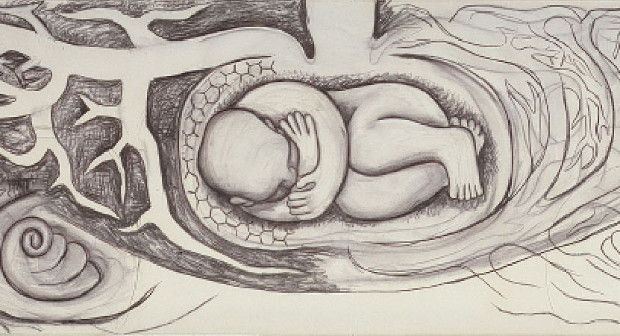
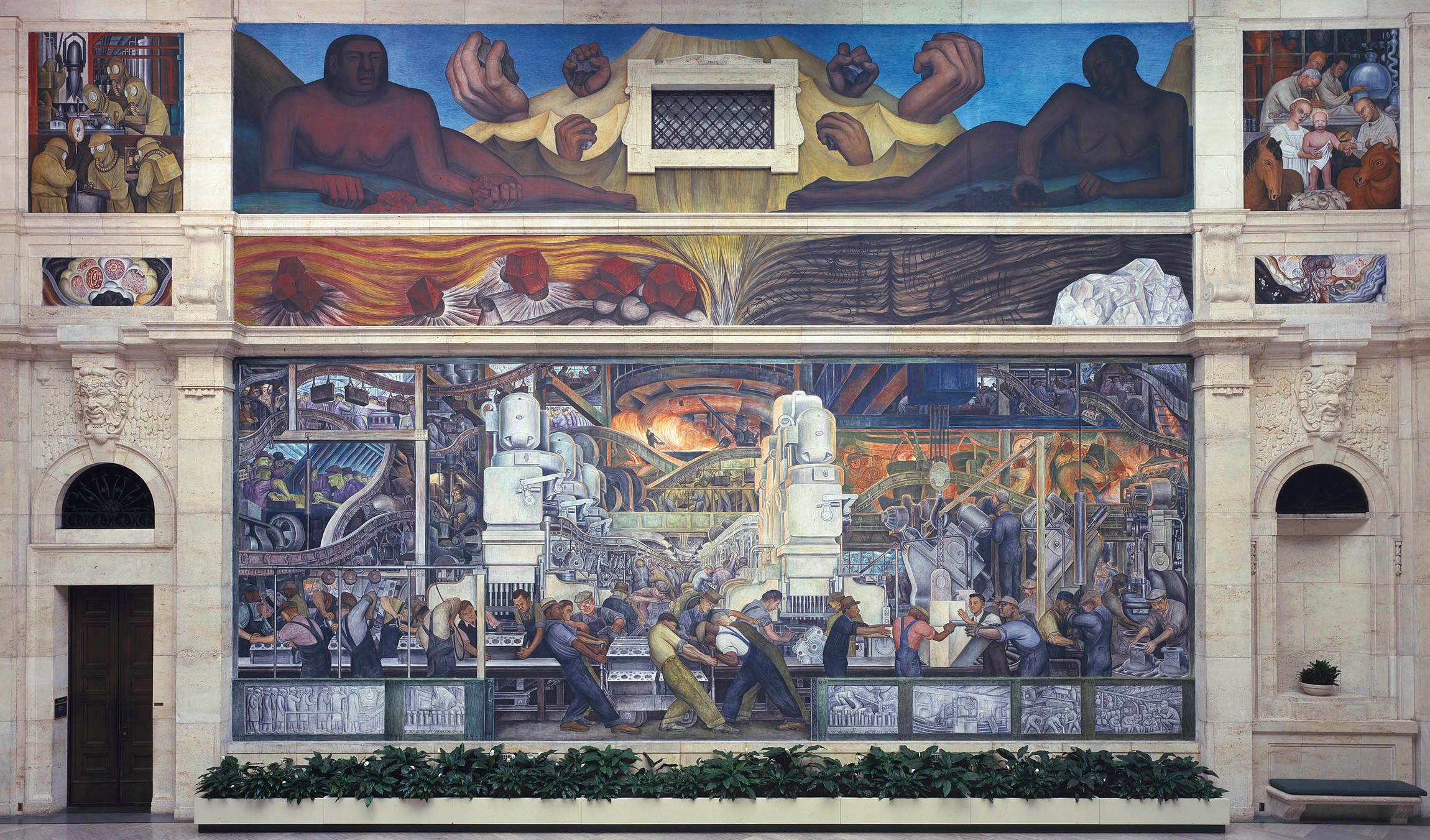
Infant in the Bulb of a Plant (Detroit Industry east wall), 1932, by Diego Rivera
The history of murals and mural painting is rich and varied, from the prehistoric cave paintings at Lascaux, France, to the celebratory and ceremonial murals of ancient Egypt, Rome, Mesopotamia, Greece and India. They are presumed to be the oldest human art form, as cave paintings at numerous ancient human settlements suggest, and can be found all over the world. A wide variety of artistic styles are used in mural painting, and some incorporate the use of techniques which create a sense of dramatic scale and amazing depth.
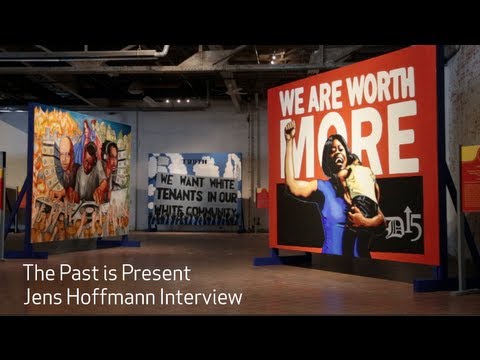
Diego Rivera (the Mexican painter who was married to Frida Kahlo) is a perfect example. One of his most significant murals, his 1933 Detroit Industry (see below) is brimming with assembly line workers, blast-furnace scenes, fertility figures, and even a portrait of Edsel Ford, who commissioned it. Come September 6 through January 4, 2014 it’s the subject of an exhibition at the neighboring Museum of Contemporary Art Detroit, Curated by Jens Hoffman.
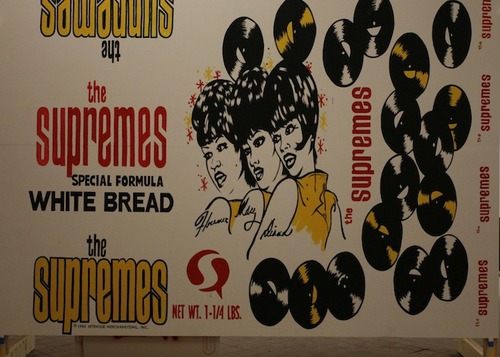
“The Past is Present” will showcase murals by 14 artists invited to respond to events that have shaped Detroit in the 80 years since Rivera completed his masterpiece. The far-ranging themes include the 1937 Ford Motor Company strike, the history of Motor City music, and Detroit’s urban farmingrevolution. “My idea is that you wander from one mural to another, so it’s almost like walking through the city, if you could travel in time,” says Hoffman.
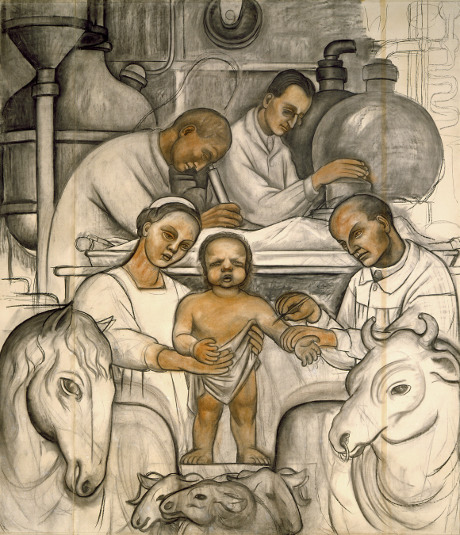
Vaccination (Detroit Industry north wall), (1932) by Diego Rivera
There can be few works of art so closely associated with America’s great industrial age than Diego Rivera’s Detroit Industry murals. These large-scale frescos that adorn the city’s Institute of Arts were created in 1932 and 1933 by the left-wing Mexican artist, and focus on the workers at the city’s Ford car plant. Yet their subject and scope is actually far wider, taking in medical production, race, weaponry, faith, and the predominant managerial structure of the day. Upon their unveiling, the works were thought of in some quarters as anti-American; today they’re regarded as one of the masterpieces of 20th Century public art.
Diego Rivera’s Detroit Industry (partial view) 1933
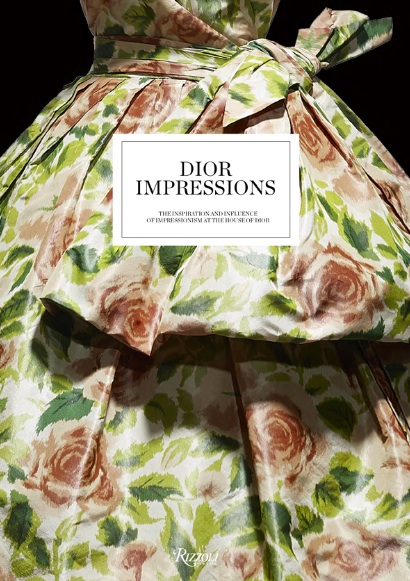
Combining art & fashion with ‘Dior Impressions’ – a new design book about the ‘Master.’
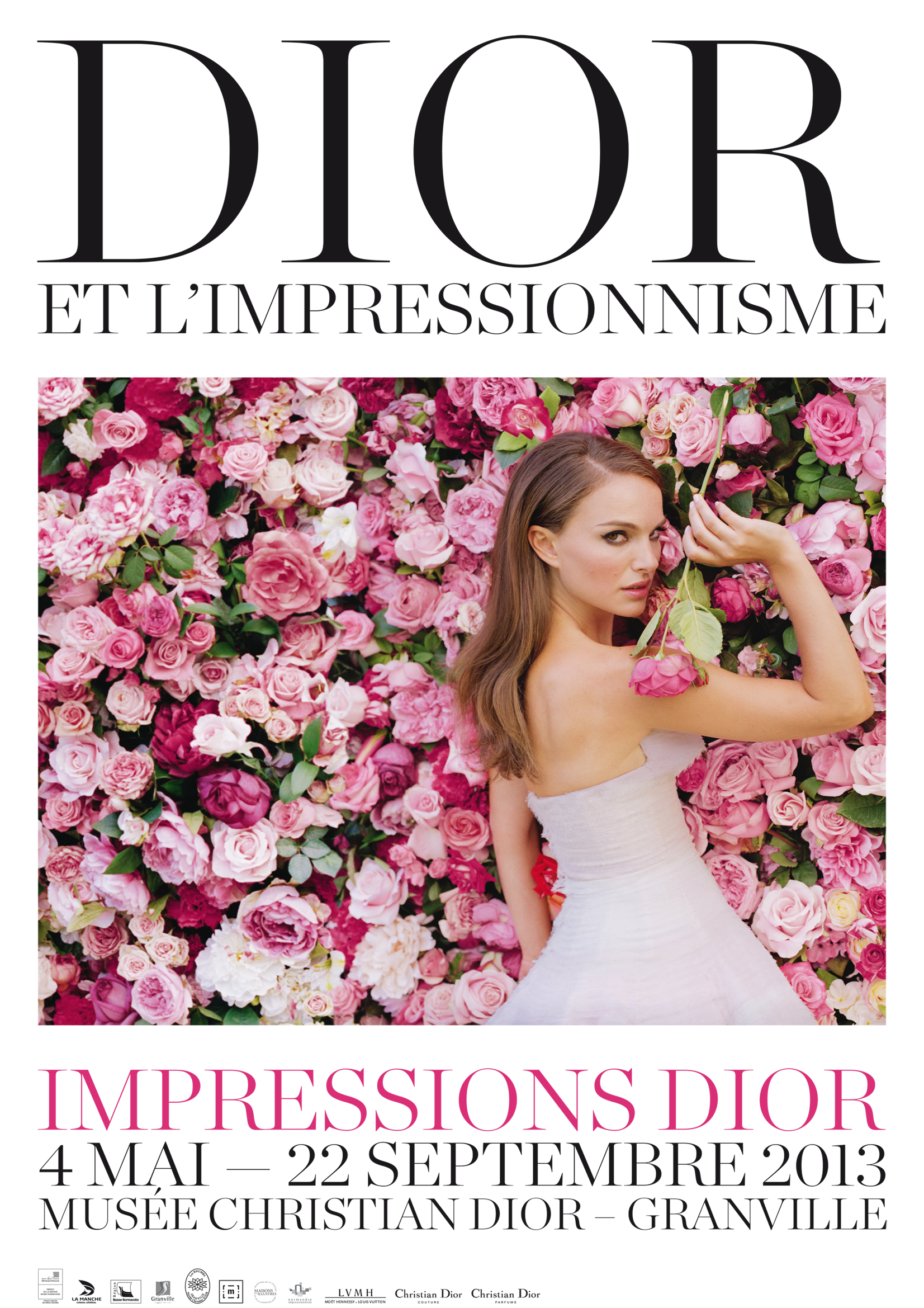
Another fabulous coffee table book. Whether cut with ballooning bustles or embroidered with a multitude of chiffon petals, Christian Dior’s dresses evoked the light, color and fluidity in the work of the French Impressionists. And it wasn’t by chance. A lover of both art and flowers, Dior found tremendous inspiration in the plein air paintings of Claude Monet, Camille Pissarro, and Pierre-Auguste Renoir. ‘Dior (Rizzoli), a new book published to accompany an exhibition at the Musee Christian Dior in Granville, France, explores the 19th-century art movement’s role in shaping the fashion house – from Dior’s very first designs to a Raf Simons (the current designer) 2012 couture gown, the pastel colors of which recall a Monet canvas. K.N. for W Magazine.
Natalie Portman models for Dior
A little bit of fashion history: “The future has arrived and it’s all about dreaming of the past” the essayist and novelist Kurt Anderson once wrote. This was true of the 2013 Fall shows. Ideas from decades old collections showed up on the runways and felt entirely au courant. This was particularly central to Raf Simon’s second ready-to-wear collection for Dior. With a passion for art similar to Monsieur Dior, Simons embroidered early Warhol fashion illustrations onto dresses and embossed them onto clutches.
Charlize Theron wears Dior
It doesn’t take a student of fashion history to understand the allure of a coquettishly punk cocktail number, nipped in at the waist in the most feminine, flattering way. Fashion’s tendency to sample and recycle is certainly nothing new. So, when it comes to reinterpreting sartorial history, Simons says “it’s important to think of fashion as part of life. The past can inform, but nostalgia should not be a part of it.”
Taken from an article written by Karin Nelson – This Old Thing?
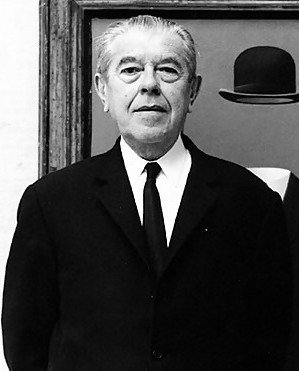
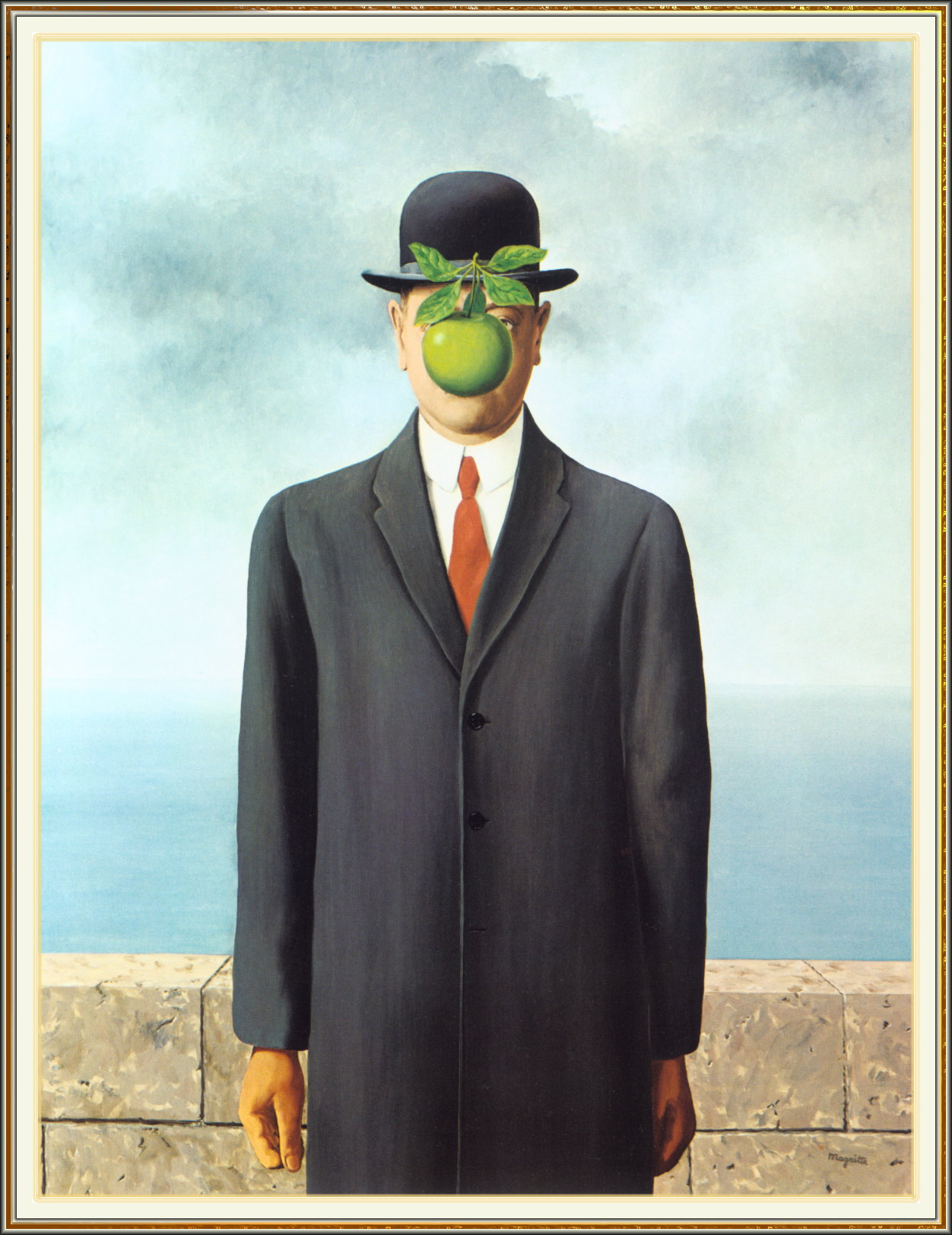
“Art evokes the mystery without which the world would not exist.” – René Magritte
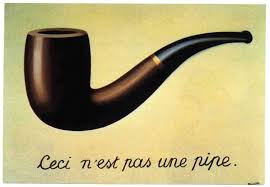
MoMa’s “Magritte: The Mystery of the Ordinary.” On view from September 28th through January 12, 2014 takes a fresh look at early works by Belgian master René Magritte. The exhibit features more than 80 paintings, collages, and objects made between 1926 and 1938. If you live in or plan to visit New York during that time you can prepare to be perplexed by images such as ‘lovers kissing through gauzy masks’ & other intriguing pieces.
MagritteThe son of a man
But surrealisly, how do you feel about Surrealism as an art form? I remember seeing an exhibit on Surrealism at the Guggenheim many years ago that made me think “what was the artist thinking?” There has to be a story behind it (at least somewhat) but the dreamlike paintings were nonetheless beautiful works of art. The mystery can be left up to the observer and it can represent many things to many people which is the true beauty of ART.
American artist Jeff Koons (who owns several Magrittes) explains that Surrealism was the very first art movement that he really responded to and he feels that Surrealism makes people go inward – to dive into the muck and understand themselves – and then return outward with a new sense of self-acceptance. He says “Art brings you in contact with feeling. When you see a Magritte, you feel something; you have an experience that can be very, very strong. He’s very poetic. One of the beautiful things about his work is that it’s really made for the viewer to participate in. It’s about creating a shared experience for you to experience this sensation.”(This as told to Lindsay Talbot).
It is what it is….what is it then?
Similar to a good author or poet, you want to be drawn in and taken away to somewhere that’s anywhere but here…even if just for a little while.
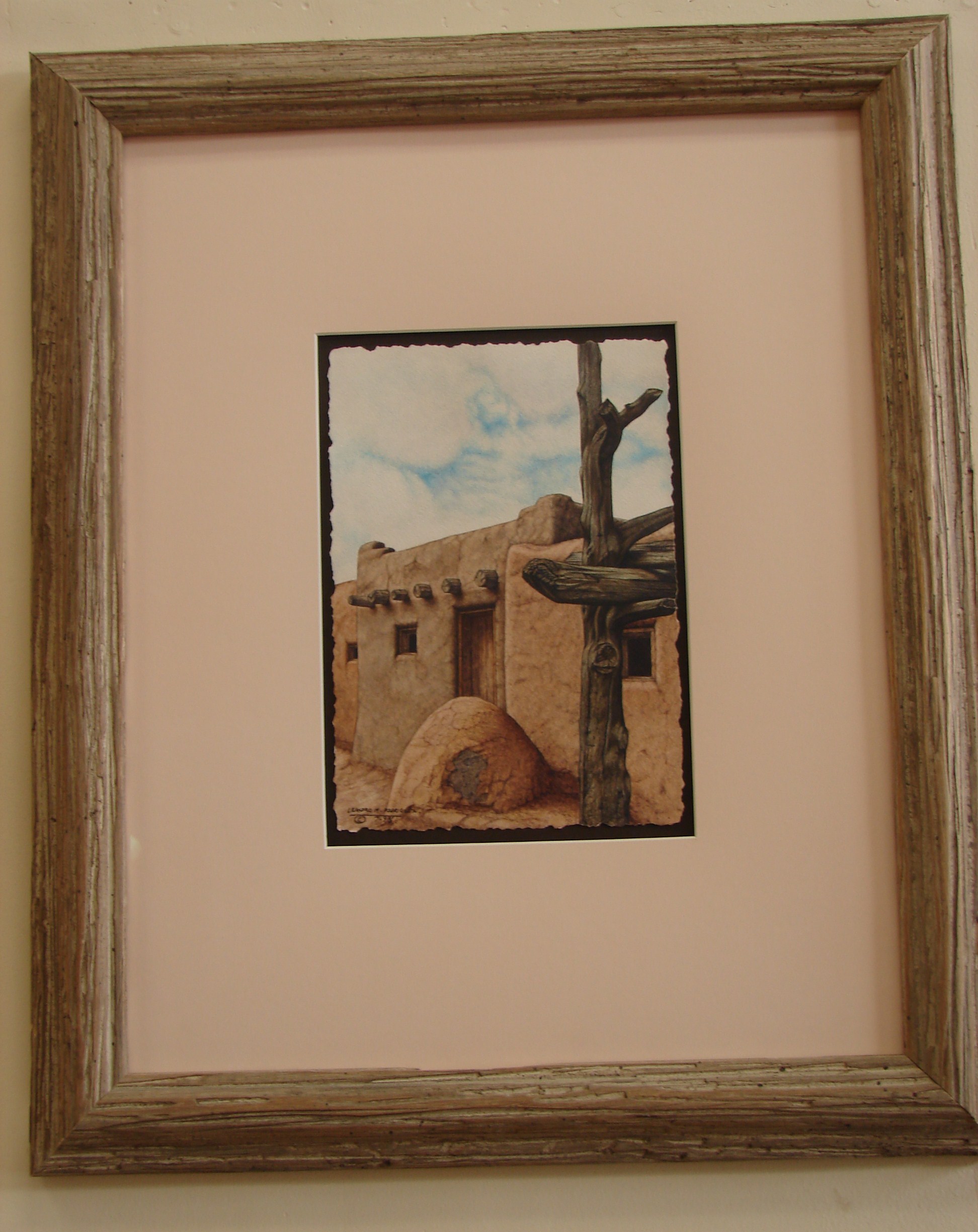
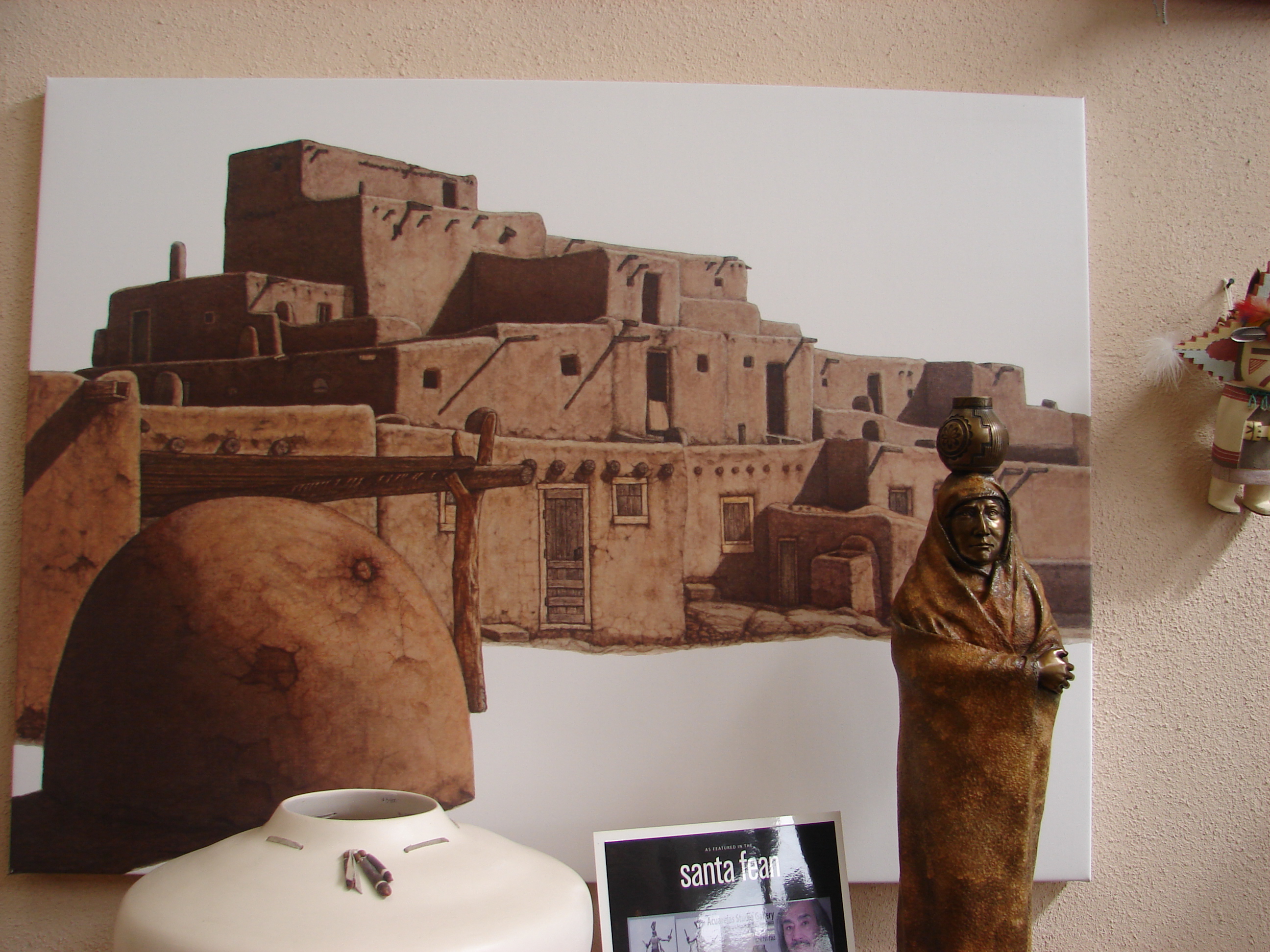
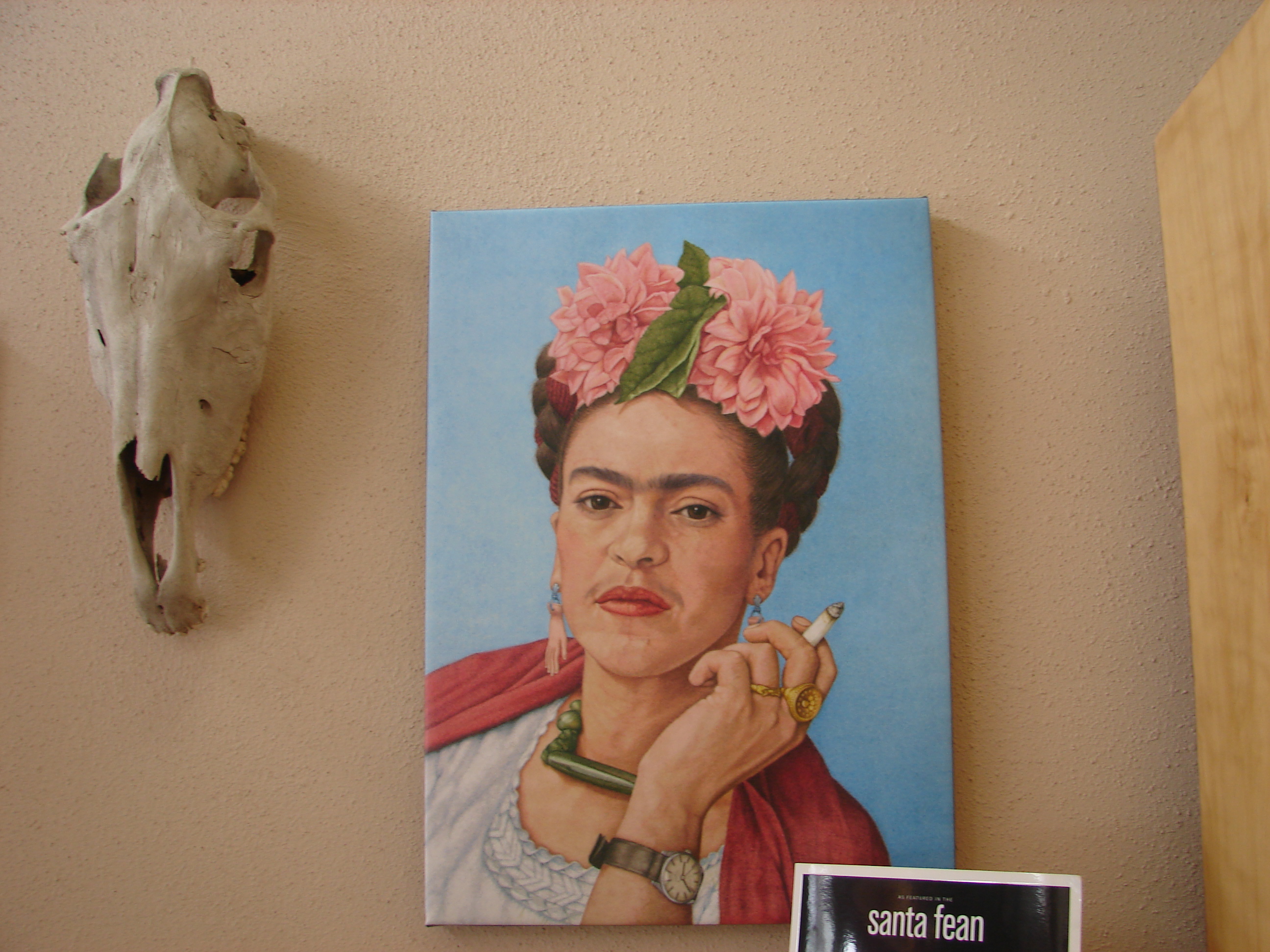
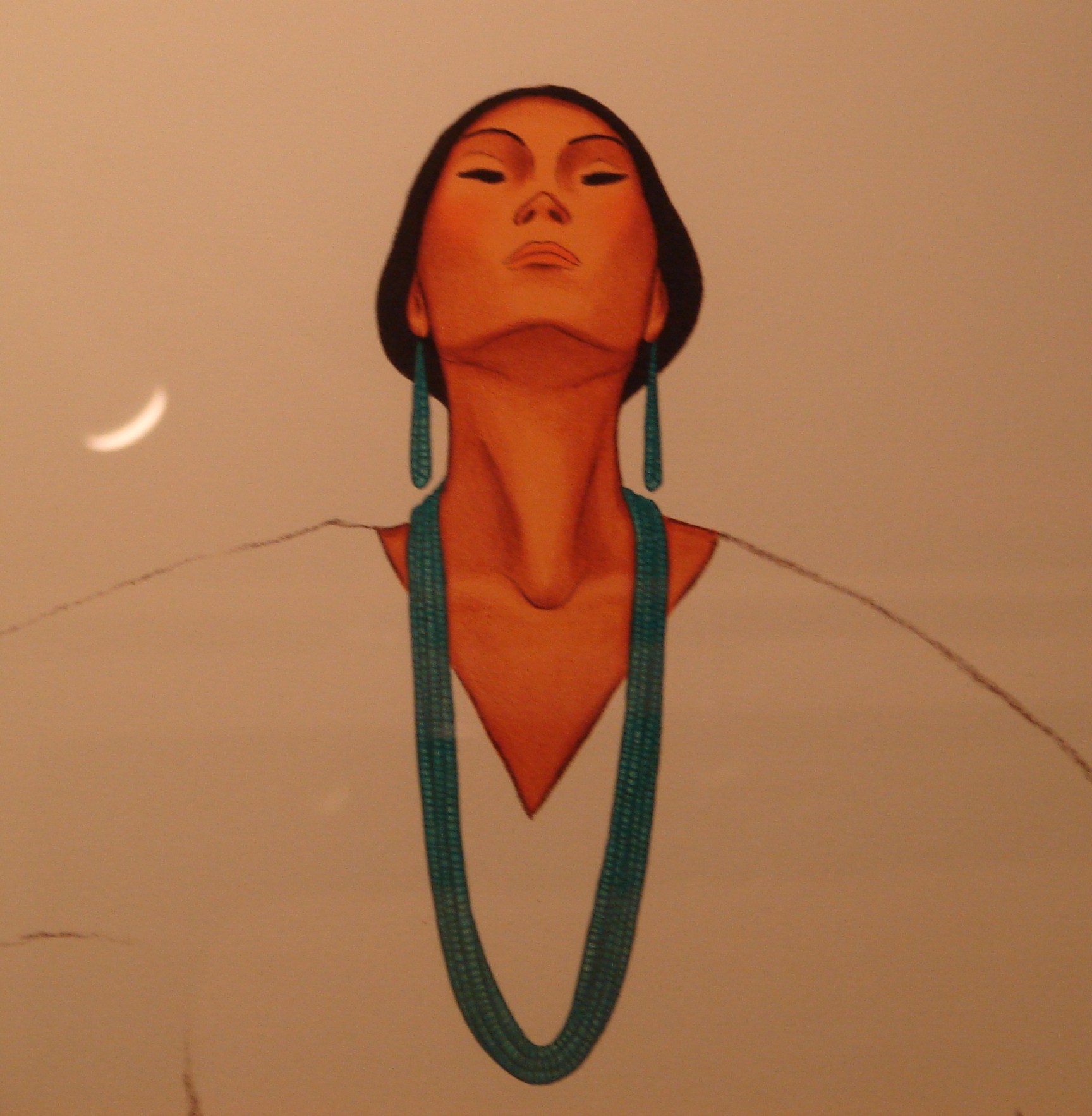
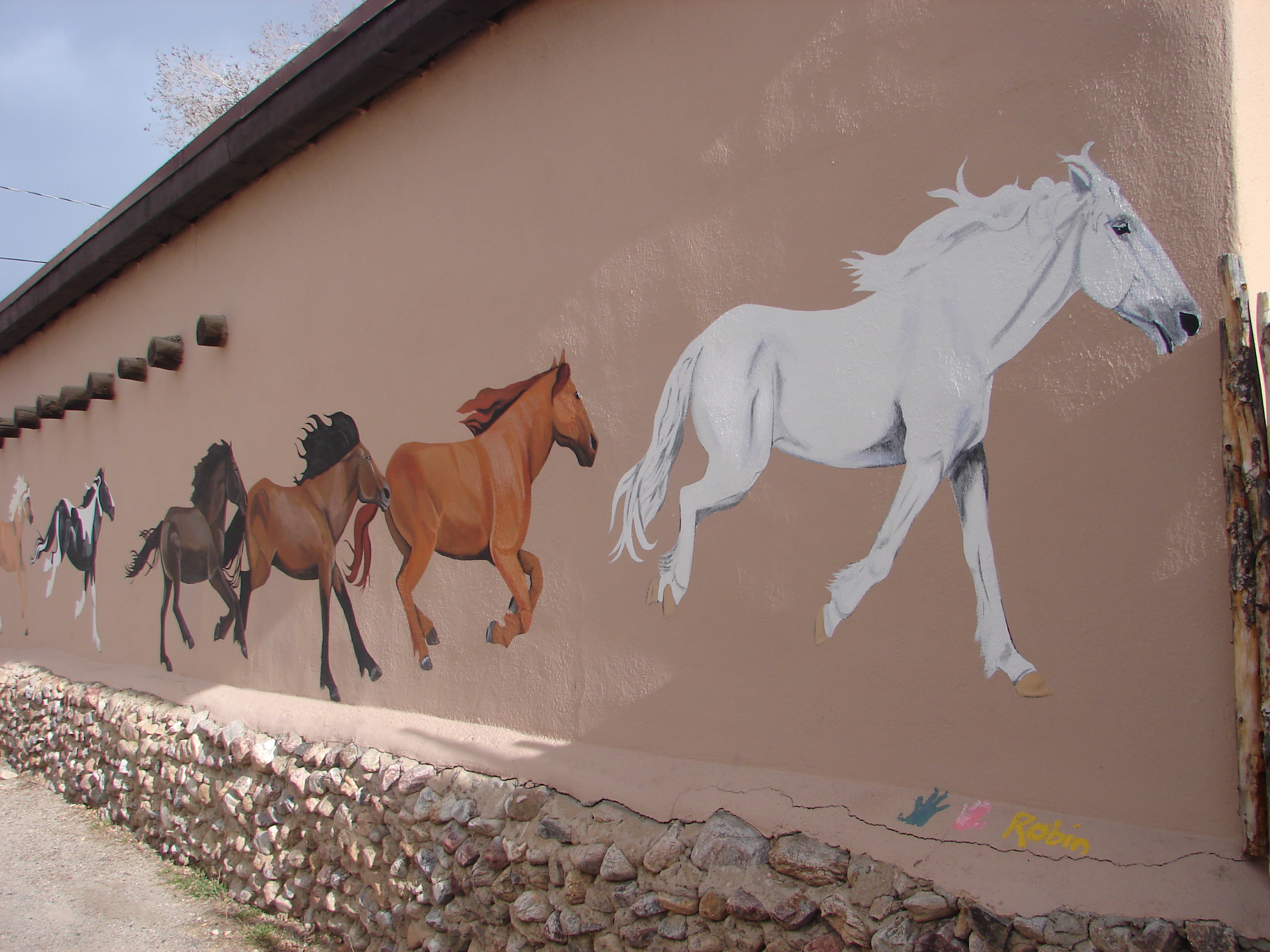
Where ART meets ARchitecTure! These images will speak for themselves. All the art pieces with the exception of woman wearing turquoise are from the “Acuarelas Studio Gallery by Leandro M. Rodriguez – painter/scupter.
One of the many talented artists of New Mexico located in Taos.
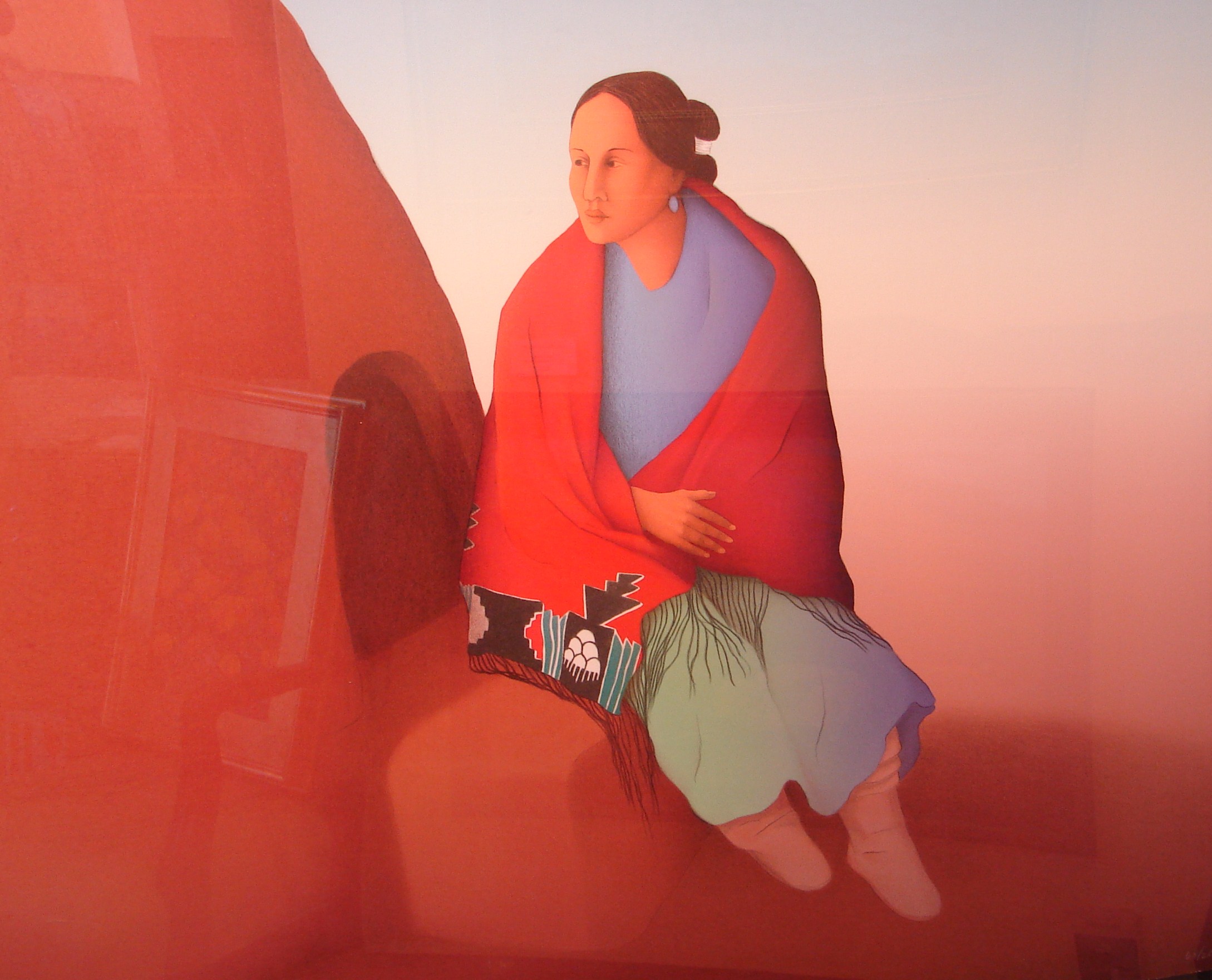
by RodriquezTypical Adobe Structureby the artist known as Rodriguez.Frida Kahlo by Rodriquez.Beautiful Woman – seen in the lobby of La Fonda Hotel.Mural on Building.Sculpture outside a Gallery.Half of a Horse Mural on Building.Other half of a horse mural on building.
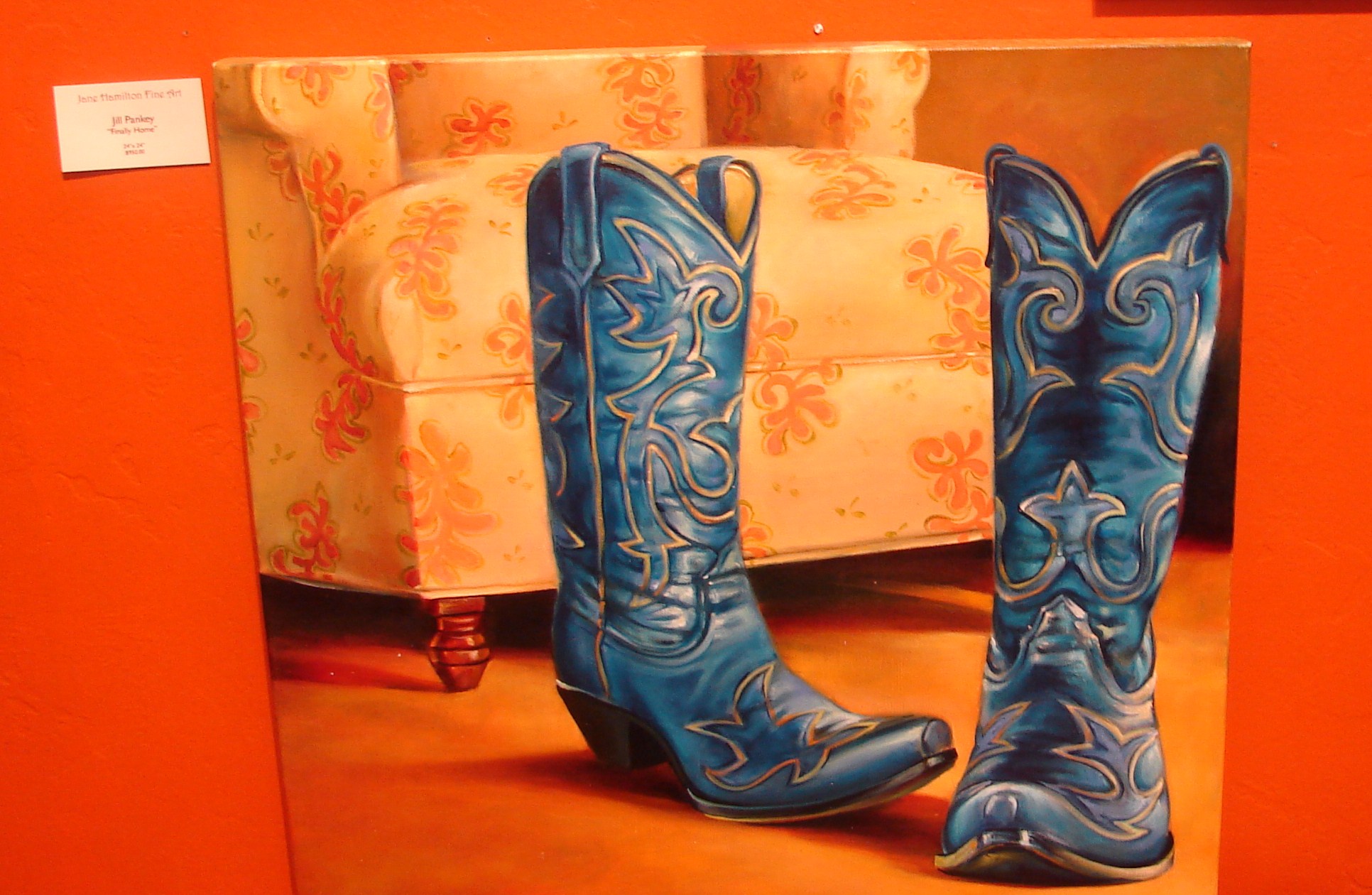
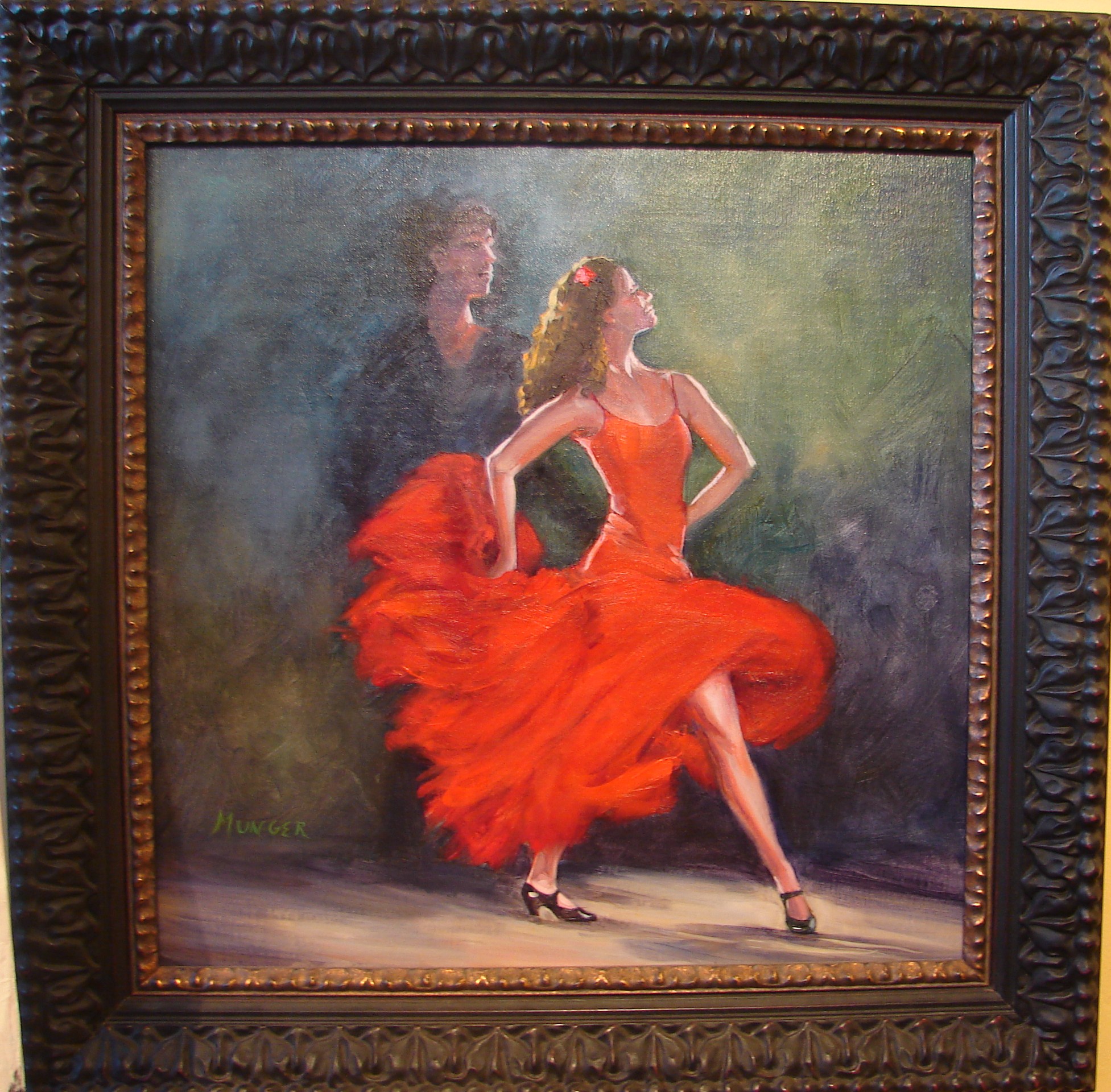
Here in Tucson, AZ you’ll come across many an art gallery but you’d be hard pressed to find better examples of varied Southwestern art than at Jane Hamilton Fine Art.
The gallery is located at 2890 E. Skyline Drive, Tucson AZ.
**After 11 years at their 6th Ave location Heather Ross [in house ] has recently moved & rebranded their art salon/boutique to heather ross (natural eclectic). See address below.
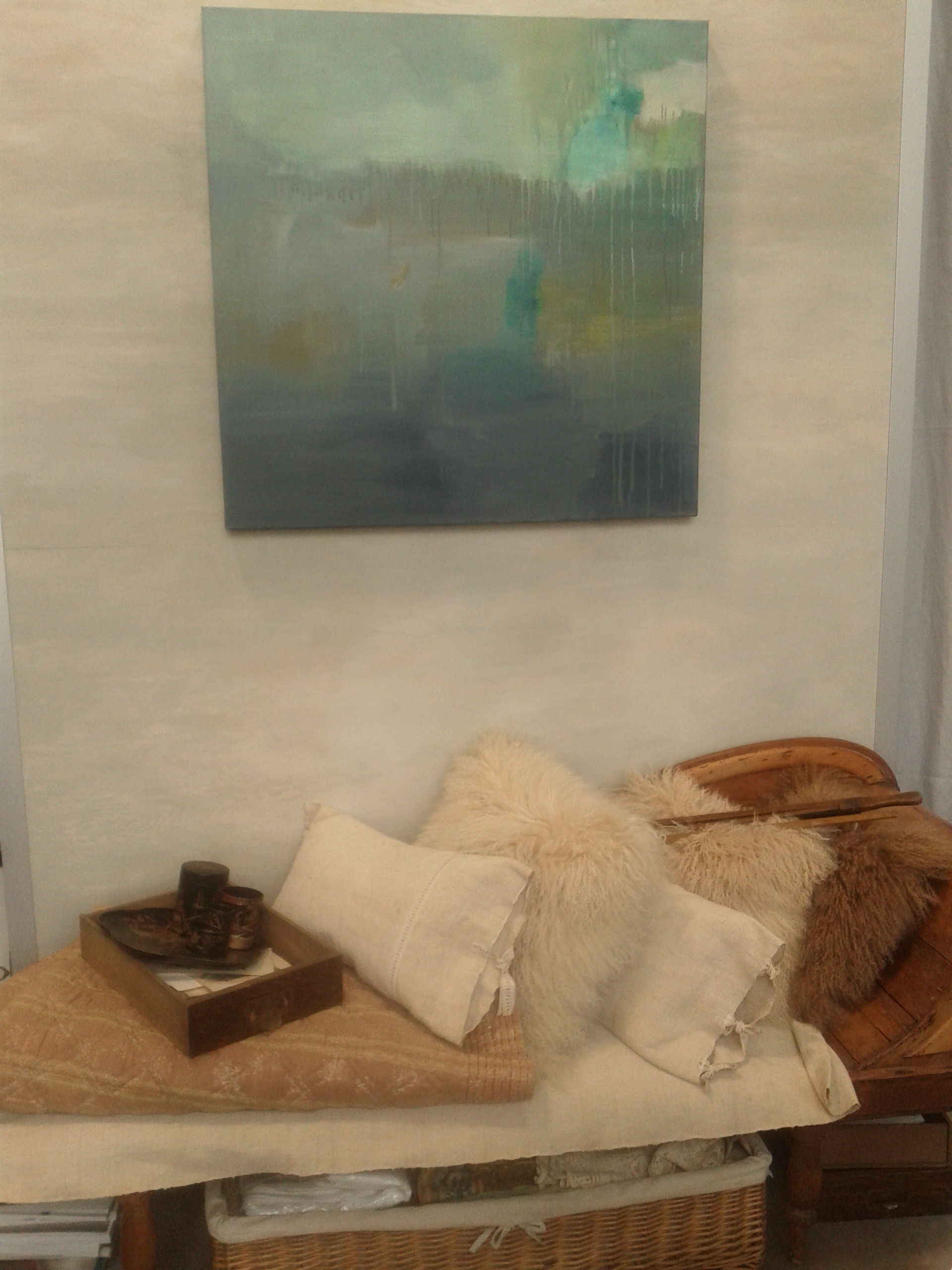
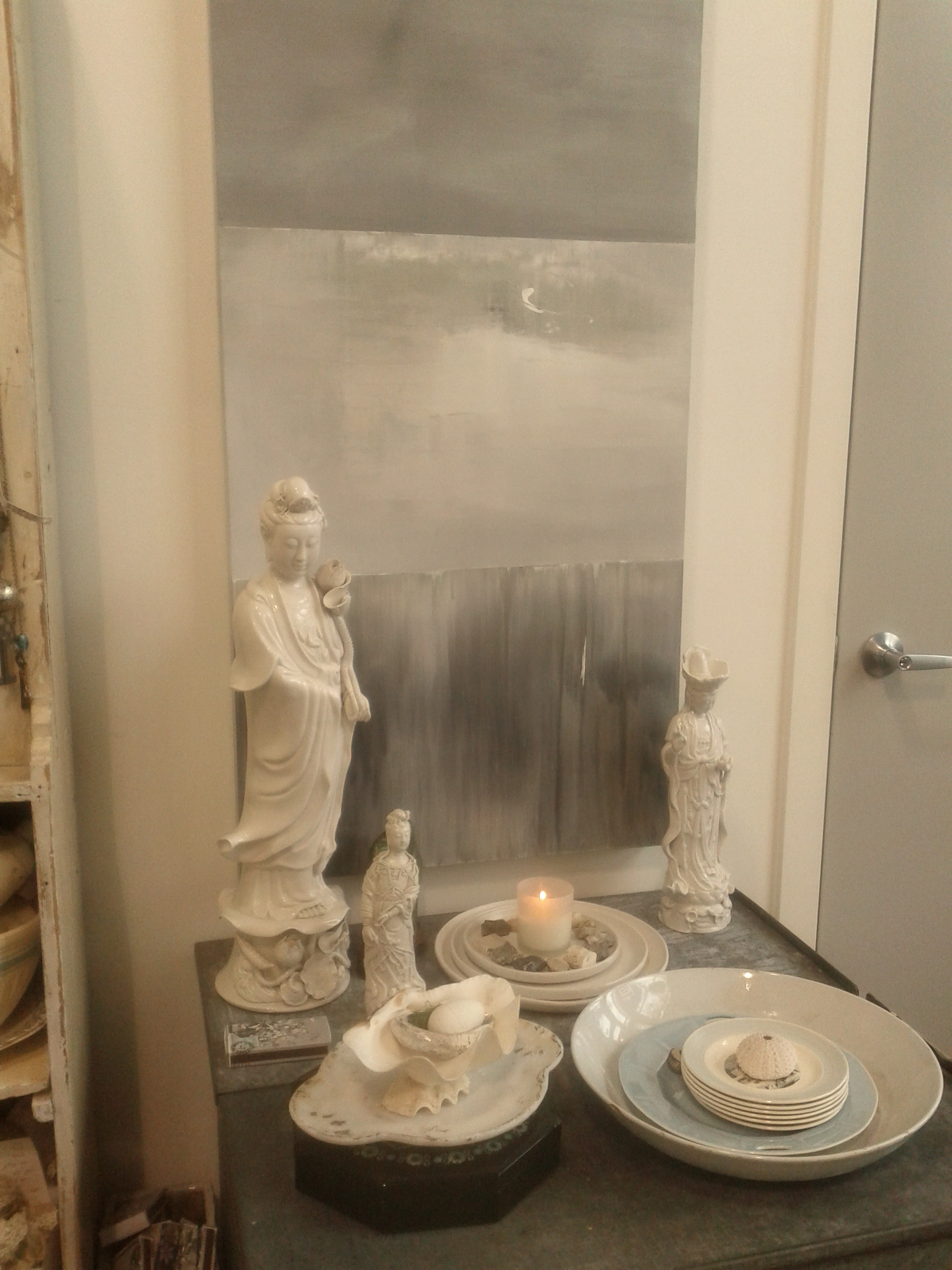
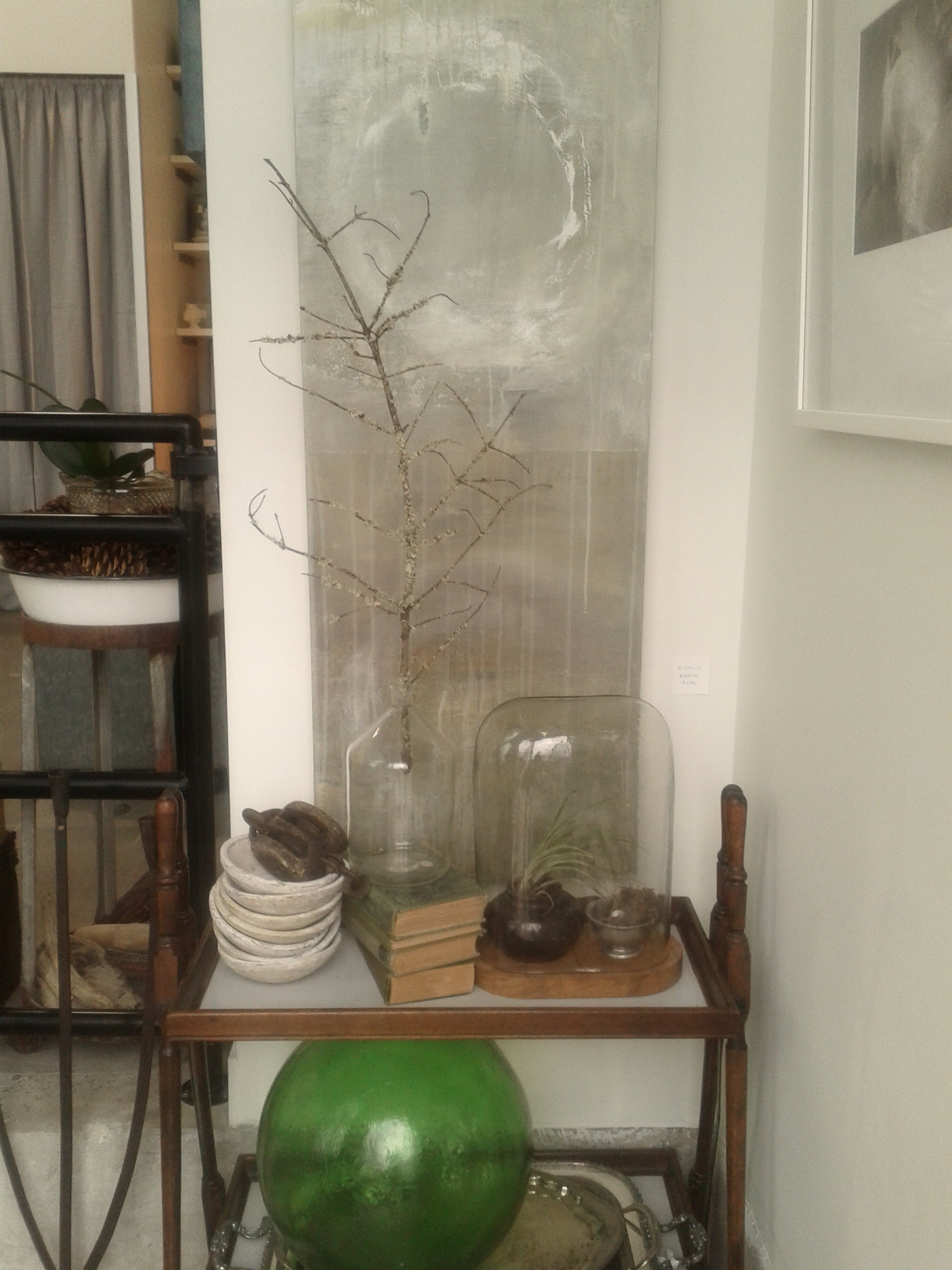
NATURE is a constant source of information for Artist & Designer Heather Ross who is known for her wonderful sense of color & keen eye. Her paintings, while abstracted, draw upon the elements of earth, water, air & sky with soothing color palettes.
Her boutique is a favorite amongst designers, art directors and decorators who covet Heathers unique vision & the way she brings unexpectedly beautiful items together with warmth & sensitivity.
In her inviting space she creates a compelling mix of new and old. Lush pillows, antique textiles and unique finds from the flea markets of Europe mingle with contemporary ceramics, fresh décor & endearing gifts. Her clientele will discover art in her paintings and photos which grace the walls in an inviting atmosphere.
Here is what a few magazine’s have written:
This is the thinking decorator’s dream shop. I could not extricate myself from its intelligent, captivating spell. It has the feeling of an underwater garden, inspired no doubt by Heather’s upbringing on the coast and her love for all things natural’
Heather (right) & sister Janet (left).
“Heather Ross [natural eclectic] conjures a home dressed in driftwood hues, vintage finds and elegant objects… rather than a typical store, poured concrete floors, clean white walls and a purposefully raw atmosphere form an uncluttered setting for her restrained vignettes” Canadian House & Home Jan 2010
“One third each evocative gallery, chic boutique, and European Atelier, Heather Ross (natural eclectic) offers an eclectic collection of hip items for the home.” Style at Home Magazine
AND I add to that “you must look up at the ceiling.”
Heather is currently working on a book & design blog, The Natural Eclectic™
New Location is at 2170 Fir Street at 6th in Vancouver (they’re just getting set up).























 Girl Who Would be KING on Life, Style and INSPIRATION.
You must be logged in to post a comment.