7,000 years of ancient art, from the end of the Stone Age to the fall of the Roman Empire.On all my previous visits to L.A. I never ventured to the Getty Villa until now. I really didn’t realize what I was missing and it’s quite fascinating especially if you’re into antiquities. The grounds alone are worth the outing, and the majority of art and sculptures at this Malibu hilltop hideaway are original pieces with a few recreations.
The educational center and museum is dedicated to the study of the arts and cultures of ancient Greece, Rome and Etruria. The J. Paul Getty Museum at the Villa features more than 1,200 antiquities from the permanent collection, as well as changing and loan exhibitions.
Drinking Vessels
The villa itself is a recreation of an ancient Roman country house that offers a taste of life in the first century A.D.
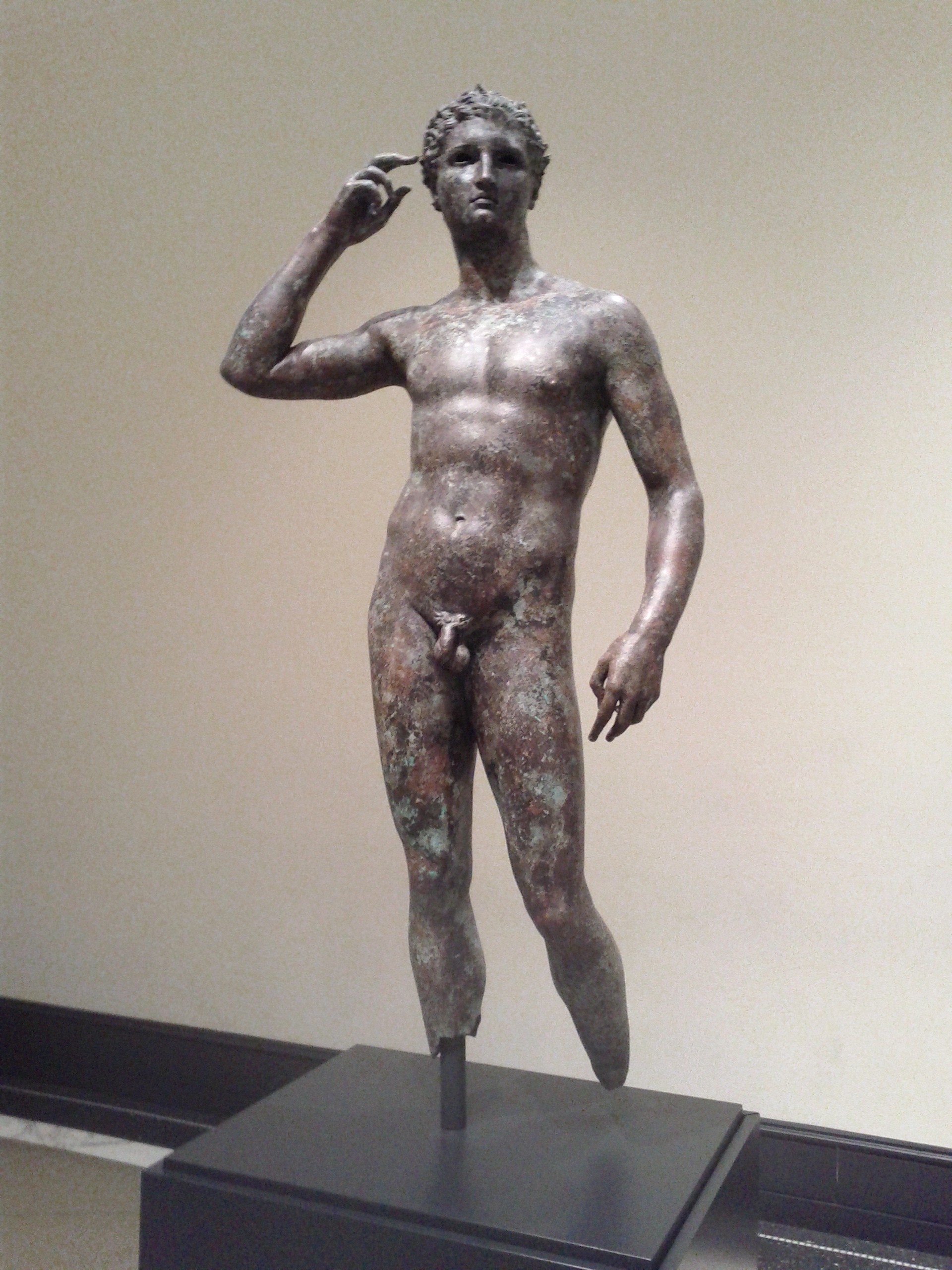
*Discovery of the Victorious Youth. See description below.
The gardens are inspired by ancient models, with species from the ancient world.
Of course a visit to any museum is not complete without checking out the gift shop.
*The Discovery of the Victorious Youth (above photo): Very few bronze statues remain from antiquity. The Victorious Youth was recovered from an ancient shipwreck in international waters in the Adriatic Sea. It was probably on its way to Rome, where many Greek sculptures were taken to be displayed in cities and villas. The statue was found in the 1960’s and had lost its feet. Otherwise, he’s not in bad shape.
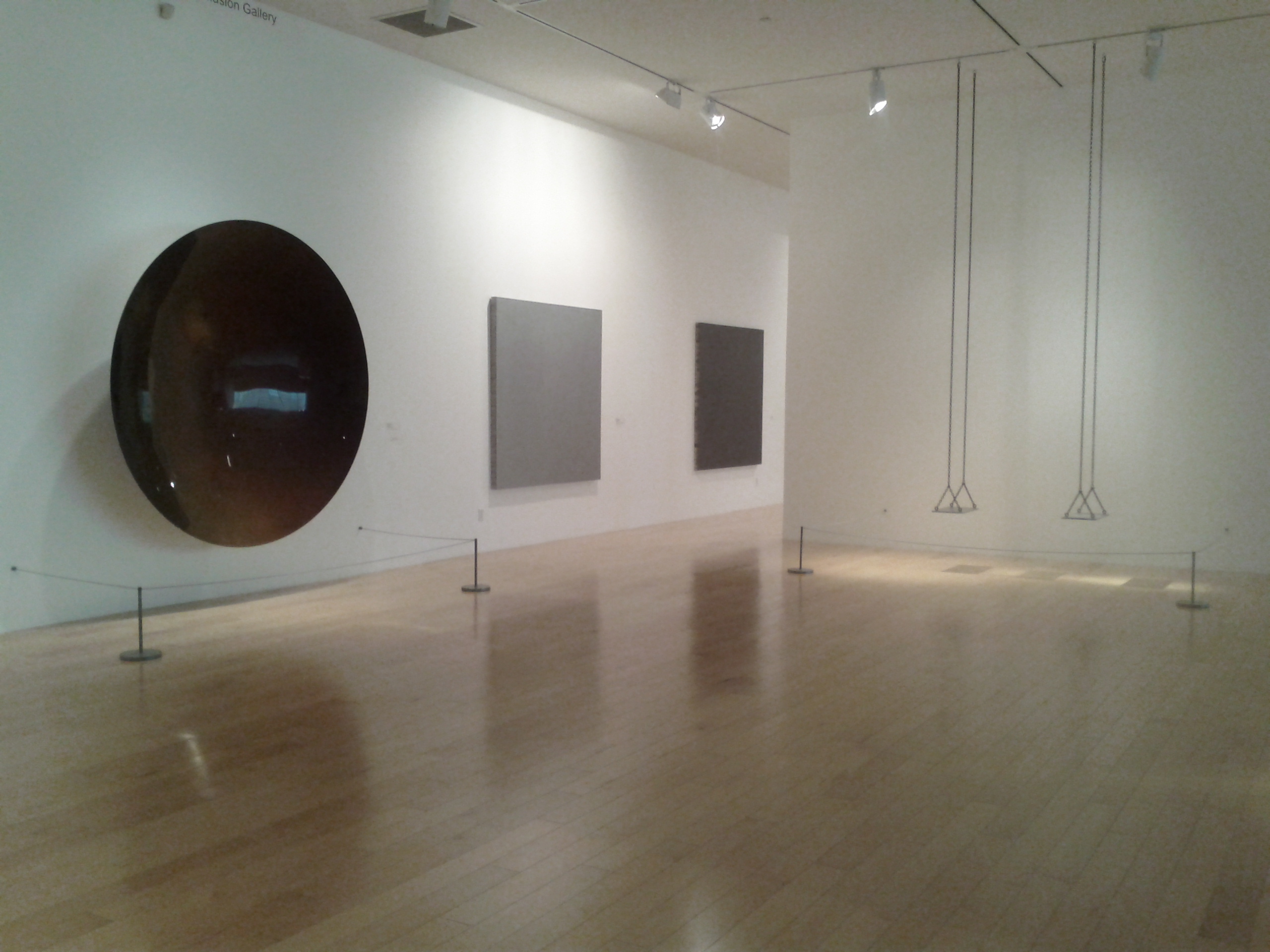
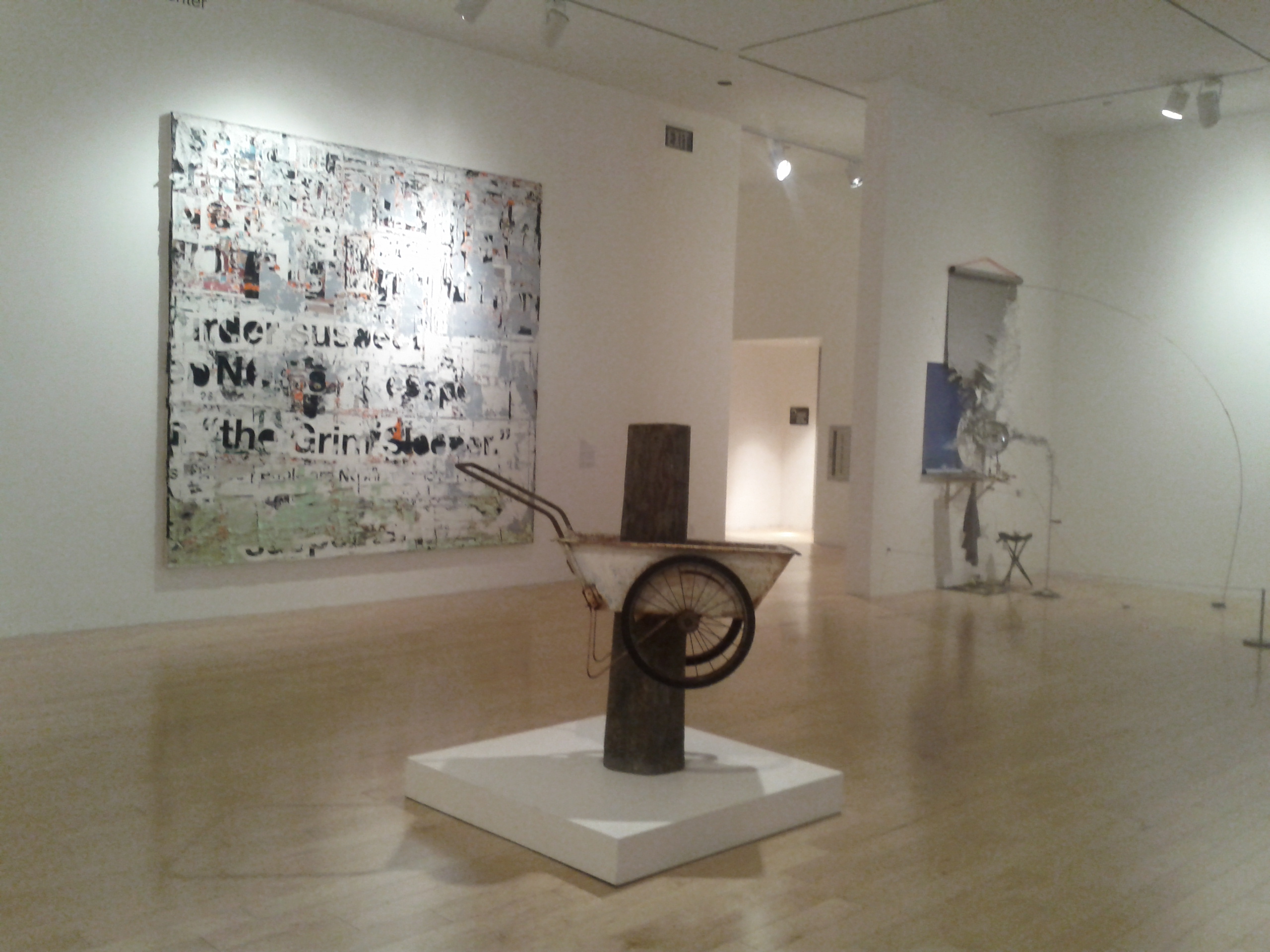
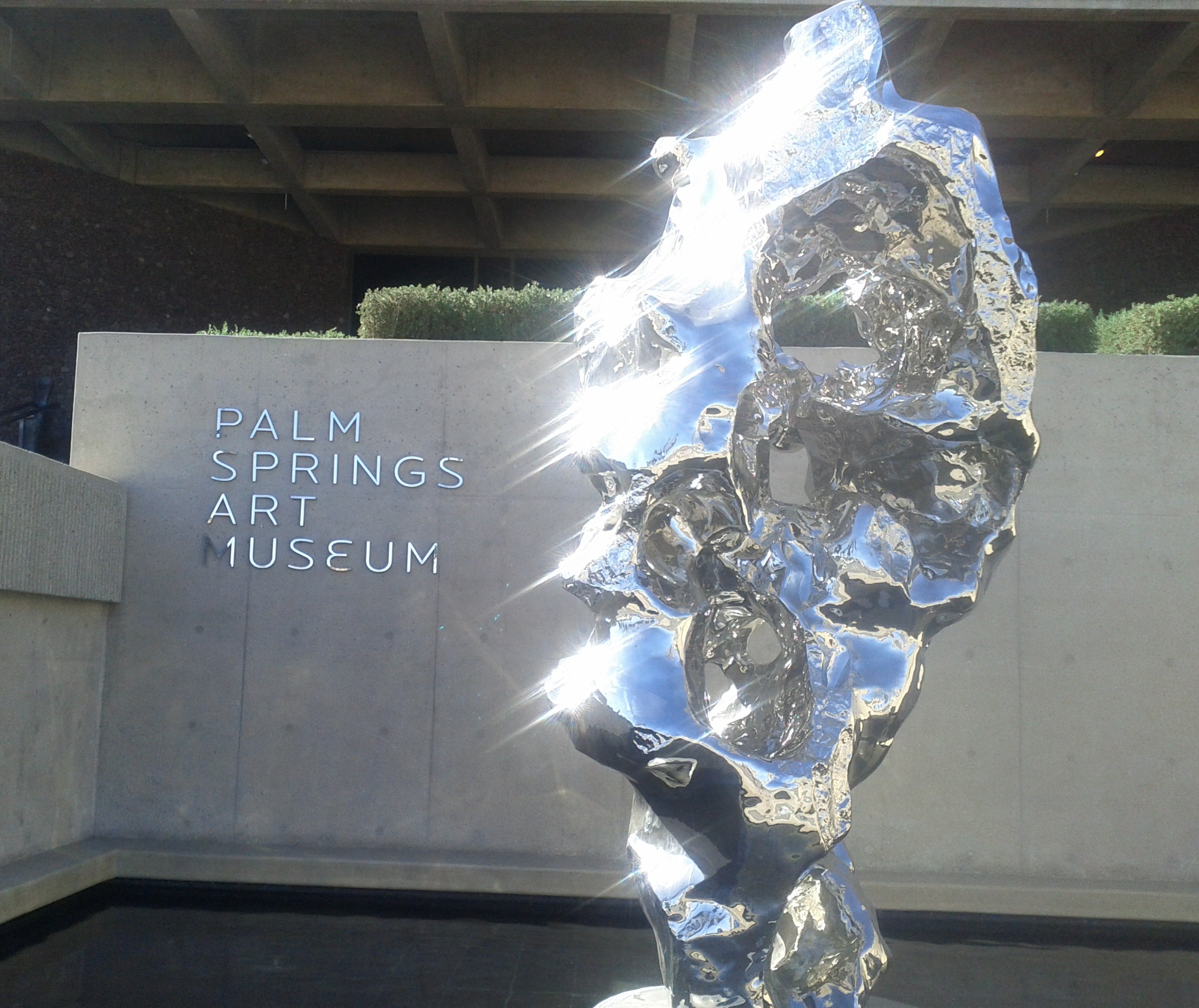
It’s always nice to visit the art galleries and museums in any city you happen to be visiting. I really enjoyed the Palm Springs Art Museum, established in 1938. The displays are culturally diverse, interesting, ethereal and thought provoking. A feast for the eyes.
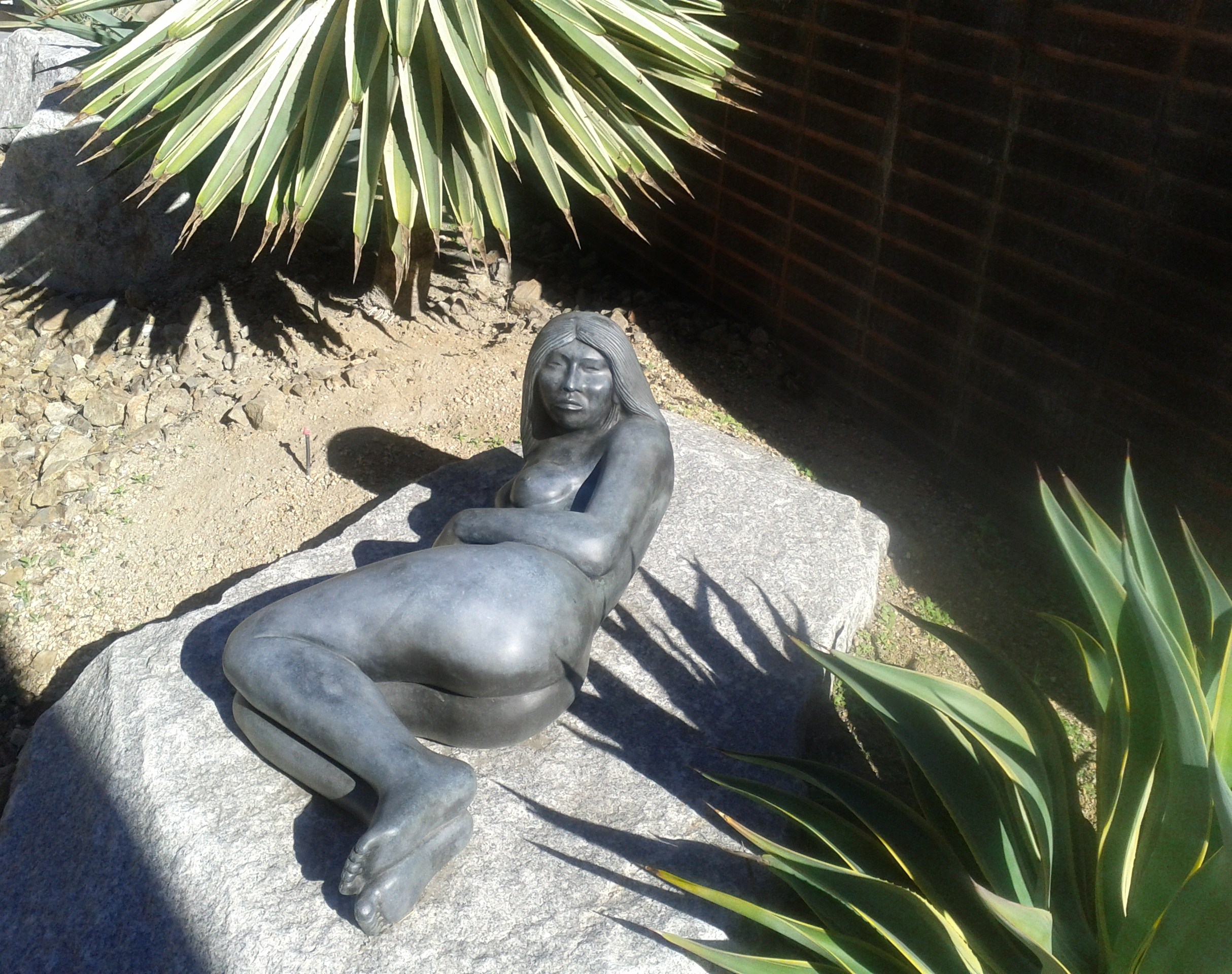
In the sculpture garden
What began as a museum about the desert has evolved into an oasis for the arts, focusing on international Modern and Contemporary painting and sculpture by artists such as Henry Moore, Barbara Hepworth, Robert Motherwell, Helen Frankenthaler, Duane Hanson, John Chamberlin, Anselm Keifer, and Anthony Gormley.
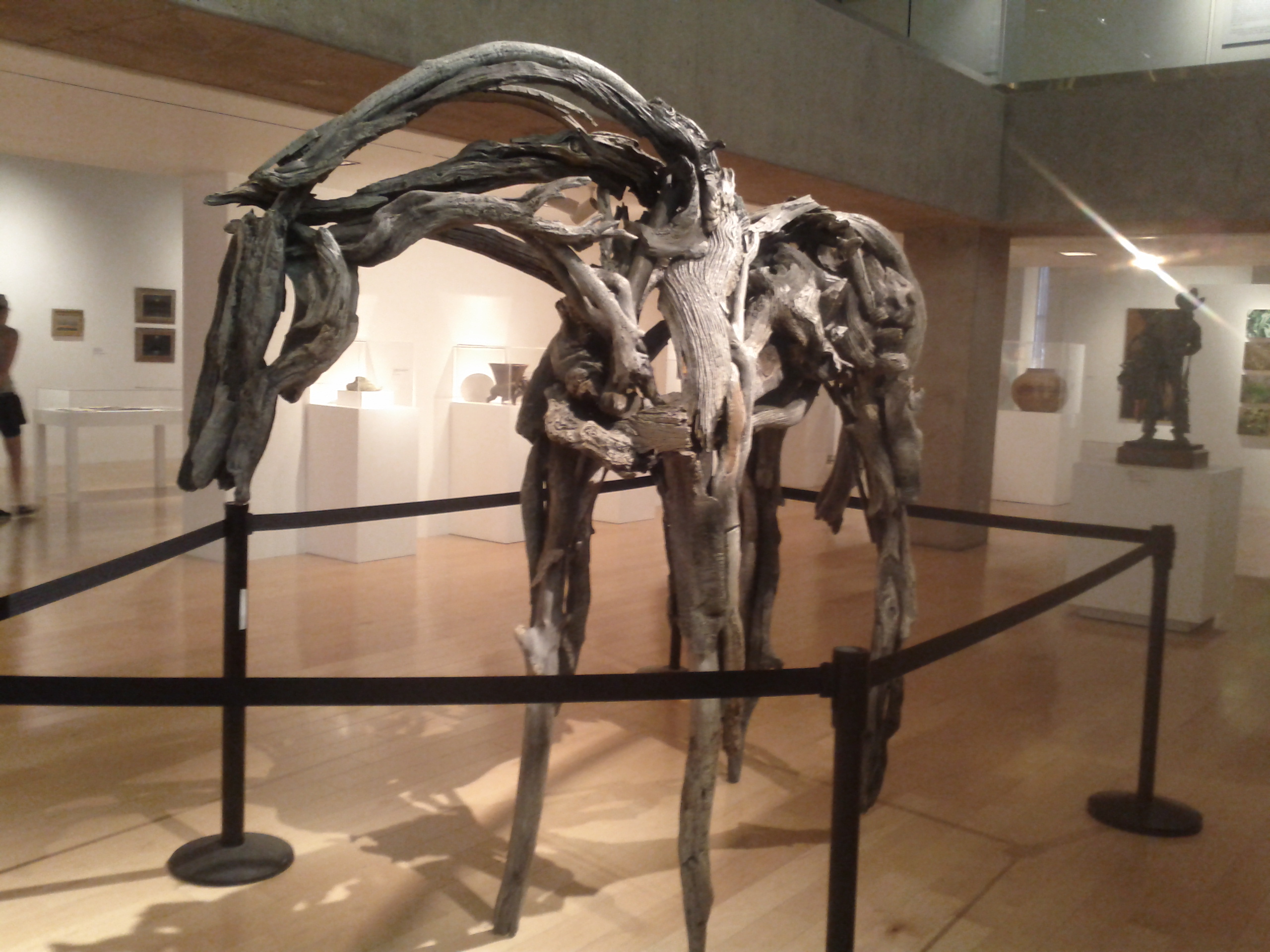
wood horse
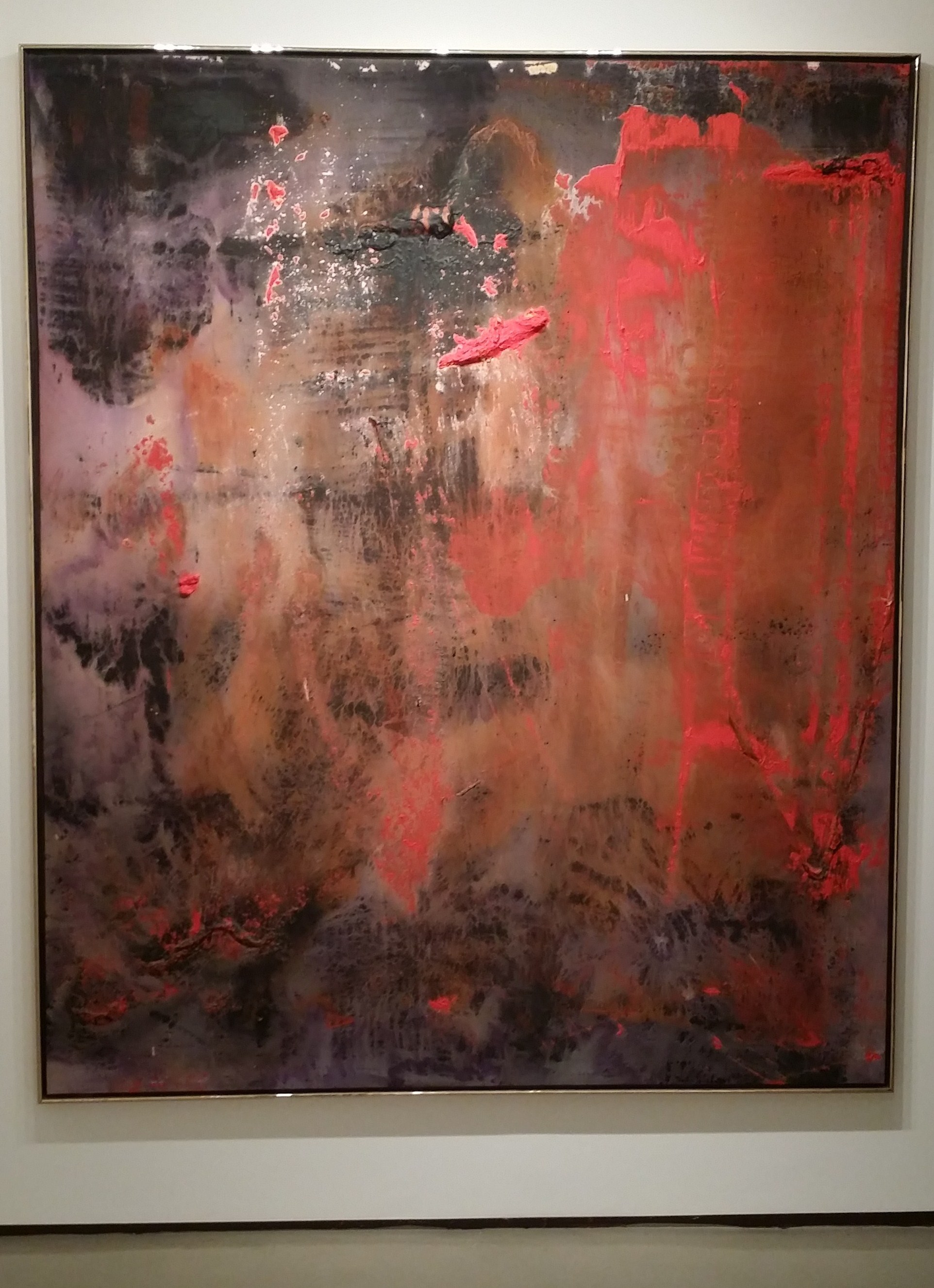
It includes works by historically significant west coast artists Sam Francis, Robert Arneson, Nathan Oliveira, Mark di Suvero, and Edward Ruscha, among others, as well as contemporary Native American artis
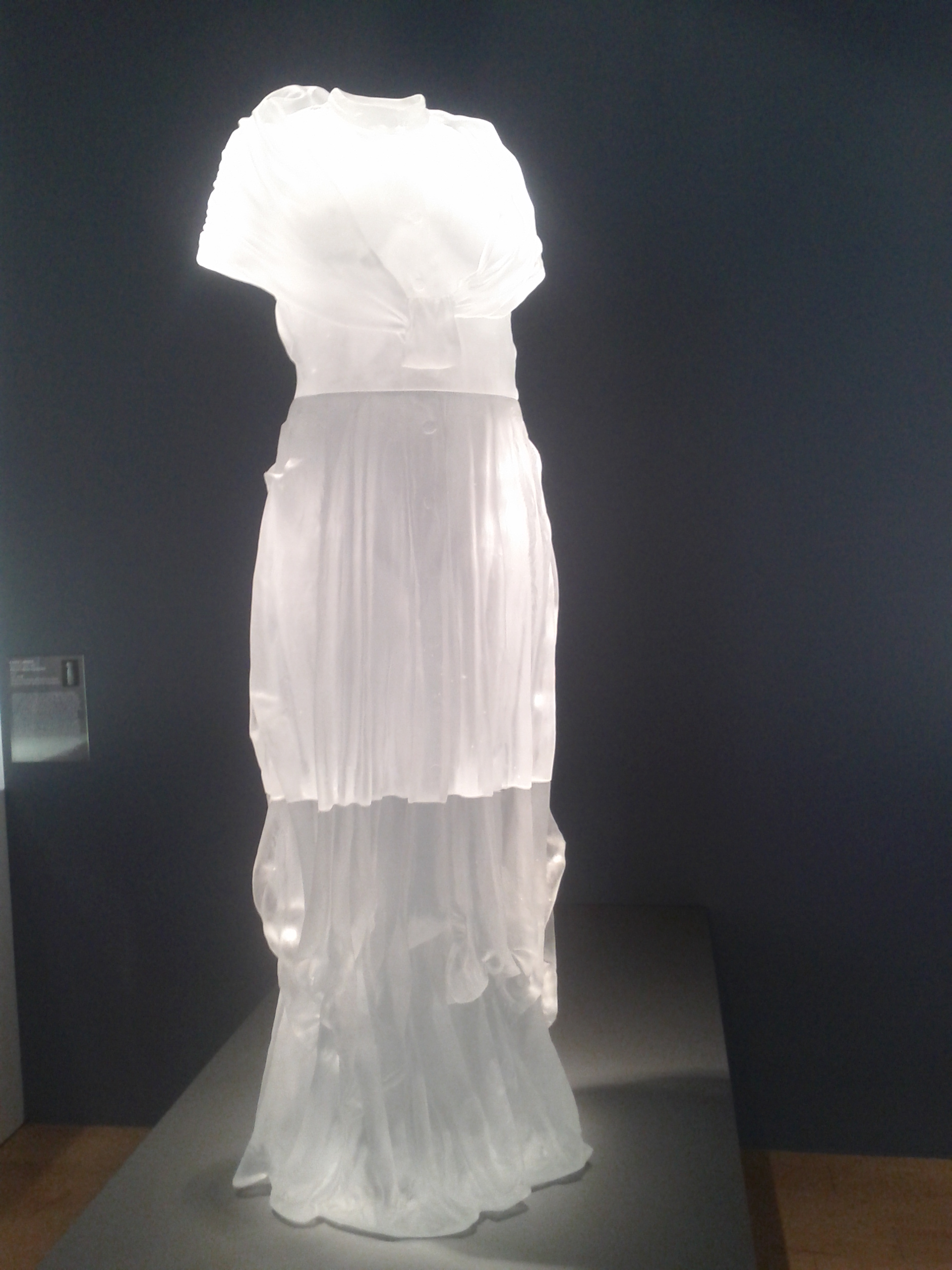
Karen LaMonte – Pianist’s Dress Impression
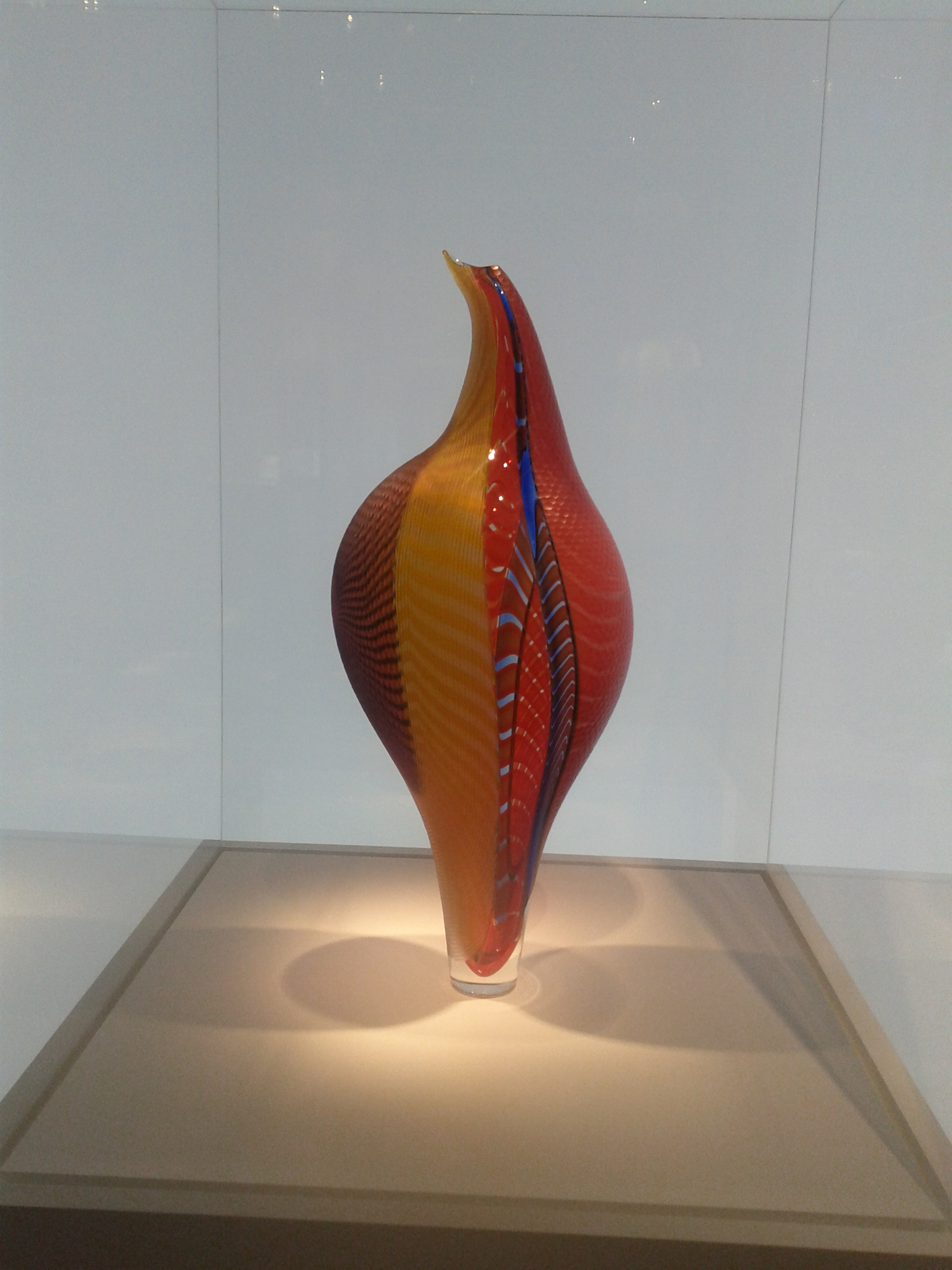
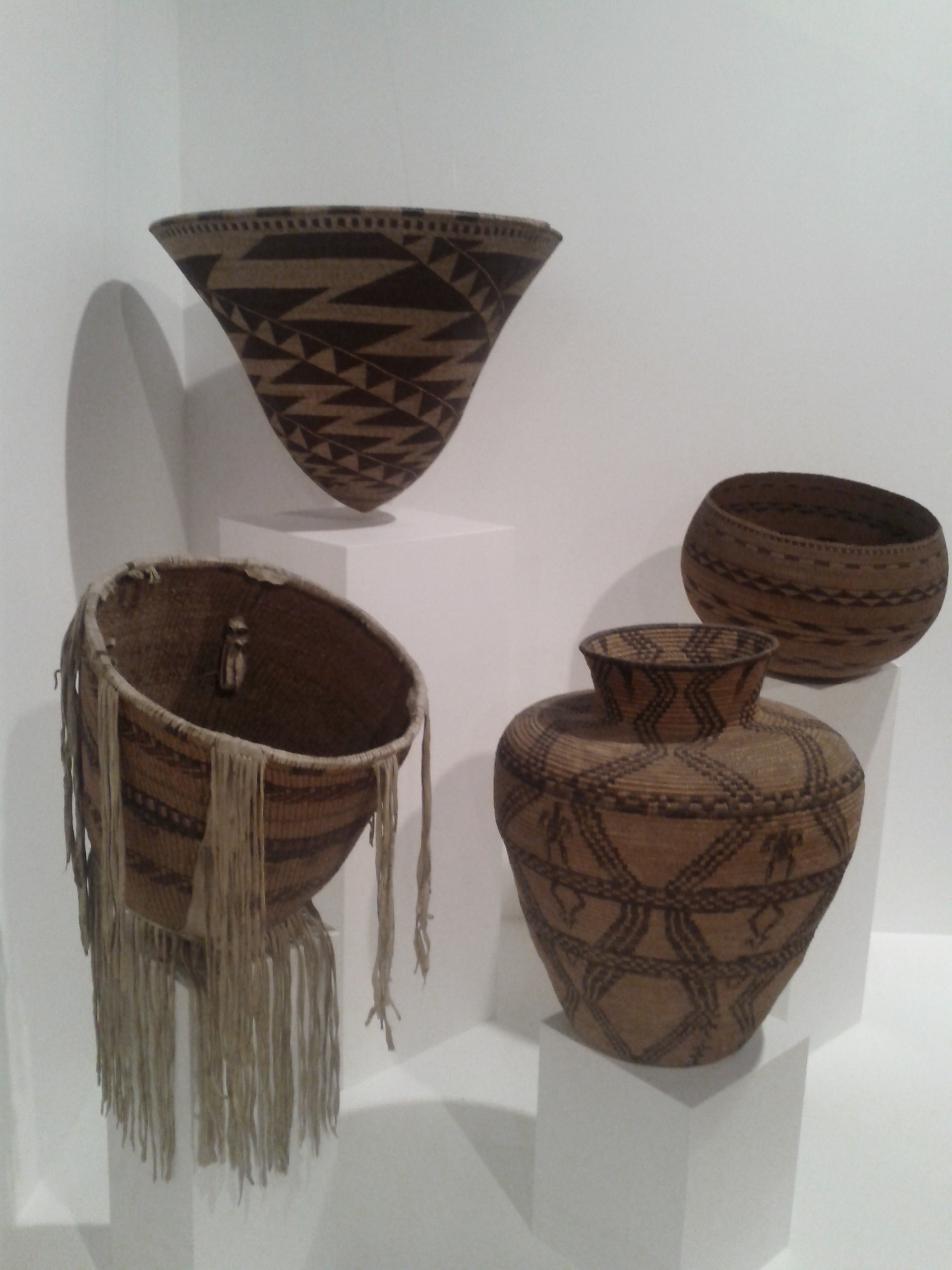
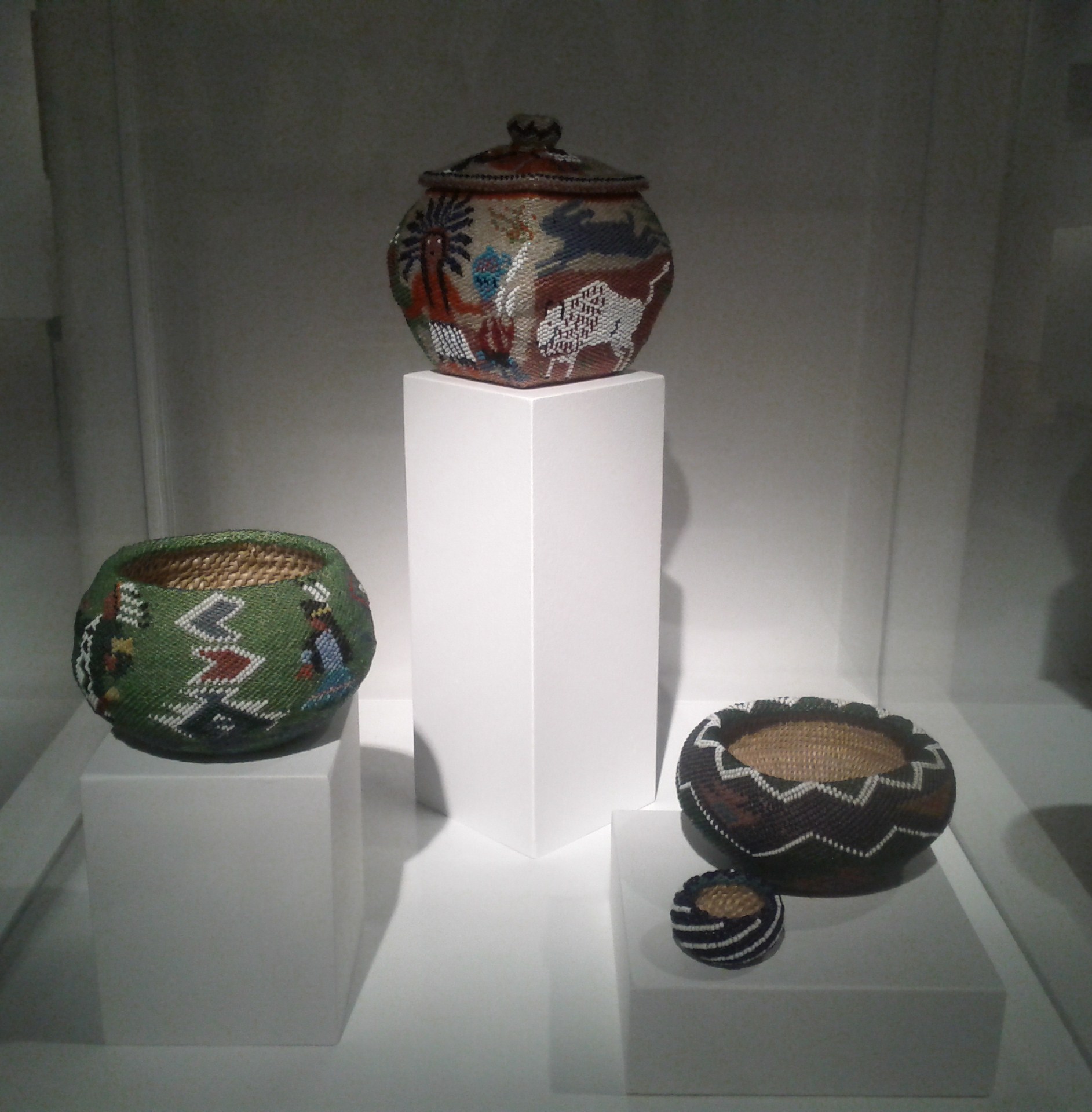
Additional areas of focus include Contemporary and Studio Art Glass by Dale Chihuly, Karen LaMonte, Howard Ben Tré, Lynda Benglis, and William Morris; Classic Western American Art by Thomas Moran, Charles Russell, Frederic Remington, Walter Ufer, and Agnes Pelton; Native American baskets; Mesoamerican artifacts; and Photography with special attention to natural, built, social, and leisure environments.
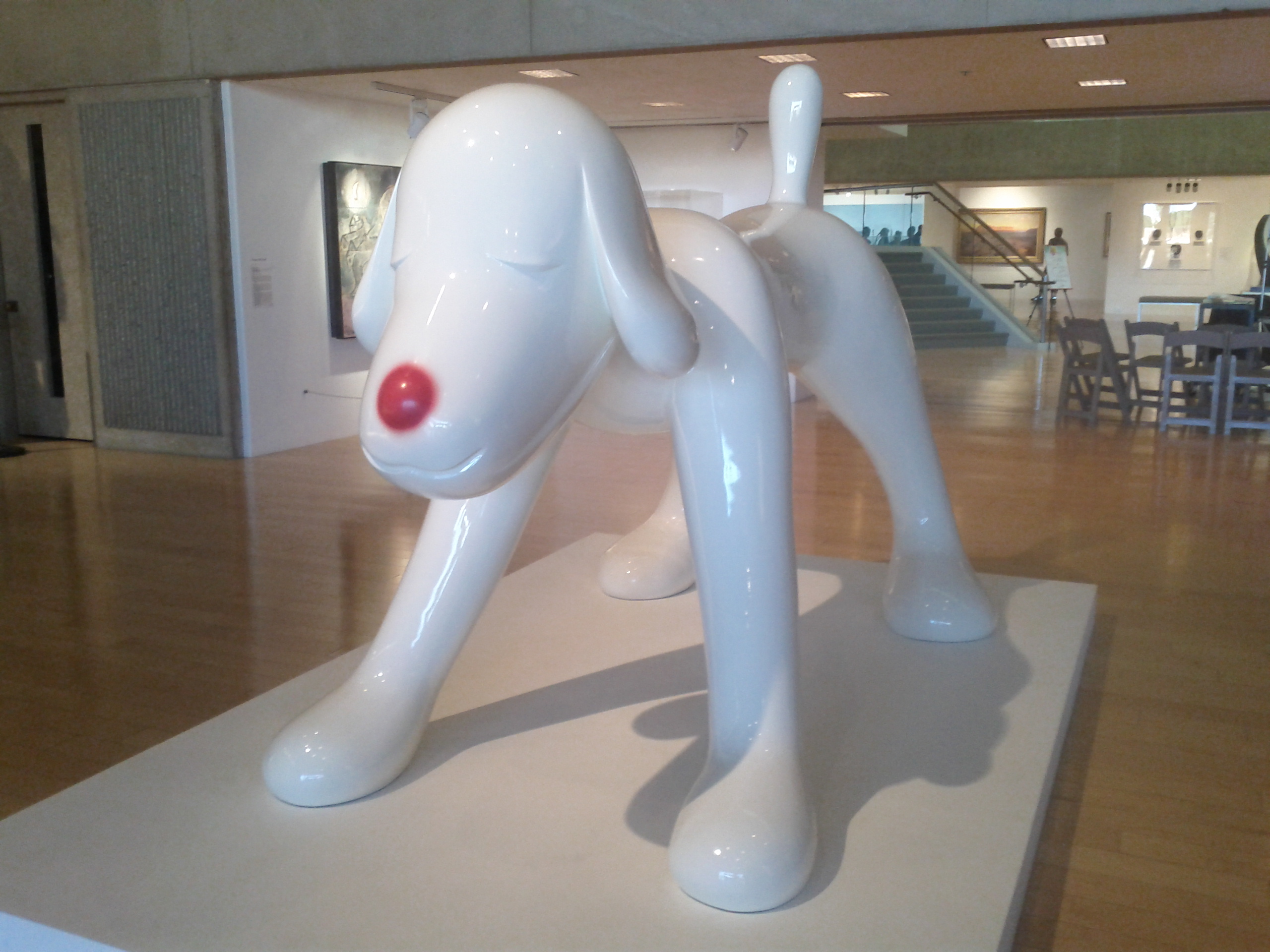
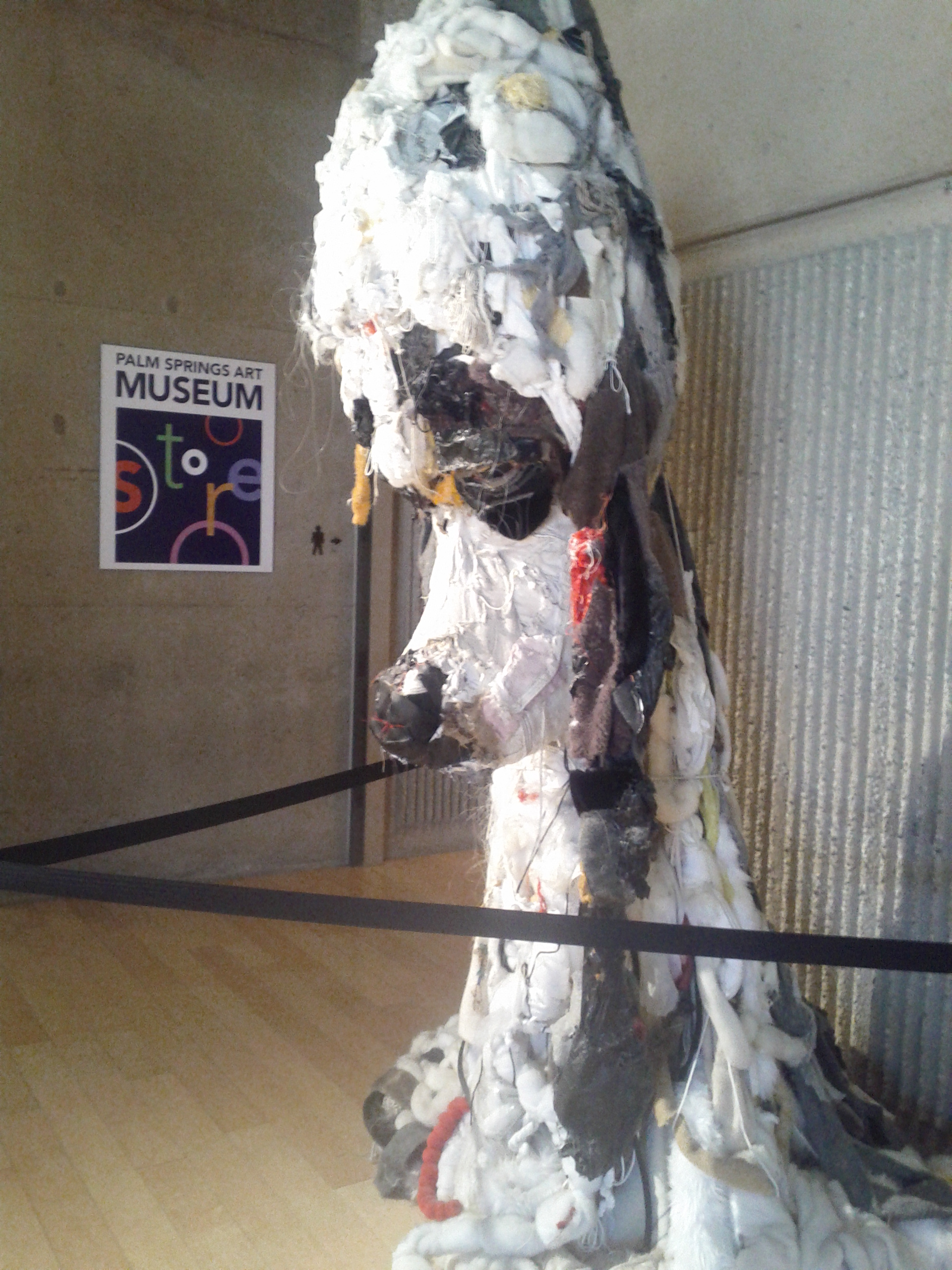
Yoshitoma Nara, “your dog” – fibreglass
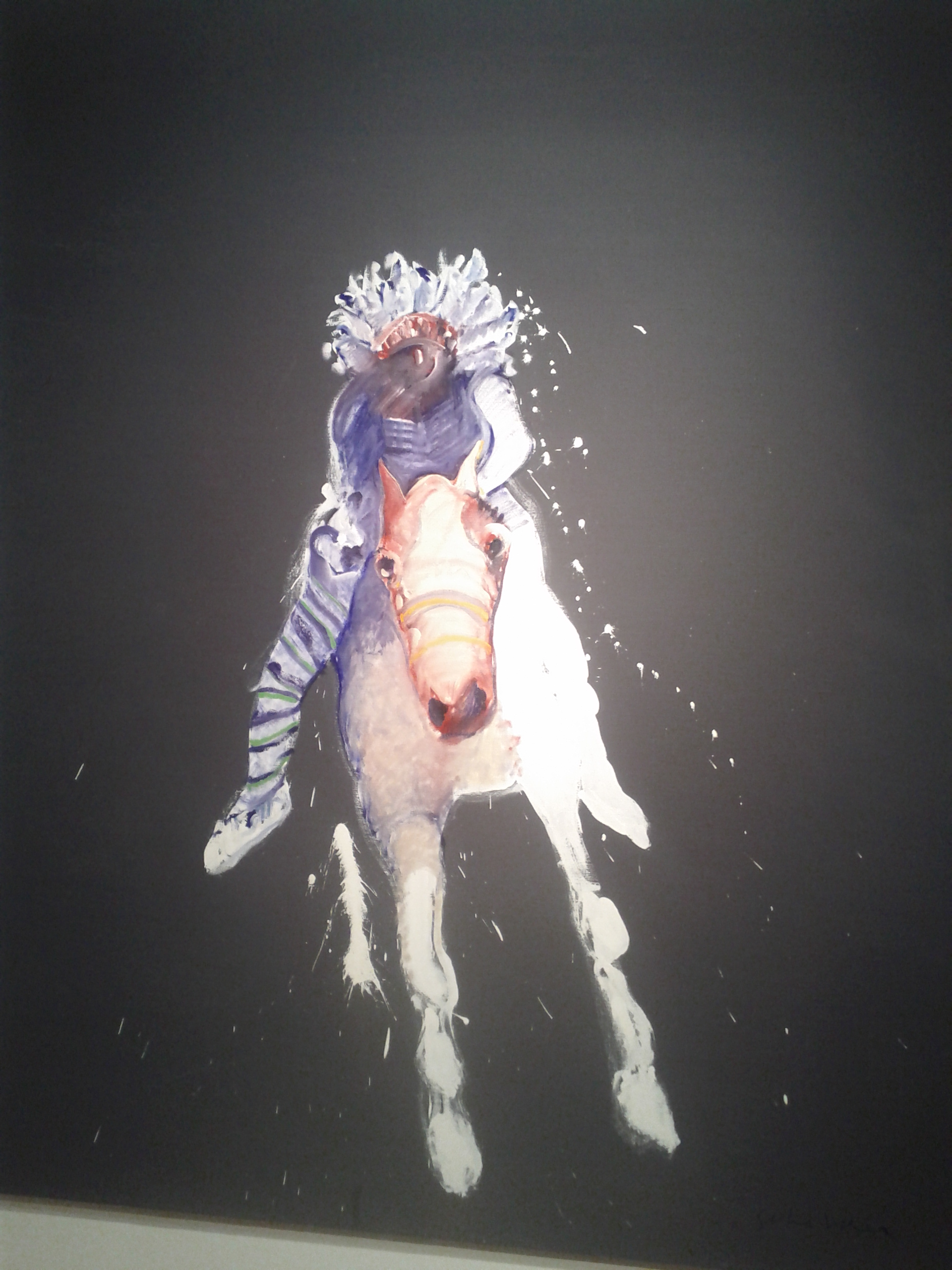
Warhol (brillo) & LichtensteinNavajo – natural handspun wool & synthetic dyesFritz Scholder – galloping indian on horse, acrylic on canvasPaiute willow & glass beaded baskets
Fashion and Art have always been inextricably intertwined. Think Yves Saint Laurent’s 1965 MondrianDressor the designs Elsa Schiaparelli conjured in the 1930’s from sketches and photos by Salvador Dali.
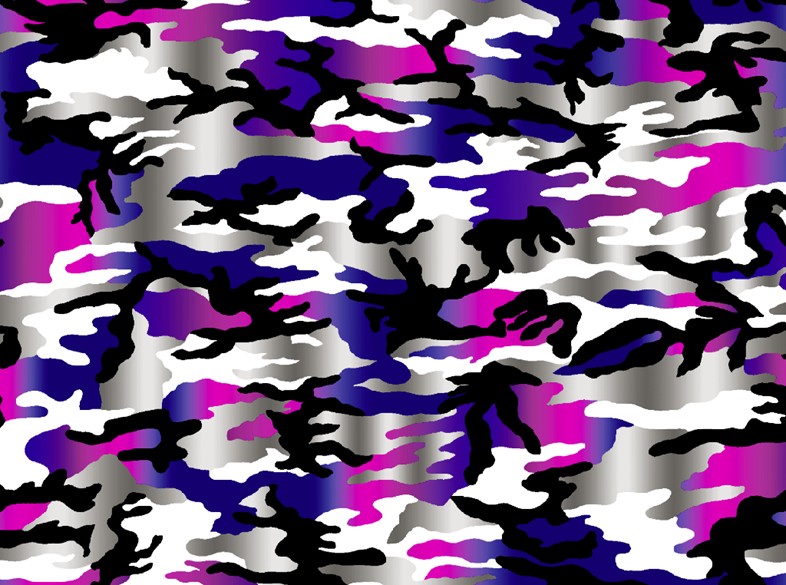
Looking back to Berlin-based Anselme Reyle’s limited edition collaboration for Christian Dior’s most fabulousaccessories.Known for his large scale abstract paintings and found object sculptures, Reyle delved deep into the label’s DNA, pinpointing such iconic pieces as the Lady Dior bag and infusing them with boldly toned twists or camouflage prints and just a splash of top-stitching on an ankle-strap wedge.
Reyle shot to fame in late 2007, when his stripe paintings sold for six figure sums, even as works by Andy Warhol and Damien Hirst remained unsold. Earlier that year, the artist’s profile received a boost when a purple foil-in-Plexiglas box sold for $192,000 at auction in London.
Reyle, whose works are characterized by bold brushwork, neon paint, 80s kitsch and silver foil, has also showcased his work at the ARKEN Museum of Modern Art in Copenhagen, the Gagosian in New York, Tate Modern in London and also showcased his abstract work in Mumbai.
“Energy and motion made visible – memories arrested in space” – Jackson Pollock
Sometimes a painting does not need an introduction. Such is the case with this stimulating “Phantom” abstract by Patrice Lesick (Acrylic on Canvas 77 x 64 inches – 1990). Elan Fine Art – Vancouver.
“Abstraction allows man to see with his mind what he cannot see physically with his eyes.…Abstract art enables the artist to perceive beyond the tangible, to extract the infinite out of the finite. It is the emancipation of the mind. It is an exploration into unknown areas.” – Arshile Gorky (Armenian-American painter).
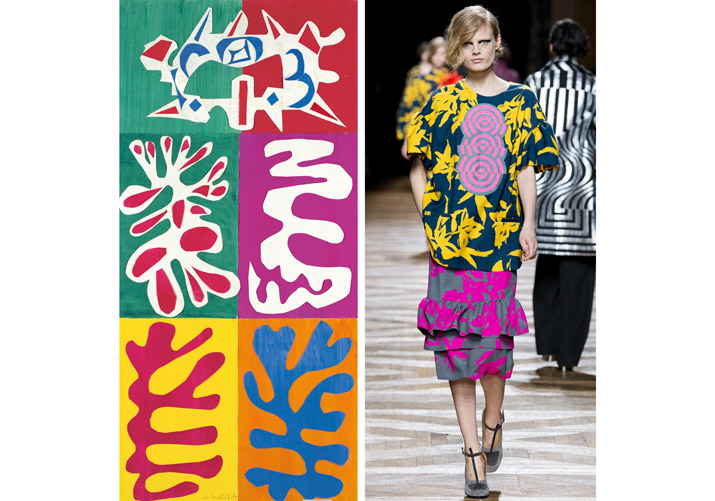
To compliment the new “Henri Matisse: The Cut-Outs” exhibit at the Museum of Modern Art, which opened October 12th, here are some Fall/Winter 2014 looks that evoke some of the artist’s most famous works.The masterful combination of contrast, line and color that Matisse was able to create with scissors is no doubt something that fashion designers today strive for as they cut their garments.
Perhaps these images will inspire you so much that you’ll want to go at your clothes with a pair of scissors…“Henri Matisse: The Cut-Outs,” is on view at the Museum of Modern Art in New York City October 12, 2014 through February 8,2015
Maybe a scarf or t-shirt but not the whole shebang for me. How about you?
High up on my trippy wish list is Barcelona. Not only for fun but to pay a visit to the Fundació Joan Miró and be reminded that life is filled with colour and shape and that the small things in the world are worth noticing and celebrating.
Playful, joyful, energetic and colourful, Joan Miró’s paint language appears very simple – bird, star, sun, moon, figure, colour, surface, and so on. But like the best poets, the artist’s juggling of these elements is sophisticated and playful at the same time. The results are unique, immediately recognizable and vibrant – a delight to behold.
Miró was passionate about art from an early age and after a failed attempt by his family to get him into business, he was allowed to pursue his artistic studies. His early work was influenced by the Fauve painters and Cubism. He admired Picasso’s work and eventually left Barcelona to live in Paris where he spent six months of each year, working alongside other artists in relative poverty. The other half of the year he spent in Spain on the family farm.
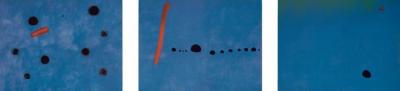
BLUE I, II AND III
Like his fellow Catalan artist, Salvador Dali, Miró is most closely associated with the surrealist movement started by Andre Breton. While Dali embraced surrealism wholeheartedly, with Miró it is more accurate to say that surrealism embraced him.
Constantly experimenting in his work, he was careful never to align himself completely with any one art movement. His take on the world is quirky, humorous, child-like in its depiction of subject-matter yet extremely sophisticated in its ability to comment on life’s experiences.
Dali, flamboyant, attention-seeking, extreme, takes us to the edge with paintings that show us a world that is distorted and disturbing. Miró’s approach is calmer, more playful. Always his own person, never interested in playing to the gallery, his work feels focused, centred, stable. His view of the world is uplifting, fun, life-enhancing.
Available at Elan Fine Art Limited,Vancouver
Above all, Miró reminds us how important a sense of humour is in life and his brilliant paintings, sculptures, wall hangings and ceramics give us permission to stop taking ourselves so seriously.
First off, I am no authority on collecting fine art but I admire beautiful paintings and would like expert advice on how to build a worthwhile collection. This means being true to my tastes while acquiring pieces that are of value.
Marc Chagall – I and the VillagePablo Picasso – Girl Before a Mirror
If you’re like most people, you know how to buy art on a piece-by-piece basis, but may not be all that accomplished at formulating a plan for making multiple acquisitions over the long haul, or in other words, building a collection. You can find art you like just about anywhere you look and in an incredible variety of subject matters, mediums and price ranges, but that can be confusing as well as intimidating. So how do you wade through it all and decide what direction to go in? How do you relate one purchase to the next? How do you organize or group your art together? How do you present it? And most importantly, how do you do all these things well? This is what collecting is all about; it’s the ultimate case of controlled purposeful buying.
Great collectors are often as well known and widely respected as the art they collect. Take the Rockefeller collection, the Phillips collection or the Chrysler collection, just to name a few. Collectors like these are famous because they demonstrate just as much talent in selecting and grouping their art as the artists show in creating it. Likewise, each work of art in a great collection commands premium attention as well as a premium price not only because it’s good, but also because of the company it keeps.
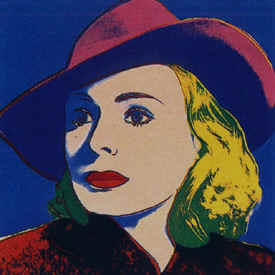
Andy Warhol – Ingrid Bergman
What makes a great collector great is his or her ability to separate out specific works of art from the millions of pieces already in existence and assemble them in such a way as to increase or advance our understanding of that art in particular or of the evolution of art in general. In any mature collection, the whole becomes greater than the sum of the parts, the collector comes to be accepted as a respected authority and in exceptional cases, goes on to set the standards, determine the trends and influence the future of collecting for everyone.
Regardless of how you view your collecting, whether serious or recreational, there are techniques that you can use to maximize not only the quality and value of your art, but also your own personal enjoyment, appreciation and understanding of that art. Step one is being true to your tastes.This means acknowledging that you like certain types of art regardless of what you think you’re supposed to like or what seems to be the current rage. All great collectors share this trait; that’s one thing makes their collections stand out. When personal preference is ignored in favor of the status quo, one collection begins to look just like the next. A few people dictate, the masses follow, everyone walks in lock-step, and the art you see from collection to collection becomes boring and repetitive.
Collectors who aren’t afraid to express themselves yield exactly the opposite results.
Source: artbusiness.com
A few quotes I really like:
“Art must be an expression of love or it is nothing” ~ Marc Chagall
“Art is literacy of the heart” ~ Elliot Eisner
“The aim of art is to represent not the outward appearance of things, but their inward significance” – Aristotle
A continuation of my post from last Monday on the Art of Collecting ART and What Makes Good Art – answersfrom Art World Pros. However this discussion will always be continuing because everyone’s opinion differs. Here is one more:
Damien Hirst’s Spot Painting – Gagosian gallery, Paris. As the title promises, Spot Paintings features borrowed and newly created works of art featuring the UK-based artist’s signature dotted paintings. Different colors, sizes, and shapes were all variations on the theme.
Scott M. Levitt, Director, Fine Arts, Bonhams & Butterfields, Los Angeles:
Quality, quality, quality. This is the mysterious and subjective key to good art. In all periods of art there are good and bad works of art. I find that defining quality in representational art is easier than in modern and abstract art. The other key word is looking. Everything looks good when you first start looking at art, as you have nothing to compare it to. As you hone your eye, you begin to distinguish between good and bad. The more you look at art, the easier it is to determine what is good and what is bad.
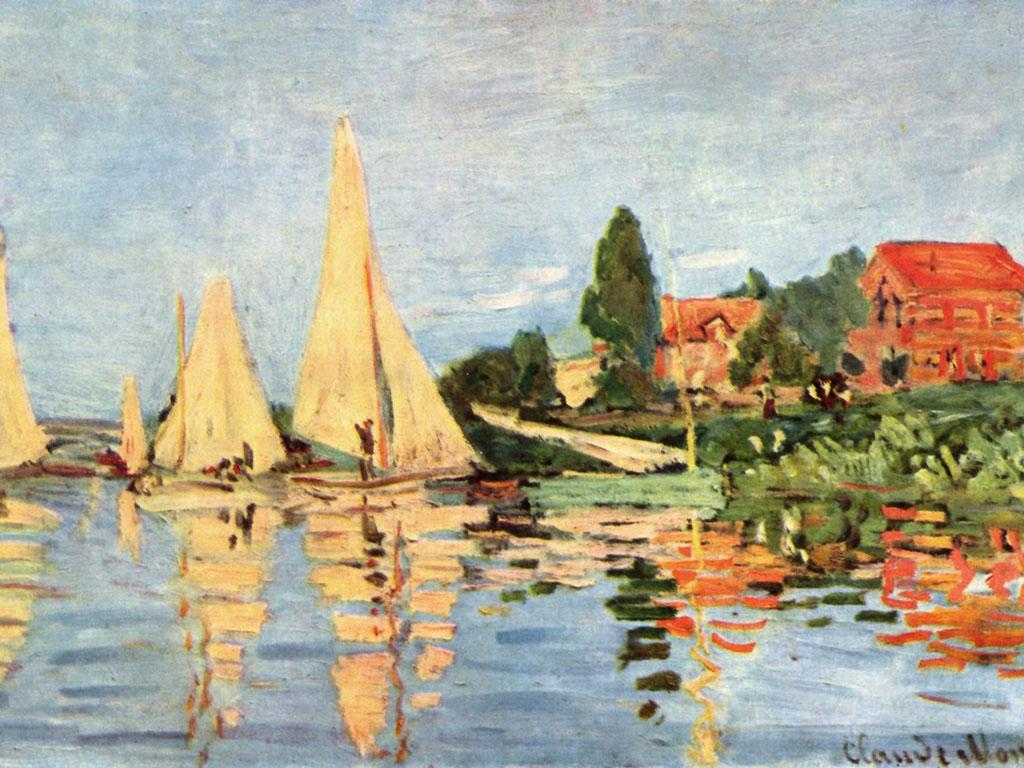
Claude Monet Landscape Painting
Also, there are two schools of thought as to what is good and bad. Some people believe that good and bad are personal distinctions and entirely in the eye of the viewer. Others believe that there is good art and crap art and no one can tell them otherwise. I think the real answer is somewhere in between, and this is based entirely on the quality of the eye of the viewer.
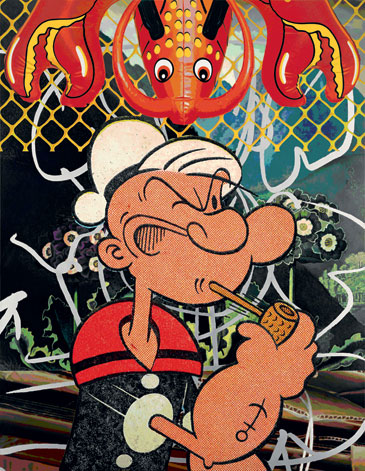
Each area of art requires its own set of criteria when determining good and bad, i.e. painting, sculpture, printmaking, craft, conceptual etc. Personally I hold originality to be important in this determination. For contemporary artists that can be tough. Most of what is being created today is, in my personal opinion, not very original. To me a Mark Rothko is a masterpiece, while a thousand color-field artists after him are not. I find Pop artists brilliant and Jeff Koons completely reactionary. There is originality in contemporary art, but it is tough to find.
Mark Rothko contemplation
It is also tough when the art market influences good and bad. I would like to say that monetary value determines quality, but unfortunately they are often unrelated, as many factors can influence the value of artwork other than quality. Damien Hirst is an interesting and relatively unique artist, but I don’t think his prices at auction reflect how good he is. When one of his works is worth more than a good Monet landscape, something is very amiss.
I think the best “take away” here is that if you want to know what is good and what is not, you have to get out and look for yourself and make that decision. Take a year… and make it a rule to visit museums and galleries every weekend and read art-related books and magazines as much as possible in as many art fields as possible. You will have your answer. If you don’t use this approach, you will officially have no eye or ability to make these distinctions.
If you are in this purely for your own collecting interests, then look at as much art as possible in all fields and eras as I have just said. If you are in it purely to make money, then buy a subscription to Artnet or E*Trade. It’s your call.
When it comes to art everyone seems to have an opinion. Of course everyone has different tastes and what someone loves, someone else might despise. But there is art…and then there is ART!
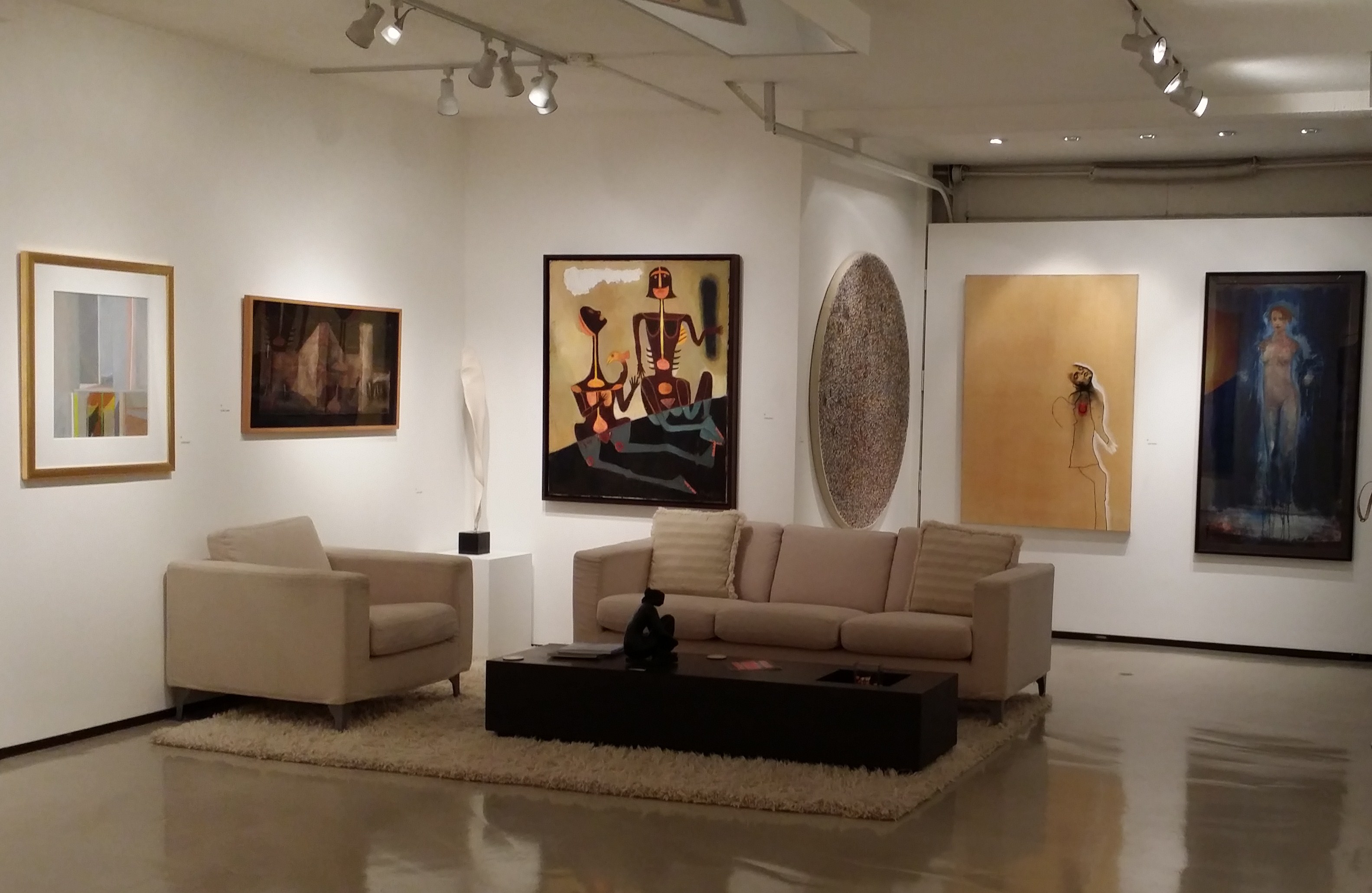
Elan Fine Art Gallery, Vancouver
Have you ever wondered how experienced art world professionals separate out the best art from the rest?
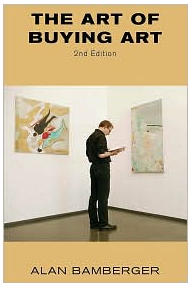
I came across a website about the business of ART by Alan Bamberger, a San Francisco art consultant, advisor, and independent appraiser of all aspects of original works of art including art-related documents, and art reference books. He has been selling art since 1979 and has been consulting and appraising for artists, galleries, businesses, organizations and collectors since 1985. He is the author of “The Art of Buying Art.”
Mr. Bamberger asked some Art World Pros for answers. Here they are:
Brian Gross, Brian Gross Fine Art, San Francisco: Art that is unique in conception and well executed.
DeWitt Cheng, freelance art writer and critic, Bay Area, CA: Good visual art looks stunningly right and, in retrospect, obvious, or inevitable– yet it’s also continually surprising. It is a powerful paradox. How can someone have possibly made this? How in the world could it not have been made?
A magnificent painting by Joseph Kyle hangs in a downtown office bringing light and life to an already beautiful space.
Cheryl Haines, Haines Gallery, San Francisco: Clear intention, unwavering dedication, patience, perseverance, self awareness and the drive to make for yourself and no one else.
Robert Berman, Robert Berman Gallery, Los Angeles: Reality is by agreement. The reality of art is usually by some kind of agreement. The arbiters are the museums, the museum curators, the people who spend their lives and their time actually being critical of what they see and judging what they see. If you add in four or five art critics who are then able to write about it, if you get four or five major collectors who are passionate about what they collect to patronize it, and several major auction houses to auction it, then a consensus or vetting process begins to unfold. Of course there’s magic dust involved, so this is not a sure way, but it’s a safe way to go about judging what is good art.
by Marc Séguin
Catharine Clark, Catharine Clark Gallery, San Francisco: When it has its own internal logic. It took me a long time to get to this place, but that is the answer that I now give. I used to say that good art is like porn; you know it when you see it.
Mat Gleason, Coagula Art Journal, Los Angeles: The moment and the memory. It has to be something that engages you, on one of a million levels, in person, and establishes a memory that remains positive. This can be an artwork that challenges you and then makes you think about it days later or one that seduces you and delivers pleasant feelings days later. There are as many ways to produce this 1-2 effect as there are artists, but so much art that grabs you is glib and you forget it or is lousy and only recalled as something you sped past or upon which you only regret wasting your day.
Robert Shimshak, Collector, Berkeley, CA:
Marc Chagall
Good art is timeless. It will assume a new relevance to each generation, and to yourself as you grow. It will connect to the past and feed the future. It has a simple and rigorous beauty that commands your gaze and thoughts whenever you look at it. The best work will break your heart. As a collector, you will know it when you see it. It’s personal. You will not have to be convinced by anyone to acquire it; it will be something you simply must have. It is like a good marriage that completes a feeling inside you, something that lasts forever and grows with time.
Marsea Goldberg, New Image Art, Los Angeles: Originality, representational of the time when it was created, passion, a frame of reference, freshness, intellectual content, and is uniquely identifiable as the work of that particular artist. The art should effortlessly have as many of these characteristics as possible– or none at all. It also has to have magic; if you try too hard, the magic could fly away. The artist needs to have a vision and it’s important that the work doesn’t go into a dead end. It’s helpful if the artist has the capacity to reinvent their creativity through various skills and mediums.
Robert Flynn Johnson, Curator Emeritus, Achenbach Foundation, San Francisco: It is truly an unanswerable question without stating something that appears pretentious… the perception of what makes art “good ” revolves around the application of that difficult word, “taste” which I observe to be in considerably short supply in society today. People are not willing to take the time and effort to develop their own personal sensibilities through study or reflection but are prone to “go with the flow” from the “tastemakers” so as not to be seen as square and out of touch… so sad…
Jack Hanley, Jack Hanley Gallery, New York: I like something where the intensity of the experience of the person making it comes through. Maybe somebody is turned on by the nature of the materials, a psychological issue or some kind of narrative. Maybe some people have greater intensities of experience than others. What makes art good on a grander scale is how extraordinary and profound the components of those experiences are. Some artists are maybe better than others at tapping into their own idiosyncrasies and conveying them to others.
Justin Giarla, The Shooting Gallery, White Walls & 941 Geary, San Francisco: What makes good art is when you see a piece from across the room, you immediately fall in love with it without knowing anything about it and are in love with it forever.
Paul Kyle, Private Art Dealer, Elan Fine Art, Vancouver: A good work of art for me, is a piece that has the ability to awaken and remind me of my essence or the highest aspect of my being, if you will. To successfully accomplish this, I as viewer, must be open to allowing the work to reveal itself to me without pre-judgement, what I call contempt prior to investigation. Also, a great work of art gets better the more it is viewed. Often it is the work that has an immediate impact that is the one that wears thin over time, being the one with little real substance, as opposed to the one that takes time to reveal itself as the one with the greatest depth and meaning. There are certain elements however that the work must contain before the experience I seek is possible. Two elements that I look for in art are: Beauty and Elegance.Beauty, not referring to “pretty” but beauty referring to directness and honesty. Elegance is where there is nothing that can be added or taken away from the individual work. This can only be accomplished by an artist with great technical competence and authentic original vision.
Alan Bamberger, itinerant artster, San Francisco: At its most fundamental level, good art is an effective combination of concept, vision and mastery of medium (the ability to get the point across). Good art is also uncompromisingly honest, unselfconscious, bold, ambitious, enlightening, original, challenging, and a feast for the senses. It doesn’t necessarily have to have all of these qualities, but at the very least it has to keep you coming back for more… and never ever bore.
An easy-to-understand book on how to buy, sell, evaluate, appraise, and collect art. Soft cover; 284 pages. By Alan S. Bamberger, noted art expert, author, and syndicated columnist. Available at http://amazon.com
ART is part of our culture and can improve our LIFE
By art alone we are able to get outside ourselves, to know what another sees of this universe which for him is not ours, the landscapes of which would remain as unknown to us as those of the moon. Thanks to art, instead of seeing one world, our own, we see it multiplied and as many original artists as there are, so many worlds are at our disposal, differing more widely from each other than those which roll round the infinite and which, whether their name be Rembrandt or Vermeer, send us their unique rays many centuries after the hearth from which they emanate is extinguished. (Proust)
“What do I ask of a painting? I ask it to astonish, disturb, seduce, convince.” – Lucian Freud
Agnes Martin
When I think of art I think of beauty. Beauty is the mystery of life. It is not in the eye it is in the mind. In our minds there is awareness of perfection.
What I say is that we’re capable of a transcendent response, and I think it makes us happy. And I do think beauty produces a transcendent response.” – Agnes Martin
Albert York
“The modern world just passes me by. I don’t notice it. I missed the train.”
“I think we live in a paradise. This is the Garden of Eden, really it is. It might be the only paradise we ever know, and it’s just so beautiful, with the trees and everything here, and you feel you want to paint it. Put it into a design. That’s all I can say.” – Albert York
Joan Miró – 1927
“I feel the need of attaining the maximum intensity with the minimum of means. It is this which has led me to give my painting a character of even greater bareness.”
“What I am looking for… is an immobile movement, something which would be the equivalent of what is called the eloquence of silence, or what St. John of the Cross, I think it was, described with the term ‘mute music.'” – Joan Miró
“Art enables us to find ourselves and lose ourselves at the same time” ~Thomas Merton

On all my previous visits to L.A. I never ventured to the Getty Villa until now. I really didn’t realize what I was missing and it’s quite fascinating especially if you’re into antiquities. The grounds alone are worth the outing, and the majority of art and sculptures at this Malibu hilltop hideaway are original pieces with a few recreations.
























 Girl Who Would be KING on Life, Style and INSPIRATION.
You must be logged in to post a comment.