If I’m going to use an eyelash curler at all it will always be one from iconic Japanese beauty brand Shu Uemura. No other curler compares – case closed! I like their mascara too but have not tried any other makeup from them. But I do admit to judging a palette by it’s cover.
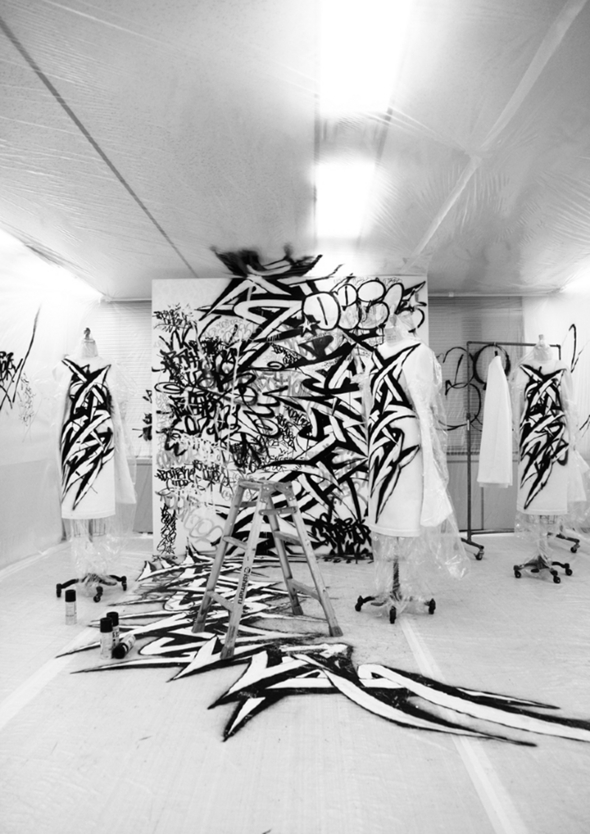
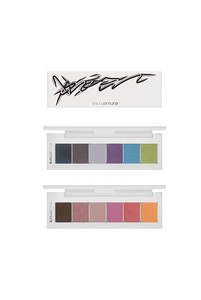
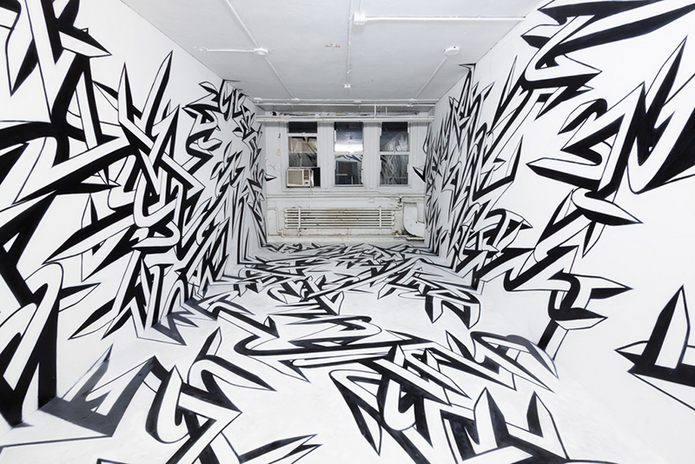
I just found out about their latest collection which is one for the books (and your makeup bag). The brand teamed up with artist Oyama Enrico Isamu Letter (a Tokyo native who now calls Brooklyn home) to devise a range of colors and compacts guaranteed to help you stand out in a crowded concrete jungle. Which would you rather be: warm and vibrant or cool and chic?
Shu Uemura Haute Street Eye Shadow in Cool x Chic and Warm & Vibrant (me). $65
Despite the fact that Shu Uemura’s international artistic director, Kakuyasu Uchiide, paints faces and Isamu oftentimes considers the city his canvas: there are more similarities between makeup and urban art than one would think.
Oyama’s explanation is “Just as a piece of street art uniquely corresponds to specific spaces in an urban environment, makeup also corresponds to shapes and functions of each part on a face, which varies person to person.” And similar to how an artist establishes an identity through his/her work, makeup can be used to “transform” its wearer from “ordinary me” to “ideal me,” he added. The limited-edition line includes two eyeshadow palettes, highly pigmented lip and cheek tints, creamy eyeliner pencils, bright lipsticks, and a striking brush set—some of the tubes and compacts emblazoned with Oyama’s work.
Eli Broad inspires both admiration and fear in the L.A. art scene.
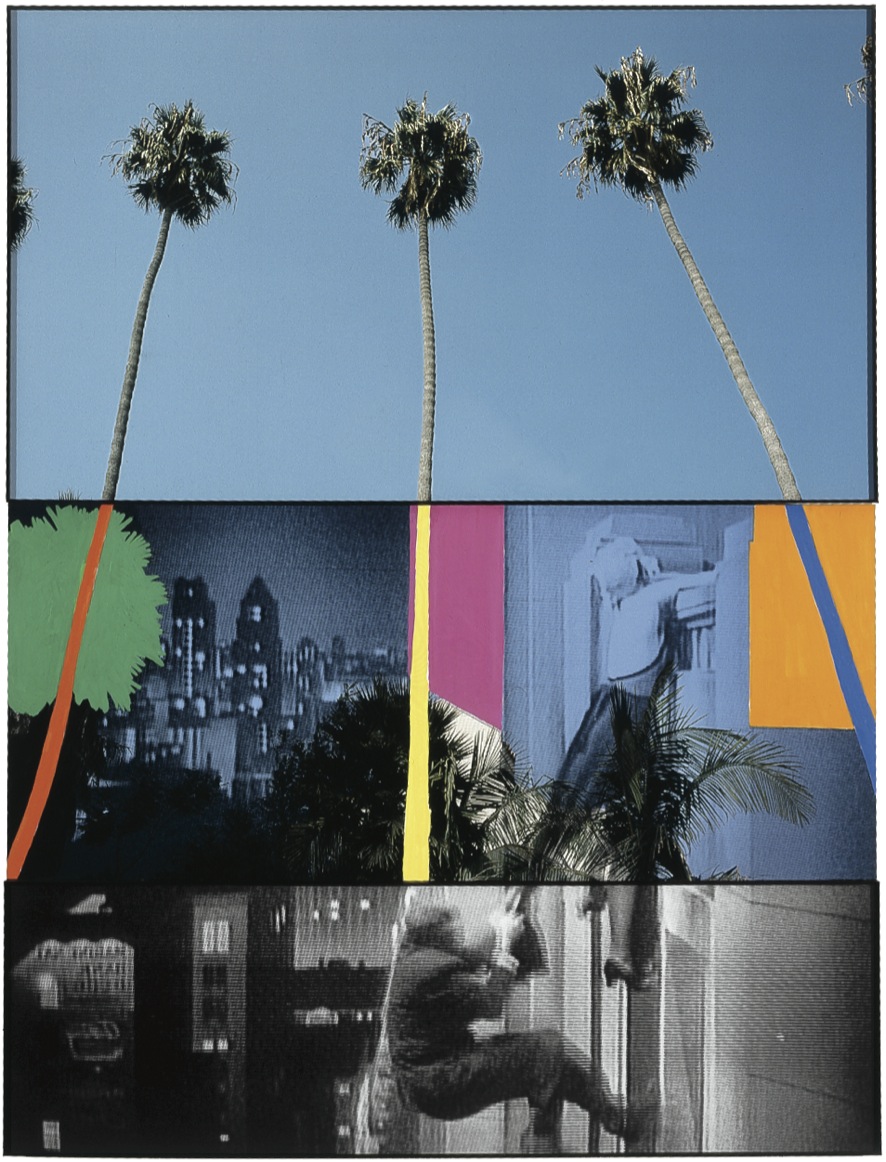
John Baldessari’s “Overlap Series: Palms (with Cityscape) and Climbers,” from Eli and Edythe Broad’s collection. COURTESY MARIAN GOODMAN GALLERY
Despite the enormous sprawl and diversity of Los Angeles, it still has the power dynamics of a small town. When people refer to “Eli,” everyone knows whom they mean.
Broad, a multibillionaire who made his money in the decidedly unglamorous businesses of tract housing and insurance, is the Lorenzo de’ Medici of Los Angeles—the city’s singular patron, especially of the arts – a man who can close his eyes and see the future.
Photo: Martin Schoeller
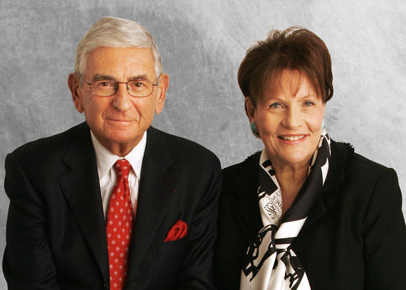
After creating shareholder wealth by providing vital homebuilding and retirement savings services through the two Fortune 500 companies he created – KB Home and SunAmerica, Inc. – Eli Broad and Edythe, his wife of 57 years, are now devoting their time, energy and resources to philanthropy.
Although Broad is the subject of constant conversation, few people are willing to criticize him openly. He often declares that Los Angeles should not be a “one-philanthropist town,” but the lack of competition has worked to his advantage.
Los Angeles ranks forty-first in charitable giving among American cities, behind Minneapolis and Detroit. Still, Broad envisages L.A. as comparable to New York in its prominence and its cultural reach, and, in the past decade or so, it has indeed joined the world’s great art centers, with a thriving artists’ community, art schools, museums, and a rapidly increasing number of galleries and collectors.
In the sixties, when Broad started building his fortune in Los Angeles, the city had no serious opera, ballet, or theatre. It had a flourishing group of artists—Ed Ruscha, Robert Irwin, John Baldessari, Ken Price, Larry Bell, Edward Kienholz, and others—but they relied on New York galleries to show their work. The Los Angeles County Museum of Art (LACMA) didn’t open as an independent institution until 1965, nearly a hundred years after the Metropolitan Museum; it was built not with old money, like such institutions as the Whitney and the Frick, but, in part, with funds from an entertainment-business committee headed by Tony Curtis and Billy Wilder. The local attitude toward contemporary art was often unwelcoming. In 1966, LACMA showed Kienholz’s “Back Seat Dodge ’38,” which depicted a couple having sex in a car, and it provoked such an outcry that the county threatened to withdraw funding.
Broad apparently found a lot of contemporary art ridiculous. In the beginning, he thought Roy Lichtenstein was a joke; now he has a major collection of Lichtenstein. He would ask everybody who was informed what their opinion was and put together his world view based on that. That’s what a good C.E.O. does.
For more than half a century, Broad has taken inspiration from a paperweight on his desk. On it is a quote from George Bernard Shaw: “The reasonable man adapts himself to the world. The unreasonable one persists in trying to adapt the world to himself. Therefore, all progress depends on the unreasonable man.”
The Broads’ first major purchases were a van Gogh, a Miró, a Matisse, and a Modigliani. Broad saw that art brought entrée into a different kind of social life—one in which, travelling to any city in the world, he could have connections to artists, collectors, and dealers. “When you’ve got the big house, and you’re driving a Jaguar, what differentiates you from every asshole dentist in the Valley?” Shelley De Angelus, who worked for Broad as his curator in the eighties and nineties, said. “Art was a way for Eli to distinguish himself.”
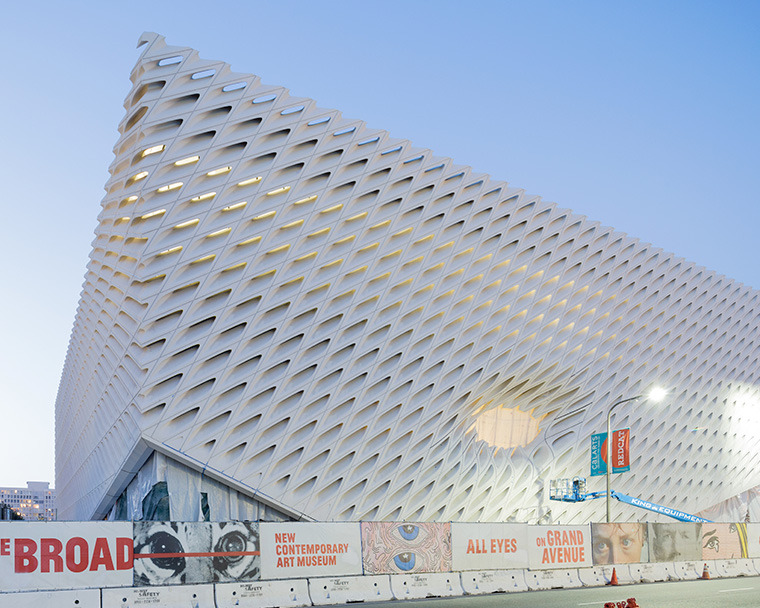
Now the Broad’s are the philanthropists behind a new contemporary art museum being built on Grand Avenue in downtown Los Angeles named appropriately, The BROAD.
The BROAD
The Broad
The Broad has suffered some significant delays in opening, but on September 20th, when the doors do finally swing open, Angelenos can expect to find an entirely columnless, sky-lit gallery designed by Diller Scofidio + Renfro. And then all the impatience will surely be forgotten. The museum will house and continually exhibit Eli and Edythe (aka Edye) Broad’s collection of contemporary art, which is one of the largest and most significant worldwide. Plus, they’ve got great taste and have amassed large collections of works by artists like Cindy Sherman, Roy Lichtenstein, Jeff Koons, and Christopher Wool. The fact that restaurateur Bill Chait of Bestia and Republique fame and Tim Hollingsworth of The French Laundry are teaming up on the restaurant next door should provide LA residents with even more incentive to head downtown.
Eli & Edythe Broad
Source: (for the Billionaire) condensed from a large article How Eli Broad took over Los Angeles by Connie Bruck for NewYorker.com
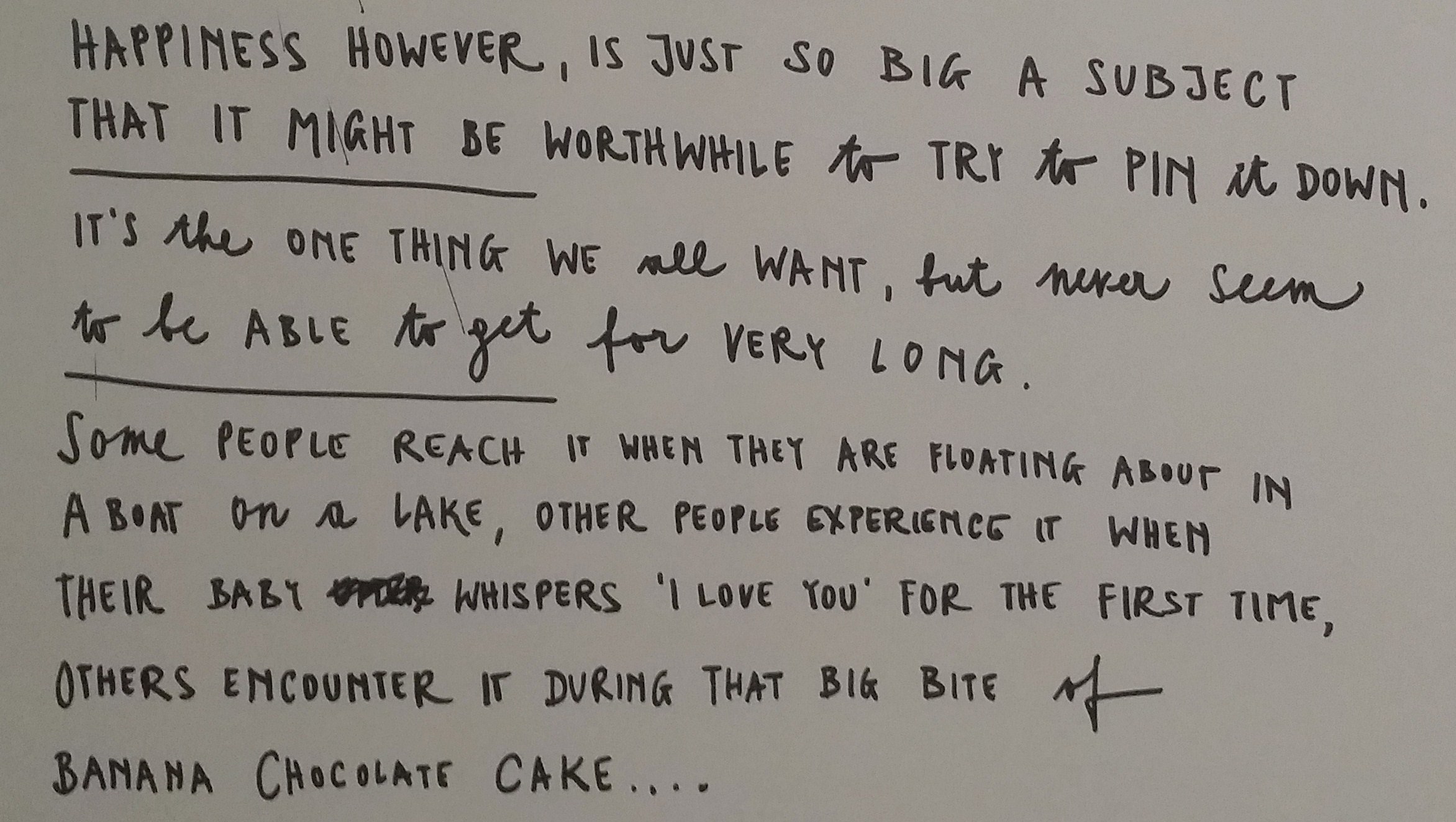
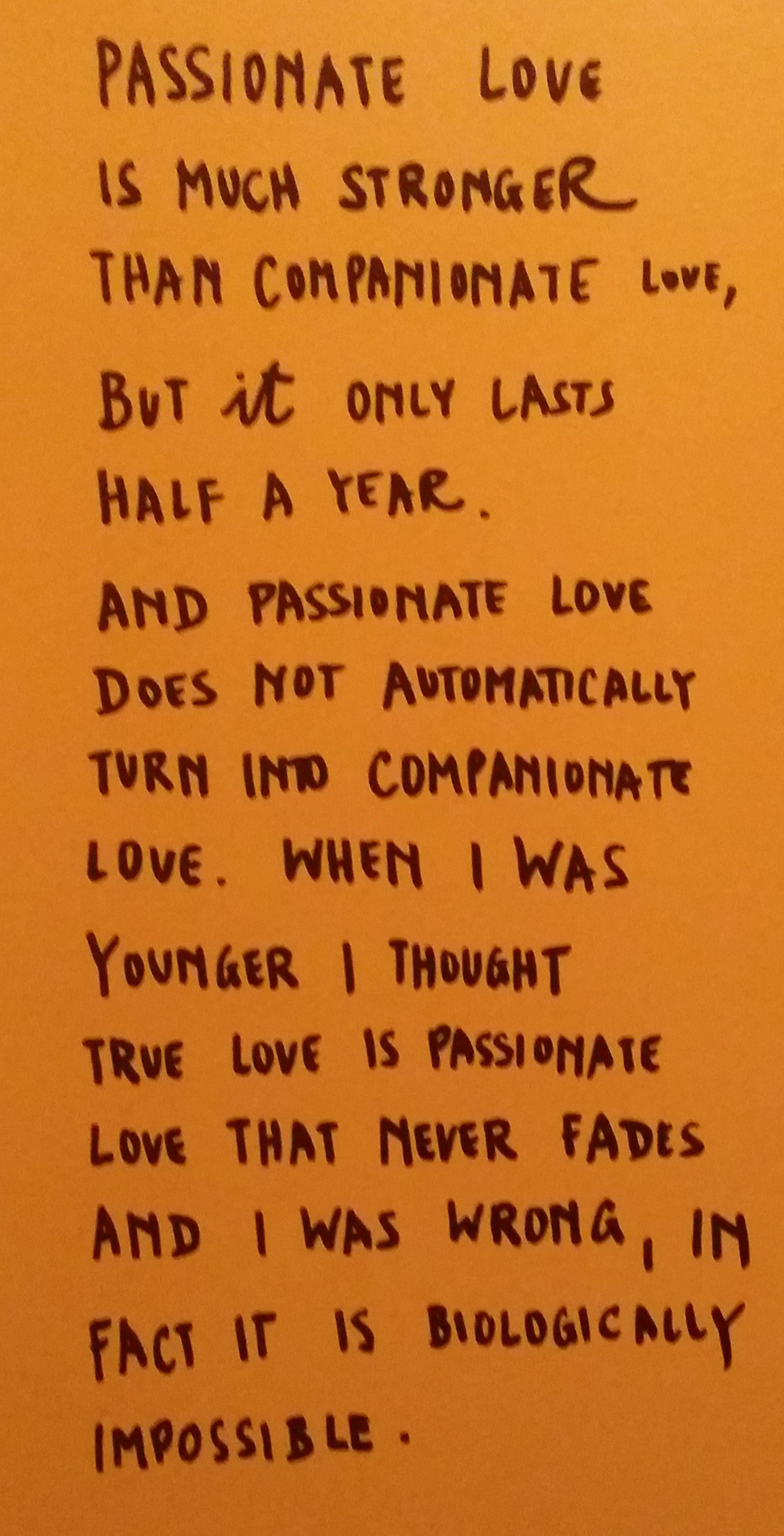
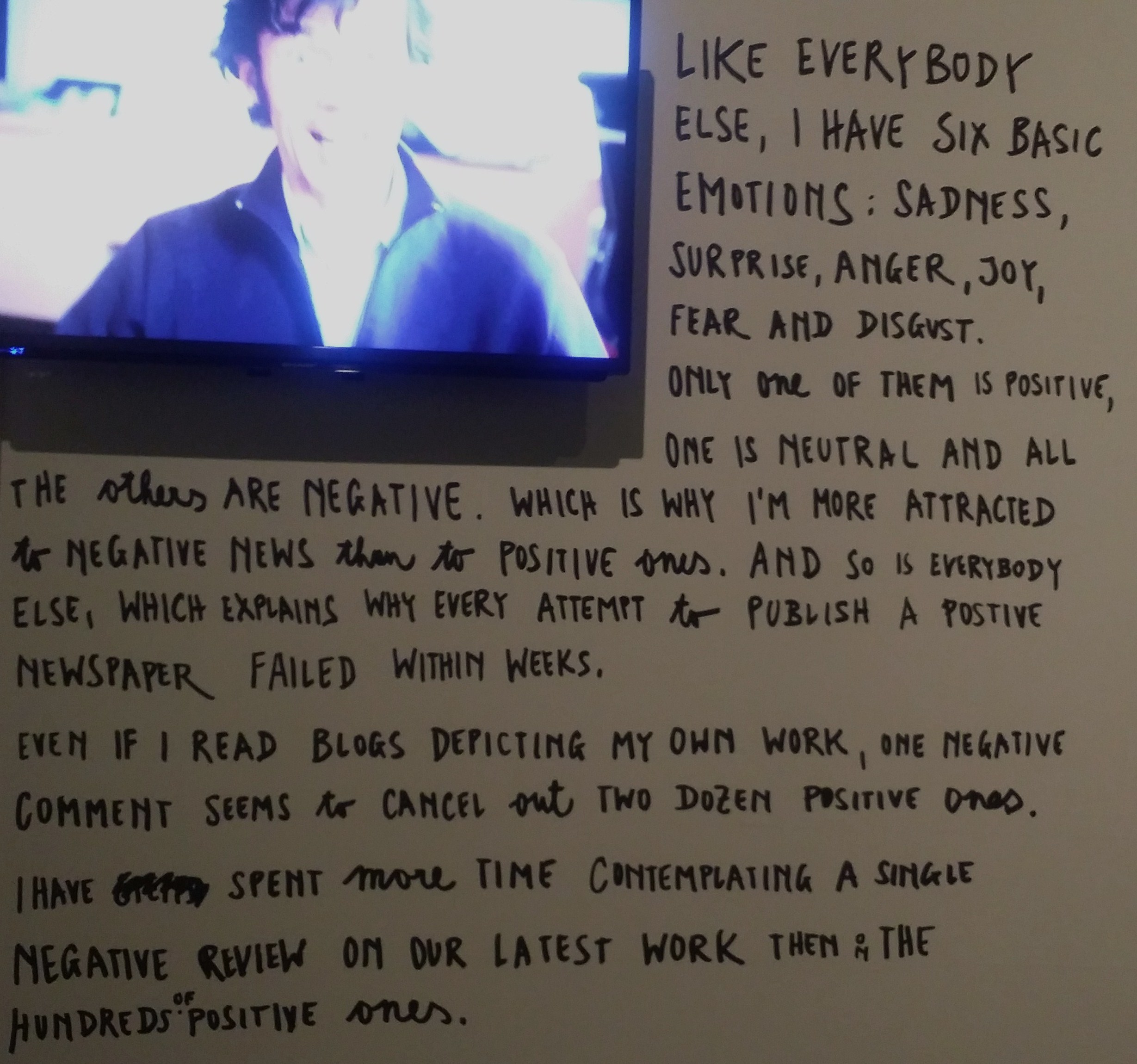
The writing is on the walls…literally. Scribbled all over the MOV’s latest exhibit.
I am usually rather bored with DEFINITIONS
Why? wouldn’t that work against happiness?
Health, wealth and happiness (usually signed on cards) are the three best wishes in the world but only one of those wishes are we able to be more in control of.
I’m leaving room for improvement
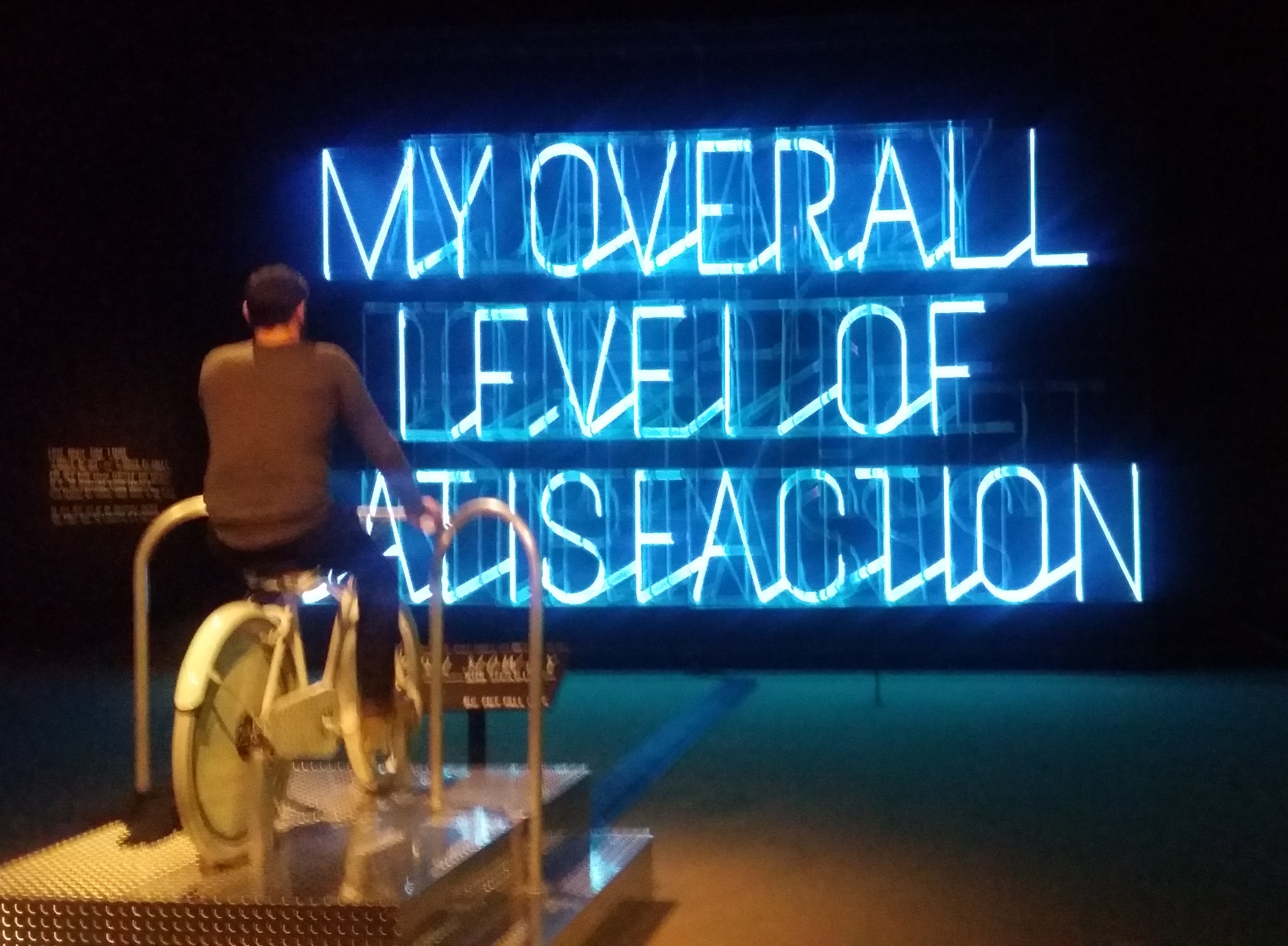
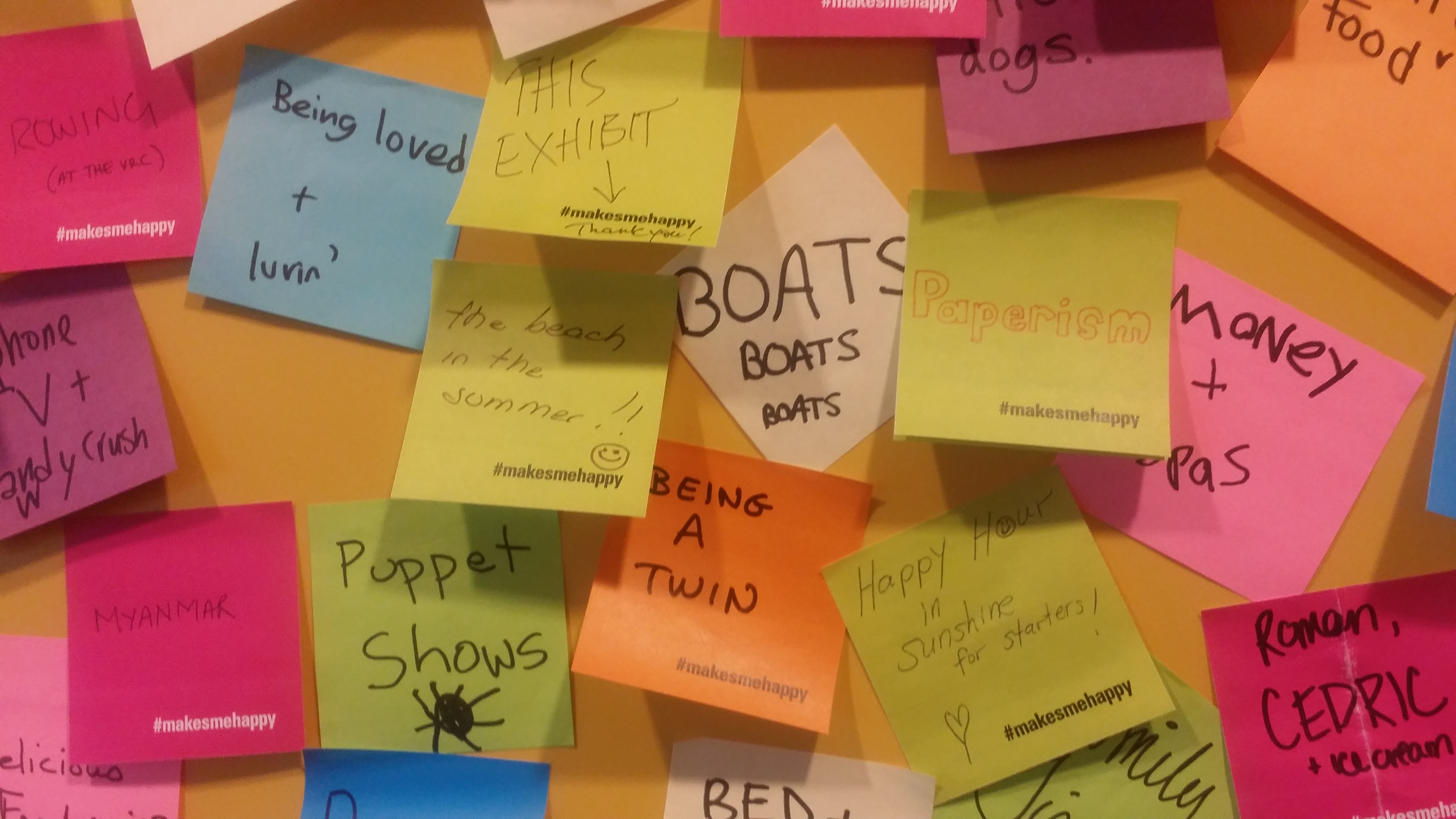
If you could rate your overall happiness on a scale between 1 and 10 (10 being the highest score), what would it be? If you were given a post-it note to write down what makes you happy, what would you write? If you had to choose your happiest activity (besides having sex) what would you do?
You might be surprised to find out that attending a religious service ranked higher than having sex, according to a happiness graph meter at the Museum of Vancouver’s (MOV) latest exhibit appropriately entitled “THE HAPPY SHOW.”
Not being the religious type, I was surprised but not totally shocked since happiness means different things to different people. Although when it comes to relationships with other people like family and friends, it seems we are all the same in rating it highest for personal happiness.
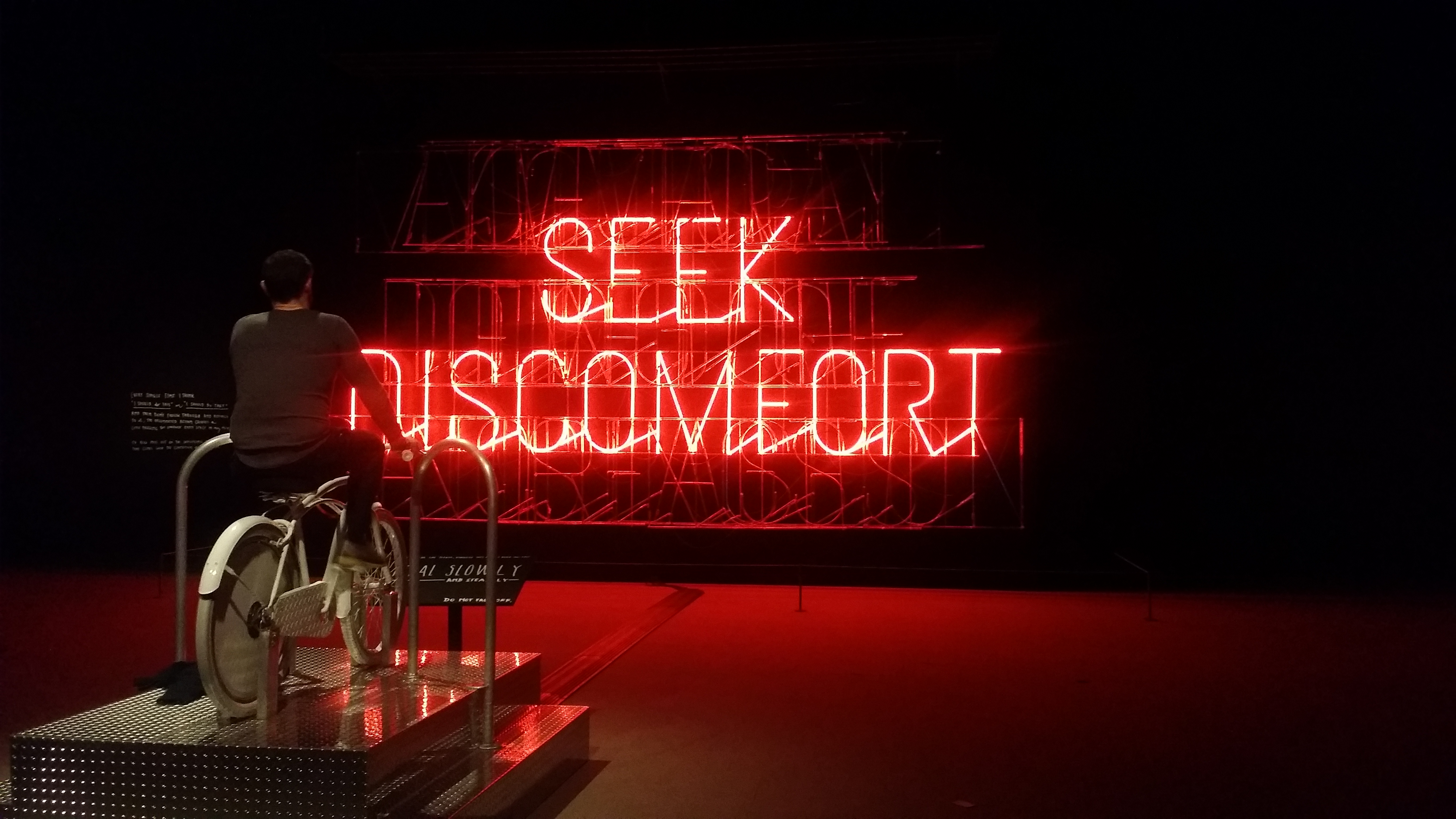
the screen changes while you pedal the stationery bike.
I was happy to be inside the MOV on an unpredictable Vancouver day that had periods of rain, hail and everything else in between. Snippets of happiness include gumballs and ginger candy which were at the exhibit and made everything better. This show is interesting, introspective, interactive and informative. However, the exhibit will not make you happier or take away any anxieties. A couple of hours spent there flew by so quickly.
If you’re happy and you know it write a note
The exhibit reflects a 10-year exploration of happiness by award-winning designer, Stefan Sagmeister. Sagmeister’s clients include HBO, the Rolling Stones (he designed album covers for them among other groups) and the Guggenheim Museum. He has also delivered several popular and disarming TED talks, a few of which you can watch and listen to (with headphones) at this exhibit. You will also get a sneak peek at the soon-to-be-released documentary, The Happy Film (depicting experiments with meditation, cognitive therapy and mood-altering pharmaceuticals) which I will definitely go do see.
A few interactive tidbits:
My friend and I were looking at a graph that indicated the happiness levels of those who were single, to those who were married or in a relationship. It claimed that men, if given the complete freedom to do exactly as they please, would do exactly as they please (surprise, surprise). A woman standing right behind me sighed and said “so true; my husband left me for my best friend.” She was on the low end of the happiness meter.
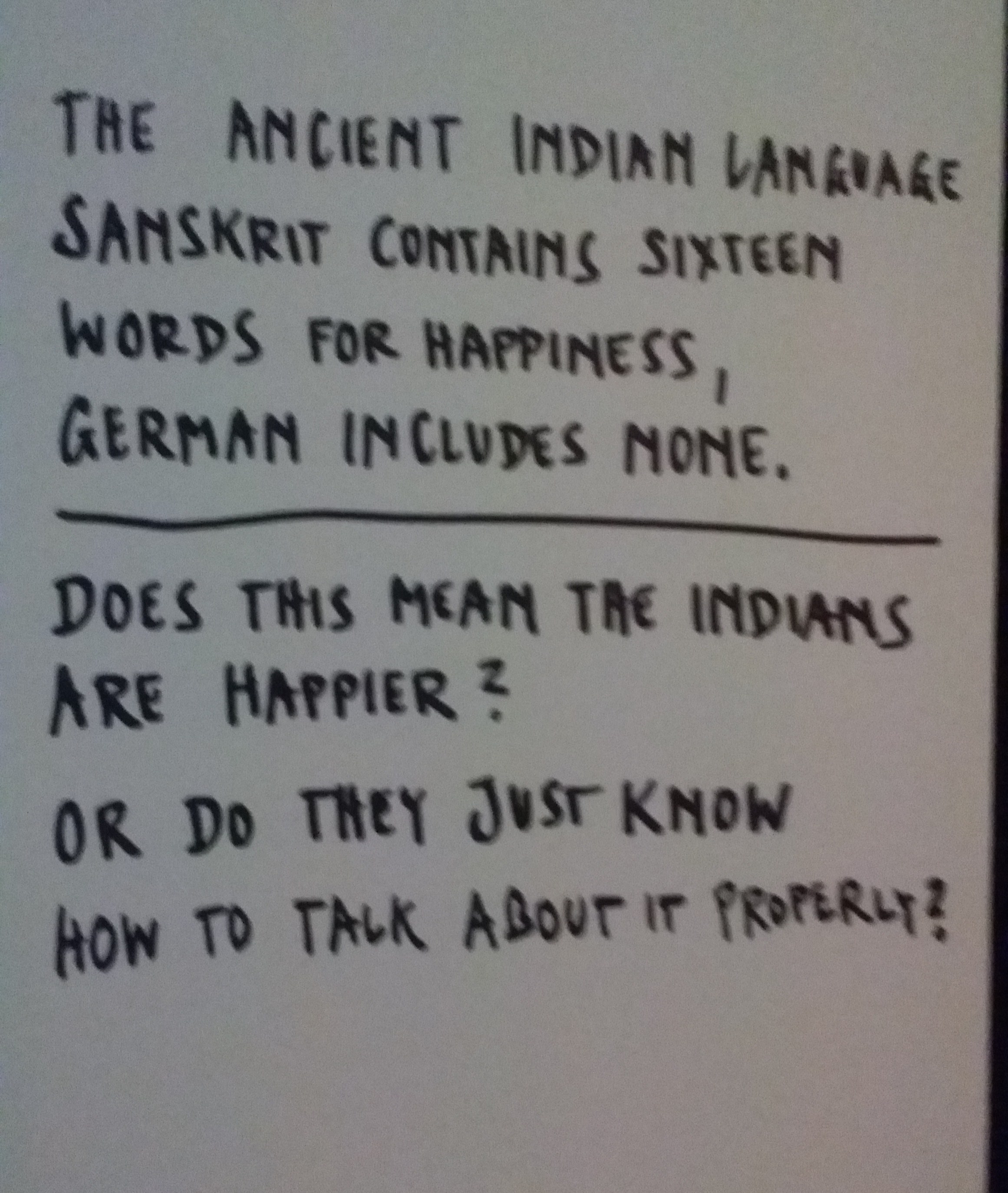
Then while reading a wall that said the ancient Indian Sanskrit language contains sixteen words for happiness, while German includes none…..a man visiting from Germany standing right behind me said that that’s not true. The German language apparently has three words and he wrote them down for me. glücklich (happy), freude (which actually means pleasure) and frohlich (merry). So I learned three German words today which mean almost the same thing – which made me somewhat happier to know.
I highly recommend this show which runs April 23 to Sept. 7
In closing, it might seem crazy what I’m about to say but the link below is bound to give you a HAPPY lift:
Whenever I have an unusual animal sighting I tend to look up the spiritual meaning. I’ve had experiences with hummingbirds, owls and dragonflies.
photo: d. king
And not necessarily under normal circumstances, several times it was in uncommon ways and no, I was not under the influence of drugs or alcohol. So here is what I found to do specifically with meanings from our own First Nations people & those of the Pacific Northwest:
BEAR – The Elder Kinsman. He teaches the legends and dances. The Bear is the symbol of strength and is always respected and treated as a high-ranking guest. EAGLE – The Eagle is a symbol of power, of knowledge and prestige. The Eagle also represents friendship and peace to all. We are lucky to have a pair of nesting Eagles in our neighbourhood. FROG – The Frog is the voice of the people and a symbol of innocence, stability and communication. He is also considered to be good luck. HUMMINGBIRD – The Hummingbird is a joyful messenger and a symbol of health. When a Hummingbird appears, healing will follow. Come on little Hummingbird…where are you now? RAVEN – The transformer. The creator. He placed the sun and moon in the sky so the world would have light and also put the trees on land and fish in water. This magical creature opened the clamshell to release man. He is known for his knowledge. SALMON – The Salmon is the life source and the provider of food for all animals and humans. When salmon are seen in pairs, it symbolizes good luck. WHALE – The Whale is a communicator and highly regarded guardian of the sea. Whales travel together and symbolize long life. WOLF – This positive symbol is very family oriented. Wolves mate for life and share all responsibilities. Wolves are known as the land equivalent of the whale. THUNDERBIRD (not the car) – This mythological creature is the most powerful of all the spirits. He lives in the mountains and has lightning sticks under his wings. He rolls the thunder, and when he blinks his eyes, lightning flashes.
Source for meanings: Lattimer Gallery, Vancouver
Links to a few of my encounters:
I saw an owl one night at Kits beach while out walking my dog – a first.
It would have been a blast to attend “The Greatest Art Basel Party in the History of Mankind”
The Invite
Arrangements Corporation of North America, you are cordially invited to the greatest Art Basel Miami Beach party in the history of mankind. Humanity has yet to behold such a truly magnificent party, with a gathering of luminaries, celebrities, socialites, sociables, sociopaths, bons vivants, and hangers-on, the likes of which haven’t convened since the sinking of theTitanic.
The festivities begin at the private residence of some private individual who’s probably (though privately) extremely rich, with an extremely privately private dinner. We will be celebrating some artist whose name we forget (that’s literally his name—some artist whose name we forget—all in bolded lowercase) and whose work you surely don’t know because it’s pretty obscure (literally the exhibition’s name—pretty obscure) and, in all likelihood, you probably aren’t supposed to be here. (Literally, you aren’t supposed to be here. We’re looking at you.)
This extremely private dinner, set to honor the artist some artist whose name we forget, will be celebrating the release of his new film, film, and will also honor the gallerists, curators, collectors, and Madonna (the Virgin Mary, not the pop singer) who made his book, book, such a huge success.
Many of the MacArthur Causeway’s northbound lanes have been shut down and turned into the Veuve Clicquot Art Basel Miami Beach Chevauchement e’ Glissement, a champagne Slip ’n Slide spanning the length of many football fields, ensuring that there’s absolutely no chance of escape.
All at once and quite suddenly, the heavens shall open up, wingéd cherubim shall appear carrying trumpets, which they shall blow in a spectacle of magnificent sound, in order to herald forth the culminating moment of the greatest Art Basel party in the history of all mankind, the likes of which humanity has never beheld.
That’s really too bad. After all, I fall into the “sociable” category and I love to hang on to things. I also appreciate South Beach (the most fun part of Miami) and Art.
I promise not to miss the next one and I won’t even attempt to escape!
LOGOS have become part of our culture. Have you ever wondered WHAT MAKES A LOGO SPECIAL?
A good logo takes time to come up with. It must be distinctive, appropriate, practical, graphic, simple and be able to inform and convey an intended message at a glance . I hope that I’ve been able to express all of that in my logos.
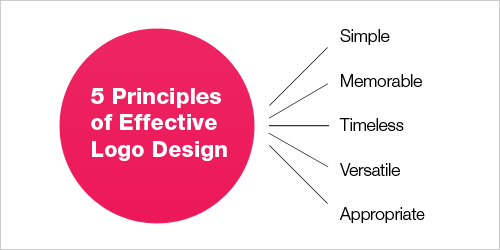
There are five principles that you should follow to ensure that this is so…
1) SIMPLE
A simple logo design allows for easy recognition and allows the logo to be versatile & memorable. Good logos feature something unique without being overdrawn.
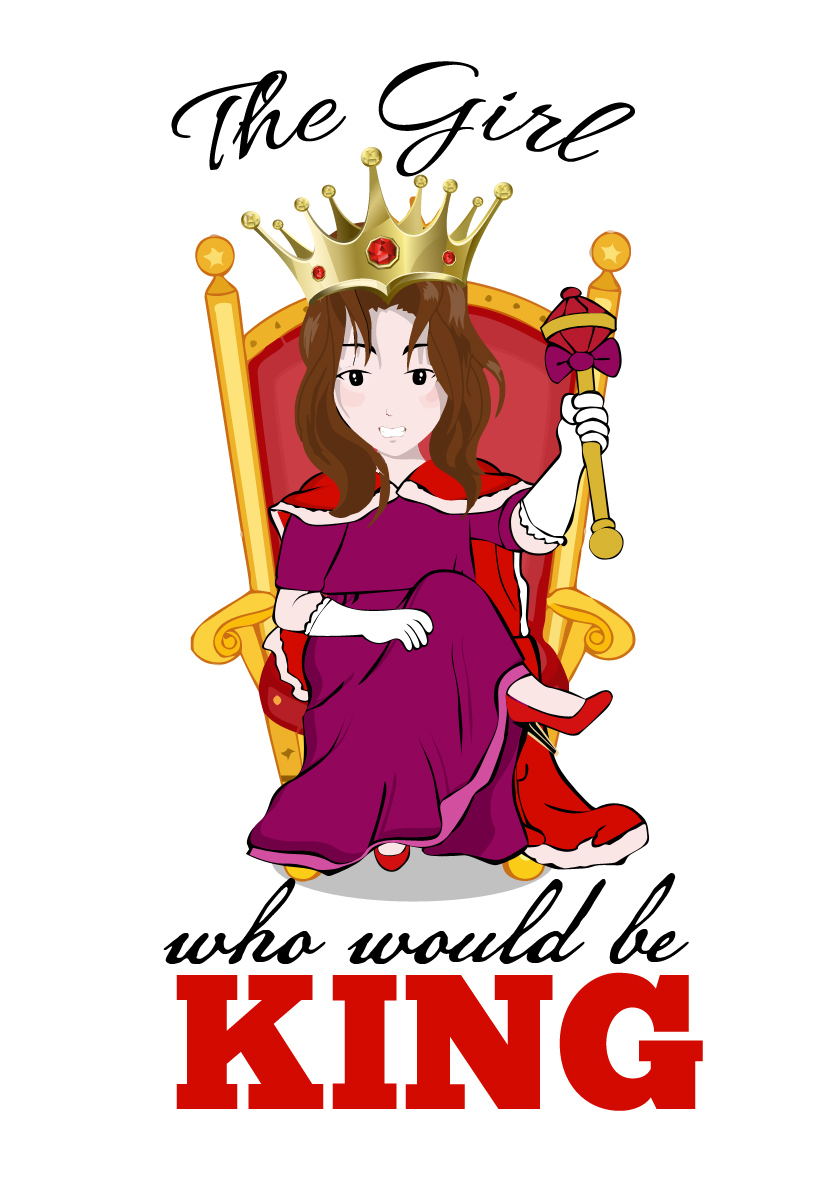
Blog logo: I’m Female, my last name is KING, I like to RULE! Oh; and be worshipped (hee, hee). Makes perfect sense!
2) MEMORABLE
Following closely behind the principle of simplicity, is that of memorability. An effective logo design should be memorable and this is achieved by having a simple, yet, appropriate logo.
3) TIMELESS
An effective logo should be timeless – that is, it will endure the ages. Will the logo still be effective in 10, 20, 50 years?
Probably the best example of a timeless logo is the Coca-Cola logo… if you compare it to the Pepsi logo, you can see just how effective creating a timeless logo can be. Notice how the Coca Cola logo has barely changed since 1885? That is timeless design.
4) VERSATILE
One way around creating a versatile logo is to begin designing in black and white only. This allows one to focus on the concept and shape, rather than the subjective nature of colour. One must also remember printing costs – the more colors used, the more expensive it will be for the business over the long term. An effective logo should be able to work across a variety of mediums and applications. The logo should be functional. For this reason a logo should be designed in vector format, to ensure that it can be scaled to any size. The logo should be able to work both in horizontal and vertical formats.
5) APPROPRIATE
How you position the logo should be appropriate for its intended purpose. For example, if you are designing a logo for children’s toys store, it would be appropriate to use a childish font & colour scheme. This would not be so appropriate for a law firm.
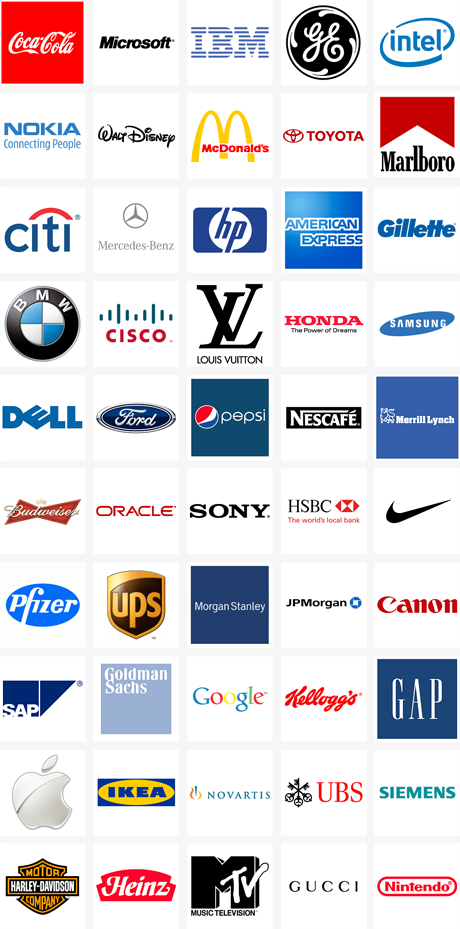
It is also important to state that a logo doesn’t need to show what a business sells or offers as a service. ie. Car logos don’t need to show cars, computer logos don’t need to show computers. The Harley Davidson logo isn’t a motorcycle, nor is the Nokia logo a mobile phone. A logo is purely for identification. For further evidence of this, take the top 50 brands of the world – 94% of the logos do not describe what the company does.
Things you may not have noticed before:
What’s so special about the amazon logo? Look at the arrow, it goes from A to Z.
This is the FedEx logo, it is quite common. What’s so interesting about it? Look at the E and the small X, you are now noticing the arrow inbetween the E and the X. Then look over at the word Fed, if you look at the small E, you see a spoon. You’re’ being “Fed,” get it?
Credit: JustCreative.com Jacob Cass does personal branding. He is responsible for the graphic art on Jerry Seinfeld’s show “Comedians In Cars Getting Coffee” – an excellent web series.
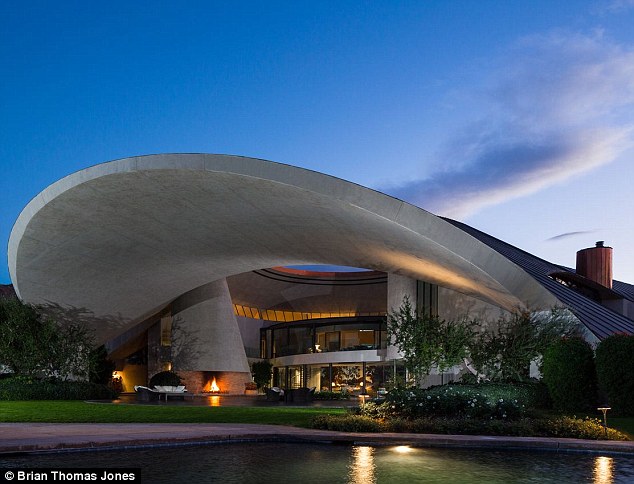
Bob Hope’s legendary Palm Springs mansion has gone on the market for an eye-watering $50m. It is the most famous property owned by the legendary comic, who was extremely passionate about architecture.
No wonder he was so cheerful – the entertainer was often cited as the biggest private landowner in California. Bob Hope had this house built in Palm Springs but never actually moved into it. The house he lived in was much more modest. If you can afford it and love living large then there’s a lot of HOPE for this house.
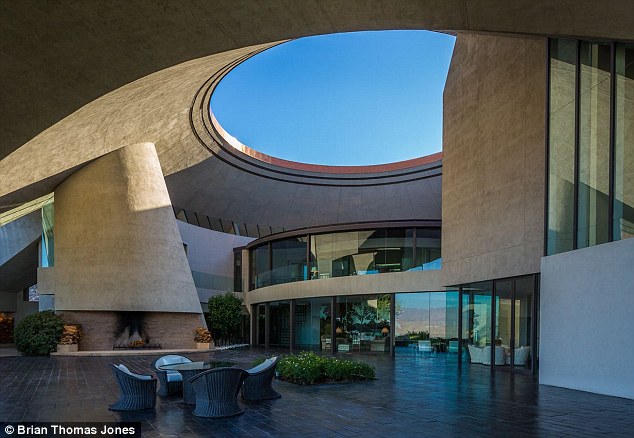
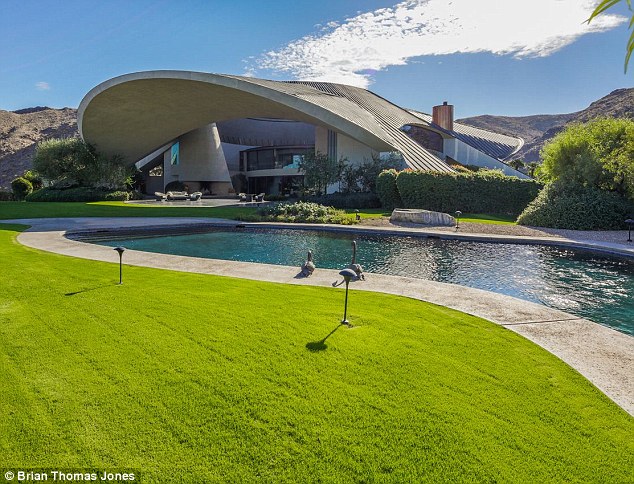
The futuristic California home was designed by renowned Modern architect John Lautner especially for the funnyman and his beloved wife Dolores.The concrete, steel and glass house was built in 1979 and has about 22,000 square feet of living space, and its unique design is somewhat reminiscent of the USS Enterprise.Buyer’s will get to boldly go where no-one except the Hope family has gone before.
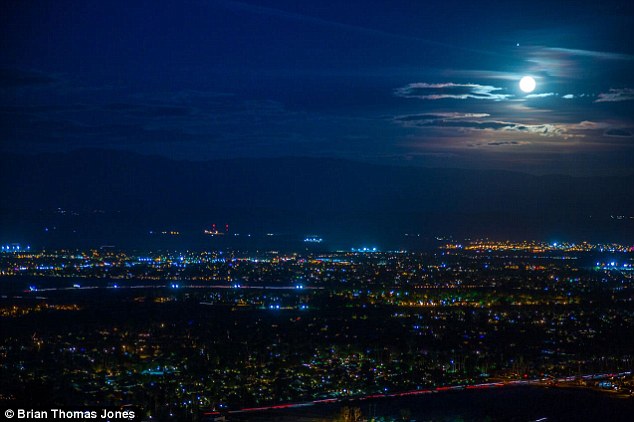
View–tiful: Bob had it sited on San Jacinto mountain to have a spectacular view overlooking the CoachellaValley – stunning. The property was specially designed to take advantage of the glorious natural landscape
The living room is said to have a gigantic boulder jutting into it.
Good luck to the new owners – whoever they may be!










 Girl Who Would be KING on Life, Style and INSPIRATION.
You must be logged in to post a comment.