Beauty/Culture: the Hoop Earring

Every fashionable woman owns at least one pair of hoop earrings.
Photo; Mitchell Sams

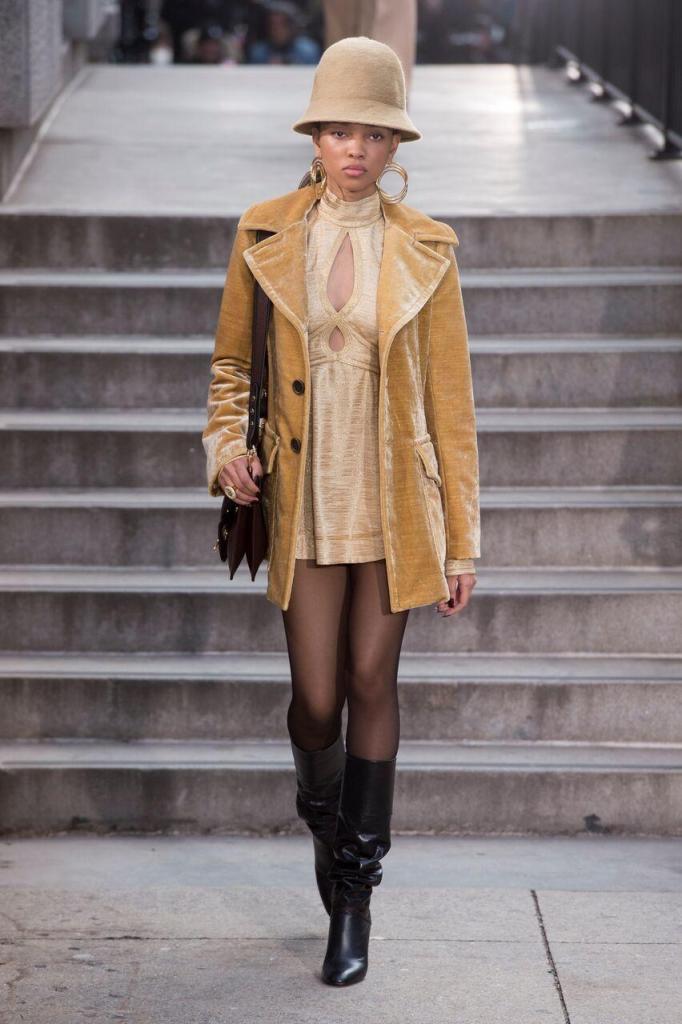
At Marc Jacob’s Fall/Winter 2017 show models stomped down the runway with shiny gold hoop earrings.  They ranged from giant three-tiered hoops to a single thin hoop with a diamond encrusted key dangling from it.

From Marc Jacobs show
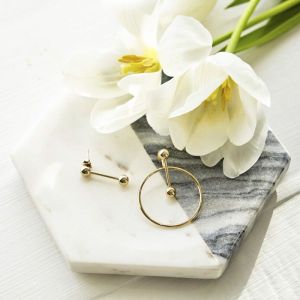
In the Spring Box  of Style from Zoe Report were these earrings.

The collection, which was also full of oversized fur collared jackets and monochromatic tracksuits, was inspired by the early days of hip-hop.

“It is an acknowledgement and gesture of my respect for the polish and consideration applied to fashion from a generation that will forever be the foundation of youth culture street style,” Jacobs explained in the show notes.

Hoops are one of the most attractive styles of earrings and they come with a story. Anything interesting comes with a story.

Unfortunately, not everyone who borrows from street culture is as eager to acknowledge the contributions of people who created it. The round jewelry has been a favorite accessory for decades from Cher in the 1960s to Madonna in the 1980s, but hoop earrings have a deep-rooted history in communities of color.

This cultural significance of the hoop earring was brought to light recently when three Latina students painted a message to their fellow classmates at Pitzer College in California about their earrings. They scribbled “White girls, take off your hoops” in bright yellow spray paint on a wall outside of a dormitory, after they noticed an influx of their peers wearing oversized hoop earrings.

Photo: Elliot Dordick, The Claremont Independent

Alegria Martinez, one of the students responsible for the graffiti, wrote an email to the student body that stated that they were sick of white women appropriating styles that “belonged to black and brown folks who created the culture.” The controversy came shortly after Elle dubbed the hoop earring a must-have accessory for fall, thanks not only to Marc Jacobs, but others like Fendi and Michael Kors.

Designers, celebrities, and even retailers have been long accused of taking styles from marginalized groups they think are “cool” without any consideration for the context. Last November, people took to social media to call out Urban Outfitters when it attempted to re-brand oversized gold doorknocker earrings. “The same earrings that people find ratchet or ghetto on black women are now $16.00 and sold at hipsters R us. These are literally a dollar at the nearest black hair store. My culture says you’re welcome,” one woman wrote in a Facebook post that has now been shared over 21,000 times.

Hoop earrings have a very long history dating all the way back to the ancient Sumerians from modern-day Iraq in 2600 B.C.  Different variations of the hoop have been adopted by a range of cultures around the world, from the Hmong women of Vietnam to the Gadaba tribe of India, as Vogue points out. But, in America, the style has often been adopted by women of color in an effort to reclaim their culture and celebrate their history.

Hoop earrings became especially popular among African American women during the Black Power movement in the 1960s when many were embracing Afrocentric dress. From activists like Angela Davis to artists like Tina Turner, more women were adopting an African-inspired look that embraced natural hairstyles and hoop earrings.

As Tanisha C. Ford writes in her book, Liberated Threads: Black Women, Style, and the Global Politics of Soul, “In African-inspired clothing and large hoop earrings and sporting Afros and cornrow braids, Americans and Britons of African descent envisioned soul style as a symbolic baptism in freedom’s waters through which they could be reborn, liberated from cultural and social bondage of their slave and colonial past.”

The statement jewelry carried on into the 70s when it was embraced by disco divas like Diana Ross and Donna Summer. When the 80s rolled around, their thin gold hoops were traded for thick gold “door knocker” and bamboo hoop earrings by hip-hop artists like Salt N Pepa and MC Lyte.

By the 1990s, oversized hoop earrings were a fixture of Chola style, which was embraced by working-class Mexican American women in Southern California. The radical look was defined by slicked-down baby hairs, dark lip-liner, and door-knocker hoop earrings.

But, it was about more than just fashion. As Barbara Calderón-Douglass writes in her piece “The Folk Feminist Struggle Behind the Chola Fashion Trend,” “The chola aesthetic is the result of impoverished women making a lot out of the little things their families could afford.”

Martinez, who grew up in Southern California, says she sees the style as a form of resistance. “We are women of color from Los Angeles, Long Beach, and San Bernadino and that is where this cultural style comes from,” explained Martinez. “Whenever we wear our hoops, or when I wear bold eyeliner and red lipstick, I feel really proud to be from that background.”

Fashion has always taken influences from different cultures. The problem with appropriating styles like hoop earrings is that many women of color still can’t wear these “trends” without facing discrimination for looking too “ghetto.” Not to mention, many of those who are eager to slip on a pair of hoop earrings fail to use their platform for any meaningful discussion about race.

Photo: Flickr Creative Commons, artist Helena Metaferia

Just last season Marc Jacobs faced a fury of appropriation accusations when he sent a predominantly white cast of models down the runway wearing colorful pastel dreadlocks. The designer had attributed the collection to the style of club kids, but failed to mention that the hairstyle has history in African culture. So, when the designer made a point to attribute his fall 2017 aesthetic to the early days of hip-hop and the people of color who created it, many were eager to praise him for finally appreciating the culture rather than merely appropriating it.

Hopefully, more in the industry will take note.

Source for this Story: http://i-d.vice.com

Style: Met Gala

Fashion’s biggest night

Rihanna in Comme des Garçons

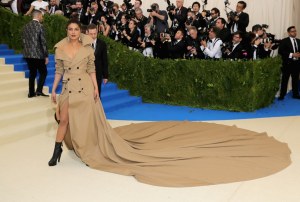
(a.k.a. the party of the year) is always held on the first Monday in May.  The MET GALA had celebrities and designers arriving at the Metropolitan Museum of Art’s iconic steps on New York City’s Upper East Side to walk up the red carpet for the opening of the Costume Institute’s latest exhibition. The theme is “Rei Kawakubo/Comme des Garçons: Art of the In-Between,” a show that examines the work of the famed 74-year-old Japanese fashion designer over the span of 40-some years.  It’s a subject that has inspired incredible fashion choices this year, some of which will no doubt go down as some of the most memorable ever.

Priyanka Chopra in Ralph Lauren
Kate Hudson in Stella McCartney

Here are my choices for the top ten best dressed  post-worthy looks. I choose sublime over plain outrageous although each women owned their look!

Lily-Rose Depp in Chanel
Jennifer Lopez in Valentino
Zendaya in Dolce & Gabbana
Lupita Nyong’o in Prada
Miranda Kerr in Oscar de la Renta
Cynthia Erivo in Thom Browne


Hailey Baldwin in Carolina Herrera

Ocean Fresh: Spot Prawn Festival returns to Fishermen’s Wharf, Vancouver

Love Seafood?  Love Prawns?  Join me!

  Fresh off the Boat…

[Vancouver, BC] The Chefs’ Table Society of British Columbia celebrates 11 years of the Spot Prawn Festival at the False Creek Fishermen’s Wharf on Saturday May 13 from 11am-3pm. This event is generously supported by long-standing sponsor the Pacific Prawn Fishermen’s Association.

With the return of this free, family-friendly festival is also the return of the ticketed Spot Prawn Boil. The boil sells out every year and tickets are going fast. Get yours here.

Each Spot Prawn Boil ticket grants a wristband for a specific time slot, for access to a plate of three succulent BC spot prawns plus a selection of side dishes made with locally-sourced ingredients from Windset FarmsGrain, and freshly baked Terra Breads. Wristbands also include access to the drink tent for free samples from R&B Brewing , Evolve Cellars and Mogiana Coffee.

Just announced: these BC chefs will take the demo stage at the festival.

11:00 am – Dino Renaerts,  Bon Vivant Group

11:30 am – Taryn Wa, Savoury Chef Catering

12:00 pm – Andrew Shepherd, Vancouver Island Salt Co.

12:30 pm – Quang Dang, West Restaurant

01:00 pm – Matt Horn, Cowichan Pasta

01:30 pm – Isabel Chung,  Fairmont Whistler

02:00 pm – Ross Derrick, The Table at Codfathers and Jon Crofts, Codfathers Market

02:30 pm – Shelome Bouvette, Chicha Restaurant

About the Chefs’ Table Society

Chefs’ Table Society of British Columbia is a non-profit society comprised of BC’s leading chefs and culinary professionals. It is a chef-administered, province-wide collaborative dedicated to creating a foundation for the exchange of information between culinary professionals. The Society supports innovative and sustainable programs that will inspire, educate and nurture BC chefs, producers and the local food industry. The Chefs’ Table Society secures apprenticeships for and bestows bursaries to emerging local chefs and also finances culinary education programs in BC schools. For more information or to become a member visit chefstablesociety.com.

ALL ABOUT Spot Prawns (taken from the website):

Wild BC spot prawns are a delicacy known around the world for their sweet, delicate flavour and firm texture. They are most recognizable for their reddish brown colour, which turns bright pink when cooked, defining white spots on their tail and white horizontal bars on the carapace.

BC spot prawns are the largest of the seven commercial species of shrimp found on the west coast of Canada. They vary greatly in size, with some larger females exceeding 23 cm in total length. Prawns are hermaphrodites: for the first two years of their lives they are males, and then they change to females. Typically, spot prawns live a total of four years.

In BC, approximately 2,450 metric tonnes are harvested annually, with about 65% of the harvest coming from the waters between Vancouver Island and the mainland.

BC spot prawns are available live during the harvest season, which usually starts in May and lasts anywhere from six to eight weeks. Prawn fishermen spread baited traps along the rocky ocean floor at depths ranging from 40 to 100 metres. This method has minimal impact on ocean habitat and very low levels of by catch of other species.

BC spot prawns are very popular in Japan and the rest of Asia, with over 90% of BC’s commercial catch consumed there. Most of the prawns are frozen at sea by fishermen, and then packed and exported across the Pacific. The remaining few, however, are available to be enjoyed fresh in local BC restaurants and kitchens during the fishing season! Frozen spot prawns are also available in Canada year round.

Spot prawn stocks are carefully and sustainably managed to ensure that they remain available to enjoy for many years to come, including:

  1. Limiting the number of vessels that can commercially harvest spot prawns
  2. Limiting the number of traps that can be used
  3. Returning females with eggs live to the ocean

Interesting; No?

For more information please visit: https://spotprawnfestival.com/

Life + Culture: Curtains (a book about life)

The peculiar circle of lifeTake a clue from an interesting read called “Curtains.” Why leave your life up to chance?  Choreograph it, script it…like the film you always thought you were starring in anyway.  Lives just don’t happen! They are projects.  This is what gives them meaning. You are responsible for the contents. You must fill up your dash. The dash being the short time in between the day you were born until the very end (1989  ????) And there are books to help you do it.  Books like 1,000 things to do before you die.  Which in reality only makes you feel like you haven’t accomplished anything. Although it’s a start for those who don’t know where to begin.  It’s all about living with purpose.  It’s important to live each day as if it’s your last because one day you will be right.

A friend of mine lent me a book to read entitled “Curtains”.  A book that I have to preface by saying I would never have chosen to read if I knew what it was about.  Because it has a lot to do with death and I didn’t want to go there. So this is somewhat of a book review and an overview of the meaning of life taken from what I read and my thoughts.

Why this book?

As it so happens the person who lent it to me used to be a professional curtain maker.  He made beautiful curtains for a living and so the title jumped out at him at the library.  I know; who goes to libraries anymore? Anyway it makes sense; he thought it was about curtains and was curious.

At the time he lent it to me I was just starting a book called Tango, a Love Story that another friend gave me because she knows that I love tango, the dance.  A light feel-good true story that was very timely. Let me tell you; Curtains is the furthest away from tango…maybe closer to Last Tango (in Paris or elsewhere).  But it is about the dance of life.

My friend assured me that he had not intended to read Curtains when he figured out what it was about but once he started he could not put it down and everyone he lent it to… same story.  I was intrigued and said I’d give it a go.  At least one chapter. So I put my beautiful tango book on hold to read a book about life coming around full circle to ultimately…death.  In a nutshell I found it morbidly fascinating, well written, extremely tongue in cheek, lots of wit but not without the gorey details.

Curtains was written by Tom Jokinen, a veteran radio producer (Morningside, Definitely Not the Opera + more) and a video-journalist at the CBC. He set his career aside in 2006 to be an apprentice undertaker at a small third generation family-run funeral home and crematorium in Winnipeg, Manitoba.  This drastic vocational change at the age of 44 resulted with him writing this book.  Why? Mostly he did it because he wanted to find out first-hand what goes in that gap between death and burial at a time when our relationship with the dead is radically changing.  What he found is from the mundane to the macabre, to the completely comic to the totally heartfelt. It delves into religion, different beliefs, customs and beyond.  It is a fascinating read. It’s about humanity and an exploration of our culture’s relationship with the dead, dying and those left behind. It prompts a question: Why do we each spend up to $10,000 – for most, the third-biggest cash outlay in our lives after a house and a car, according to Jessica Mitford, who wrote The American Way of Death – on funerals?

It may have been the prelude to the widely popular Netflix series 6 ft. under (which I hear was really well done but have never watched). What it basically comes down to is we don’t want to know; we do want to know; we’re confused; we’re better off not knowing, but we’re curious, sorry to know; not sorry; a little sorry! I’m not sure but I read the whole book anyway.  Too late! But it’s something we will all ultimately be dealing with whether we like it or not. From the book:

A modern take is that a man is now defined not by his faith but by his hobbies and quirks. Did he golf?  Was she an avid gardener?  Everyone is an avid something: an avid bowler, drinker, sailor or snake charmer.  Avidity is the key to unlocking your story.

Having faith doesn’t mean you have to be religious but religious faith, when it comes to death, is a fairy tale that soothes.  It doesn’t deny there’s a monster in the closet or a wolf in the woods but it tames them.  A study at Yale, published in the International Journal of Psychiatry in Medicine, found that “bereaved individuals who relied on religion to cope generally used outpatient services less frequently compared to non-believers.

Epicurus said that there’s no need to fear the oblivion after we’re gone if we never cared about the oblivion that came before we were born.

“Curtains is deft, funny, surprising and above all thought-provoking.  Benjamin Franklin said that to know a society you only had to visit its cemeteries.  Jokinen has taken him up on that, and added in our funeral parlours and crematoria.  What emerges is a sharply focused picture of twenty-first-century North America – we’re uncertain about our values, distracted by inessentials but yearning, like every culture, to understand the meaning of death and the dead body, which is just another way of understanding life and humanity.” – Katherine Ashenburg, author of The Mourner’s Dance.

Food for Thought

Would this book pique your interest?

Feel-good Friday: last weekend of

Yippee!

Here are 10 things to feel good about this weekend...besides two glorious days off:

  1. Getting your taxes done (it’s not really feel-good but you will feel better when they’re done).
  2. Something to look forward to – May weather should be drier.
  3. Getting a bike tune-up (I just did) for good weather riding.
  4. I’ve gone a few shades lighter with wispy bangs & rounder sunglasses

    Lighter clothing.

  5.  Change a little something about yourself even if it’s only your hair.
  6. Tulips & Daffodils.
  7. Cherry Blossoms.
  8. Better weather (did I just say that?).
  9. April is from the latin verb “Aperire” which means to open yourself up.  Go for it – you have two more days!
  10. April showers bring May flowers.  It’s a cliché I know but…it’s true.

 Have a wonderful weekend and enjoy whatever is left of April.

Beauty: BioActive Externals

Youthful and Ageless

Two key words that jump out to grab our attention in the packaging of many skincare lines.  After all, we all strive to be youthful and ageless for as long as we can.

If we’re being true to ourselves we should know that we cannot rely on one miracle topical product to turn back the clock.  But we keep hoping.  I think even with *good genes the key ingredients to staying youthful is remaining curious, being active, refrain from stress (as much as humanly possible), eating and sleeping well, hydration and the bioactive externals like good clean skincare.  Basically looking after yourself as well as you can because you’re all you’ve got! Keeping this in mind, and aside from my own products, I’m always open to checking out new and improved skincare regimes.  I also love the ritual of applying them morning and night.

After having met and listened to Suzanne Somers promote her Suzanne Organics skincare line which is exclusively at Clark’s Nutrition in Rancho Mirage, Ca., I felt obliged to try a few products.  If only because Suzanne is her own best testament to the products and philosophy behind them.

Makeup + Skincare by Suzanne Organics

I’ve been using her ageless serum which is loaded with sea algae followed by her Bioactive Moisturizer which among other active natural ingredients is loaded with CoQ10, Argan (last year my sis brought Argan oil back from the Atlas mountains of Morocco for me) oil and sea buckthorn berry which acts as a superfood for your skin.  Of course you have to eat whole food for your skin to look its very best but let’s just agree that the ingredient listing is excellent.  It feels great on my face too. The whole collection is Toxic Free.  The coco-mango body butter is my absolute favourite. Find out more at: link below

*Having good genes doesn’t mean you’ll live longer, it just means you’ll look better doing it.

https://www.suzannesomers.com/

BENEFITS: 

  Formula uses only pure, organic ingredients

  No animal testing

  No synthetic fragrances

  Beech Tree Bud Extract supports the skin cells. This organic extract moisturizes the skin and assists in the look of wrinkle reduction by supporting the skin

  Argan Oil is one of the rarest oils in the world, this desert plant restores moisture so skin can survive dry climates, such as air-conditioning or heating

  Just as this plant protects itself from the desert heat, the oil from the tree’s fruit helps our skin to be protected from the elements.

  Sea Buckthorn Berry is a rare plant that contains essential fatty acids, Omega 3,6,7 and 9! Our skin loves these essential fatty acids and to find all of these essential fatty acids in one plant is remarkable

AND MORE…

If you’ve been fortunate enough to try her line I’d like your comments.

Style: Tailor Made

I always say a trustworthy tailor is right up there with finding a good dentist, doctor, hairstylist & cobbler (if there is an updated term for someone who mends shoes I’m not aware).

A good tailor is worth his/her weight in gold thread.  How many of us have been in this scenario: you found the almost-perfect dress, skirt, pant or jacket but if it only had a little tweaking it would fit perfectly.  That’s where the magic of a good tailor comes into play.  Anything is possibleWell, almost.  There are some things worth taking in or altering and there are others that just don’t make the cut (pun intended).  I know; I’ve been through it all.  I’ve had things altered that I’m really happy with and a few other items that have just been costly mistakes.  Like re-working a well-made floor length fitted brocade vintage opera coat that no matter how lovely it looks, even the fact that Grace Kelly wore one almost identical (I have the photo to prove it)…I will never wear.  Not even to the opera! The friend who gave it to me said her well dressed mother wore it to the opera & wanted to hand it down to someone who’d appreciate it.  Sorry! She should have given me the Chanel suit instead.

If something is really worth fixing to form (an heirloom piece or something you can’t part with) it may be worth the splurge but there are times when it’s just not.  You’re better off to go and buy new.

It can be more involved but worth it depending on the item  to fix things that have beading.

Here, six next-level alterations any tailor worth her salt can do, and a few things even the pros can’t fix.

They Can Rework a Neckline
If you’re worried about showing a little too much décolletage, or not enough, a tailor can help adjust a neckline by adding fabric, removing collars or turning a basic V-neck into a plunge worth carrying around a roll of double-sided tape for. (If that’s your sort of thing.)

They Can Add or Move a Zipper
If you avoid wearing a particular dress just because it’s a pain to pull over your head, you might want to consider adding a zipper instead of tossing it in the donation pile. This alteration does require enough fabric to accommodate the zipper, so it isn’t realistic for a dress that’s already pretty tight. Alternately, if you hate struggling to get into a dress that  zips up the back, a tailor can remove that zipper and add one under the arm instead.

They Can’t Take Something in More Than Four Inches
If you’re talking about pants, the cutoff is closer to two inches. After the four-inch mark, the original proportions of the item will be thrown off and start to look wonky in a whole new way. A good rule of thumb when making things smaller is that you shouldn’t try to reduce something by more than one size.

They Can Fix That Gap in the Waistband of Your Jeans
You finally found a pair of jeans that make your bum look Kardashian-level amazing. Only problem: The waistband is gapping in the back in a way no belt will fix. Have no fear, this is actually a super-simple problem to fix. If your tailor isn’t too busy, he or she might even have it done in time for your dinner date the very same night.

They Can Add a Lining to Simple Silhouettes
Adding a nude-colored lining to a slightly sheer summer dress means you’ll get infinitely more use out of it (and infinitely more compliments). A-line skirts, shift dresses and straight-leg pants are all good contenders for adding a lining, but be aware that not everything is easy to line. Anything too tight or too complicated is going to pose more problems for your tailor than it’s worth.

They Can’t Adjust the Shoulders Much
Think you can just remove the shoulder pads from that ’80s power suit and wear it proud through the rest of 2017? Think again. Adjusting shoulders is a risky move that rarely pays off. Removing shoulder pads often leaves excess fabric that’s difficult to sort out, and attempting to narrow the shoulders of a too-wide top often requires deconstructing and rebuilding the entire thing.

They Can Dye Natural Fabrics Darker
Fabrics like denim, cotton, linen and muslin are easy to dye a few shades darker or even make black. So instead of tossing those red-wine-stained white jeans, give them new life as a pair of sleek black skinnies.

They Can’t Dye Manmade Fabrics or Lighten Anything
On the flipside, there are certain fabrics that don’t accept dye very well, and few fabrics at all can be lightened more than one or two shades. Polyester and acetate can’t be dyed without factory-grade machinery. Leather is also very difficult to alter. So if you’ve been itching to turn your leather skirt pink (like you’ve seen on all the street-style stars), maybe consider just finding one off the rack.

They Can Alter a Heavily Sequined or Beaded Item
Take this one sequins. If you’re unsure of a tailor’s abilities, ask to see examples of his or her previous work. Many—especially those with a high skill level—keep portfolios at the ready in order to entice new clients. with a grain of salt. It is possible to shorten or take in the waist of a fully sequined pencil skirt, but it should be done only by someone who has experience working with

They Can’t Alter a Corset (damn!)
Corsets by nature are supposed to fit your body like a glove and are actually easier to build from scratch than they are to alter because of all the pattern pieces and boning required to make one. If you really have your heart set on a corset dress or piece of lingerie that isn’t fitting quite right in the store, take lots of photos and bring them to a specialist who can recreate your dream piece so that it fits you (and your girls) perfectly.

A quote from someone I admire:

Fran Lebowitz , the cultural critic, writer, and sometimes actress :People care more about trends now than they do about style. They get so wrapped up in what’s happening that they forget how to dress, and they never learn who they are because they never learn how to take care of anything. So much of what my generation was taught regarding clothes was how to make them last. How to wash and care for them.

Best advice: take care of what you already own!  Re-work only what you have to & shop smart: buy classic pieces you can wear forever and don’t pay a lot for trendy items.

Alteration info: Abby Hepworth; Pure Wow.

Recipe of the Week: Seafood in Coconut Curry Broth

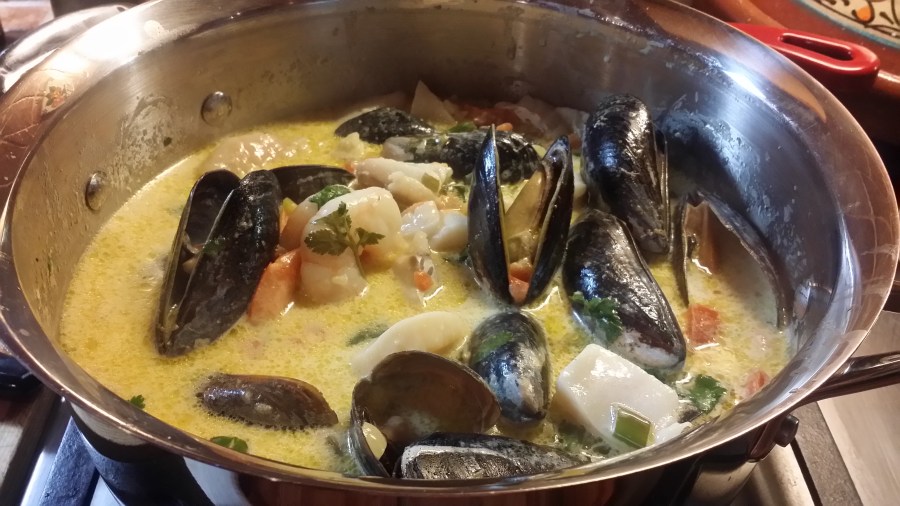
Last week I made this delicious flavorful dish for an important celebration

my 25 year wedding anniversary! And I might add that the time has flown by.

Who says you have to go out? An evening spent at home with good food, good company, good wine, conversation, music and candlelight cannot be beat by going out to a restaurant.  Add to that a glass or two of bubbly to start…a perfect evening!

We were craving seafood and I hadn’t made this in a very long time.  It’s quite simple as everything is made in one pot.  You can alter the seafood depending on what you like as it’s adaptable as long as you’re using a variety of fresh seafood.  I have to admit the mussels make a huge difference for added flavour & appearance.  Originally I followed a popular recipe from an Indo-American Bistro, but as per usual I changed it and did it my way and it turned out perfect.

1 Tbsp. butter

¼ cup olive oil

2 cloves garlic, minced

1 shallot, minced

2 green onions, chopped

1 large tomato, chopped

1-2 tsp. Madras curry powder

salt + pepper to taste

1 cup coconut milk

1 cup fish stock  (you can make from scratch by boiling bones in water or you can buy from your local seafood store).  I bought frozen halibut stock which dissolves quite easily).

Splash of dry white wine or more (or none)

¼ cup fresh cilantro, chopped

Saffron threads

For Seafood: I used scallops, halibut, prawns & mussels

½  lb. sea scallops (if large, cut in half)

1 lb. white fish cut into chunks (halibut or cod)

1 ¼  lb. mussels (scrubbed + debearded)

8 large prawns (shelled + deveined)

Recipe serves 4 people

In a large saucepan, melt butter and sauté garlic, shallot and green onion for a few minutes over a low heat.   Add the olive oil and turn to medium high heat.  add tomato and sauté for 5-7 minutes, or until soft.

Stir in curry powder, salt and pepper.

Add coconut milk, stock and cilantro.  Cook for 5 minutes.

Add scallops, fish, mussels and prawns all together.  Cover and cook for 5 minutes.  Discard any shellfish that have not opened.

Best served in large soup bowls with naan bread for dipping.  YUM!

Enjoy!

Photos: d. king

Feel-good Friday: style tips from a 95 year old icon.

Attitude, Attitude, Attitude!

Iris Apfel

Iris Apfel is a model and an inspiration to women everywhere.  I loved watching the documentary about her.  Here is the latest video ad campaign for Macy’s.  Enjoy!

https://www.youtube.com/watch?v=QEUv8aa2-4M&t=31s

Words to live by:

“I never buy what someone says is ‘in’ or a ‘must-have.’ I buy what makes me happy.” Iris Apfel

Style: Standout Handbag for Spring

Striking + Sustainable.  A Spring Carryall with a Purpose

Photo: Robby Mueller
Carry It Everywhere

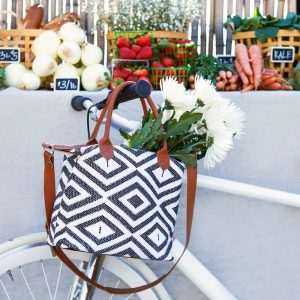
Sunny days are bound to be coming our way sometime soon I hope.  When they do I’ll be carrying my handmade handbag which was the hero item in the Spring Box of Style sent to me from the people over at the Zoe (Rachel Zoe) Report.

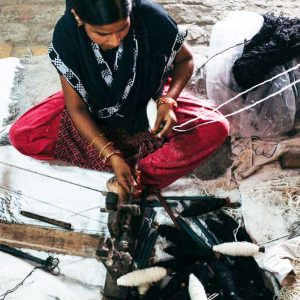
I wanted to share it with you because not only do I think it’s attractively versatile and convenient to carry around, the black and white carryall by *Tribe Alive is made with love by female artisans in India. “Without meaningful employment these women could have fallen into the sex trade epidemic which runs rampant in the communities we work,” shares Tribe Alive founder Carly Burson. This bag provided invaluable skills training and fair wages to its creators, making it even more special to carry for festival season or on the daily.

courtesy Tribe Alive

*Tribe Alive is a fair-trade accessory label that supports independent artisans in developing countries.  The striking carryall is made of foot-loomed fabric and cognac brown leather and produced on a small-batch scale to ensure the highest quality.

The beautiful handbag provided five months of employment for more than 150 Indian artisan partners in three cities. From the weavers in Panipat to master tailors and leather workers in Delhi to the logistics team in Jaipur, this bag positively impacted every link of the supply chain.

courtesy Tribe Alive

That’s truly a wow factor.