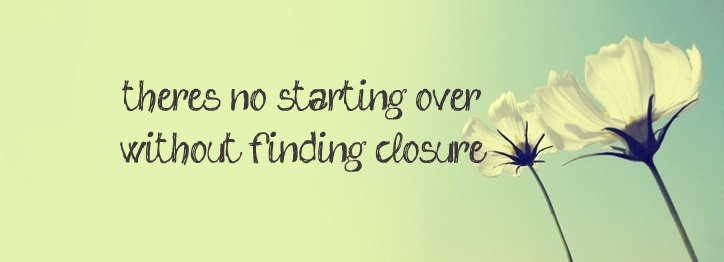
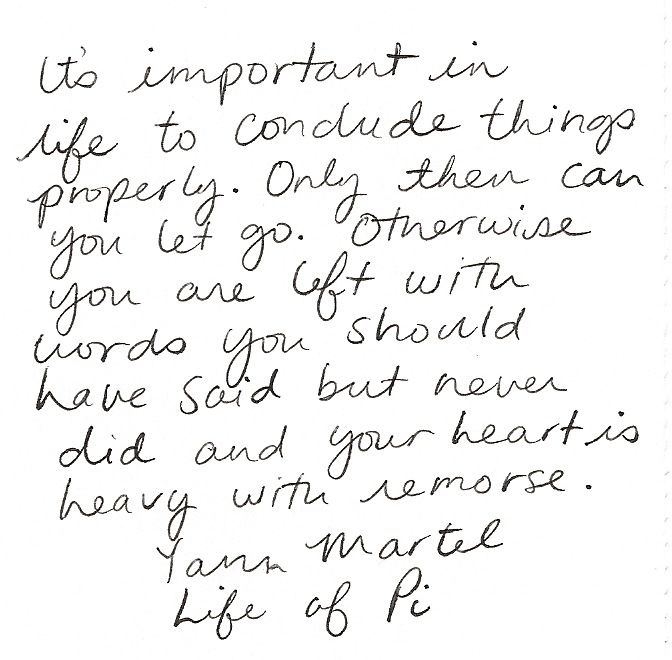
HOW COMFORTING IS CLOSURE? Very.Not in a feel-good sense but in an overall peace of mind sort of way. Otherwise it’s like an open ended book where you never quite know what happens in the end.
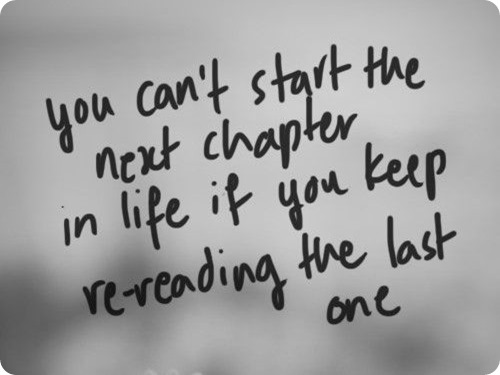
It’s important not only for those who have lost loved ones and were not able to say goodbye but also for relationships that have ended. It’s like you want to move on to the next chapter of your life gracefully and not keep re-reading the last.
And there is a certain sense of relief in coming to terms with your feelings about a person or a situation and finally being able to let go and start a brand new book. Even when the ending in the last one appeared kind of sketchy. In a psychological sense it’s finding an answer to an unclear situation. The Aha moment as in Ahhhh…..now I get it!Maybe you’re better off being an open book even if it means you end up hurting someone.
In the case of someone who passed on where you didn’t get the opportunity to say farewell in person or go to the funeral or memorial you can make your own bon voyageby lighting a candle, saying a prayer or paying tribute in some other manner. Go for a long walk, think about all the things you loved about that person, pull out photos, write something down and make a final toast. But never ever forget!
The beautiful thing is that memories live forever, regret should have no place and life as usual, carries on. Draw your own conclusions…
Yes; finding WORDS is important
In closing…..you might consider what Shakespeare’s Hamlet said “you have to be cruel to be kind“
Metabolic Warrioris a brand new website still in the process of being updated. In the meantimeyou can sign up for their newsletter to become part of the warrior tribe. This is where you will receive valuable information products, and services specifically designed to help you look, feel and perform at your absolute best.
We all want to feel good. A stream of studies in the last decade have focused on oxytocin’s effects on body and mind.
the best things in life are these
Like antennas picking up a signal, oxytocin receptors are found on cells throughout the body.
Oxytocin has long been called the “love hormone” (although it sounds more like a laundry detergent) — responsible for attachment, bonding and plenty of those feel-good moments we have with other people and our pets. The naturally-occuring chemical is thought of as an anti-anxiety drug and used in couples counselling. But, new research shows the hormone isn’t all hearts and roses — there may be a dark side.
Like love, this powerful hormone is a complicated thing and it affects men and women differently. Here’s how the oxytocin is affecting your relationships, from sex to breakup recovery.
1. It Makes Breakups Worse
Have a painful memory of your ex that never seems to go away? A new study found that oxytocin has the ability to enhance anxiety and fear for stressful events in the future. So, when something is negative, like your failed relationship, oxytocin activates a part of the brain that intensifies, even prolongs your bad thought, which increases the chance it’ll become a long-term, painful memory. Ouch. As if breakups weren’t bad to begin with.
2. It Puts You In The Mood
A drug that gives you a better sex life? Nope, not talking about Viagra. Oxytocin, along with it’s ability to facilitate hugs and touches, has also been proven to boost sexual arousal. In a study from the University of California, men who sniffed a nasal spray containing oxytocin became more affectionate, had a stronger libido and they even were more satisfying lovers. Naturally, the wives weighed in for that one.
3. It Makes You Fall Head Over Heels … Sometimes Too Quickly
Released during sex, oxytocin is what connects us to our partner. The chemical accelerates an emotional connection right after a physical one. Studies suggest the bonding hormone is more powerful in women, making them attached to the men they sleep with — whether they’re a friend with benefits or a husband. Sound familiar? Your Tango expert Moushumi Ghose writes that there may be a such thing as an oxytocin overdose. And, studies show that too much oxytocin can cause men to be even less interested. “In this all too common scenario, one person may feel attached and therefore chase, while the other will run away.”
4. It Strengthens Your Relationship
The bonding hormone has been known to increase trust, make us generous and keep us supportive, but it’s also keeping you there for the long haul. The chemical is also responsible for the longevity of a relationship. A study published in Psychoneuroendocrinology discovered that couples with high-oxytocin levels laughed more often, touched more frequently and even finished each other’s sentences than those with low levels of the hormone.
5. It Makes You A Better Mother
The powerful hormone isn’t just affecting your romantic love — it’s responsible for maternal love, too. It plays an essential role in helping moms give birth and bond with their babies. Not only does it help induce labour, post-birth, it’s makes moms affectionate with their little ones. Researchers at Bar-Ilan University in Israel found a strong connection between the levels of oxytocin and the amount of attention new moms paid to her baby. In fact, it was the first trimester of the pregnancy that was most significant in predicting the mother-infant bonding behaviour. Higher levels of the hormone during that time period correlated to more bonding and embracing after the birth.
6. It Helps Resolve Your Arguments
Several studies have found that increased oxytocin levels can improve facial reading, empathy and how we determine others’ emotional states. But it might go beyond understanding our partner’s feelings better. Researchers from the University of Oxford argue that giving oxytocin nasal spray to couples may end marital conflicts, decrease stress hormones and boost the relationship.
7. It Makes Men Monogamous
Oxytocin is an essential hormone for monogamy in the animal kingdom and it’s been proven to foster trust in humans, but a recent study reveals it may also be what’s keeping your man faithful. Researchers in Germany found that oxytocin may be strengthening your bond even when you’re apart. The study found that attached men who were given a oxytocin-filled nasal spray kept a significantly greater distance between themselves and attractive women than the single participants did. Good work, oxytocin.
Now, where to get that nasal spray??
It works the same way with our pets.
What is it about the bond between human and dog that is not like the relationship between parent and child?
KIRA , I will definitely miss our sleepovers. XO
Now science offers a new explanation for the similarity. When our dogs gaze into our eyes with that “you are everything to me” look, our bodies — and theirs as well — are flooded with oxytocin, the hormone of love and nurture that cements the bond between people.
From feel-good Friday to feel-sad Saturday: feeling sad is not a choice and it happens….but being sad for toooo long can become a health issue.
Excuse me, but how long is too long? This is a timely post because in a fairly short time span there have been a steady stream of things to feel sad about. You would think that it would center around health issues concerning my parents at this stage but no, we lost them way too early, within six months of each other. Now it concerns the illness of other loved ones, not knowing the outcome, the untimely death of some friends and now the loss of Kira, my brother’s beloved half yorkie, half schnauzer that he fawned over. He did everything he could being the health guru that he is, gave her the best life possible. Every dog and even many humans should be so lucky to be cared for like that. She will be greatly missed.
Normally we are pretty well adjusted, capable, happy, positive & upbeat people in everyday life. But when everything hits you all at once and people you are close to are experiencing losses and breakups it’s harder to put on a happy face.
We know it’s normal to have bad days and we have many good and bad days throughout our lives but man oh man, how many bad days are considered the norm?
My brother phoned me yesterday in tears to say he didn’t know how to say goodbye to Kira, that it was so difficult but he didn’t want to be selfish and keep her around just for him. He saw that she was uncomfortable and he hadn’t slept in several days. But then he said sorry to me for crying. Imagine apologizing for feeling sad about losing a family member? It was nothing to be sorry about, sometimes you just have to let go.
But it is funny (or strange rather) that we put pressure on ourselves not to show our true feelings. We don’t want to appear weak and helpless. It’s “the mask” we put on in public to save face and honestly I think we have to watch who we choose to open up to. The thing is feeling comfortable enough to know who to share those feelings with. Sometimes people you were really close to suddenly don’t have the time of day for you. It makes you wary. It’s disappointing and hurts but moving right along…
We put a lot of pressure on ourselves to be ‘the best we can be’, to be perfect, to always do the right thing. Humans inherently are seeking happiness. But damn it, sometimes life just sucks and we do have bad times.
Brad & Kira
My friend sent me a link to a meditation instructor’s blog by the name of Wendy Quan. She posted the following on “permission to be sad”:
Here I am, someone who has faced cancer, a muddled through a myriad of other things and am now dealing with aging parents and managing through my remaining cancer treatment. People call me inspirational, probably because I do try to make the best in life no matter what, and I teach meditation and mindfulness to others. But do you know what? I’m not perfectly happy. I’m not perfect.
I have good days and bad days. And when I have the bad days sometimes I feel down about feeling that way. I have found a great way to weather the bad days that I’d love to share with you. Give yourself permission to be sad and have the bad days. It’s OK. We are human. Bad days will happen. We don’t have to be perfect. It’s OK to be angry, to cry, to feel sorry for yourself on occasion. I often give this advice to people going through divorce – sadness, guilt and regret can come and go. Just remember to apologize to others if you have lashed out at them.
A few weeks ago, I was alone and suddenly felt really sad. I thought to myself “I have no idea why I’m feeling this way, but I do. Why do I have to deal with all of this?” I happened to be unloading my dishwasher at the time and burst out into tears. Then I gave myself permission to be sad – it must have been a comical scene – me bawling my eyes out but still unloading the dishwasher until the task was done! After that crying session, I felt so much better. It didn’t matter why I cried, but what did matter is the perspective I took. I knew the down period would pass, and I gave myself permission to experience it.
Now, if the sadness had lasted consistently for several weeks, of course this could be a different story, but it didn’t last. When you think about it, how can you even know what happiness is unless you’ve gone through sad times?
So be self-aware, gain perspective, and give yourself permission to have these human emotions. After all, we are human and meant to experience the ups and downs of life.
Guess I was feeling a bit mentally drained from recent life events.
this is not me
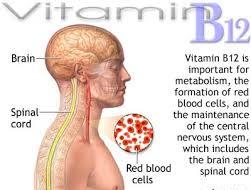
On Thursday I was invited to a special beauty event held at a wellness clinic (called a wellness boutique – not really a boutique as we know it) in Yaletown. I’ll tell you more about the evening later. An allopathic practitioner administered my very first B12 injection. I’ve always hated needles but at least it was quick. It was a dosage of 1000 mcg by Hydroxocobalamin form which is the preferred form to use because its effects are long lasting and it does not contain the cyanide component of Cyanocobalamin (which I had no idea about). This is the required dosage per month which is given intramuscularly. The rationale being that B12 is stored in the liver allowing for potential overdose. Vitamin B12 is a water soluble vitamin. There is a very low incidence of B12 toxicity even with large amounts up to 1000mcg daily.
So the very next day which was yesterday, I had energy to spare from 7:00 am to 7:00 pm non-stop. Of course my day didn’t end at 7:00pm but I got to relax after that. It began with yoga, then a run, cleaned the house strenuous physical exercise by itself made a pie, planted geraniums, packaged up some skincare products, shopped for groceries and gave the dog his usual 3 walks before putting together some munchies for my visitors.
Why B12?
People have been getting B12 shots regularly. Here are some of the Benefits:
Helps to boost the immune system and increase energy
Helps with Stress
Depression
Digestive disturbances
Treats some kinds of nerve damage
Treats diabetic and peripheral neuropathy
Treats restless or weak and tingling arms & legs, pernicious anemia, allergies, skin problems, fatigue, mental symptoms
Prevents B12 deficiency in vegan vegetarians and persons with absorption difficulties
Improves memory and teaming ability
I know people who have been getting these shots for a long time and swear by them.
The IV Wellness Boutique is Vancouver’s first ever wellness boutique specializing in intravenous vitamin therapy – a treatment which delivers high doses of vitamins, minerals, antioxidants and amino acids intravenously. They’ll hook you up!
The IV’s approach to health care incorporates IV vitamin therapy with a multitude of health care services including:
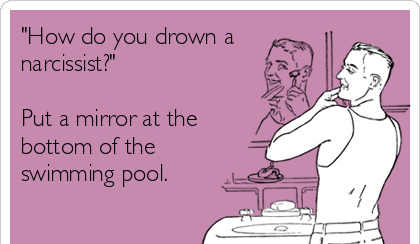
Narcissism is the pursuit of gratification from vanity or egotistic admiration of one’s own attributes.The term originated from Greek mythology, where the young Narcissus fell in love with his own image reflected in a pool of water. (wikipedia)
Last month, the goop.com website posted a piece about the legacy of narcissistic parents from Dr. Robin Berman , a practicing psychiatrist, Associate Professor of Psychiatry at UCLA, and author of Permission to Parent. To say that the piece resonated would not quite do it justice: It hit a nerve. And prompted many follow-up emails and questions, which primarily revolved around concern from readers that they might currently be involved with a narcissist, to debilitating effect. Below, Dr. Berman addresses the ramifications of romantic involvement with a narcissist, relationships that often kick off with so much fanfare they feel like a Disney cliché, before the fantasy fades and a darker reality emerges.
This is a little longer of a blog post than usual but I think you’ll find it quite interesting. We all seem to know someone with these traits. How to handle it?
I’ve heard the story countless times. A client comes in confused, hurt, and disheartened, wondering what happened to her fairytale romance that started off with such a bang. Invariably some combination of these words come next: “Prince Charming,” “soulmate,” “man of my dreams,” “swept me off my feet,” “attentive,” “charismatic”…”so all in.”
I am a psychiatrist, not a psychic, but I can predict what comes next: The relationship spirals downward and this so-perfect-he-can’t-possibly-be-real man morphs into something else entirely. Often, something much more disturbing. He needs endless attention, yet nothing she does makes him happy. Everything she says is wrong, as he’s easily injured or angered. She starts to feel very alone in the relationship, confused, and unmoored. What’s worse, she might feel like she’s somehow to blame—that she should work even harder to please.
Often, the dynamics play out more insidiously. You talk about an issue, and your partner relates it immediately to something that happened to him; your story fades as his takes over. Or you and your partner disagree and somehow you end up second-guessing yourself, as if dissent threatens his very well-being. Any needs you communicate that aren’t in line with his may be thrown back at you as a character flaw. For instance, you tell your boyfriend you won’t be able to get together on your usual date night because of work, and his comeback is: “You’re just not available for a serious commitment right now, and I want a real relationship.” Suddenly you have a global problem and he is a victim. What a head-trip.
“NARCISSISTS TAKE EVERYTHING SO PERSONALLY BECAUSE UNDERNEATH THEIR GRANDIOSE BRAVADO LURKS PROFOUND SELF-LOATHING—THEY NEED TO BE SHORED UP BY CONSTANT EXTERNAL PRAISE.”
If this all sounds familiar, perhaps you, too, are living with or dating a narcissist. The big, charming personality is typical of narcissists. Initially quite likable, they capture everyone’s attention. When they shine their light on you, it is easy to fall hard.
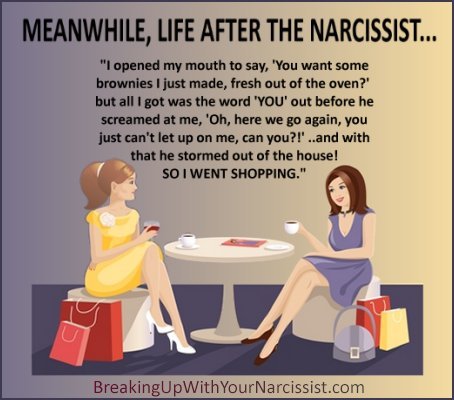
But that fall becomes painful when other narcissistic traits make themselves known. Narcissists are hypersensitive to any perceived critique. Feedback other than flattery feels like a slight and can trigger extreme anger. They feel deeply injured by criticism and have an excessive need for praise and admiration. Any time you express your honest feelings, you might stumble into your partner’s emotional quicksand. This is not what real love feels like.
Falling in love may put you off balance, but standing in love firmly grounds you. An absolute essential ingredient of a good relationship is emotional safety—you need to feel safe to be the real you! But it is very difficult to be yourself when you have such an emotionally volatile partner. Narcissists are often arrogant, self-important, and devoid of empathy. They are so in their own world they can’t even see you. It’s hard to stand in someone else’s shoes when you can’t see past your own. Narcissists see you not as you, but more as an extension of themselves.
To be seen and adored for who you really are, though, is the highest form of romance. I once heard that the word intimacy can be broken down into the words “IN TO ME YOU SEE.” It is so difficult for the narcissists in your life to truly see you and get you because they are focused on themselves. Their needs steamroll over yours. Talking about how you feel becomes exhausting and frustrating because they can’t truly appreciate your perspective and because you have to sugarcoat everything to not set them off.
Ha, this is exactly what I would do.
“IF HE EASILY CONDEMNS THOSE HE PREVIOUSLY CHERISHED, CHANCES ARE THAT DARK LIGHT WILL SHINE ON YOU AT SOME POINT, TOO.”
A patient once told me this story: “When I was newly married, we saw the movie Inception. When we walked out of the theater and I said I didn’t like it, my husband flew into a rage. ‘What?! We love thought provoking movies! How could you not get that story?!’ I remember thinking ‘Who is we?’ His reaction was so full of wrath, I was scared to speak up. From that point on, more and more pieces of my true self went silent.”
This exemplifies how quickly the benign can become malignant and destroy emotional safety. Even disagreeing about what you think of a movie can trigger your partner’s disapproval or anger. Living with or dating narcissists feels like you have to tiptoe around minefields and are constantly on guard to not set them off. Narcissists take everything so personally because underneath their grandiose bravado lurks profound self-loathing—they need to be shored up by constant external praise. Their fuel is admiration, and they need you to reflect their magnificence because they truly don’t feel it themselves. Being that perfect, flattering mirror is depleting, and after awhile, your needs become enmeshed with theirs. You lose sight of where they end and you start. You become so busy shoring up the narcissist that you have nothing left for yourself. You tend to disappear.
Meanwhile, as you are doing all that work to build up your partner, he or she may be busy tearing others down. The classic example comes from Snow White and the narcissistic Evil Queen. Maleficent needs constant reassurance from her Magic Mirror that she, indeed, is the fairest of them all. But once Snow White comes into the picture, Maleficent feels threatened by the competition and sets out to destroy her.
“YOU MAY HOLD ONTO THE FANTASY THAT IF YOU SHORE THEM UP ENOUGH, THEY WILL EVENTUALLY GET AROUND TO TAKING CARE OF YOU, TOO. UNFORTUNATELY, MORE OFTEN THAN NOT, THIS WON’T BE THE CASE.”
In real life, narcissists need to cut down others to build themselves up. Even when you are in the glow of a new relationship, and the charm offensive is blindingly bright, watch for clues that all may not be well. If he needs to criticize others to show how grand he is by comparison, he will likely do the same to you. Besides noticing how he treats the people around him, look at his history. Is it filled with long-term friendships or littered with relationships—romantic or business—in which he has inevitably been wronged? If he easily condemns those he previously cherished, chances are that dark light will shine on you at some point, too. The narcissist who keeps himself elevated by putting down others eventually might become competitive even with you.
Narcissists hoard attention, interrupt conversations so that they can steer it back to themselves, and are more concerned with their feelings than anyone else’s. Their theme song is, “Enough about me, let’s get back to me.” If you are living with a full-fledged narcissist, you know first-hand how this can interfere with their ability to relate to you and to your kids.
“My marriage was great before we had kids. I knew that my husband needed a lot of attention, but I never realized how much, until I stopped giving it to him in the usual doses, because I was so busy caring for our baby. I could no longer be so focused on him. Our relationship got ugly fast.”
Before having children you had more energy to attend to the narcissist. Some narcissists feel threatened and jealous of the attention that you devote to your kids; other narcissists use their children to feed their ego; and others are so preoccupied with themselves that they completely neglect their kids. Of course, all of these are detrimental for a child.
“THE JOURNEY TO DISCOVERING YOUR AUTHENTIC SELF REQUIRES YOU TO GET PAINFULLY HONEST TO WORK THOUGH YOUR DISTRESSING FEELINGS.”
Disagreeing with a narcissist or working through issues is extremely difficult. In addition to their inability to see your point of view, they cannot own their stuff. Their extreme defensiveness shuts down their ability to learn, and that impinges on your ability to grow as a couple.
You may hold on to the fantasy that if you shore them up enough, they will eventually get around to taking care of you, too. Unfortunately, more often than not, this won’t be the case. But if part of life’s journey is knowing yourself, the narcissist in your life can be a great teacher. The journey to discovering your authentic self requires you to get painfully honest to work though your distressing feelings. Here are some questions that can lead you to clarity and help you figure out whether you just need more tools to cope, or you really need to extricate yourself.
TOUGH QUESTIONS
Why did you pick him or her? Does she remind you of the way you were loved by one or both parents? Have you just unknowingly repeated the scene of the original crime—your own childhood? Or are you trying, with your partner, to have a happier ending than you did with your parents?
Are you depressed? Swallowing anger and hiding your real self can lead to depression.
Are you exhausted from tap dancing around someone’s fragility? Do your constant attempts to please him require a hyper-vigilance that is draining? Are you working to hide your partner’s volatility and fragile ego from your kids and your friends?
Are you seeing things as they are, or are you making constant excuses? Try to get an honest picture of what’s going on. Don’t skew the data.
Do you feel like your needs are constantly overshadowed in spite of all of your efforts to communicate them? Have things gotten so bad that you’ve stopped trying to communicate them because it feels pointless? Or is there safe space for your feelings?
Are you being gaslighted? Narcissists have a tendency to deny things they said, or claim they said something else. They rewrite history. They are unaware of the impact they are having on you or others. This is crazy-making. Beware of this distortion and don’t buy into it.
Does your partner have a history of healthy, intimate relationships? Or is there a long-standing pattern of unstable relationships, whether romantic, friendly, or professional? History doesn’t lie, so pay attention to it.
How do you feel when you are with your partner: Separate and whole, or enmeshed and sucked in to their drama? Does being around your partner make you feel peaceful or on edge?
Since living with or dating a narcissist, do you feel like you are a better version of yourself? Take a moment to compare how you feel about yourself before you met your partner, and now.
PROTECT YOURSELF
ASSESS
Is this relationship worth saving? Be honest, how extreme is your partner’s narcissism—is it just a few traits, or is it more encompassing? Full-blown narcissism (see chart below) is hard to live with. A few traits can be manageable. If you choose to work on the relationship, know that at any time, the healthiest choice may be to leave.
In assessing the extent of the problem, be cautious when you see hints of a more evolved partner. Recognize whether these moments are fleeting or a bigger piece of the picture. Don’t make too much of the glimpses of improvement. Manage your expectations. The narcissist in your partner likely will not disappear. Unless there is consistent growth, decide if a sporadic connection is enough to sustain you.
SET PARAMETERS FOR STAYING
If you decide to stay in the relationship, both of you must recognize the problem and the role each of you plays in perpetuating it. Also, and this is crucial, he must commit to getting professional help in working to change his behavior. In a therapist’s office, as time makes him feel safe, he can get underneath the mask of grandiosity and access his true feelings. Then, ultimately, he can learn to replace the harsh self-critique with self-compassion, which is where real healing takes place.
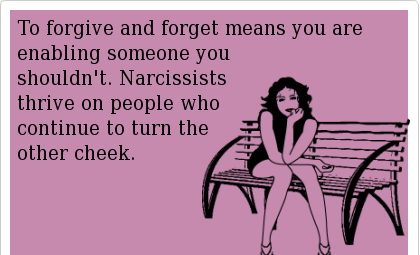
If your partner is a full-blown narcissist and doesn’t want to get help or work on it, this should be a deal breaker. If you’re married to a narcissist, realize that you can’t fix him. No matter how much you try, his actual healing is going to have to come from within. No amount of external shoring up will ever be enough. Don’t make fixing a narcissist your life’s work. You have a different journey, one that is more inspired than repairing your partner.
* If you’re dating someone you suspect is a narcissist, tread carefully. What makes a great date may not make a great mate.
* If the narcissist in your life is getting help, remember it may be two steps forward and one step back. Give yourself a deadline so that years don’t elapse, leaving you in a perpetually dysfunctional relationship.
* Although it is likely your narcissistic partner loves you in his own way and does give you something—for instance, he makes life exciting, he’s vivacious and flattering—in the end, his own limitations may prevent him from consistently giving you the love you need. It may be 10% his affirming you in exchange for 90% you affirming him.
TAKE CARE OF YOURSELF
If progress is being made, you need to take care of you. Shore yourself up with a strong support network. Make sure that you have close friends that you feel safe enough with to share your truth—great girlfriends, a good therapist, a spiritual leader. Don’t screen the story; share it unfiltered. Speaking the truth is quite liberating.
* Learn to notice and take care of your needs, maybe for the first time.
* Set boundaries clearly, calmly, and firmly. Know where you begin and where he ends. Start small. It’s OK to not like the same movies. You don’t need to change your opinions to placate him. You may take flack for standing up for yourself. Don your invisible armor so that if he overreacts, you’re clear that it’s about him, not you.
* Work through your own anger to have empathy for the narcissist in your life. He never got what he needed, and his self-hatred is much greater than his self-love, even though it appears to be the opposite. Have massive amounts of empathy for yourself and compassion for your partner. And know that understanding him doesn’t have to mean staying in the relationship.
* Listen to your intuition, that deep place of knowing. You deserve to be happy, free, and at peace. You deserve safe and unconditional love!
WHAT’S YOUR REAL LOVE STORY?
When it comes to romance, listen to your head and your heart. In healthy partnerships, both vital organs are aligned. Good relationships free your true spirit. They allow you to exhale with ease into feeling safe and cherished. To quote one of my dearest friends, a good partnership is an “elevator.” It brings out your best self. It does not force you to bury parts of yourself. You want a partnership in which you can not only fall in love, but then stand and ultimately grow in love.
Now that is what I call happily ever after.
Robin Berman, MD, is an Associate Professor of Psychiatry at UCLA and author of “Permission to Parent: How to Raise Your Child with Love and Limits.”
CRITERIA FOR DIAGNOSING NARCISSITIC PERSONALITY DISORDER
Narcissism exists on a spectrum from a person who has a few traits to someone who meets the full criteria for a personality disorder. Full-fledged narcissism is a pervasive pattern of grandiosity (in fantasy or behavior), need for admiration, and lack of empathy, beginning by early adulthood and present in a variety of contexts, as indicated by five (or more) of the following:
Has a grandiose sense of self-importance (e.g., exaggerates achievements and talents, expects to be recognized as superior without commensurate achievements).
Is preoccupied with fantasies of unlimited success, power, brilliance, beauty, or ideal love.
Believes that he or she is “special” and unique and can only be understood by, or should associate with, other special or high-status people (or institutions).
Requires excessive admiration.
Has a sense of entitlement (i.e., unreasonable expectations of especially favorable treatment or automatic compliance with his or her expectations).
Is interpersonally exploitative (i.e., takes advantage of others to achieve his or her own ends).
Lacks empathy: is unwilling to recognize or identify with the feelings and needs of others.
Is often envious of others or believes that others are envious of him or her.
Shows arrogant, haughty behaviors or attitudes
From the Diagnostic and Statistical Manual of Mental Disorders, Fifth Edition, 2013
mind-body-spirit How nice to know that aside from the sheer pleasure of dancing the tango there might be a health benefit to go along with it. Tango may be the most passionate of all dances but it has a structure that goes along with the flow, so I consider it to be the “thinking man’s dance.”
So I wasn’t surprised to find out that that according to the non-profit organization Dance for PD® (Parkinson’s disease), the answer is YES, it does help to improve cognitive function.
The following was written by Ruth Buczynski, PhD for the National Institute for the Clinical Application of Behavioural Medicine.
Because Parkinson’s is a brain disorder, some people thought it might be uniquely affected by something like dance. So they approached the Mark Morris Dance Group in Brooklyn, New York, about creating a program for people diagnosed with the disease.
Dance for PD® has been holding classes since 2001 and has witnessed the profound positive impact it has had among participants. But most of this evidence was anecdotal.
Scientific evidence of the program’s effectiveness was just beginning to be published.
In the nearly four years since I first started following Dance for PD®, the science has caught up. I heard about a 2015 study focusing on participants, but when I went to look it up, I was amazed at the number of studies published just in the first few months of 2015 that look at the topic.
Given this wealth of studies from research facilities around the world, I had a hard time highlighting just one. So instead, let’s look at some of the most recent findings on dance as an intervention for Parkinson’s:
46 patients diagnosed with mild to moderate Parkinson’s participated in Japanese researchers Hiroko Hashimoto et al’s study. They found that dance improved motor function, cognitive function, and mental symptoms. (Effects of dance on motor functions, cognitive functions, and mental symptoms of Parkinson’s disease: A quasi-randomized pilot trial. Complimentary Therapies in Medicine, Apr. 2015)
Researchers out of Canada and Sweden investigated the use of tango lessons to improve motor and non-motor functions of people with Parkinson’s Disease. They found that the Argentine tango can improve balance and functional mobility and are calling on larger studies to test benefits on cognition and fatigue. (Tango for treatment of motor and non-motor manifestations in Parkinson’s disease: A randomized control study. Complimentary Therapies in Medicine, Apr. 2015)
Irish investigators led by Dr. Amanda Clifford took ten participants and had them attend weekly Irish dancing lessons, along with a parallel home practice, over an 8-week period. This preliminary study found that Irish set dancing is feasible for people with Parkinson’s and could increase their quality of life (Is Irish set dancing feasible for people with Parkinson’s disease in Ireland? Complimentary Therapies in Clinical Practice, 2015)
A May 2015 [epub Feb. 2015] literature review in Maturitus concluded that studies support the idea that dance can cause “substantial and wide-ranging benefits” in people who suffer from Parkinson’s, in addition to the older population in general.
One of the things that fascinated me about these studies was the sheer number of countries that are currently researching the neurological possibilities of dance for people with Parkinson’s.
This is a treatment strategy that could be used anywhere in the world.
And then, let the neuroplasticity begin.
In our Brain-Smart webinar series, we’ve been talking about practical and innovative strategies for working with the power of neuroplasticity to strengthen and heal the brain. The webinars are free to watch at the time of broadcast – you just need to sign up.
What are your reactions to using dance as a therapeutic intervention?
Source: http://www.nicabm.com/ (National Institute for the Clinical Application of Behavioural Medicine – a pioneer and leader in the field of mind-body-spirit medicine.).
Rooted in Tradition, Enhanced by ScienceIt was suggested to me recently that I look into Theracurmin capsules. I already know the benefits of ingesting Turmeric and many other spices – part of the reason that I decided to make curries again was because of using the various amounts of spices required. My aim is to incorporate tasty meals that have health benefits to boot. Sometimes it also helps to supplement.
Here is an article by Dr. Michael T. Murray forliving naturally which explains the benefits of this natural product.
The root of the turmeric plant (Curcuma longa), a member of the ginger family, has been used in India for thousands of years as the principal spice in curry and as an Ayurvedic medicine for supporting the body’s natural inflammatory response system. A century ago turmeric’s primary active compound, curcumin, was isolated. This valuable natural compound gives turmeric its vibrant yellow color and its medicinal qualities. An explosion of scientific research, literally thousands of studies, with curcumin has deepened and expanded our understanding of curcumin’s unique health effects in supporting many body functions. While much research has documented curcumin’s effects, most research has focused on in vitro (test tube) or animal studies. The big shadow over curcumin is that in humans its oral absorption (bioavailability) is quite low and once it is absorbed it is rapidly changed to other compounds or broken down. Clinical studies show that amounts as high as 12 grams of curcumin powder failed to significantly raise blood levels. To address this issue of poor bioavailability, a number of processing techniques have been developed to enhance the absorption of curcumin. Natural Factors Curcumin Rich Turmeric Root Extract contains Theracurmin, a natural turmeric extract preparation with by far the highest absorption profile.
What is Theracurmin?
Theracurmin is an all-natural preparation that utilizes advanced techniques to reduce the particle size of curcumin then disperse it with a very unique natural suspension to dramatically increase its solubility. The result is a dramatic increase in the absorption of curcumin compared to all other commercial forms tested, including other enhanced forms of curcumin. At equal dosage levels, Theracurmin produces blood levels in human and animal studies that are 30-40 times greater than regular curcumin.
Theracurmin Increases “Free” Curcumin
Theracurmin is the only curcumin preparation to demonstrate a clear dose response. What this means is that even small dosages of Theracurmin increase blood measurements of curcumin and as the dosage Turmeric Root Extract Theracurmin™ Highly Bioavailable Curcumin increases so does the blood level. This increase is linear, meaning that it increases in the blood in a parallel fashion to the dosage. This absorption profile is extremely important as the effectiveness of curcumin within the body requires achieving effective concentrations. Theracurmin is able to achieve necessary concentrations within the body that are not likely to be easily achieved, if at all, with other curcumin preparations. In addition to being poorly absorbed, curcumin is rapidly metabolized in the liver. When measuring levels of curcumin in the blood during absorption studies the value of curcumin is based upon total curcuminoids including metabolites. The only product form that has shown to actually increase the free curcumin form is Theracurmin. As free curcumin is significantly more active than the metabolites, it is extremely likely that Theracurmin is not only better absorbed, but it also produces additional benefits compared to other supplemental forms of curcumin.
What Are The Benefits of Theracurmin?
What research has continually documented is that curcumin is highly pleiotropic, meaning it exerts multiple actions. Foremost is curcumin’s ability to influence many factors involved when normal inflammatory processes get out of balance. It has also demonstrated significant effects in preventing the accumulation of compounds associated with premature aging. For example, beta-amyloid is a compound linked to aging in the brain. It is kind of like a biochemical scar in brain tissue that reflects damage due to inflammation. Curcumin is showing great promise in preserving brain health by preventing the accumulation of beta-amyloid. However, in order for this benefit to be realized, it must be absorbed. Here are some of the other benefits shown with curcumin: • Potent antioxidant • Supports the body’s natural inflammatory response system • Promotes the liver’s ability to detoxify.
How Much Theracurmin Do I Need?
The suggested usage of Theracurmin based upon current clinical evaluation is 150 to 300 mg per day. Although this amount is significantly lower than many other forms of curcumin, keep in mind that the amount of curcumin you take is not as important as how much you absorb.
Dr. Michael T. Murray is one of the world’s leading authorities on natural medicine. He has published nearly 30 books, including the best-selling Encyclopedia of Healing Foods and The Pill Book Guide to Natural Medicine. He is chairman of Dr. Murray Natural Living, Inc. and director of product development at Natural Factors, which produces a line of vitamins and supplements. He is a graduate and faculty member of Bastyr University in Seattle, Washington.
Here is my healthful morning TEA with TUMERIC recipe:
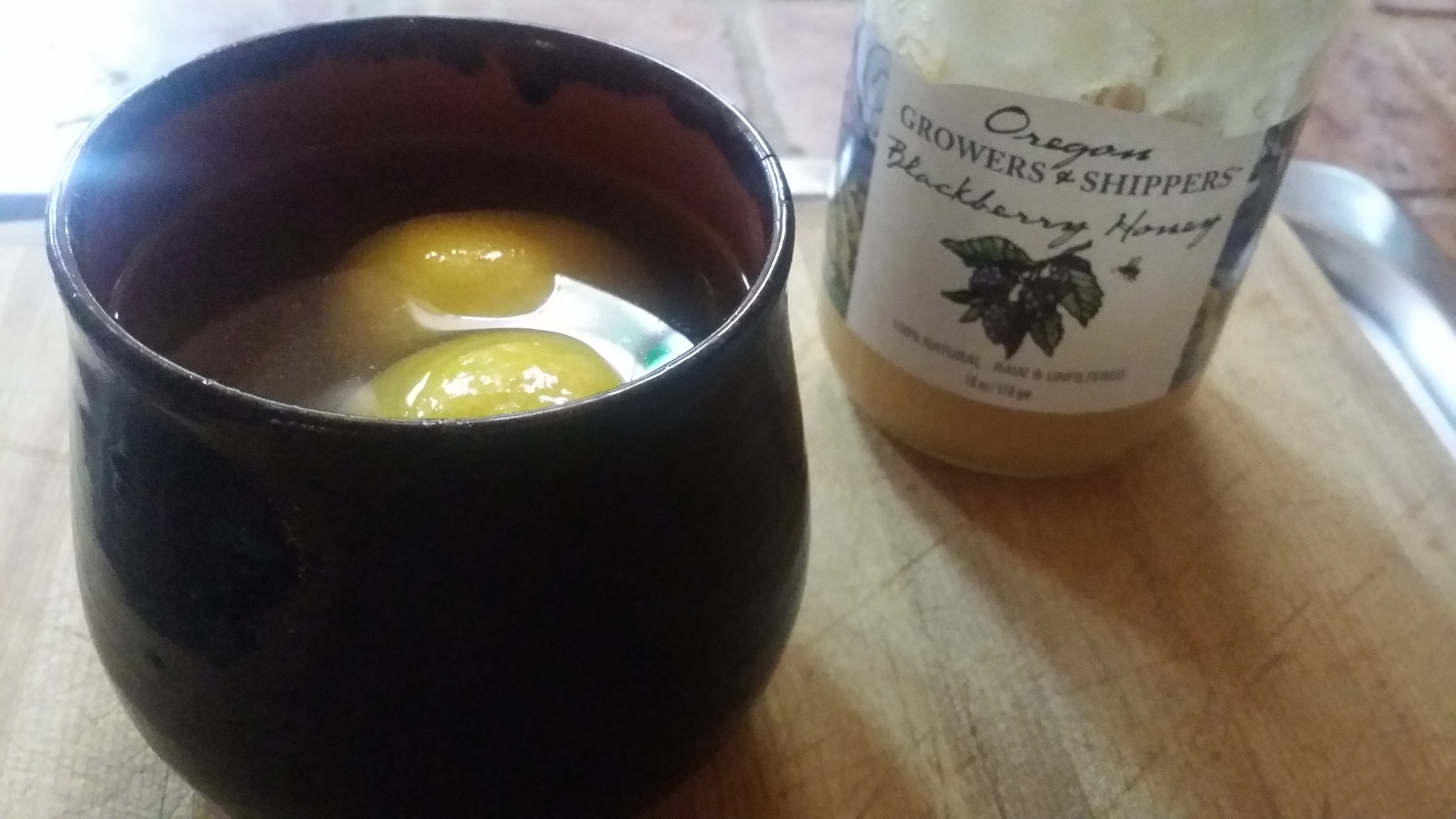
Squeeze a few slices of lemon & fresh ginger into a mug and pour very warm to moderately hot water over top. Add about a tsp. each of cayenne pepper & powdered tumeric, Sprinkle a bit of dried cinnamon and add a tsp. of honey. Mix, drink & enjoy.
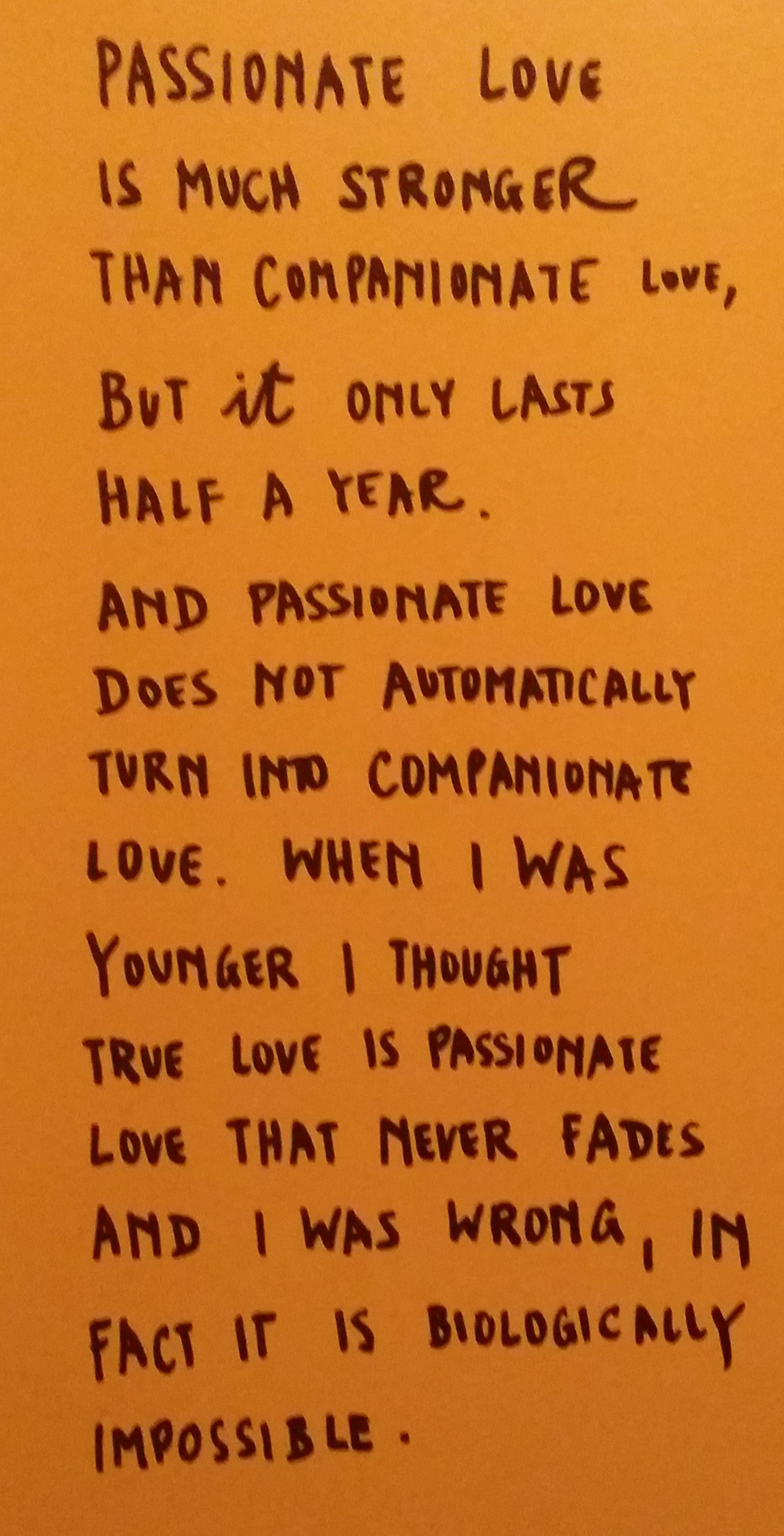
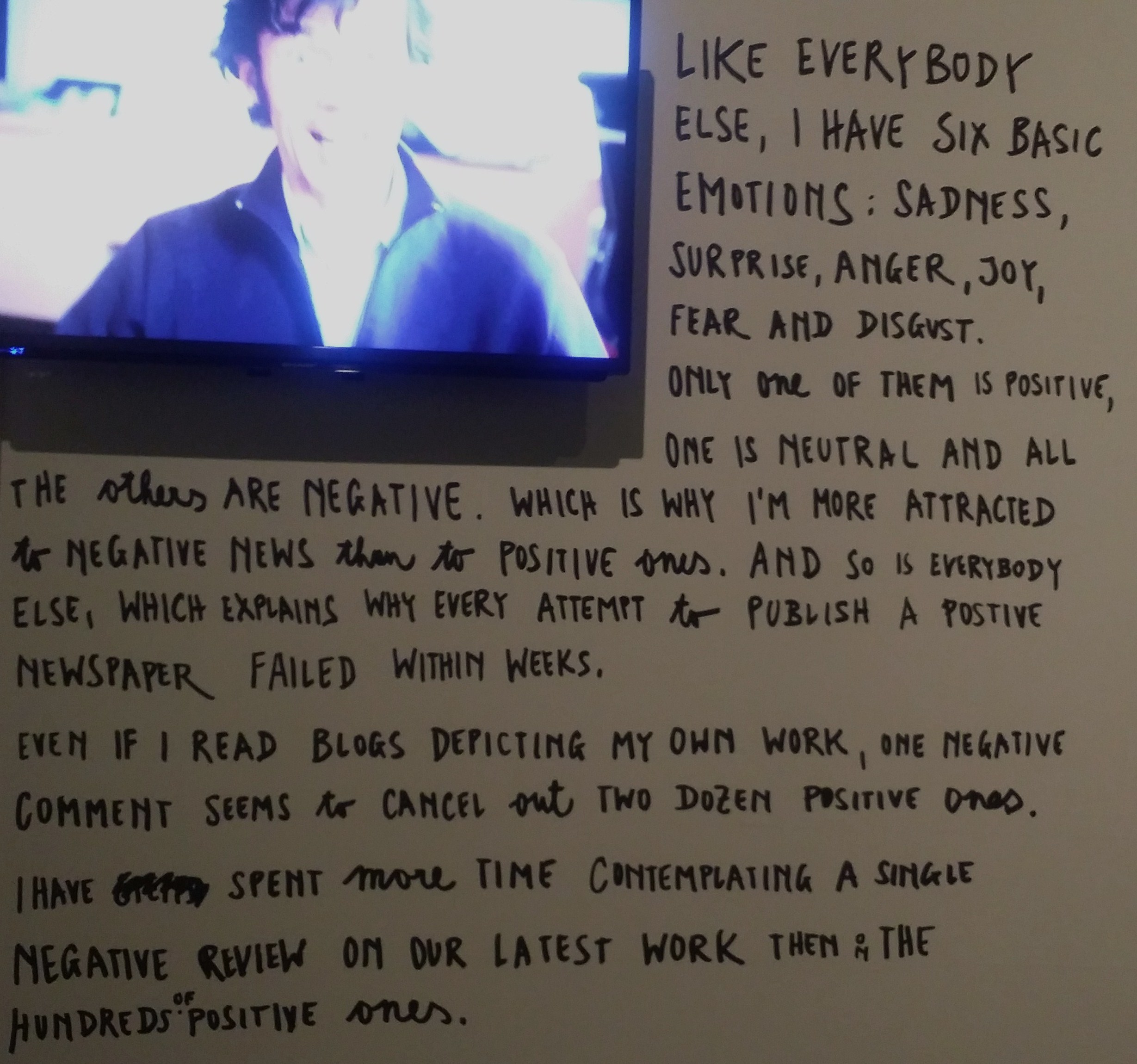
The writing is on the walls…literally. Scribbled all over the MOV’s latest exhibit.
I am usually rather bored with DEFINITIONS
Why? wouldn’t that work against happiness?
Health, wealth and happiness (usually signed on cards) are the three best wishes in the world but only one of those wishes are we able to be more in control of.
I’m leaving room for improvement
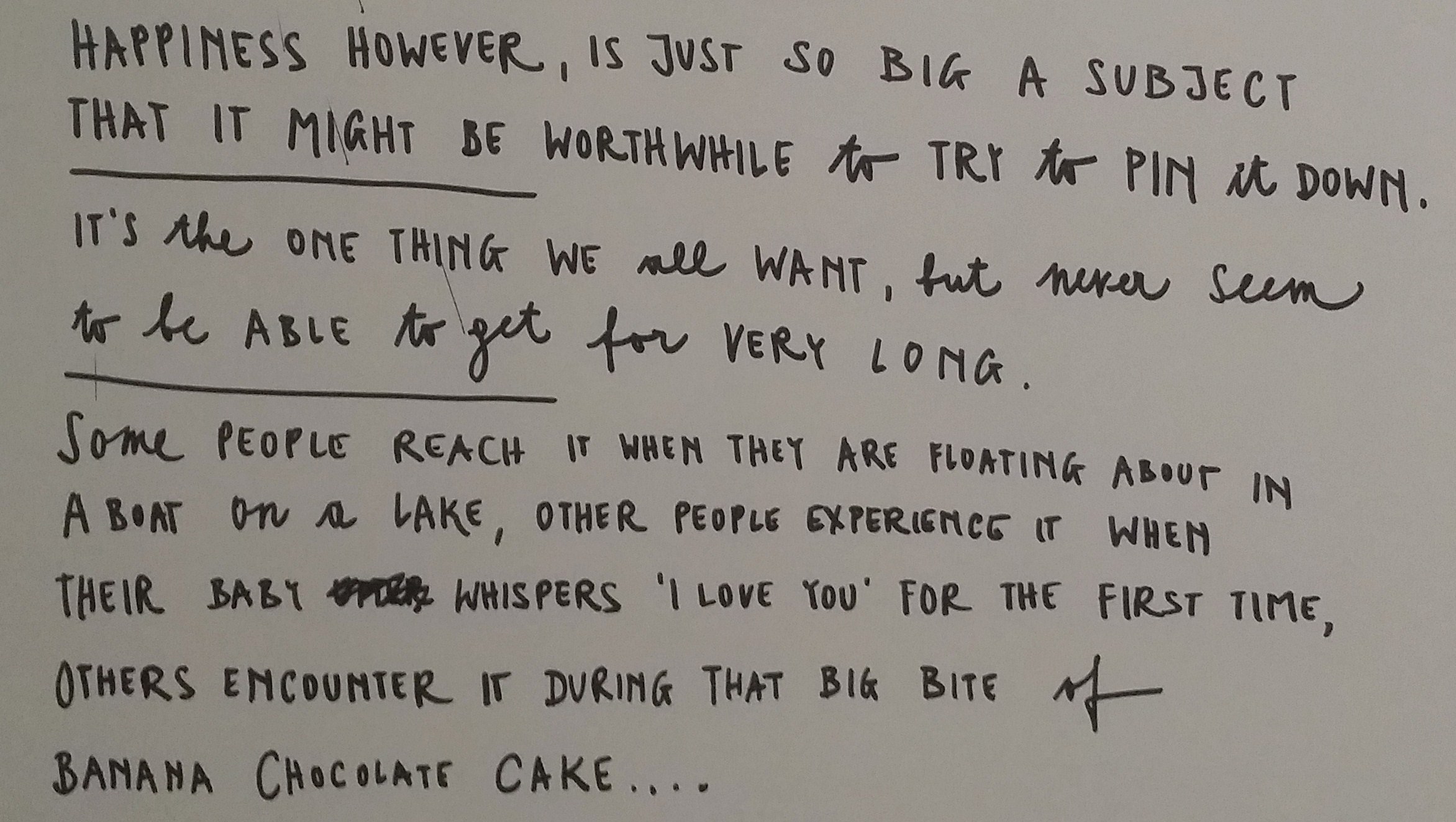
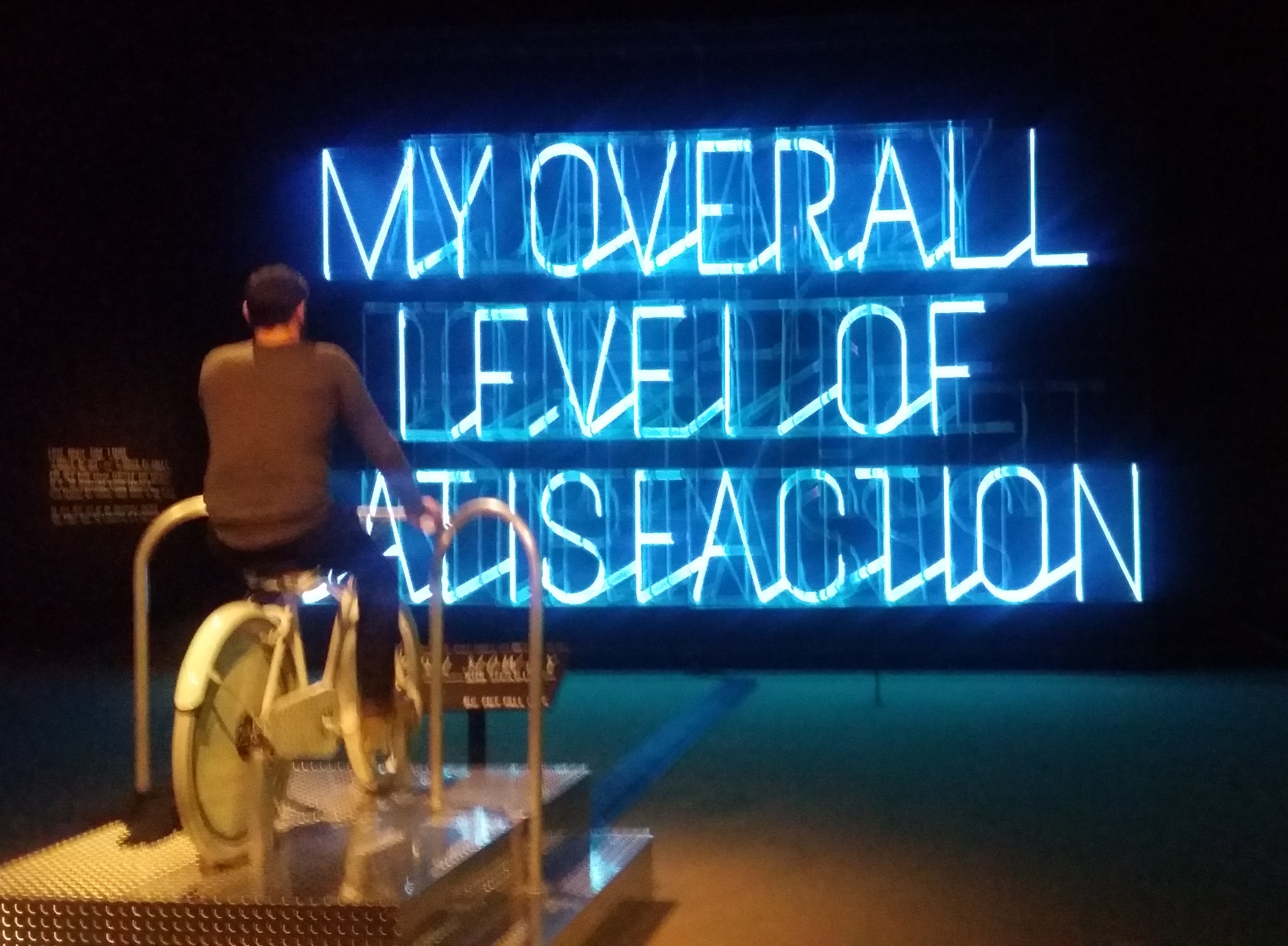
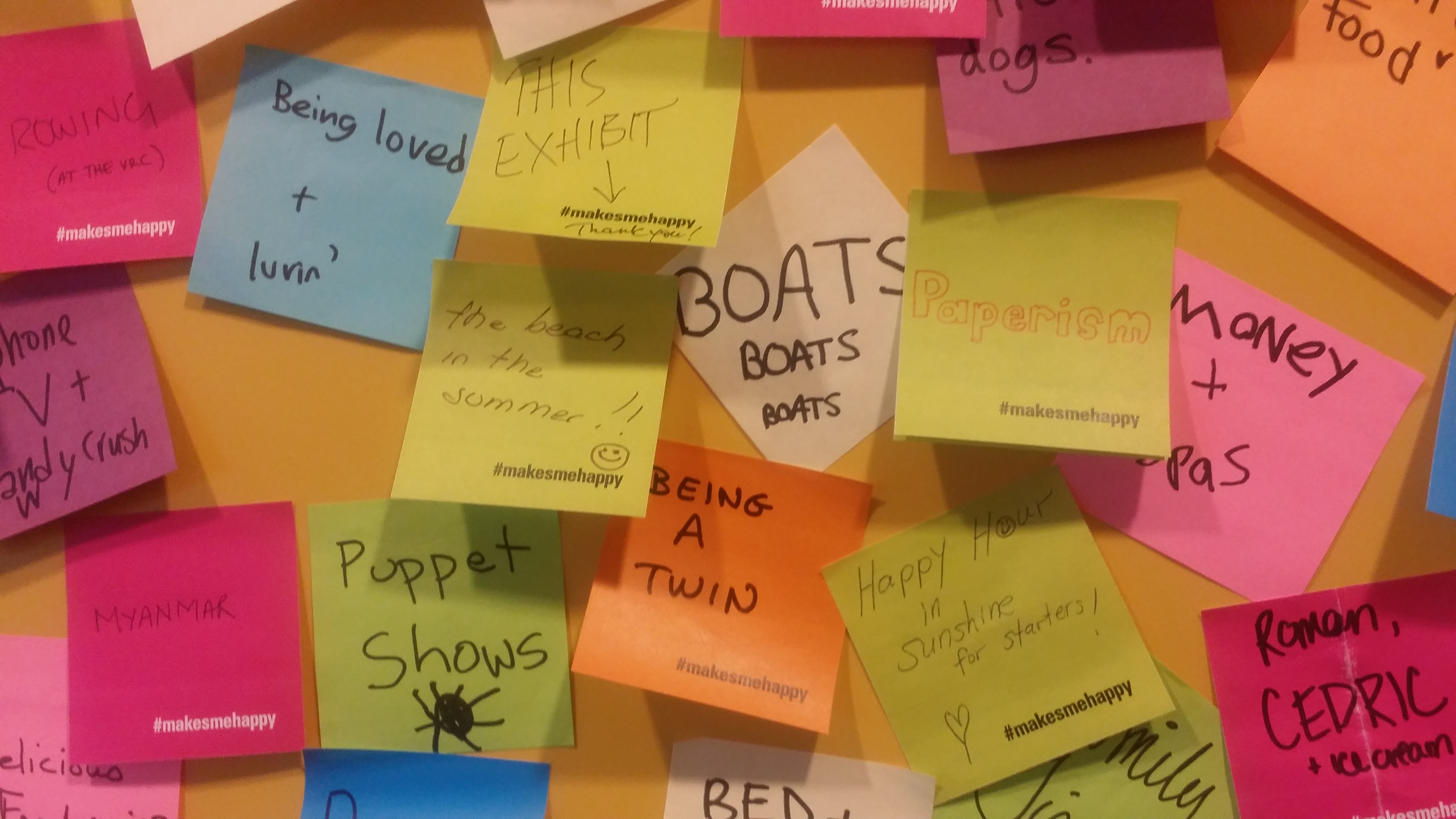
If you could rate your overall happiness on a scale between 1 and 10 (10 being the highest score), what would it be? If you were given a post-it note to write down what makes you happy, what would you write? If you had to choose your happiest activity (besides having sex) what would you do?
You might be surprised to find out that attending a religious service ranked higher than having sex, according to a happiness graph meter at the Museum of Vancouver’s (MOV) latest exhibit appropriately entitled “THE HAPPY SHOW.”
Not being the religious type, I was surprised but not totally shocked since happiness means different things to different people. Although when it comes to relationships with other people like family and friends, it seems we are all the same in rating it highest for personal happiness.
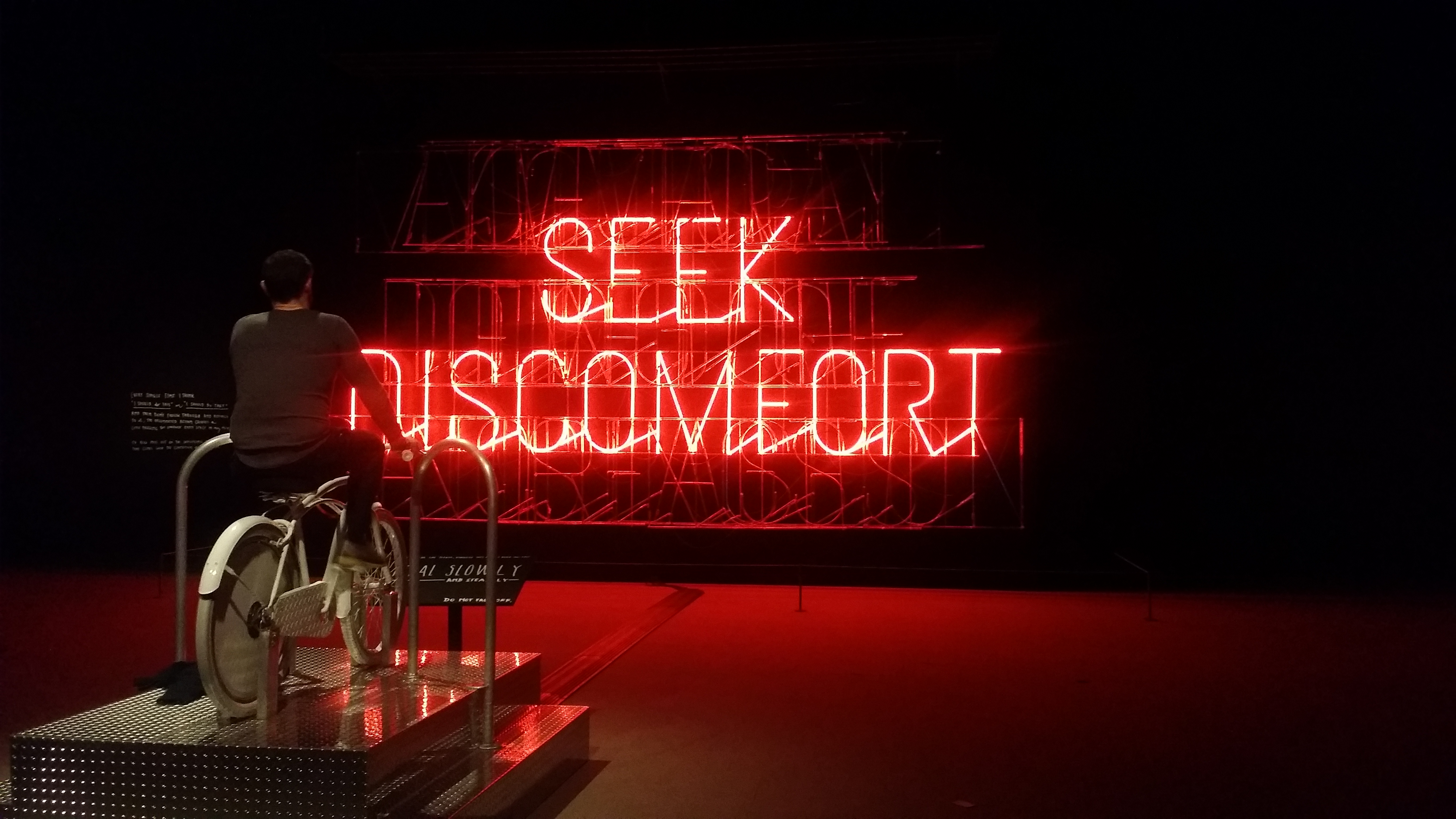
the screen changes while you pedal the stationery bike.
I was happy to be inside the MOV on an unpredictable Vancouver day that had periods of rain, hail and everything else in between. Snippets of happiness include gumballs and ginger candy which were at the exhibit and made everything better. This show is interesting, introspective, interactive and informative. However, the exhibit will not make you happier or take away any anxieties. A couple of hours spent there flew by so quickly.
If you’re happy and you know it write a note
The exhibit reflects a 10-year exploration of happiness by award-winning designer, Stefan Sagmeister. Sagmeister’s clients include HBO, the Rolling Stones (he designed album covers for them among other groups) and the Guggenheim Museum. He has also delivered several popular and disarming TED talks, a few of which you can watch and listen to (with headphones) at this exhibit. You will also get a sneak peek at the soon-to-be-released documentary, The Happy Film (depicting experiments with meditation, cognitive therapy and mood-altering pharmaceuticals) which I will definitely go do see.
A few interactive tidbits:
My friend and I were looking at a graph that indicated the happiness levels of those who were single, to those who were married or in a relationship. It claimed that men, if given the complete freedom to do exactly as they please, would do exactly as they please (surprise, surprise). A woman standing right behind me sighed and said “so true; my husband left me for my best friend.” She was on the low end of the happiness meter.
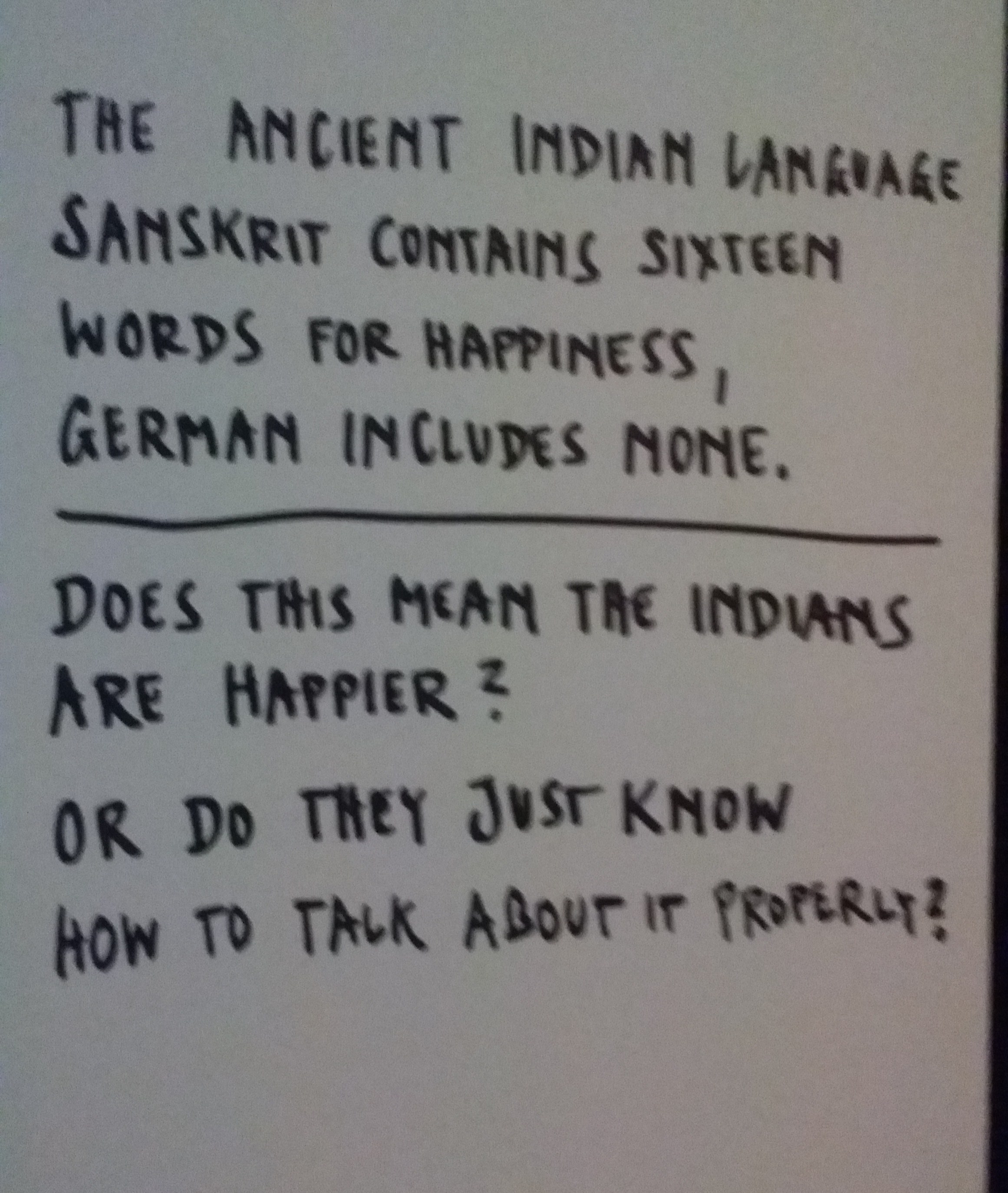
Then while reading a wall that said the ancient Indian Sanskrit language contains sixteen words for happiness, while German includes none…..a man visiting from Germany standing right behind me said that that’s not true. The German language apparently has three words and he wrote them down for me. glücklich (happy), freude (which actually means pleasure) and frohlich (merry). So I learned three German words today which mean almost the same thing – which made me somewhat happier to know.
I highly recommend this show which runs April 23 to Sept. 7
In closing, it might seem crazy what I’m about to say but the link below is bound to give you a HAPPY lift:
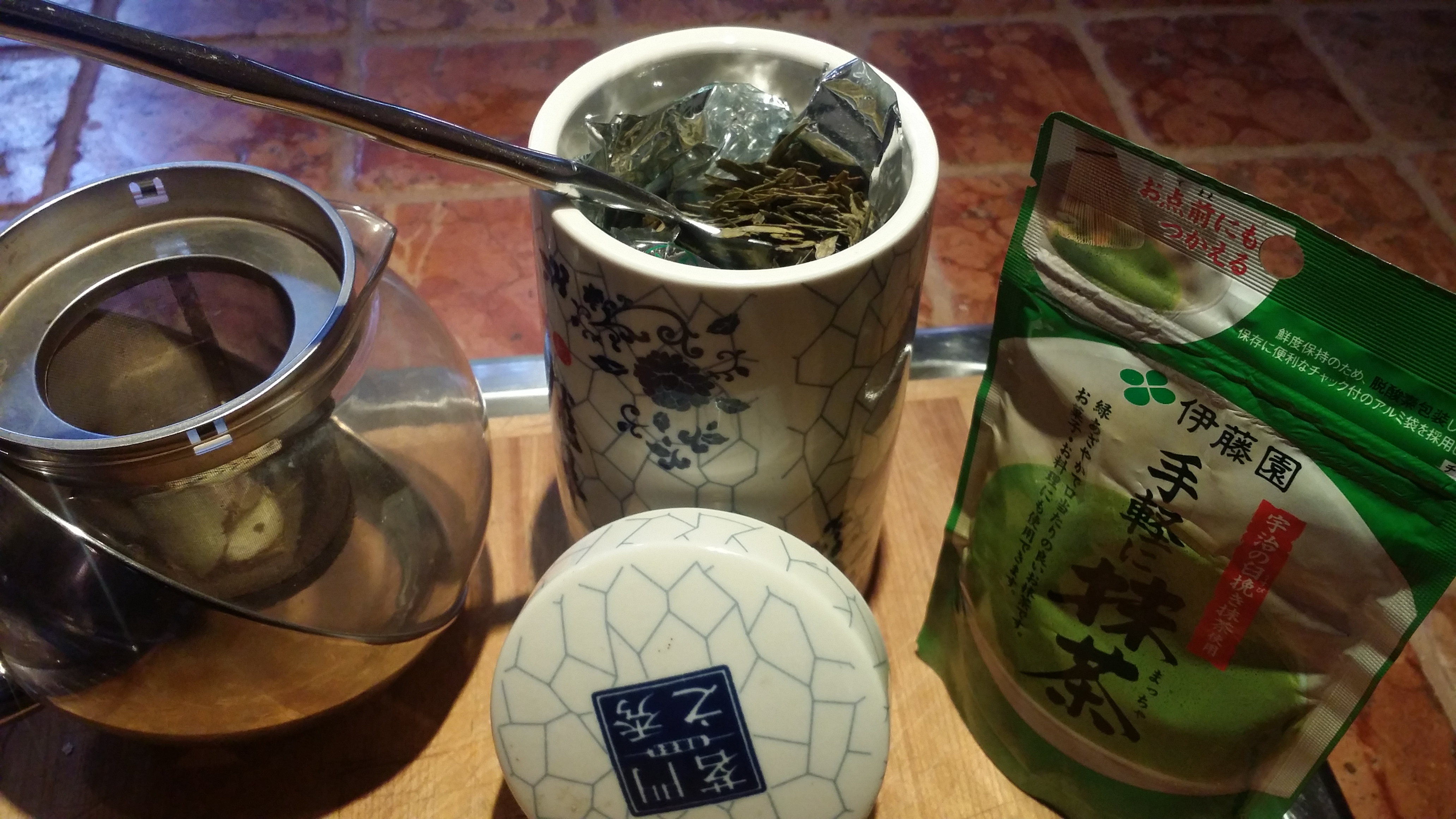
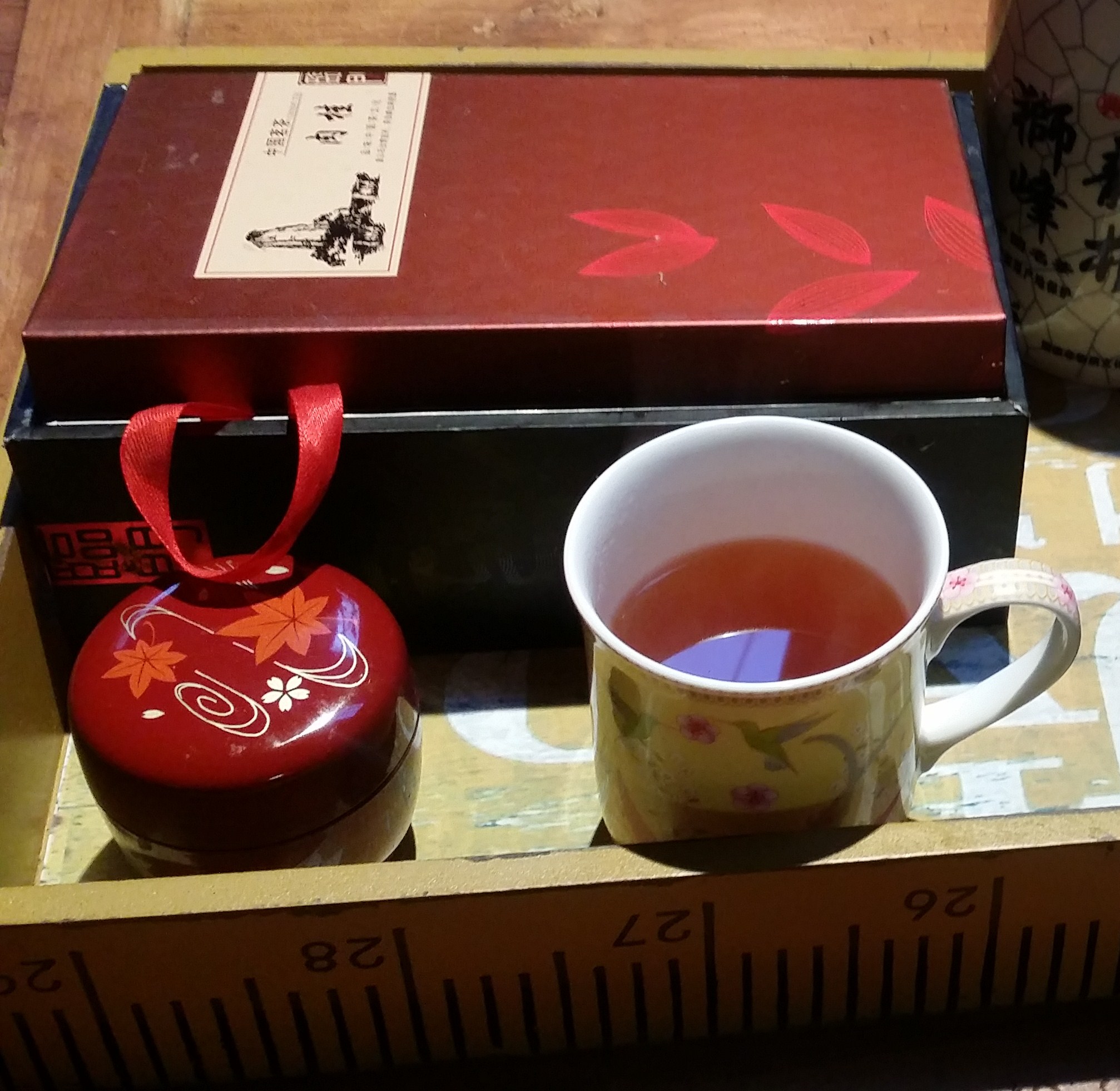
I’ve gone back to steeping green tea in the afternoon. I know this trend has been brewing (ha, ha) for years now and I don’t mind taking on a trend that I know (if all the consensus is correct) will benefit me in a healthy way.I’ve been putting matcha green tea powder into smoothies for ages and even add it to melted white chocolate (which turns it a pretty green colour as opposed to when you add it to dark chocolate).
Pouring hot water over the tea leaf itself and/or the bright green matcha powder (I like to mix both) rather than steeping a tea bag delivers more of the signature *antioxidants that have powerful effects on the body.
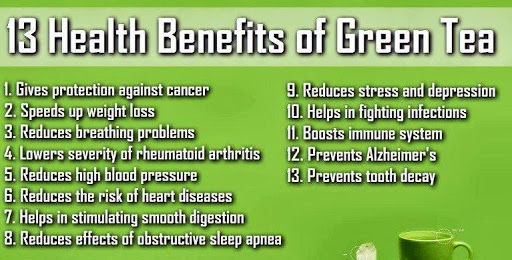
Why GO GREEN?The antioxidants (it’s loaded with*metabolism boosting and hard to pronounce names like polyphenols which contain **flavonoids and catechins) found in green tea battle the free radicals that can alter and even kill cells. Green tea has been shown to help fight a number of diseases, from cancer to diabetes. It is unfermented, whereas black or oolong teas are at least partially fermented. This allows green tea to retain its natural antioxidant levels better than the other types.
One of the more powerful compounds in green tea is the antioxidant EpigallocatechinGallate( a type of catechin), which has been studied to treat various diseases and may be one of the main reasons green tea has such powerful medicinal properties.
As an added health benefit, theanine (an amino acid found in particular plant species) in green tea can help you manage stress and stay relaxed. These relaxing effects, which are usually experienced within 40 minutes after drinking green tea, are caused by the ability of theanine to stimulate the generation of alpha brain waves. The generation of alpha brain waves has been directly linked to mental relaxation.
This is good to know as for the last several weeks I’ve been experiencing what can best be described (by me, not a doctor) as tiny and sometimes not so tiny anxiety attacks. I’ve never had this before and I believe they’re due to a few contributing factors beyond my control that have taken place, that I’m sure over time will come to pass. I don’t believe in taking pills for every little thing (this goes for even taking common aspirin) unless really needed which is extremely rare. So tea time is “me time” in the meantime to help reduce unwanted stress.
To double my free radical fighting strategies I am now adding sliced ginger to the pot. Green Tea & Ginger – any reason not to?
*When your metabolism is cranked into high gear, your body will burn more energy, which in turn can help you lose excess body weight (another benefit we don’t mind).
**Antioxidants, as you may already know, are health-benefiting molecules that slow down aging and guard against disease. According to research conducted by the U.S. Department of Agriculture (USDA) on the antioxidant capacity of foods and drinks, green tea is superior to black tea in terms of antioxidant capacity. It appears that the enzymatic oxidation process (fermentation) used in the preparation of black tea leaves is responsible for the weaker antioxidant activity of black tea.
Now I just need to add meditation to the mix. What do you do to help yourself relax?

 Not in a feel-good sense but in an overall peace of mind sort of way. Otherwise it’s like an open ended book where you never quite know what happens in the end.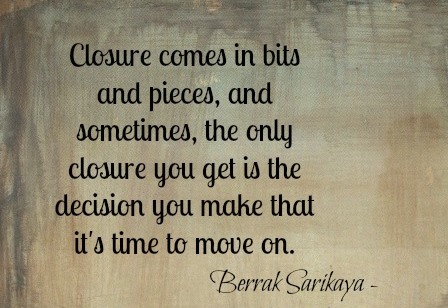












 Girl Who Would be KING on Life, Style and INSPIRATION.
You must be logged in to post a comment.