Health MATTERS:  a better way to get your C

  “Satisfaction of one’s curiosity is one of the greatest sources of happiness in life” – Dr. Linus Pauling

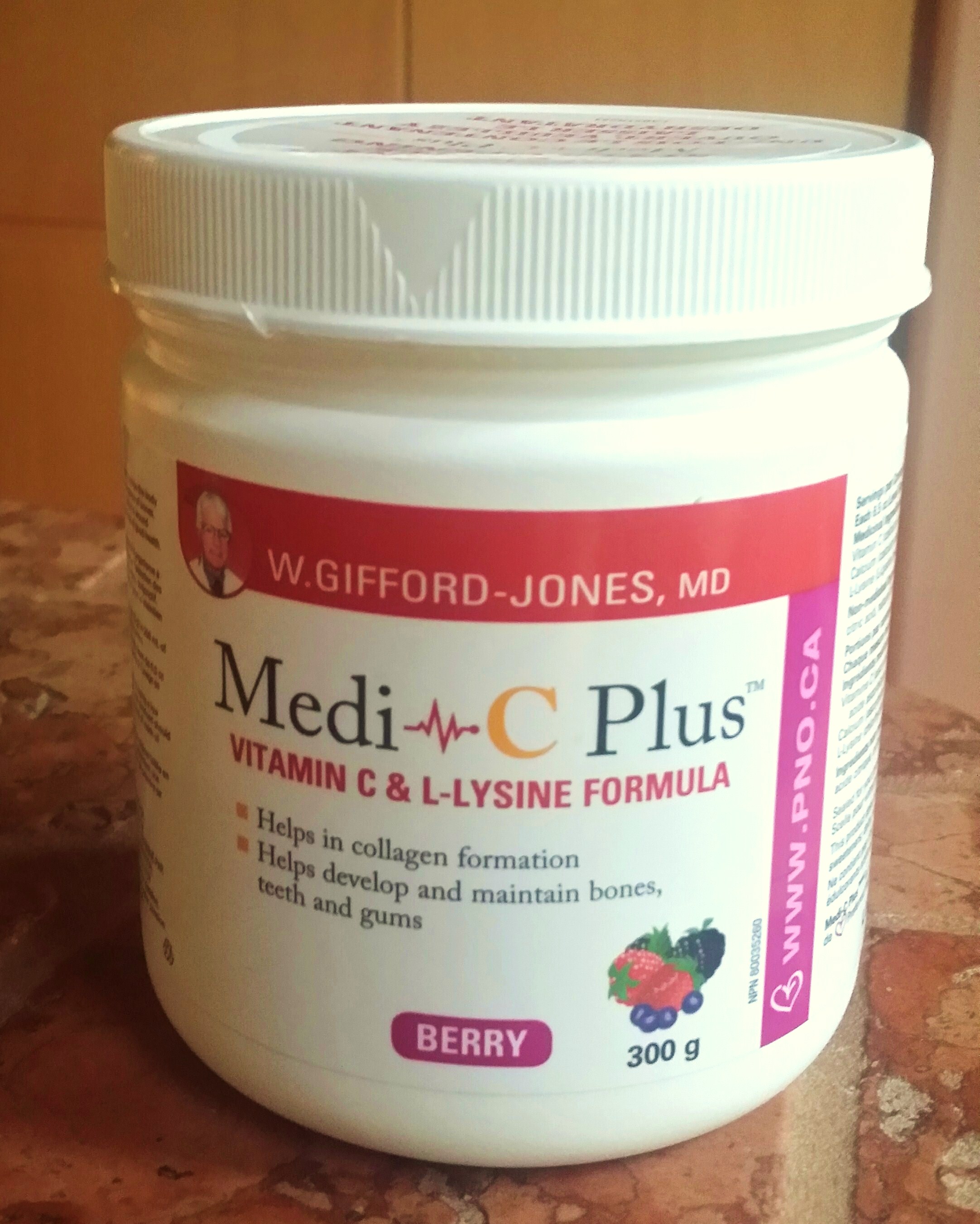
20140612_162844Funny the way life works sometimes.  I was reading W. Gifford-Jones MD “a collection of columns” from his book “What I Learned as a Medical Journalist which I find fascinating by the way….when I realized I was out of Vitamin C.  I was also feeling under the weather and it was suggested to me that I try out a brand new product – a powder with a high concentration of Vitamin C and L-Lysine called Medi-C Plus.  It sounded pretty good so I’m trying it out when I then realize that the Harvard Medical graduate’s name is on the bottle.  So now I’m even more curious to know more about this product.In a revolutionary finding, based on scientific fact that should have hit the headlines of every newspaper in the world, he says this powder can both prevent and reverse atherosclerosis in coronary and other arteries to prevent heart attack – a number one killer.

I just needed Vitamin C but while we’re at it…..

“If I had the power to improve the nation’s health I’d prohibit daily TV commercials that tell us that something is wrong with us.  I’d do this because Madison Avenue advertising is triggering false hopes and injuring health.  We’ve reached a point where a well person is someone who hasn’t been seen by enough doctors, or had a battery of tests done.  Then we could dump half of the pills in the trash.” – W. Gifford-Jones, MD (with a twist).

20140612_163547A condensed EXCERPT from the book: How Vitamin C and Lysine Powder can help prevent Heart Attack.

Many years ago, Dr. Linus Pauling, two-time Noble Prize winner, is ignored for reporting that large amounts of Vitamin C and Lysine are needed to prevent coronary attacks.  Twenty-five years ago, Pauling reported that animals make Vitamin C while humans do not.  That’s why sailors died of scurvy during long sea voyages, but the ship’s cat survived.

Vitamin C is required to manufacture healthy collagen, the glue that holds coronary cells together, just like mortar is needed for bricks.  Lysine, like steel rods in concrete, makes collagen stronger.  Pauling claimed that it takes a mere 10 milligrams to prevent scurvy, but several thousand to prevent heart attack.

But to take large doses of Vitamin C and Lysine requires swallowing many pills daily.  It’s a tall order for those who dislike swallowing even one pill.  So for several years, Gifford-Jones had been trying to find a company that would manufacture a combination of Vitamin C and Lysine powder.  Now Medi-C Plus is available at health food stores.

It’s easy because the dosage for the Medi-C Plus combination is easy – one flat scoop with breakfast and the evening meal, with either water or orange juice. The only thing you can’t take it with is *Grapefruit juice.

The berry flavour doesn’t taste bad at all.  I read labels – it is naturally sweetened with berry and stevia.  The scoop inside is not so large that you feel you won’t go through it so quickly which is another plus factor. Helps in collagen formation, developing & maintaining bones and for teeth and gums.  Nothing not to like – I’M IN!  This may be my new “for life” product.


*Grapefruit juice and fresh grapefruit can interfere with the action of some prescription drugs, as well as a few non-prescription drugs.  Grapefruit most commonly interacts with drugs taken for high blood pressure, high cholesterol, depression, anxiety, allergies, HIV, impotence, and seizures. If you’re taking medication for any of these conditions, avoid grapefruit as a snack or juice. To be on the safe side, also stay away from tangelos, which are a hybrid of tangerine and grapefruit.

**Don’t miss listening to “Transforming Healthwith host Brad Kingfor the most evocative and informative up-to-the-minute interviews with leading health professionals – Live every Wednesday @ 12PM-PST/3PM-EST on VoiceAmerica.com – #1 internet radio station in North America.  Here’s the link: http://www.voiceamerica.com/show/1686/transforming-health


Personally….keeping up with the Pack

Natural born Runners – are they born that way?

Nike Women's Half & Full Marathon - San Francisco
Nike Women’s Half & Full Marathon – San Francisco

In April I signed up for the Lululemon Seawheeze half marathon with my sister. Good thing we were fast because it sold out in minutes.  Part of the attraction is that you get a cute pair of booty shorts and it seems more like a party than an actual run.  Anyway, we started training last month but I just had to take two weeks off due to an annoying asthmatic cough (and a slight back injury) which happened all an once. I managed to re-join the Running Room group last Sunday where we did a manageable 8K run (reluctantly chosen over the 10K group). While I was secretly happy that it wasn’t much longer than that, I did wonder if I should have pushed myself for the extra 2K. I just didn’t want to chance wheezing my way through the Seawheeze run in  August.  Then it occurred to me that maybe I’m not a natural born runner.  Some people just seem to keep up the steady pace without falter.  Others like me are unpredictable – sometimes I have tons of energy and feel like I can go even longer than the actual planned run and at other times I’m done after about 10 minutes.  What gives?

Starting out:

Practice patience, grasshopper. Rome wasn’t built in a day, and neither is a happy runner.

If you want to become the kind of runner who can’t wait for the next workout, it’s going to take time to get there. Truth is, the most common mistake new runners make is running too much too soon. For example, some new runners set a lofty goal to go couch to marathon in three months. Don’t get me wrong, it can be done. But these runners are more likely to spend their time in the “bite-me zone” of hurt and pain. Just because you can do something doesn’t mean you should.

I’ve seen way too many runners cross the finish line only to toss their shoes in the closet to collect dust because they’ve burned out by overzealous goals. Invest in running. Take your time to find the joy, and you’ll be a runner for life. If you are about to take your first steps, think about running 30 minutes straight in a few months (or a 5K event). With the pressure gone, all you need to focus on is putting one foot in front of the other. Set a smaller goal for your first running session. For example, aim to finish and go a little farther than you have to and complete your workout in a good mood. Set another goal for your second workout and so on, and so on.

50,000 people runners can't be that stupid can they?
50,000 people runners can’t be that stupid can they?  The Annual largest 10K run in N. America.

Consistency is the secret to success. It’s all about creating momentum.

I use to play with dominoes when I was a young girl, and I’d line them up on a table close enough together that when I knocked over the first one, the rest came falling down in a breathtaking sequence. This is exactly how running works as well. You want to maintain the momentum from one run to another to maintain a consistent progression. If you space the workouts too far apart, you begin to lose the wonderful effects of consistency (improvement). If you find yourself in a bind and unable to get in your normal 30-minute session, head out for a quick 15 minutes of running (or even a walk). A shorter workout is better than none at all.

Running is like life. It will have its ups and downs. Ultimately, it will come down to what you do on the down days that truly pays off in the long run. Be prepared to edit, tweak and modify to ebb and flow with life’s running interruptions. It’s not about perfection, but rather keeping your running momentum flowing.

I learned to run from a course - of course I did
I learned to run from a course – of course I did!

I like to get high: It’s the best part of running and it doesn’t happen all the time. It’s a euphoric state that is experienced by not only runners, but by anyone engaged in a vigorous workout.  Boxers and bikers have reported similar states of being, as have weight lifters, cross country skiers and rugby players.  The high itself is described as a feeling of well-being, to being one with the world or to a total out of body experience. It is typically related to longer periods of vigorous exercise rather than shorter, easier workouts, possibly due to the stress the body undergoes as the major muscle groups begin to run short on glucose. The experience of the high also seems to rely on the individual makeup of the runners themselves, with some experiencing it at 5 miles, while others must run 20 before the euphoric feelings kick in.

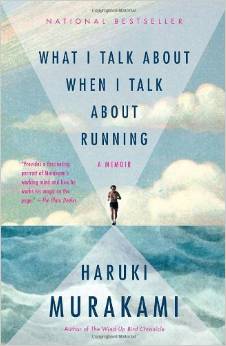
run1 (2)What I Talk About When I Talk About Running.    An intimate look at writing, running, and the incredible way they intersect, from the incomparable, bestselling author Haruki Murakami.While simply training for a New York City Marathon would be enough for most people, Haruki Murakami’s decided to write about it as well. The result is a beautiful memoir about his intertwined obsessions with running and writing, full of vivid memories and insights, including the eureka moment when he decided to become a writer. By turns funny and sobering, playful and philosophical, relevant both for fans of this masterful yet guardedly private writer and for the exploding population of athletes who find similar satisfaction in athletic pursuit.

Available at Amazon.com

I won’t talk about what I talk about when I talk while running.  So there will be no book.

Souce: Active.com


Health MATTERS: “Mighty Aphrodite” – OIL of OREGANO

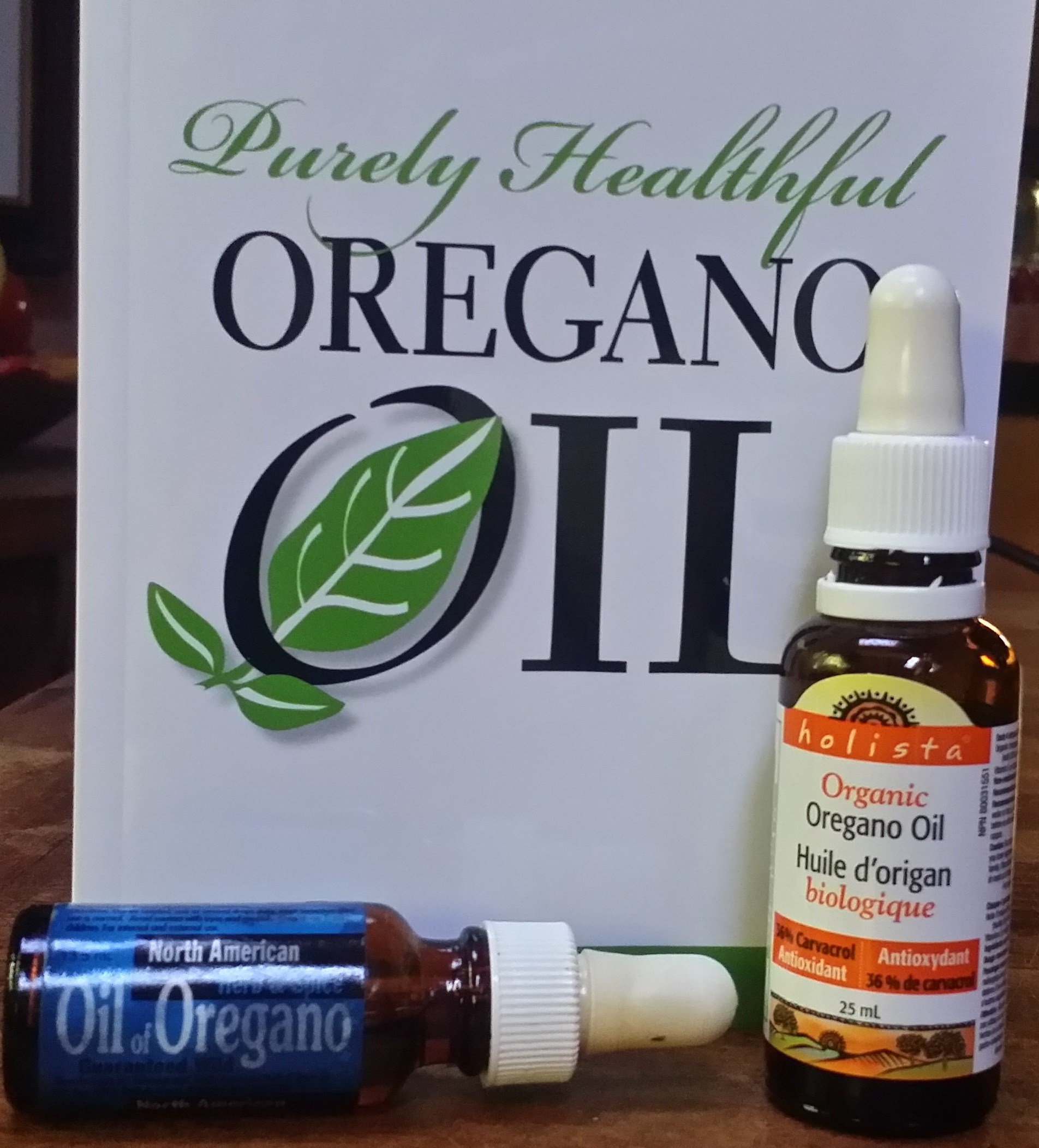
The Greeks were the first to record the use of Oregano and they credited Aphrodite, the goddess of love, with creating it, with the purpose of bringing joy to mankind. oregano

The word “oregano” is from two Greek words – oras, which means “mountain”, and ganos, “joy” – basically meaning oregano “joy of the mountains”. Ancient Greek physicians prescribed oregano for infections, wounds, headaches, respiratory disorders, seizures, snakebike and other forms of poisoning.

I can attest to the powerful healing benefits of this Mediterranean oil.  It’s responsible for single-handedly clearing up my terrible asthmatic cough which I had for two straight weeks.  I don’t like to use inhalers but was on the verge of doing so when I decided to try Organic Oregano Oil once again (I had previously taken it for several years, never got sick and then went off it when my last bottle was finished). So last night instead of taking it orally I just diluted several drops in water and my coughing subsided immediately.  I don’t believe it to be a co-incidence. I believe the oil cleared up my annoyingly aggravating cough. The one benefit of having a hoarse voice would be to sound like Demi Moore, but unfortunately my voice sounded more like Marge Simpson.  So I decided to discuss all the benefits of this miracle oil.

The oregano used to produce oregano oil for healing purposes is not the same as what we generally call oregano and you won’t find it in the spice section of your local grocery store.  There are more than 30 species of oregano and only a few have been proven to have real medicinal value.  So it is very important to be sure you are buying quality oregano oil from a trusted manufacturer of natural products.

Oregano Oil grows wild around the world, especially in the mountainous area of Greece and Turkey, where the highest medicinal grade is found.  Medicinal oregano is rich in minerals as well as vitamin C, vitamin A and niacin.  It takes a lot of oregano to distill a small amount of oil – in fact,  about 1,000 pounds would be needed to make one pound of oil.  This is why superior quality medicinal oregano oil is quite expensive.  However it is also quite potent and a little goes a long way as a natural remedy or treatment, making this healing herb a good investment.

Oregano oil contains natural compounds that combat bacteria, fungal, viral and parasitic infections.  It can be used for ailments ranging from athlete’s foot to food poisoning. Basically you can use it from head to toe.  It is an antiseptic, anti-microbial powerhouse and as such it has an almost infinite number of uses around the home.  Be sure to have a  bottle on hand.

How to use it:  For daily use, place 1 to 5 drops of oil under the tongue and hold it there for 5 to 10 seconds for sublingual absorption.  You can then follow with a drink of water or juice.  If you don’t like the taste (it’s strong) you can add it to a glass of water, milk or any kind of juice and drink it to increase your immune support or fight an infection.

There are so many uses (too numerous to mention there) that you might want to google it yourself.  As for me, it helped my throat right after using it and that’s why I decided to blog about it.  The vapours of the oil when taken internally are touted as a treatment for coughs and sinus congestion.  Putting a drop under the nose can help clear sinus congestion and the oil can also be added to a humidifier of vapourizer for nighttime support. It also helps for shingles, itching, ear infections, headaches, digestive difficulties, athelet’s foot, candida, dandruff and muscle aches.

Choose a product prepared by a reputable manufacturer and follow the label directions.  You can start to enjoy better health right away with this potent natural ally in your medicine cabinet.

 Have you tried it?

Also, **Don’t miss listening to “Transforming Healthwith host Brad King for the most evocative and informative up-to-the-minute interviews with leading health professionals – Live every Wednesday @ 12PM-PST/3PM-EST on VoiceAmerica.com – #1 internet radio station in North America.  Here’s the link: http://www.voiceamerica.com/show/1686/transforming-health 

Health MATTERS: Stinging Nettle is nothing to sneeze at!

I’m always on the lookout for a good natural solution to my problem.

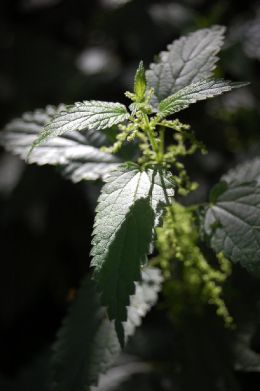
Stinging Nettle
Stinging Nettle

Of all the health problems that summer and spring can bring, hay fever can be amongst the most debilitating and annoying. The constant interruptions to your life brought on by uncontrollable sneezing and irritated eyes is enough to drive most people crazy. It’s driving me crazy right now!

It may surprise you then to realize that the same garden which is largely responsible for your current predicament is also home to the solution to your problems.

One study on humans of nettle leaf for the treatment of hay fever found that this herb works 58 percent of the time on reducing itching and sneezing.  Researchers believe that nettle is able to reduce the amount of histamine in people with allergies. By naturally reducing the level of histamine in the body as a result of allergens, you increase your resilience to those same allergens.

Doctors recommend taking nettle long before allergy season begins. They also suggest using freeze-dried leaves, however taking supplements will also work. It has been found that hay fever sufferers can start out taking two nettle supplements, three times a day until symptoms are under control and then reduce their intake after that.

Stinging nettle tea is also available from most health food stores.

Did you know? Stinging nettle has been used for hundreds of years to treat painful muscles and joints, eczema, arthritis, gout, and anemia.

Have you tried it?

Also,                                                                                                                                      **Don’t miss listening to “Transforming Health” with host Brad King for the most evocative and informative up-to-the-minute interviews with leading health professionals – Live every Wednesday @ 12PM-PST/3PM-EST on VoiceAmerica.com – #1 internet radio station in North America.  Here’s the link: http://www.voiceamerica.com/show/1686/transforming-health


Health MATTERS: Let’s go NUTS!

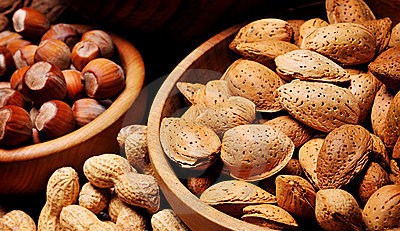
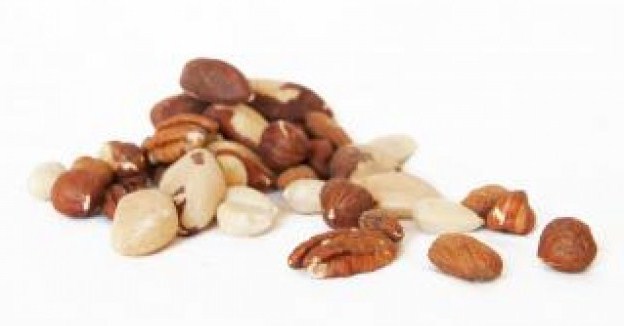
nuts1I’ve been going nuts for a while because these tiny treats come packed with major nutritional benefits. I put them in lots of things like homemade granola, energy bars & salads.  They’re one of the cornerstones of a Mediterranean diet and while all nuts are healthy, each variety has its own unique benefits.  Here are some of the standouts:

ALMONDS

Call them the skinny nuts.  In a 2013 study in the European Journal of Clinical Nutrition, people who ate about one and a half servings of almonds with breakfast felt a significant decrease in appetite.  When the nuts were consumed as an afternoon snack, they quashed appetites by about two and a half times that, helping subjects naturally eat less for the rest of the day.  Serving Size: 23 nuts, 164 calories.

WALNUTS

Walnuts not only taste great but are a rich source of heart-healthy monounsaturated fats and an excellent source of those hard to find omega-3 fatty acids. Like most nuts, they can easily be added to your Healthiest Way of Eating. Just chop and add to your favorite salad, vegetable dish, fruit, or dessert. The form of vitamin E found in walnuts is somewhat unusual, and particularly beneficial. Researchers are convinced—more than ever before—about the nutritional benefits of walnuts when consumed in whole form, including the skin. We now know that approximately 90% of the phenols in walnuts are found in the skin, including key phenolic acids, tannins, and flavonoids. Serving Size: ¼ cup, 196 calories

PECANS

A study in the Journal of Nutrition found that people who consumed about three servings of pecans experienced as much as a 33 percent drop in oxidized LDL cholesterol (the kind that causes artery-clogging plaque to form).  The pecan’s power may lie in its high levels of heart-protecting antioxidants. Serving Size: 19 halves, 196 calories.

PISTACHIOS

Not only are pistachios the lowest-calorie nut of the bunch, but they’re also rich in healthy unsaturated fatty acids.  In a study, a group that consumed 20 percent of their daily calories from pistachios for nearly six months had lower blood sugar and cholesterol levels – two risk factors for heart disease – and trimmed their waistlines more than those who ate a wholesome but pistachio free- diet.  Great news – I love pistachios!  Serving Size: 49 nuts, 159 calories.

MACADAMIAS

These pack roughly 21 grams of fat per serving, but most of it is the unsaturated kind.  Macadamia nuts are an excellent source of two nutrients vital for healthy brain and nerve function: manganese (one serving delivers 65 percent of what you need daily) and the B vitamin thiamine (30 percent of your recommended dietary allowance).  Serving Size: 10-12 nuts, 204 calories.

BRAZIL NUTS

First the bad news: you can’t eat a lot of them.  Each of these Amazonian nuts contains about 33 calories – the equivalent of nearly 10 M&M’s.  Now the good news: You needn’t go overboard to reap their health benefits.  Just two nuts per day for 12 weeks can increase blood levels of the mineral selenium by 64 percent.  Selenium is essential for proper immune function, as it helps build germ-fighting white blood cells.  Serving Size: 6 nuts, 186 calories.

So, go NUTS!nuts2


Health MATTERS: Exercise vs. Diet – which one matters most?

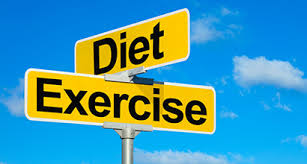
diet1If you had to choose between Diet or Exercise when it comes to slimming down which would it be?

Does one matter more than the other? I know, it’s not really a fair question but some people want to lose weight but really don’t want to 1) Exercise or 2) Diet.

 Of course you can always do one without the other but any thinking person knows that doing both will be more effective.  I was reading an article about this with two experts weighing out the differences.diet2

 HIT THE GYM:

Expert: Michele Olson, PhD, professor of physical education and exercise science at Auburn University at Montgomery, Alabama.

“Yes, you can lose weight with diet alone, but exercise is an important component.  Without it, only a portion of your weight loss is from fat – you’re also stripping away muscle and bone density.  Since working out stimulates growth of those metabolic tissues, losing weight through exercise means you’re burning mostly fat.  The number on the scale might not sound so impressive, but because muscle takes up less space than fat does, you look smaller and your clothes fit better.  Data shows that to lose weight with exercise and keep it off, you don’t need to run  marathons.  You just need to build up to five workouts a week, 50 minutes each, at a moderate intensity, like brisk walking or zumba.  Resistance training helps too.  Don’t just do isolated weight-lifting exercises like bicep curls – you’ll get leaner faster by using your body weight against gravity, as with movements like squats, lunges, push-ups, and planks.  And, of course, beyond burning fat, people shouldn’t forget that exercise can have other impressive health perks, like improving the quality of your sleep, lowering your cholesterol, and reducing your stress level.”

 EAT SMART

Expert: Shawn M. Talbott, PhD, nutritional biochemist and former director of the University of Utah Nutrition Clinic.

“As a rule of thumb, weight loss is generally 75 percent diet and 25 percent exercise.  An analysis of more than 700 weight loss studies found that people see the biggest short-term results when they eat smart.  On average, people who dieted without exercising for 15 weeks lost 23 pounds; the exercisers lost only six over about 21 weeks.  It’s much easier to cut calories than to burn them off.  For example, if you eat a fast-food steak quesadilla, which can pack 500-plus calories, you need to run more than four miles to ‘undo’ it!”

“So, what should you eat?  It’s true that low-carb diets tend to be the most popular because they offer the fastest results, but they can be difficult to sustain.  I recommend striving for a  more balanced plan that focuses on fruits and veggies, lean proteins, and whole grain carbs.  And never cut calories too low (this causes your metabolism to slow, and you can start losing muscle mass).  For a healthy daily calorie count, allow 10 calories per pound of body weight – so a 150-pound woman should shoot for a 1,500 calorie target.  That way, you should be able to lose weight no matter how much you exercise.”diet3

 THE LAST WORD: While diet and exercise are both important for long-term weight loss, remember this: “You can’t out-exercise a bad diet,” says Talbott.

Source: as told to Sarah Z. Wexler for “O” Magazine


Health MATTERS –  it doesn’t hurt to get a little support

I’ve been taking a veggie capsule called “BioSil” for almost a year which claims to promote healthy hair, skin & nails among other things (like bones & joints) and overall I have noticed an improvement especially in my hair and nail growth. BioSil is the only thing I can attribute this to.BioSil

I realize that this is beginning to sound like a testimonial more than a product review.  There is an active ingredient in the capsule that helps to generate collagen (collagen accounts for around 30% of the protein content of the human body) which diminishes significantly as we age.  In simple terms, collagen is considered to be the “glue” that holds the body together. Even so, I wasn’t actively looking for this, just noticed it on the vitamin shelf of a health food store and it looked worth giving a try.  Now I’m almost through my third bottle and will continue to take this supplement – because I’m crazy for keeping the glue together.

This from Preferred nutrition:

Molecular biologists have pinpointed the key structural protein integrally involved in creating smooth skin, thick strong hair, and strong nails. It’s your body’s beauty protein, collagen. Collagen is an essential building block of your body, making up 70% of your skin and 30% of your bones. During youth, you have a rich abundance of collagen, which arranges itself into a resilient and flexible “tight mesh” matrix . This “ideal” collagen condition prevents wrinkles from forming, gives skin elasticity and helps create thick and strong hair. But over the years, collagen diminishes and undergoes other changes.

For years, scientists searched for a method that would give the human body the ability to regenerate its own collagen. But it took the discovery of BioSil’s™ patented choline-stabilized orthosilicic acid (ch-OSA®), the active ingredient in BioSil™, to make genuine collagen regeneration a reality.

BioSil™ “turns on” the body’s actual collagen-generating cells, known as fibroblasts. Because BioSil™ works through your body’s natural pathways, the collagen it generates has your own DNA fingerprint. BioSil™ has been tested in rigorous double-blind placebo controlled trials which have consistently shown its safety and effectiveness for collagen regeneration and improved appearance of skin, hair and nails.

In one study, 50 women with sun damaged skin took BioSil™ or a placebo tablet for 20 weeks. At the end of the trial, women taking BioSil™ showed significant improvements in skin smoothness and strength, and in nail and hair strength.3 In yet another study, BioSil™ supplementation for nine months increased hair thickness, elasticity and strength in women with fine hair.4

Collagen: Generate It – Don’t Eat It

It’s important to note that BioSil™ is not made out of collagen. Instead it triggers the body to generate its own collagen. There’s a big difference. When you ingest collagen, the human body breaks it down and uses it as food. By contrast, BioSil’s™ patented ch-OSA complex is absorbed by the body, where it acts to promote the production of collagen, boosting your body’s collagen levels, and slowing the loss of this essential building block that occurs with age.  As a result, BioSil™ provides superior support for stronger, healthier and thicker hair; stronger nails; fewer fine lines and wrinkles and denser and more flexible bones.

Have you tried it?


Health MATTERS – packaging claims and misdemeanours

Are grocery labels too promising?

label4You can hardly grocery shop without being bombarded by products promising you more vitamins, more fiber, more nutrients, more everything. Almost half of all new items that make their way to store shelves carry at least one health claim on their packaging. Below is a listing of reality-check lingo so you know exactly what you’re getting from your favourite foods.

Claim: with Omega-3s

Truth: don’t get too excited as heart-healthy omega-3s get top billing on everything from peanut butter to milk and breads.  Some products contain only 32 milligrams of the healthy fat per serving – one tenth the amount in a half ounce of salmon.  You’re better off following the American Heart Association’s guidelines, which recommend eating at least two weekly servings (3.5 ounces cooked) of fatty fish like salmon or trout to get the most omega-3s in your diet.

Claim: Good source of Antioxidants

Truth: Packaged foods need to contain only 10 percent of your daily intake of antioxidants, like vitamin A, C, and E, to be considered a “good source,” according to the Food and Drug Aministration.  Instead, consume a full spectrum of antioxidants from natural sources like fruits and vegetables.  One small carrot, for example, provides more than twice the amount of Vitamin A than a full serving of one antioxidant-enriched cereal does. Aim for four servings of fresh fruits and five servings of veggies per day – the more colourful they are, the higher the antioxidant levels.

 Claim: High in Fiber

Truth: Some loaves of bread, energy bars, and even waffles can deliver up to 35 percent of your daily fiber requirement per serving, but much of the added fiber can be man-made or extracted from plants.  And while studies have shown that a high-fiber diet may reduce the risk of heart disease, the research applies to naturally occurring fiber.  To meet your daily needs, stick to natural sources like bran, oats, berries, and broccoli.

 Claim: Made with Whole Grainslabel2

Truth: Crackers, breads, and cereals that carry this promise must offer some whole grains (higher in fiber, vitamins, and minerals than their refined counterparts), but companies aren’t obligated to disclose the actual amount, and there’s no required minimum.  In fact, one popular brand of “whole-wheat” crackers contains a measly five grams of whole grains per serving – 1/16 of your recommended daily intake.  Avoid confusion in the bread aisle by choosing foods that say they’re “100 percent whole grain” – that label ensures that the product contains no refined flours.label3

Source: Johannah Sakimura for “O”


Health MATTERS –  on the benefits of LAUGHTER 

Talking about natural medicine….

Your sense of humor is one of the most powerful tools you have to make certain that your daily mood and emotional state support good health.

health1

Laughter makes you feel good. And the good feeling that you get when you laugh remains with you even after the laughter subsides. Humor helps you keep a positive, optimistic outlook through difficult situations, disappointments, and loss.

Laughter is a powerful antidote to stress, pain, and conflict. Nothing works faster or more dependably to bring your mind and body back into balance than a good laugh. Humor lightens your burdens, inspires hopes, connects you to others, and keeps you grounded, focused, and alert.

With so much power to heal and renew, the ability to laugh easily and frequently is a tremendous resource for surmounting problems, enhancing your relationships, and supporting both physical and emotional health.health2

Laughter is good for your HEALTH:

  • Laughter relaxes the whole body. A good, hearty laugh relieves physical tension and stress, leaving your muscles relaxed for up to 45 minutes after.
  • Laughter boosts the immune system. Laughter decreases stress hormones and increases immune cells and infection-fighting antibodies, thus improving your resistance to disease.
  • Laughter triggers the release of endorphins, the body’s natural feel-good chemicals. Endorphins promote an overall sense of well-being and can even temporarily relieve pain.
  • Laughter protects the heart. Laughter improves the function of blood vessels and increases blood flow, which can help protect you against a heart attack and other cardiovascular problems.

Best of all, this priceless medicine is fun, free, and easy to use

What’s not to laugh about?


Source: http://www.helpguide.org


Health MATTERS – Is it a cold or flu?

flu3Springtime is a time you really don’t want to get sick – but let’s face it, no one wants to get sick any time of the year.  You feel a tickle in your throat, then a headache coming on, start to sniffle or sneeze, and suddenly you feel really tired. You know you’re coming down with something – but is it a cold, or do you have the flu?

With both conditions your symptoms can include a sore throat, runny nose, headache, body aches, chills, fatigue and nausea.  The main difference is that with the flu, you’ll have a temperature above 37.8C (a normal temperature is about 37C but can fluctuate from 36.1 to 37.2 depending on the time of day and physical activity). 

Flu symptoms tend to come on suddenly, are more severe and are at their worst for the first three or four days; after that, it can take up to two weeks before you feel better.   A cold can linger anywhere from a few days to a few weeks, although one week is typical.

Viruses are the culprits behind both of these illnesses. Did you know that there are more than 200 viruses that can cause cold-like symptons?  In contrast, there are just two influenza viruses –  A and B, which continually mutate, requiring the flu vaccine to be updated each year in order to protect against the latest strains.

Cold viruses are infectious up to two days before symptoms appear and remain infectious until they’re gone. Influenza, however, is infectious one day before it appears and remains so for up to six days after symptoms develop.

The possibility of science finding a cure for the common cold “just a catch-all phrase for the many different viruses that circulate” is unlikely.  Researchers at MIT are working on a drug that kills cells that are infected by all types of viruses, including rhinoviruses (the most common for colds) and influenza, but it will be at least 10 years before it can even be tested on humans.

So, unless you have a pre-existing condition that requires medical attention, “once you get sick with a cold or the flu, you just have to get through it,” says pharmacist Valerie Kalyn, owner of a Shoppers Drug Mart in Calgary.  Your best bet is to avoid getting sick in the first place. How easy is this?

 flu1A prevention strategy:

Wash your hands often with soap and water for at least 20 seconds at a time, says Marianne Trevorrow, a naturopathic doctor in Victoria and a director at the British Columbia Naturopathic Association.  If soap and water aren’t available, a hand sanitizer with at least 60 percent alcohol is the next best thing.  Supplementing with vitamin D may also help since a recent study found that people with low levels of D are the most likely to catch colds and flu. Get proper sleep, try to improve your stress levels (easier said than done), the old drink lots of fluids & chicken soup rule seems to hold true and if you must, take an over the counter remedy.

An old-school FIX for the Common Cold : even though over-the-counter decongestants and cough medicines help to relieve symptoms, they won’t speed recovery.

in raw form
in raw form
elderberry syrup
elderberry syrup

New-School REMEDY: Elderberry Extract.  The purplish extract has been shown to be effective against ten strains of influenza virus, likely by increasing the production on chemical messengers that stimulate the immune system.  When adults were given elderberry syrup or a placebo within the first 48  hours of feeling flu symptoms, those who took the elderberry (one tablespoon of the antivaral syrup four times a day) felt better on average four days sooner.  Bonus: it tastes a little like blueberry candy.


 BE Healthy & Feel Good!