Health MATTERS: the skinny on PROTEIN

 A crash courseprotein1Believe me there’s far too much information so I broke it down as best I could (even though it’s a lot bit longer than my usual posts) from researching a few articles. I think we all know that keeping a balanced diet is really key.

What do I immediately do after a run or workout using weights at the gym?  Go home to make a smoothie with a BIG scoop of *protein powder.  Of course the smoothie is more of a thick milkshake-like consistency with other good stuff like banana, yogurt, frozen wild blueberries (I like it cold), wild green powder or juice, coconut water, flax & chia seeds and a good quality matcha green tea powder (from Japan).  This to me is the Ultimate workout recovery.  I try to drink it as quickly as possible so that the protein will adhere to my muscles ASAP!  Who knows but it feels really healthy, works for most athletes as I am a major athlete (of which I am not) but why not do as they do?

 Because WITHOUT PROTEIN, life as we know it would not be possible.

They’re used to make muscles, tendons, organs and skin.  Proteins are also used to make enzymes, hormones, neurotransmitters and various tiny molecules that serve important functions.

Bottom Line: Protein is a structural molecule assembled out of amino acids, many of which the body can’t produce on its own. Animal foods are usually high in protein, with all the essential amino acids that we need.

If we don’t get enough from the diet, our health and body composition suffers.

However, there are vastly different opinions on how much protein we actually need.     Most official nutrition organizations recommend a fairly modest protein intake.

  • 56 grams per day for the average sedentary man.
  • 46 grams per day for the average sedentary woman.

Although this meager amount may be enough to prevent downright deficiency, studies show that it is far from sufficient to ensure optimal health and body composition.

It turns out that the “right” amount of protein for any one individual depends on many factors… including activity levels, age, muscle mass, physique goals and current state of health.

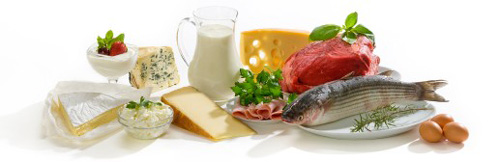
The best sources of protein are meats, fish, eggs and dairy products. They have all the essential amino acids that your body needs.  There are also some plants that are fairly high in protein, like quinoa, legumes and nuts.

All of this being said, I don’t think there is any need for most people to actually track their protein intake.

If you’re just a healthy person trying to stay healthy, then simply eating quality protein with most of your meals (along with nutritious plant foods) should bring your intake into an optimal range.

If you have a physically demanding job, you walk a lot, run, swim or do any sort of exercise, then you need more protein. Endurance athletes also need quite a bit of protein, about 0.5 – 0.65 grams per pound, or 1.2 – 1.4 grams per kg.

Elderly people also need significantly more protein, up to 50% higher than the DRI, or about 0.45 to 0.6 grams per pound of bodyweight.

What “Grams of Protein” Really Means

This is a very common misunderstanding

When I say “grams of protein” – I mean grams of the macronutrient protein, not grams of a protein containing food like meat or eggs.

An 8 ounce serving of beef weighs 226 grams, but it only contains 61 grams of actual protein. A large egg weighs 46 grams, but it only contains 6 grams of protein.

What About The Average Person (of course we all think we’re all above average)?

If you’re at a healthy weight, you don’t lift weights and you don’t exercise much, then aiming for 0.36 to 0.6 grams per pound (or 0.8 to 1.3 gram per kg) is a reasonable estimate.

This amounts to:

  • 56-91 grams per day for the average male.
  • 46-75 grams per day for the average female.

But given that there is no evidence of harm and significant evidence of benefit, I think it is better for most people to err on the side of more protein rather than less.

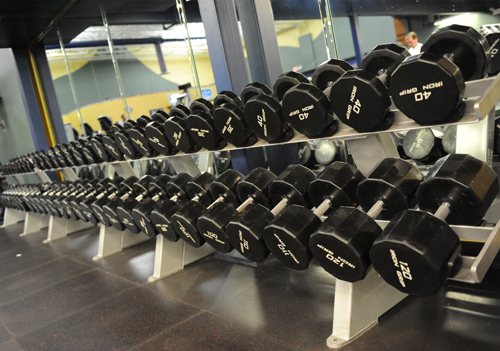
Protein and THE ATHLETE – How Much Do You Need?weights1

By **Alexandra Caspero, MA, RD

Whether running sprints, long-distance swimming or lifting weights, athletes expend more energy than the average person and their bodies need additional nutrients to recover from intense physical activity. Protein plays an important role in an athlete’s diet as the nutrient helps repair and strengthen muscle tissue. Recently, high protein diets have become popular among athletes — especially those seeking a leaner, more defined physique. But how much protein is really necessary?

OVERALL DIET

While protein is critical in building muscle mass, more is not necessarily better. Eating large amounts of lean protein will not equate with a toned body.

When determining protein requirements for athletes, it’s important to look at the athlete’s overall diet. During periods of both rest and activity, protein contributes about 10 percent of the total fuel an athlete’s body uses. The remaining fuel used is made up of carbohydrates and fat. Athletes who consume diets adequate in both these nutrients end up using less protein for energy than those who consume a higher protein diet. This means that protein can go toward preserving lean body mass (i.e. that lean physique). So in order to retain muscle, athletes need to ensure they are also meeting needs for carbs and fat, not just protein.

ACTIVITY

Muscle growth happens only when exercise and diet are combined.

For example, research has shown that *timing of protein intake plays a significant role. Eating high-quality protein (such as eggs, dairy or soy) immediately after exercise — either by itself or with a carbohydrate — enhances muscle creation.

Duration and intensity of the activity is also a factor when it comes to protein needs.

Endurance athletes (such as runners, bikers and swimmers) tend to synthesize more protein for fuel while power (or strength) athletes (such as sprinters, weightlifters and CrossFitters) tend to synthesize less protein for fuel but retain more for muscle development.

Because they are building muscle, power athletes require a higher level of protein consumption than endurance athletes. “[Power] athletes’ protein needs are highest during the initial training phases, when muscle gain is largest,” says sports dietitian Kelly Rossi, MS, RD, CSSD. “As any athlete trains more, their body’s efficiency in using protein increases so they may not need as much.”

RECOMMENDATIONS

While protein needs of both endurance and power athletes are greater than that of non-athletes, they’re not as high as commonly perceived.

The Academy of Nutrition and Dietetics, Dietitians of Canada and the American College of Sports Medicine recommend the following for power and endurance athletes, based on body weight:

  • Power athletes (strength or speed): 1.2 to 1.7 grams/kilogram a day
  • Endurance athletes: 1.2 to 1.4 grams/kilogram a day

For an adult male athlete, that’s about 84 to 119 grams of protein a day; for adult females about 66 to 94 grams.

By comparison, a sedentary adult male needs about 56 grams of protein a day; for females it’s about 46 grams.

Are POWDERS and SUPPLEMENTS Needed?

*Protein powders and protein supplements are great for convenience, but not to be solely relied on. Whole foods are always best, but with a busy athlete trying to juggle a million things, it is more realistic to provide them with the convenient shake.  It is for added reassurance.

*For the Ultimate protein, greens and fiber in powder form I use and recommend: http://www.ultimatevegan.com/products/

Source of info: http://authoritynutrition.com and http://www.eatright.org

**Alexandra Caspero, MA, RD, is owner of Delicious Knowledge in Sacramento, Calif. She specializes in plant-based diets, sports nutrition, food intolerance and weight management.

How about you?  What form of exercise do you regularly do and do you make a shake the minute you get home from your workout?



Health MATTERS: Relationships

Good relationships are not just found.  They must be created.

Relationships – Where Fantasy meets Reality:

like1

The following was written by *Brad King:

We’ve all heard the saying, “You need to love yourself before you can truly love another.” But what does that really mean? To love yourself is to respect yourself, which means you need to learn to respect the vehicle that allows you to love—your body and your mind.

When it comes to respecting your body and your mind, you need to understand that what goes into the vehicle, eventually dictates how efficient that vehicle will be able to perform. In other words, our ability to love with extreme passion is—to a large extent—subject to the way we feel from day to day, and science dictates that we can greatly enhance the way we feel by the way we move, by the way we think and by what we consume.

Regardless of why we feel love—love is… always has been… and always will be the force that drives us as humans. Everything we do in life is for one specific reason: to experience pleasure! And the ultimate pleasure is LOVE. You’ve fallen in love; maybe you’re getting married; now how do you keep your love alive?

Unfortunately as a relationship progresses, quite often the waist line expands. Couples tend to not try as hard, thereby allowing their exercise routine and healthy eating habits to go by the wayside.

As we age, our hormones start to wreck havoc within our bodies and with that comes a whole slew of complications, including: depression, moodiness, fat gain, difficulty sleeping, aching joints, low passion for life affect our love lives. So how do you become happy and healthy for life and maintain the incredible sex life you’ve always enjoyed? Following are my tips on how to feel, act and perform at your very best for life:

  • Have more fun and reduce stress
  • Consume smaller meals at regular intervals throughout the day (every 3-4 hours) to balance blood sugar and hormones
  • Eat organic foods whenever possible, as these foods contain more nutrition and less toxins
  • Smile more
  • Exercise (high intensity, short duration)
  • Dim the lights in the evening
  • Lose the belly
  • Avoid excess caffeine and alcohol, as both can exacerbate the stress response and interrupt sleep
  • Develop a healthy sleep routine: do the same things before you go to bed each night, it will train your body to get ready for sleep

    Brad King
    Brad King

*Brad King, MS, MFS, a nutritional researcher and award winning formulator has been touted as one of the most influential health mentors of our time. He is the author of 10 books, including Fat Wars, Beer Belly Blues and Losing Fat for Life. Visit him on Facebook @ Transforming Health with Brad King or on his website at: http://www.AwakenYourBody.com. – See more at: http://www.bridalfantasy.com/brad-king/#sthash.9Fi1U61d.rVCrNDPE.dpuf

including: How to FEED YOUR METABOLISM TO BURN EXCESS BODY FAT


Health MATTERS: MERCURY rising – should we be worried?

First off, let me preface this by saying I LOVE SUSHI and tend to eat a lot of tuna especially.sushi1

General concern about the levels of mercury in our water and food are coming up more and more so you can imagine my interest to see the article about toxicity levels in my weekly Goop in-box edition .

Goop asked Dr. Alejandro Junger, a Cardiologist and detoxification expert (they claim to trust him with their  lives &  love his very easy-to-implement program, Clean),  just how concerned we should be.  And more importantly, they asked him how we can help our bodies unload toxic heavy metals.

 IS MERCURY POISONING A REAL THREAT?

Mercury is an extremely toxic element and heavy metal that is increasingly affecting the health of millions of people. It’s a major problem today because our exposure to it is rising, from the air we breathe to the food we eat. One of the primary ways we are exposed to mercury is by eating large fish such as tuna, shark, and swordfish. The bottom line is that we want to reduce our exposure to mercury as much as possible.

One of the biggest challenges is that most practitioners and researchers are not aware of the latest science that shows elevated levels of mercury can take a serious toll on our health. Exposure to this heavy metal has been linked to increased incidents of chronic fatigue syndrome, autoimmune conditions, ADHD, autism, as well as memory loss, irritability and blurred vision. Even if you don’t have one of the ailments listed above, mercury exposure could still be having an effect on your health. When I see a lingering health issue that hasn’t been cleared after significant lifestyle, cleansing, and dietary changes, I look to see if mercury is one of the causes.

DOES MERCURY EXPOSURE JUST COME FROM FISH?  WHAT ARE ALL THE SOURCES?

There are different types of mercury, but most of our immediate exposure comes from just a few major sources:

  • Fish that are high in methylmercury, also known as organic mercury. Typical examples are the big fish mentioned above, like tuna, swordfish, shark, etc.
  • Mercury amalgam—also known as inorganic mercury—dental fillings.
  • We can also be exposed to mercury through drinking water (especially private water systems like wells that are often untested and municipal systems), occupational exposures, and by coal heating in homes.Most of the mercury tht finds its way into the environment is from coal-fired power plants, artisanal gold mining, and processing plants that make plastics and chlorine. The mercury is sent into the air, then rained down on lakes, into soil, and carried off by rivers. It all eventually makes its way to our oceans where the organic compound is then accumulated into the fatty tissue of fish. Finally, it ends up on our plates.

When we eat high-mercury fish, the mercury is distributed throughout our body but primarily takes hold in the kidneys and brain. Once there, the mercury can cause slow havoc to a variety of organs especially the heart, brain, and gut.

In pregnant mothers, mercury is transferred to the fetus through the placenta causing increased risks of poor neurological performance, language skills, and verbal memory.
New cases of mercury poisoning have also been connected to certain skin lightening face creams. I recommend that people check if their products are free from toxic chemicals at the Environmental Working Group’s Skin Deep Database.sushi2

industrial or environmental mercury sources may require both industrial and governmental assistance to design ways to prevent exposure to forms of mercury.

Mercury Poisoning Prevention at Home                                                                      

At home, there are a few mercury- containing items (for example, thermometers, medical devices, some disinfectants, fluorescent light bulbs) that potentially can be the source of mercury poisoning. People are advised to read the labels on products to see if they contain mercury, have warning labels about potential toxicity, or have directions about how to dispose of a broken or non-useable product.

Mercury Poisoning Prevention – Vaccines

Another source of concern by people is the use of thimerosal, a mercury-containing preservative used in vaccine preparations. Except for some influenza vaccines, it is not being used in most vaccines.

What a major drag it would be to not be able to eat my favourite sushi anymore.  Let’s try to clean up our act ASAP!  Anyone??

Source: Goop.com & emedicinehealth.com


Health MATTERS: myths about the G word  

I must have gluten intolerance because I’m so sick of hearing the word gluten-free. It’s a dirty word and people are using it almost as much (or more) than the “F” word. Gluten1gettyimages

It feels like everybody’s going gluten-free these days, but there is quite a bit of misinformation about the g-word.  Some people -– even those who claim to follow gluten-free diets -– don’t even know what gluten is.  And if you’re one of them, that’s OK. We won’t tell anyone your secret.

We’ll even help you out: Gluten is a word used to describe the proteins found in wheat, rye and barley. You’re welcome!

Here are a few myths that have been circulating lately.

Gluten makes you fat.

The number one myth registered dietitian Kristen Kirkpatrick hears in her office is that cutting gluten will help people lose weight.

“Gluten does not make you fat,” said Kirkpatrick, who manages wellness and nutrition services at the Cleveland Clinic. “Calories make you fat regardless of where those calories are coming from, whether they’re coming from brown rice, which is gluten-free or a wheat bagel.” In fact, sometimes gluten-free bread can have 30 more calories than regular bread, Kirkpatrick said. And if you eat more calories in a day than you use, the extra calories will be stored as fat, she said.

“Some gluten-free foods contain extra sugar or calories to make them more palatable – to make up for the loss of the gluten,” said Dr. Kelly Thomsen, a gastroenterologist at Vanderbilt University Medical Center.

That said, since people who go gluten-free need to do some extra label-reading, it can help them make better choices overall and ultimately lose weight, Kirkpatrick said. But it’s a secondary factor.

Gluten is not part of a “clean” diet.

First of all, “clean” eating is subjective, Kirkpatrick said. The Food and Drug Administration has no official definition for it. But to her, it means something along the lines of eating foods that are as whole and unprocessed as possible.  As such, you can eat a clean diet that includes gluten or a clean diet that cuts it out, she said. Gluten doesn’t make a diet clean or unclean.

“You can be on a horrible gluten-free diet, just like you can be on a horrible vegetarian diet,” Kirkpatrick said.  Remember, French fries are gluten-free and vegetarian.

Gluten is bad for you.

Thomsen says she often hears people say that they want to reduce the amount of gluten in their diet, but she says that’s a useless (and expensive) choice for anyone who hasn’t been diagnosed with celiac disease.  “There’s nothing inherently unhealthy about gluten,” Thompsen said.

Gluten alone doesn’t have many health benefits, but foods that contain gluten – like whole grains – tend to be higher in fibre and have a lot of vitamin B, zinc and iron, she said. As a result, cutting gluten could actually result in nutritional deficiencies.

That’s why people with celiac disease often meet with a nutritionist to make sure there are no holes in their diets, Thomsen said.

You personally can’t eat gluten because you just know it.

It’s true that there are people who can’t eat gluten, but they’re a minority of the population. These people have celiac disease.  “Most people don’t have celiac disease, so they don’t need to remove gluten from their diets,” Thompsen said.

When someone with celiac disease eats gluten, it damages the tiny finger-like protrusions that line their small intestines, keeping them from absorbing nutrition from food, according to the National Institutes of Health. The disease affects about 1 percent of the population, and can be diagnosed with a blood test. If that’s inconclusive, a doctor may perform additional tests, like a biopsy.

Symptoms of celiac disease vary and can include fatigue and diarrhea as well as fertility problems, joint pain and seizures. The only treatment is a lifelong, gluten-free diet.

If you think you have celiac disease, do not stop eating gluten before seeing your doctor, Thompsen said. If you stop eating gluten before getting tested for celiac, it could result in a false negative diagnosis.

There are also people who have a gluten intolerance, which Thompsen said is a diagnosis that comes only when all other possible diagnoses have been ruled out. These people do not have celiac disease, but their doctors have determined that they can’t eat gluten. Again, she said people who suspect they have a gluten intolerance should not stop eating gluten before seeing their doctors.

Finally, a gluten allergy is when someone experiences signs of allergic reaction when they eat gluten, Thompsen said. They may have swollen lips, difficulty breathing or diarrhea. Again, people should not self-diagnose or self-treat.

Gluten causes cancer.

Thompson says this one is a myth for the majority of the population.

“For the average person, eating gluten in their diet does not increase the risk of cancer,” Thompsen said.

Long-term complications of untreated celiac disease, however, can include intestinal cancers, she said. Again, if you think you have celiac disease, make an appointment with your doctor before making any dietary changes, she said.

gluten3gettyAs for me, I will continue enjoying French bread and all types of baked goods…in moderation.  Moderation: being within reasonable limits; not excessive or extreme.  Okay then.

gluten4getty

Source: Sydney Lupkin – a health reporter for ABCNews.com.  Photos: Getty Images

Health MATTERS: how to ADD YEARS to your life

eating2With aging, scientists have always seemed to study things that decline, but how about those lucky individuals who seem to stay vital well into their 80s and beyond?  Here’s some of their latest research advice & six ways how you can add years to your life.

#1 is no surpise – STOP EATING SO MUCH

exception for holidays
exception for holidays…please.

This is something I personally have a hard time adhering to.  But…young1

In Okinawa, Japan—home to some of the world’s oldest people—centenarians stop eating when they’re 80 percent full, says The Blue Zones author Dan Buettner, who studies longevity all over the planet.

They’re onto something: Scientists at St. Louis University found that, while both exercising and eating less led to weight loss in the study’s volunteers, cutting calories also lowered production of T3, a thyroid hormone that slows metabolism. The researchers believe that lower T3 levels may also slow the aging process.

#2 – MORE SEX

This might be easier and more fun to follow.  And who doesn’t want to live longer? This does not apply to the ones who don’t enjoy it.  Just skip to #4. Women who enjoy sex live longer says Mehmet Oz, MD, professor and vice chairman of surgery at New York Presbyterian–Columbia University and co-author of YOU: Being Beautiful. In fact, doubling your amount of satisfying sex can add up to three years to your life, he says. “Sex gives you the Zen moment you can’t find throughout the day otherwise.”

And you know what they say….more Zen, more Men! (No, I just made that up).

#3 – USE YOUR BRAINeating4

Dr. Geula, who has studied 80-year-olds who perform at the same level as people in their 50s on neuro­psychological tests, has found that the superaged have fewer brain tangles—deposits of protein linked to Alzheimer’s—suggesting that their brains have some sort of protection that normal brains don’t. While scientists puzzle this out, there’s a lot you can do to keep your own synapses firing. Learn Italian, take up the cello—even driving a new route to work can wake up sleepy brain cells.

Darn, I’ve been learning the wrong language! I’m in trouble because I don’t even drive to work.  Hope walking counts for something because you can walk so many different routes.

#4 – POUR YOUSELF SOME MERLOT

Now we’re talking – something I can follow! You’ve probably heard a lot about resveratrol, a compound in red wine and grape juice that seems to slow aging. One recent study found that resveratrol-fed mice had stronger bones and better motor coordination, and showed fewer “old age” problems like heart disease, inflammation, and cataracts. The jury is still out on whether resveratrol has the same effect on humans, but nutritionists say drinking red wine in moderation (and grape juice for those who can’t) does have heart-healthy benefits. The question is, what is moderation?? Pour me!

#5 – LOSE THE MUFFIN TOP

In one large study published in 2009, researchers who tracked 6,583 people for more than 30 years found that having significant belly fat in midlife can nearly triple your risk of dementia. No wonder so many people suffer from it.

#6 – EAT MORE PLANTS

They should have specified.  I tried eating my fern and got sick.

In his study of centenarians, Buettner found the longest-living people tend to eat less meat and more beans, soy, and nuts (but no ferns).  This is where it’s good to be a vegetarian.

AND no matter what your age there's no excuse for not being STYLISH!
AND no matter what your age there’s no excuse for not being STYLISH!

Source: Health.com


Health MATTERS: Yes or No to Probiotics?

Probiotics are showing up in foods, beverages, and supplements. What exactly are they, do they work, and are they safe for us to be consuming?

A Gut Feeling
A Gut Feeling

What are probiotics?

There are very few people who have not heard about the “new” health miracles called probiotics. Probiotics are organisms such as bacteria or yeast that are believed to improve health and prevent colds or fight a cold once you already have one.   Is your body able to handle this on its own or do you need to start including probiotics in your diet?

The idea of taking live bacteria or yeast may seem strange at first. After all, we take antibiotics to fight bacteria. But our bodies naturally teem with such organisms.  The digestive system is home to more than 500 different types of bacteria. They help keep the intestines healthy and assist in digesting food. They are also believed to help the immune system.

Let’s start with the facts behind what probiotics are. The root of the word probiotic comes from the Greek word pro, meaning “promoting” and biotic, meaning “life.” There is some debate about how to define probiotics. The Food and Agriculture Organization of the United Nations (FAO) defines probiotics as “live microorganisms, which, when administered in adequate amounts, confer a health benefit on the host.” Yes, they are actually alive, and most of these microorganisms are bacteria. Most people think of antibiotics and antibacterial products when you mention bacteria. Both of those kill bacteria so why would you want to consume anything that has live bacteria in it? It’s all about balance.pro1

How Do Probiotics Work?

Researchers believe that some digestive disorders happen when the balance of friendly bacteria in the intestines becomes disturbed.  This can happen after an infection or after taking antibiotics. Intestinal problems can also arise when the lining of the intestines is damaged. Taking probiotics may help.  “Probiotics can improve intestinal function and maintain the integrity of the lining of the intestines,” says Stefano Guandalini, MD, professor of pediatrics and gastroenterology at the University of Chicago Medical Center.

Probiotics and the Immune System

There’s also evidence that probiotics help maintain a strong immune system. In societies with very good hygiene, we’ve seen a sharp increase in autoimmune and allergic diseases. That may be because the immune system isn’t being properly challenged by pathogenic organisms. Introducing friendly bacteria in the form of probiotics is believed to challenge the immune system in healthy ways.

Probiotics may seem new to the food and supplement industry, but they have been with us from our first breath. During a delivery through the birth canal, a newborn picks up bacteria from his/her mother. These good bacteria are not transmitted when a Cesarean section is performed and have been shown to be the reason why some infants born by Cesarean section have allergies, less than optimal immune systems, and lower levels of gut microflora.

Cautions About Probiotics

For the most part, taking probiotics is safe and causes few side effects. “People in cultures around the world have been eating yogurt, cheeses, and other foods containing live cultures for centuries,” says Martin Floch, MD, a professor of gastroenterology at Yale University, co-author of Probiotics: A Clinical Guide, and a consultant for the Dannon Company.

Still, probiotics may be dangerous for people with weakened immune systems or serious illnesses.  One study found that patients with severe pancreatitis who were given probiotics had a higher risk of death.  It’s always best to consult with your doctor before taking anything new in general, but especially for those that have weakened immune systems.

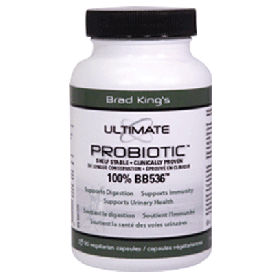
THE ULTIMATE PROBIOTIC!

Brad King's Ultimate Probiotic - sold at health food stores & online
Brad King’s Ultimate Probiotic – sold at health food stores & online.

BRAD KING’S ULTIMATE PROBIOTIC contains one of the most research-proven beneficial probiotic species – bifidobacterium – and the main intestinal microflora residing mostly in the colon. Ultimate Probiotic has been proven safe in over 30 years of studies and has been consumed in yogurt in Japan for over 20 years. It is also backed by over 15 years of controlled studies proving its efficacy and is the only probiotic available today to carry the highly proven shelf-stable BB536 strain of bifidobacterium. [VEGI CAPSULES]


For a complete list of all the different types of Probiotics and their health benefits please visit:  http://www.onhealth.com/probiotics/page3.htm

Source: Webmd


What MATTERS: good Intentions

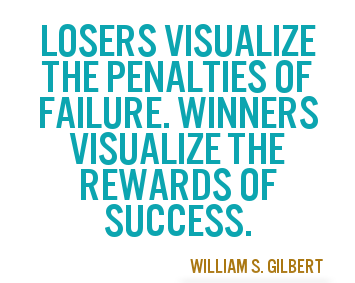
Intention is Everything!  Oprah Winfrey quoted Martin Luther King “If you can see it and believe it, it is a lot easier to achieve it.”  It’s about Visualization.  I find this fascinating and believe it to be true.win1

Actor Jim Carrey parked his car on Mulholland Drive every night before anybody knew about him, with the visualization of becoming the Hollywood star that he inevitably became. He even wrote himself a ten million dollar check for a movie deal, and dated it five years from that very day. Can you guess what eventually happened? Not long before that date came along, he secured ten million dollars to star in the movie Dumb and Dumber.  That Jim is no dummy!

Being that Jim Carrey is one of the funniest comedians in history I thought it would be pretty cool to meet him, and luckily I had the pleasure of doing so not just once, but on several occasions through a mutual friend.  I found him to be extremely intelligent, captivating and humble all at once.  And I never thought it unusual to be in his presence because I visualized being there as normal.

The power of visualization has been instrumental in turning dreams into reality for not only folks like Jim,  but elite and successful people in every field: professional athletes, business CEO’s, speakers, singers, and performers…YOU?

Please take time to watch this inspiring 11 minute video of actor Jim Carrey sharing his life changing realization.  Take from it what you will but whatever your beliefs, I hope you agree that having good intent and positive visualization makes for healthier living. Have a great weekend.

LINK TO VIDEO:

http://www.youtube.com/watch?v=cEOW_uhF8bk#t=26

Credit: http://meaningfulwesternlife.com (a website about cultivating joy and meaning through meditation in a western society lifestyle.)


Health MATTERS – anti-aging for PETS?

Brad & Kira
Brad & Kira

WHY NOT?  

If you could…..wouldn’t you prefer to improve the health and longevity of your pets?  After all, they are family members and deserve the best that life has to offer.  At least we think so!

KIRA now
KIRA now
Debbie & Jia Jia
Debbie & Jia Jia

Both dogs in the photos are 11 years young, still playful with several more good

Jia Jia models a Star Wars baseball cap.
Jia Jia models a ‘Yoda’ Star Wars baseball cap.

years ahead of them. Both dogs have been taking daily drops of Rejeneril FP® – which is the first Patented Anti-Aging Dietary Supplement for pets.


With animals aging at a much faster rate than us humans, we lose them way too quickly as is. And unfortunately, many of our pets experience degenerative conditions at younger ages, which greatly impacts the quality of their lives in later years. But, it doesn’t have to be this way!

Rejeneril FP® is comprised of a unique and patented antioxidant molecule along with minerals, vitamins and amino acids which are crucial to the health and longevity of one’s pet. The synergy of these nutrients is highly beneficial for all stages of a pet’s life.

Rejeneril FP® can help:

  • Younger pets build a strong immune system and set the foundation for a disease free life.
  • Adult pets recover quicker, maintain youthful energy levels and remain healthier for longer.
  • Senior pets rejuvenate and slow and/or reverse the negative effects associated with aging.

Rejeneril FP® works in three targeted ways to help keep your pet younger longer. Find out more at: http://www.myultimatepet.com/

Health MATTERS:  out of the Ordinary   

Tell me you’re not sick & tired of hearing/seeing/reading all the publicity to do with all things Kale?  How about Açaí?  Pomegranate is so last year! (even though I just bought a bottle of pomegranate vinegar).

veggieYes, we know (or have been repeatedly informed) that they’re wonderful for us, but now we take for granted the ordinary food staples that sound less glamorous.  Fruits and vegetables like celery, grapes, mushrooms and bell peppers – stuff we probably have more of in our kitchens.  Why should they be ignored? I always root for the underfruit!

Researchers are discovering new reasons to get excited about the old standbys.  So maybe we shouldn’t let “superfoods” crowd out staples that are just as nutritious.  They can work together as a team.  Let’s discuss:

universe4Celery – what’s a dip platter without this crudite? Now, back on the must-eat list as a potential cancer fighter with it’s top source of a flavonoid called apiginen.  Researchers recently discovered that when pancreatic cancer cells were treated with apigenin, 44 percent of the cells died.  Apigenin activates a chemical reaction inside diseased cells, causing them to self-destruct.  While eating celery can’t cure pancreatic cancer (you’d never be able to eat enough), over time a diet containing apigenin-rich foods my help prevent the disease.

universe7Grapes – we  like them because they taste so refreshing and the skins are bursting with Resveratrol, the same superstar antioxidant that helps make red wine good for your heart (providing you don’t drink the whole bottle yourself).  Resveratrol may also aid in boosting immunity by helping increase levels of a molecule that kills bacteria and viruses.  Adding more grapes to your diet may even protect you from contracting infections in the first place.  So drink up eat your grapes!

universe5Mushrooms are like magic – science shows they may help prevent breast cancer by lowering estrogen levels.  Fungi have also been thought to be heart healthy and immunity boosting for years.  A study showed that when postmenopausal women consumed 13 grams of mushroom powder (the equivalent of 1 ½ cups of white button mushrooms) per day for three months, their estrogen production dropped by 27 percent.

universe6Bell Peppers – researchers have long known that smokers have a lower risk of developing Parkinson’s disease characterized by a loss of brain docells that make dopamine.  No doctor would encourage lighting up, but there may be another way to get the benefit: peppers.  They’re a safe source of nicotine, which may protect dopamine producing cells.  Eating peppers (mostly bell peppers) twice a week or more is associated with at least a 30 percent reduced risk of Parkinson’s.  This according to Susan Searles Nielson, PhD, who did a study which was published in the Annals of Neurology.  Interesting stuff indeed.

What’s good too is that you can incorporate at least three of these items into a breakfast omelette, salad or pasta sauce. Try grapes in a chicken salad sandwich, they’re delicious.


Health MATTERS:  Shelf Life – keep or toss?

shelflife1

Do you ever throw food away prematurely?  The packaging tells you it’s time to chuck it, but it still seems okay.

Confusion over food dating has led 91 percent of us to throw food away too soon according to a 2013 report from Harvard Law School and the Natural Resources Defense Council.

Some foods can stay fresh well past their “expiration” dates. Here, SIX ITEMS YOU SHOULD NOT BE SO QUICK TO TOSS.

shelflife2

Eggs:  Pay no attention to the SELL BY date on your carton – it’s meant to help retailers manage turnover and is not a measure of freshness.  Eggs should keep for three to five weeks in the refrigerator.

Cereal/Granola: Boxes typically come printed with a BEST BEFORE shelflife3date, but it’s a conservative estimate set by manufacturers for peak quality.  Those Cheerios can stay fresh for up to three months if you refold the inner bag tightly.  I make my own granola and it keeps (if I don’t eat it beforehand) placed in a glass container in the fridge for a few months without compromising the quality or taste.

Apples: Store your favorite reds in the fridge (place them in a plastic bag; poke a few holes to allow air to circulate), and they’ll still be good to eat three weeks later.

Deli Meat: you can keep unopened packages of sandwich meat in your fridge for two weeks – even if the SELL BY date has come and gone.

Bread: ignore the BEST by or SELL BY date.  Placing your loaf in the fridge can extend freshness by two weeks.  I end up freezing mine and taking out what I need which can extend the life for a few months.

Milk/Cream – if you buy it in a glass bottle instead of a carton the life can be extended for at least one more week.

Also, a good way not to waste food is to not buy too much at once….but we already know that.