You’ve heard of the Love Boat…this is the Love Bus!
back of the bus
On Sunday I will be one of several people (except for the bride) to be escorted to an afternoon wedding at the Vancouver Yacht Club in the Love Tuner bus. The bus with a message:
One Journey
In Music, tuning refers to adjusting the pitch of the tone
In human beings, it means adjusting your emotional and physical state to align yourself with your environment
Literally tuning in and harmonizing with the world around you
THE LOVETUNER IS A MINDFULNESS TOOL
A SINGLE TONE FLUTE THAT ALIGNS OURSELVES
WITH THE 528 HZ FREQUENCY
THE SO CALLED LOVE FREQUENCY
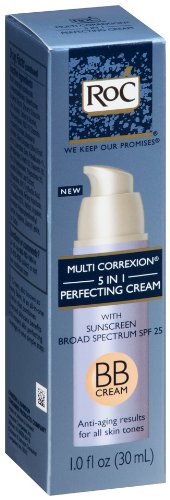
Roc Multi-Correxion 5-in-1 Perfecting BB Cream is a new lightweight single shade BB Cream that’s infused with Roc Retinol. It’s formulated to protect skin with an SPF 25 and while it claims to fight fine lines & wrinkles while improving dark spots, smoothing, evening, and brightening skin tone….it was the high SPF & tint that was the selling feature for me. It goes on light and doesn’t cake which some tinted formulas tend to do – something you definitely don’t want for under your eyes.
It’s a self adjusting formula which offers sheer coverage that evens out skin tone, hydrates, and gives a nice hint of colour. It might help for when the rest of your face is tan but you have that sunglasses whiteout thing happening under your eyes which is not so attractive.
Available at drugstores and pharmacies that sell ROC. Cost: approx. $25.00
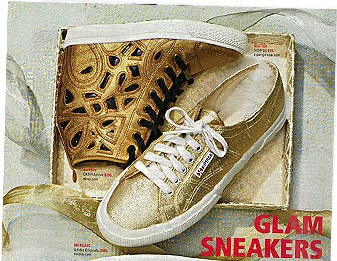
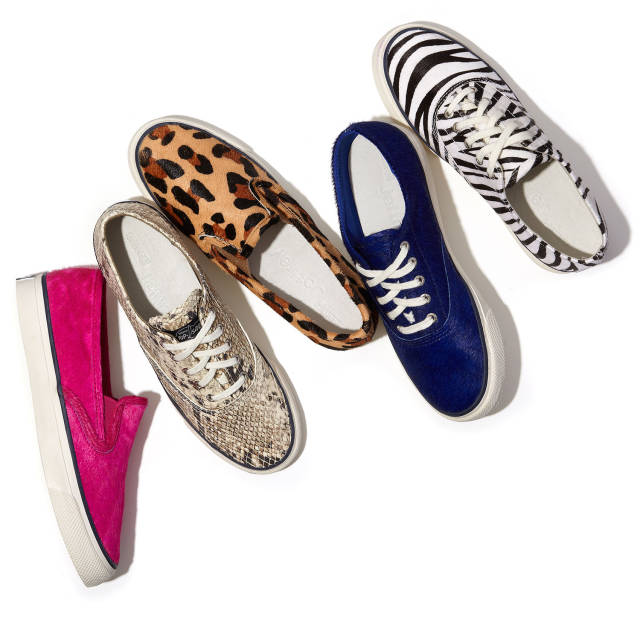
When you need to take a break from sky-high heels, go out for a stroll or run around town (but not literally because that’s an entirely different shoe) – check out these CHIC SNEAKS:
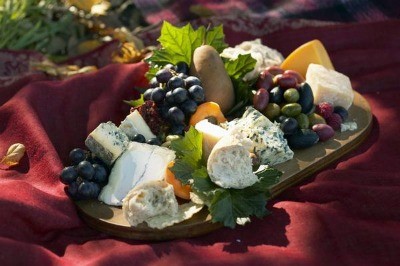
Crudités anyone? I love that word!Okay you guys, we’re in the midst of summer now. This is where we okay, I tend to get lazy. Maybe I’m just speaking for myself but I don’t really feel like cooking until Fall. Well at least nothing major and nothing that involves turning on the oven. This is the time when I start to throw things together last minute or just barbeque.
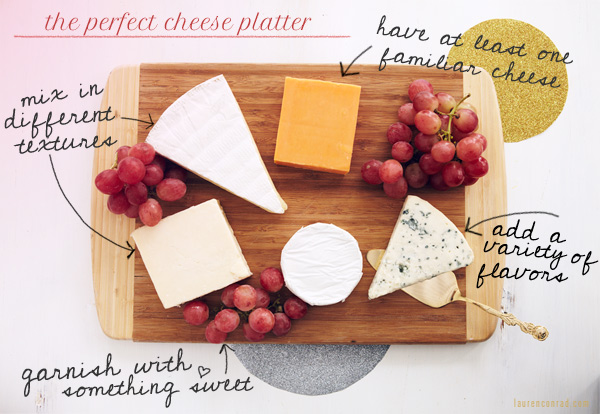
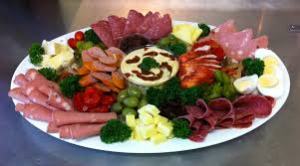
So how about those party platters? You know…the usual cheeses, dips, olives, nuts, cold cuts. I had deviled eggs at one barbeque – an almost forgotten but welcome addition. Doesn’t everyone have a party finger-food specialty? How about arranging a great cheese platter? Here are some photos that will give you a few arrangement ideas. Don’t forget the grapes.
A continuation of my post from last Monday on the Art of Collecting ART and What Makes Good Art – answersfrom Art World Pros. However this discussion will always be continuing because everyone’s opinion differs. Here is one more:
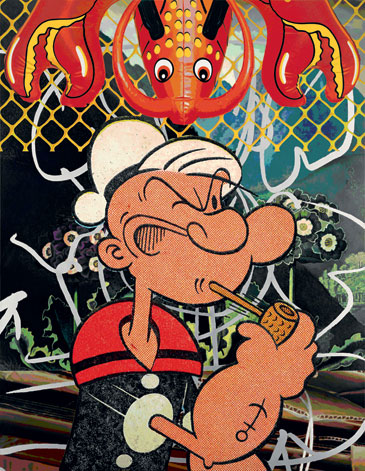
Damien Hirst’s Spot Painting – Gagosian gallery, Paris. As the title promises, Spot Paintings features borrowed and newly created works of art featuring the UK-based artist’s signature dotted paintings. Different colors, sizes, and shapes were all variations on the theme.
Scott M. Levitt, Director, Fine Arts, Bonhams & Butterfields, Los Angeles:
Quality, quality, quality. This is the mysterious and subjective key to good art. In all periods of art there are good and bad works of art. I find that defining quality in representational art is easier than in modern and abstract art. The other key word is looking. Everything looks good when you first start looking at art, as you have nothing to compare it to. As you hone your eye, you begin to distinguish between good and bad. The more you look at art, the easier it is to determine what is good and what is bad.
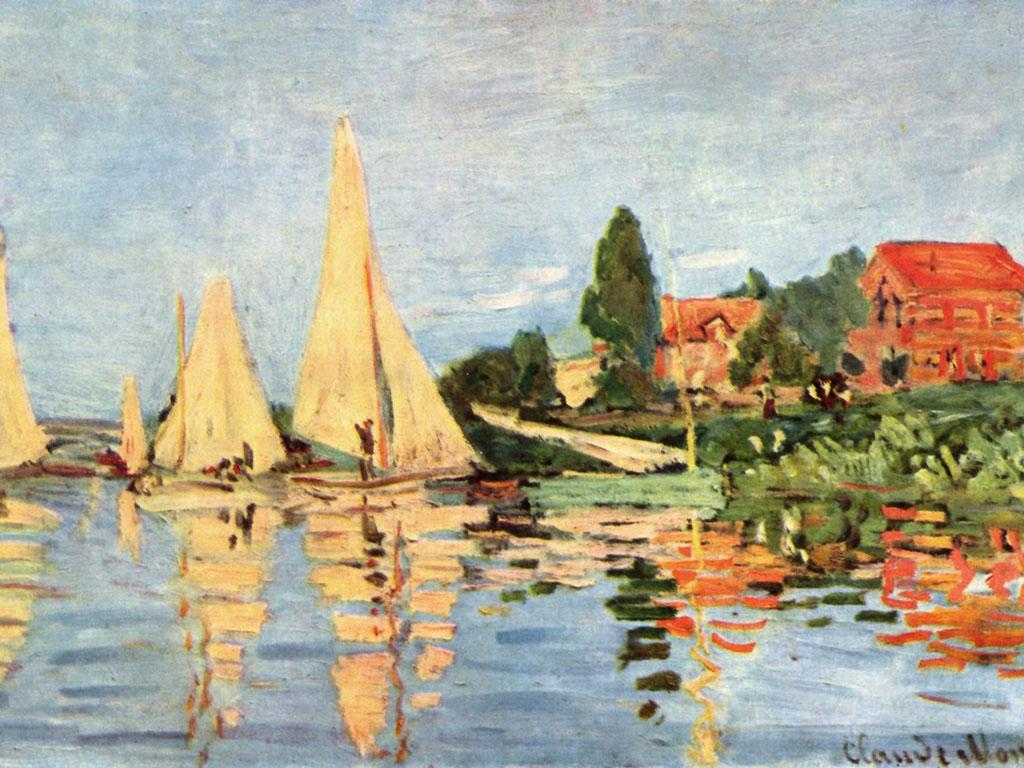
Claude Monet Landscape Painting
Also, there are two schools of thought as to what is good and bad. Some people believe that good and bad are personal distinctions and entirely in the eye of the viewer. Others believe that there is good art and crap art and no one can tell them otherwise. I think the real answer is somewhere in between, and this is based entirely on the quality of the eye of the viewer.
Each area of art requires its own set of criteria when determining good and bad, i.e. painting, sculpture, printmaking, craft, conceptual etc. Personally I hold originality to be important in this determination. For contemporary artists that can be tough. Most of what is being created today is, in my personal opinion, not very original. To me a Mark Rothko is a masterpiece, while a thousand color-field artists after him are not. I find Pop artists brilliant and Jeff Koons completely reactionary. There is originality in contemporary art, but it is tough to find.
Mark Rothko contemplation
It is also tough when the art market influences good and bad. I would like to say that monetary value determines quality, but unfortunately they are often unrelated, as many factors can influence the value of artwork other than quality. Damien Hirst is an interesting and relatively unique artist, but I don’t think his prices at auction reflect how good he is. When one of his works is worth more than a good Monet landscape, something is very amiss.
I think the best “take away” here is that if you want to know what is good and what is not, you have to get out and look for yourself and make that decision. Take a year… and make it a rule to visit museums and galleries every weekend and read art-related books and magazines as much as possible in as many art fields as possible. You will have your answer. If you don’t use this approach, you will officially have no eye or ability to make these distinctions.
If you are in this purely for your own collecting interests, then look at as much art as possible in all fields and eras as I have just said. If you are in it purely to make money, then buy a subscription to Artnet or E*Trade. It’s your call.
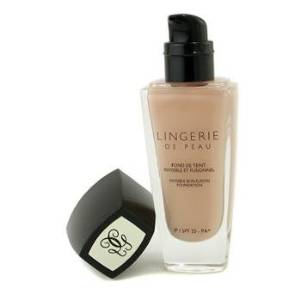
What’s in a name? Obviously something that attracts to get your attention. Something that gives an impression of gliding on like a silk stocking or wears invisibly like a second-skin, like lingerie itself.….which appeals to me. A good marketing tool? I had to check it out.
Guerlain Lingerie de Peau Invisible Skin Fusion Foundation SPF 20 – Product Review.
I said I’d never buy foundation but then I came across this one. I think the name “lingerie” appealed to me at first and the fact that Guerlain products are “top-notch”so I had to sample it. The application felt really lightweight (you hardly need any) with a natural-finish and a light to medium coverage. I like that it can be used even as a cover-up for trouble spots only. It’s one of the most natural-looking foundations that still allows for adequate coverage for minor skin imperfections. If you have just a couple of small areas to cover, it is workable to build up coverage on a spot-by-spot basis. The consistency is thin, not so thin it’s watery, but thin enough that it blends out easily and feels weightless once applied. I apply it with my fingers, but you can use a sponge or brush if you prefer.
Its secret: hyaluronic acid, encapsulated in the Bio-Fusion micro-mesh, continuously captures and maintains water on the skin’s surface. The unbelievably silky formula creates a natural radiance that captures and reflects light to reveal the look of naturally perfect skin. Let’s FACE IT…it sure takes a lot of work to look Natural!
It is Formulated without:
– Sulfates
– Phthalates
– GMOs
– Triclosan – Probably some other things we can’t pronounce
Available at Nordstrom and Sephora – approx. $65.00
Shopping after hours –the way it “should” be…at least in my dreams.
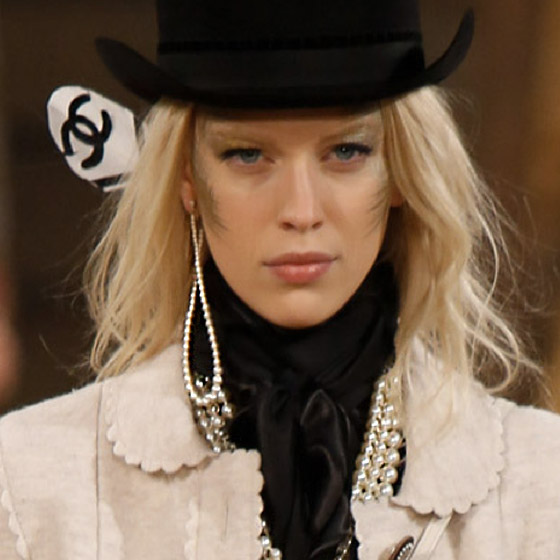
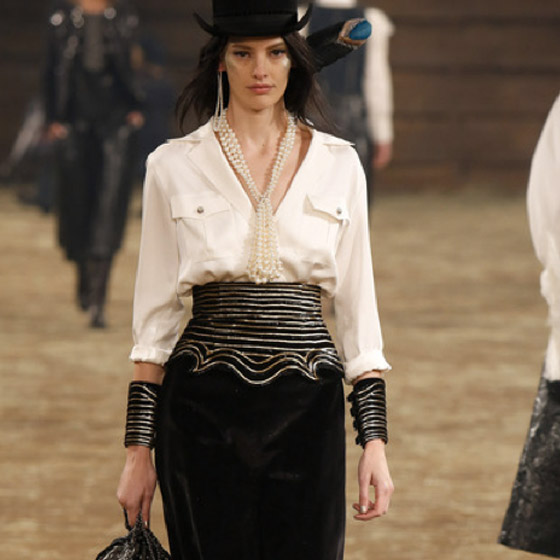
In my DREAM I picture myself getting dropped off in front of the CHANEL Rue Cambon headquarters in Paris when it is closed for business to everyone else. A dutiful sales assistant anxiously awaits me, then escorts me upstairs so that top models can one by one parade around and model the Private Viewing Pre-Fall cowboy-inspired Collection for my eyes only.
In the short video (link below) by Chanel creative director Karl Lagerfeld I am played by *Lady Amanda Harlech (Lagerfeld’s real-life muse and right-hand woman), who undoubtedly has a fair few Chanel wares of her own. I think she does an amazing job. This gives an insight into the exclusive world of one of the brand’s VICs (very important customers). Top American model Jamie Bochert plays the sales assistant.
The Cowboy-inspired collection, which is rich in waistcoats, bow-tie blouses and gold tweeds, was first shown in Dallas last year and the range is dropping into Chanel stores throughout the current month. Please click on link below to get a glimpse: (NOTE: the video might start somewhere in the middle so just scroll right back to the beginning). http://www.youtube.com/watch?v=u5qrQoea-2U#t=194
*Disclaimer – It’s really not supposed to be “me” – remember, it’s just my dream! I can be whoever I want in it. Oh, did you think it really was me???
Here we go again….cooking with chickpeas. Chickpeas (otherwise known as Garbanzo beans), like most legumes have long been valued for their fibercontent. Do you know that people who consume garbanzo beans on a regular basis have better blood fat regulation including lower levels of LDL-cholesterol, total cholesterol, and triglycerides?
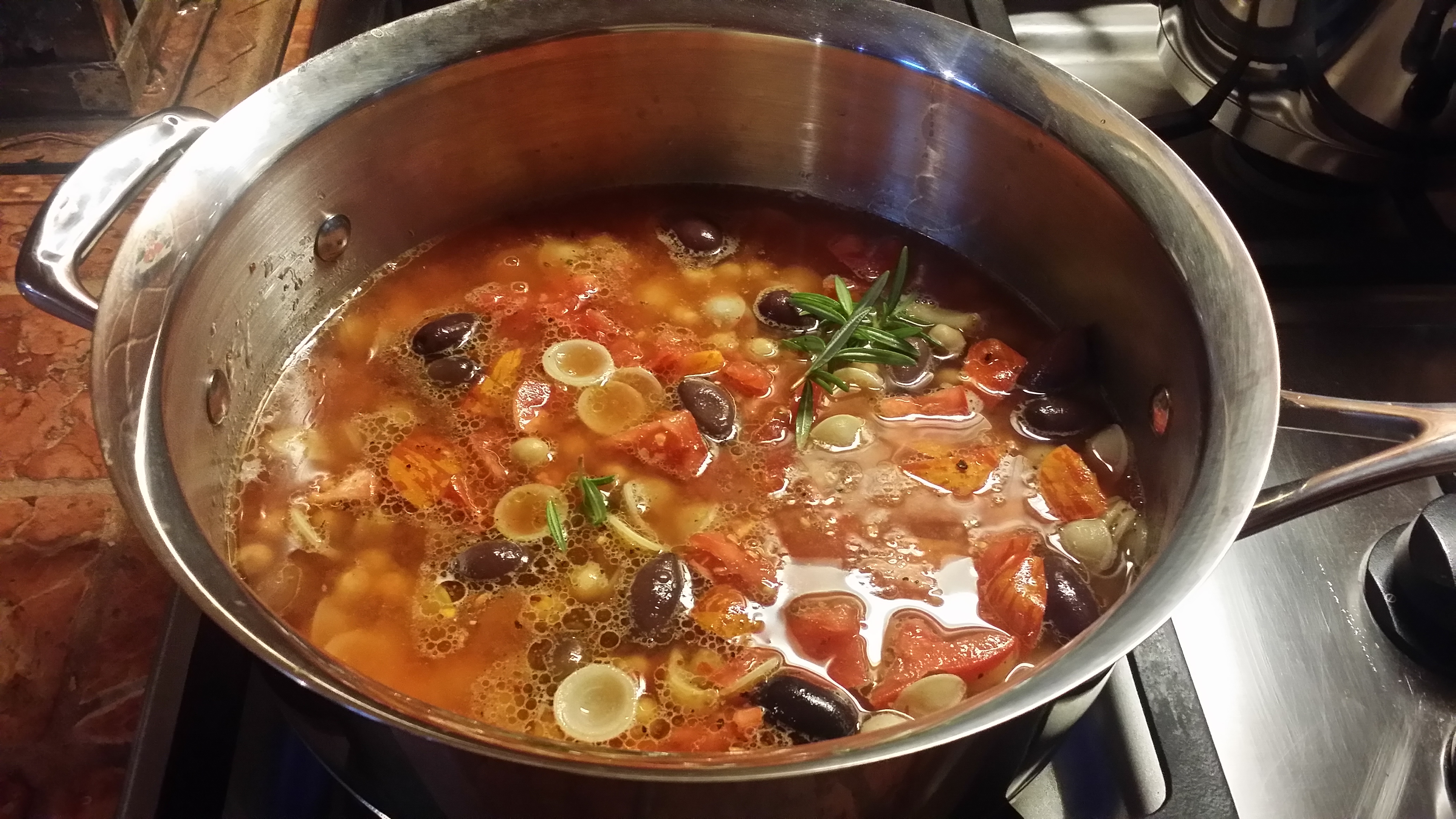
Orecciette pasta is much easier to find nowadays (I don’t remember how many stores I went through trying to find it years ago) – it has a tiny ear-shape look to it. It really means just that: from orecchio (ear) + etto (small). There, now you can speak some Italian!
This recipe is from Everyday Food by Martha Stewart and it is a very simple but tasty dish. So very Italian!
Then it becomes more
Ingredients to Serve 4:
12 ounces Orecchiette
1 can (15.5 ounces) chickpeas, drained and rinsed
½ cup of Kalamata olives, pitted
2 Tbsp. tomato paste
3 cloves of garlic, thinly sliced
1 6-inch sprig of Rosemary
3 Tbsp. extra-virgin olive oil, plus more for serving
¼ tsp. red-pepper flakes, plus more for serving
Coarse salt and freshly ground pepper
½ cup grated Parmigiano-Reggiano (about 1 ½ ounces), plus more for serving
2 cups baby arugula (about 2 ounces)
Combine pasta, chickpeas, olives, tomato paste, garlic, rosemary, oil, pepper flakes, and 4 cups of water in a large straight-sided skillet. Season generously with salt and pepper. Bring to a boil, then cook over medium-high heat, stirring occasionally, until pasta is al dente and liquid is reduced to a sauce that coats pasta, 12 to 15 minutes.
Remove skillet from heat, discard rosemary, and stir in arugula until just wilted and cheese to coat. Add more water only if needed to thin out sauce, a few tablespoons at a time. Divide pasta among bowls and serve immediately, drizzled with oil and sprinkled with cheese and pepper flakes.
When it comes to art everyone seems to have an opinion. Of course everyone has different tastes and what someone loves, someone else might despise. But there is art…and then there is ART!
Elan Fine Art Gallery, Vancouver
Have you ever wondered how experienced art world professionals separate out the best art from the rest?
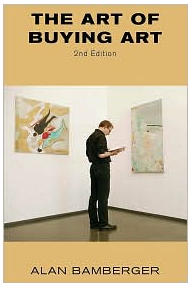
I came across a website about the business of ART by Alan Bamberger, a San Francisco art consultant, advisor, and independent appraiser of all aspects of original works of art including art-related documents, and art reference books. He has been selling art since 1979 and has been consulting and appraising for artists, galleries, businesses, organizations and collectors since 1985. He is the author of “The Art of Buying Art.”
Mr. Bamberger asked some Art World Pros for answers. Here they are:
Brian Gross, Brian Gross Fine Art, San Francisco: Art that is unique in conception and well executed.
DeWitt Cheng, freelance art writer and critic, Bay Area, CA: Good visual art looks stunningly right and, in retrospect, obvious, or inevitable– yet it’s also continually surprising. It is a powerful paradox. How can someone have possibly made this? How in the world could it not have been made?
A magnificent painting by Joseph Kyle hangs in a downtown office bringing light and life to an already beautiful space.
Cheryl Haines, Haines Gallery, San Francisco: Clear intention, unwavering dedication, patience, perseverance, self awareness and the drive to make for yourself and no one else.
Robert Berman, Robert Berman Gallery, Los Angeles: Reality is by agreement. The reality of art is usually by some kind of agreement. The arbiters are the museums, the museum curators, the people who spend their lives and their time actually being critical of what they see and judging what they see. If you add in four or five art critics who are then able to write about it, if you get four or five major collectors who are passionate about what they collect to patronize it, and several major auction houses to auction it, then a consensus or vetting process begins to unfold. Of course there’s magic dust involved, so this is not a sure way, but it’s a safe way to go about judging what is good art.
by Marc Séguin
Catharine Clark, Catharine Clark Gallery, San Francisco: When it has its own internal logic. It took me a long time to get to this place, but that is the answer that I now give. I used to say that good art is like porn; you know it when you see it.
Mat Gleason, Coagula Art Journal, Los Angeles: The moment and the memory. It has to be something that engages you, on one of a million levels, in person, and establishes a memory that remains positive. This can be an artwork that challenges you and then makes you think about it days later or one that seduces you and delivers pleasant feelings days later. There are as many ways to produce this 1-2 effect as there are artists, but so much art that grabs you is glib and you forget it or is lousy and only recalled as something you sped past or upon which you only regret wasting your day.
Robert Shimshak, Collector, Berkeley, CA:
Marc Chagall
Good art is timeless. It will assume a new relevance to each generation, and to yourself as you grow. It will connect to the past and feed the future. It has a simple and rigorous beauty that commands your gaze and thoughts whenever you look at it. The best work will break your heart. As a collector, you will know it when you see it. It’s personal. You will not have to be convinced by anyone to acquire it; it will be something you simply must have. It is like a good marriage that completes a feeling inside you, something that lasts forever and grows with time.
Marsea Goldberg, New Image Art, Los Angeles: Originality, representational of the time when it was created, passion, a frame of reference, freshness, intellectual content, and is uniquely identifiable as the work of that particular artist. The art should effortlessly have as many of these characteristics as possible– or none at all. It also has to have magic; if you try too hard, the magic could fly away. The artist needs to have a vision and it’s important that the work doesn’t go into a dead end. It’s helpful if the artist has the capacity to reinvent their creativity through various skills and mediums.
Robert Flynn Johnson, Curator Emeritus, Achenbach Foundation, San Francisco: It is truly an unanswerable question without stating something that appears pretentious… the perception of what makes art “good ” revolves around the application of that difficult word, “taste” which I observe to be in considerably short supply in society today. People are not willing to take the time and effort to develop their own personal sensibilities through study or reflection but are prone to “go with the flow” from the “tastemakers” so as not to be seen as square and out of touch… so sad…
Jack Hanley, Jack Hanley Gallery, New York: I like something where the intensity of the experience of the person making it comes through. Maybe somebody is turned on by the nature of the materials, a psychological issue or some kind of narrative. Maybe some people have greater intensities of experience than others. What makes art good on a grander scale is how extraordinary and profound the components of those experiences are. Some artists are maybe better than others at tapping into their own idiosyncrasies and conveying them to others.
Justin Giarla, The Shooting Gallery, White Walls & 941 Geary, San Francisco: What makes good art is when you see a piece from across the room, you immediately fall in love with it without knowing anything about it and are in love with it forever.
Paul Kyle, Private Art Dealer, Elan Fine Art, Vancouver: A good work of art for me, is a piece that has the ability to awaken and remind me of my essence or the highest aspect of my being, if you will. To successfully accomplish this, I as viewer, must be open to allowing the work to reveal itself to me without pre-judgement, what I call contempt prior to investigation. Also, a great work of art gets better the more it is viewed. Often it is the work that has an immediate impact that is the one that wears thin over time, being the one with little real substance, as opposed to the one that takes time to reveal itself as the one with the greatest depth and meaning. There are certain elements however that the work must contain before the experience I seek is possible. Two elements that I look for in art are: Beauty and Elegance.Beauty, not referring to “pretty” but beauty referring to directness and honesty. Elegance is where there is nothing that can be added or taken away from the individual work. This can only be accomplished by an artist with great technical competence and authentic original vision.
Alan Bamberger, itinerant artster, San Francisco: At its most fundamental level, good art is an effective combination of concept, vision and mastery of medium (the ability to get the point across). Good art is also uncompromisingly honest, unselfconscious, bold, ambitious, enlightening, original, challenging, and a feast for the senses. It doesn’t necessarily have to have all of these qualities, but at the very least it has to keep you coming back for more… and never ever bore.
An easy-to-understand book on how to buy, sell, evaluate, appraise, and collect art. Soft cover; 284 pages. By Alan S. Bamberger, noted art expert, author, and syndicated columnist. Available at http://amazon.com







 turning on the oven. This is the time when I start to throw things together last minute or just barbeque.











 Girl Who Would be KING on Life, Style and INSPIRATION.
You must be logged in to post a comment.