If the only time you tend to eat NORI (dried seaweed) is with sushi, you’re missing out.
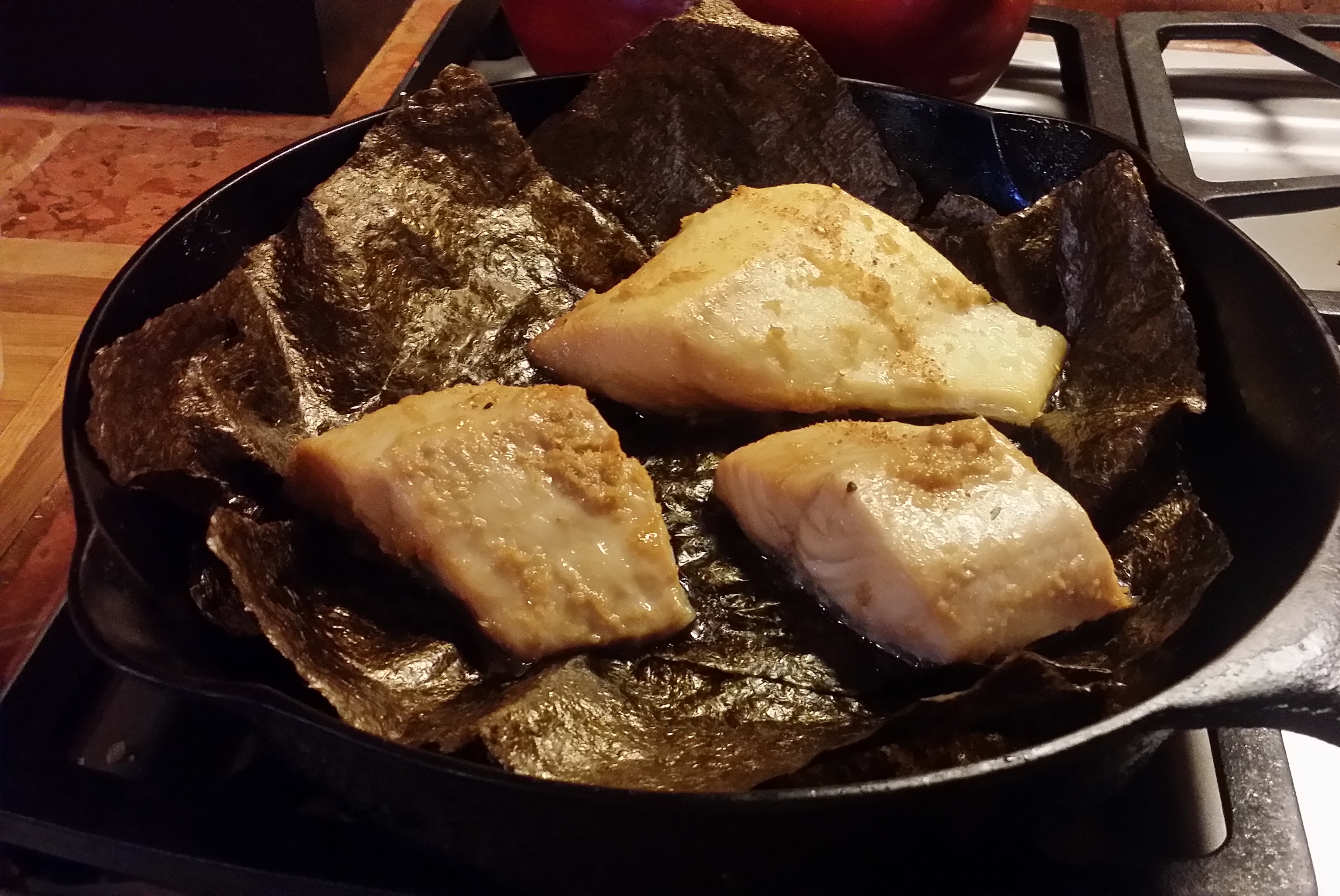
Sablefish (marinade is my own recipe) over Nori in cast iron pan
You probably know nori best as the paper-like dark green wrapping that keeps pieces of sushi neatly — and deliciously! — contained.
There was a time when I made sushi from scratch (not the seafood part, but the assembling of it all with rice, nori & wasabi and then rolling and cutting it to make California rolls or tuna maki, etc. It was a way of being artistic as top sushi chefs are artists of a sort. Also I wanted to impress my parents after living in Tokyo by making them sushi…..which at the time, they weren’t used to at all. My mom hated raw fish and spit it out when I wasn’t looking.
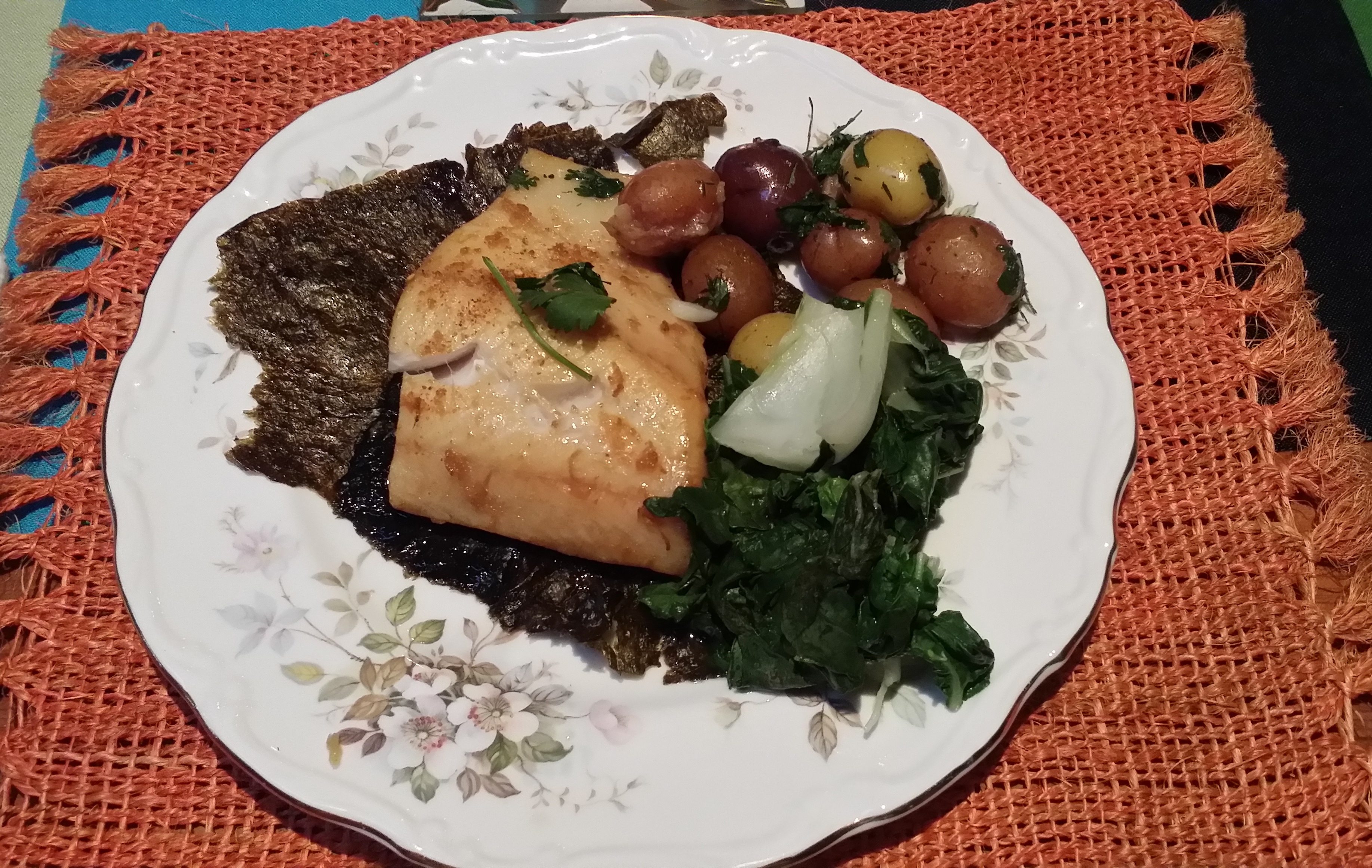
However in Vancouver Japanese sushi restaurants are a dime a dozen plus it was costing me more to make it, so I stopped. The other day I marinated Sablefish overnight. The next day as I was preparing to cook it I realized I had some sheets of Nori that were unopened. Hmmm…..what can I use them for now that I no longer make sushi? Without using any specific recipe I decided to place the Sablefish over top of a few Nori sheets and bake it in the oven. I knew from toasting nori in the past over a stovetop that it would probably toast in the oven too. But I wasn’t completely sure of the outcome. End result: nice & tender perfectly cooked fish with Asian Marinade and crispy seaweed. The combo was quite yummy and my two guinea pigs were very pleased.
Asian Marinade of soy, sake, mirin, sesame oil, chopped fresh ginger, garlic & a bit of honey, patted dry before baking. Side of steamed baby bok choy & little boiled potatoes with fresh herbs & butter.
So I decided to check into how to use Nori for other recipes.
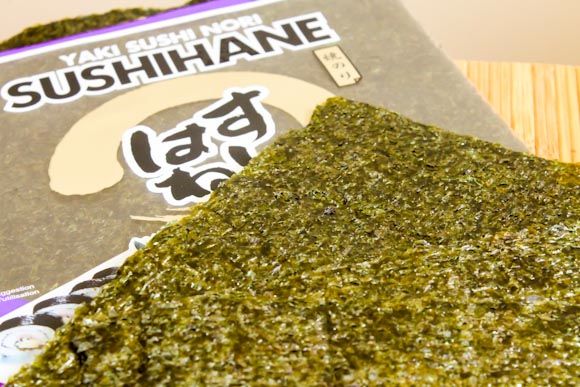
Nori Sheet
How long does it keep, How is it made & Where can you buy it?
These crisp sheets of mild grassy-tasting seaweed last forever in the pantry packaged in an airtight container or ziplock bags and can come in handy when you just need “a little something extra” to perk up a weeknight meal. If they start to lose their crispness, you can re-toast them (carefully!) over the flame on a gas stove (as I have done in the past).
Noriis made by shredding edible seaweed and then pressing it into thin sheets — much like the process for making paper. You can find packages of it at any Asian grocery store, Whole Foods, and more and more frequently these days, regular grocery stores. Nori that is sold as “plain” or “toasted” is the most versatile sort for our cooking purposes.
It also comes with a whack load of healthy benefits. (I will post this separately – ups).
Other ways to use it:
Crispy Nori Snacks: Crisp those sheets of nori a little more, and by golly, you have yourself some nori chips!
Furikake Seasoning: This blend of nori and sesame seeds makes a simple rice dish taste like it came straight from a restaurant kitchen. It’s *easy to make yourself at home.
Soup and Rice Bowl Topper: Add a little extra crunch to your next bowl of soup or rice. Toasted Nori – These thin sheets of pressed seaweed crisp up beautifully after a few minutes in a low oven or toaster oven, then you can crumble them on top of a bowl of soup. Brush the top with water for even crispier sheets! Slice nori into thin ribbons and sprinkle away. Also try using it over omelets, baked fish, salads, steamed vegetables, and anywhere where you might like nori’s crisp texture.
*Vegetarian Furikake Rice Seasoning
2 sheets toasted nori seaweed
1/4 cup toasted white and/or black sesame seeds.(You can just use whole sesame seeds, but I like to include both whole and ground for added texture).
1/2 teaspoon coarse sea salt
1/2 teaspoon sugar
Toast the nori over a low flame or burner, waving each sheet over the burner until it crisps and the color changes. Using scissors, cut into small pieces.
With a mortar and pestle or coffee grinder, combine 1/8 cup sesame seeds, salt, and sugar.
Combine nori with ground sesame seed mixture and remaining 1/8 cup whole sesame seeds. Store in an airtight container.
To serve, sprinkle over or mix into rice or noodles.
Food, Friends, Fun…..what would life be like without all that? Not so merry.
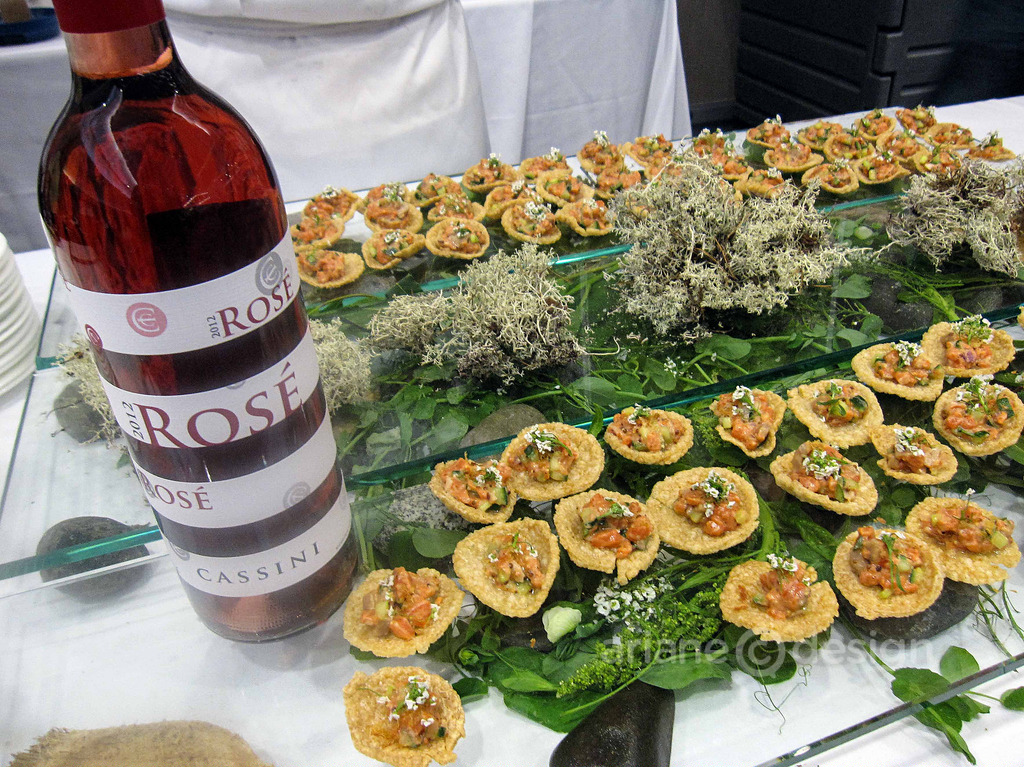
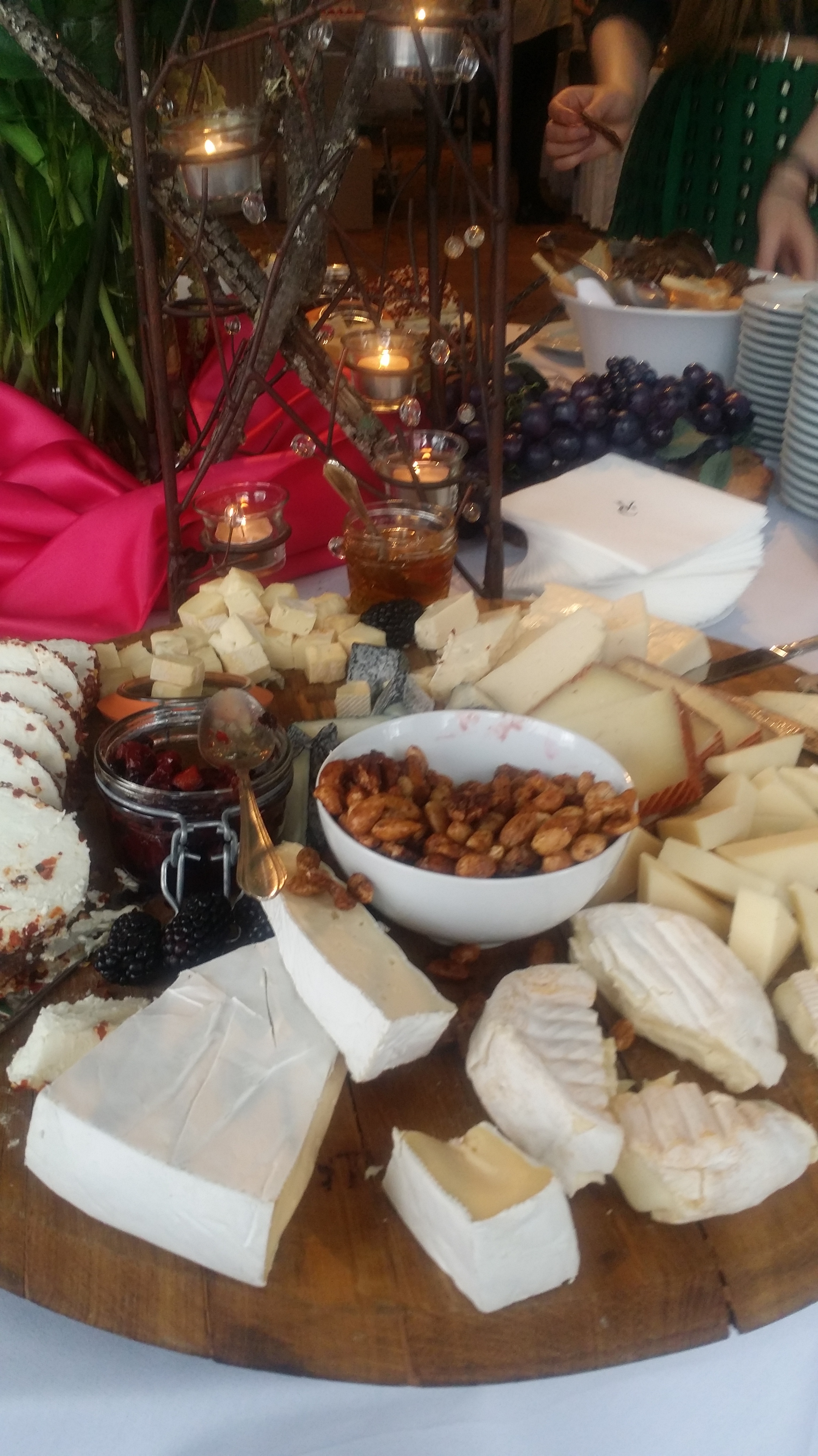
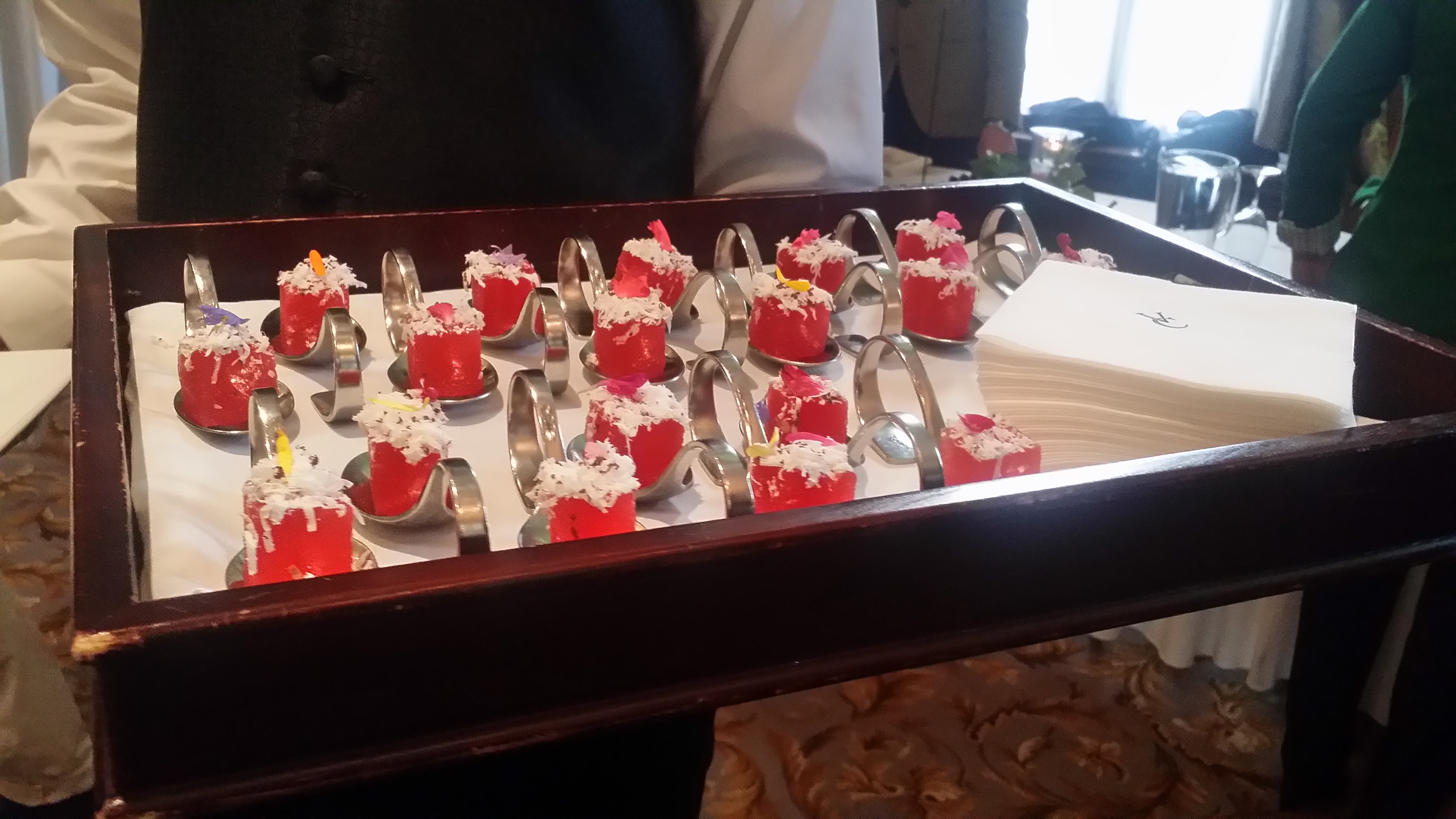
Last night I attended the 12th Annual Chef Meets BC Grape event with a good friend. A fun fundraiser put on by the British Columbia Wine Institute and the Arts Club Theatre Company – a toast to the extraordinary chefs and winemakers who call BC home. Along with food, British Columbia is growing into a world class destination for premium wine. The proceeds from the event go towards funding local playwrights and emerging artists.
Here is a sampling of my favourite wine/food pairings of the evening:
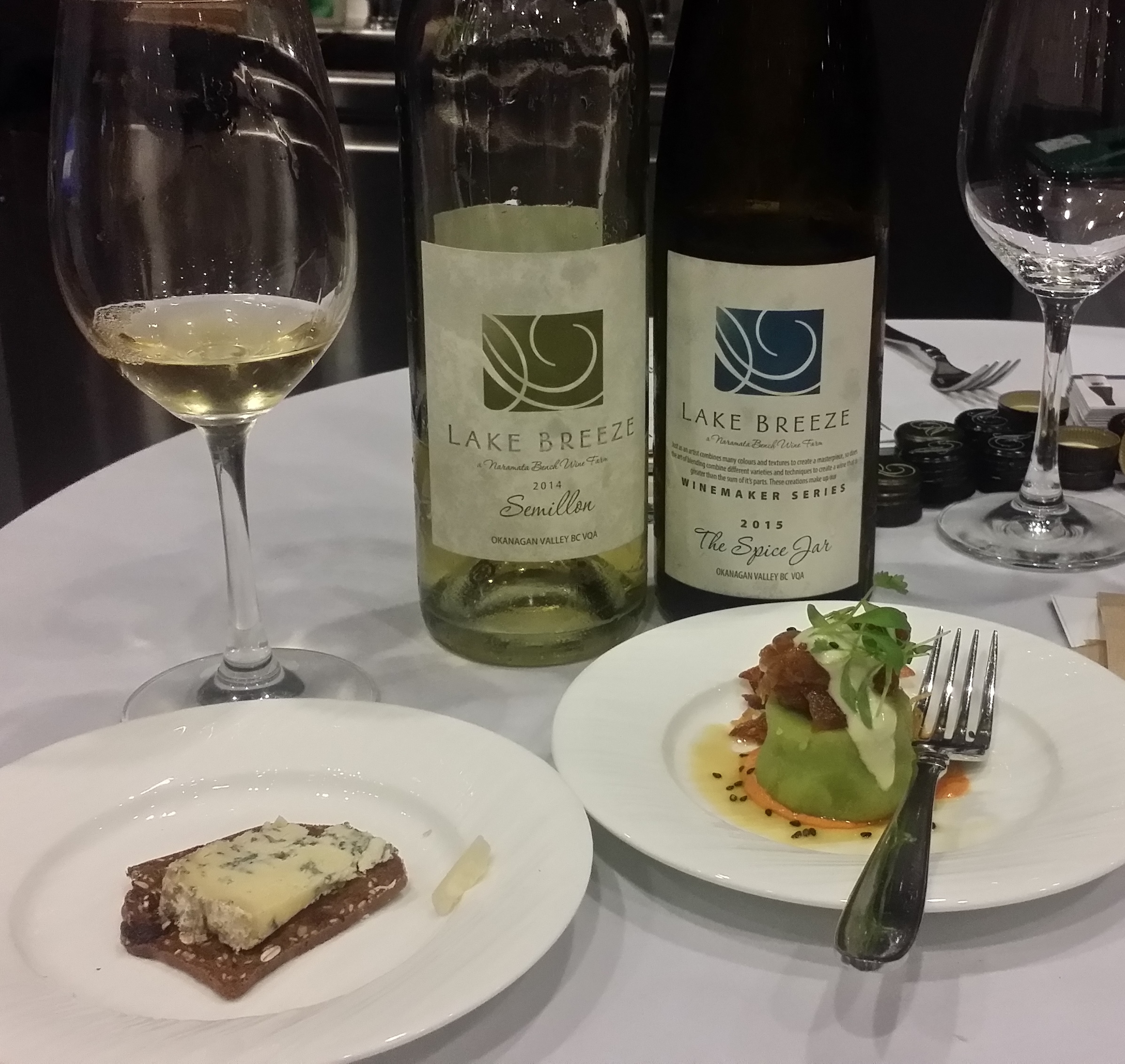
Chicha restaurant presented a Tuna Causa – cilantro whipped and chilled potato topped with sesame and soy, BC local Haida Gwaii Albacore Tuna, a crisp fruit and ginger ponzu, and a Peruvian rocato chilli aioli. Paired with Lake Breeze Spice Jar.
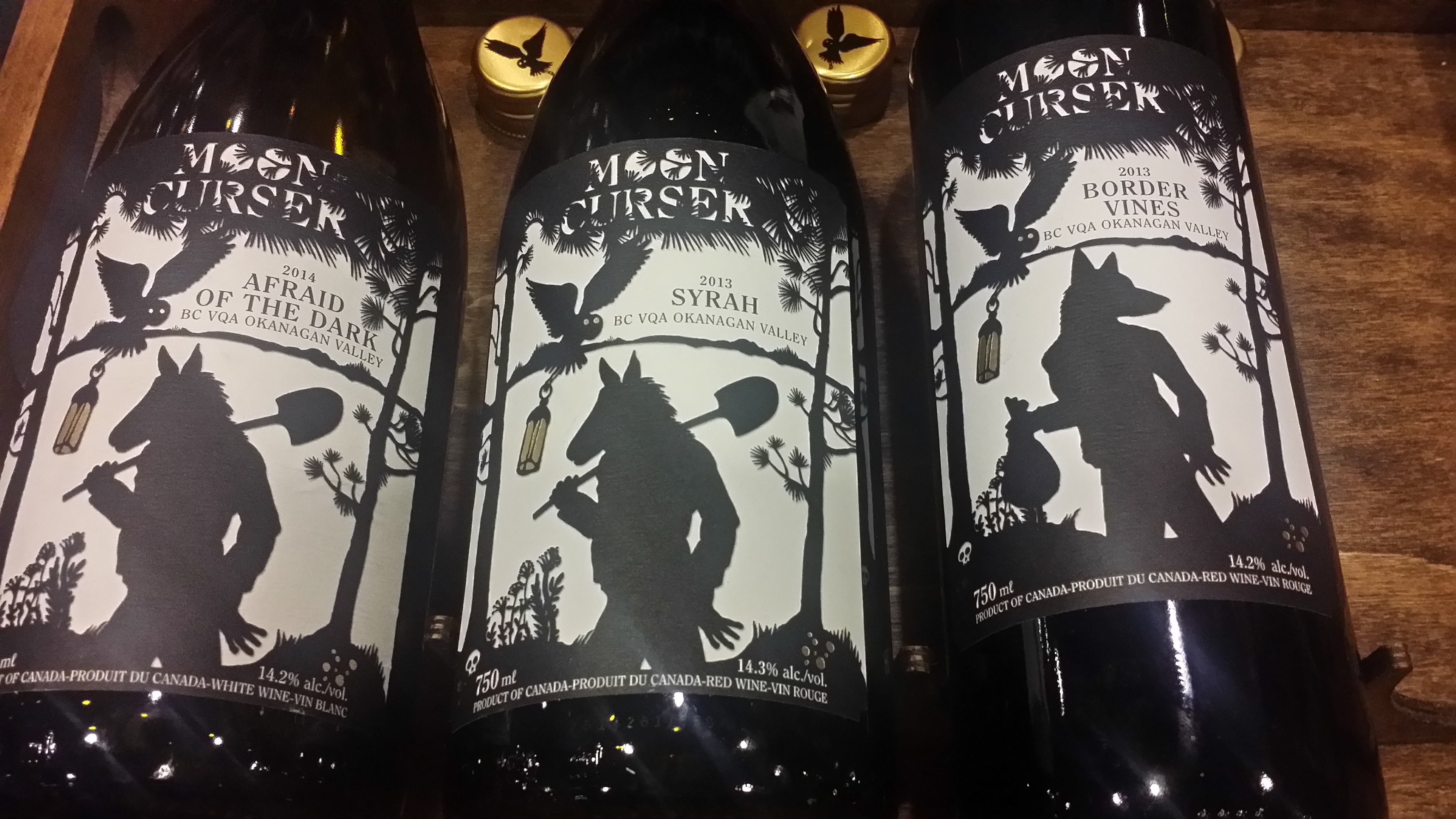
Hart House Restaurant presented a Pancetta wrapped pork terrain with sourdough crisp Hannah Brook Farm peach and apricot mostarda, Barnston Island micro arugula. Paired with Moon Curser “Afraid of the Dark” red.
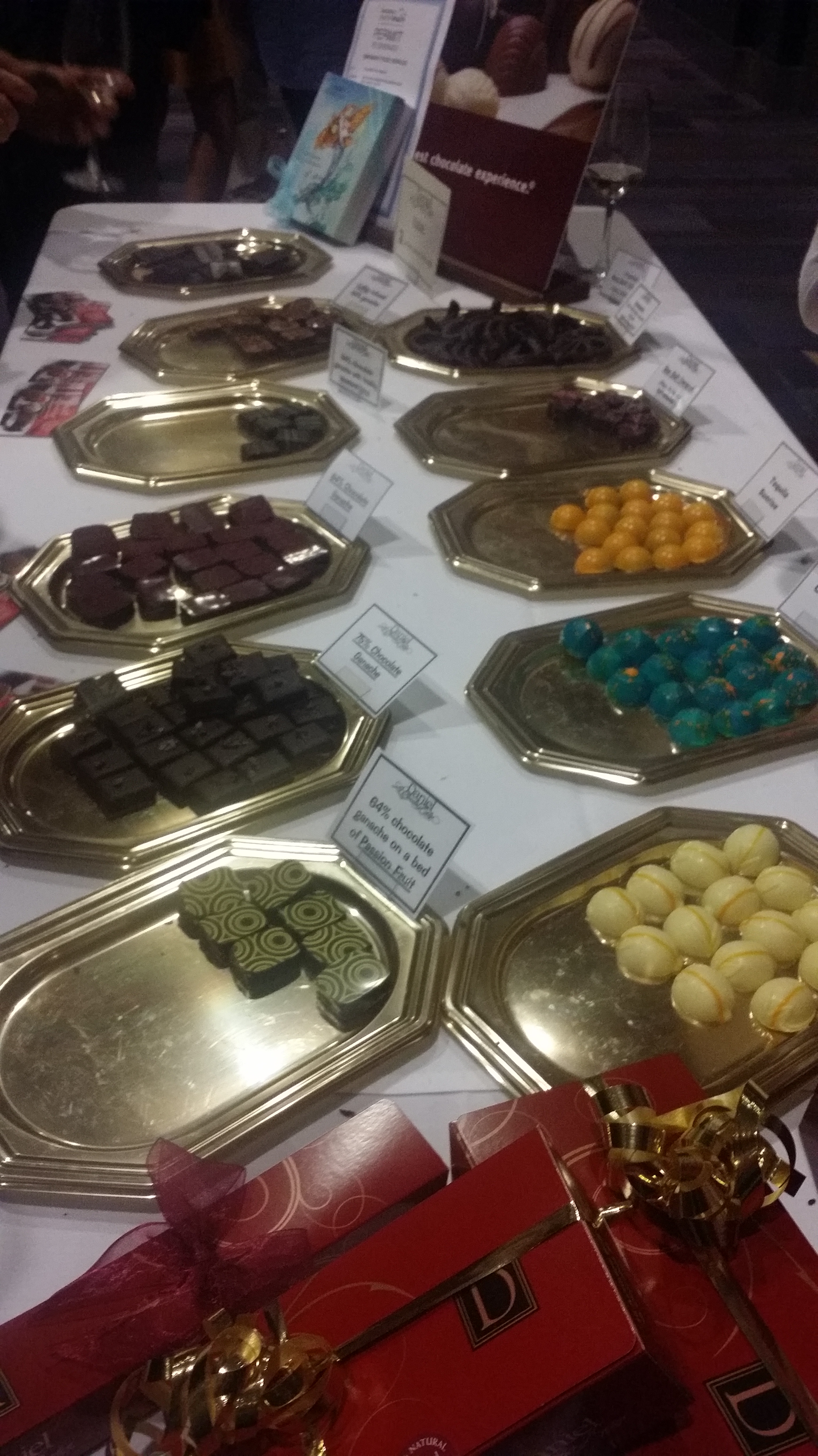
Love the label on Moon Curser Wines.Daniel Chocolates to Finish
Lift Bar and Grill presented smoked sturgeon, dark soy & nori emulsion, putanesca jam and squid ink rice puff. Paired with Desert Hills Gamay Noir.
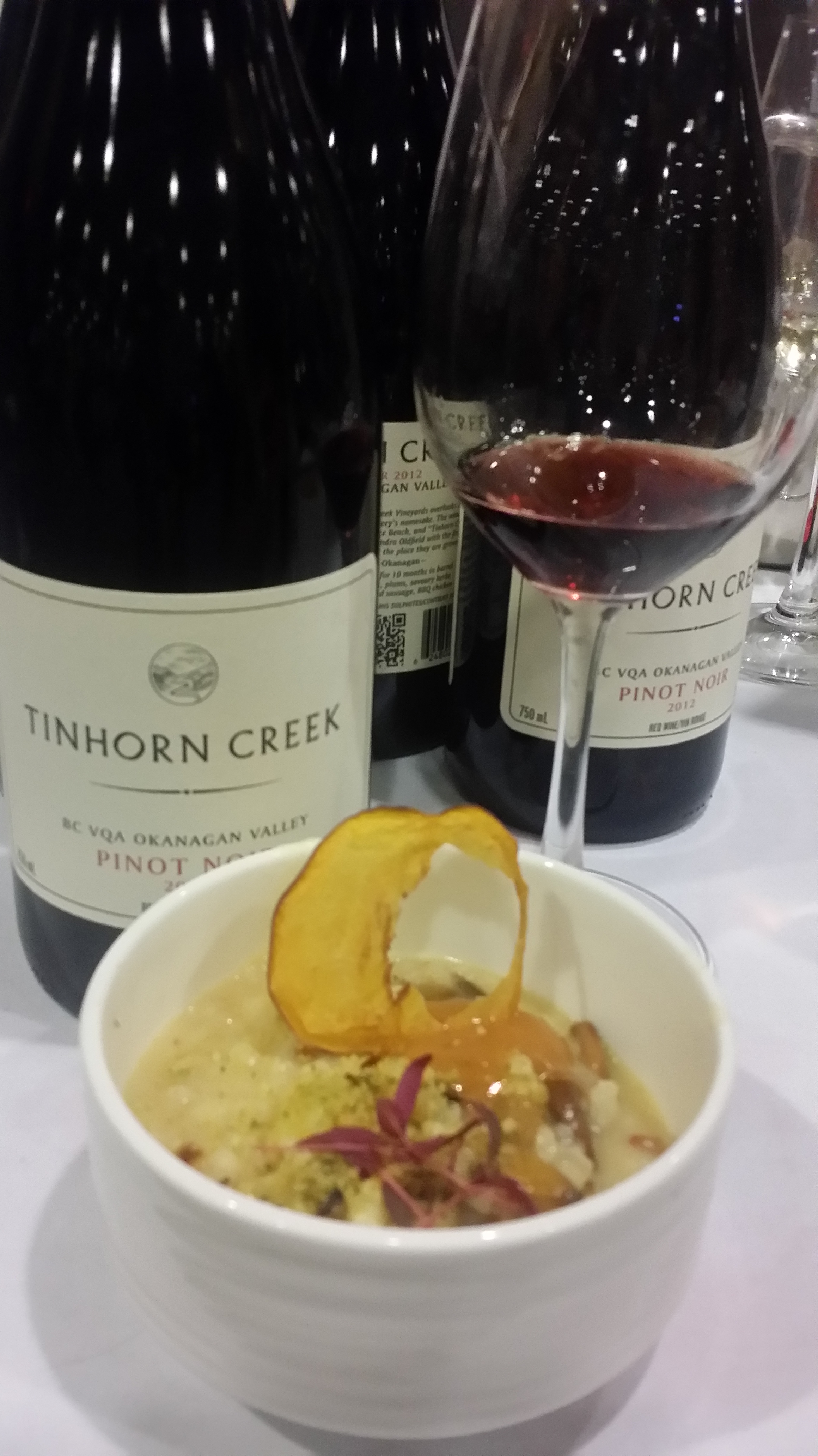
Miradoro (at Tinhorn Creek) presented chanterelle lobster mushroom and pancetta risotto with Okanagan peach, grilled corn & rosemary. Paired with Tinhorn Creek Pinot Noir.
Provence Marinaside presented seared scallop, prosciutto crisp, Okanagan peach broth with lemon thyme salt. Paired with Misconduct Suspect Series Chardonnay Viognier.
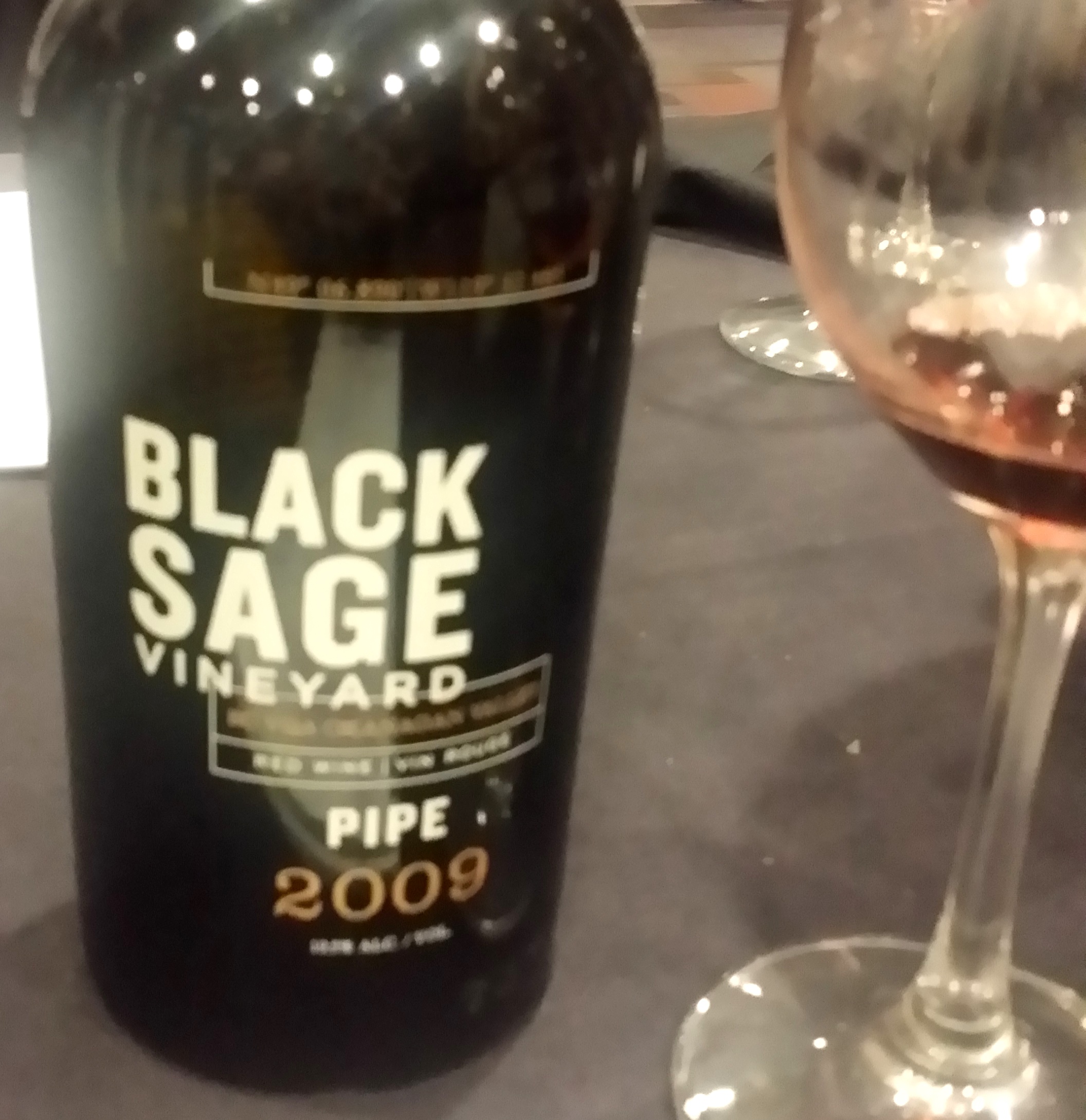
A nice BC Port – Fall is fast approaching. Goes well with chocolate.
Honourable Mention:
The Observatory (at Grouse Mountain) presented mushroom boar belly, chanterelle mushrooms, brioche, frissee with Tantalus Vineyards Riesling.
The Westin Bayshore presented Albacore Tuna Poke, avocado, taro root with Bordertown Estate Winery white.
*Torafuku (modern Asian eatery) presented onion ash beef terrine wrapped with Portobello, local vegetables, **foie gras, potato pave, chimichurri and hunter sauce. Paired with Gold Hill Cabernet Franc.
Pinnacle Harbourfront Hotel presented Duo of duck-spiced rubbed duck breast, duck confit goat cheese croquette, habanero jam. Paired with Quails’ Gate Gewurztraminer.
**On a personal note I object to the way foie gras is produced. I wish that restaurants refrained from using Foie Gras on their menus. At the same time, *Torafuku had the longest tasting lineup.
All in all this was a most enjoyable evening and a perfect start to the weekend.
Oh don’t you know….the weekend starts on Thursday!
Well here’s something different. Especially after attending the opening of a pop-up pastrami place called Mensch for brisket sandwiches & beer last week. My Yin and Yang is well balanced for sure.
First I must explain that this is a new regime for me. Yesterday right after my meditation practice (more on this later) I went to a bar.
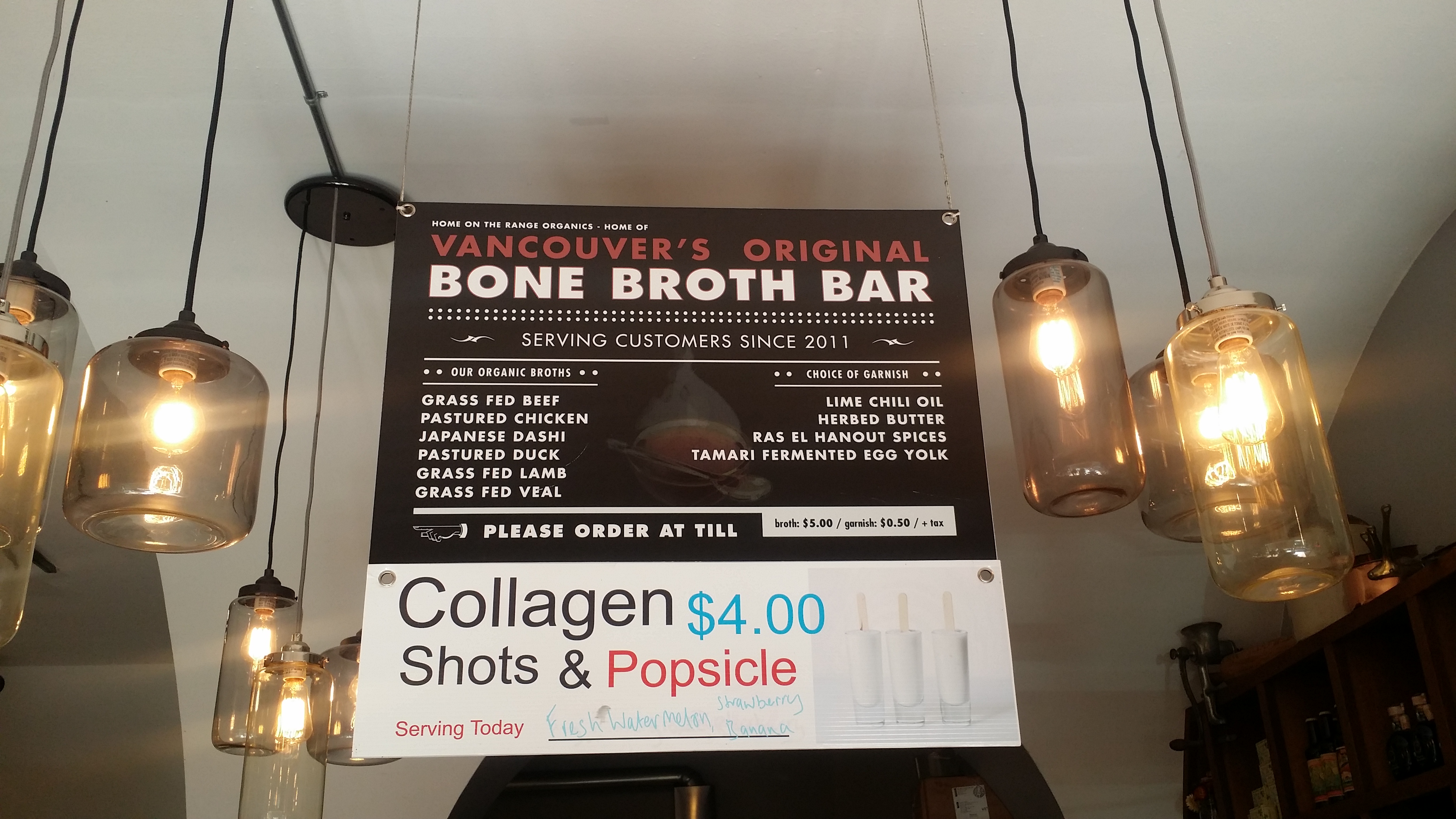
But just not your everyday kind of bar. A bone broth bar.
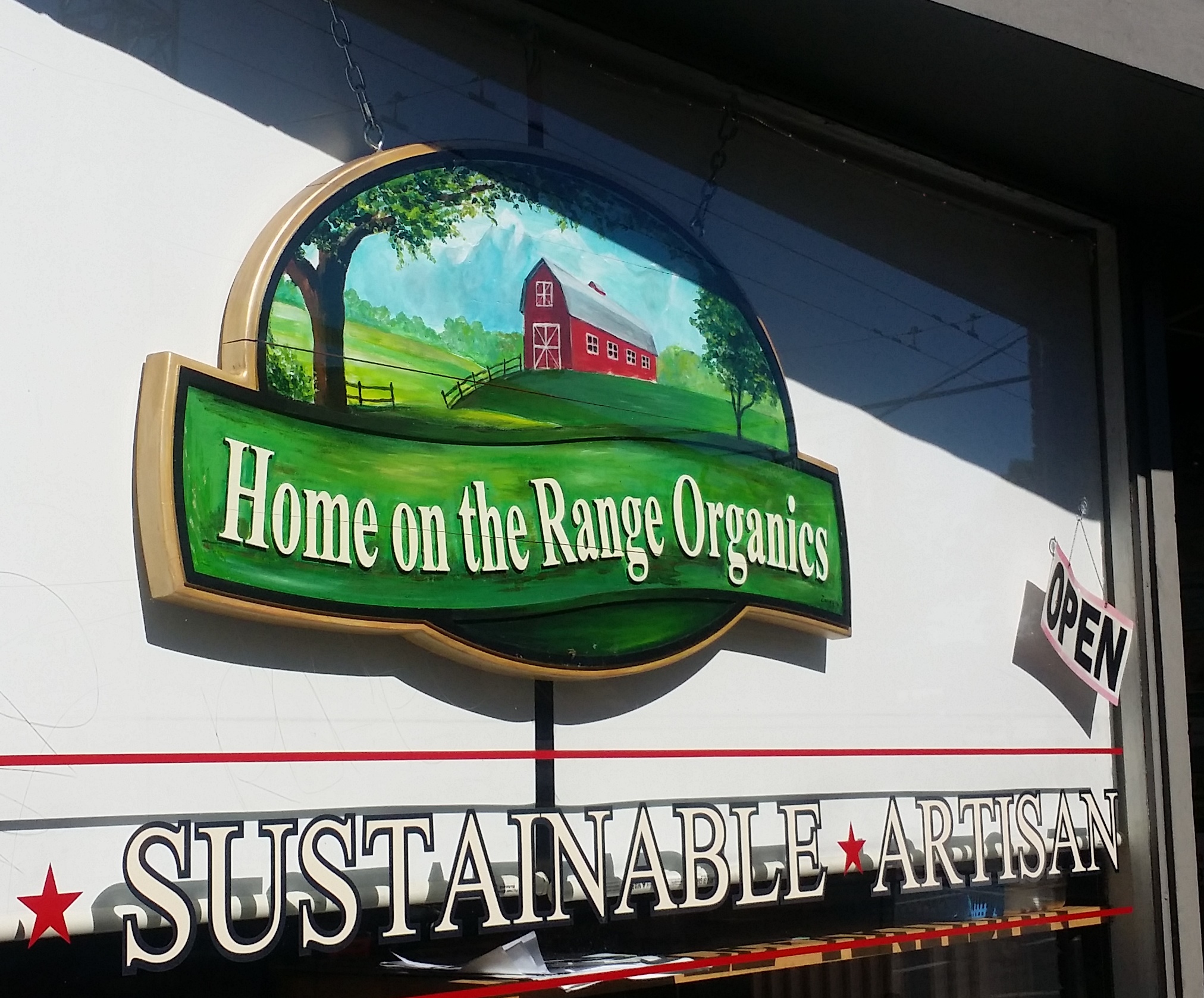
I sat at the counter of a fairly small but very well stocked store/take-out called “Home on the Range Organics”
It’s North America’s First and Original Broth Bar!
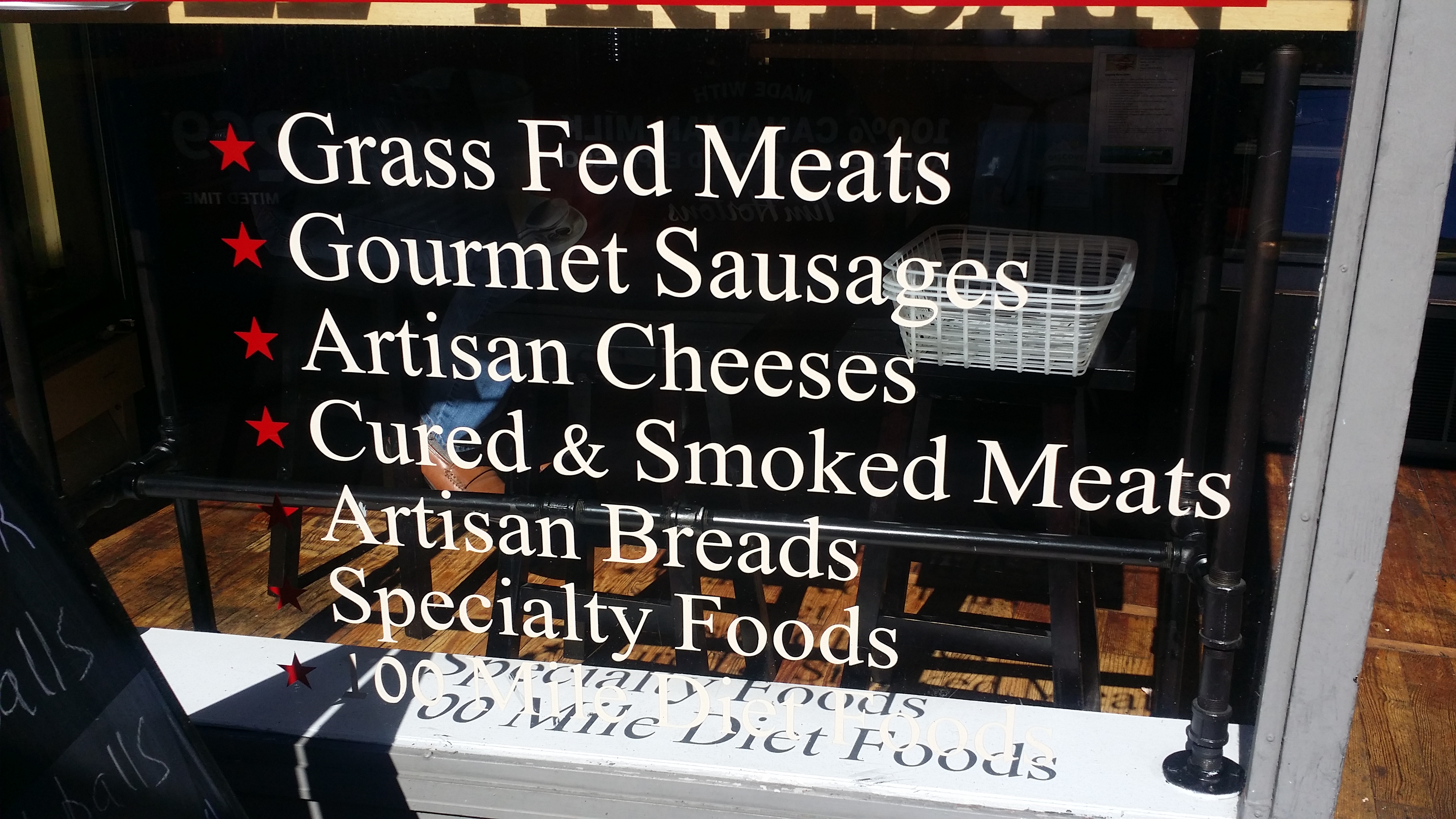
They sell other things too that are hard to find elsewhere
What a great little find!
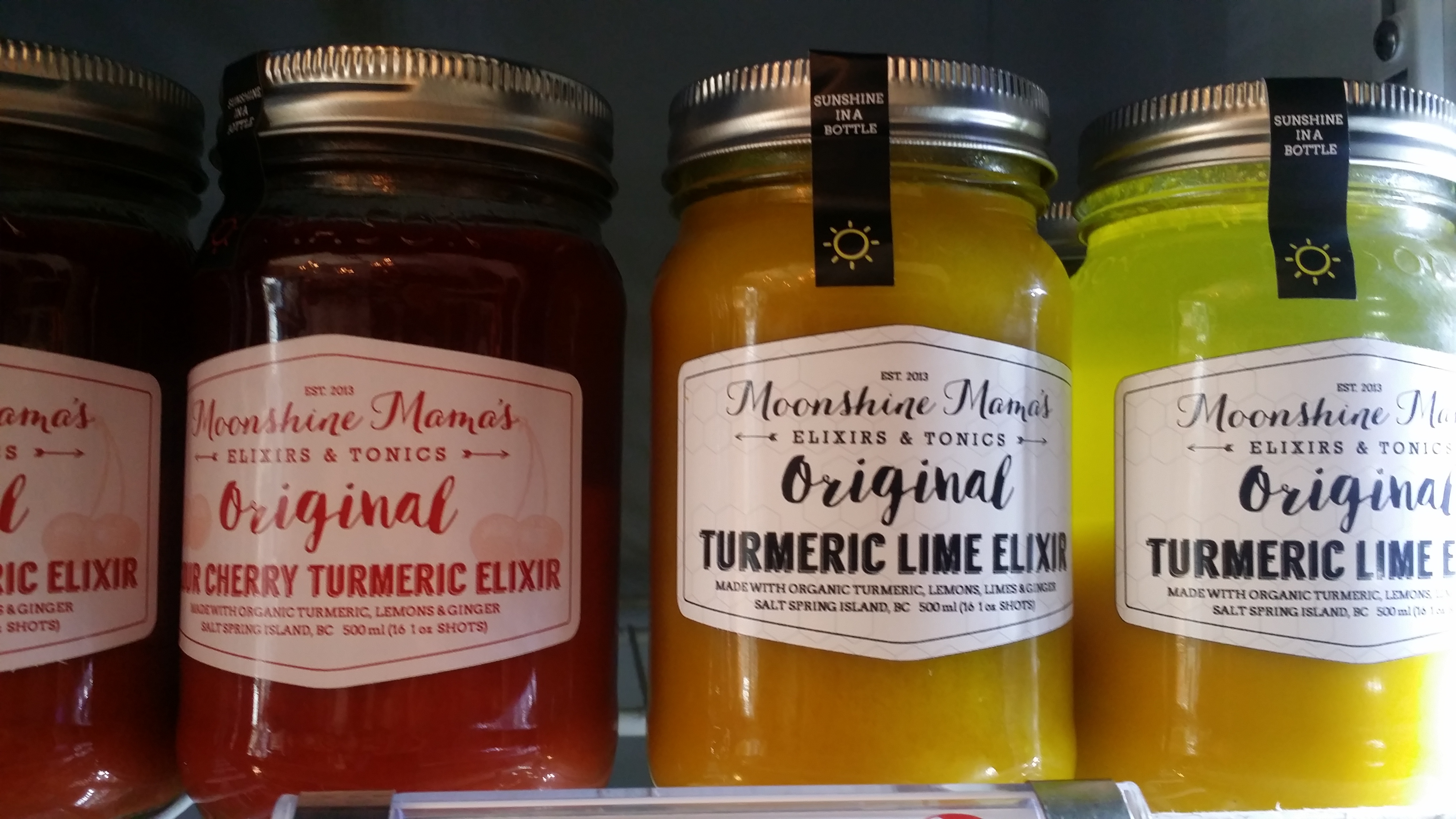
I spoke with Jackie Ingram (she and her husband Allen own the place) and was quite impressed with all the healthy offerings they have in stock (literally speaking too, they have amazing stock). I bought some ready made broth to take home and add stuff to (I can make my own but did not have any prepared), a super elixir of turmeric & lime and avocado mayonnaise because I want to make sandwiches without using regular high fat mayo or miracle whip which has corn syrup, soybean oil and sugar. Basically I’m looking for better ingredients. So you might wonder:
Why broth not coffee?
Unlike coffee, broth can help hydrate your body and nourish it. It helps to fight inflammation and significantly boosts gut health!
Here are 10 great reasons why you should drink their delicious broths:
Great for post work out as its recuperative properties directly stimulate regrowth of connective body tissue.
The natural way to fight colds and flus. This is how your grandmother used to fight the common cold! Studies show that having chicken broth in particular (and other broths as well) increases the number of white blood cells that fight common colds and flus.
Helps reduce food allergies and intolerances.
Helps reduce cellulite. Bone broths help to slow down structural changes in your skin’s tissue by strengthening elastin fibres, to make cellulite less visible. As we age our skin becomes thinner so it is easier to see blemishes below the surface whereas collagen can reverse this trend if you exercise regularly and moderate your diet through bone broth consumption.
Reduces inflammation. Collagen is the body’s natural healing workhorse but after our early twenties we slow production of collagen, and providing a natural boost is essential. Broth contains plenty of the anti-inflammatory amino acids glycine and proline.
Greatly improves joint health by helping with bone formation and natural repair. Broths contain magnesium, phosphorus and calcium plus a host of other nutrients. Also contains glucosamine which can promote regrowth of collagen even after your early twenties.
Great for your skin, hair and nails. Brings natural shine to your hair and lustre to your nails. Your skin is given a natural moisturising through the influx of collagen, from the inside out – the healthy way.
Because glycine is found in broths, it is often used to help promote healthy sleep and helps to reduce stress and anxiety.
Broth helps to heal leaky gut syndrome (by protecting and healing the mucusal lining of the digestive tract through collagen)
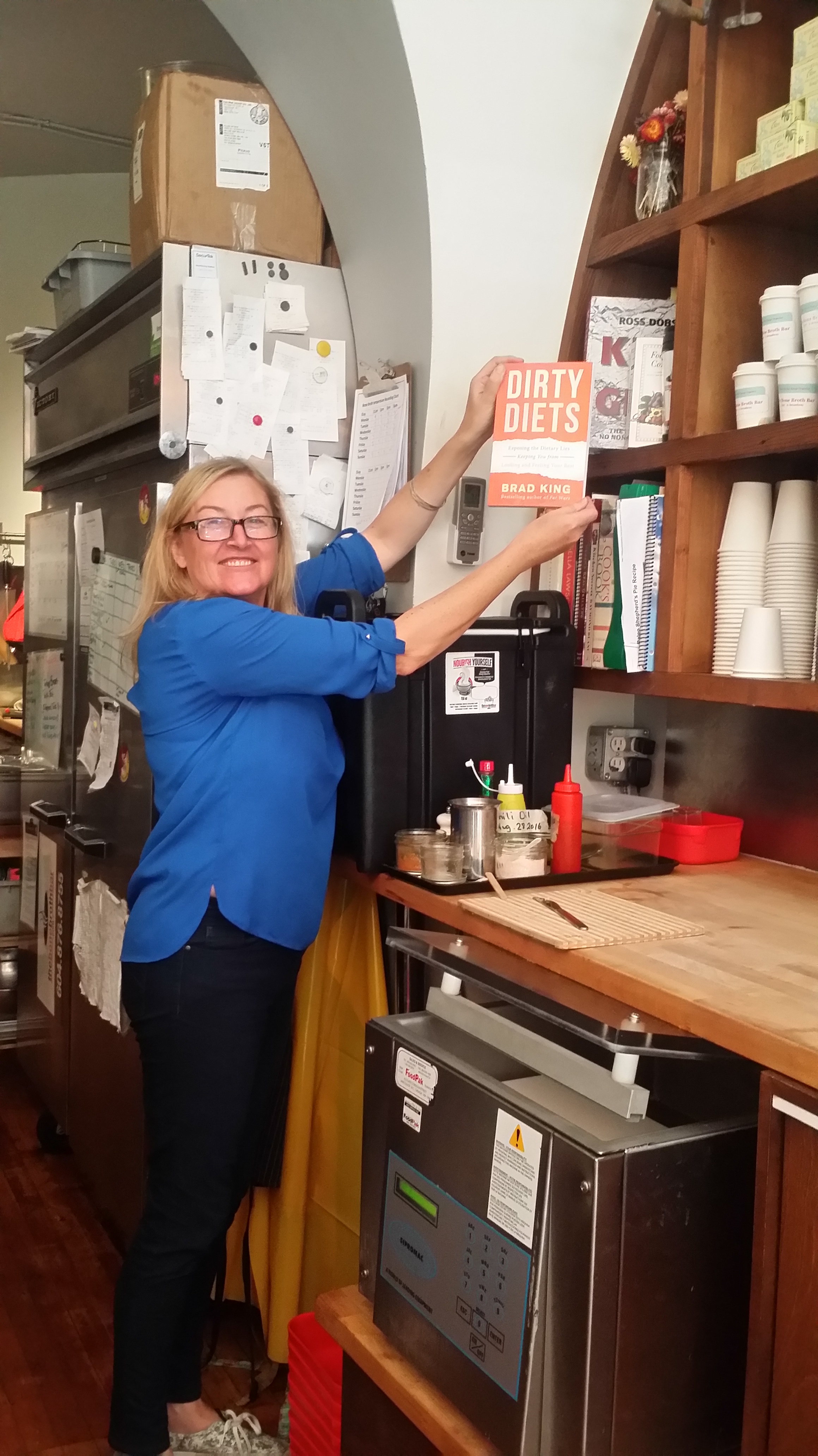
They have some good books. Jackie holds up Dirty Diets written by Brad King.
It tastes fantastic and helps suppress your appetite before a meal helping you lose weight naturally.
What’s not to love?
Location: 235 East Broadway (between Main & Kingsway – parking in back if you’re lucky).
Store #: 604.876.8755
Do you have anything like this in your city?
Mensch Jewish Delicatessen (they do take-out) 666 E Broadway, Vancouver (Mount Pleasant)
Hey, this is not to say I’m trading in my morning cuppa for broth. Some things are not meant to become substitutes.
I’ve been watching the series on Netflix. It’s not your run of the mill cooking show. It’s so much more because in each hourly episode the series focuses on a particular chef that will inspire the hell out of you.
From Chef Meets BC Grape
You find out their story: what drives them, how they shop, about their relationship to food and their style as they prepare a culinary specialty. And it all looks so pretty….even something so simple and singular as a carrot. But it’s not just a carrot, it’s a carrot from the chef’s family run farm that tastes unlike any other carrot. And it makes everything you make seem so……...well, ordinary?
Anyway….just wanted to tell you about two upcoming chef inspired events in my home town, Vancouver because I really feel that Vancouver is becoming a world class dine out city. So much so that I just found out about a dine out week taking place next month that is very inspiring (UPS – upcoming post soon). But in the meantime:
#1 – Chef Meets Truck:
Roaming Dragon Pan-Asian Food Truck
On September 13, the Chefs’ Table Society of BC, in partnership with the Yaletown BIA and the Streetfood Vancouver Society host the inaugural event Chef Meets Truck in Yaletown at the intersection of Hamilton and Nelson. The event will run from 6:30pm-9:30pm and consists of Vancouver restaurant chefs hopping on board local Food Trucks to serve up the foodie event of the season. This collaborative event brings Vancouver’s hottest restaurant and food truck chefs together for the first time ever.
Purchase tickets to the inaugural event for $69 + taxes and fees here. Tickets include food samples from the eight participating food trucks, as well as, wine and beer samples from Nichol Vineyard, Lock and Worth Winery and Brassneck Brewery.
Thursday, September 15
Vancouver Convention Centre East
999 Canada Place, Ballrooms A, B, C
7–9:30 PM
Tickets are selling fast to the largest tasting of BC VQA wines in Vancouver! This popular fundraiser is a unique opportunity to taste a selection of more than 300 wines from 90 of BC’s top producers.
A tasting event for both novice wine tasters and connoisseurs—you can expect to sip and savour vintages of established labels, and find new favourites from an abundance of up-and-coming, family-run, and boutique operations. Guests will also have the opportunity to taste specially prepared pairing dishes from 12 BC restaurants!
Participating restaurants include:
Chicha Restaurant
Fable Kitchen
Hart House Restaurant
Lift Bar and Grill
Miradoro Restaurant
Provence Marinaside
Torafuku Modern Asian Eatery
Tickets are selling fast—buy now to avoid disappointment!
There is no question that foraging for anything edible is not a simple task. It’s a thing. I mean it’s a lifestyle choice – a healthy one if you are so inclined.
You are one with nature, love being in the wild or are just plain….wild.
To be totally self-sufficient food wise it would take a lot of work and dedication and you’d have to really know when to look for what, where to look for it and then what to do with it once you find it. You must be adventurous, outdoorsy and know what the heck you’re doing. Most likely you’re also a foodie. It’s not for everyone.
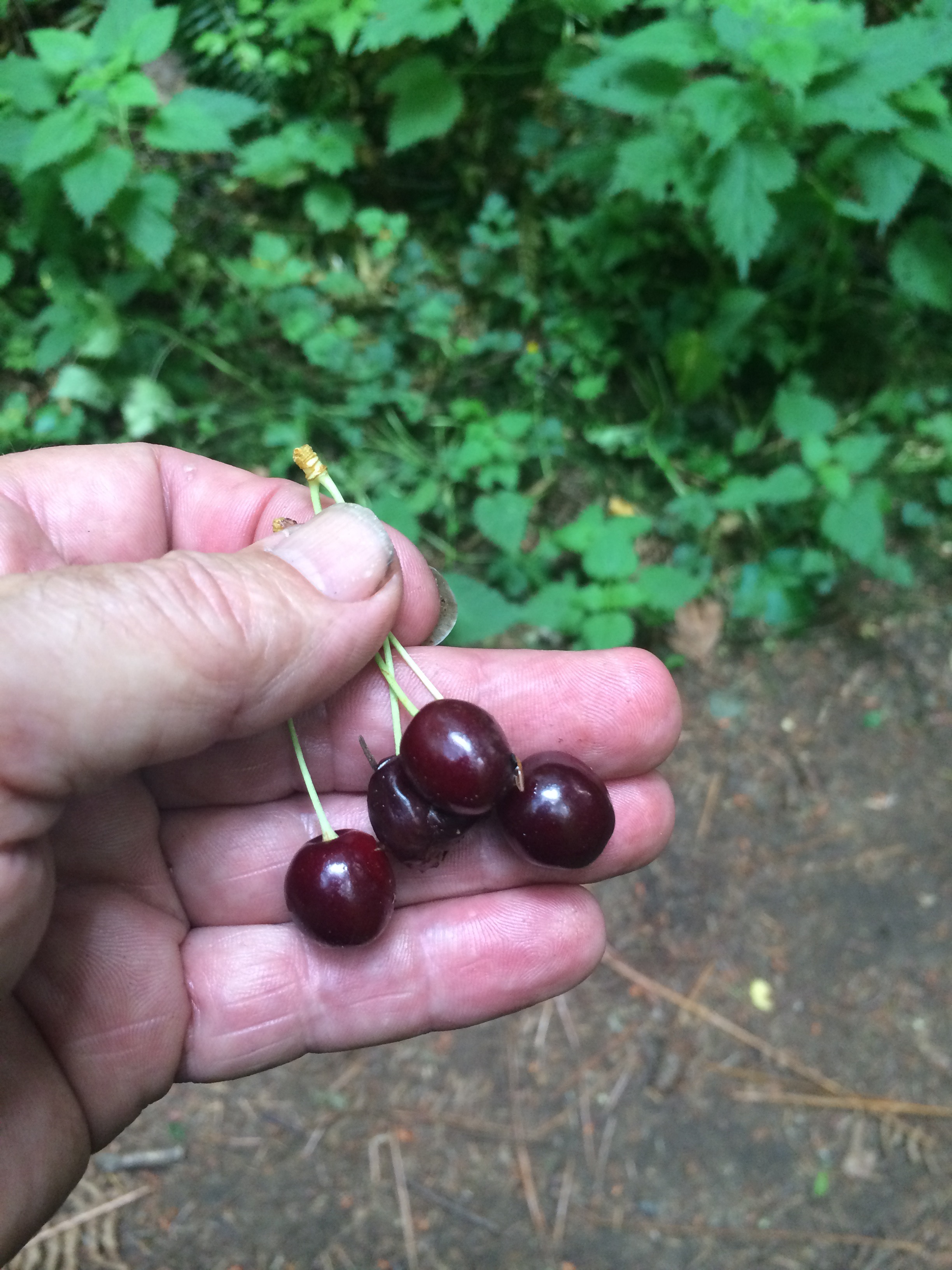
Freshly picked wild cherries
Our ancestors who might have been foodies back in the day had to hunt and gather (or forage as we like to call it) like wild animals do in order to survive. It wasn’t a choice so much as a necessity. Survival of the fittest. We lucky folks don’t have to, but lately foraging has piqued my attention and interest. Even a few of my urban neighbours are getting into it – albeit lightly. One has chickens (so fresh eggs for sure) and another is building a terrarium to grow edible plants. I also have friends who have fresh figs, other fruits and trees with bay leaves so sometimes you’ll find me foraging around in their garden.
I really like the idea of having a garden to grow vegetables. It’s the absolute best but since I can hardly keep fresh herbs alive for long I’ll scratch that idea. Surprisingly enough two herbs I totally ignored all winter long have survived together in one pot – thyme and oregano. Rosemary is pretty easy too but let’s face it – that does not a complete meal make. Many of the plants that we know as weeds are both edible and nutritious, and some plants that grow wild have been cultivated into some of the foods we know today (for example, parsnips, garlic and carrots).
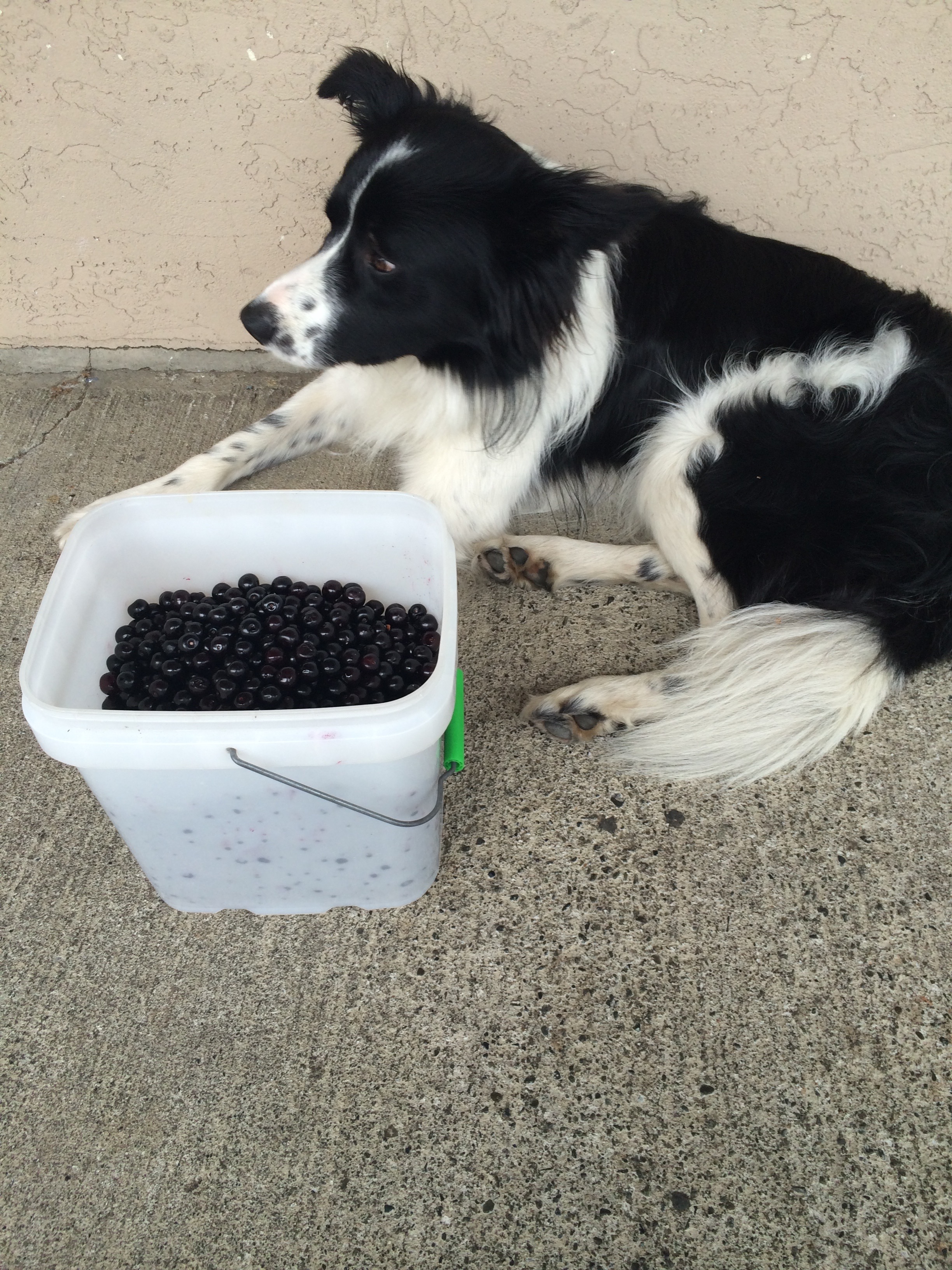
Taylor guards a bucket of cherries
If there is one fresh fruit (that resembles a vegetable) I really miss eating – it has to be farm fresh Rose tomato. Large, meaty & delicious. I remember my dad eating them like apples. I don’t remember eating a good tomato since I was a teenager – too many years of eating only acceptable tomatoes at best that are usually made tastier with a generous drizzling of balsamic. Pesticides are to blame and early picking. We really don’t know what we’re eating.
But now I know Bill. He’s my first foraging friend. He’s also my only foraging friend until I gather more. He refers to himself as a novice forager but from what I’ve witnessed through photos and in person it seems pretty serious to me. At least a serious hobby. Bill’s Instagram feed is usually chock-full of some type of mushroom, berry or plant. Also, he’s constantly making jam and lots of other interesting and/or unusual edibles. Guess you can say he shops local.
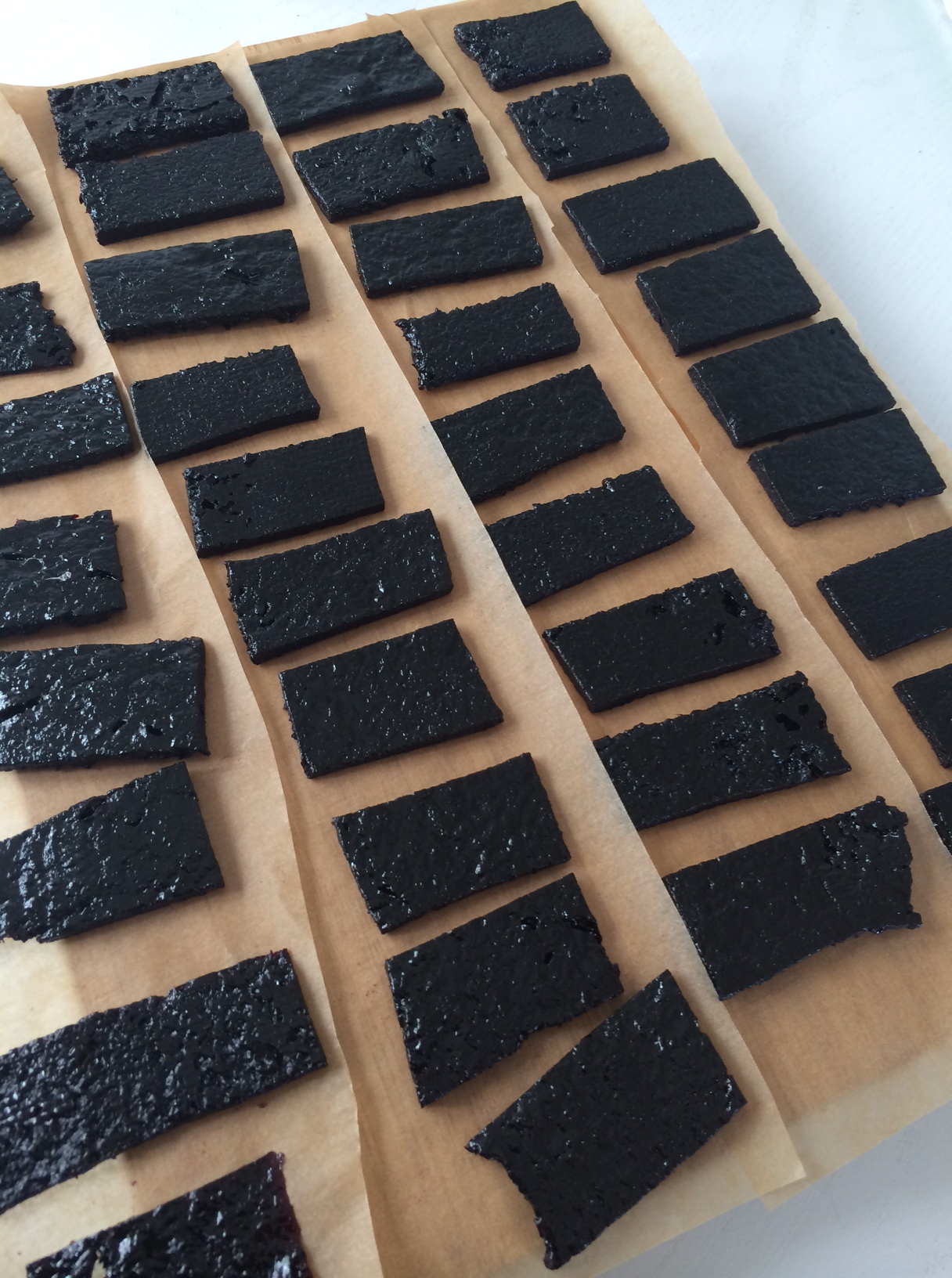
Cherry Fruit Leather
I asked if he would mind talking a bit and educating readers about the process for this blog and send a few photos. Because Bill makes almost everything from scratch and lots of it he finds in the forest. He doesn’t scavage around garbage bins like bears do looking for food just in case you’re one of those who think that’s how people forage. But I know you guys are more sophisticated than that. But to let you know how much I knew about foraging, when I first found out Bill was gathering and cooking up hedgehogs I thought it was the animal, not the mushroom. I was about to dump him as a friend.
When I called him he was high up on a tree not getting high but he still answered the call.
In Bill’s Words:
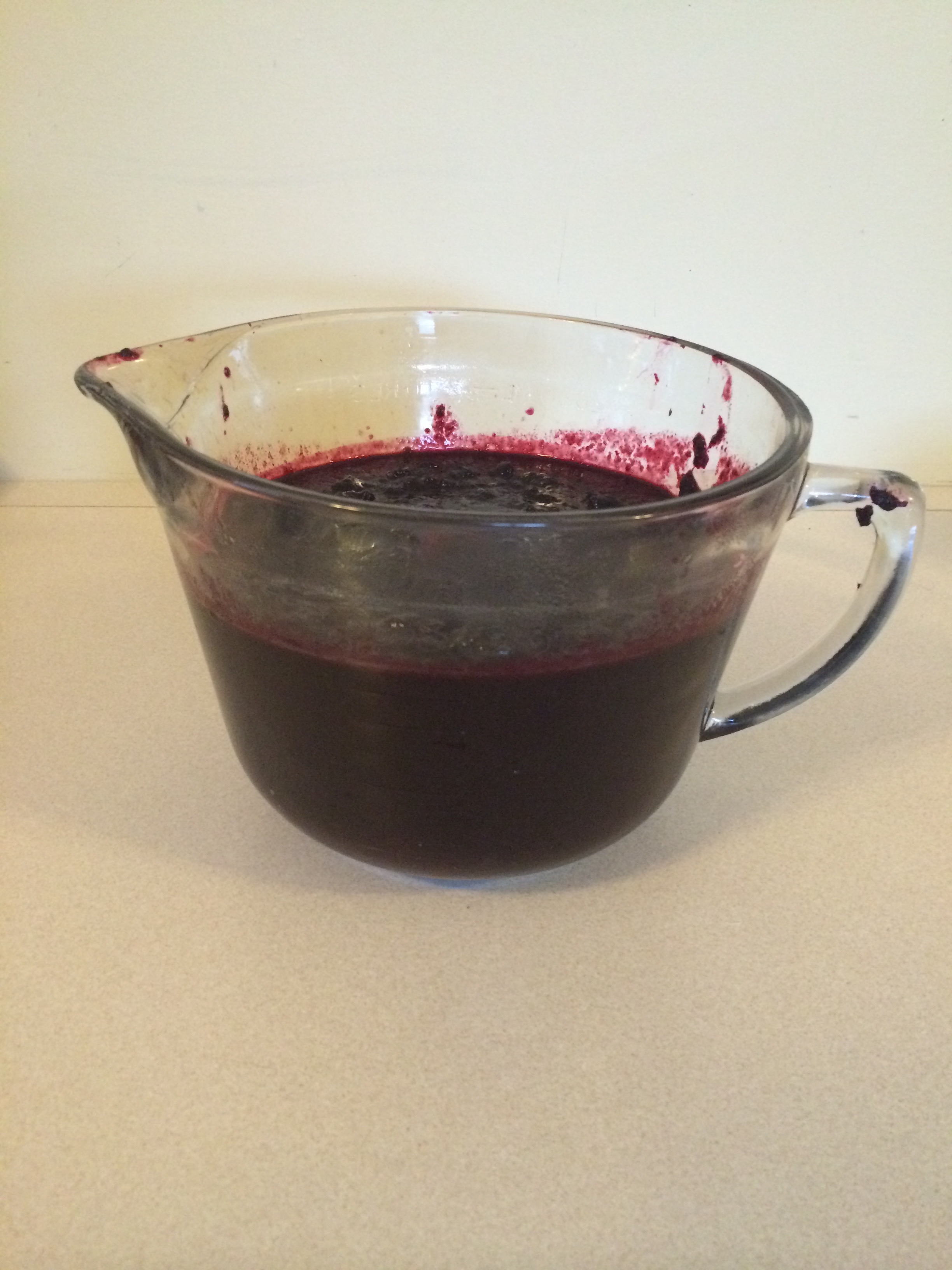
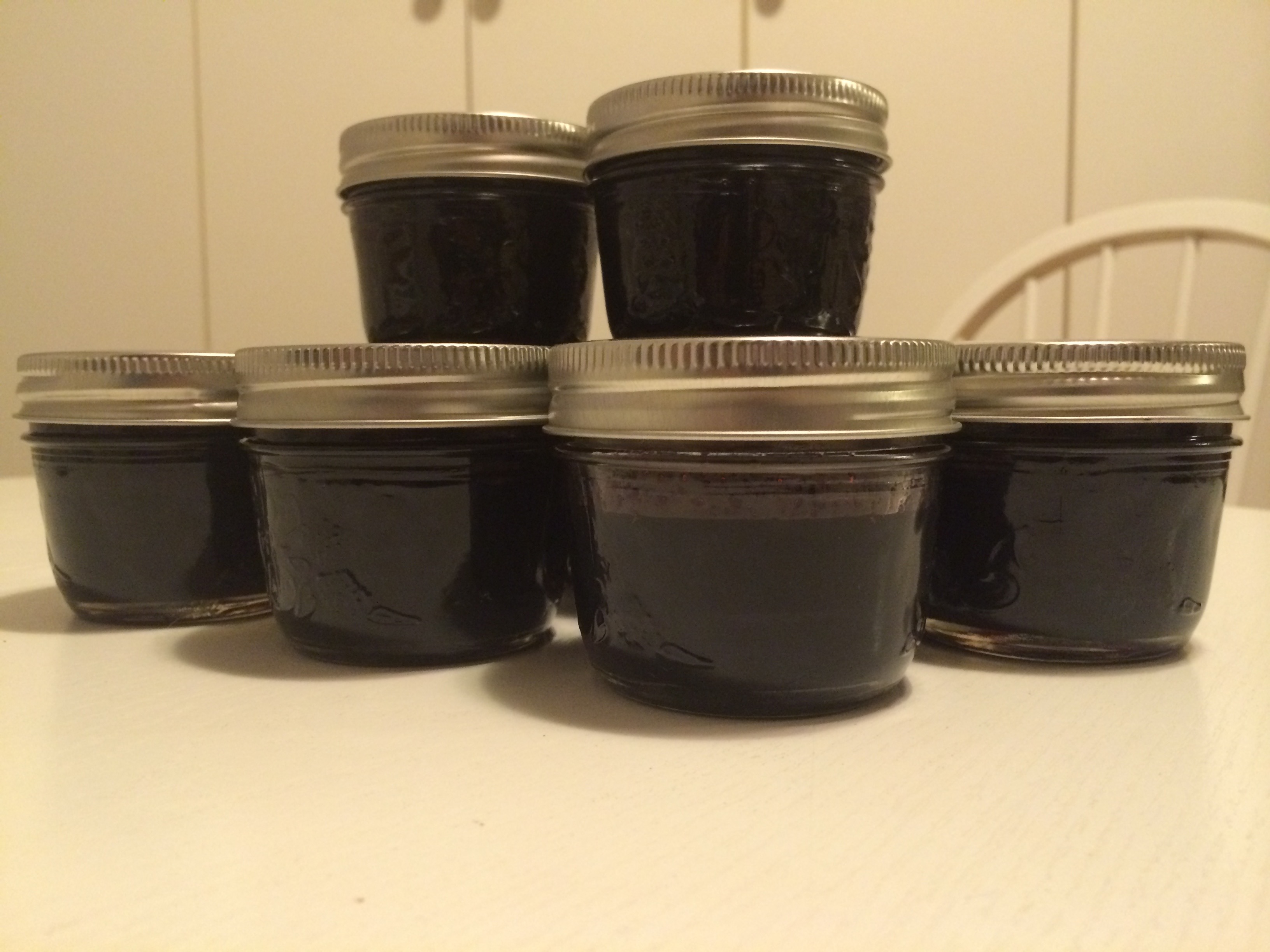
Yes, I was really up at tree. I was on a 12 foot ladder borrowed from a building nearby. I was harvesting fabulous tiny cherries from the trees growing wild between the road and a parking lot about 1.5 kilometres from my home. These little black cherries are so intensely flavoured compared to cultivated ones! I continued picking until I had about ten litres, my dog Taylor patiently waiting below. They were too small to use a cherry pitter on, so I boiled them for a few minutes, and after they were cool, put them through my hand crank food mill. I ended up with about four litres of very flavourful puree. I made a big batch of delicious jam with most of it, and then decided to try my hand at some fruit leather just using honey instead of sugar. It took about five days to dry enough, but it was worth the wait.
Me: I can hardly wait for MY jars of jam to be personally delivered!
Okay we just got a little taste of what it’s all about. Bill is a busy guy but we spoke about collaborating on more food posts with stories & photos from his adventures in foraging. Stay tuned…
Vancouver dining with a view and a twist. This is what happens when you mix West Coast influence with inspiring Peruvian and Japanese cultures.
When I go out for lunch or dinner I prefer to order something I’m not likely to make at home. Ancora restaurant (previously “C” directly across from Granville Island) fit the bill perfectly. *I also take into account restaurant patios that accommodate dogs adjacent to your table.
At Ancora the cuisine’s manifesto hinges on sustainable seafoods, locally sourced and international ingredients, while also drawing inspiration from the Pacific Northwestern surroundings.
Aside from one glass of wine here is what my friend and I ordered on a sunny afternoon last week…
Starters:
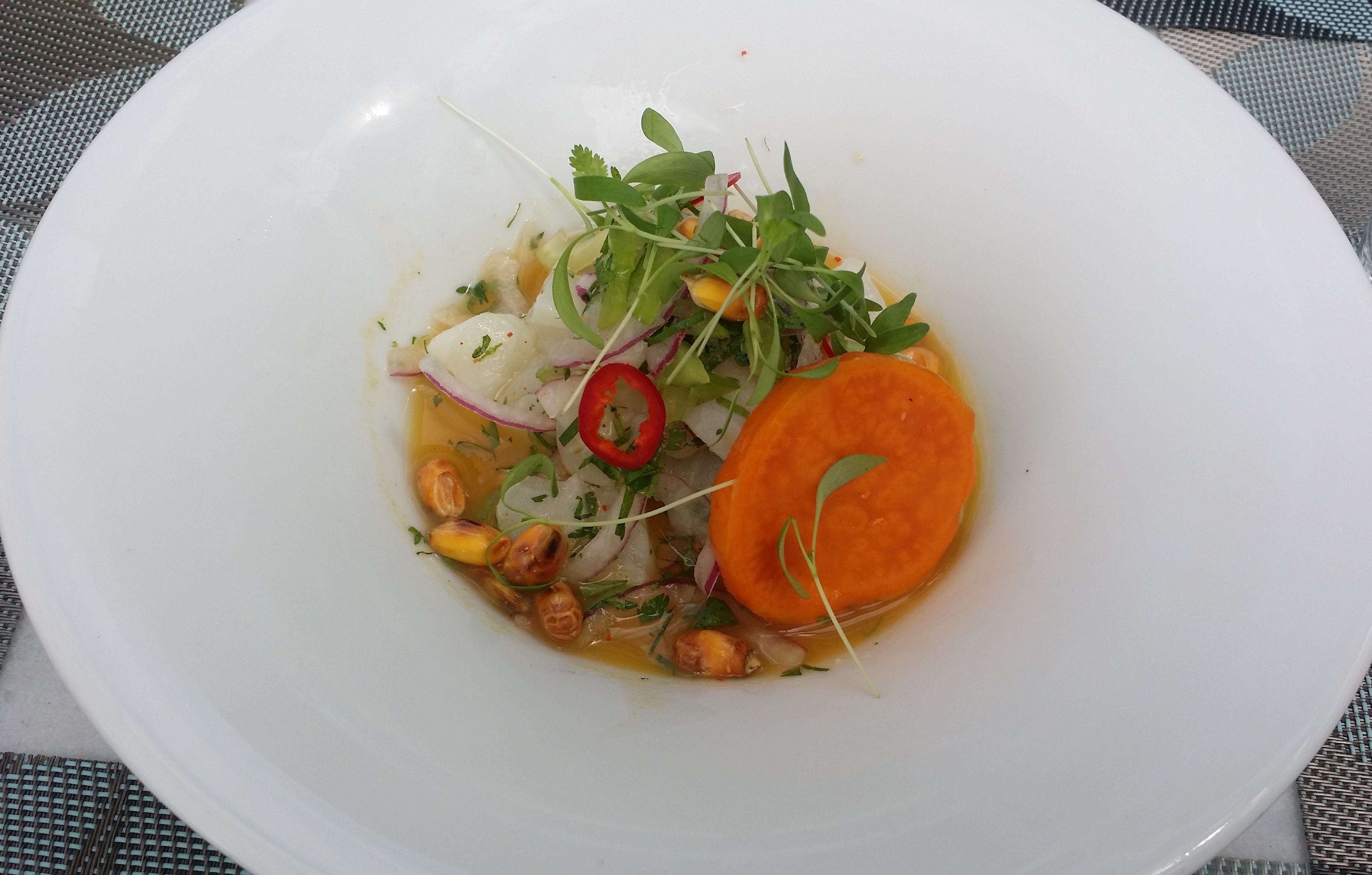
Halibut Ceviche:
with celery, red onion, cancha, yam, cilantro, aji, amarillo tiger’s milk. Not sure who is milking the tiger.
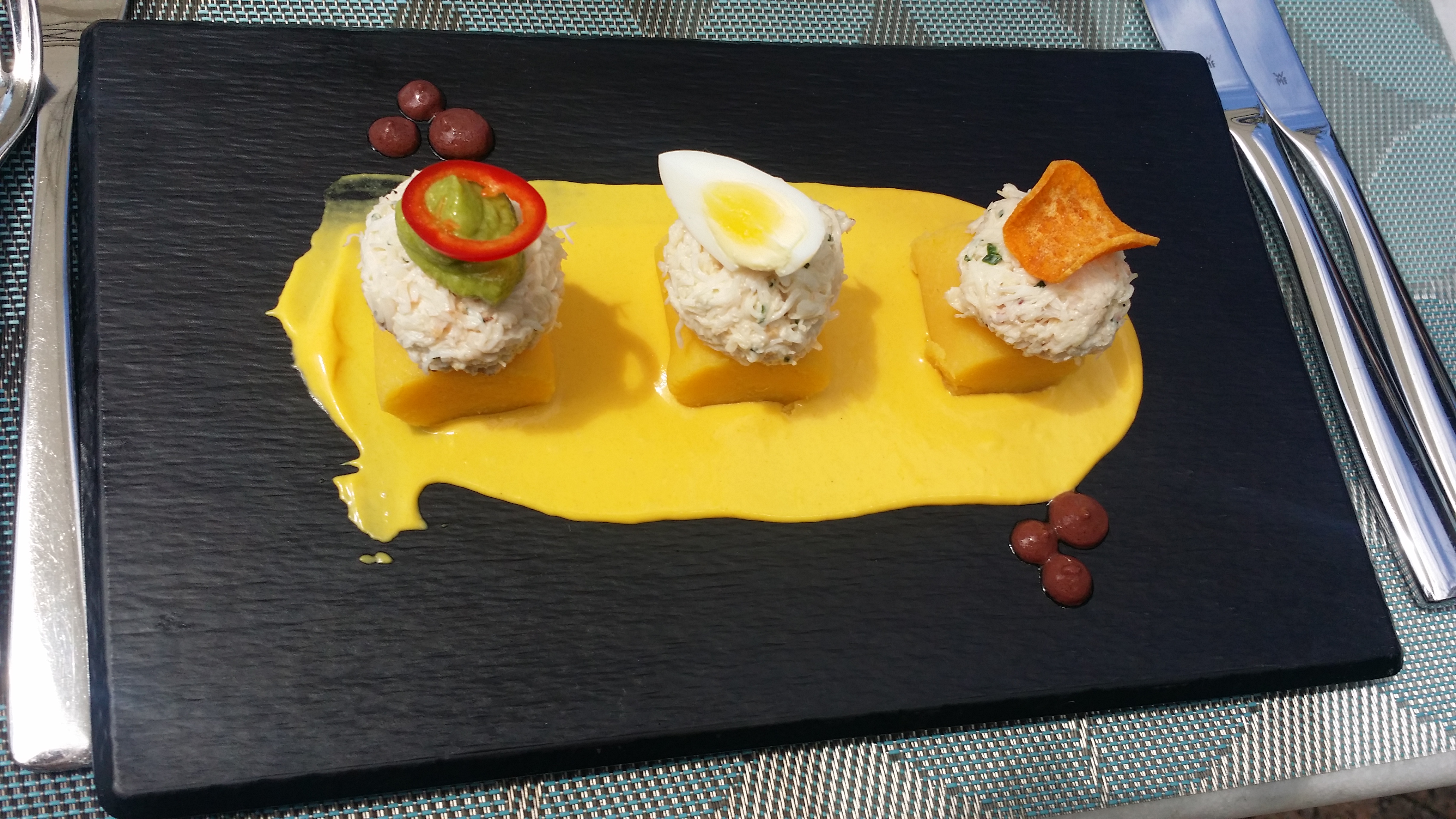
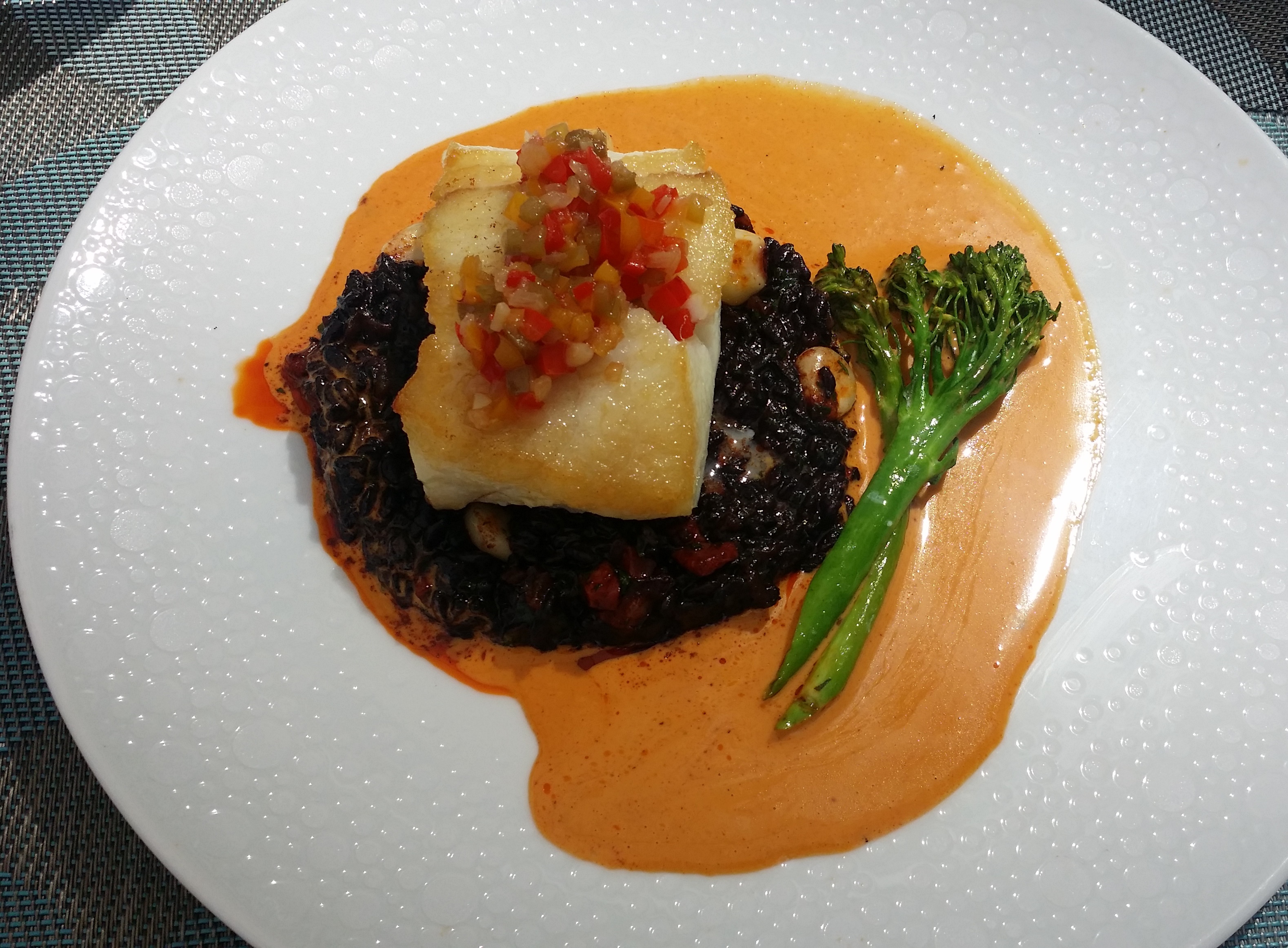
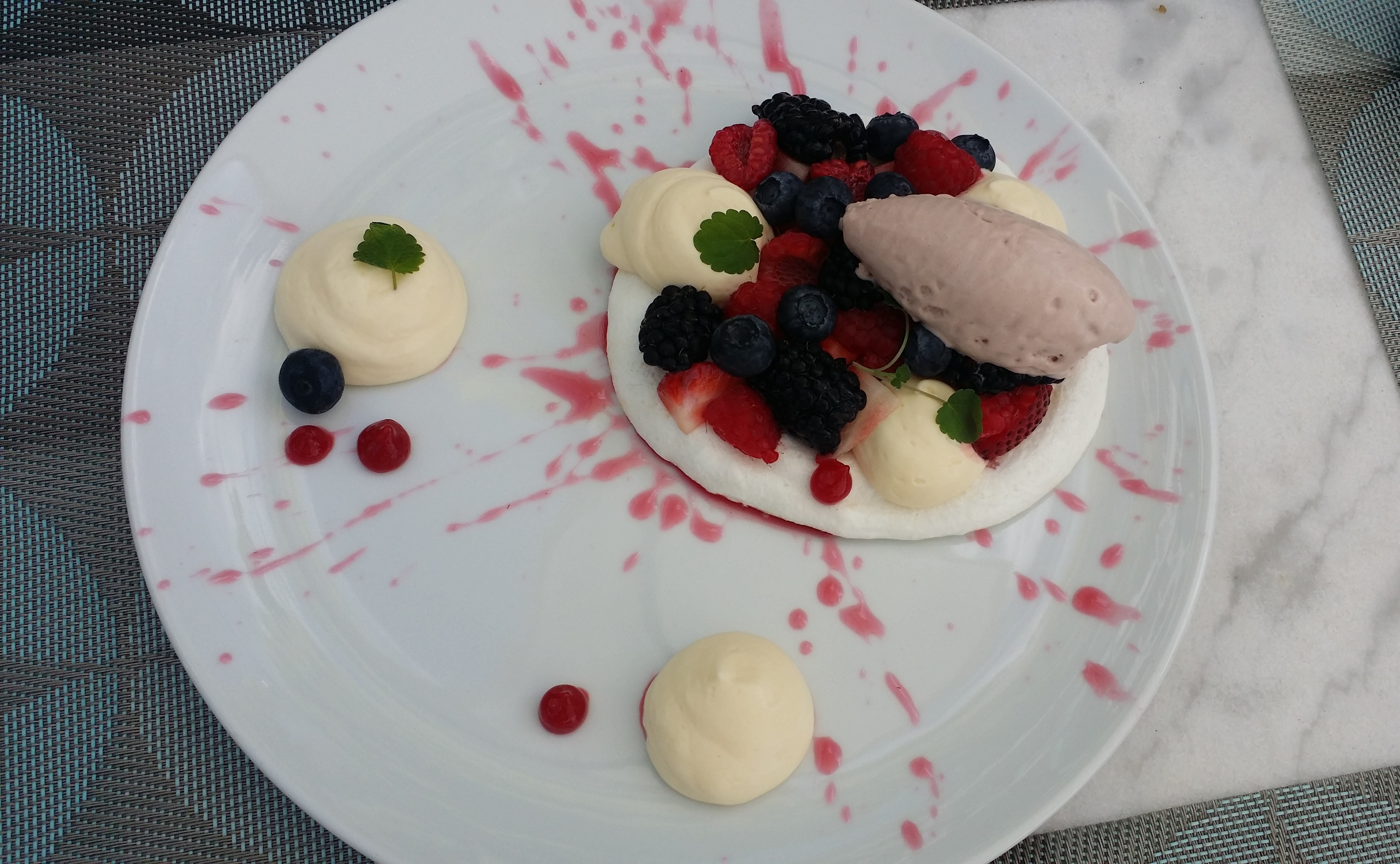
meringue, lemon cream, fresh fruit, raspberry ice cream.Wonderful View, Good Service, Amazing Presentation. I loved the ceviche and the ling cod. The sauce was delicious. The sauce the crab was served on was unfamiliar and likely a developed taste. If you like meringue you’ll like the pavlova. My friend loves meringue – I don’t. The lemon cream, berries and ice cream were very tasty. The beef short ribs seco was not a hit. The ribs were grizzly but the salsa criolla was quite good. You’re better off sticking with seafood here. Overall it was a very pleasant afternoon taking in the scenery, relaxing and trying out a new culinary experience. And of course the company and conversation was most excellent. $$$$
*There is a rule in Vancouver that you cannot bring your dog inside the restaurant patios. They must be outside the gate and not left unattended.
This is the first time that I’ve struggled with what to write about for my food post. Pretty sad right? This coming from the woman who loves to cook, owns tons of interesting cookbooks and has tried almost everything and likes to be creative in the kitchen. This coming from someone who embraces food from every culture, has made spices from scratch and then questioned why on earth afterwards.I just don’t want to throw any little thing at you for the sake of posting something. The recipes I post are ones I’ve made or at least appeal to me that I’m about to make. And to be honest I’ve been cooking very simply lately and you know what…it’s great! It just doesn’t make for a fantastic post so maybe I’ll just talk about food in general. No, no don’t leave yet. Let’s discuss.
Quick cooking rarely comes from a recipe so much as it does from intuition and time spent mulling around in the kitchen. So…
Instead of covering food in fancy sauces sometimes it’s nice to really taste the food itself. I’m not so sure a simple cookbook would be a best seller but I do think people are going back to basics. It feels healthier too. The days of Julia Child and her extravagantly rich sauces are lessening at least for me. For now. Almost to the point of being boring but what I’ve discovered is that not only is it a breeze to make something with less fuss, but the taste is fresher. Anything good does not require covering up. Let’s make one thing clear, simple doesn’t have to mean bland. For instance, if you steam fresh vegetables like carrots which are naturally sweet you really don’t need to add anything else to them. Maybe a squeeze of lemon and that’s it. Taste the vegetable itself. Also, it’s summer so we want things easy breezy where salads and barbeques are major. With steak you can barbeque just using salt + pepper but if you want to add more zing just add crushed fennel & smoked paprika along with s+p. You only need a few good quality basics. Cooked properly with variety and colour on the plate is all it takes to make a meal more appealing.
On another note, I recently planned a surprise birthday party for my husband who hates surprises. I really had to give some thought as to where to book a restaurant (it was on the same day as Fathers Day) for 10-12 people where everyone could enjoy something from the menu, be reasonably priced and have ambience. Not so easy. Anyway, I first chose a new trendy place which incorporated unusual food pairings. But when I looked at their website it seemed almost too elaborate…and I think that men in general prefer a “real” meal instead of something showy. So I changed it to another restaurant – something a little less formal where everyone ended up feeling relaxed and satisfied. Luckily, no complaints. Except for the friend (and her friends) who arrived late.
They were celebrating Fathers Day having dinner at another restaurant – one that was on my Foodie list of places to eat. I heard wonderful things and have been meaning to go for ages. Well….they all complained about the portions being way too small and in general were disappointed in the food considering the cost. And they complained about it while filling up their plates with our leftovers (we ordered too much) as well as ordering more food. Which brings me to my next question…
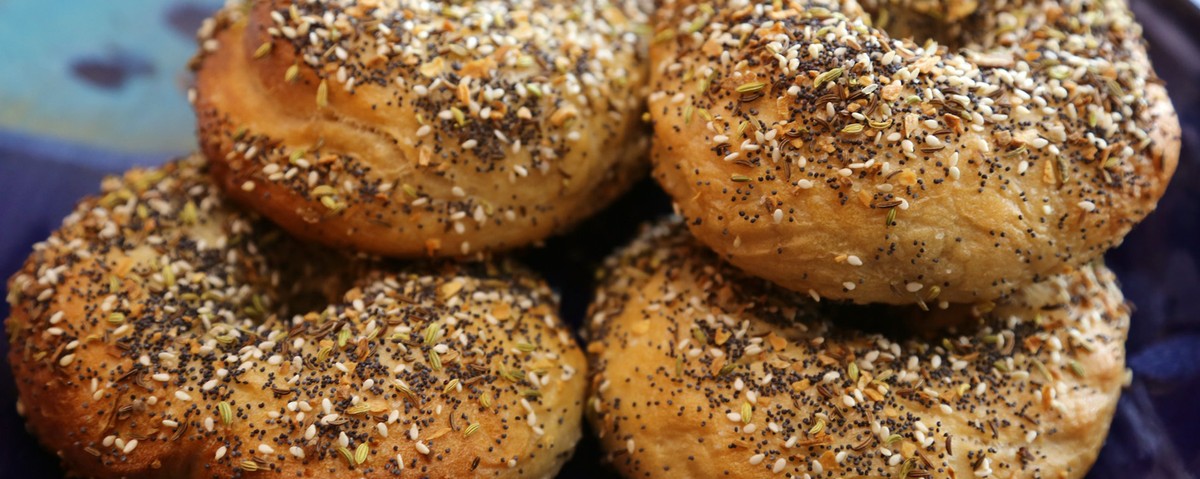
You know good bagels especially if you’re from Montreal or New York.
Making homemade bagels takes a little bit of patience, but is so worth it when your kitchen smells like heaven—and you get to eat them.
Ingredients:
5 cups flour (preferably bread flour)
1 teaspoon yeast
2 tablespoons sugar
2 tablespoons honey or *barley malt syrup
1 1/2 tablespoons salt
2 cups of water
Directions:
In a standup mixer fitted with the dough-hook, combine the yeast, and 2 cups water. Give it a quick stir to get the yeast excited. Add the sugar, salt, and honey and stir.
Slowly add the 5 cups flour and mix for 5 minutes (stopping to scrape down the sides if need be). After 5 minutes, the dough should be tacky but not sticky. Drop the dough ball into a lightly oiled bowl and cover the bowl with lightly oiled cellophane and set it in a warm place to rise for 2 hours.
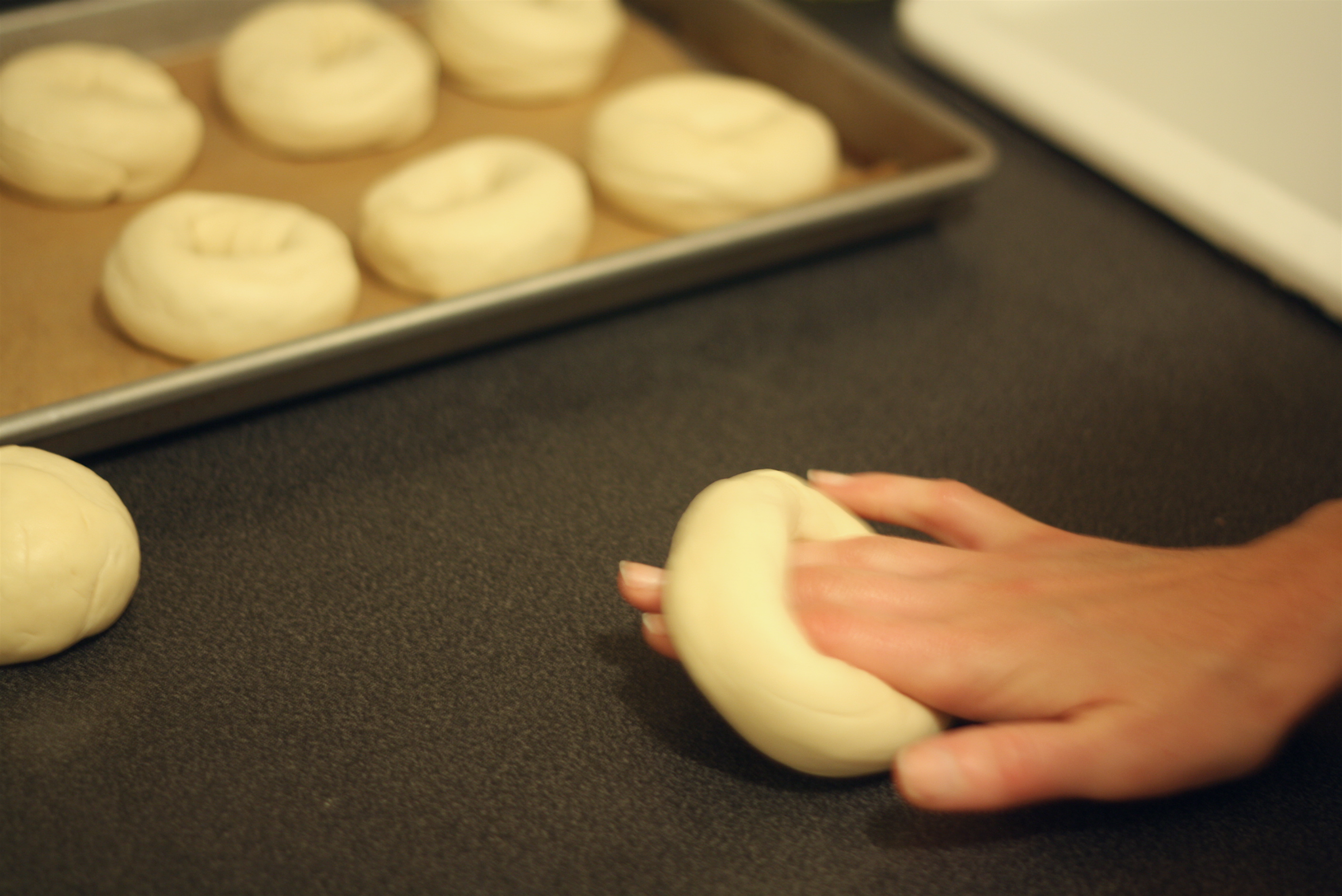
After 2 hours, the dough should have doubled in size. At this point, you dump your dough onto the counter and either pinch or cut the dough into 12 approximately equal-sized pieces. Roll them into balls and leave on 2 Silpat or parchment-lined cookie sheets, topped with a lightly damped towel, for 20 minutes.
They will have puffed a bit and now it’s time to poke the hole in the middle. Poke your finger through and stretch a 2-inch hole. Throw ‘em back down on the cookie sheets and let ’em rise for 20 more minutes.
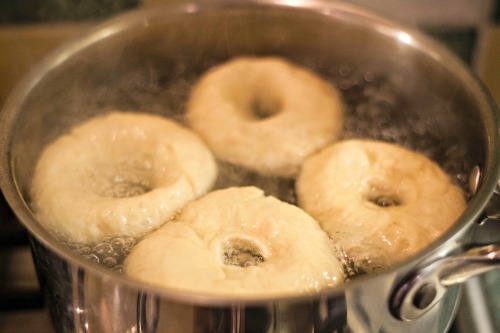
Meanwhile…..pre-heat your oven to 500° degrees F and get your ‘everything’ toppings together in a bowl, as well as a large (preferably wide) stockpot 3/4 full of boiling water with 2 tablespoons of honey mixed in. Turn it down to a simmer, and when the bagels have finished their second 20-minute proof, plop 3 or 4 in, making sure not to crowd them. Simmer them in the water for 30 seconds on each side, then place them back on the cookie sheets. Immediately sprinkle liberally with toppings.
Pop the trays in the oven for 5 minutes then turn the heat down to 350° F degrees. Rotate the pans and let them cook for 10-12 more minutes. They should be golden brown and they should smell like heaven.
Everything Topping:
2 Tablespoons poppy seeds
2 Tablespoons sesame seeds
1 Tablespoon dried minced onion
1 Tablespoon dried garlic flakes
1 Tablespoon coarse salt
egg wash:1 egg white beaten with 1 Tablespoon water (brushed overtop to prevent toppings from burning)
If you want to get really creative you can create your own cream cheese spreads – eg: sundried tomatoes mixed into softened cream cheese, etc.
*Malt syrup, a sweetener, gives bagels their characteristic flavour. Barley malt syrup is available at most supermarkets, but if you can’t find it, use brown rice syrup, honey, or agave. Though these are not traditionally used in bagel making, they are completely acceptable substitutions. Some people even prefer the flavour of honey or agave to barley malt, especially fans of Montreal-style bagels, which are boiled in honey-sweetened water.
And remember; you don’t have to be Jewish to enjoy them!
Time: takes about 2 hours. Serves: 12
Source: The Dinner Bell: part of a brunch for the cast and crew of “High Maintenance”
Land of Art, Charm, History, Tradition and Wonderful Wines.
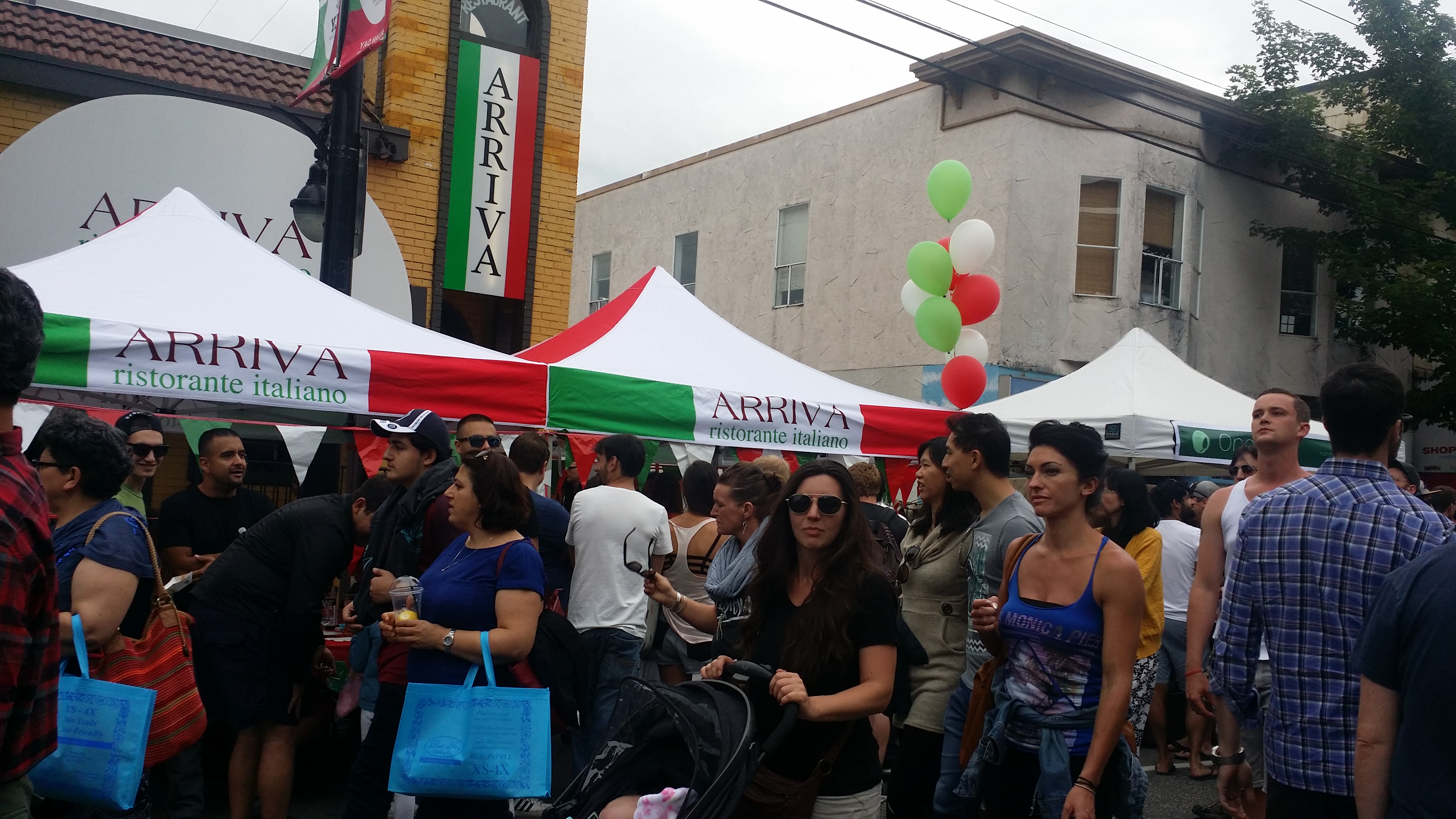
Italian Days on the Drive. Photo: d. king
For three days in a row I enjoyed little Italian touches and some major ones, not in a physical sense but in other gratifying ways.
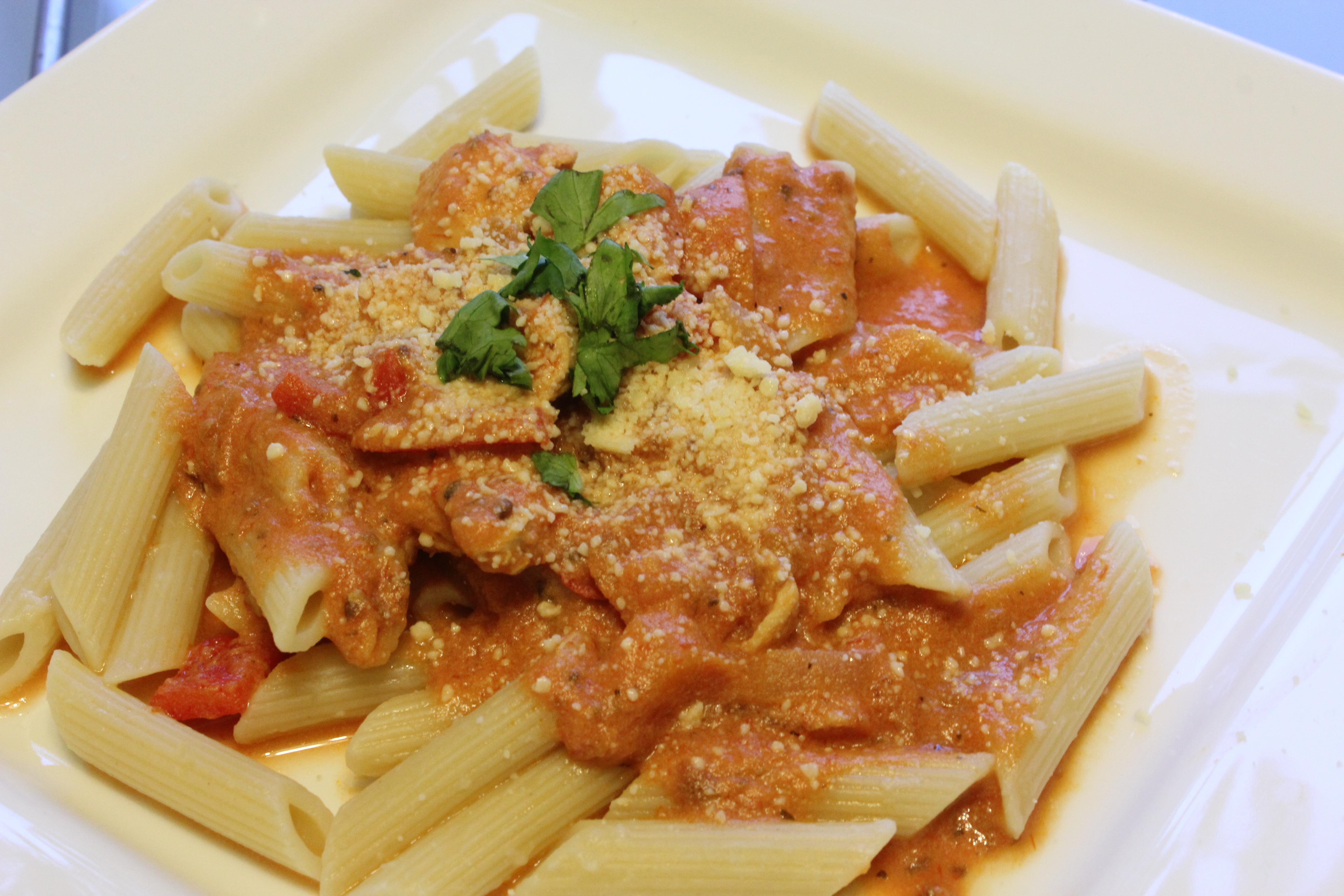
I made a typical Italian Rosé Sauce on Saturday. The kind I’ve been craving for ages; nicely rich & full of flavour. Simple and satisfying.
Because I wasn’t sure if I’d be eating
Italian on “Italian Days” the following day, Sunday. They have Italian Days in many cities across North America where they close the streets to traffic, put up white tents to sell odds ‘n ends by storefronts, have staged live music, many food vendors and crowds where you can hardly walk without bumping into someone and wait in line forever to get something you can normally get on any other given day. Anyway, in Vancouver it took place on Commercial Drive (aka “the Drive” on the East side of town ) in what used to be a mainly Italian neighbourhood but now houses an International variety of cuisine. I think I did notice a few Italians here and there but most of them probably left for the day. It was fun for a few hours especially from where I sat, comfortably under a heat lamp on a side street enjoying a glass of wine while watching the passersby and a plate of calamari. The real Italians were elsewhere, sitting inside one of the many Cafés sipping espresso.
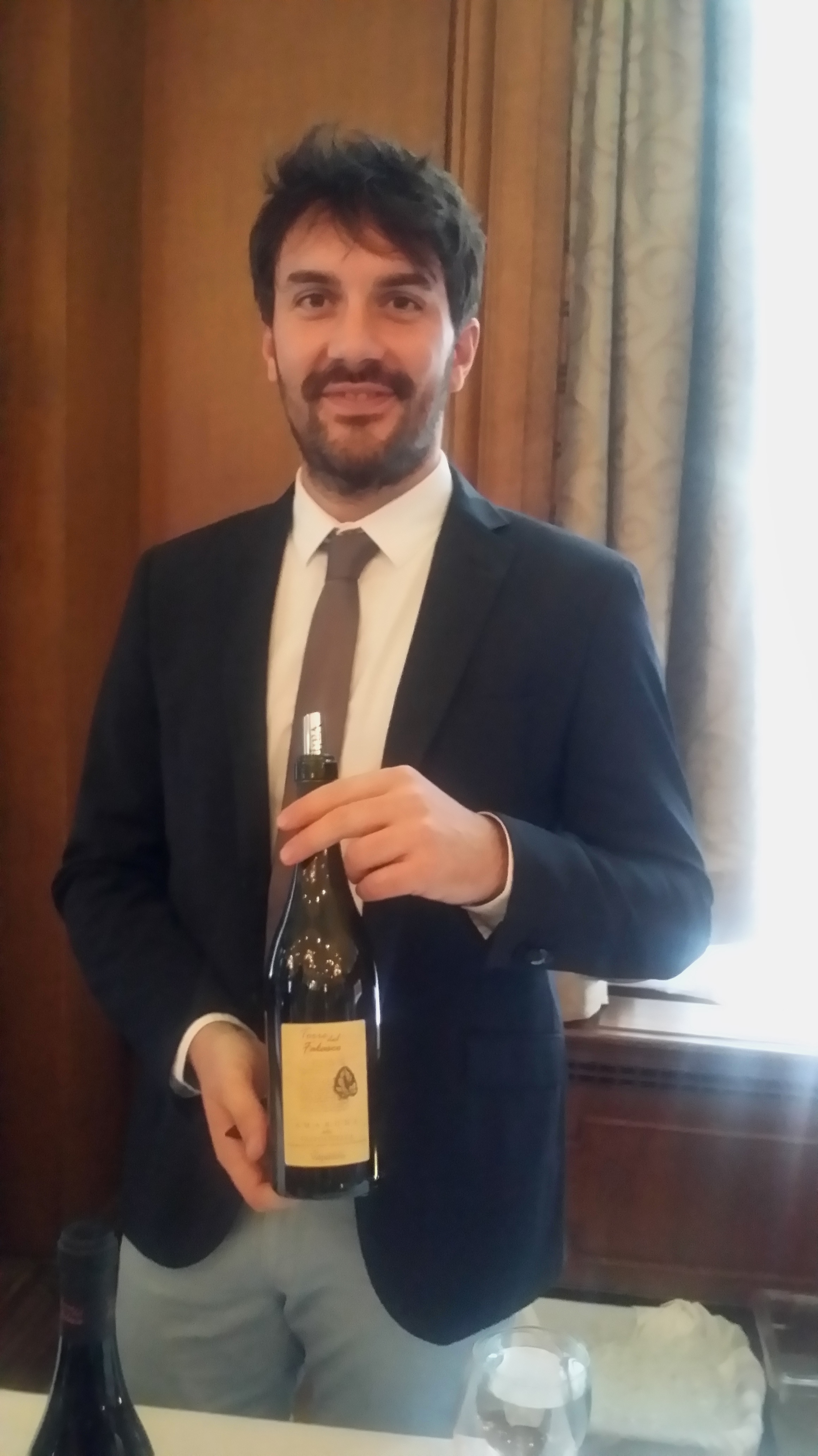
Then yesterday (Monday) I spent part of the afternoon at the Vancouver Club with real Italians flown in fresh from Italy especially to educate the trade about the wonderful ancient wine growing regions for Prosecco & Valpolicella and of course to promote the wines.
A short history of Old World Wine Country:
The VALPOLICELLA territory has ancient origins, natural beauty and artistic value. In Roman times it was known for its fascinating landscape and its tranquility. Ancient palaces and noble villas are among the most attractive historical monuments in the area. During the rule of the Most Serene Republic of Venice, large land tenures were established: country houses turned into splendid villas, decorated by the best artists of that period, and became the place where aristocracy and intellectuals had their cultural gatherings. There are architectural jewels in the valley of Valpantena. Rural and town churches are spread all over the territory, enriching Valpolicella building panorama, made of small villages, courts, towers, capitals, fountains and dry stone walls. All these monuments were built by local peasants, whose technical mastery turned country labour into ART.Valpolicella “Superiore” is made from selected grapes grown in the best locations. It is aged for a year minimum thus obtaining its characteristic ruby-red colour with garnet shades; the nose is slightly ethereal with hints of vanilla. Its flavour fine, harmonious, dry and velvety. Especially fine when paired with second courses of red meat and medium seasoned cheeses.
Prosecco: not just a name.
chilled Prosecco bottles
Prosecco with friends: when I have a special occasion (which almost everything is a special occasion) I like to start the evening off with an Italian Prosecco. I never think too much about it, just that I like a nice tasting, tall cool glass of bubbly. But now I know a bit more about Prosecco Superiore and realize the refinement of the region it comes from. Apparently it makes a difference between various types of soil, climate and the skill of men (yes, men) who have passed down the art of their hand-crafted labour from one generation to the next. It is thanks to this experience that they can cultivate the steep slopes of the hills that they have adorned with manicured vineyards, creating an environment so spectacular that it is now a candidate to become a UNESCO World Heritage Site. So there is a “Superiore” for every occasion in three versions that vary in their residual sugar content. Brut, the driest style, Extra Dry, the most traditional version, and Dry. The sparkling wine also differs according to where it comes from within the region. So the best advice I can give is to try them all and find out which one(s) you love best.
Amarone Amore:
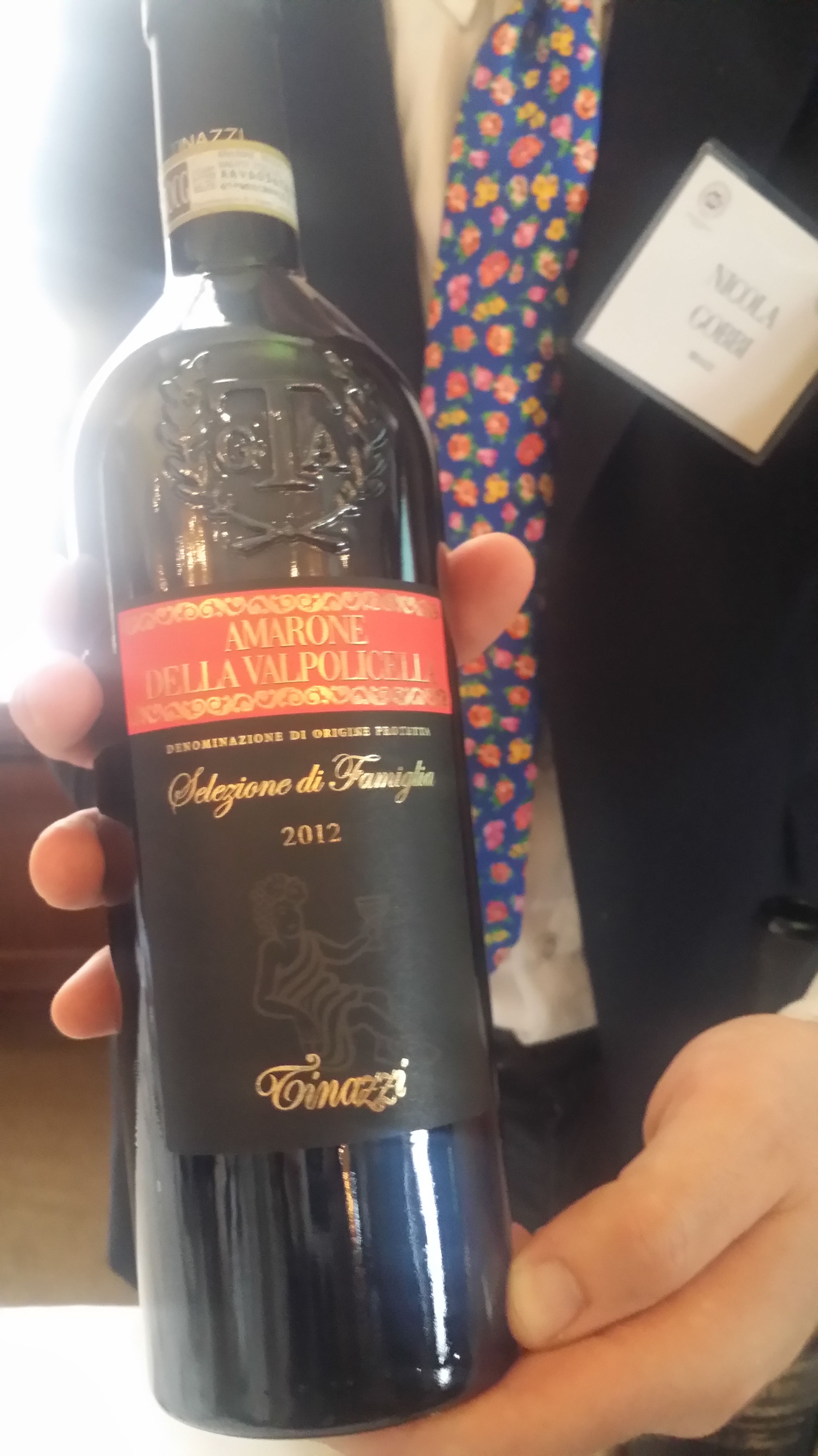
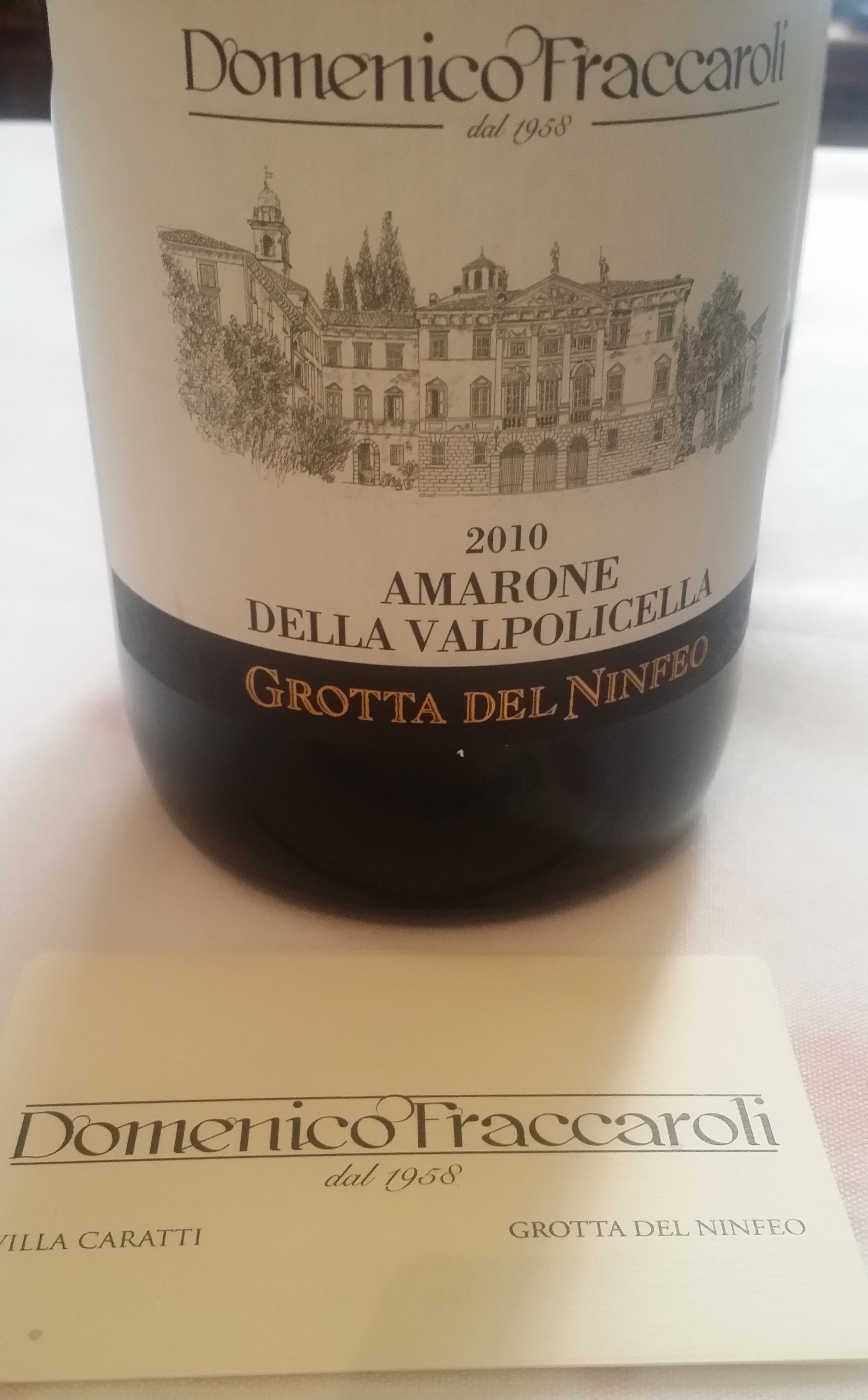
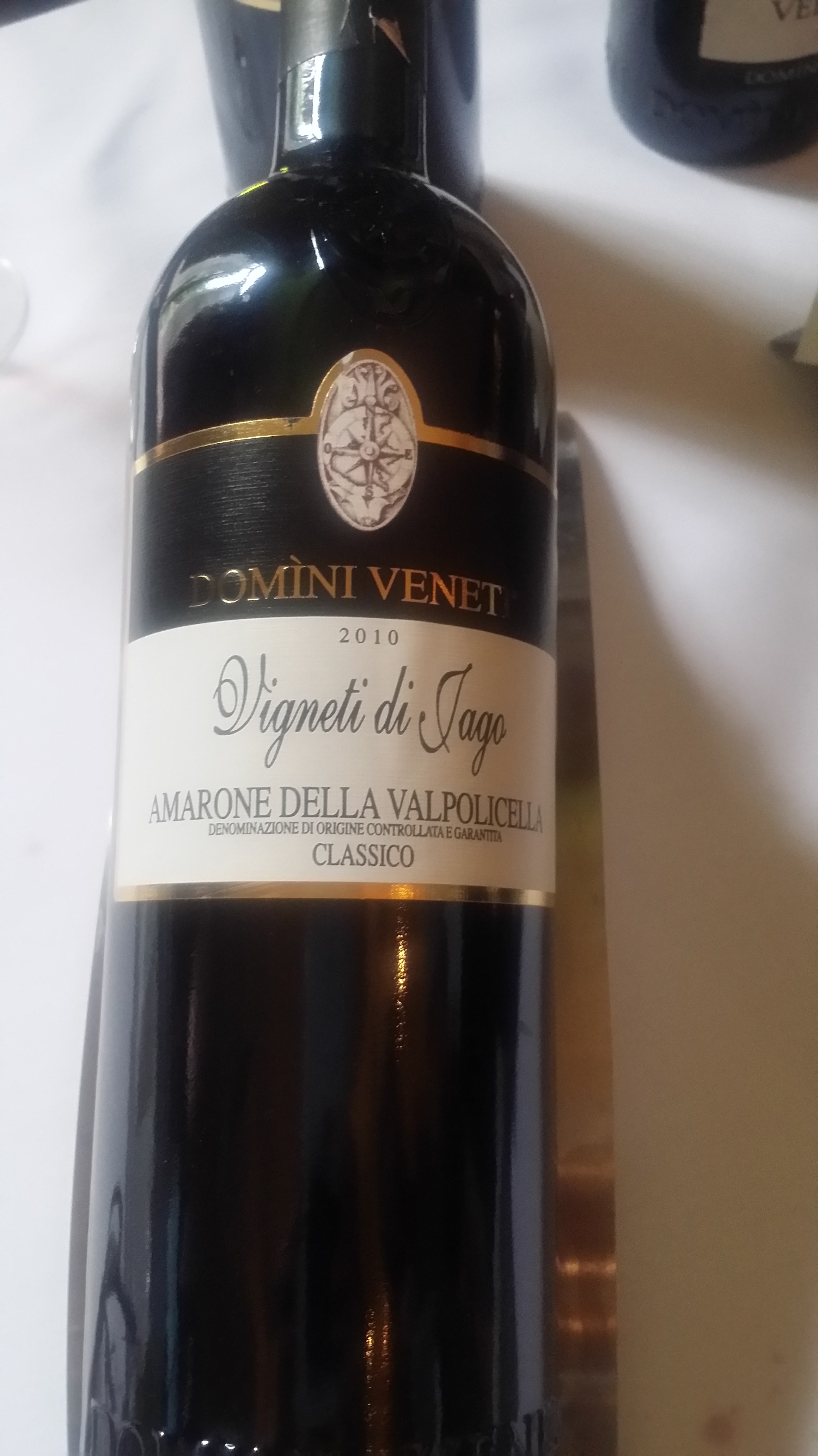
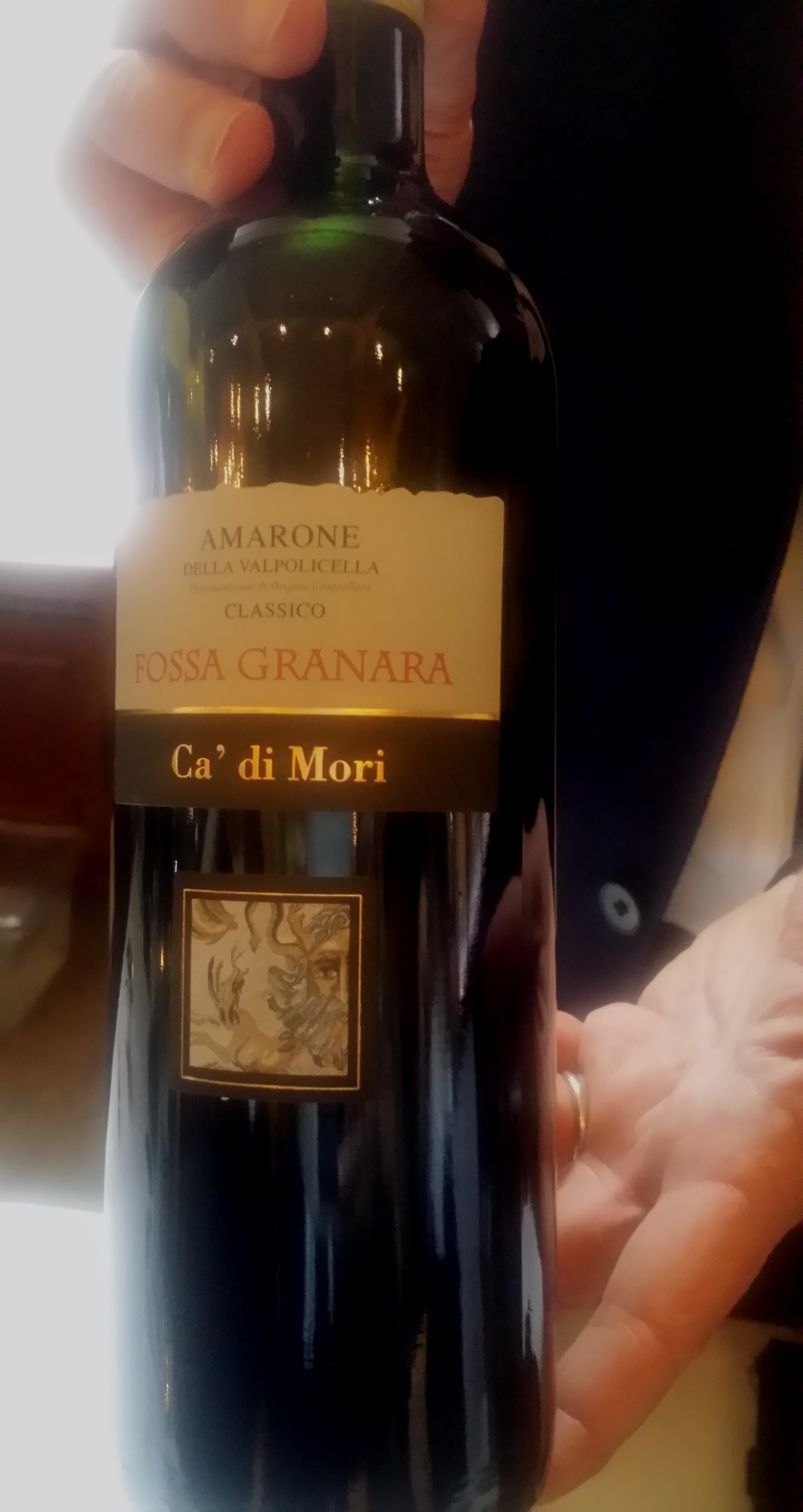
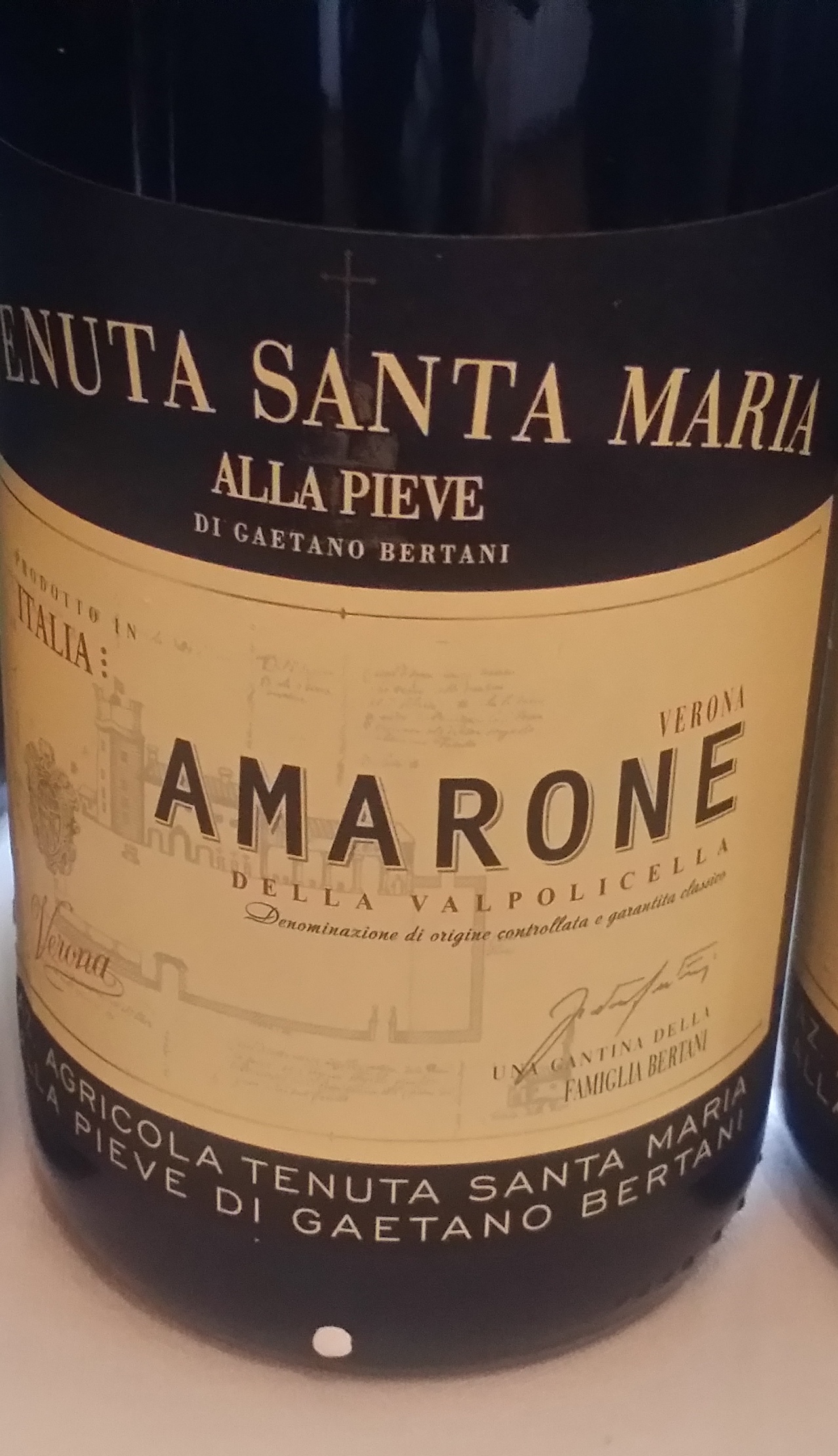
(ps: the individual bottles shown in photos are my picks for this week)
Amarone Wine: The Patriarch of Valpolicella Many wine lovers know Amarone on a first name basis, though relatively few are personally acquainted. This is most likely due to the high entrance fee. Perhaps you’ve seen him lingering at the bottom of a wine list next to other recognizable stars such as Brunello di Montalcino or Barolo and wondered:
What is the story on this dude? Is he worth it?
Yes. Amarone is worth the minimum $50-$60 ++ bottle price. While some wine prices are artificially inflated, there’s a practical explanation as to why Amarone is one of Italy’s top red wines. – and one of mine too. It comes with a good story:To tell it properly, we must begin at the end, with Amarone’s family name: Valpolicella. Like Romeo and Juliet – it is in fair Verona where we lay our scene…
Verona is a jewel of a city in northeastern Italy, an hour and a half due east of Venice by car. The town is home to an immaculate, picture-perfect medieval center, as well as one of the most untouched Roman amphitheaters in the world, where concerts and events are still held.
The 5 Levels of Valpolicella Wine
Tier 1:Valpolicella Classico
Tier 2:Valpolicella Superiore
Tier 3:Valpolicella Superiore Ripasso
Tier 4:Amarone della Valpolicella
Tier 5:Recioto della Valpolicella
Why is Amarone Wine so Expensive?
After harvesting the grapes for ‘Tier 1’ Valpolicella Classico, they are immediately crushed and fermented. This is a light, high acid red wine; it generally sees no oak aging and provides a perfect match for the traditional local appetizers. In Verona, everything tastes amazing when accompanied by delicious Valpolicella.
By contrast, the fruit destined to become Amarone takes quite a different journey before reaching the bottle. He is, after all, the family Patriarch – most wineries will select their older, more mature vines for this wine. Grapes are picked a bit later to ensure ripeness – usually in mid-October. Then, they are left all winter to dry into raisins.
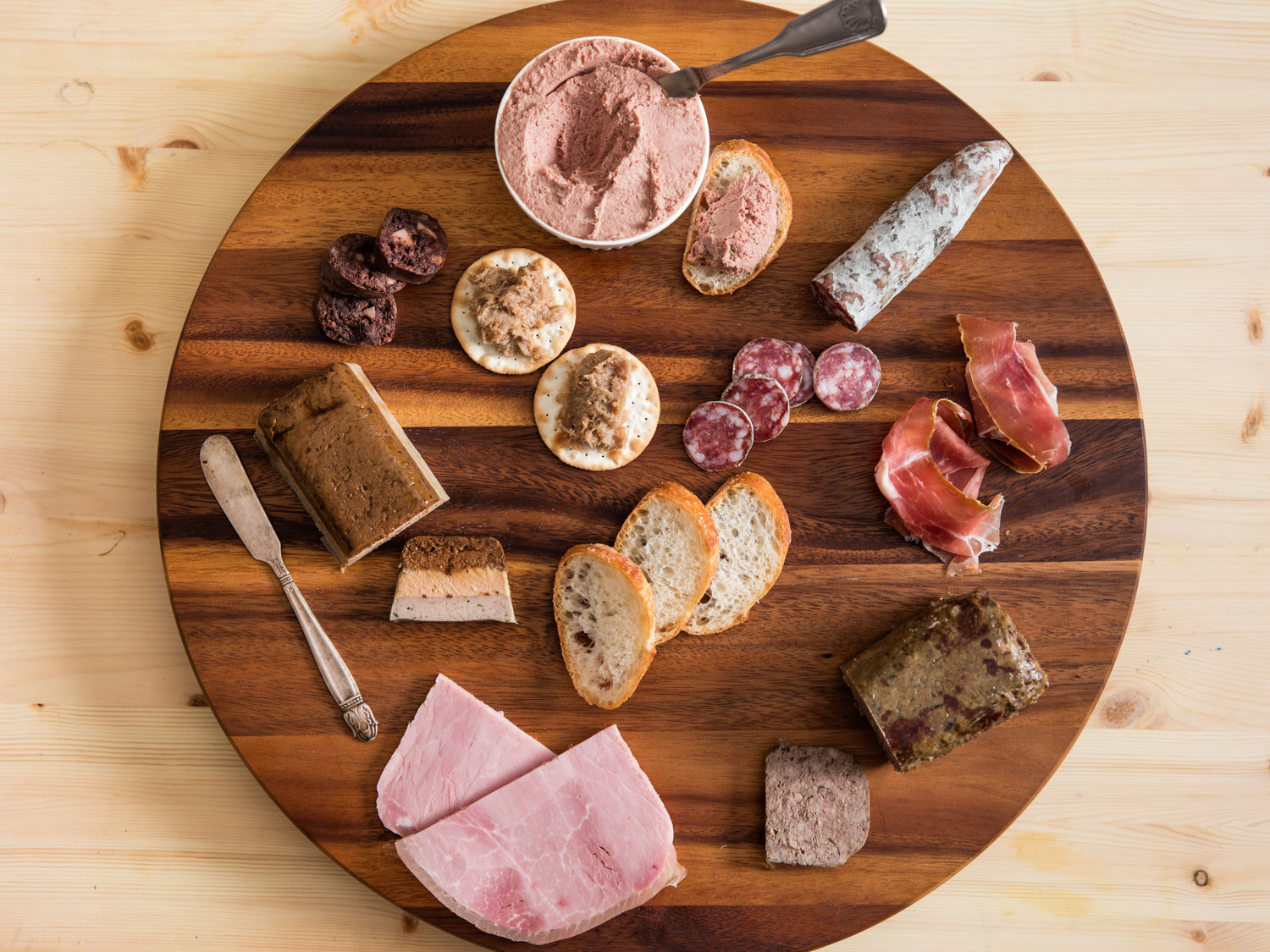
You’ve invited some friends over for an informal gathering and you want to offer your guests something to soak up the wine/cocktails with (because you’re a gracious host and always put out some food be it the tasty but predictable dips, cheese and coldcuts platter)…but this time you want something a little more pleasing than the usual. Maybe a little charcuterie?
Charcuterie is the perfect essential French cured meatsand more.
Done right, the charcuterie board is an awe-inspiring sight. There are the meats, of course, in a smorgasbord of cuts, cures, and flavors. And then there are the mustard and pickles and crusty baguettes, and the fact that we get to eat it all with our hands. In a world where fine dining typically comes with dainty cutlery and elegant plating, charcuterie speaks to a different, gloriously primal, kind of indulgence.
But what exactly is French charcuterie? How does it differ from, say, the cured meats of Italy, or the bounty of smoked Delikatessen meats made in neighboring Germany? And what do experts consider the most noteworthy items under the charcuterie umbrella?
The word itself comes from the French words chair, meaning “flesh,” and cuit, meaning “cooked.” It first entered the culinary lexicon in the 15th century to represent storefronts specializing in the preparation of pig and offal at a time when shop owners weren’t allowed to sell uncooked pork. These owners,charcutiers, would hang inventory in their shop windows to draw customers in. It worked: The craft was mastered, and a culture was born.
As for how it’s defined today? Elias Cairo, founder and charcutier of Oregon’s Olympia Provisions, puts it simply: “Charcuterie is value-added meat,” he says, “where something is added, be it salt or heat, to enhance flavor and prolong shelf life.” So, really, charcuterie is an exercise in crafty innovation—resulting from a need to preserve the fruits of a day’s hunt. Smoked meats and fish came first. Cured meats came second. Once processed, many products in the charcuterie canon were covered with melted fat, either butter or rendered poultry fat, to maximize stability and prevent spoilage.
Then again, these methods of preservation are practiced internationally. So what makes French charcuterie so diverse and unique? “The French rely on amazing technique,” says Cairo. “But they’re so good at farming and processing, too, and have such respect for ingredients.” And, when most charcuterie items are little more than pork and a few spices, it’s crucial that each be of the highest caliber. French chefs place such value not only on the end product, but [on] the entire process and where the food comes from.
French charcuterie has always been shaped by regional variety as well, which contributes to its vast inventory. Each region uses its geographic strengths and uses the wealth of ingredients that are readily available in that particular area. The full list of French charcuterie items is long and not at all lean, but there are a few that experts consider classics.
So let’s open a bottle of wine, break into some fresh bread, and dig in.
PÂTÉ
“Pâtés and terrines, broadly speaking, are essentially big sausages cooked in some sort of mold,” Michael Ruhlman writes in Charcuterie: The Craft of Salting, Smoking, and Curing, the book he coauthored in 2005 with Brian Polcyn. Put simply, they’re a mixture of fat, meat, and seasonings that can be ground or puréed.
The grind can vary from coarse to fine, and pork is the dominant pâté meat. But in the US, says Collins, “we have a broad umbrella and use the word ‘pâté’ very loosely.” She talks about her own experience in France, where the structure of definitions is less rigid. But for the American market, which is less familiar with charcuterie products, Les Trois Petits Cochons distinguishes pâtés as coarse in texture, meat-based (from mostly duck, chicken, and rabbit), hearty, and garnished with spices and, occasionally, vegetables.
Pâté de campagne, the most common, is a coarse grind of lean and fatty pork with spices and little, if any, liver. More lavish versions are found baked in pastry dough (en croûte), in a mold (en terrine), or in skin (galantines and ballottines), but, historically speaking, the charcutier’s goal was always the same: “Pâté was created to use up the excess product—offal, trim, fat—from a day of slaughter,” Cairo writes in his book, Olympia Provisions, coauthored with Meredith Erickson.
A typical pâté de campagne comes in the form of a savory loaf, flavored with onions, white pepper, and cognac. It’s a deeply porky product that’s simultaneously light and delicate.
TERRINE
“The terrine category throws a lot of people off,” Collins says. “We tried to keep it as a more vegetable-based or seafood-based category, because what we found in France was [that] a lot of the vegetable and seafood items were termed terrines.” Collins also notes that most of the layered charcuterie items she’s found in France use the term. In Charcuterie, Ruhlman writes that “we use the words pâté and terrine interchangeably. Technically, though, terrine is short for pâté en terrine.”
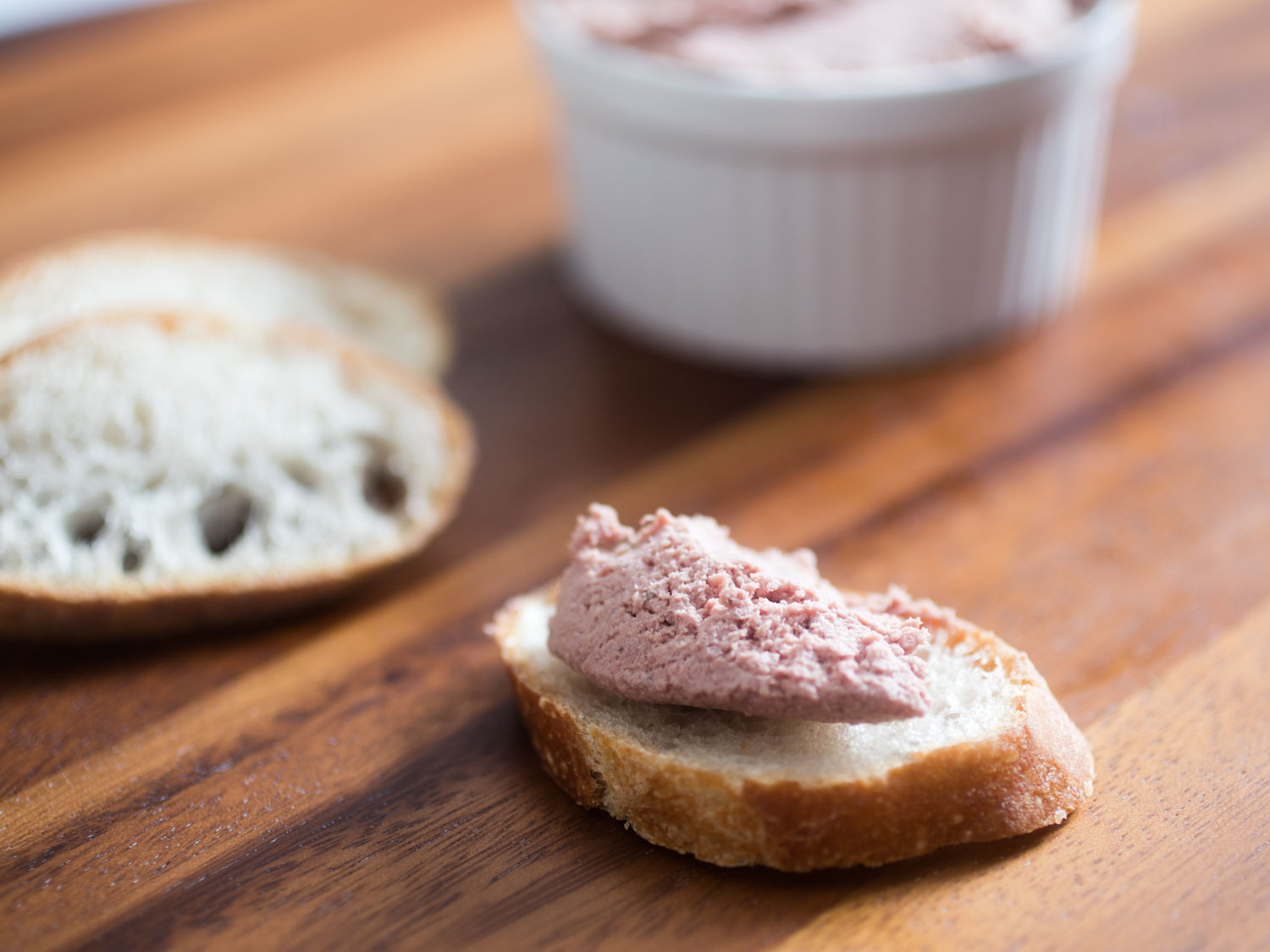
MOUSSE
Mousses, like pâtés, can be made from a variety of meats. But a mousse is much more finely ground, yielding a smooth texture. And, while you’ll find liver in both pâté and mousse, the percentage is typically much higher in mousses, which gives them their famously creamy consistency.
“Pâté and mousse and all the products we make, a lot of people think of them as high-end, which is great, because we use great ingredients, and they’re labor-intensive. But pâtés and mousses are really a labor of love. They utilize items that are essentially leftovers,” says Collins.
The transition from liver to mousse typically starts by soaking livers in cold water. “This will remove some of the really iron-y flavor that liver may have,” Cairo says. For his pork liver mousse, Cairo marinates livers for two days once they’ve soaked, after which they’re puréed in a food processor and passed through a fine-mesh sieve. The rich liver, enhanced with a dose of cream and egg before it’s cooked, is balanced with a splash of port. Chili flakes, white pepper, and coriander add a spiced depth to the spread.
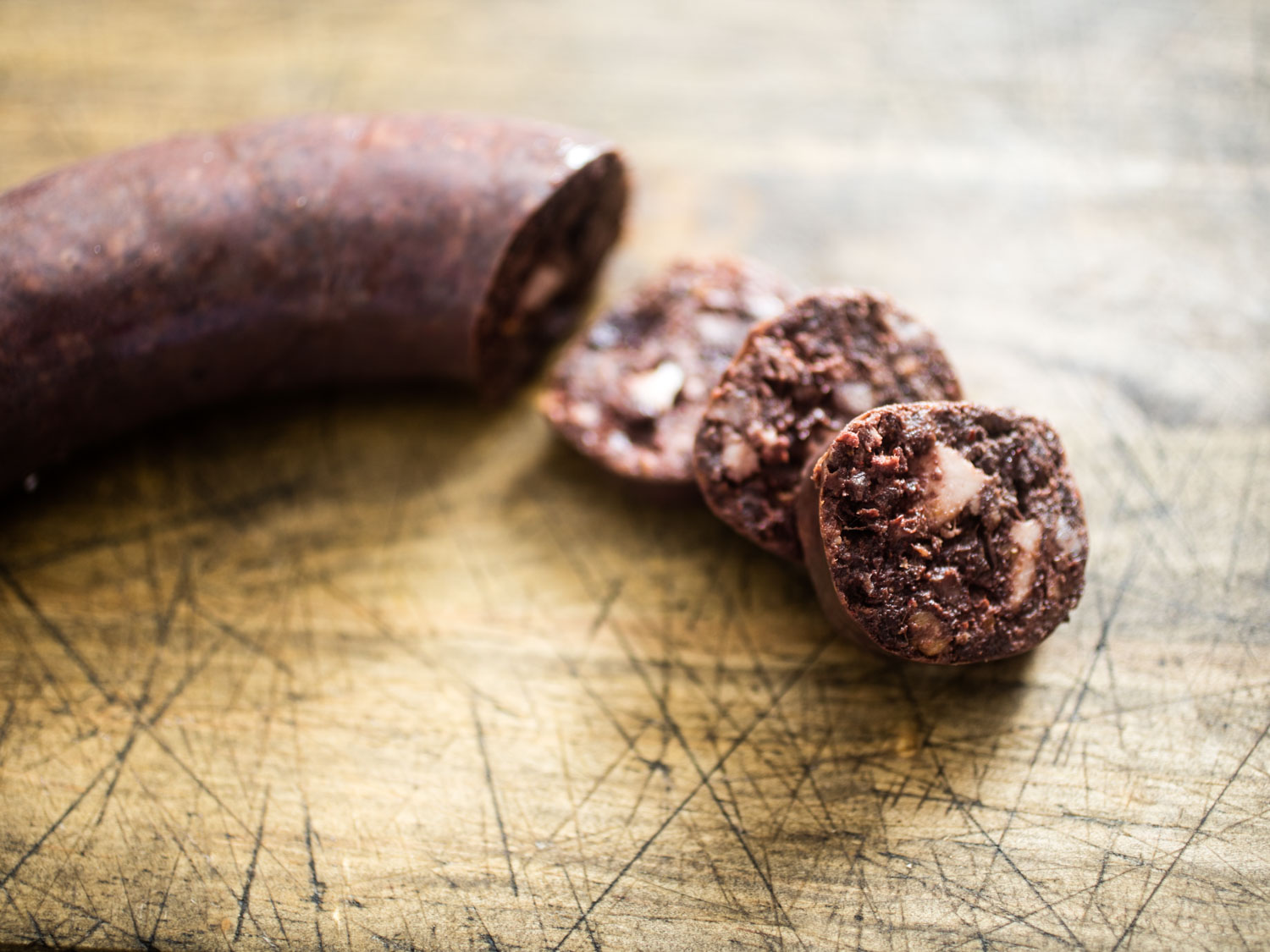
BOUDIN
Boudin means “pudding,” but these savory sausages are made from ground, spiced meat packed in natural casings and then boiled, poached, or blanched. The two most common varieties are blanc and noir (white and black, respectively). Blanc is more of a holiday sausage, usually served around Christmastime, and often seen in Auvergne, in central France, where chestnuts are widely grown. The Fatted Calf stores in Napa and San Francisco, California, make theirs with cream, bread crumbs, and chestnuts that have been braised in broth and bourbon.
Boudin noir is named such for the addition of pig’s blood to the sausage, which gives the final product its signature deep, dark red color. “The French aren’t afraid of anything,” says Heather Bailie, an owner of Fatted Calf. “That’s where blood comes in.” Theirs, like most traditional boudin noir, is a pork product made from a mixture of shoulder, blood, diced back fat, caramelized onions, apples (when they’re in season), and a salty, smoky Basque spice called piment d’Espelette. The sausage mixture is encased, tied off at the ends, and poached in water with onion and bay leaf. The blood solidifies as it cooks, for a delicate, savory sausage with a mousse-like texture.
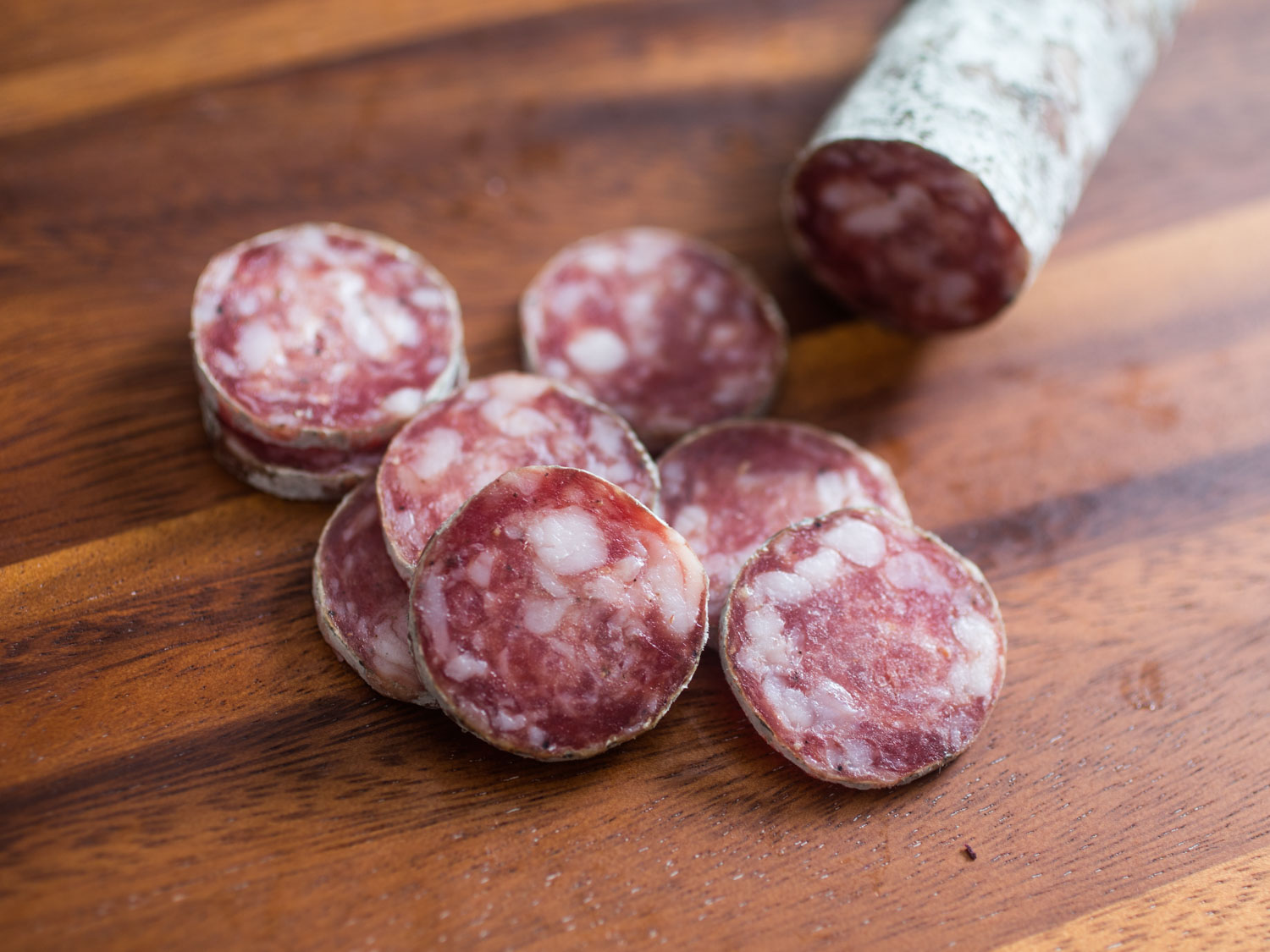
SAUCISSON
The regional variation in French charcuterie is perhaps most evident in saucisson: dry-cured, fermented salami. Dry-curing is simply preserving meat by using salt. As saucissons age, natural, healthy molds develop on the casings that prevent bad bacteria from contaminating the meat. These casings can be removed, but Cairo, who makes four different, regionally inspired saucissons, encourages leaving the natural casings intact to enhance the experience.
Saucisson sec (dry) is the most common of the French saucisson arsenal. “If you go to France and go to a charcuterie shop and buy a dried salame,” Cairo says, “this is the flavor profile you’re going to get.” That profile is dominated by pork, as it should be. But Cairo strikes a balance of that porcine perfection with a hint of garlic and a subtle spice from traces of black pepper, the only other two components of saucisson sec. This type of charcuterie is about simplicity and respect for ingredients.
As you travel around France, though, you’ll discover many variations on the theme. In Alsace, saucisson is traditionally spiced with clove, allspice, cinnamon, and nutmeg, making a deeply savory and satisfying wintry salame. In Arles, where it is at its purest, you’ll find it made with just pork and salt. Meanwhile, eastern France, near the Swiss Alps, is famed for its saucisson aux noisettes, a salami made with pork, salt, and whole hazelnuts from Savoy.
JAMBON
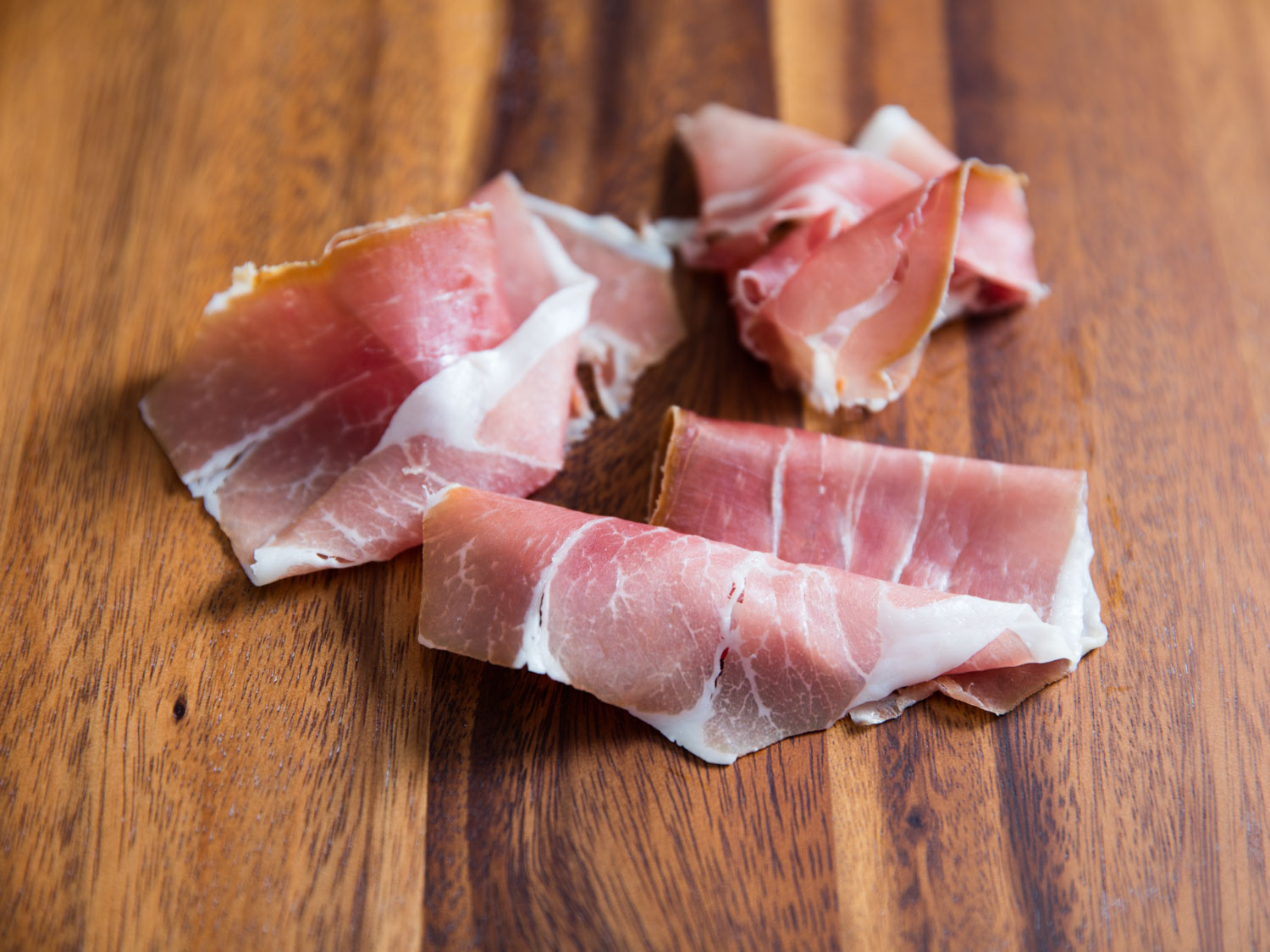
Cooked and cured hams are frequently seen in French charcuterie, but different regions are known for different types. Jambon de Paris is a three-muscle, lean, low-fat ham wrapped in its own skin and cooked in its own juices. It’s flavored with nothing but salt—with little else to distract from that flavor, it’s important that the meat be high-quality. Jambon de Paris is the perfect slicing ham, typically cut thin and served with butter on baguettes, or on croques monsieurs and croques madames.
Jambon de Bayonne is the quintessential French cured ham, the country’s equivalent of Italian prosciutto di Parma or prosciutto di San Daniele. It comes from the city of Bayonne in southwest France, a city cut in two by the Adour River, which sits in the shadows of the Pyrenees Mountains. Jambon de Bayonne is a regionally protected foodstuff under PGI (protected geographical indication)—a designation that covers goods whose production, processing, or preparation takes place in a specific area. To qualify, the ham must be cured with salt from the Adour River basin only. This, along with USDA restrictions on the number of foreign meats allowed for import, is part of the reason Bayonne ham wasn’t spotted on American shores until spring of last year.
Thinly sliced, a piece of Bayonne ham tastes like a cool glass of clean river water. It’s slightly salty, evidence of the Adour River’s proximity to the Atlantic Ocean, and then sweet from traces of pork fat that melt on your tongue. It’s still difficult to find in the States, so your best bet is a specialty meat and cheese shop. The minimum age for a jambon de Bayonne is only seven months, but a longer cure will give it a more intricate and nuanced flavor—the 12-month ham sold at Murray’s Cheese is something truly special.
RILLETTES
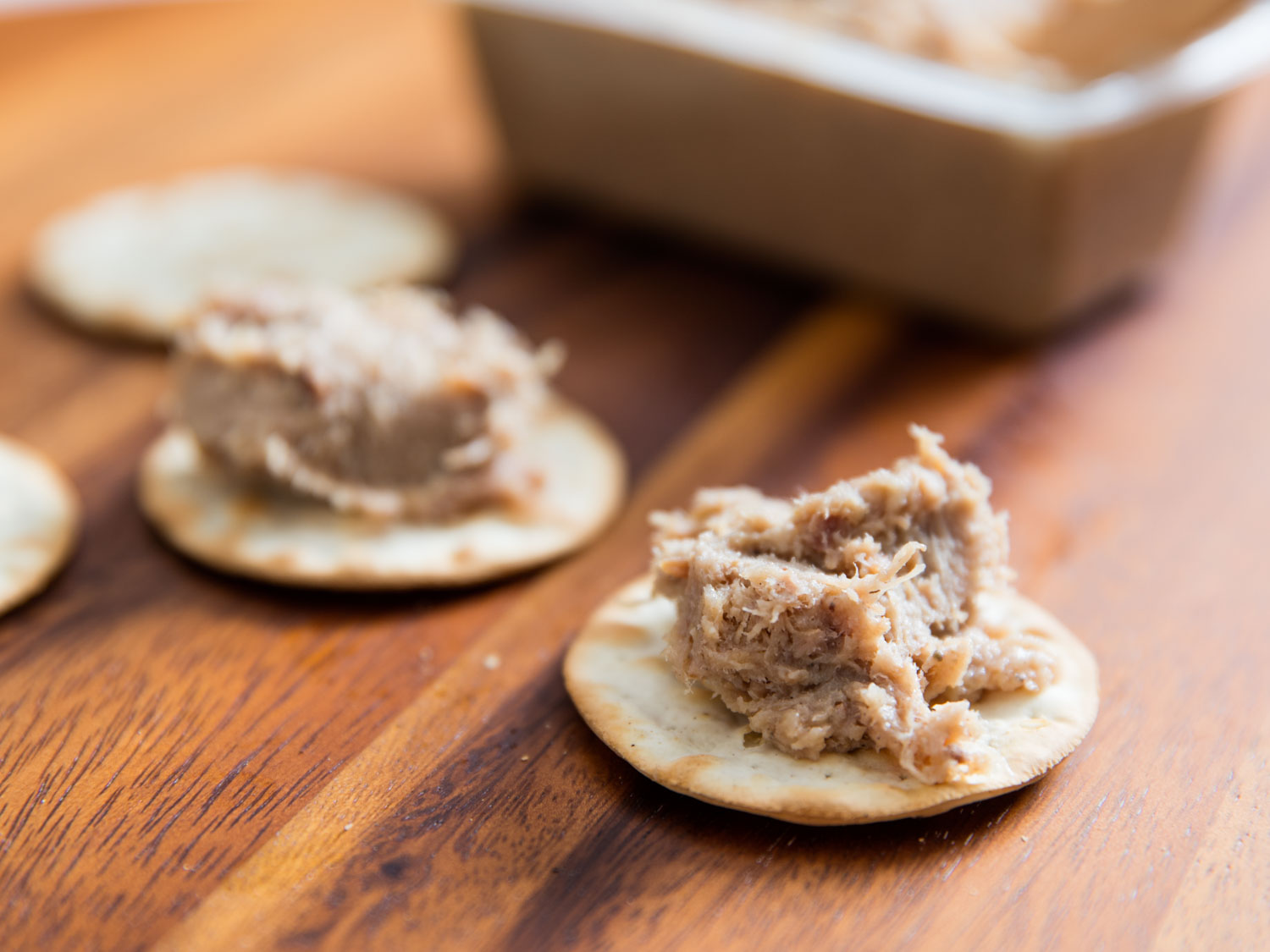
Though rillettes can be made from meat simmered in stock, the most traditional iteration starts as confit—meat that’s been heavily salted and then cooked in its own fat. But where confit is presented whole, rillettes call for finely shredding or chopping the cooked meat and then folding it back into that fat. From there, the rillettes are packed into a small container, making them less unwieldy than an entire confited duck leg, and topped with a final layer of fat, which keeps air out and extends shelf life.
Pork is considered the standard choice for rillettes due to its relative affordability, but duck and rabbit are often used as well. An amazing rillettes will be spreadable, soft, and rich, with a slight chew from the lightly seasoned meat.
So there you have it. I found it interesting to read the history of how the charcuterie is prepared. Then having said that, maybe it’s better off not knowing too much. I’m the girl who does not eat Foie Gras but loved Boudin (which I first discovered and tried in New Orleans) before knowing some of it comes with pig’s blood added to it. Ewww.
Craig Cavallo has been working and eating in New York City restaurants for a decade. His insatiable appetite (and bike) take him from one delicious thing to the next. You can follow Craig’s journey @digestny and on Digest NY, a website he launched in 2012 to share his love of food and the stories told through it. A love affair with wine grew organically when Craig was an opening staff member at Eataly’s wine store. The job lead him to Piedmont where he discovered even more joys. Craig’s from Syracuse, but he lives and writes in Brooklyn.


















 Girl Who Would be KING on Life, Style and INSPIRATION.
You must be logged in to post a comment.