I’m enjoying experimenting with different kinds of salads. While I always love a classic green or Cobb salad, these two are a fresh and tasty change.
If you’re looking for a cool and refreshing salad recipe for this summer, look no further.
This salad is light and sweet, with a perfect balance between fruit and vegetables. Not only is it delicious, but it also features two extremely hydrating foods – watermelon and cucumber, making it perfect for the summer. Serve it up at barbecues or throw it together at lunchtime. Either way it’s a winner.
As far as the herbs, freshness is key. If you don’t have mint on hand, you can easily substitute basil, for a dish that will be just as delicious.
Ingredients
1/4 watermelon, diced into bite-sized chunks
1/2 cucumber, diced into bite-sized chunks
2 ounces feta, crumbled
1 lime
1 Tbsp. extra virgin olive oil
4-5 fresh mint leaves, chiffonnade (cut into thin strips)
freshly ground black pepper
Directions
Toss the watermelon and cucumber together in a large bowl. Sprinkle the cheese on top and season with olive oil, lime juice and black pepper. Sprinkle the chiffonnade of mint leaves over the top of the salad as a garnish.
The colors of the salad look best before tossing, so if you’re making this for company, I recommend serving like this and tossing at the table. Alternatively, you can toss the watermelon and cucumber with the oil, lime juice, salt and pepper and then add the cheese and mint at the end. Or, you can slice larger pieces of watermelon and place large thin slices of feta over top which gives this an elegant look.
For this one you must love cooked beats (not pickled), artichoke hearts, sweet onion & prosciutto (Italian word for ham that is cured & very thinly sliced).
Ingredients:
Sliced cooked beets
Sliced Artichoke Hearts
Thinly sliced sweet onion
Good Quality Feta Cheese (I always ask for the “Barrel” sheep Feta from Minerva’s Greek)
Top with torn crisp Prosciutto. (Cook in frypan on medium-high heat (turn once) until done – should only take a couple of minutes).
Just arrange on the plate to your liking and drizzle with organic olive oil, a splash of lemon juice & balsamic vinegar (I used one with fig & dates). Simply delicious!
Every year millions of dollars are spent by art collectorseager to own the world’s most sought after paintings. However, the most expensive paintings are not necessarily the most famous paintings. The most famous ones are generally owned by museums, which very rarely sell them, and as such, they are quite literally priceless. An overview of the TOP 10most famous paintings of all time, found in museums around the world:
the birth of Venus, Sandro Botticelli
10. The Birth of Venus is a painting by Sandro Botticelli created around 1485–87. It depicts the goddess Venus (or Aphrodite as she is known in Greek mythology) emerging from the sea upon a shell in accordance with the myth that explains her birth. The original location of the painting and its commissioner remain uncertain. Some experts attribute its commission to Lorenzo de’ Medici and the Villa of Castello as the site to which the work was originally destined. Today, the painting is held in the Uffizi Gallery in Florence.
Water Lilies, Claude Monet
9. Water Lilies is a series of approximately 250 oil paintings by French Impressionist Claude Monet. The paintings depict Monet’s own flower garden at Giverny and were the main focus of his artistic production during the last thirty years of his life. The paintings are on display at museums all over the world. The one shown here is displayed at the Metropolitan Museum of Art in New York.
The night watch, Rembrandt van Rijn
8. Completed in 1642, at the peak of the Dutch Golden Age, The Night Watch is one of the most famous paintings by Dutch painter Rembrandt van Rijn. It depicts a city guard moving out, led by Captain Frans Banning Cocq and his lieutenant, Willem van Ruytenburch. For much of its existence, the painting was coated with a dark varnish which gave the incorrect impression that it depicted a night scene, leading to the name Night Watch. This varnish was removed only in the 1940s. The painting is on display in the Rijksmuseum in Amsterdam.
The Scream, Edvard Munch
7. The Scream is a series of expressionist paintings and prints by Norwegian artist Edvard Munch, showing an agonized figure against a blood red sky. The landscape in the background is Oslofjord, viewed from the hill of Ekeberg, in Oslo. Edvard Munch created several versions of The Scream in various media. The one shown here was painted in 1893 and is on display in The National Gallery of Norway. It was stolen in 1994 in a high-profile art theft and recovered several months later. In 2004 another version of The Scream was stolen from the Munch Museum, only to be recovered in 2006
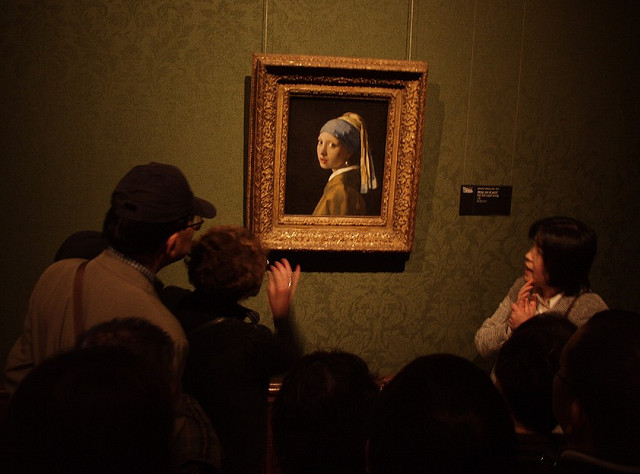
the girl with the pearl earring, Johannes Vermeer
6. Sometimes referred to as “the Dutch Mona Lisa”, the Girl with a Pearl Earring was painted by Johannes Vermeer. Very little is known about Vermeer and his works and this painting is no exception. It isn’t dated and it is unclear whether this work was commissioned, and if so, by whom. In any case, it is probably not meant as a conventional portrait. Tracy Chevalier wrote a historical novel fictionalizing the circumstances of the painting’s creation. The novel inspired a 2003 film with Scarlett Johansson as Johannes Vermeer’s assistant wearing the pearl earring. It has been in the collection of the Mauritshuis gallery in The Hague (Netherlands) since 1902.
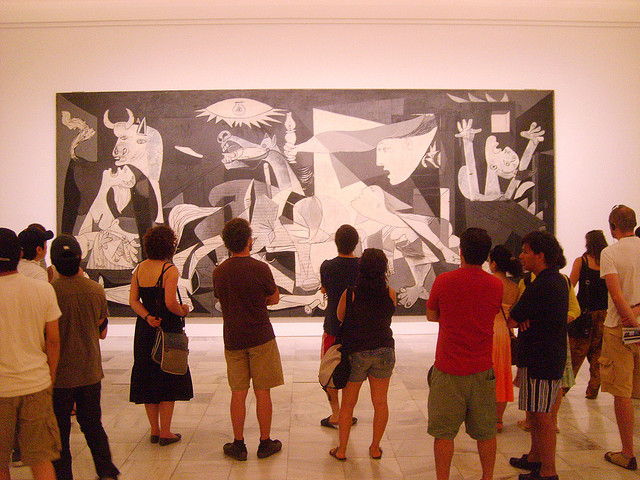
Guernica, Pablo Picasso
5. Guernica is one of Pablo Picasso most famous paintings, showing the tragedies of war and the suffering it inflicts upon individuals, particularly innocent civilians. Picasso’s purpose in painting it was to bring the world’s attention to the bombing of the Basque town of Guernica by German bombers, who were supporting the Nationalist forces of General Franco during the Spanish Civil War. Picasso completed the painting by mid-June 1937. The painting can be seen in the Museo Reina Sofía in Madrid.
The Sistine Chapel, Michelangelo
4. The Sistine Chapel ceiling, painted by Michelangelo between 1508 and 1512, at the commission of Pope Julius II, is one of the most renowned artworks of the High Renaissance. The ceiling is that of the large Chapel built within the Vatican in Rome. Central to the ceiling decoration are nine scenes from the Book of Genesis. Among the last to be completed was the Creation of Adam in which God the Father breathes life into Adam, the first man. The Creation of Adam is one of the famous paintings of all time and has been the subject of countless references and parodies.
The Last Supper, Leonardo da Vinci
3. The Last Supper is a 15th century mural painting in Milan created by Leonardo da Vinci and covers the back wall of the dining hall at the monastery of Santa Maria delle Grazie in Milan. It represents the scene of The Last Supper when Jesus announces that one of his Twelve Apostles would betray him. Leonardo began work on The Last Supper in 1495 and completed it in 1498 though he did not work on the painting continuously. Some writers propose that the person in the painting seated to the left of Jesus is Mary Magdalene rather than John the Apostle, as most art historians identify that person. This popular theory was the topic of the book The Templar Revelation (1997), and plays a central role in Dan Brown’s novel The Da Vinci Code (2003).
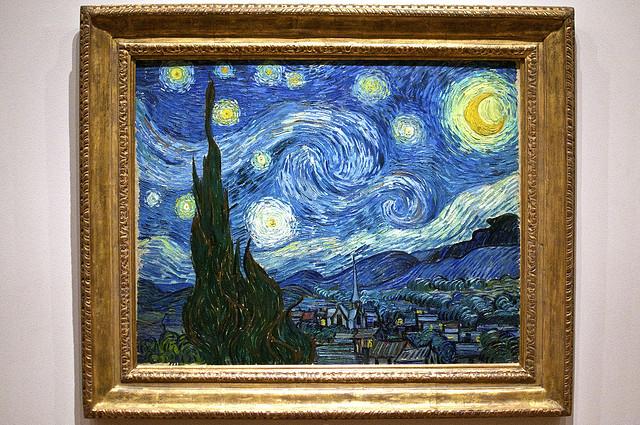
The Starry Night, Vincent van Gogh
2. The Starry Night was painted by Dutch artist Vincent van Gogh. Although Van Gogh sold only one painting in his life, the aftermath of his work is enormous. Starry Night is one of his most famous paintings and has become one of the most well known images in modern culture. The painting shows the village of Saint-Rémy under a swirling sky, in a view from the asylum towards north. The cypress tree to the left was added into the composition. Since 1941 it has been in the permanent collection of the Museum of Modern Art in New York.
Mona Lisa, Leonardo da Vinci
1. The most famous painting of all time, the Mona Lisa was painted by Leonardo da Vinci during the Renaissance in Florence. He began painting the Mona Lisa in 1503 or 1504 and finished it shortly before he died in 1519. The painting is named for Lisa del Giocondo, a member of a wealthy family of Florence. In 1911, the Mona Lisa was stolen by Louvre employee Vincenzo Peruggia, an Italian patriot who believed the Mona Lisa should be returned to Italy. After having kept the painting in his apartment for two years, Peruggia was finally caught when he attempted to sell it to the directors of the Uffizi Gallery in Florence. Today, the Mona Lisa hangs again in the Louvre in Paris where 6 million people see the painting each year.
I’ve had the pleasure of seeing six of these paintings in person. The Birth of Venus (Florence), Water Lilies (Met, New York), The Night Watch (Amsterdam), The Last Supper (Milan), Starry Night (MOMA, New York) & Mona Lisa (Paris).
So, do you have a favourite? I appreciate them all, but if I had to choose it would be between The Birth of Venus and the Girl with the Pearl Earring. Does this mean I’m a girly girl?
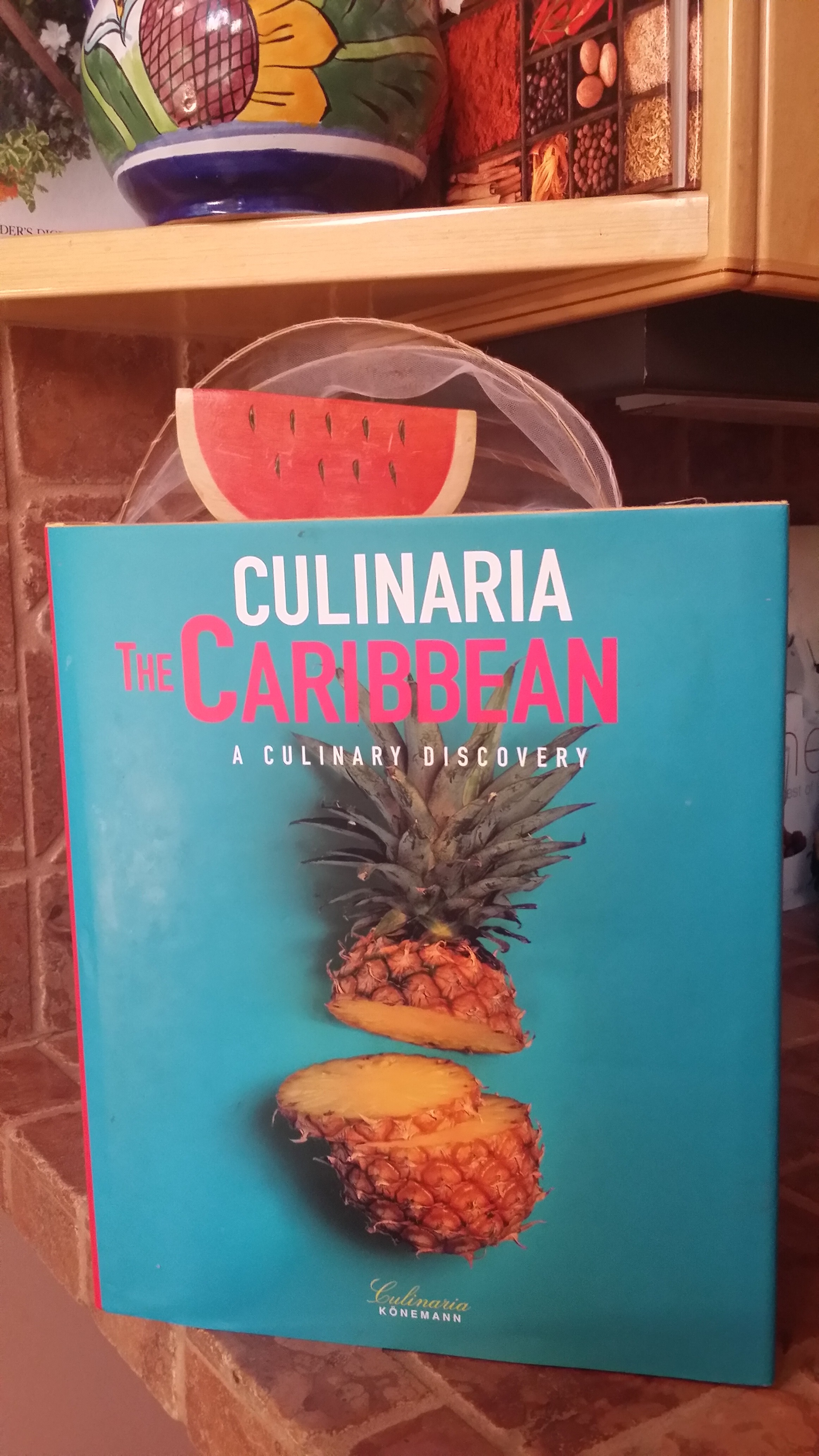
what pictures can. So here are a few of my favourite souvenir books from travels past:
I like to collect cookbooks from places where the food has been exceptionally good. I do use them on occasion and it helps to re-create special memories.
Landscapes
only 999 more places to go! A great guide if you have the time and $$$
As they say, “a picture is worth a thousand words”
“There are always two people in every picture: the photographer and the viewer” – Ansel Adams
“I don’t like food that’s too carefully arranged; it makes me think that the chef is spending too much time arranging and not enough time cooking. If I wanted a picture I’d buy a painting” – Andy Rooney
Every day we should hear at least one little song, read one good poem, see one exquisite picture, and, if possible, speak a few sensible words. – Johann Wolfgang von Goethe
The Greeks were the first to record the use of Oregano and they credited Aphrodite, the goddess of love, with creating it, with the purpose of bringing joy to mankind.
The word “oregano” is from two Greek words – oras, which means “mountain”, and ganos, “joy” – basically meaning oregano “joy of the mountains”. Ancient Greek physicians prescribed oregano for infections, wounds, headaches, respiratory disorders, seizures, snakebike and other forms of poisoning.
I can attest to the powerful healing benefits of this Mediterranean oil. It’s responsible for single-handedly clearing up my terrible asthmatic cough which I had for two straight weeks. I don’t like to use inhalers but was on the verge of doing so when I decided to try Organic Oregano Oil once again (I had previously taken it for several years, never got sick and then went off it when my last bottle was finished). So last night instead of taking it orally I just diluted several drops in water and my coughing subsided immediately. I don’t believe it to be a co-incidence. I believe the oil cleared up my annoyingly aggravating cough. The one benefit of having a hoarse voice would be to sound like Demi Moore, but unfortunately my voice sounded more like Marge Simpson. So I decided to discuss all the benefits of this miracle oil.
The oregano used to produce oregano oil for healing purposes is not the same as what we generally call oregano and you won’t find it in the spice section of your local grocery store. There are more than 30 species of oregano and only a few have been proven to have real medicinal value. So it is very important to be sure you are buying quality oregano oil from a trusted manufacturer of natural products.
Oregano Oil grows wild around the world, especially in the mountainous area of Greece and Turkey, where the highest medicinal grade is found. Medicinal oregano is rich in minerals as well as vitamin C, vitamin A and niacin. It takes a lot of oregano to distill a small amount of oil – in fact, about 1,000 pounds would be needed to make one pound of oil. This is why superior quality medicinal oregano oil is quite expensive. However it is also quite potent and a little goes a long way as a natural remedy or treatment, making this healing herb a good investment.
Oregano oil contains natural compounds that combat bacteria, fungal, viral and parasitic infections. It can be used for ailments ranging from athlete’s foot to food poisoning. Basically you can use it from head to toe. It is an antiseptic, anti-microbial powerhouse and as such it has an almost infinite number of uses around the home. Be sure to have a bottle on hand.
How to use it: For daily use, place 1 to 5 drops of oil under the tongue and hold it there for 5 to 10 seconds for sublingual absorption. You can then follow with a drink of water or juice. If you don’t like the taste (it’s strong) you can add it to a glass of water, milk or any kind of juice and drink it to increase your immune support or fight an infection.
There are so many uses (too numerous to mention there) that you might want to google it yourself. As for me, it helped my throat right after using it and that’s why I decided to blog about it. The vapours of the oil when taken internally are touted as a treatment for coughs and sinus congestion. Putting a drop under the nose can help clear sinus congestion and the oil can also be added to a humidifier of vapourizer for nighttime support. It also helps for shingles, itching, ear infections, headaches, digestive difficulties, athelet’s foot, candida, dandruff and muscle aches.
Choose a product prepared by a reputable manufacturer and follow the label directions. You can start to enjoy better health right away with this potent natural ally in your medicine cabinet.
Have you tried it?
Also, **Don’t miss listening to “Transforming Health” with host Brad King for the most evocative and informative up-to-the-minute interviews with leading health professionals – Live every Wednesday @ 12PM-PST/3PM-EST on VoiceAmerica.com – #1 internet radio station in North America. Here’s the link: http://www.voiceamerica.com/show/1686/transforming-health
Leafing through the pages of this gorgeous book brings home the diversity of Vancouver and makes me appreciate it more.
Whether you live in Vancouver or are here just visiting, this stunningly photographed coffee table book by Claude Duke will remind you of all the good things that Vancouver has to offer.
Of course there’s the natural scenic beauty but the book also showcases the talent of local fashion designers and our multi-cultural foodies. It even comes with 24 detachable postcards. It would make a great gift.
Claude’s event (he is originally from Chile) was held at the Art Institute of Vancouver on Wednesday evening and it was totally multi-cultural and absolutely Fabulous. A generous number of consulates (Canada, U.S., Chile, Equador) were there to take part in the festivities.
Sexy Samba DancersCuban band Brisas Palmar with Flamenco Dancer/SingerIndoor/Outdoor event at *The Art Institute
There was an abundance of food, wine, entertainment, fashion show and of course….books!
The man – Claude Duke & me
*The Art Institute of Vancouver is one of The Art Institutes, a system of over 45 educational institutions located throughout North America, providing education in design, media arts, event management, fashion and culinary arts.
JQi & Katelen (visiting from São Paulo)Individual Ceviches with mango.marvelous macaroons
So you want to delay getting a facelift for as long as possible or even avoid it (like me) entirely. So here’s what you need to do – use retinol. Here’s why: this one ingredient boosts collagen, softens skin, evens texture, and fades dark spots. The data is clear (we hope whoever is controlling the data is clear on this) that women who regularly use retinoids age better than women who don’t. Here are a few key things to know before getting started:
You don’t have to use it every night. Start with twice weekly and follow up immediately with you regular moisturizer or face oil. After a few weeks, step it up to three times a week.
It should be an “at bedtime-only” thing. Retinoids are photolabile, meaning they break down in the presence of sunlight.
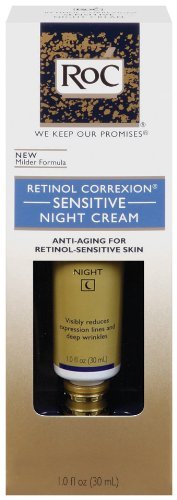
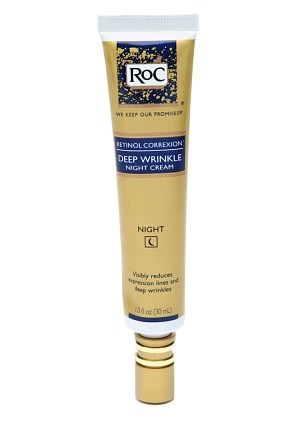
A little irritation is OK. Redness and flaking are signs that the active form of retinol, a compound called retinoic acid, is working in the skin to make more collagen. Just give your skin a few days to recover between applications. I recommend trying RoC Retinol Correxion Sensitive Night Cream if you’re not sure or you experience burning or stinging. Fyi – I have sensitive skin and I was using the regular Roc with retinol night cream, then followed up with face oil after waiting a few minutes for it to sink in. I took a long break so I’ll have to start using it again.
Have patience – it takes at least a few months to work. Your patience will be rewarded. I just found out that even if it doesn’t look like the retinol is doing anything, it’s building collagen stores in the skin that will help as you get older.
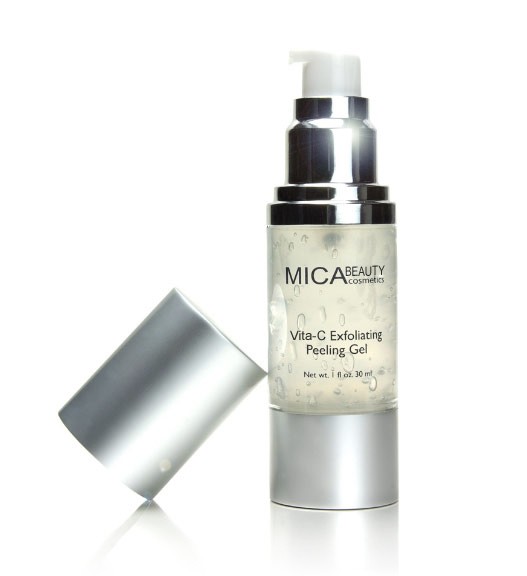
TIP: do an at-home peel a few days before starting retinol. This will get rid of dead skin cells allowing the retinol to penetrate faster and the fresh, new cells to benefit most from the ingredient. I like the Vica-C exfoliating peel by Mica Beauty.
What you don’t know about Retinol:
It doesn’t work by exfoliating. Even though they can make skin flaky (at first) they work by increasing the activity of enzymes in the skin that make more collagen.
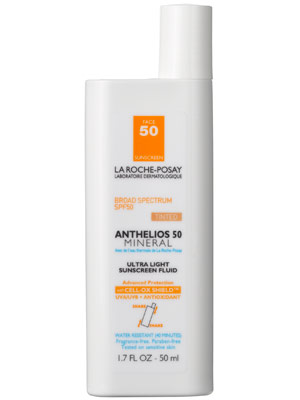
It doesn’t make skin more sun-sensitive. Your skin might become more heat-sensitive, but that means it may feel hotter and look a bit redder if you go outside on a hot day, but that’s not burning. That said, don’t forget to apply sun protection for the obvious reasons. My favourite sunscreen is La Roche Posay Anthelios Mineral Tinted SPF 50. It does the trick and gives a healthy glow.
You can use it around your eyes. This is where your skin really needs the collagen boost. Try not to get it in your eyes but if you do, don’t freak out. It won’t do any harm, just rinse your eyes with water. RoC makes a specific one for eyes.
There are other skin creams available with Retinol. Go to the beauty counter or do some research yourself. Maybe you can pick up a few samples somewhere like “Sephora” to try out a few and decide which works best for you.
Victorians never swam – they went into the water, covered head-to-toe, and called it “bathing.”
Hence the term “bathing beauties” Here are some: This summer the hottest look on the beach will be vintage, so girls….get ready to embrace Retro pin-up style! I’ve found some fine examples from years past. So it’s not a perfect world and we’re not built like Marilyn or look like Farrah (remember the poster every boy had?) but these are flattering and let’s face it, more figure forgiving. Of course, all these women had gorgeous hourglass figures, but the brilliant part about a vintage-style swimsuit is that you don’t have to.
Marisa Tomei
These styles that cover more flesh have been seen on everyone from Megan Fox and Taylor Swift to Lindsay Lohan, Meg Ryan, and Marisa Tomei (if you need this kind of assurance). Breath a sign of relief that you don’t have to suck in your gut now. The hottest looks right now come right out of the old Hollywood glamour of the ‘40s and ’50s, when pin-ups really took off. Some history:
Lindsay Lohan
In the year 2000 a platinum-haired R&B singer named Sisqó proclaimed his obsession with thong underwear, and suddenly, it got much more difficult to find bikini bottoms that actually covered the bottom. Swimwear, particularly for women, had shrunk to the smallest possible piece of fabric that retailers could justify selling as clothing. “Let it all Hang Out” bikinis were seen everywhere but not all of us look our best by letting it all hang out if you know what I mean. Remember every year around March, magazines began to scream about getting “bikini ready” for the summer. Would it ever end? Who would save us?
Believe it or not: One of the girls from Sex and the City – but the least suspecting of the bunch – Miranda (I would have guessed Charlotte). In 2008, Cynthia Nixon’s “Sex And The City” character appeared on the big screen in a stunning, red ruched one-piece swimsuit, with a halter strap and a sweetheart neckline, that hugged her curves and covered her bum. Women rushed to the stores to snatch up the Mio swimsuit designed by Norma Kamali (who, by the way still designs killer swimsuits).
This is probably the first time in 100
years that the trend has reversed from showing more skin. Interesting, right? Enjoy it! There are lotsa rappers out there so ya neva know when the trend will revert back.
Looks good on plus-sized women – a few of the plusses!
Let’s take a break from cooking (but just this time) to get our house in order.
A lot of cleaning products as you already know, are very toxic and natural ones usually cost quite a bit more. Have you ever tried making your own that work just as well but are better for the environment and your lungs?
You won’t believe how easy these are to make and how effective they are at replacing your regular ones. You may never buy another household cleaning product ever again. And most of these items you already have in your fridge/pantry. Go to a dollar store and buy a few spray bottles. Try them and let me know what you think.
Glass and Tile Cleaner:
¼ cup white vinegar
1 quart water
Mix together, pour into a spray bottle. Works just like Windex.
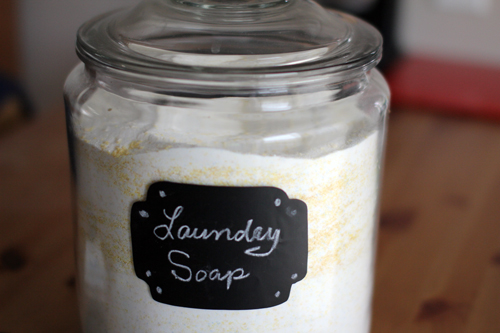
Liquid Laundry Soap:
1 cup of grated Ivory soap
½ cup *washing soda
½ cup Borax
2 Tbsp. Glycerin (buy at your local pharmacy)
2 Gallons of water (NOTE: this recipe originally called for 2 cups water). Also, feel free to add a few drops of essential oil like lavender for a fresh scent.
Mix first three ingredients together. Add glycerin and water. Use ½ – ¾ cup per load. Best when used with cold or warm (not too hot) water.
Scouring Powder for Stainless Steel:
1 part salt
1 part baking soda
Mix together and pour into a jar with a sprinkle top.
Carpet Stain Cleaner:
Put 1 part white vinegar mixed with 1 part water in a spray bottle. Spray directly on stain, let sit for 5 minutes or so, then clean with a brush or sponge using warm soapy water.
Drain Cleaner:
1 cup baking soda
1 cup salt
1 quart boiling water
Blend soda and salt together and pour down the drain followed by boiling water. Let set several hours or overnight.
Oven Cleaner:
3 parts baking soda
1 part water
Nylon scrubber
Combine baking soda and water and use like a paste with the scrubber and your elbow grease. For the hard parts mix half baking soda, half salt to increase abrasiveness. Keep baking soda off the heating element.
Homemade Furniture Polish:
Cooking oil (no need to waste the good stuff on this, cheap unhealthy stuff will do fine)
Lemon juice
2 rags
1 container to hold the mixture
In your container, mix a few tablespoons of oil with a dash of lemon juice. Stir or shake well. Dip your rag into a tiny bit of the oil-lemon mixture. Rub thoroughly over the wooden surface, adding more liquid as needed. When completed, the wood should be dirt free and glistening. Use the second cloth to rub down the furniture so no oil remains on top, so the furniture is not slippery or prone to giving oil stains. Note: This works on faux wood as well as real wood.
*WASHING SODA (see liquid laundry soap above), also known as soda ash or sodium carbonate has many uses, from acting as a pH stabilizer in pools to acting as a water softener to removing calcification in water heaters to making lye pretzels. Washing soda is a beneficial item to have around the house, especially if you want to make homemade laundry detergent, as it is one of the main ingredients. However it is not so easy to come across. Fortunately it is very easy to make. One ingredient needed: baking soda. Here’s what you do: 1.Fill a wide baking dish with baking soda. 2. Heat in the oven at 400 degrees until all the baking soda becomes washing soda. Occasionally mix it so that this process happens faster and more uniformly. 3. Use as needed!
How to know when it’s done: Washing soda is grainy, baking soda is powdery. Washing soda is dull and opaque, baking soda is crystalized like salt and reflects light, i.e. it is semi shiny. Washing soda is separate grains, baking soda clumps together.
A bit about Borax (in case you’re as confused as I was):
WHAT IS BORAX? Borax is very effective, versatile, affordable, and eco-friendly compared to petroleum-based ingredients in conventional cleaning products.
Borax, also known as sodium borate, is a boron mineral and alkaline salt that’s mined directly from the ground. Borax is not boric acid. Borax and boric acid are found together in many places, especially volcanic areas where the borax has naturally reacted with sulfur. You can also find both compounds in seawater. It’s a naturally occurring element but even things from nature can be harmful (like asbestos or mercury).
Bottom line: While it may be listed as “poison” on the box, it’s only toxic at very, very high levels. (Like salt, baking soda, and even water is.) Here’s one more bit of info for you: Boron is an essential mineral that the body needs for bone building, immune function, and brain function. Plants need it to grow. But, like anything, it’s needed in small moderation. Much like salt. Boron is found aplenty in borax. People even take borax as a supplement and swear by it (I am NOT recommending you do this). That’s a little extreme, but use it as a gauge as to how harmful borax really is.
It is not harmful to the environment. In fact, the largest borax (borate) mine in the world – found in Boron, California – is considered by many to be the most ecologically sound and environmentally sustainable mine in the United States. This is also the mine where 20 Mule Team comes from.
Not unlike conventional cleaning products, homemade or store bought green cleaning solutions should be stored safely away from children and pets. When handled with respect, borax is a great addition to your cleaning arsenal. Mix solutions in your kitchen, away from food and clearly label your finished product.
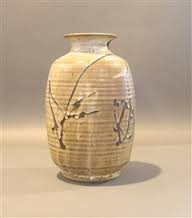
Versatile, sensuous, malleable, as basic as mud and as old as art itself, clay is increasingly emerging as a material of choice for a wide range of contemporary artists.
Ann Agee’s installation Super Imposition (2010), at the Philadelphia Museum of Art, presents the artist’s factory-like castings of rococo-style vessels in a re-created period room.
Ceramic art, referring specifically to American ceramic art, has finally come out of the closet, kicking and disentangling itself from domestic servitude and minor-arts status—perhaps for good. Over the past year, New York has seen, in major venues, a spate of clay-based art. There was the much-lauded Ken Price retrospective at the Metropolitan Museum of Art, as well as his exhibitions at Franklin Parrasch Gallery and the Drawing Center. Once known as a ceramist, Price is now considered a sculptor, one who has contributed significantly to the perception of ceramics as fine art.
Populist as well as elitist, its inclusive nature might be one reason for its current appeal. It has infinite versatility, from the purely formal to the functional. It is a substance every child has played with,
Clayzone Ceramics, Vancouver
and it is responsive to the primal instinct to make things by hand. Clay allows the artist to create form in spontaneous and direct ways that other mediums do not.
What do the Artists have to say?
Arlene Shechet, Sculptor: “I’m not a ceramic artist,” Shechet insists. “I’m an artist who works in clay. I like working in clay because it is very direct experience. I like the resistance of clay. It’s a physical enterprise, and you can make anything out of it. It doesn’t have a character until you give it one.”
Julia Kunin, Sculptor: “Clay,” she says, “gives me the freedom to create something intense, raw, over the top.”
Sculptor Julia Kunin creates baroquely grotesque animal forms, such as Double Portrait, 2010. D. James Dee
It has allowed me to pile things up, break things down, play, and make mistakes.” Kunin loves the immediacy of a material that is “as basic as mud,” she points out. “I am addicted to the unpredictability and iridescence of the glazes I’m using as well as the range of their colors and their psychedelic qualities.”
As these artists and many others, frequently women, wrestle with a material deeply embedded in rules, craft, and tradition, they are widening its trajectories, spinning it into the art-world mainstream, into blue-chip desirability. They are waiting for the day, as Cherubini says, when clay—no longer synonymous with the counterculture, with hippies and vegans—is just a material like any other, and those who use it are not ghettoized as ceramic artists.
Lilly Wei is a New York–based art critic, independent curator, and a contributing editor of ARTnews.



 For this one you must love cooked beats (not pickled), artichoke hearts, sweet onion & prosciutto (Italian word for ham that is cured & very thinly sliced).










































 Girl Who Would be KING on Life, Style and INSPIRATION.
You must be logged in to post a comment.