beauty – naturally!

More and more women are turning to Natural Beauty Products.   What works & what doesn’t?naturalbeautyThe following is from a recent interview that Alex (who works for Garance Doré) had with Tata Harper (founder of Tata Harper Skincare).  Since I’ve been formulating my own line of natural skincare products I found it quite timely and true to what I believe so it seemed natural to just re-blog their interview.beauty

What is natural beauty?

Natural beauty doesn’t have an official definition in the industry; a lot of beauty companies label and market their products as “natural” though they have synthetic chemical ingredients in the formulas. To me, “natural beauty”, when it comes to products, means the ingredients are 100% natural and nontoxic: nothing synthetic that’s been formulated in a lab, only things that have been derived from natural sources like plants, clays found in nature, etc. I think, too, “natural beauty” can mean something more holistic: a lifestyle approach to beauty that includes more than just skincare and makeup products, and incorporates important elements of our lifestyles that affect the way we look, like our diet, stress level, exercise, and how hydrated we are. I think cultivating beauty from the inside out is an element of “natural beauty”, because making healthy, skin-conscious lifestyle decisions can make a huge difference in our outward appearance – naturally.

What made you want to create a line of natural products?

My step dad was diagnosed with cancer about nine years ago now, and it really started after I accompanied him to different cancer centers and all of a sudden the doctors asked me to bring all of his personal care products in for evaluation, and everything was banned.

We were given the mandate to find all-natural products to replace everything that he was using. Obviously I was very curious about that because I’m Latin, and we use too many products. We grow up in a culture that we embrace beauty and our dedication to beauty is beyond what Americans can imagine.

I remember going to department stores trying to look for this holy grail of natural skincare, to look at the ingredients, and thinking, “What’s the point of this natural skincare if it mixes the natural and all of the synthetics?” Basically, that’s how it started and it took almost five years with eight different scientists, because I was obsessed with making them extremely high-tech so that when people use them they would see the results. So I had aromatherapists, homeopathic doctors, herbalists, botanists, skin biologists, all working in this line for many years, until we were launched into the market.

What do we need to worry about?

The majority of the products that are out there in the market contain these questionable toxic chemicals that the FDA [Food and Drug Administration] does not regulate.

A lot of the time what happens is that people don’t even realize what they are putting on. The typical is like the paraben-free, so you’re like “Oh it is natural, it is paraben-free.” And I know that that just means there is one ingredient they left out of there. But then they replace it with another ingredient, which is a mixture of gasoline and alcohol. And people just don’t know that. If people knew what is in their products they probably wouldn’t be putting it on their skin everyday twice a day.

Daily exposure to all these toxic chemicals, that is what motivated me to do this. As a consumer, I don’t want to put any potential cancer-causing ingredient on my skin. Ten years down the road, with the attempts to be beautiful, my wellness is sacrificed. At the end of the day, is what this natural movement is all about. A lot of people think that the natural movement, this switch, has to do with the environment and hugging trees in Vermont. It’s really not about that, this is a health conversation that we are all having.

Do natural products work?

A common myth is that natural products don’t work, everybody thinks that. People are used to natural products that are really low quality found in supermarkets, where you don’t expect a lot of performance from them in the first place. When people say that natural products don’t work, that is something I have to challenge every time.

I am usually faced with women that come to me and say “Tata I buy organic food for my family, I use all natural products to clean my house, I use all natural medicine, but, you know my skin care products are still this and that.”  And I’m like “What are you doing?” Why are you doing that when nowadays you can achieve the results you need without putting all the synthetic chemicals on your skin?

For example, we bring ingredients from around the world like Spanish lavender. We bring from a lab outside of Barcelona. It is actually an ingredient that is synthesized, so it mimics the effect of Botox topically applied. So in two hours, 95% of all your subcutaneous muscles are completely relaxed. So that is something that people really don’t realize when they think about natural products.

Have you noticed changes in the market?

The good thing is that the market is really responding to this demand that customers are making for having better things for them. In big cosmetic labs today, the majority of the budget goes into natural actives that perform as well as synthetics, or even better.

It is getting a lot easier now to find all of these natural ingredients. Before when we would go to trade shows there would only be about ten or fifteen, and now it has become such a huge thing. Now it is super exciting because everyone is re-evaluating. The majority of the newness is all about natural actives.

What advice do you give someone who wants to start using natural products?

I like to tell people to start with one thing at a time. Change the things that you use most often first, don’t try to change everything because it is such a daunting task that the people never end up doing anything.

What is your beauty philosophy?

First of all, I believe that beauty isn’t a one way street: the way we look on the outside is a reflection of our entire wellness. I believe that healthy food, getting lots of sleep, controlling stress and finding time to relax, finding time for regular exercise and staying hydrated are all as important to the way my skin looks as my skincare is. It doesn’t matter how many creams you use – if you’re not getting any sleep or your diet is mostly sugar or processed foods, your skin is going to reflect that by being more dull or prone to showing signs of aging because it’s not being nourished, or given time to naturally refresh and regenerate. Secondly, I believe that beauty is about consistent, daily care – find a routine that makes your skin glow and stick to it, so your skin can really enjoy the long-term benefits of the products!

Here are a few others brands that we love and are following the whole natural path… Don’t hesitate to tell us if you know others!

Tata Harper Resurfacing Mask, Regenerating Cleanser and Reparative Moisturizer. One Love Organics Vitamin C Serum and Rahua Voluminous Shampoo and Conditioner.  Dr. Hauschka Cleansing Milk.

Get Spoiled luxe facial oil, étoile hydrating essence & BALMshell advanced care for eyes/lips/cuticles.  NEW: 1st Class Natural Skincare flight package.  Available at http://GetSpoiledNow.com

 So, what do you think about natural beauty? What are you using? And what does it take for you to go 100% natural?
styling NOW – SEXY LBDs

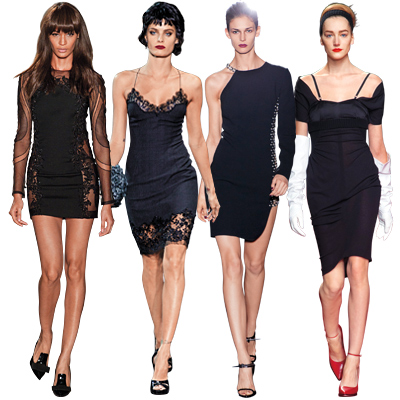
Holiday Party Season is Here – what woman can resist wearing one of these perfect LBDs.

11111
Photos from inStyle (left to right) Emilio Pucci, Louis Vuitton, Anthony Vaccarello, Nina Ricci

WHY WE LOVE THEM:

LBDs have always had a restrained sex appeal, but this season designers really cranked up the heat, sneaking in sheer panels or slashing up classic shapes to expose subtle hints of skin. The look is definitely tight, leggy, and lingerie-ish but still completely refined.

xxx
Haute Hippie DressCotton-nylon ponte, $595; hautehippie.com. 

HOW TO WORK IT:
This is not an Audrey Hepburn moment—the vibe is raw and seductive. Hair should have an effortless quality (worn combed back or loose and down), and go with kiss-me lipstick in  red or wine. Pair one of these edgy LBDs with black pumps, or if you’re feeling bold, try red ankle-strap heels. To keep things from getting to risqué, make sure one area of your body remains covered. Choose a short dress with long sleeves, or if you’re working a plunging neckline, look for a hemline that hits past the mid-thigh. I love a below the knee black strapless with a thigh-high slit.

aaa
Rachel Roy black dress – $298
Kate Bosworth wears Emilio Pucci...perfectly.
Kate Bosworth wears Emilio Pucci…with perfection.  Taken from Images

If you’re on a tight budget try H&M or Winners for some nice inexpensive selections.

In any event you should have no trouble finding your perfect match with so many options to be found.

Happy Shopping!

Simply Satisfying – cooking OILS

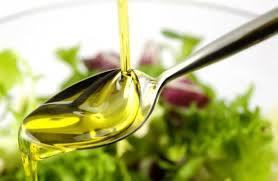
oils2From OLIVE to COCONUT to FLAX, it’s no secret that oils are having a major culinary moment.oils1

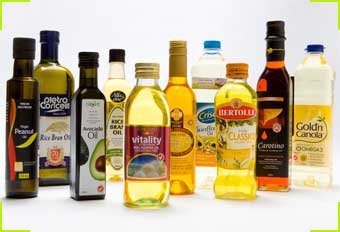
Good thing, too, since most of them are rich in unsaturated fats that’ll help keep your heart in tip-top shape. But what’s the smartest way to fit all of these different lipids into your kitchen repertoire? And which oils hold up to each kind of cooking? Confusing, no? I just added three more to my vast collection – avocado, rice bran & black truffle. The first two are for cooking over high heat & the third is for finishing purposes only.

READ ON to learn the best (and worst) oils for eight everyday cooking methods.

oils3Stir-frying
You can’t go wrong with safflower or canola oil. But if you’re looking to add an Asian-inspired flavor, try toasted sesame oil. All stand up to stir-frying’s hot temperatures because of their high smoke point, the temperature at which an oil starts to burn and emit (you guessed it!) smoke. When oil smokes, it’s actually oxidizing and turning rancid, and oxidized oils are carcinogens. You can try Rice Bran too with a smoke point of 430F. If you opt for canola, make sure it’s organic and certified non-GMO: In the US, nearly 90% of canola is genetically engineered.

What not to use: Olive oil. With a smoke point that tops out at around 325 degrees, it can’t stand up to the high temps required for stir-frying.

Sautéing
Rich in heart-healthy fats, olive oil of any kind works well for this medium-heat, stove top cooking method. Refined or light olive oil is paler in color and more neutral in flavor than its extra virgin cousin, making it a good choice for all-purpose sautéing. Go for the greener, grassier (and often more expensive) extra virgin stuff in dishes where you want a more pronounced olive oil flavour, like marinara sauce.

What not to use: Steer clear of oils that break down in the presence of heat, like flaxseed or wheat germ.

Dips, sauces, and dressings
When making uncooked items like hummus, pesto, or vinaigrette, reach for rich, flavorful extra virgin olive oil. Looking for something a little different? Try avocado oil. Though you can cook with it at high temperatures, its buttery essence really shines when used raw. I can’t wait to try it. Grape Seed Oil works well for salad dressings.

What not to use: Canola or safflower oil. Though perfectly safe, the neutral flavor will leave your food tasting lackluster.

Baking
Refined coconut, organic canola, grapeseed or safflower all fare well in medium temperatures typically used for baking. Among those, the one you pick depends on the taste you’re looking for: Coconut oil’s distinct, nutty flavor will stand out in baked goods, while canola or safflower will fade into the background. I use organic virgin coconut oil for making granola in a low-heat oven.

What not to use: Flaxseed or wheat germ oils. Though you might think they’ll give muffins and quick breads an extra boost of omega-3s, “these oils are fragile and break down in the presence of heat.

Roasting
Your oil here depends on the temperature at which you’ll be cooking. If you’re roasting higher than 325 degrees, pick a heat-stable oil, like organic canola. Cooking low and slow? Regular olive oil is a good choice.


What not to use: Just like you’d skip flaxseed or wheat germ oil for baking, avoid them for roasting, too.

Grilling
Consider organic canola or safflower oil your kings of the grill. Able to withstand temperatures reaching close to 500 degrees, these sturdy fats are the least likely to oxidize in the presence of flames or hot coals.

What not to use: Olive oil. Even though tons of recipes call for brushing proteins and veggies with the stuff before slapping them on the grill, the heart-healthy fat can’t take the heat.

Frying
A high oil temperature is key to turning out fried fare that’s crisp–not soggy–which means the food has absorbed too much fat. With smoke points of up to 450 degrees, peanut, safflower, certain types of avocado (check label) and soybean oils get the job done. If you choose soybean oil, though, be sure to pick an organic variety to avoid GMOs. I tend to taper the oil to the dish.  For instance, for Indian or Thai I prefer using peanut & for Mexican, Avocado.

What not to use: Olive oil. Tempted though you might be to make your fried foods feel slightly more virtuous, its smoke point is too low for this type of cooking.

Flavoring or Finishing
For extra nutrition and depth of flavor, try nutty flaxseed or wheat germ oil in smoothies or drizzled over cooked dishes (like whole grains or roasted vegetables) right before serving. T
oasted sesame oil, too, can make a finished dish even more delicious. I love drizzling white or black (a bit stronger) truffle oil over regular pasta, eggs or rice dishes.

What not to use: Canola, safflower, or regular olive oil. They won’t do anything except make your food taste oily!

Other specialty (not so common) oils – we see them, we buy them & then we’re not exactly sure  how to best use them.

Walnut oil is at its most valuable in cold dishes such as salad dressings, where it lends its flavour to best advantage.

Hazelnut oil is not for the meek. Not only is it pricier than olive or vegetable oil, it is also more delicate and flavourful. It brings great taste and health advantages despite this. Some may have difficulty deciding what to do with their hazelnut oil. Drizzle Hazelnut Oil on desserts, particularly ice cream and  rich chocolate cakes.

Now get cooking, baking….

Credit: Marygrace Taylor, Prevention & yours truly


coffee culture – dark & handsome

coffee3Coffee, chocolate, men…some things are better rich…

Handsome Coffee Roasters, L.A.

from their website
from their website – http://handsomecoffeeroasters.com

Only in Los Angeles can you find Handsome in the city’s derelict, industrial downtown.  Also…

Comfort: Comfort is a handshake at the door, an offer to take your jacket. Need a lift to the airport? These coffees deliver time and time again, rain, wind or shine. The good life is within arm’s reach.

Adventure: Adventure is a drive in your friend’s Porsche, a job offer from the CIA. Mom and Dad’s advice is useless and the decisions you make are your own. These coffees are a glimpse into life’s endless possibilities, rewards waiting to be earned.

Never before has coffee tasted so…..promising?

“Hello, handsome” likely wasn’t the greeting between Michael Phillips, Chris Owens and Tyler Wells, as they first met while working the coffee circuit.  Then again, Owens admits the impetus to start their company, Handsome Coffee Roasters, came about while he and Wells were on a “man-date.”  Each from a different corner of the United States (Wells from West Virginia, Phillips from Michigan + Owens from Texas) , their confluence in Los Angeles marked not only the beginning of a budding three-way bromance, but also the blueprint for a business that would see them sourcing beans first-hand from farmers around the world, roasting them in small batches, supplying them to cafés across the country, and brewing the grinds at a coffee bar all their own, right from downtown L.A.coffee1Angelenos have been flocking to the space for a bar menu with options that read simply: “espresso” and “espresso + milk.”  In a shamanistic way, the baristas surmise your flavor preferences and then prescribe the bean they think you’ll enjoy most.  The menu changes often, and sometimes includes Konga Cooperatives from Ethiopia; in it, you find notes of raspberry and Clementine – a brew that Wells calls his favourite.  Phillips disagrees, for him, it’s the mysterious tobacco, brown sugar, graham, and black tea aromas in Dukunde Kawa, grown in Northern Rwanda.  As for Owens, he’s most excited about the Finca Tanzania from Salvadoran coffee-growing legend Aida Batlle.  The coffee queen was so impressed with the triumvirate’s operation that she invited them into her exclusive club.  There’s a lot more to them than just their good looks.

but wait….no Blue Mountain on the list?

credit: Craig David Long for Nuvo Magazine.


BeYOUtiful Words

“There is no cosmetic for beauty like happiness.” -Maria Mitchell

toxic3CAUTION: Kisses may be poisonous…

Attention Ladies: Does your lipstick or lip gloss contain lead? Attention Gentlemen: Have you kissed those lead-laced lips? In an analysis done of 33 different popular brands of lipstick by an independent lab, it was found that 61% contained lead. Lead is readily absorbed by the body and accumulates in our bones. It is highly toxic to the nervous system and can also cause serious gastrointestinal symptoms.  Just saying…something you might want to consider the next time you’re in the market for a new lipstick. xotoxicquote4

“Even the most beautiful things can be toxic” –  Jodi Picoult, The Storytellertoxicquote2

“The best part of beauty is that which no picture can express.”-Francis Bacontoxicquote1

The average girl would rather have beauty than brains because she knows that the average man can see much better than he can think. Quote from: The Ladies Home Journaltoxicquote5


B well – is your food loaded with toxins & chemicals?

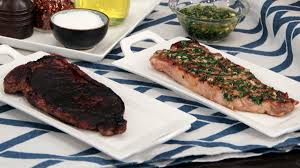
toxic1On Tuesday I posted about the benefits of using Ghee in place of butter.  What I failed to point out was the importance of choosing the most beneficial kinds on the market – the ones that come from “grass-fed” cows. (It was noted that butter and ghee that come from grass-fed cows are rich in healthful omega-3’s but it wasn’t made clear that you should buy only that one).  You should and I’ll tell you why!  Below are four nutritious foods (some of my favourites like salmon and popcorn) that may be more harmful than beneficial if you don’t choose them carefully.toxic2

1. CORN-FED BEEF

Joel Salatin, co-owner of Polyface Farms and author of half a dozen books on sustainable farming, gives us the scoop:

The problem: Cattle evolved to eat grass, not grains. But farmers today feed their animals corn and soybeans, which fatten up the animals faster for slaughter. But more money for cattle farmers (and lower prices at the grocery store) means a lot less nutrition for us. A recent comprehensive study conducted by the USDA and researchers from Clemson University found that compared with corn-fed beef, grass-fed beef is higher in beta-carotene, vitamin E, omega-3s, conjugated linoleic acid (CLA), calcium, magnesium, and potassium; lower in inflammatory omega-6s; and lower in saturated fats that have been linked to heart disease. “We need to respect the fact that cows are herbivores, and that does not mean feeding them corn and chicken manure,” says Salatin.

The solution: Buy grass-fed beef, which can be found at specialty grocers, farmers’ markets, and nationally at Whole Foods. It’s usually labeled because it demands a premium, but if you don’t see it, ask your butcher.

Budget tip: Cuts on the bone are cheaper because processors charge extra for deboning. You can also buy direct from a local farmer, which can be as cheap as $5 per pound. To find a farmer near you, search eatwild.com.

2. MILK PRODUCED WITH ARTIFICIAL HORMONES

Rick North, project director of the Campaign for Safe Food at the Oregon Physicians for Social Responsibility and former CEO of the Oregon division of the American Cancer Society, gives us the scoop:

The problem: Milk producers treat their dairy cattle with recombinant bovine growth hormone (rBGH or rBST, as it is also known) to boost milk production. But rBGH also increases udder infections and even pus in the milk. It also leads to higher levels of a hormone called insulin-like growth factor in milk. In people, high levels of IGF-1 may contribute to breast, prostate, and colon cancers. “When the government approved rBGH, it was thought that IGF-1 from milk would be broken down in the human digestive tract,” says North. As it turns out, the casein in milk protects most of it, according to several independent studies. “There’s not 100% proof that this is increasing cancer in humans,” admits North. “However, it’s banned in most industrialized countries.”

The solution: Check labels for rBGH-free, rBST-free, produced without artificial hormones, or organic milk. These phrases indicate rBGH-free products.

Budget tip: Try Wal-Mart’s Great Value label, which does not use rBGH.

3. FARMED SALMON

David Carpenter, MD, director of the Institute for Health and the Environment at the University at Albany and publisher of a major study in the journal Science on contamination in fish, gives us the scoop:

The problem: Nature didn’t intend for salmon to be crammed into pens and fed soy, poultry litter, and hydrolyzed chicken feathers. As a result, farmed salmon is lower in vitamin D and higher in contaminants, including carcinogens, PCBs, brominated flame retardants, and pesticides such as dioxin and DDT. According to Carpenter, the most contaminated fish come from Northern Europe, which can be found on American menus. “You could eat one of these salmon dinners every 5 months without increasing your risk of cancer,” says Carpenter, whose 2004 fish contamination study got broad media attention. “It’s that bad.” Preliminary science has also linked DDT to diabetes and obesity, but some nutritionists believe the benefits of omega-3s outweigh the risks. There is also concern about the high level of antibiotics and pesticides used to treat these fish. When you eat farmed salmon, you get dosed with the same drugs and chemicals.

The solution: Switch to wild-caught Alaska salmon. If the package says fresh Atlantic, it’s farmed. There are no commercial fisheries left for wild Atlantic salmon.

Budget tip: Canned salmon, almost exclusively from wild catch, can be found for as little as $3 a can.

4. MICROWAVE POPCORN

Olga Naidenko, PhD, a senior scientist for the Environmental Working Group, gives us the scoop:

The problem: Chemicals, including perfluorooctanoic acid (PFOA), in the lining of the bag, are part of a class of compounds that may be linked to infertility in humans, according to a recent study from UCLA. In animal testing, the chemicals cause liver, testicular, and pancreatic cancer. Studies show that microwaving causes the chemicals to vaporize—and migrate into your popcorn. “They stay in your body for years and accumulate there,” says Naidenko, which is why researchers worry that levels in humans could approach the amounts causing cancers in laboratory animals. DuPont and other manufacturers have promised to phase out PFOA by 2015 under a voluntary EPA plan, but millions of bags of popcorn will be sold between now and then.

The solution: Pop natural kernels the old-fashioned way: in a skillet or use an air popping machine. For flavorings, you can add real butter or dried seasonings, such as dillweed, vegetable flakes, or soup mix.

Budget tip: Popping your own popcorn is dirt cheap.

Taken from Prevention.com

beautifully speaking – Think Dirty

Today’s post might have you jumping to clean out your bathroom cabinet.

the app

Don’t go throwing out ALL of your beauty products…

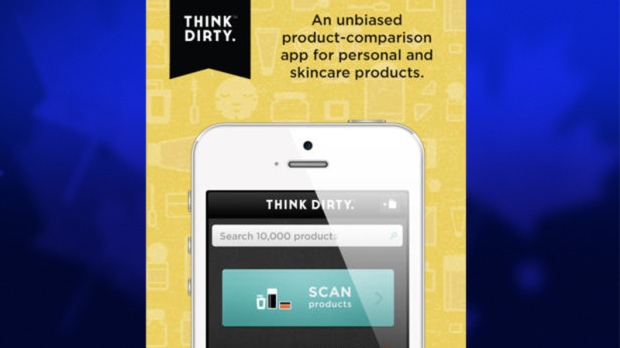
I’m usually good about reading product labels but after hearing about this new app I went home and read the labels on everything I used in a semi-state of panic – but before you toss anything, download this app, Think Dirty.

From lead-filled lipsticks to carcinogenic moisturizers, this app aims to help you find out what toxic chemicals you might be exposing yourself to on a daily basis through cosmetics and personal care products.

US health research and advocacy group Environmental Working Group (EWG) says that women are exposed to about 168 chemicals in beauty products each day. In 2004, the EWG launched its Skin Deep database, which lists potentially hazardous ingredients in some 78,000 products available in the US.

Think Dirty launched recently as a free iPhone app that also allows barcode scanning to find products, with ratings drawn from nonprofits like EWG, along with publicly available government databases in Canada, the US, and Europe. So far, the app contains a database of more than 12,000 cosmetic products.dirty1

The app allows you to scan the barcodes of your beauty and personal care products to get a breakdown of the ingredients and how they impact your health. The app also suggests other “cleaner” products to replace items you have that get a dirty rating.

Now the group plans to launch a new app, named Skin Deep, this autumn for both iOS and Android devices.

If you need me, I’ll be at Sephora…scanning…everything

In the meantime, check out the clean 100% mineral beauty products at MicaBeauty.  Available at: http://www.IntrigueImports.com

*(I first heard about this in Alex’s post for Garance Doré)

beauty – what’s new at Nordstrom

Keeping up with the Customers!   Nordstrom Inc. is giving its beauty departments a fresher, more contemporary look designed to give customers more individualized ways to shop.

photo:
photo: Stefanie Keenan

This is good news because what I don’t like about buying cosmetics at most department stores is 1) the hard sale 2) feeling that the sales girl (who works on commission) from the line that you just wasted an hour of her time talking about is watching you go from one counter to the next to check out the competitors. 3) too many other distractions in a department store – stuff like shoes,  clothing & accessories.  Usually I tend to gravitate towards the smaller independent boutiques for most things in general. But this might make me change my mind for a time or two.

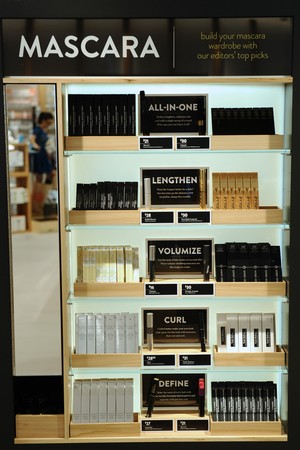
Unveiled at stores in the California shopping centers (The Americana at Brand in Glendale and The Sh20ops at Mission Viejo) and expanding to a total of nine stores by January, the most dramatic modifications are to color cosmetics areas, where customers are encouraged to shop how they want, whether it is on their own by opening drawers brimming with makeup or with guidance from staff dedicated to specific brands. Nordstrom is also simplifying beauty shopping by breaking down its vast selection by trend and key product no matter what brand, and offering shoppers access to beauty concierges, trial sizes and applications, consultations and other services so they can more fully experience the products.

    photo: Stefanie Keenan
lengthen, volumize, curl + define.  I want ALL 3 in 1! photo: Stefanie Keenan

The refreshed approach recognizes that the traditional behind-the-counter model of selling beauty products doesn’t work for everyone. Acknowledging Sephora and e-commerce have impacted shopping for beauty products, Pete Nordstrom, president of merchandising for Nordstrom, said, “The best ingredient to success is to be reflective of what the customers are interested in. Customers evolve and change over time, not only in regards to the product, but how they like to be served. In the beauty segment, there is an opportunity to serve the customer in a different and a better way. We have to allow our stores to be able to evolve to be able to appeal to customers, not just to legacy customers, but to our new customers.”

Nordstrom will soon be coming to Canada.

Taken from an article by Rachel Brown for WWD

Trending now – Colour Coated

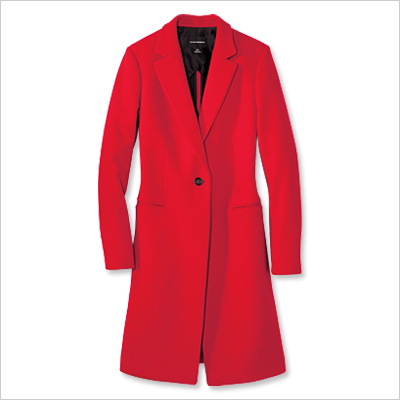
Who doesn’t agree that a vibrant topper will brighten up any drab day and make anything else you’re wearing feel more special? 

ccccccccccc
Photo:  (left to right) Marc Jacobs, Dior, Stella McCartney, Max Mara

  Yes, but I must admit I’m a bit colour shy after having had many a colourful coat.  There was a beautiful long soft leather fuschia (yup – that was an expensive mistake), an ankle length red wool coat, a mid length purple wrap coat and a shorter yellow cashmere coat (It was a mistake letting that one go).  Then I got tired of all the colour, went back to safe ‘go-with-anything’ neutral toppers and stuck with that.  So while they’re not the most exciting choices out there right now I know that in a year or five years from now I can still wear them.  The coloured ones  felt a bit dated…..of course until now.

Club Monaco
Club Monaco – $495.00

Blame the designers.  They draw you in, get you to drop lots of $$$ on every colour out there and then fade back to black.  This year they’re on a monochromatic kick, matching coats to the clothes underneath (I refuse), so pick one vivid hue – whether it be scarlet, taxicab yellow, hot pink or purple – and run with it.  Since you’re dealing with loud shades, keep everything else quiet.  That means clothes with minimal prints, simple shoes and a few accessories.

Bonus – if you end up checking your coat it will sure be easier to find, but why bother?  Why miss a chance to make a memorable entrance?  For me, I’ll check my black/grey/navy/camel coat at the door and wear a vibrant bodysuit underneath….perhaps.

I’m just annoyed that I let go of all my colourful cover ups.

These coats make you welcome the colder weather. Just don’t make the mistake of buying too many.

If you do buy one, which colour would you choose? For me it would be red or yellow or purple or fuschia.

simply satisfying – winter fruit crumble

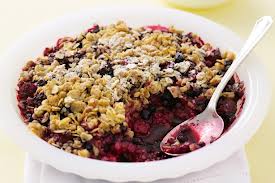
A splash of lemon and a touch of vanilla add zest to this old-fashioned dessert.  crisp3

Love Bumbleberry pie but don’t want the extra calories from the crust?  Try making this healthier option using frozen fruit and  oats.  I use frozen fruit in smoothies &  shakes but this is a tasty alternative & clears up some space in the freezer.

Topping

1 cup (250 ml) quick cooking (not instant) oats.

1/3 cup (75 ml) all-purpose flour

½ cup (135 ml) packed brown sugar

½ tsp. (2 ml) ground cinnamon

1/3 cup (75 ml) butter,                                                                                                                                     Tip: if you have ghee, you can substitute a little in place of some butter.

Fruit Mixture

5 cups (1.25 L) mixed frozen unsweetened fruit (I used wild blueberries, raspberries & bing cherries but peaches & strawberries would work well too).

1/3 cup (75 ml) organic cane sugar (or granulated sugar)

1 Tbsp. (15 ml) fresh lemon juice

½ tsp. (2 ml) pure vanilla extract

In a small bowl, combine oats, flour, brown sugar & cinnamon.  Add butter and mix until crumbly; set aside. (to make ahead: cover and refrigerate topping for up to 3 days).

Fruit Mixture: If using peach, cut any extra large wedges in half crosswise.  In a large bowl, toss together frozen fruit and cane (or granulated) sugar.  Pour the lemon juice and vanilla extract over top and toss.

Spread the fruit mixture evenly in ungreased 8-inch square (20 cm) baking dish.  Sprinkle evenly with topping. Cover tightly with foil.  Bake at 375F (190 C) for 35 minutes. Uncover and bake for about 30 minutes longer, or until bubbly and fruit is tender.

Serve warm, topped with a scoop of vanilla ice cream, frozen yogurt or whipped cream.