FOOD Fad: I’ve Got a Bone to Pick

FOOD FANATICS see trends come and go, but sometimes chefs can take a good thing and turn it into a cliché. Case in point: these bone dishes we’ve been seeing a little too much of:
SONY DSC

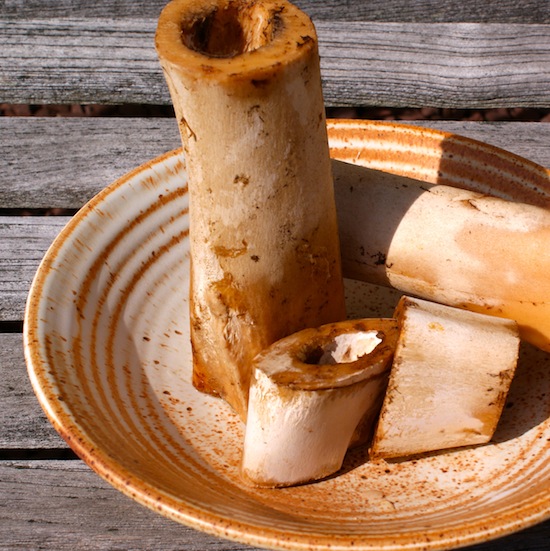
Marrow Overkill — A giant shank cut lengthwise is too much of a good thing.                        (I went to a top buffet in Vegas where they had platters of bone marrow).  My friend was like “omg they have bone marrow…I’m so going for that”.  I did too but it wasn’t the high point of my dinner.

Bone-In Burger — A burger with a bone sticking out just for laughs is…laughable.
Bone Broth — C’mon: Broth was made with bones centuries before the paleo craze.

I’m laughing because all of a sudden “bone broth” is a thing.  People are drinking the liquid all day long as a medicinal to prevent sickness or keep from getting more sick than they already are (like when you have a basic cold).

Most of us grew up with our grandmothers making soup from scratch which meant first making a stock from chicken or beef bones – same as today (unless you buy “already made” broth from a can or box which every grocery stores sells).  I know people who buy broth from a butcher for $10 a litre.  To make a good batch of soup you’d need at least 3-4 litres. And to make your own don’t forget that marrow no longer comes cheap.  At $4-5 a lb. it doesn’t seem like much but you’ll need several bones to make a large pot of soup and with all the extras you can prepare to spend about $30 to make it worthwhile.  Anything time consuming you want to have lots of.

Making a homemade *stock (or broth) from bones does take time to do properly but it’s so worthwhile.  You cannot recreate a good soup solely from adding Knorr® bouillon cubes to water.  But if a recipe calls for only adding a little stock (eg: rice or risotto) I use “better than bouillon” in its many forms (beef, chicken or veggie depending). It’s the next best thing if homemade is not on hand.

I credit the bone broth trend for giving me a kick to going back to making wholesome soups from scratch.
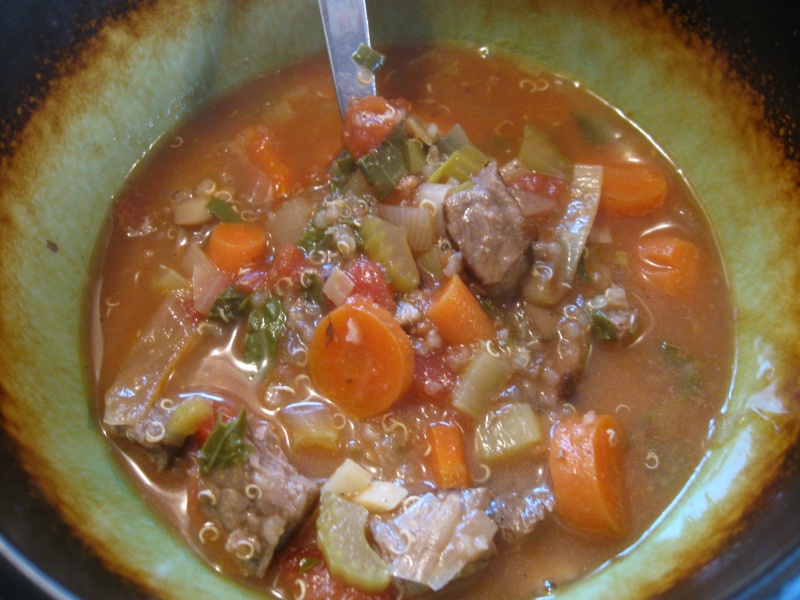
Homemade Beef Broth - made with bones
Back to Basic Homemade Beef Broth

Nothing replaces it. The ‘bone broth’ most people are now referring to is the kind that you cook for up to two days where the bones begin to disintegrate and then you strain everything through a sieve to get only the liquid.  This has to be done with chicken because beef bones don’t really disintegrate entirely. I can’t even tell you how long it would take if they did. With beef you make sure to get bones with as much marrow in them as possible because the marrow is what gives you the nutritive qualities that have all the healthy benefits. Bone broth builds bones, and the likely reason is it’s high in gelatin — collagen. And collagen is what provides the framework for good bones. That’s what’s needed to lay on calcium and other minerals. Gelatin is one of the healthiest foods you can eat and has benefits ranging from reducing wrinkles (I’m told it’s even better than botox but I wouldn’t know!), healing joints, building stronger bones, and even improving dental health. The biggest benefit of gelatin is that it is apparently a gut healer.bones2I’ve been buying large grass fed beef shanks with marrow and add **oxtail for flavour.  I brown them first before putting them into my large slow cooker set on high for one hour and then low for as long as it takes for the marrow to soften and the meat to fall away from the bones.  Last time it took 36 hours.  This is the original slow cooking. They will create their own juices over time (just make sure you check to make sure they don’t dry out – add water if you need to) but you can always put them into a large pot of water, bring to a boil and then simmer for hours.  Then once cool, remove all the bones, cut up the meat and set aside.  Then cut up your veggies (garlic, onion, celery, carrots) and add spices and 2-3 bay leaves to the pot.  If using a slow cooker you can now add water.  I put some of the bones back in with the vegetables and remove once the veggies are fully cooked.  Once the veggies are soft and the stock is tasting good I then add the meat and a bunch of cut-up kale and sometimes serve over tiny egg noodles or macaroni for added heartiness.  See? It’s so easy – just that everyone is in so much in a hurry now to have it…now.

A great pot of soup is nurturing and at this time of year especially there’s always some on hand in my house either in the fridge or freezer.  And it tastes like what your grandmother used to make.  Which is all the rage.

Nice to know grannies are trending

*The only difference between a stock and a broth is a stock uses bones, and a broth is the liquid the meat was cooked in.

**Oxtail: not only does it add more flavour but it also contains trace amounts of calcium, with 10 milligrams of calcium present in 100 grams of oxtail and is a very good source of iron.

Do you make soup from scratch or try to cut corners? – just wondering.
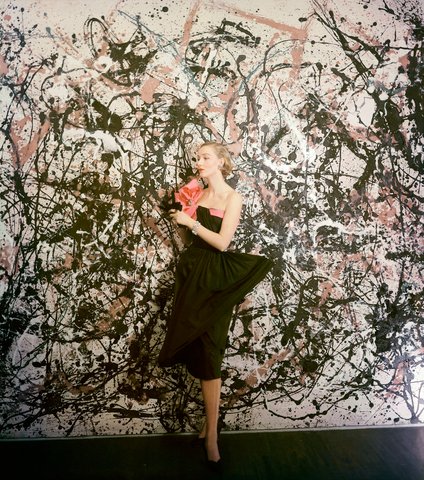
How ART influences FASHION

And it’s such a drip….figuratively speaking, because I’m talking about Jackson Pollock in this post.

Photographed by Cecil Beaton, Vogue, March 1951

 A survey of Pollock’s works is at the Museum of Modern Art (MoMA) covering early experiments with primal themes and loosely figurative forms from the years 1934 to 1954.  The exhibition also features the highly recognizable drip paintings which made him famous the world over.

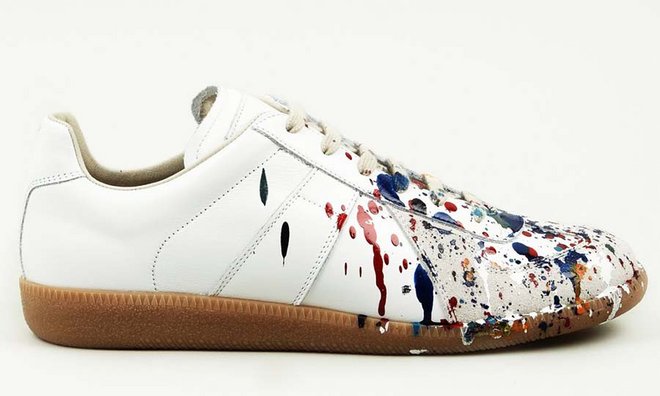
These drippings have caught on with fashion designers big time who have been inspired by them and have incorporated Pollock-print paint splatterings on everything from sneakers to ball gowns.

While designers have referenced many artists over the years, there are few so synonymous with Pollock’s style.

Maison Margiela’s popular “Pollock” sneaker Photo: Courtesy of Maison Margiela
Maison Margiela’s popular “Pollock” sneaker
Photo: Courtesy of Maison Margiela

Perhaps the first fashion world adoption of Pollock’s art came in a 1951 issue of Vogue (in photo above), where a model showed off the season’s chicest gowns standing in front of a Pollock painting on view at the Betty Parsons Gallery.

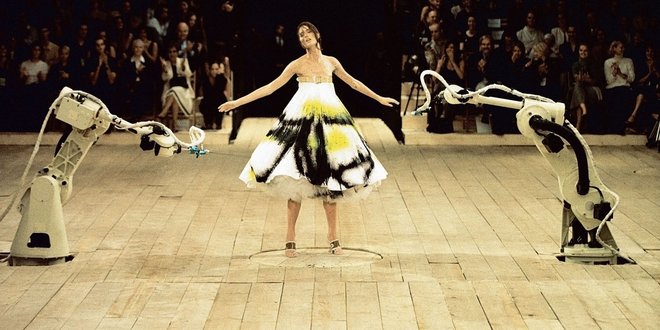
Since then, his signature splashes have infiltrated the runways in many forms. The most unmatched tribute to Pollock’s art, however, came courtesy of Alexander McQueen, who positioned model Shalom Harlow in the center of paint-shooting robots that streaked her ivory gown black and acid green as she rotated on a platform.

Alexander McQueen Spring 1999 Photo: Courtesy of Alexander McQueen
Alexander McQueen Spring 1999
Photo: Courtesy of Alexander McQueen

Now that’s making a statement!

“Jackson Pollock: A Collection Survey, 1934-1954” is on view at the Museum of Modern Art until Sunday, May 1, 2016.

Vancouver OPERA presents Madama Butterfly

Don’t miss Vancouver Opera’s gorgeous production of Puccini’s MADAMA BUTTERFLY – a beautiful story of honour, love, heartbreak and sacrifice.    

          As they say; Fall in love at the OPERA.

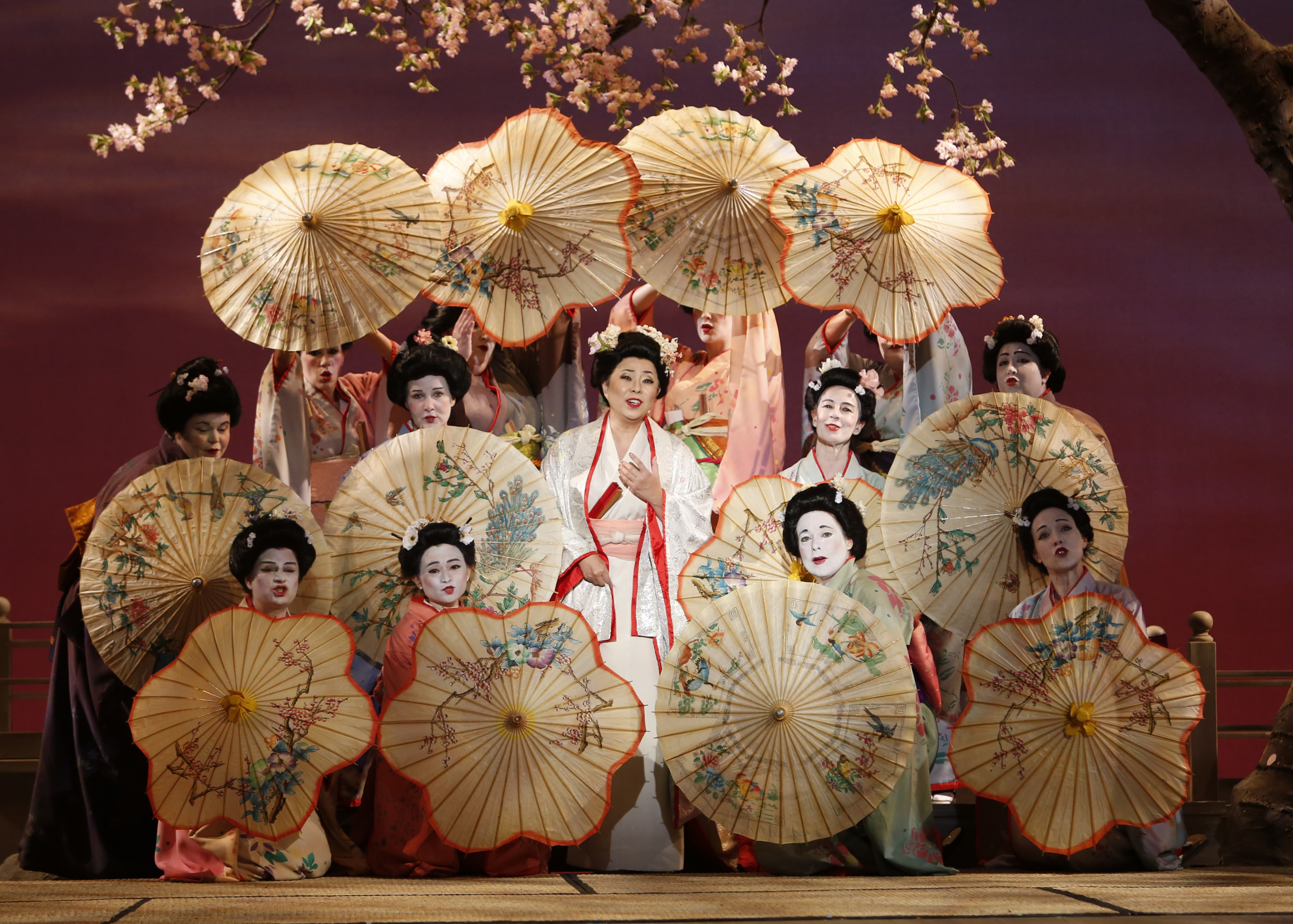
Middle: Mihoko Kinishita as Cio-Cio-San (Butterfly). Photo: Tim Matheson
Middle: Mihoko Kinishita as Cio-Cio-San (Butterfly).  Photo: Tim Matheson

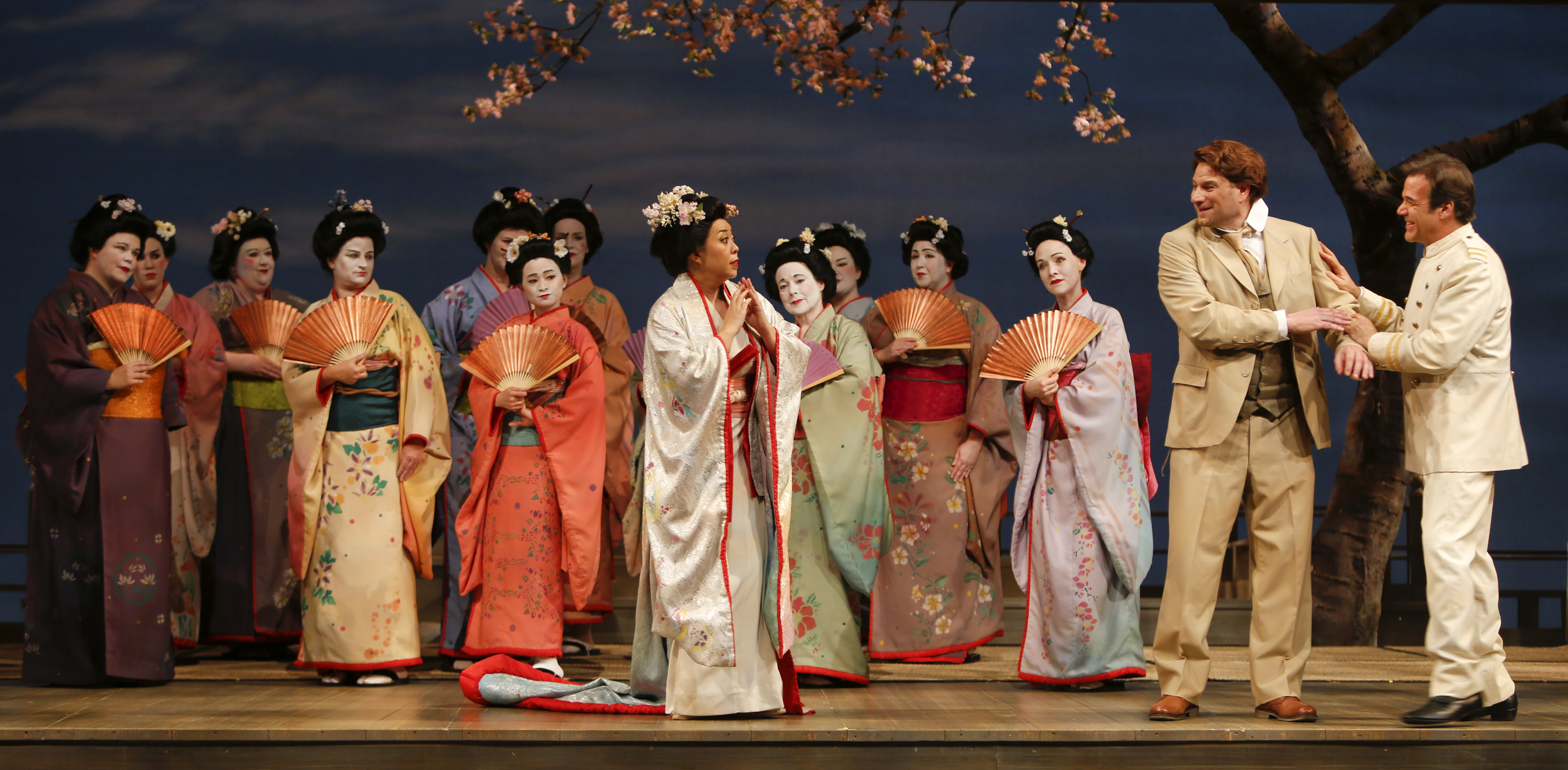
I went to the opening last night and thoroughly enjoyed the gorgeous set, incredible voices and achingly beautiful music brought to life by two of the world’s most in demand sopranos.  There were many women fittingly dressed up in stunning Kimonos.

Mihoko Kinoshita as Cio-Cio-San (butterfly), Gregory Dahl as Sharpless, Richard Trotell as Pinkerton. Photo: Tim Matheson
Mihoko Kinoshita as Cio-Cio-San (butterfly), Gregory Dahl as Sharpless, Richard Trotell as Pinkerton.   Photo: Tim Matheson

About the Performers:

Sharing the role of Cio-Cio-San (Butterfly) for alternating performances will be Jee-Hye Han and Mihoko Kinoshita. Jee-Hye Han will be making her VO début. Mihoko Kinoshita was last seen in VO’s 2010 production of Madama Butterfly. Tenors Adam Luther and Richard Troxell will sing opposite them, sharing the role of Pinkerton.

Madama Butterfly is onstage at the Queen Elizabeth Theatre, corner of Georgia and Hamilton Streets,Vancouver, B.C. for only 6 performances, March 5 – 13, 2016.

Good seats still remain but are selling quickly for all performances, with the best availability at the Friday, March 11 and Sunday March 13 performances.

Not a kimono but at least it was colourful.
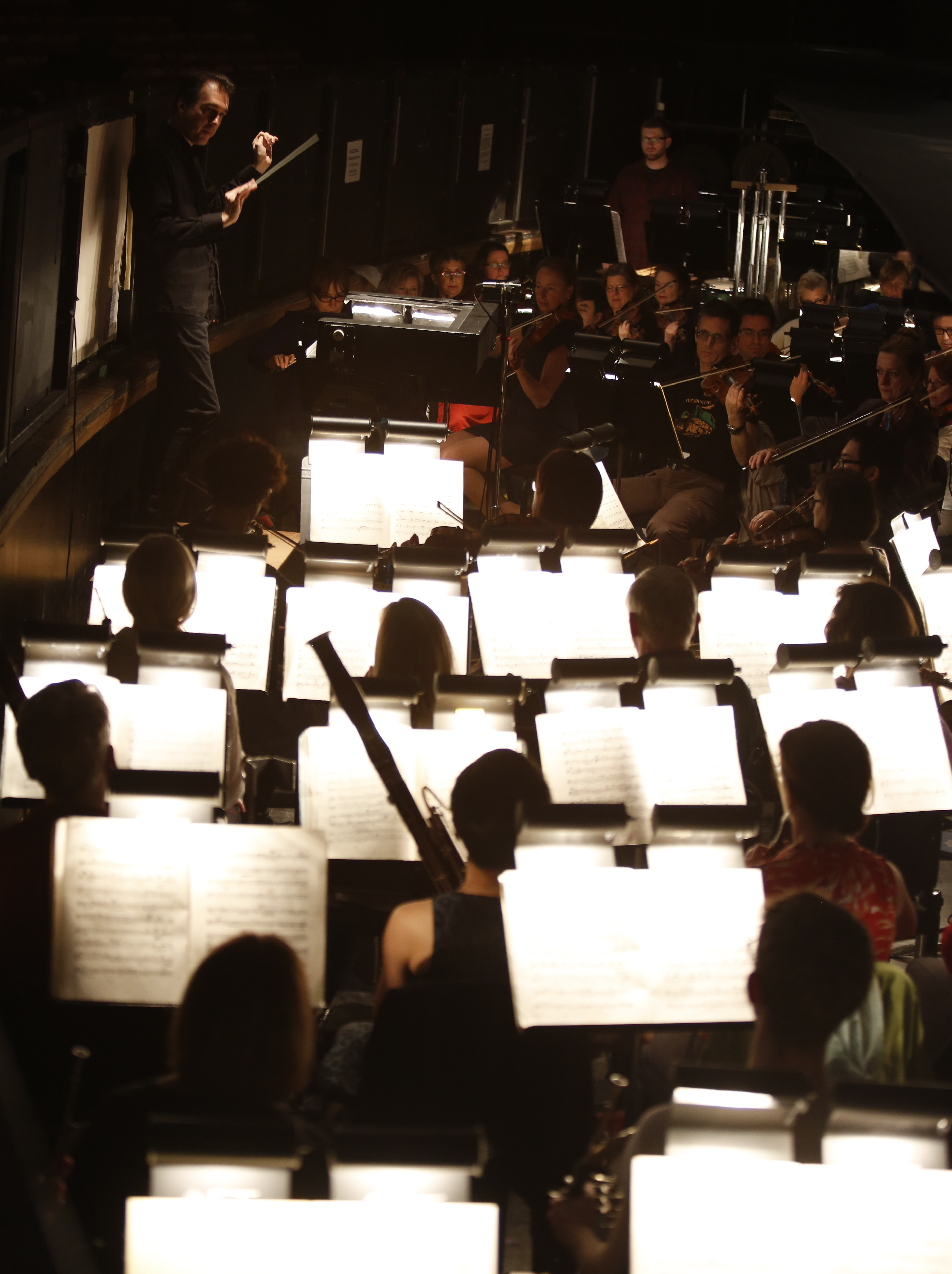
The Vancouver Opera Orchestra conducted by Leslie Dala. Photo: Tim Matheson

Dates:

Sunday, March 6 • 2:00pm matinée

Thursday, March 10 • 7:30pm

Friday, March 11 • 7:30pm

Saturday, March 12 • 7:30pm

Sunday, March 13 • 2:00pm matinée

Madama Butterfly will be sung in Italian with English translations projected above the stage.

Approximate running time: 2 hours and 40 minutes, including 1 intermission.

Tickets are available exclusively through the Vancouver Opera Ticket Centre: 604-683-0222 or www.vancouveropera.ca. Visa, MasterCard and American Express are accepted. Special pricing for groups of at least 10, and for families, is available by phone.

Follow Vancouver Opera on Twitter and Facebook for exclusive offers such as VO’s Get O.U.T (Opera Under 35) program, with $35 tickets for patrons aged under.

GODERE!

ENJOY!


Hypnosis for Healing

This week I want to focus on the old cliché in a few different areas.  I want to start with Hypnosis because it’s something that has always fascinated me. Maybe I just want to be a control freak.

My dad used to say corny things to my mom like “you hypnotise me with your eyes“hypnosis1

When I was little my dad took me to see the stage illusionist and hypnotist Raveen who came to Montreal quite regularly. All I remember is lots of people going up on stage and then after being hypnotized, they did some crazy things like bark like dogs or cluck like chickens.  I remember wanting to find out if I could be hypnotized but not wanting to find out later that I ran around naked onstage or something equally (no; that’s the worst) humiliating.
And who can forget Woody Allen in the screwball movie Curse of the Jade Scorpion where his character is hypnotized into stealing jewels after hearing only one word by a crooked hypnotist. Case of being in the wrong place at the wrong time. It is intriguing to think about…I mean if you had the power to actually play with people’s minds and try to control them. (not like it hasn’t been done before by some crafty players.) I would like to wave the wand and be like: you are getting sleepy, you are under my spell. Now give me your sandwich!  But realisticaly….

It’s time to put aside all the illusions about what a hypnotist can do. A stage hypnotist might, for the purposes of entertainment try to make you bark like a dog or take off your clothes (I don’t think they really do that but I would if I had the power and wanted to see someone naked) but clinical hypnotherapy is not entertainment. It is therapy undertaken in a state of hypnosis.

I’m just beginning to find out because two people close to me have started seeing a clinical therapist to experience hypnosis for therapeutic and medical reasons.   Next week I’m tagging along to see for myself how the process works. The mind is a powerful tool so if this helps someone deal with pain or a psychologically stressful issue, it can’t be harmful. It appears that it can also benefit anyone dealing with a friend or significant other who has a medical issue and the accompanying stress that goes along it.  Apparently this kind of hypnosis makes it easier for your subconscious mind to understand how you can get the results you want.

The Doorway to Your Subconscioushypnosis2

To be a good subject you need to want to cooperate and you need to be able to focus and follow instructions (a challenge for me but I will make a mental state of focusing attention). The reason to use clinical hypnosis is to help you become receptive to suggestions for solving your problem (s) and to help you have more control over your symptons.  It is not mind control. You cannot be made to act on suggestions that are not acceptable to you. You are not asleep during the process.  You cannot be hypnotized against your will.  It involves helping you experience a pleasant state of relaxed concentration during which your conscious mind can relax and the “doorway” to your subconscious mind can be opened with your consent.  In this relaxed state (almost a meditative state – something else I want to explore) your openness to suggestion and your mental focus may be increased.  Sensitivity to feelings, sensations, sights, sounds, smells and tastes can be made more or less intense.  Also, your imagination can often be easily used for making helpful suggestions work for you.  I have a very active imagination so this will be interesting.
Hypnosis can be used as a tool to help you:

Experience Deep Healing Relaxation, Identify what you want and how you can get it, use your imagination to help you solve your problem, become more open to helpful suggestions and ideas, gain relief from bothersome symptoms such as physical pain and anxiety, gain more control over how you deal with such symptoms, learn how to more effectively manage stress, control your mood swings, supercharge your motivation to make positive changes in your behaviour, free yourself from harmful habits such as smoking, have better sleep, become less depressed and less anxious, let go of self destructive resentment and guilt, solve emotional conflicts that hold you back from getting better, and change harmful attitudes, beliefs, feelings and behaviours.

 I will follow up on this and if it turns out that I can bend people to my will, I hope I can do some good.

 Would you consider trying this?


Beauty: essentially speaking

Skin.Hair.Nails.Bath.Candles...these are some areas of the body, places and objects used to put essential oils. oils
Scent is powerful and important. I’ve made no secret about my love for essential oils and for mixing them up to create some outstanding allover skincare products.  It helps to know what works for what area  but by trial and error you can always experiment yourself.

If you haven’t already been introduced to aromatherapy, think of it as a cross between your new favorite candle and a cure to all your most annoying ailments along with the best scents nature has to offer. One of my favourite mixes to add to a diffuser is Ylang Ylang, Neroli, Orange sweet & Vanilla – it’s called “Hawaiian Escape” and it really smells like an exotic vacation. Essential Oils will trick your senses to help you escape for a little while.

Here are 5 EASY WAYS to incorporate essential oils in your daily routine. Warning: Once you start experimenting with them, you won’t be able to stop.oils2

Jasmine: The Happy Scent

Put a few drops of jasmine, ylang ylang or rose in your hand and rub into your scalp. This awakens the senses and increases feelings of optimism and joy.  I use jasmine in my facial spray.oils3

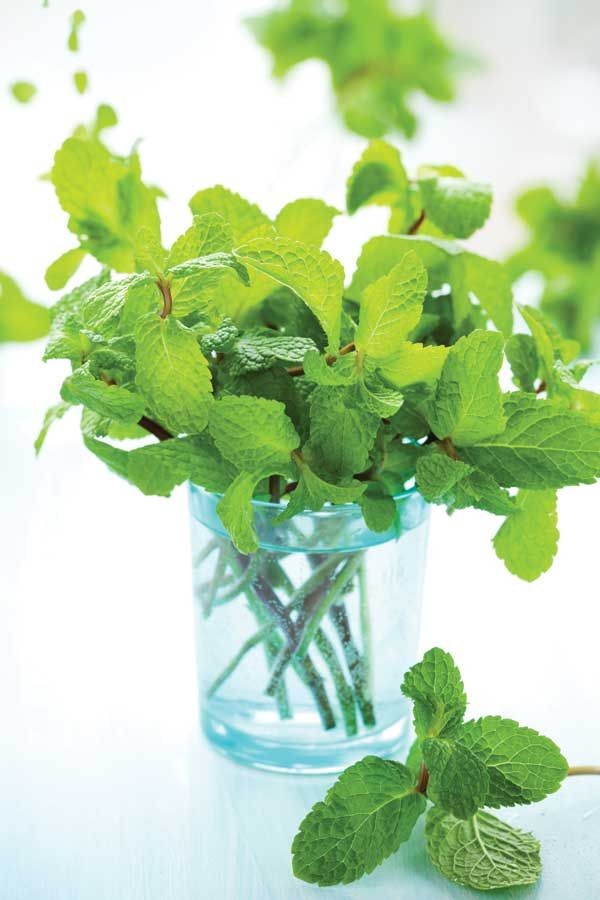
Mint: The Pain Reliever

Add Peppermint essential oil to your lotion and rub on your feet at the end of a long day. Enjoy increased circulation and the natural analgesic.  Fresh and Stimulating. Great for headaches too so if you feel one coming on rub a bit onto your temples.oils4

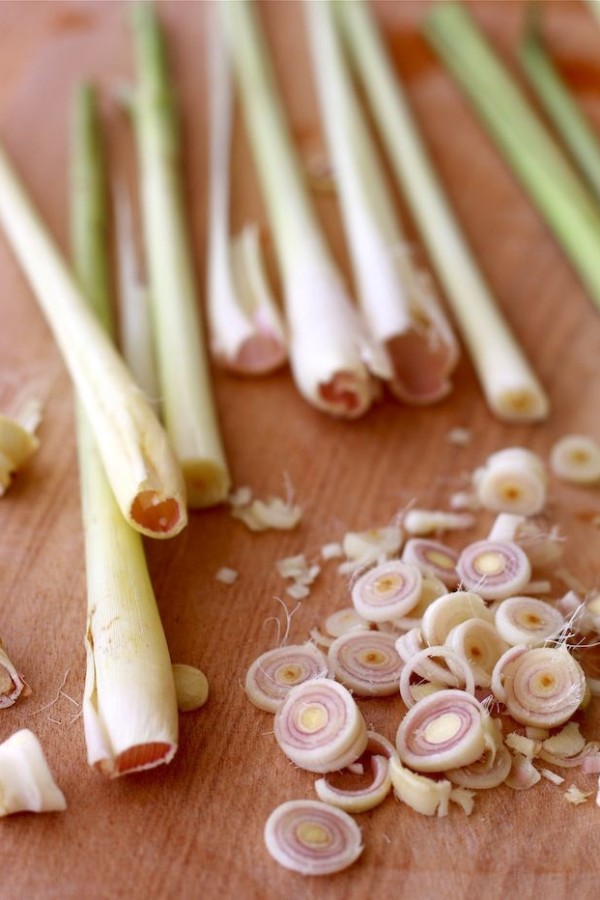
Lemongrass: The Pick-Me-Up

Add lemon or lemongrass essential oil to a spray bottle filled with water and mist the carpet before you vacuum. Citrus is uplifting and invigorating. On another note it helps to relieve stomach aches if you use it as a tea. I learned this while living in Brazil. – just pour hot water over fresh cut lemongrass.  Works like a charm.oils5

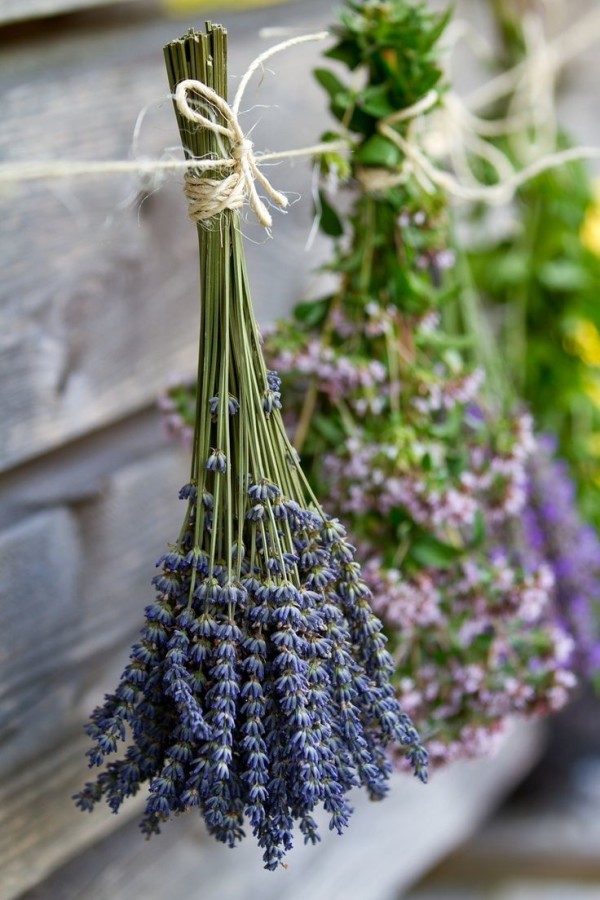
Lavender: The Sleep-Time Scent

Add a few drops of Lavender essential oil to your bath to unwind, or spritz on your pillow for a restful sleep.  I use lavender bath salts for a relaxing before-bedtime bath. There is nothing to do but crawl into bed as I can hardly keep my eyes open after that.oils6

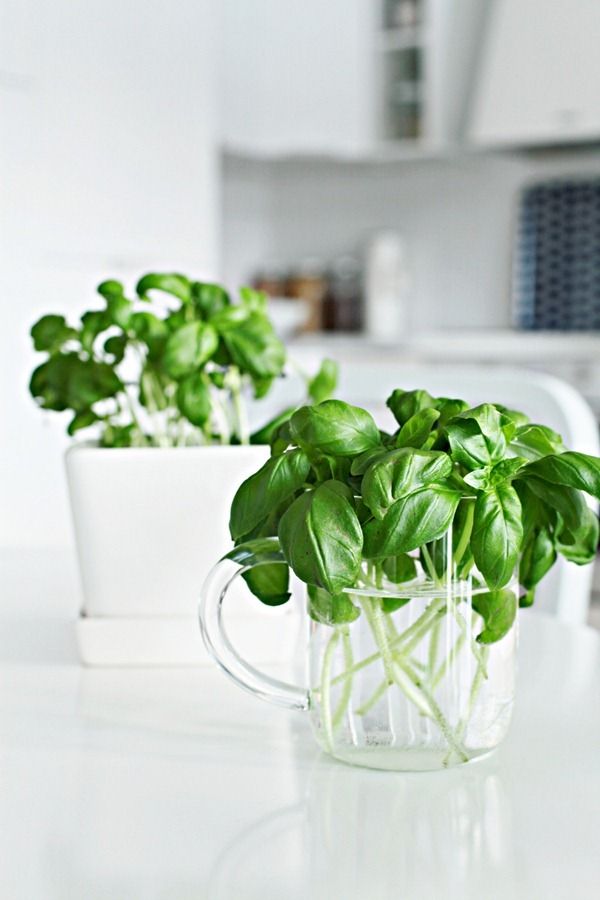
Basil: The Feel-Better Blend

Combine rose geranium, basil and sandalwood and diffuse into the air when you are grieving, stressed out or overwhelmed. Diffuse or apply topically to promote clear breathing (warning; it will make you hungry for caprese).

On a heavier note – a bitch of a spray:
oils8

A perfect blend for when you’re irritated, annoyed, tired, peeved, frustrated, enraged, or have an overall bad attitude! Spray near co-workers, friends, and relatives as needed. Try to use sparingly!

I love to help!

Which essential oils are your favourite?

Photos: Pinterest

La Parisienne – Famous French Style

Oh I think you know where I’m going with this…frenchgirlvogue2PARIS fashion week kicked off yesterday so right now is a good time to brush up on that French je ne sais quoi in all its forms.

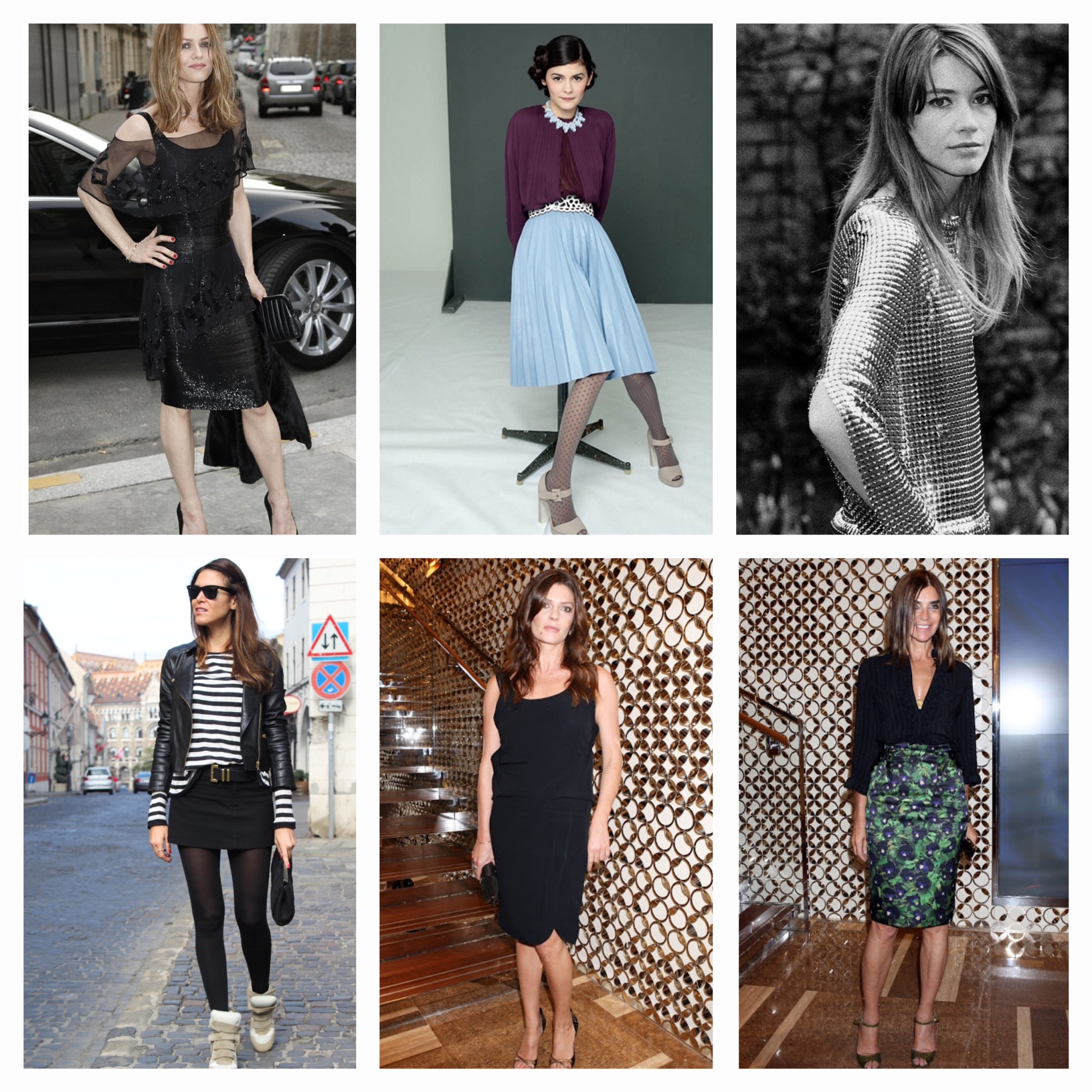
To honour Fashion Week here are some Frencheccentric trendsetters of yesteryear and today worth taking note of.  Starting with:

Josephine Baker
frenchgirlvogue3

Nightclub performer Josephine Baker might have been American by birth, but she came as close to being a proper Parisian as a foreigner could get, becoming a Chevalier of the Légion d’honneur after World War II. (Charles de Gaulle himself bestowed the honor upon her.) Baker first arrived in Paris in 1925, gaining acclaim for her sultry dances at the Folies Bergère. Her costumes were as famous as her moves, too—her banana skirt ensembles inspired a Prada collection, while her sheer crystal dresses were a reference for Rihanna’s unforgettable see-through CFDA look. Today, you’ll find traces of Baker in some of Spring’s more soigné slip dresses.

Anouk Aimée


frenchgirlvogue4French actress
Anouk Aimée is perhaps most famous for her Golden Globe winning role in Claude Lelouch’s 1966 A Man and a Woman, but her offscreen style was just as noteworthy as her career-making role. In her ’60s heyday, Aimée preferred sultry yet simple pieces like cropped sweaters, fitted dresses, and flats. She was never one for accessories, choosing to complement her looks with a flick of winged eyeliner and expertly arched brows.

Sylvie Vartan
frenchgirlvogue5

Chanteuse Sylvie Vartan rolled with the right crowd in ’60s Paris, calling Yves Saint Laurent one of her closest collaborators. That relationship bore some of the decade’s best outfits, like the two pairs of crystal-studded jeans Vartan and her then-husband, Johnny Hallyday, wore to perform a duet. Off the stage, she favored minidresses with girlish collars, Mary Janes, and plush furs, helping to define France’s nascent yé-yé girl movement. (Think of yé-yé style as the French equivalent of mod.) A just-released book on her taste, Le Style Vartan, chronicles her outfits in immense detail—all the better for re-creating them today.

Sonia Rykiel
frenchgirlvogue6

The name Sonia Rykiel might conjure up visions of thin, patterned knits, but the wardrobe of the designer herself is much more varied. As one of Paris’s Rive Gauche trendsetters of the ’70s, Rykiel built up a reputation of being the woman with the best—and biggest—coat in the room. Underneath the voluminous outerwear, you’d find a mix of gamine pieces like jumpsuits and mannish trousers, styled with some of her namesake knits. There was a Sonia Rykiel store for years in Vancouver on Burrard Street but sadly it didn’t make it and closed shop – it did not appeal to the Vancouver crowd.

Niki de Saint Phalle


frenchvogue7

Sculptor and artist Niki de Saint Phalle made some of the most vibrant works of the ’60s through ’80s, which have just been honored in an exhibition in Paris’s Grand Palais. When she wasn’t wearing a caftan that rivaled the colors and patterns of her artwork, De Saint Phalle preferred simple, neutral pieces that she jazzed up with bold accessories like berets, pendants, and armfuls of bracelets.

Vanessa Paradis
frenchgirlvogue7

Today’s runways have made a habit of applying highbrow taste to thrift store finds—something Vanessa Paradis has been doing for decades. The singer has been sporting slip dresses with shaggy furs, bohemian maxi skirts with boyish blazers, and skinny jeans with blouson tops since the ’90s, and continues to hone her eclectic style to this day. No wonder her daughter, Lily-Rose Depp, has such good taste at only 16.

Aymeline Valade
frenchgirlvogue8

Model-turned-actress Aymeline Valade’s Saint Laurent tuxedo at the Cannes Film Festival was the stuff of red carpet dreams. Valade’s off-duty style is just as memorable, making everything from a Lacoste polo shirt to a dainty Chloé dress look all her own.

These women are all fine examples of how to embody personal STYLE

Photos: Getty Images

Source: Vogue Runway

Eat.Drink.Dance.Listen – Blue Martini Jazz

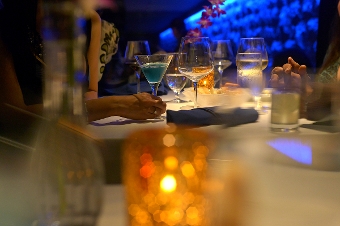
my first (not completely) unhappy review – and hopefully my lastbluemartini1

Last Saturday I went with a friend to the newly opened Blue Martini Jazz Café  to listen to live music – the wonderful Dawn Pemberton and her band were performing and they were excellent; a mix of R&B, Jazz, Funk and World Beat music which I love. The ambience was reminiscent of a true dinner/jazz club which is lacking in Vancouver.  I can also walk to this place from home which is a big plus.bluemartini3

The friend I went with had been there for Dine Out Vancouver and said the food was great.  Here’s the complaint:

We only wanted to order one glass of wine and share some appies while listening to a few sets.  I only complain when necessary and hate to do so; but I became that woman for the duration of the evening.  And I believe that it only helps for the owners to know when a customer is not satisfied.

So we decide to order a glass of red wine each, a salad and an antipasto platter for two.

The waiter tells us the wine we want (which is on the menu) is not available (they just haven’t yet taken it off the menu) but he can bring us a comparable one in its place.  He wasn’t planning to tell us that the one replacing it will cost us each $4 more  – something made me ask (I must have felt suspect because I do not normally ask the price of something that should be a given).  We order a glass anyway.

He brings the bottle and starts to pour directly from bottle to wine glass.  It looks like a taster.  Which brings me to question how many ounces they serve.  He says six.  I say it looks more like four.  I finish in five sips and decide not to order more wine.  Maybe should have gone with a martini.  Waiter comes back and says “sorry, my mistake, we pour five ounces only.”  I still think my pour (like how would he really know since he didn’t measure and the pours were not even) was less but don’t want to start complaining as the company and music are perfect.

We order a zesty Caesar salad to split.  It was good even though the croutons were from a box. It should be noted that this place charges $4 to split orders although that either does not count for salads or they decided not to charge us.

The shared Antipasto Platter was a different matter – it was a total disappointment.  Why? Because the menu reads: Italian Cheeses, cold cuts, pickles, smoked salmon, artichokes, olives, arugula and buffalo burrata.  At $16 per person (total $32 for the platter) Sounds great right?

It came with no bread.  We had to ask and they brought us 4 little pieces.  It came with no cheese that we can recall (remember we were not the least bit tipsy on 4 ounces of wine) except for two teensy tiny slices of mozzarella (believe me when I tell you there was no way on earth it was burrata – it was not the least bit creamy) on a slice of tomato.  One slice was double the size so we had to flip a coin for fun to see which one of us would be the lucky one to have it – I won.  There was a pile of arugula in the middle of the plate with a few pieces of artichoke underneath, a few of the tiniest gherkins we’ve ever seen, 4-5 regular sized green olives, two slices of smoked salmon and an assortment of rolled-up deli meats (mortadella, pepperoni, the usual where I can’t pronounce the names) but it didn’t even out with the rest of the plate.

I ask the waiter to see the menu again just to make sure there was mention of other cheese or cheeses in this case.  Sure enough the first thing mentioned on the antipasto platter is Italian Cheeses (see, it’s even plural  which suggests more than one kind). So I question him – where was the cheese? He tells us there was a little shaved parmesan on top of the arugula (there may have been but neither of us noticed).  I asked about the burrata.  He said it’s buffalo burrata.  I say it’s a way of misleading customers – it’s just another word for regular mozzarella cheese – of the plainest kind. The couple sitting across from us said the same thing – “why would they write cheeses on the menu when they only give you three little pieces?”  I said you got three pieces, we only got two?” They only complain to us that they’re not satisfied.

We ask for the bill. We’re still hungry but don’t want to order anything else.

Because it was obvious we were not satisfied we got a piece of dessert on the house to share – which was tasty. We laugh it off to an unpleasant experience – like something crazy out of a Seinfeld episode or Sex and the City.

We go back to my place and my friend asks if I have any food so I go into the fridge, take out some stuff and we sit on the sofa and watch an episode of a 4-part documentary series on Netflix –  Chelsea Does on Racism. It lightened up our evening.

Will I go back to Blue Martini? 

I really wanted to love this place.   I understand that rents are high and there is no cover charge but please do not take advantage of good customers who may become regulars.  I like to support live music and buy CD’s. I’m crazy enough to go back at some point, sit at the bar, order one martini and just listen to the live music….maybe.

What do you think – Am I nuts?


Art of the DANCE & DEGAS – two beauties

A STRANGE NEW BEAUTY –  at the MoMAdegas

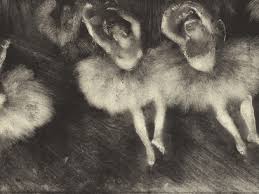
“Degas’s focus on dance is part of his engagement with depicting the subjects, spaces, rhythms, and sensations of modern life,” says Jodi Hauptman, senior curator in the department of drawings and prints at New York’s Museum of Modern Art, where an exhibition that explores Degas’s extensive work in monotype, “Edgar Degas: A Strange New Beauty,” opens up next month.  “His vision wanders and focuses, taking note of what usually is overlooked and honing in on what best reflects the conditions of his time.”

I found the article below INSPIRING.  It encompasses the perfect ménage à trois of Style: Art, Dance & Fashion.

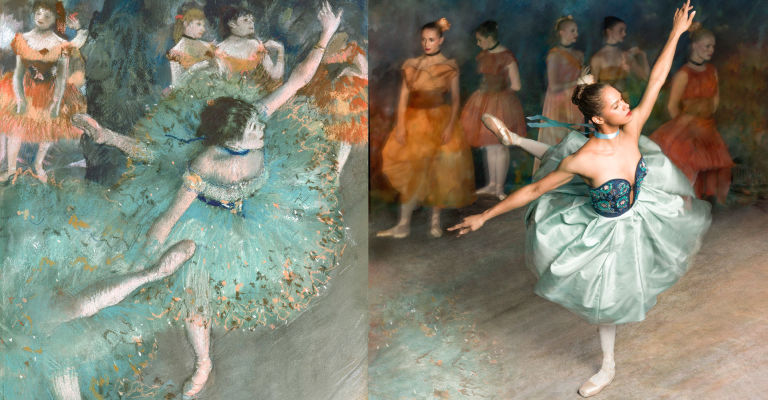
As she channels the artist Edgar Degas’s most famous ballet works ahead of this new exhibition, dancer Misty Copeland opens up about what it feels like to make history.

Ballet dancers, Misty Copeland says, like to be in control. It’s something about ballet itself—the painstaking quest to achieve the appearance of a kind of effortless athleticism, fluidity, and grace—that makes it hard to let go. “I think all dancers are control freaks a bit,” she explains. “We just want to be in control of ourselves and our bodies. That’s just what the ballet structure, I think, kind of puts inside of you. If I’m put in a situation where I am not really sure what’s going to happen, it can be overwhelming. I get a bit anxious.”

Copeland says that’s part of the reason she found posing for the images that accompany this story—which were inspired by Edgar Degas‘s paintings and sculptures of dancers at the Paris Opéra Ballet—a challenge.

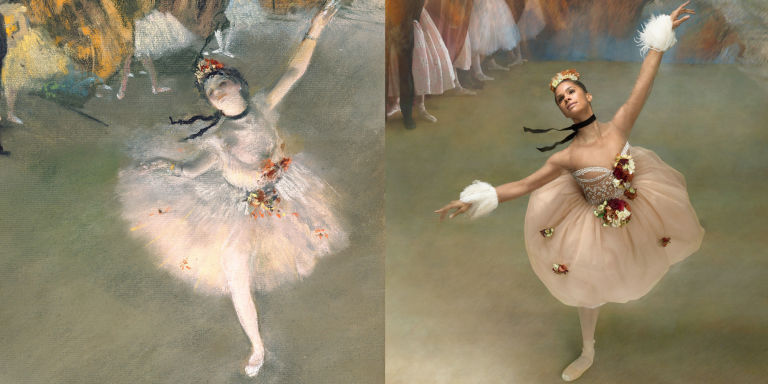
Copeland re-creates Degas's The Star; Valentino dress, $15,500, 212-355-5811; Wilhelm headpiece, $495, and corsages,$135, wilhelm-nyc.com; Mokuba ribbon, $11 per yard, 212-869-8900.
Copeland re-creates Degas’s The Star; Valentino dress, $15,500, 212-355-5811; Wilhelm headpiece, $495, and corsages,$135, wilhelm-nyc.com; Mokuba ribbon, $11 per yard, 212-869-8900.

“It was interesting to be on a shoot and to not have the freedom to just create like I normally do with my body,” she says. “Trying to re-create what Degas did was really difficult. It was amazing just to notice all of the small details but also how he still allows you to feel like there’s movement. That’s what I think is so beautiful and difficult about dance too. You’re trying to strive for this perfection, but you still want people to get that illusion that your line never ends and that you never stop moving.”

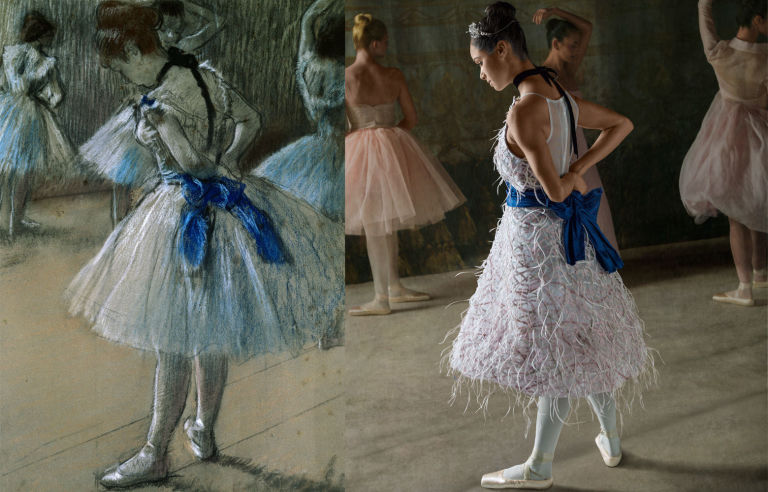
Copeland as Degas's Dancer; Carolina Herrera top, $1,490, skirt, $4,990, 212-249-6552; Hatmaker by Jonathan Howard headpiece, $750, hatmaker.com.au; Mokuba ribbon, $11 per yard, 212-869-8900; Mood Fabrics fabric (worn as a belt), 212-230-5003. 
Copeland as Degas’s Dancer; Carolina Herrera top, $1,490, skirt, $4,990, 212-249-6552; Hatmaker by Jonathan Howard headpiece, $750, hatmaker.com.au; Mokuba ribbon, $11 per yard, 212-869-8900; Mood Fabrics fabric (worn as a belt), 212-230-5003.

It should probably come as no surprise that Copeland would have trouble conforming to someone else’s idea of what a ballerina should look like; she gave that up a long time ago. At 33, she’s in the midst of the most illuminating pas de deux with pop culture for a classical dancer since Mikhail Baryshnikov went toe-to-toe with Gregory Hines in White Nights. Last June, she was named a principal dancer at American Ballet Theatre, the first African-American woman to hold that distinction. She was also the subject of a documentary, Nelson George’s A Ballerina’s Tale, which chronicled her triumph over depression and body-image issues, as well as her comeback from a career-threatening leg injury in 2012. The story of her rise from living in a single room in a welfare motel with her mother and five siblings to the uppermost reaches of the dance world has become a sort of 21st-century parable: the unlikely ballerina, as Copeland referred to herself in the subtitle of her 2014 memoir, Life in Motion, who may be on her way to becoming the quintessential ballerina of her time.

Copeland as Swaying Dancer (Dancer in Green); Oscar de la Renta dress, $5,490, 212-288-5810; Mokuba ribbon, $11 per yard; Hatmaker by Jonathan Howard headpiece corsage, $70,hatmaker.com.au. 
Copeland as Swaying Dancer (Dancer in Green); Oscar de la Renta dress, $5,490, 212-288-5810; Mokuba ribbon, $11 per yard; Hatmaker by Jonathan Howard headpiece corsage, $70,hatmaker.com.au.

Degas’s ballet works, which the artist began creating in the 1860s and continued making until the years before his death in 1917, were infused with a very modern sensibility. Instead of idealized visions of delicate creatures pirouetting onstage, he offered images of young girls congregating, practicing, laboring, dancing, training, and hanging around studios and the backstage areas of the theater. Occasionally, portly men or dark figures appear, directing or otherwise coloring the proceedings. “People call me the painter of dancing girls,” Degas is said to have once told his Paris art dealer Ambroise Vollard, the Larry Gagosian of the day. “It has never occurred to them that my chief interest in dancers lies in rendering movement and painting pretty clothes.” It’s an unsentimental place, Degas’s ballet, and his representation of the dancers is far from sympathetic. But it’s a space where he discovered not only a freedom for himself as an artist but also a kind of beauty that existed behind all the beauty of the performance and in the struggle of his subjects to become something.

 WHEN: 26 Mar — 24 Jul 2016 at the Museum of Modern Art (MoMA) in New York

Not to be missed if you’re in New York City

Source: photography by Ken Browar & Deborah Ory of the NYC Dance Project.


Health: Tea Talk

“Take some more tea,” the March Hare said to Alice, very earnestly.
“I’ve had nothing yet,” Alice replied in an offended tone, “so I can’t take more.”
“You mean you can’t take less,” said the Hatter: “it’s very easy to take more than nothing.”
“Nobody asked your opinion,” said Alice.” – Lewis Carroll, Alice in Wonderland

tea3I’ve been planning to have a ladies tea party for the longest while.  Mostly because it’s a good idea (nobody does that anymore), I have lots and lots of bags (but I’m more of a loose women when it comes to tea) and a large box of beautifully mismatched china cups and saucers from my Irish grandmother sitting in storage waiting to be useful.  And I can make little fancy sandwiches.   A grown up tea party on the deck when the weather gets warmer…whenever that happens.  And I don’t have to worry about them getting home safely.

Which brings me to….

Have you been down the tea aisle lately?  Doesn’t it seem that there are more assortments than ever before to choose from? Crazy considering there are really only five basic categories: white, green, oolong, black, and pu-erh (a variety of fermented and aged dark tea produced in Yunnan province, China). And all types of traditional tea begin with a tea leaf from the same plant, Camellia sinensis.

What about Rooibos then which is red? Turns out that Rooibos is not a true tea, but an herb. I just found that out.  (There are hundreds of herbal teas – too many to be discussed in this post, for another time). You learn something new every day – even something as basic as a tea fact.

We’ve all heard about the many health benefits of drinking tea.  Apparently all kinds of teas even black tea is good for us to drink, although some are more potent than others at fighting off disease…so we are told.  In any event it’s always nice to enjoy a cup of tea.

It seems that almost every country you visit has their own kind of specialty tea with claims of medicinal benefits and the custom is usually to welcome you with a cup of the hot stuff.

Tea is taken seriously in most countries you know.

The English love their black tea, in Peru it is mate de coca (or coca tea made from the leaves of the coca plant), In India it’s Darjeeling, in Africa it’s Rooibus, in the Orient it’s types of green tea and in Egypt it’s Hibiscus.  I’m sure there are others but these are the most common kinds.

What about the health claims?

There has been less research on herbal blends than on traditional teas, but one study published in the Journal of Nutrition found that drinking three cups of hibiscus tea daily could help lower blood pressure in people with hypertension. And evidence suggests that chamomile tea may promote sleep and that peppermint tea may calm the stomach.

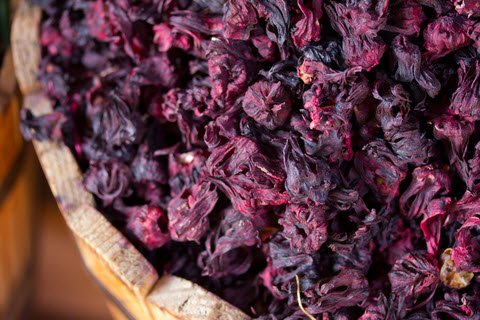
Hibiscus
Hibiscus

I’m focusing on Hibiscus right now because the red flowers are so pretty, the scent is sweet and floral but not overpowering….and I have several jars of the stuff brought back from Egypt.  Good thing that dried tea keeps for a long, long time.

Hibiscus also goes by the names Sorrel and Roselle.  It is said that that the properties  can help ward off major diseases due to it’s high content of polyphenol antioxidants.

Other health benefits of hibiscus tea include relief from high blood pressure and high cholesterol, as well as digestive, immune system, and inflammatory problems. It helps to cure liver disease and reduces the risk of cancer. It can also speed up the metabolism and help in healthy, gradual weight loss. Hibiscus tea is rich in vitamin C, minerals and various antioxidants, while also helping in the treatment of hypertension and anxiety.

A cup of hibiscus tea is a simple, effective, delicious way to increase your antioxidant intake!  I better get those jars out of the cupboard and into the pot.

So a tea party is in store!

“In Ireland, you go to someone’s house, and she asks you if you want a cup of tea. You say no, thank you, you’re really just fine. She asks if you’re sure. You say of course you’re sure, really, you don’t need a thing. Except they pronounce it ting. You don’t need a ting. Well, she says then, I was going to get myself some anyway, so it would be no trouble. Ah, you say, well, if you were going to get yourself some, I wouldn’t mind a spot of tea, at that, so long as it’s no trouble and I can give you a hand in the kitchen. Then you go through the whole thing all over again until you both end up in the kitchen drinking tea and chatting.

In America, someone asks you if you want a cup of tea, you say no, and then you don’t get any damned tea.

I liked the Irish way better.” – C.E. Murphy, Urban Shamantea2

What’s your favourite cup?